Jump to ratings and reviews
Rate this book

Averno

Rate this book
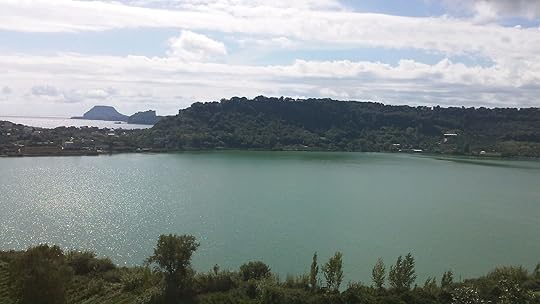
Glück noemde Averno (2006) naar een klein kratermeer in Zuid-Italië, dat de Romeinen beschouwden als de toegang tot de onderwereld. Averno is als een lange, rusteloze klaagzang vol spitsvondigheid en schrijnende beelden.

159 pages, Hardcover

First published November 1, 2006

302 people are currently reading
11156 people want to read

About the author

Louise Glück

94 books2,146 followers
American poet Louise Elisabeth Glück served as poet laureate of the United States from 2003 to 2004.

Parents of Hungarian Jewish heritage reared her on Long Island. She attended Sarah Lawrence College and later Columbia University.

She was the author of twelve books of poetry, including: A Village Life (2009); Averno (2006), which was a finalist for The National Book Award; The Seven Ages (2001); Vita Nova (1999), which was awarded The New Yorker's Book Award in Poetry; Meadowlands (1996); The Wild Iris (1992), which received the Pulitzer Prize and the William Carlos Williams Award of the Poetry Society of America; Ararat (1990), which received the Rebekah Johnson Bobbitt National Prize for Poetry from the Library of Congress. She also published a collection of essays, Proofs and Theories: Essays on Poetry (1994), which won the PEN/Martha Albrand Award for First Nonfiction.

In 2001, Yale University awarded Louise Glück its Bollingen Prize in Poetry, given biennially for a poet's lifetime achievement in his or her art. Her other honors include the Lannan Literary Award for Poetry, the Sara Teasdale Memorial Prize (Wellesley, 1986), the Pulitzer Prize for Poetry in 1993 for her collection, The Wild Iris . Glück is the recipient of the National Book Critics Circle Award ( Triumph of Achilles ), the Academy of American Poet's Prize ( Firstborn ), as well as the Massachusetts Institute of Technology Anniversary Medal (2000), and fellowships from the Guggenheim, Rockefeller foundations and the National Endowment for the Arts.

In 2020, Glück was awarded the Nobel Prize in Literature, "for her unmistakable poetic voice that with austere beauty makes individual existence universal."

Glück also worked as a senior lecturer in English at Williams College in Williamstown, Massachusetts, served as a member of the faculty of the University of Iowa and taught at Goddard College in Vermont. She lived in Cambridge, Massachusetts, and teached as the Rosencranz writer in residence at Yale University and in the creative writing program of Boston University.

Ratings & Reviews

What do you think?
Rate this book

Friends & Following

Create a free account to discover what your friends think of this book!

Community Reviews

5 stars
3,109 (43%)
4 stars
2,643 (36%)
3 stars
1,153 (16%)
2 stars
224 (3%)
1 star
63 (<1%)
Displaying 1 - 30 of 1,034 reviews
Profile Image for Nicola.
241 reviews30 followers
September 1, 2009
That Gluck voice. Keep trying to understand why it has such a vulnerable authority, like someone wielding a dagger then using it to offer you a piece of fruit. A voice poised between challenge and cowering, distance and closeness, indifference and intimacy. In “Prism,” it’s the daughters “assignment” to fall in love; an improper “vaccination” leads to passion, desire and the search for love; the lover is “the stranger” in the shock of “the first dawn.” There’s a lot of attempt at dichotomy: of breaking mother, lover, and daughter into superego, id, and ego; of the soul and the body; of good and bad; death and life. But Gluck often undermines these dichotomies or, at least, subverts them: in “Crater Lake” it is ironically the body and not death that might have betrayed us by making us fear “love.” The title of the collection, Averno, as well as this particular poem, “Crater Lake,” suggests we are more on the cusp of things, the liminal space of the entranceway to the underworld.
And for a book based on the myth of Persephone and, thus, on the earth and the underworld, there is so much mention of sky. This seems a subversion as well. This disorientation feels somehow purposeful, as though we, like Persephone, despite Zeus' promise to allow her to "forget" her passage, half-remember the place between extremes. To quote from "Prism" again: "Then the rain again, erasing / footprints in the damp earth. / An implied path, like / a map without a crossroads."

In addition to "Prism," the first “Persephone The Wanderer” struck a deep chord. These brutal lines especially: “…the tale of Persephone / which should be read / as an argument between the mother and the lover— / the daughter is just meat.”
Profile Image for Henk.
1,195 reviews302 followers
June 5, 2023
The sublime of nature and death, told loosely around the Persephone myth, with winter as a recurring metaphor
death cannot harm me
more than you have harmed me,
my beloved life

You will not be spared, nor will what you loved be spared.

- October

I liked this bundle, if not as much as Ararat or The Seven Ages. Louise Glück seems in a reflective, end of life mood in these poems, enforced by the Persephone myth of a goddess being dragged to the underworld by Hades, god of Death.

Life not lived is definitely a theme that comes back, as does the question if it even matters to reflect on these kind of matters. 3.5 stars rounded up

Is there any benefit in forcing upon oneself
the realization that one must die?
Is it possible to miss the opportunity of one’s life?

The terrible moment was the spring after his work was erased,
when he understood that the earth
didn’t know how to mourn, that it would change instead.
And then go on existing without him.

- Averno

Spring will return, a dream
based on a falsehood:
that the dead return.

- Persephone the wanderer
Profile Image for Marc Lamot.
3,461 reviews1,970 followers
October 14, 2023
To be honest: I am not really a poetry lover; I prefer the broad, layered narratives of prose. But the Nobel Prize 2020 made me take on this small volume (barely 70 pages). And immediately you can notice Louise Glück writes from her own universe, she does not have a formal focus, but a substantive content-orientated one, and it is supported by a broad range of personal experiences.

The Greek Persophone myth is central to this collection, or at least the myth is the narrative that is used as the central reference. With Persophone you immediately think of seasonal changes, but also of death and damnation, seclusion, and hibernation, with occasional moments of hope and happiness. Glück connects this with her own physicality, in a lived-through way, and thus with transience, despair and hope, appearance and reality. Barely 70 pages, but enough to enjoy for a long while.
(rating 3.5 stars)
Profile Image for Edita.
1,584 reviews591 followers
October 2, 2020
I rode to meet you: dreams
like living beings swarmed around me
and the moon on my right side
followed me, burning.

I rode back: everything changed.
My soul in love was sad
and the moon on my left side
trailed me without hope.

To such endless impressions
we poets give ourselves absolutely,
making, in silence, omen of mere event,
until the world reflects the deepest needs of the soul.
Profile Image for Atri .
219 reviews157 followers
November 17, 2020
We are, each of us, the one who wakens first,
who stirs and sees, there in the first dawn,
the stranger.

***

I lived in the present, which was
that part of the future you could see.
The past floated above my head,
like the sun and moon, visible but never
reachable.
...
All your life, you wait for the propitious time.
Then the propitious time
reveals itself as action taken.

***

In our silence, we were asking
those questions friends who trust each other
ask out of great fatigue,
each one hoping the other knows more
and when this isn't so, hoping
their shared impressions will amount
to insight.

***

After many lives, maybe something changes.
I think in the end what you want
you'll be able to see -

Then you don't need anymore
to die and come back again.
Profile Image for Praveen.
193 reviews374 followers
December 21, 2021
“The brightness of the day becomes
The brightness of the night
The fire becomes the mirror." -Louise Gluck


Averno,
There was a lake in a distant country. And an author got inspired by it. I can say such at most. A distant country, if I roughly guess; this small Crater Lake must be at least six thousand kilometers away from my study. While people around this lake must be expecting or relishing a Mediterranean winter right now, I hope not so cold one, I am sitting around 14 degrees outside my room, intermittently rubbing my hands while typing. Inside the room, the mercury plummets a bit sharp in the capital, at least in my case sometimes! You must know this fact that this lake Averno, was regarded by the ancient Romans as an entrance to the underworld.

I started reading this book on one starry night when there was so much light outside even at night and I knocked it off quick, without searching hither and thither; if I put it together there was no procrastination. This Nobel award-winning author pushed me from pillar to post in her craft in a very fruit-bearing manner, as if just in a moment I traveled the whole world of the verse-maker, entering through an alcove of novelty. Though I did not reach any underworld like Romans; yet this book was the world of gravitas for me.

Such simple and intense was the writing. And such a profound piece of solemnity in verse!
Even if I did not get impressed by the structure of the poems most of the time yet I reckon, I have not read too simple and yet too intense as this book lately in poetic form. I was reading her for the first time after her name was set forth in the list of Nobel laureates.

The book is in two parts, the first one with six titles and the second one with eleven titles. Somewhere you will find the poetry of life and death and at times it can leave you on thin ice, you must take care of your own, the precariousness of life and certitude of death takes you to the truth- line of reality and you have to bear it.

She has written about change, she says balm after violence makes no effect to her as violence has changed her.

“Summer after summer has ended
Balm after violence;
It does me no good
To be good to me now
Violence has changed me”


At one place she remembers the music of falling snow from her open window, and she sings,

"This is the light of autumn, not the light of spring
The light of autumn: you will not be spared.
You will not be spared, nor what you love be spared."


She ponders over the beauty outside and her helplessness to enjoy it.

"It is true there is not enough beauty in the world
It is also true that I am not competent to restore it.
Neither is there candor, and here I may be of some use."


She asserts something and then leaves a question to the reader,

"My friend the earth is bitter I think
Sunlight has failed her
Bitter or weary it is hard to say."


There is a poem on the goddess queen of the underworld, PERSEPHONE, she has compared her behavior with the modern girls when she went to hell and returned to earth. She talks about life and death, here you will see verses about her soul, she talks to her soul, and you can hear that intense and mild note of her whispering. The sound of such intensified conversations with the self can even blare sometimes. She has written about her mother, sister, and father. Her thoughts embrace nature and landscape. She undulates between the Past and future and talks about the time governed by contradictions in a febrile tone. In a poem, a young girl set the fire to the field of wheat. And She fell asleep in a river and what a wonderful manner the entire scene has been done in verse.

I have adored this book for its intensity and Touch!
Profile Image for Steven Godin.
2,782 reviews3,373 followers
December 30, 2020

Tonight, for the first time in many years,
there appeared to me again
a vision of the earth’s splendor:

in the evening sky
the first star seemed
to increase in brilliance
as the earth darkened

until at last it could grow no darker.
And the light, which was the light of death,
seemed to restore to earth

its power to console. There were
no other stars. Only the one
whose name I knew

as in my other life I did her
injury: Venus,
star of the early evening,

to you I dedicate
my vision, since on this blank surface

you have cast enough light
to make my thought
visible again.

Profile Image for Gerhard.
1,304 reviews885 followers
October 18, 2020
To such endless impressions
we poets give ourselves absolutely,
making, in silence, omen of mere event,
until the world reflects the deepest needs of the soul.
Profile Image for Alan.
718 reviews288 followers
Read
December 29, 2022
This one was a miss for me as well. Trying to figure out why, and I keep landing on the possibility that it’s due to the poems lengthening significantly from the previous collection. Boom - suddenly each poem is 5-8 pages, multiple sections, multiple movements and energies. If one doesn’t hit you as you read it out loud, you can hold on, continue to try and find a way in, but it will be a while. Persephone and Hades dropped by here, so that was cute to see.

Poems I enjoyed:
- Landscape
- Averno

I would want to put Landscape here, but there is no way I am typing all of that out. The tradition of including one of the poems from the collection may have to die here as I move on to the last 3 books.
Profile Image for Hadrian.
438 reviews243 followers
November 1, 2020
From October:

The brightness of the day becomes
the brightness of the night;
the fire becomes the mirror.

My friend the earth is bitter: I think
sunlight has failed her.
Bitter or weary, it is hard to say.

Between herself and the sun,
something has ended.
She wants, now, to be left alone;
I think we must give up
turning to her for affirmation.

Above the fields,
above the roof of the village houses,
the brilliance that made all life possible
becomes the cold stars.

Lie still and watch:
they give nothing but ask nothing.

From within the earth's
bitter disgrace, coldness, and barrenness

my friend the moon rises:
she is beautiful tonight, but when is she not beautiful?
Profile Image for Teresa.
1,492 reviews
April 10, 2021

Estou cansada de ter mãos
disse ela
quero asas —

Mas que farás sem as tuas mãos
para continuar humana?

Estou cansada do humano
disse ela
quero viver no sol —
Profile Image for Sofia.
44 reviews2 followers
December 28, 2023
I am tired of having hands
she said
I want wings -

But what will you do without your hands
to be human?

I'm tired of human
she said
I want to live on the sun -
Profile Image for Gumble's Yard - Golden Reviewer.
2,189 reviews1,794 followers
June 24, 2021
This is the tenth collection by the 2020 Nobel Laureate and a very clear- but in my view unsuccessful - return to the Greek Mythology of “The Triumph of Achilles”, “Meadowlands” and “Vita Nova”.

Having read the first eight collections and having largely enjoyed her poetry I have to say I found this the weakest since her first, rather formative collection “Firstborn” – which is I think a personal rather than universal reaction as this collection seems to be generally regarded as one of her strongest, with the Nobel citation calling it: “a masterly collection, a visionary interpretation of the myth of Persephone’s descent into hell in the captivity of Hades, the god of death. The title comes from the crater west of Naples that was regarded by the ancient Romans as the entrance to the underworld”

After what was I thought a strong opening with "October" (https://www.goodreads.com/review/show...), my personal aversion (averno-sion?) was two fold.

First I think FOMO – in this case Fed-Up Of Myth Overload. I have probably just read too many literary re-interpretations of Greek myths – with the issue being that I have no knowledge of the original myths so no framework. Glück’s earlier work (particularly “The Triumph of Achilles”) drew at least on myths I know from other literature (mainly recent novelistic interpretations) but the Persephone/Hades story drew a complete blank for me and therefore I missed the resonances.

Secondly I found the non-mythological writing very clunky such as (from “Fugue”)
7.
I put the book aside. What is a soul?
A flag flown
too high on the pole, if you know what I mean.

The body
cowers in the dreamlike underbrush.

8.
Well, we are here to do something about that.

(In a German accent.)

Read “The Wild Iris” instead.
Profile Image for Bryant.
241 reviews29 followers
February 15, 2008
Averno is as bracing and clean and as perfect as the stark scherzos of winter evoked by Louise Glück. The poet explores, with moments of splintering incision, the myths of Persephone, the difficulty of reconciling the dying body to an earth that itself seems at once death-bound (headed for winter) yet renewable (headed for summer), and the strange regions that the soul fitfully inhabits in a world devoid of comfort or faith ("weren't we necessary to the earth"?)

This redoubtable collection gives and re-gives with successive readings, not unlike the gift of love that Glück describes as

"The gift of the self,
that is without limit.
Without limit, though it recurs."
Profile Image for beau.
49 reviews48 followers
March 27, 2008
Prism
Louise Gluck

1.
Who can say what the world is? The world
is in flux, therefore
unreadable, the winds shifting,
the great plates invisibly shifting and changing-


2.
Dirt. Fragments
of blistered rock. On which
the exposed heart constructs
a house, memory: the gardens
manageable, small in scale, the beds
damp at the sea's edge-


3.
As one takes in
an enemy, through these windows
one takes in
the world:

here is the kitchen, here the darkened study.

Meaning: I am master here.


4.
When you fall in love, my sister said,
it's like being struck by lightning.

She was speaking hopefully,
to draw the attention of the lightning.

I reminded her that she was repeating exactly
our mother's formula, which she and I

had discussed in childhood, because we both felt
that what we were looking at in the adults

were the effects not of lightning
but of the electric chair.


5.
Riddle:
Why was my mother happy?

Answer:
She married my father


6.
"You girls," My mother said, "should marry
someone like your father"

That was one remark. Another was,
"There is no one like your father."


7.
From the pierced clouds, steady lines of silver.

Unlikely
yellow of the witch hazel, veins
of mercury that were the paths of the rivers-

Then the rain again, erasing
footprints in the damp earth.

An implied path, like
a map without a crossroads.


8.
The implication was, it was necessary to abandon
childhood. The word "marry" was a signal.
You could also treat it as aesthetic advice;
the voice of the child was tiresome,
it had no lower register.
The word was a code, mysterious, like the Rosetta stone.
It was also a roadsign, a warning.
You could take a few things with you like a dowry.
You could take the part of you that thought.
"Marry" meant you should keep that part quiet.


9.
A night in summer. Outside,
sounds of a summer storm. Then the sky clearing.
In the window, constellations of summer.

I'm in a bed. This man and I,
we are suspended in the strange calm
sex often induces. Most sex induces.
Longing, what is that? Desire, what is that?

In the window, constellations of summer.
Once, I could name them.


10.
Abstracted
shapes, patterns.
The light of the mind. The cold, exacting
fires of disinterestedness, curiously
blocked by earth, coherent, glittering
in air and water,
the elaborate
signs that said now plant, now, harvest-
I could name them, I had names for them:
two different things.


11.
Fabulous things, stars.

When I was a child, I suffered from insomnia.
Summer nights, my parents permitted me to sit by the lake;
I took the dog for company.

Did I say "suffered"? That was my parents' way of explaining
tastes that seemed to them
inexplicable: better "suffered" than "preferred to live with the dog."

Darkness. Silence that annulled mortality.
The tethered boats rising and falling.
When the moon was full, I could sometimes read the girls' names
painted to the sides of the boats:
Ruth Ann, Sweet Izzy, Peggy My Darling-

They were going nowhere, those girls.
There was nothing to be learned from them.

I spread my jacket in the damp sand,
the dog curled up beside me.
My parents couldn't see the lift: in my head;
when I wrote it down, they fixed the spelling.

Sounds of the lake. The soothing, inhuman
sounds of water lapping the dock, the dog scuffling somewhere
in the weeds-


12.
The assignment was to fall in love.
The details were up to you.
The second part was
to include in the poem certain words,
words drawn from a specific text
on another subject altogether.


13.
Spring rain, then a night in summer.
A man's voice, then a woman's voice.

You grew up, you were struck by lightning.
When you opened your eyes, you were wired forever to your true love.

It only happened once. Then you were taken care of,
your story was finished.

It happened once. Being struck was like being vaccinated;
the rest of your life you were immune,
you were warm and dry.

Unless the shock wasn't deep enough.
Then you weren't vaccinated, you were addicted.


14.
The assignment was to fall in love.
The author was female.
The ego had to be called the soul.

The action took place in the body.
Stars represented everything else: dreams, the mind, etc.

The beloved was identified
with the self in a narcissistic projection.
The mind was a subplot. It went nattering on.

Time was experienced
less as narrative than ritual.
What was repeated had weight.

Certain endings were tragic, thus acceptable.
Everything else was failure.


15.
Deceit. Lies. Embellishments we call
hypotheses-

There were too many roads, too many versions.
There were too many roads, no one path-

And at the end?


16.
List the implications of "crossroads."
Answer: a story that will have a moral.
Give a counter-example:


17.
The self ended and the world began.
They were of equal size,
commensurate,
one mirrored the other.


18.
The riddle was: why couldn't we live in the mind.

The answer was: the barrier of the earth intervened.


19.
The room was quiet.
That is, the room was quiet, but the lovers were breathing.

In the same way, the night was dark.
It was dark, but the stars shone.

The man in bed was one of several men
to whom I gave my heart. The gift of the self,
that is without limit.
Without limit, though it recurs.

The room was quiet. It was an absolute,
like the black night.


20.
A night in summer. Sounds of a summer storm.
The great plates invisibly shifting and changing-

And in the dark room, the lovers sleeping in each other's arms.

We are, each of us, the one who wakens first,
who stirs first and sees, there in the first dawn,
the stranger.
Profile Image for Neal Adolph.
146 reviews106 followers
October 19, 2017
Let me begin.

Let me say that I do not know poetry. I cannot separate the good from the bad with any real authority. What I do like and do admire is based entirely on impression and appreciation, surprise. I like poetry though. And it comes to be as something I feel I must read, it comes in waves of desire and ignorance. So when I talk about this collection of poetry I cannot pretend that I have much to say which is deserving of your attention.

Louise Gluck is one of those names in American poetry that is said, mostly, with admiration. She is the author of a great many collections, the winner of a great many prizes. This collection nearly received one of the major ones, but lost out to another poet. I have read that other book, but having read this collection I can only suggest that the decision to award somebody else was the right decision.

Gluck is an aggressive poet, as far as I can tell. She writes in staccato phrases that are dark and exacting. Her words and phrases bring to mind the abrupt black and whiteness of some mid-century art photographer whose work is almost certainly more famous than their name; stark lines separating the areas where the sun falls from the where the shadows take over, taut, something natural, in its way, but also ugly, in its way, like the sheer rocky face of a mountain as it rips itself out from the suffocation of a glacier. Louise Gluck’s poetry reads like a cry for survival, or perhaps like a last sucking in of air before the cold waters drag you into your forever home.

At times it produces something truly beautiful; the sort of poems that one things deserves the National Book Award. Like in “The Night Migrations”.

This is the moment when you see again
the red berries of the mountain ash
and in the dark sky
the birds’ night migrations.

It grieves me to think
the dead won’t see them-
these things we depend on,
they disappear.

What will the soul do for solace then?
I tell myself maybe it won’t need
these pleasures anymore;
maybe just not being is simply enough,
hard as that is to imagine.


And sometimes you see that Gluck has a special talent in producing poetry which seems to miss whatever it aims to hit. Like in “Archaic Fragment” or in “Blue Rotunda” or in “Fugue.” I won’t name the title poem, even if it also has some lines, highlighted in other reviews, which either need to stop being or to be reworked extensively. That isn’t to say that each of these poems is excessively bad (though perhaps Archaic Fragment is). It is to say that the components that are bad prevent one from really appreciating the fineness of the parts that are good. And maybe you can see, in that poem above, the hints of the bad writing creeping in and redeemed in that final stanza. But maybe that is me, thinking her rather direct approach to handling her themes appears, at times careless. Maybe that is just me, who thinks words like “dead” and “time” and “memory” and “shadow” need to be used more sparingly, more carefully, and maybe need to be softened by something else.

I appreciated the fullness of this collection. It is a composition that takes themes, phrases, ideas, and develops them as the poems move on, so the end product doesn’t seem to be a bundle of discrete products that were assembled by some publisher. No, there was some attention given to the shaping of this collection, making it a full work that thrives when read as such and is weakened by the failures which seem to leak into each poem and poison the vision just enough.

The first half of this collection is more consistent than the second, with gems like October and Landscape and Persephone the Wanderer. There are some equally good ones in the second half, with Thrush being worthy of a reading or two. Take that as you may.
Profile Image for Adriana Scarpin.
1,734 reviews
October 19, 2020
Persephone the Wanderer

In the first version, Persephone
is taken from her mother
and the goddess of the earth
punishes the earth—this is
consistent with what we known of human behavior,

that human beings take profound satisfaction
in doing harm, particularly
unconscious harm:

we may call this
negative creation.

Persephone’s initial
sojourn in hell continues to be
pawed over by scholars who dispute
the sensations of the virgin:

did she cooperate in her rape,
or was she drugged, violated against her will,
as happens so often now to modern girls.

As is well known, the return of the beloved
does not correct
the loss of the beloved: Persephone

returns home
stained with red juice like
a character in Hawthorne—

I am not certain I will
keep this word: is earth
”home” to Persephone? Is she at home, conceivable,
in the bed of the god? Is she
at home nowhere? Is she
a born wanderer, in other words
an existential
replica of her own mother, less
hamstrung by ideas of causality?

You are allowed to like
no one, you know. The characters
are not people.
They are aspects of a dilemma or conflict.

Three parts: just as the soul is divided,
ego, superego, id. Likewise

the three levels of the known world,
a kind of diagram that separates
heaven from earth from hell.

You must ask yourself:
where is it snowing?

White of forgetfulness,
of desecration—

It is snowing on earth; the cold wind says

Persephone is having sex in hell.
Unlike the rest of us, she doesn’t know
what winter is, only that
she is what causes it.

She is lying in the bed of Hades.
What is in her mind?
Is she afraid? Has something
blotted out the idea
of mind?

She does know the earth
is run by mothers, this much
is certain. She also knows
she is not what is called
a girl any longer. Regarding
incarceration, she believes

she has been a prisoner since she has been a daughter.

The terrible reunions in store for her
will take up the rest of her life.
When the passion for expiation
is chronic, fierce, you do not choose
the way you live. You do not live;
you are not allowed to die.

You drift between earth and death
which seem, finally,
strangely alike. Scholars tell us

that there is no point in knowing what you want
when the forces contending over you
could kill you.

White of forgetfulness,
white of safety—

They say
there is a rift in the human soul
which was not constructed to belong
entirely to life. Earth

Asks us to deny this rift, a threat
disguised as suggestion—
As we have seen
in the tale of Persephone
which should be read

As an argument between the mother and the lover—
the daughter is just meat.

When death confronts her, she has never seen
the meadow without the daisies.
Suddenly she is no longer
singing her maidenly songs.
about her mother’s
beauty and fecundity. Where
the rift is, the break is.

Song of the earth,
song of the mystic vision of eternal life—

My soul
shattered with the strain
of trying to belong to earth—

What will you do,
when it is your turn in the field with the god?

####################################

In the second version, Persephone
is dead. She dies, her mother grieves —
problems of sexuality need not
trouble us here.

Compulsively, in grief, Demeter
circles the earth. We don’t expect to know
what Persephone is doing.
She is dead, the dead are mysteries.

We have here
a mother and a cipher: this is
accurate to the experience
of the mother as

she looks into the infant’s face. She thinks:
I remember when you didn’t exist. The infant
is puzzled; later, the child’s opinion is
she has always existed, just as

her mother has always existed
in her present form. Her mother
is like a figure at a bus stop,
an audience for the bus’s arrival. Before that,
she was the bus, a temporary
home or convenience. Persephone, protected,
stares out the window of the chariot.

What does she see? A morning
in early spring, in April. Now

her whole life is beginning — unfortunately,
it’s going to be
a short life. She’s going to know, really,

only two adults: death and her mother.
But two is
twice what her mother has:
her mother has

one child, a daughter.
As a god, she could have had
a thousand children.

We begin to see here
the deep violence of the earth

whose hostility suggests
she has no wish
to continue as a source of life.

And why is this hypothesis
never discussed? Because
it is not in the story; it only
creates the story.

In grief, after the daughter dies,
the mother wanders the earth.
She is preparing her case;
like a politician
she remembers everything and admits
nothing.

For example, her daughter’s
birth was unbearable, her beauty
was unbearable: she remembers this.
She remembers Persephone’s
innocence, her tenderness —

What is she planning, seeking her daughter?
She is issuing
a warning whose implicit message is:
what are you doing outside my body?

You ask yourself:
why is the mother’s body safe?

The answer is
this is the wrong question, since

the daughter’s body
doesn’t exist, except
as a branch of the mother’s body
that needs to be
reattached at any cost.

When a god grieves it means
destroying others (as in war)
while at the same time petitioning
to reverse agreements (as in war also):

if Zeus will get her back,
winter will end.

Winter will end, spring will return.
The small pestering breezes
that I so loved, the idiot yellow flowers —

Spring will return, a dream
based on a falsehood:
that the dead return.

Persephone
was used to death. Now over and over
her mother hauls her out again —

You must ask yourself:
are the flowers real? If

Persephone “returns” there will be
one of two reasons:

either she was not dead or
she is being used
to support a fiction —

I think I can remember
being dead. Many times, in winter,
I approached Zeus. Tell me, I would ask him,
how can I endure the earth?

And he would say,
in a short time you will be here again.
And in the time between

you will forget everything:
those fields of ice will be
the meadows of Elysium.
Profile Image for D'Argo Agathon.
202 reviews7 followers
February 23, 2012
This is what I hate about poetry.

Ha! Well, I’m done!

No, really, *Averno* started with significant promise – using an established mythos to analogize human growth and the confrontation with death in an evolved secular society. She does well with the “Persephone” poems [reminds me of a poem by Wendy Barker] in that her poetry tells a somewhat coherent story that transports the reader to the place and allows the reader to become emotionally invested. Lines like “It is snowing on Earth; the cold wind says // Persephone is having sex in hell” are both concrete and poetic… unfortunately, Glück’s other poems fall apart without this kind of cohesion.

This is where the hate comes in – repetition of unnecessary words, cliché imagery/phrasing, vague sentences without referentials (or referring to abstract concepts), long poems that do not possess sufficient stamina to keep the title working throughout the piece, and didactic hogwash. “Prism” is a great example of all of these facets; while the idea of breaking a subject into its component parts is an interesting goal for a poem, Glück loses sight of the “original image” that she is “breaking up,” invades the space upon the page with deep (read: cliché and pompous) gems like “here is the kitchen, here the darkened study. // Meaning: I am master here,” rambles on for eight pages, and nebulizes concrete images into meaningless word constructions as with “An implied path, like / a map without a crossroads.” …Think about that for a second, and tell me if it makes any kind of rational sense.

Pieces like “Archaic Fragment” and the title poem of “Averno” attempt a kind of density one might see in short-form poetry like Japanese pieces, but the phrases she ends up with are laughable: “It was a beautiful day, though cold.” Really? You were going for compact space, and that’s what you chose? But the worst part I think is the pathetic didactic: “You die when your spirit dies. / Otherwise, you live.” Wow. Brilliant. Moving.

A Pulitzer Prize winner? …Okay.
Profile Image for Ana.
148 reviews
October 20, 2020
Averno é um lago vulcânico, localizado proximo à Napoles, na Italia. É considerado pelos romanos a entrada dos infernos.

Estou de boca aberta com este poema recontando a historia da Persefone de forma bem direta, quando sofreu abusos do pai Zeus e do tio Hades.

"Persephone the wanderer" (fragmentos):

did she cooperate in her rape,
or was she drugged, violated against her will,
as happens so often now to modern girls.

is earth "home" to Persephone? Is she at home,
conceivably,
in the bed of the god? Is she
at home nowhere? Is she
a born wanderer, in other words
an existential
replica of her own mother, less
hamstrung by ideas of causality?

Persephone is having sex in hell.
Unlike the rest of us, she doesn't know
what winter is, only that
she is what causes it.

she has been prisoner since she has been a daughter.


Indico também esta entrevista no Youtube de 2012 com a autora que ganhou o Nobel de Literatura em 2020.
Profile Image for Helen McClory.
Author 12 books208 followers
November 7, 2019
A descent into the underworld or into winter (which are the same things) following a girl, a goddess or a dead soul (which are the same things)(or not at all the same things, but different things existing, as they do in the best poetry, on overlapping planes of existence).

One of those collections that make you realise, once you finish, that you have been holding your breath.

Exhale.
Profile Image for Come Musica.
2,058 reviews627 followers
April 8, 2021
“Devo immaginare
tutto
lei disse
devo agire
come se ci fosse davvero
una cartina per quel luogo:
quando eri una bambina — 
*
E poi:
Sono qui
perché non era vero; l’ho
distorto — 
*
Voglio lei disse
una teoria che spieghi
tutto
nell’occhio della madre
l’invisibile
scheggia di stagnola
il ghiaccio blu
serrato nell’iride —”

Averno
Louise Glück
Profile Image for Fabio Luís Pérez Candelier.
300 reviews19 followers
October 12, 2022
"Averno" de Louise Glück, poemario que retoma el mito del rapto de Perséfone para desarrollar el tema de las relaciones humanas, tanto familiares como de pareja, con observaciones metafóricas profunda sobre: la muerte, la inocencia, el deseo, la maternidad y el amor.
Profile Image for vuelociego.
101 reviews13 followers
September 7, 2020
Aquí:

Paisaje

2.

«Pasó el tiempo, lo heló todo.
Bajo el hielo el futuro se agitaba.
Si caías en él, morías.

Era un tiempo
de espera, de acción suspendida.

Yo vivía en el presente, que era
la parte del futuro que se ve.
Sobre mi cabeza flotaba el pasado
como el sol y la luna, visible pero siempre inalcanzable.

Era un tiempo
gobernado por contradicciones como:
no sentía nada y
tenía miedo.

El invierno vaciaba los árboles. Los volvía a llenar con nieve.
Como no podía sentir, cayó la nieve, se heló el lago.
Como estaba asustada no me movía.
Mi aliento era blanco: una descripción del silencio.

Con el paso del tiempo algo de aquel entonces
se convirtió en esto. Y algo simplemente se evaporó.
Se podía ver cómo flotaba sobre los árboles blancos
formando partículas de hielo.

Toda tu vida aguardas el instante propicio.
Luego el instante propicio se revela
como una acción emprendida.

Miré moverse el pasado, como se mueve una fila de nubes:
de izquierda a derecha o de derecha a izquierda,
a merced del viento. Algunos días

no había viento. Parecía que las nubes
se quedaran en su sitio,
como en una marina, muertas, poco naturales.

Algunos días el lago era como cristal.
Bajo el cristal el futuro emitía
sonidos dulces, tentadores:
tenías que hacer un esfuerzo para no escuchar.

Pasó el tiempo; llegaste a ver una parte de él.
Los años que se llevó consigo eran años invernales,
no tenían pérdida. Algunos días

no había nubes, como si hubiesen
desaparecido las fuentes del pasado. El mundo

era como un negativo sobreexpuesto: la luz pasaba
directamente a través suyo. Luego
la imagen se desvanecía.

Sobre el mundo
Había sólo azul, azul por todas partes» (89-93).


4.

«Me quedé dormida en un río, desperté en un río
de mi misteriosa
ineptitud para morir nada puedo
decir, ni quién
me salvó ni por qué motivo.

Había un silencio grande.
Sin viento. Sin voz humana.
El siglo amargo

Había concluido,
el de la gloria también, y el de la permanencia.

El sol frío
persistía como curiosidad, como memento.
El tiempo fluía tras él.

El cielo estaba muy limpio,
como en invierno,
la tierra seca, sin cultivar,

la luz oficial se movía
con calma a través de una ranura en el aire

dignificada, complaciente,
disolviendo la esperanza,
subordinando las imágenes del futuro a los signos del paso
del futuro.

Creo que debí de caerme.
Me obligué a ponerme en pie,
no estaba acostumbrada al dolor físico.

Había olvidado
lo duras que son estas condiciones:

la tierra inmóvil,
pero no en desuso. El río de aguas heladas, poco profundas.

De mi sueño nada
recuerdo. Cuando grité,
mi voz me serenó de un modo inesperado.

El el silencio de la conciencia me dije:
¿cuándo rechacé mi vida? Me respondí:
Die Erde überwältigt mich,
la tierra me derrotó.

He intentado describirlo con exactitud
por si alguien siguiera mis pasos. Puedo verificar
que cuando el sol se pone en invierno es
incomparablemente hermoso y su recuerdo
dura mucho. Creo que significa

que no había noche.
Que la noche estaba sólo en mi cabeza» (97-101)
Profile Image for Vartika.
523 reviews772 followers
April 12, 2023
The rest I have told you already.
A few years of fluency, and then
the long silence
American poet Louise Glück's tenth collection is also her 'death' collection, a set of deeply reflective poems populated with images of snow (oblivion?), liminality, and the end of life, threaded through with the idea of Averno – the volcanic crater regarded by the Romans as the entrance to the underworld – and a reimagination of the myth of Persephone, with its attendant themes of changing seasons, seclusion, damnation, violation, death, and occasional hope.

I particularly liked the poems "Persephone the Wanderer", "Prism", "The Myth of Innocence", and the titular poem "Averno", which seem to veer the collection into a contemplation of ageing, particularly growing up and growing old as a woman: here, the poet asks us to read the tale of Persephone
as an argument between the mother and the lover—
the daughter is just meat.
Here, the daughter's "assignment was to fall in love". "The mind...a subplot" and getting "struck by lightning" paramount – a necessary vaccination whose shock, if not deep enough, would leave you addicted, passionate. And as Persephone wanders from innocence to the underworld and back again,
She sees
the same person, the horrible mantle
of daughterliness still clinging to her.
I also loved "Telescope", which I will leave you all with:
There is a moment after you move your eye away
when you forget where you are
because you've been living. it seems,
somewhere else, in the silence of the night sky.

You've stopped being here in the world.
You're in a different place,
a place where human life has no meaning.

You're not a creature in a body.
You exist as the stars exist,
participating in their stillness, their immensity.

Then you're in the world again.
At night, on a cold hill,
taking the telescope apart.

You realize afterward
not that the image is false
but the relation is false.

You see again how far away
each thing is from every other thing.


3.5 stars.
Profile Image for La lettrice controcorrente.
592 reviews247 followers
April 15, 2021
Averno di Louise Glück (Il Saggiatore) era la raccolta di poesie di cui avevo bisogno. Dopo aver terminato La storia di Elsa Morante ero certa che nessun libro sarebbe stato all'altezza. Ecco perché ho deciso di buttarmi sulla poesia, continuando così il mio Poesia non ti temo.

Certo, so che misurarmi con un premio Nobel non è facile e so che qualcuno storcerà il naso leggendo la parola recensione accostata ad Averno. Ma io sono qui per mettermi in gioco, per consigliare, per dirvi cosa penso anche questa volta.

Averno, come Iris Selvatico, sono due raccolte tradotte da Massimo Bacigalupo, professore rapallese.  E già questo fatto sarebbe bastato a farmi venir voglia di scoprire questa poetessa. Ma il fattore decisivo è stato il fatto che a scommettere su di lei fosse stata una piccola casa editrice di Napoli Liberia Dante Descartes e Editorial Parténope. I grandi editori ancora una volta disattenti non avevano mai pubblicato questa poetessa americana da Premio Nobel.

Le mie copie  però sono edite Il Saggiatore, casa editrice che ha acquisito i diritti di Glück e che gentilmente mi ha mandato Averno e L'iris selvatico. Facendomi un regalo meraviglioso.

Ma torniamo alla raccolta. Averno è una delle porte per l'inferno, comincia così a nostra discesa negli inferi. Con una voce di donna asciutta, potente ma intima Glück ci fa conoscere una donna che è cambiata per sempre.
RECENSIONE COMPLETA: www.lalettricecontrocorrente.it
Profile Image for Angelina.
703 reviews91 followers
March 2, 2021
3.5 stars This is Gluck's 10th poetry collection (published in 2006) and the second one I read by her. I'm still far from fully understanding the complexity of her ideas and imagery, but I think I'm starting to get into her style. The relative darkness in her poems, illuminated by pieces of light here and there can be quite spell-bounding and thought-provoking. Definitely worth giving a try if you're a poetry lover.

The Night Migrations
Louise Glück

This is the moment when you see again
the red berries of the mountain ash
and in the dark sky
the birds' night migrations.

It grieves me to think
the dead won't see them—
these things we depend on,
they disappear.

What will the soul do for solace then?
I tell myself maybe it won't need
these pleasures anymore;
maybe just not being is simply enough,
hard as that is to imagine.

Profile Image for Bob Jacobs.
360 reviews30 followers
January 7, 2022
First five stars of the year: this is beautiful and harrowing poetry. The myth of Persephone flows throughout Averno as a thread and it connects to the different poems in interesting and sometimes very surprising ways.

I’m ashamed I haven’t read any of Glück’s work before this. I can’t wait to read more of her poetry: it’s absolutely worth it.
Profile Image for alexandra.
105 reviews53 followers
January 22, 2022
"They say
there is a rift in the human soul
which was not constructed to belong
entirely to life."

[i absolutely loved omens and telescope]
Displaying 1 - 30 of 1,034 reviews

Can't find what you're looking for?

Get help and learn more about the design.