

What do you think?

Miss Marple #0.5, 13
Miss Marple: The Complete Short Stories
Miss Marple: The Complete Story Collection
gathers together in one magnificent volume all of Agatha Christie's short stories featuring her beloved intrepid investigator, Miss Marple. It's an unparalleled compendium of murder, mayhem, mystery, and detection that represents some of the finest short form fiction in the crime fiction field, and is an essential omnibus for Christie fans.
Described by her friend Dolly Bantry as "the typical old maid of fiction," Miss Marple has lived almost her entire life in the sleepy hamlet of St. Mary Mead. Yet, by observing village life she has gained an unparalleled insight into human nature--and used it to devastating effect. As her friend Sir Henry Clithering, the ex-Commissioner of Scotland Yard, has been heard to say: "She's just the finest detective God ever made"--and many Agatha Christie fans would agree.
Described by her friend Dolly Bantry as "the typical old maid of fiction," Miss Marple has lived almost her entire life in the sleepy hamlet of St. Mary Mead. Yet, by observing village life she has gained an unparalleled insight into human nature--and used it to devastating effect. As her friend Sir Henry Clithering, the ex-Commissioner of Scotland Yard, has been heard to say: "She's just the finest detective God ever made"--and many Agatha Christie fans would agree.
384 pages, Paperback
First published October 1, 1997
About the author
Agatha Christie
6,427 books79.2k followersAgatha Christie also wrote romance novels under the pseudonym Mary Westmacott, and was occasionally published under the name Agatha Christie Mallowan.
Dame Agatha Mary Clarissa Christie, Lady Mallowan, DBE (née Miller) was an English writer known for her 66 detective novels and 14 short story collections, particularly those revolving around fictional detectives Hercule Poirot and Miss Marple. She also wrote the world's longest-running play, the murder mystery The Mousetrap, which has been performed in the West End of London since 1952. A writer during the "Golden Age of Detective Fiction", Christie has been called the "Queen of Crime". She also wrote six novels under the pseudonym Mary Westmacott. In 1971, she was made a Dame (DBE) by Queen Elizabeth II for her contributions to literature. Guinness World Records lists Christie as the best-selling fiction writer of all time, her novels having sold more than two billion copies.
This best-selling author of all time wrote 66 crime novels and story collections, fourteen plays, and six novels under a pseudonym in romance. Her books sold more than a billion copies in the English language and a billion in translation. According to Index Translationum, people translated her works into 103 languages at least, the most for an individual author. Of the most enduring figures in crime literature, she created Hercule Poirot and Miss Jane Marple. She atuhored The Mousetrap, the longest-running play in the history of modern theater.
Associated Names:
Agata Christie
Agata Kristi
Агата Кристи (Russian)
Агата Крісті (Ukrainian)
Αγκάθα Κρίστι (Greek)
アガサ クリスティ (Japanese)
阿嘉莎·克莉絲蒂 (Chinese)
Dame Agatha Mary Clarissa Christie, Lady Mallowan, DBE (née Miller) was an English writer known for her 66 detective novels and 14 short story collections, particularly those revolving around fictional detectives Hercule Poirot and Miss Marple. She also wrote the world's longest-running play, the murder mystery The Mousetrap, which has been performed in the West End of London since 1952. A writer during the "Golden Age of Detective Fiction", Christie has been called the "Queen of Crime". She also wrote six novels under the pseudonym Mary Westmacott. In 1971, she was made a Dame (DBE) by Queen Elizabeth II for her contributions to literature. Guinness World Records lists Christie as the best-selling fiction writer of all time, her novels having sold more than two billion copies.
This best-selling author of all time wrote 66 crime novels and story collections, fourteen plays, and six novels under a pseudonym in romance. Her books sold more than a billion copies in the English language and a billion in translation. According to Index Translationum, people translated her works into 103 languages at least, the most for an individual author. Of the most enduring figures in crime literature, she created Hercule Poirot and Miss Jane Marple. She atuhored The Mousetrap, the longest-running play in the history of modern theater.
Associated Names:
Agata Christie
Agata Kristi
Агата Кристи (Russian)
Агата Крісті (Ukrainian)
Αγκάθα Κρίστι (Greek)
アガサ クリスティ (Japanese)
阿嘉莎·克莉絲蒂 (Chinese)
Ratings & Reviews
Friends & Following
Create a free account to discover what your friends think of this book!
Community Reviews
Displaying 1 - 30 of 1,143 reviews

March 14, 2012
I was stuck at my grandparents house for a summer while my mother and brother went to Bermuda on a boyscout trip that I couldn't accompany them on. Needless to say, I was bitter. My grandmother had a number of books in a bookcase in the guest bedroom, mostly historical fiction, religious biographies, and birdwatching guides. But this little gem was wedged between a tell-all on St. Francis of Assisi and 'Season at the Point: The Birds and Birders of Cape May.' And thus I discovered Agatha Christie. I spent that night polishing off short story after short story, got in trouble around 2 a.m. for having my reading light on, only to slink under the covers with a flashlight as soon as my grandmother returned to bed to continue reading. Miss Marple, the aged but acute sleuth, became the love of my summer. I would read the stories over and over, trying to catch clues and put together Christie's elaborate plots. Poirot is probably the most celebrated of Christie's characters, but Miss Jane Marple taught me that a literary sleuth does not have to be male or young in order to be captivating.

April 5, 2022
Did you ever have an in-between book?
This is one of my in-between books. What is an in-between book you ask?
For me, it is a book of short stories that you read in-between the “other” books.
So, I have been reading this book for months. A short story here and there. When I needed a break in-between the novels.
And now that I have finished it, I feel a sense of sadness, somewhat – like I am saying good bye to a dear old friend.
I love Miss Marple. She is truly like an old friend.
Someone you want to go to who will give you all sorts of advice, especially when someone drops dead in the neighborhood and you want to find out who did it – and she just has all sorts of ways of figuring out how it has been done – even if she hasn’t even stepped foot on the premises.
Pure logic.
Just give her the details of the “story” and she will apply her logic and come up with the culprit.
Of course, there is always a lot of town gossip to fill in the blanks – and everyone wants to tell Miss Marple everything – so that helps, too.
You just can’t underestimate this “old lady.”
I particularly loved how the beginning of the first short stories started.
Each person at a gathering would describe a mystery that the others should guess the resolution to (I guessed the perpetrator in most cases).
I found myself laughing repeatedly at Miss Marple busily knitting away, then quietly explaining her rationale and correct assessment of who had committed whatever act described.
Anyway, I loved spending time with her these past few months, and I am truly going to miss her.
This is one of my in-between books. What is an in-between book you ask?
For me, it is a book of short stories that you read in-between the “other” books.
So, I have been reading this book for months. A short story here and there. When I needed a break in-between the novels.
And now that I have finished it, I feel a sense of sadness, somewhat – like I am saying good bye to a dear old friend.
I love Miss Marple. She is truly like an old friend.
Someone you want to go to who will give you all sorts of advice, especially when someone drops dead in the neighborhood and you want to find out who did it – and she just has all sorts of ways of figuring out how it has been done – even if she hasn’t even stepped foot on the premises.
Pure logic.
Just give her the details of the “story” and she will apply her logic and come up with the culprit.
Of course, there is always a lot of town gossip to fill in the blanks – and everyone wants to tell Miss Marple everything – so that helps, too.
You just can’t underestimate this “old lady.”
I particularly loved how the beginning of the first short stories started.
Each person at a gathering would describe a mystery that the others should guess the resolution to (I guessed the perpetrator in most cases).
I found myself laughing repeatedly at Miss Marple busily knitting away, then quietly explaining her rationale and correct assessment of who had committed whatever act described.
Anyway, I loved spending time with her these past few months, and I am truly going to miss her.

January 19, 2023
As far as I can tell, this looks to be exactly what it says it is, so if you're looking for all of Miss Marple's shorts, this wouldn't be a bad purchase.
Each story is linked to a slightly longer review for anyone interested in a particular one.
The Tuesday Night Club
The Origin of The Marple!
Yes, this is the first Miss Marple story, and I don't really think you can call yourself a superfan if you haven't read this one.
#loser

The Idol House of Astarte
The beautiful young socialite, Diana Ashley, convinces the other guests to play dress up and go out to the supposedly sacred grove of Astarte (on the property) that had a small temple/house there. It's all fun and games till the owner of the house, Sir Richard, falls over dead with a stab wound, and there's no knife to be found.
How did this toga party go so wrong?!

Ingots of Gold
Once again, the Tuesday Night Club meets up, and this time it's Miss Marple's own nephew, writer Raymond West, who tells a story. He hopes that the group (well, actually Miss Marple) can figure out what happened when his friend, John Newman, was kidnapped while his salvage ship was robbed of its treasure.

The Bloodstained Pavement
This time, when the Tuesday Night Club meets, Joyce (Raymond West's future wife) tells the story of her time painting in the small coastal village of Rathole.
She witnesses a husband and wife go off on a bathing trip with a woman they ran into when they got to the hotel.
Without realizing what she was doing, Joyce painted blood stains onto her painting. When the wife drowns a few weeks later, Joyce wonders if she had some sort of a premonition.

Motive v. Opportunity
What is it with so many of Christie's characters getting taken in by spiritualists all the time!?
I'm guessing that was probably a very talked-about THING back in the day.
Ooooh! Did you hear about Gertrude? She's been seeing that Madame Zartan on the regular since her husband died, and I'm pretty sure that wacky bitch is bleeding her dry. I'll bet her kids won't inherit a pot to piss in by the time she's done.
Or something along those lines.
Point is, vulnerable people have always existed to become the prey of unscrupulous snake oil salesmen.

The Thumb Mark of St Peter
This is a good one for 2 reasons.
1) Miss Marple takes her turn and tells the Tuesday Night Club of a murder that she helped solve.
2) In an adorable twist, Ramond West teases his Aunt Jane that there is at least one thing she doesn't know. But she pops back and shocks him by telling him that she does know he proposed to Joyce (the artist in the group) that very evening.

The Blue Geranium
When Arthur & Dolly Bantry ask Sir Henry Clithering who he would like to invite over as a dinner guest to round out their house party, he shocks them by asking for Miss Marple to be included.
When he tells Dolly about the uncanny way the elderly spinster solved the mysteries of the Tuesday Night Club the year before, she starts to think maybe Miss Marple could help her solve a seemingly paranormal murder mystery.

The Companion
Miss Marple solves the case of the lady's companion who drowned off the shore of Gran Canaria island.
How?
She noticed a bit of weight gain for what it was.

The Four Suspects
Sir Henry Clithering, a member of the Tuesday Night Club, takes his turn and tells a story.
The title refers to a running theme in Agatha Christie's mysteries, where the goal of solving a murder isn't just to punish the guilty but to free the other parties who might be suspects from the suspicion of their friends, neighbors, and loved ones.

A Christmas Tragedy
Miss Marple knows a murdering husband when she sees one.
Even if she can't prove it right away.
Jane Marple recounts the time she couldn't save an adoring wife from her treacherous spouse. Without any proof and only her intuition to go on, she couldn't convince the young woman that her husband was eyeballing the windfall he would receive upon her death.

The Herb of Death
It's Mrs. Bantry's turn to tell a story to the Tuesday Night Club, and she's not at all sure she can make hers sound interesting. And to be fair, she hems and haws and does a fantastic job of messing it up.
It's a case of (gasp!) poisoning where everyone got sick, but only one person died.
Was it an accident that there was foxglove in the sage, or did something more nefarious happen?

The Affair at the Bungalow
This is the last mystery told by a member of the Tuesday Night Club, and this time around, it's the ditzy but beautiful actress, Jane Helier, who offers up a crime for the group to solve.
It seems as though a local bungalow was burgled, and the man in custody for the robbery has a crazy story to tell...

Death by Drowning
A local girl, rumored to be pregnant by an out-of-town architect, is found drowned.
The locals assume it was suicide because her father is known to be an unreasonable man.

Miss Marple Tells a Story
I loved the way Miss Marple narrated the story in a hilarious humblebrag kind of way.
When a lawyer brings his client to Jane and asks her to listen to the story of the events leading up to him finding his wife dead in their hotel room, the client in question thinks it's a waste of time.
However, just as her lawyer friend hoped, the fluffy old lady manages to see a few things that everyone else missed and ends up saving his bacon.

Strange Jest
Ho-ly shit. Joan Hickson's accent is TERRIBLE in this particular story.
I couldn't make out half of what she was lisping out of her mouth and had to go back and re-listen to parts of this one over and over again. She's narrated several of the Miss Marple stories that I've listened to, but for whatever reason, in this one, she was incredibly hard to understand.

Tape-Measure Murder
Not my favorite Marple.
And yet, is any Marple a bad Marple?
So. This one deals with a woman whose husband is the main suspect in her murder, mainly because he isn't showing the appropriate amount of emotion.

The Case of the Caretaker
Miss Marple, recovered from a bad bout of the flu, was feeling depressed.
I guess that's a thing?
Anyway, it took a lot out of her, and she'd started to fall into a funk. So her good friend and physician, Doctor Haydock, brings her a file with a case he recently had, so she can solve the whodunnit.

The Case of the Perfect Maid
Miss Marple knows.
She's like Santa Claus or something when it comes to who has been bad or good, and her friends and neighbors would do well to listen to her advice when it comes to the hiring and firing of servants.
Or employees, as we call them these days.

Sanctuary
A man dies from a gunshot wound in the parson's wife's arms, whispering the word sanctuary with his dying breath.
A little dramatic, no?

Greenshaw's Folly
Raymond West, Miss Marple's lovable nephew, brings home a mystery to his Aunt Jane.
While trying to entertain a friend from the city with the local sight of an oddly built local house, he stumbles into a family drama and a murder-to-be decades in the making.

I've read all of these stories in different collections, but it's nice to see them all gathered in one place.
Recommended.
Each story is linked to a slightly longer review for anyone interested in a particular one.
The Tuesday Night Club
The Origin of The Marple!
Yes, this is the first Miss Marple story, and I don't really think you can call yourself a superfan if you haven't read this one.
#loser
The Idol House of Astarte
The beautiful young socialite, Diana Ashley, convinces the other guests to play dress up and go out to the supposedly sacred grove of Astarte (on the property) that had a small temple/house there. It's all fun and games till the owner of the house, Sir Richard, falls over dead with a stab wound, and there's no knife to be found.
How did this toga party go so wrong?!
Ingots of Gold
Once again, the Tuesday Night Club meets up, and this time it's Miss Marple's own nephew, writer Raymond West, who tells a story. He hopes that the group (well, actually Miss Marple) can figure out what happened when his friend, John Newman, was kidnapped while his salvage ship was robbed of its treasure.
The Bloodstained Pavement
This time, when the Tuesday Night Club meets, Joyce (Raymond West's future wife) tells the story of her time painting in the small coastal village of Rathole.
She witnesses a husband and wife go off on a bathing trip with a woman they ran into when they got to the hotel.
Without realizing what she was doing, Joyce painted blood stains onto her painting. When the wife drowns a few weeks later, Joyce wonders if she had some sort of a premonition.
Motive v. Opportunity
What is it with so many of Christie's characters getting taken in by spiritualists all the time!?
I'm guessing that was probably a very talked-about THING back in the day.
Ooooh! Did you hear about Gertrude? She's been seeing that Madame Zartan on the regular since her husband died, and I'm pretty sure that wacky bitch is bleeding her dry. I'll bet her kids won't inherit a pot to piss in by the time she's done.
Or something along those lines.
Point is, vulnerable people have always existed to become the prey of unscrupulous snake oil salesmen.
The Thumb Mark of St Peter
This is a good one for 2 reasons.
1) Miss Marple takes her turn and tells the Tuesday Night Club of a murder that she helped solve.
2) In an adorable twist, Ramond West teases his Aunt Jane that there is at least one thing she doesn't know. But she pops back and shocks him by telling him that she does know he proposed to Joyce (the artist in the group) that very evening.
The Blue Geranium
When Arthur & Dolly Bantry ask Sir Henry Clithering who he would like to invite over as a dinner guest to round out their house party, he shocks them by asking for Miss Marple to be included.
When he tells Dolly about the uncanny way the elderly spinster solved the mysteries of the Tuesday Night Club the year before, she starts to think maybe Miss Marple could help her solve a seemingly paranormal murder mystery.
The Companion
Miss Marple solves the case of the lady's companion who drowned off the shore of Gran Canaria island.
How?
She noticed a bit of weight gain for what it was.
The Four Suspects
Sir Henry Clithering, a member of the Tuesday Night Club, takes his turn and tells a story.
The title refers to a running theme in Agatha Christie's mysteries, where the goal of solving a murder isn't just to punish the guilty but to free the other parties who might be suspects from the suspicion of their friends, neighbors, and loved ones.
A Christmas Tragedy
Miss Marple knows a murdering husband when she sees one.
Even if she can't prove it right away.
Jane Marple recounts the time she couldn't save an adoring wife from her treacherous spouse. Without any proof and only her intuition to go on, she couldn't convince the young woman that her husband was eyeballing the windfall he would receive upon her death.
The Herb of Death
It's Mrs. Bantry's turn to tell a story to the Tuesday Night Club, and she's not at all sure she can make hers sound interesting. And to be fair, she hems and haws and does a fantastic job of messing it up.
It's a case of (gasp!) poisoning where everyone got sick, but only one person died.
Was it an accident that there was foxglove in the sage, or did something more nefarious happen?
The Affair at the Bungalow
This is the last mystery told by a member of the Tuesday Night Club, and this time around, it's the ditzy but beautiful actress, Jane Helier, who offers up a crime for the group to solve.
It seems as though a local bungalow was burgled, and the man in custody for the robbery has a crazy story to tell...
Death by Drowning
A local girl, rumored to be pregnant by an out-of-town architect, is found drowned.
The locals assume it was suicide because her father is known to be an unreasonable man.
Miss Marple Tells a Story
I loved the way Miss Marple narrated the story in a hilarious humblebrag kind of way.
When a lawyer brings his client to Jane and asks her to listen to the story of the events leading up to him finding his wife dead in their hotel room, the client in question thinks it's a waste of time.
However, just as her lawyer friend hoped, the fluffy old lady manages to see a few things that everyone else missed and ends up saving his bacon.
Strange Jest
Ho-ly shit. Joan Hickson's accent is TERRIBLE in this particular story.
I couldn't make out half of what she was lisping out of her mouth and had to go back and re-listen to parts of this one over and over again. She's narrated several of the Miss Marple stories that I've listened to, but for whatever reason, in this one, she was incredibly hard to understand.
Tape-Measure Murder
Not my favorite Marple.
And yet, is any Marple a bad Marple?
So. This one deals with a woman whose husband is the main suspect in her murder, mainly because he isn't showing the appropriate amount of emotion.
The Case of the Caretaker
Miss Marple, recovered from a bad bout of the flu, was feeling depressed.
I guess that's a thing?
Anyway, it took a lot out of her, and she'd started to fall into a funk. So her good friend and physician, Doctor Haydock, brings her a file with a case he recently had, so she can solve the whodunnit.
The Case of the Perfect Maid
Miss Marple knows.
She's like Santa Claus or something when it comes to who has been bad or good, and her friends and neighbors would do well to listen to her advice when it comes to the hiring and firing of servants.
Or employees, as we call them these days.
Sanctuary
A man dies from a gunshot wound in the parson's wife's arms, whispering the word sanctuary with his dying breath.
A little dramatic, no?
Greenshaw's Folly
Raymond West, Miss Marple's lovable nephew, brings home a mystery to his Aunt Jane.
While trying to entertain a friend from the city with the local sight of an oddly built local house, he stumbles into a family drama and a murder-to-be decades in the making.
I've read all of these stories in different collections, but it's nice to see them all gathered in one place.
Recommended.

February 11, 2017
I'm reading this with the Reading the Detectives as part of their Miss Marple Challenge. As the Miss Marple Short stories originally appeared in two books
 and
and
 this book will be going on my "in hibernation" shelf for a while. If I don't jot down my thoughts on the stories I've read. My aging memory just won't retain the information until December.
I'll start with the general comment that the Tuesday Night Club mysteries that begin the book are very early works and are overall weaker than the stories in the second half.
My ratings for The Tuesday Night Club stories.
The Idol House of Astarte
I liked it - some of Christie's older works seem quite heavily influenced by Conan Doyle & Poe. I guessed the solution quite easily, but I liked the writing so 4★
Ingots of Gold
Convoluted and required a certain amount of British knowledge that some of us don't have. I'm used to Christie playing fair, but I guess she was at that stage still writing for the home market only. 2.5★
The Bloodstained Pavement
Now, this is a story title that captures the attention!
[It was good but I guessed the motive & whodunnit. Given the limited range of suspects it was hard not to! 3★
Motive vs Opportunity
I thought this one was both clever & played fair. 4.5★
The Thumb Mark of St Peter.
interesting & more character development of Miss Marple. Quite witty. Mabel's actions were bizarre though 4★
Now part two!
The Blue Geranium
I liked this story which I felt played fair. but I had the wrong person pegged as the murderer. 5★
The Companion
Clever & I'll bet this was an innovative murder at the time. Didn't really like the conclusion - felt it wussed out a bit. 4.5★
The Four Suspects
I read this one twice as I thought I must have missed something, but no, I hadn't - a lot of assumptions 2★
A Christmas Tragedy First equal from all the stories for me. A great Christie twist. Regarding the death penalty
I thought the murder was ingenious & worked well in the short story format. 5★
The Herb of Death
Still 5★
The Affair at the Bungalow.
& another regular Christie theme- A little over complicated for a short story, but still clever 4★
Death by Drowning
Wow! Totally taken by surprise! A very clever story indeed. a very Christie twist. Equal favourite for me with A Christmas Tragedy 5★
I know Geraldine MacEwan isn't the most popular Miss Marple, but she looks exactly like I envisage her
I'm looking forward to reading the rest of the short stories. Many sneer at Christie as a writer but her dialogue makes her characters breathe!
So far the stories average out at 4.1★, rounded down to 4.
Roll on December!
Edit: I didn't quite make it to December! Just needed some Christie in my life!
Miss Marple Tells a Story
& what a story she told!
A very good example of "hide in plain sight."5★
Strange Jest
Another favoured Christie theme. The old aren't as daft as the young people may think. I was feeling nearly as impatient as The Bright Young Things by the time this far fetched riddle was solved. 3★
The Case of the Perfect Maid
Quite brilliant. Christie effortless fit in quite a bit of character study & the twist was very clever! 5★
The Case of the Caretaker
This one was a bit obvious. 2.5★
Tape Measure Murder
This one had me fooled! Ingenious motive & method! 5★
Greenshaw's Folly
This might be my favourite. Brilliant attention to character and detail. 5★
Sanctuary
Shame to finish this collection on a low note. I just found this one a bit silly & improbable. I prefer Miss M when she is a "thinker" sleuth, rather than an active one! 2★
and
this book will be going on my "in hibernation" shelf for a while. If I don't jot down my thoughts on the stories I've read. My aging memory just won't retain the information until December.I'll start with the general comment that the Tuesday Night Club mysteries that begin the book are very early works and are overall weaker than the stories in the second half.
My ratings for The Tuesday Night Club stories.
The Idol House of Astarte
I liked it - some of Christie's older works seem quite heavily influenced by Conan Doyle & Poe. I guessed the solution quite easily, but I liked the writing so 4★
Ingots of Gold
Convoluted and required a certain amount of British knowledge that some of us don't have. I'm used to Christie playing fair, but I guess she was at that stage still writing for the home market only. 2.5★
The Bloodstained Pavement
Now, this is a story title that captures the attention!
[It was good but I guessed the motive & whodunnit. Given the limited range of suspects it was hard not to! 3★
Motive vs Opportunity
I thought this one was both clever & played fair. 4.5★
The Thumb Mark of St Peter.
interesting & more character development of Miss Marple. Quite witty. Mabel's actions were bizarre though 4★
Now part two!
The Blue Geranium
I liked this story which I felt played fair. but I had the wrong person pegged as the murderer. 5★
The Companion
Clever & I'll bet this was an innovative murder at the time. Didn't really like the conclusion - felt it wussed out a bit. 4.5★
The Four Suspects
I read this one twice as I thought I must have missed something, but no, I hadn't - a lot of assumptions 2★
A Christmas Tragedy First equal from all the stories for me. A great Christie twist. Regarding the death penalty
I thought the murder was ingenious & worked well in the short story format. 5★
The Herb of Death
Still 5★
The Affair at the Bungalow.
& another regular Christie theme- A little over complicated for a short story, but still clever 4★
Death by Drowning
Wow! Totally taken by surprise! A very clever story indeed. a very Christie twist. Equal favourite for me with A Christmas Tragedy 5★
I know Geraldine MacEwan isn't the most popular Miss Marple, but she looks exactly like I envisage her

I'm looking forward to reading the rest of the short stories. Many sneer at Christie as a writer but her dialogue makes her characters breathe!
So far the stories average out at 4.1★, rounded down to 4.
Roll on December!
Edit: I didn't quite make it to December! Just needed some Christie in my life!
Miss Marple Tells a Story
& what a story she told!
A very good example of "hide in plain sight."5★
Strange Jest
Another favoured Christie theme. The old aren't as daft as the young people may think. I was feeling nearly as impatient as The Bright Young Things by the time this far fetched riddle was solved. 3★
The Case of the Perfect Maid
Quite brilliant. Christie effortless fit in quite a bit of character study & the twist was very clever! 5★
The Case of the Caretaker
This one was a bit obvious. 2.5★
Tape Measure Murder
This one had me fooled! Ingenious motive & method! 5★
Greenshaw's Folly
This might be my favourite. Brilliant attention to character and detail. 5★
Sanctuary
Shame to finish this collection on a low note. I just found this one a bit silly & improbable. I prefer Miss M when she is a "thinker" sleuth, rather than an active one! 2★

December 26, 2021
Always an amusing read... I've read most of these a few times throughout my literary history. I've also watched several shows and series where they were re-enacted. Miss Marple is entirely too clever, and without these side stories, how would readers survived the wait in between Christie's releases. Most, if not all, contain characters we've heard about in her other books. I enjoy the settings in addition to the mysteries. The keen study of human nature is what attracts me to the books. Being so utterly confident that you can solve a crime based entirely on people's behaviors - genius. I'd probably get it wrong in real life all the time. But I solved a few here.

September 5, 2020
People always ask, “Poirot or Marple?” I wonder why I have to choose. I like them both very much, but I may have just a teensy bit more love for Miss Jane Marple. She may be a bit fusty & musty in her very proper habits, but she's sharp as a tack (as some forget just before she administers a corrective). In fact, she very carefully camouflages herself through talking in somewhat circular patterns and declaring that she's “not clever.” Perhaps not, but she is certainly shrewd. And as she observes regularly, human nature is consistent. People get themselves into the same peccadilloes in big cities and tiny villages. As someone pronounced to me once, you can change companies, but you'll find the same people in the new office, just with different names.
Christie writes decent short stories, but I have to say that I prefer her novels. They just give more room to maneuver, allowing the reader to enjoy her characters more effectively.
Cross posted at my blog:
https://wanda-thenextfifty.blogspot.c...
Christie writes decent short stories, but I have to say that I prefer her novels. They just give more room to maneuver, allowing the reader to enjoy her characters more effectively.
Cross posted at my blog:
https://wanda-thenextfifty.blogspot.c...

February 25, 2019
2022-07: Spending time with Miss Marple is always enjoyable.…
Sanctuary: 3 stars. I never really got into this story. Something about jewels, but loved how Miss Marple dealt with the situation.
Strange Jest: 4 stars. A couple is looking for a treasure left to them by the couple’s great-something uncle. They say the have no brain and can’t find it, and Miss Marple helps them see past their uncle’s joke to the actual valuables concealed in a concealed drawer. Amusing, especially all of Miss Marple’s tangents.
Tape-Measure Murder: 3.5 stars. Though recovering from an illness and a little down, Miss Marple quickly perked up when a murder occurred -- a local woman was strangled by something thin. Of course Miss Marple figured it out!
The Case of the Caretaker: 4 stars. The mystery was dead easy to figure out. What I actually liked about this story was how Miss Marple’s doctor knew exactly what she really needed to feel better after a long illness: a murder to figure out.
The Case of the Perfect Maid: 4 stars. Raymond West, Miss Marple's nephew, comes to Jane for help with his latest story effort, and a paragon of a maid is hired by a neighbour....then a robbery occurs. When something or someone seems to good to be true, of course Miss Marple is on to it or them immediately.
Miss Marple Tells a Story: 3 stars. I had a feeling who the murderer was immediately, and it hinges on how we focus on uniforms and not on middle-aged and older women.
Greenshaw's Folly: 4 stars. I’d read this one in a different story collection, and though the mystery was easy to figure out, involving duplicitous family members, it was still pretty good.
2019-02:
Thirteen Problems: Each story illustrates, with Christie's typical economy of words, how good a judge of character Miss Marple is. The idea for each story is interesting: each person at a gathering would describe a mystery that the others should guess the resolution to (I guessed the perpetrator in most cases). I found myself laughing repeatedly at Miss Marple busily knitting away, then quietly explaining her rationale and correct assessment of who had committed whatever act described by one of the others in the gathering. (It was also amusing meeting the Bantrys (of "The Body in the Library") in these short stories.)
Sanctuary: 3 stars. I never really got into this story. Something about jewels, but loved how Miss Marple dealt with the situation.
Strange Jest: 4 stars. A couple is looking for a treasure left to them by the couple’s great-something uncle. They say the have no brain and can’t find it, and Miss Marple helps them see past their uncle’s joke to the actual valuables concealed in a concealed drawer. Amusing, especially all of Miss Marple’s tangents.
Tape-Measure Murder: 3.5 stars. Though recovering from an illness and a little down, Miss Marple quickly perked up when a murder occurred -- a local woman was strangled by something thin. Of course Miss Marple figured it out!
The Case of the Caretaker: 4 stars. The mystery was dead easy to figure out. What I actually liked about this story was how Miss Marple’s doctor knew exactly what she really needed to feel better after a long illness: a murder to figure out.
The Case of the Perfect Maid: 4 stars. Raymond West, Miss Marple's nephew, comes to Jane for help with his latest story effort, and a paragon of a maid is hired by a neighbour....then a robbery occurs. When something or someone seems to good to be true, of course Miss Marple is on to it or them immediately.
Miss Marple Tells a Story: 3 stars. I had a feeling who the murderer was immediately, and it hinges on how we focus on uniforms and not on middle-aged and older women.
Greenshaw's Folly: 4 stars. I’d read this one in a different story collection, and though the mystery was easy to figure out, involving duplicitous family members, it was still pretty good.
2019-02:
Thirteen Problems: Each story illustrates, with Christie's typical economy of words, how good a judge of character Miss Marple is. The idea for each story is interesting: each person at a gathering would describe a mystery that the others should guess the resolution to (I guessed the perpetrator in most cases). I found myself laughing repeatedly at Miss Marple busily knitting away, then quietly explaining her rationale and correct assessment of who had committed whatever act described by one of the others in the gathering. (It was also amusing meeting the Bantrys (of "The Body in the Library") in these short stories.)
May 21, 2020
4 Stars. I have checked the other compendiums and believe the title is correct; these are all the short stories Miss M. appears in. All twenty, the ultimate collection! The concept works for me - with Christie or others like Doyle, Hammett, and Chesterton. Note that I review the individual stories elsewhere on GR. In some of the 12 novels our elderly village busy-body seems to only make a guest appearance; in The Moving Finger, Miss M visits only fleetingly. But in these shorts she is present to a much greater extent - to the end where all is explained. Her abilities are often underestimated, but she is never off the mark. Not all are murders. None of them are bad, and two of them really stand out for me. The Affair at the Bungalow is an admission by one of the recurring characters of some unpleasant events in her life involving a married man. Is the character a Christie stand-in? Plus the first story, The Tuesday Night Club, lays one of the general theme for many of them. A revolving group sit down to dinner to recall difficult cases. They are challenged to solve them. As usual, Miss Marple finesses everyone. I really enjoyed them - your turn. (De2020/Ja2026)

June 20, 2016
February 25, 2022: So I am all about the comfort reads right now. Reading Miss Marple getting the bad guy in the end was just what I needed right now. I also for some weird reason just need to have a physical book in my hands right now. I don't know if it's turning the pages that is soothing to me or the smell of the book, but I read this collection and my other short story collection written by Christie that I have in physical book form right after this. My prior re-read of this book I gave this collection 4 stars, but at this point it is a 5 star read for me. If anyone is not really in the mood to shell out money for this collection since it contains the 13 short stories featuring Miss Marple, you can buy the other stories as Kindle singles for 99 cents.
Original review: This collection was pretty much a hit with me. There are only a few stories that I felt okay to meh about and so I gave the entire book 4 stars.
If you don't know Miss Marple by now, I don't suggest you start with this collection. What I do like though is that Miss Marple is a lot more endearing in these short stories than she was in her first appearance (Murder at the Vicarage). We get to see Miss Marple solve the solution to all of the below mysteries time and time again and everyone around her being astounded by how brilliant she is.
The Tuesday Night Club (5 stars)-Introduction to Miss Marple and several other key characters we will see again and again. Miss Marple's slightly jerky nephew Raymond. His girlfriend/fiancee/wife Joyce whose name weirdly switches in later books and Sir Henry Clithering who works for Scotland Yard who appeared in some other Miss Marple books. The group that attended this first get together decides to tell a real life murder mystery to see who can guess who dun it. I loved the solution to this one a lot. This was a great way to show how astute Miss Marple was though she acts like she is not as smart as she really is.
The Idol House of Astarte (3.5 stars)-Another murder mystery told by Dr. Pender (introduced in the first story) tells about a man who unexpectedly stabbed though no one was near him when he was injured. I thought the whole premise was a bit far-fetched myself. Once again Miss Marple quickly solves it.
Ingots of Gold (2 stars)-Maybe I just hate this one since it is told by Raymond West and it irked the crap out of me through all of these stories. Also this one was not that great of a mystery and the solution bored me to tears.
The Bloodstained Pavement (5 stars)-Told by Joyce, I really loved the description of the places and people in this one. And I can honestly say that I did not catch on to what was going on and what really happened until she and Ms. Marple explained the solution.
Motive V Opportunity (3.5 stars)-Told by Mr. Petherick and honestly kind of a boring story about what happened to a will. I also hated that the party behind this got away with it too.
The Thumb Mark of St. Peter (2 stars)-Told by Miss Marple. I still have no idea what in the world was happening. I think because Christie chose to have Miss Marple ramble here and there I could not keep straight anything that was said. I was able to follow along just when we almost go to the end, but seriously the whole story was straight up convoluted. I was really happy to get to the end of this story.
The Blue Geranium (5 stars)-Told by Colonel Bantry (from The Body in the Library) I thought the whole story was well done and the final solution quite clever. Once again Miss Marple hits on the solution that no one else did.
The Companion (4.5 stars)- Told by Dr. Lloyd. I thought this was kind of a meandering story. And I have to say I hate when guilty parties escape. In this story we have Dr. Lloyd I think having a grudging admiration for the murderer.
The Four Suspects (5 stars)-Told by Sir Henry Clithering again. I loved this whole story about a secret German society and how one of the suspects was able to plan out a murder.
A Christmas Tragedy (5 stars)-Told by Miss Marple and I really did enjoy this one. You have to love someone that can meet a total stranger and call him out as a murderer. I thought the solution to this one was quite ingenious too.
The Herb of Death (5 stars)-Told by Mrs. Bantry. I really did get creeped out while reading this a bit because once you realize what happened and why the whole thing was so sad. Mrs. Bantry is one of my favorite re-occurring characters in the Miss Marple books so it was great to get a story told by her.
The Affair at the Bungalow (3 stars)-Told by actress Jane Helier. I seriously thought she was not that bright when she was introduced in the preceding stories, but the ending to this one did make me laugh and groan at the same time. I can see why Mrs. Bantry probably wanted to shake her.
Death by Drowning (5 stars)-Sir Henry is back again in this one visiting the Bantrys. Coming back to St. Mary's Mead he is called upon by Miss Marple to intervene when she thinks a guilty party may get away with murder. She's actually not really in this one that much, but we get to see how Sir Henry's mind works.
Miss Marple Tells a Story (3 stars)-Miss Marple tells her nephew Raymond and his wife Joan (see name change) about how she figured out a woman was murdered and who did it. It wasn't as great as some of the other stories. I think anytime Christie tells a story in Miss Marple's voice the book suffers.
Strange Jest (3 stars)-Once again actress Jane Helier calls upon Miss Marple to help her friends figure out where some buried treasure is after their uncle claims to have left them something, but they can't figure out where it is.
The Case of the Perfect Maid (3.5 stars)-Miss Marple is called upon to help out a young maid accused of theft. I have to say that I had time swallowing the solution in this one.
The Case of the Caretaker (3 stars)-After an illness, Miss Marple isn't feeling like her old self. Her doctor, Doctor Haydock gives her a mystery to solve to liven her up. I didn't like that half of the story was in italics. It also gives my brain a jog when books switches fonts like that, so I had to re-read this story twice through.
Tape-Measure Murder (5 stars)-Miss Marple figures out who killed a woman and why. I actually like this one since it reminded me slightly of a Murder is Announced with regards to how bold the murderer was to do what they did and having to worry about getting caught.
Greenshaw's Folly (2.5 stars)-Another story featuring Miss Marple's nephew Raymond. I seriously didn't get this story that much and once again was pretty bored. I also didn't find the story realistic at all.
Sanctuary (5 stars)-I thought this one was actually really good and I am glad that the short story collection ended on a high note. I swear it be nice to have a family tree/acquaintances/friends flowchart of Miss Marple's done one day. In this story we are introduced to her godchild who also calls her Aunt Jane. This one was smartly done though the story does end I thought on a slightly odd note. I wish we had been given an epilogue of the whole collection because this is the last story and that's all she wrote.
Original review: This collection was pretty much a hit with me. There are only a few stories that I felt okay to meh about and so I gave the entire book 4 stars.
If you don't know Miss Marple by now, I don't suggest you start with this collection. What I do like though is that Miss Marple is a lot more endearing in these short stories than she was in her first appearance (Murder at the Vicarage). We get to see Miss Marple solve the solution to all of the below mysteries time and time again and everyone around her being astounded by how brilliant she is.
The Tuesday Night Club (5 stars)-Introduction to Miss Marple and several other key characters we will see again and again. Miss Marple's slightly jerky nephew Raymond. His girlfriend/fiancee/wife Joyce whose name weirdly switches in later books and Sir Henry Clithering who works for Scotland Yard who appeared in some other Miss Marple books. The group that attended this first get together decides to tell a real life murder mystery to see who can guess who dun it. I loved the solution to this one a lot. This was a great way to show how astute Miss Marple was though she acts like she is not as smart as she really is.
The Idol House of Astarte (3.5 stars)-Another murder mystery told by Dr. Pender (introduced in the first story) tells about a man who unexpectedly stabbed though no one was near him when he was injured. I thought the whole premise was a bit far-fetched myself. Once again Miss Marple quickly solves it.
Ingots of Gold (2 stars)-Maybe I just hate this one since it is told by Raymond West and it irked the crap out of me through all of these stories. Also this one was not that great of a mystery and the solution bored me to tears.
The Bloodstained Pavement (5 stars)-Told by Joyce, I really loved the description of the places and people in this one. And I can honestly say that I did not catch on to what was going on and what really happened until she and Ms. Marple explained the solution.
Motive V Opportunity (3.5 stars)-Told by Mr. Petherick and honestly kind of a boring story about what happened to a will. I also hated that the party behind this got away with it too.
The Thumb Mark of St. Peter (2 stars)-Told by Miss Marple. I still have no idea what in the world was happening. I think because Christie chose to have Miss Marple ramble here and there I could not keep straight anything that was said. I was able to follow along just when we almost go to the end, but seriously the whole story was straight up convoluted. I was really happy to get to the end of this story.
The Blue Geranium (5 stars)-Told by Colonel Bantry (from The Body in the Library) I thought the whole story was well done and the final solution quite clever. Once again Miss Marple hits on the solution that no one else did.
The Companion (4.5 stars)- Told by Dr. Lloyd. I thought this was kind of a meandering story. And I have to say I hate when guilty parties escape. In this story we have Dr. Lloyd I think having a grudging admiration for the murderer.
The Four Suspects (5 stars)-Told by Sir Henry Clithering again. I loved this whole story about a secret German society and how one of the suspects was able to plan out a murder.
A Christmas Tragedy (5 stars)-Told by Miss Marple and I really did enjoy this one. You have to love someone that can meet a total stranger and call him out as a murderer. I thought the solution to this one was quite ingenious too.
The Herb of Death (5 stars)-Told by Mrs. Bantry. I really did get creeped out while reading this a bit because once you realize what happened and why the whole thing was so sad. Mrs. Bantry is one of my favorite re-occurring characters in the Miss Marple books so it was great to get a story told by her.
The Affair at the Bungalow (3 stars)-Told by actress Jane Helier. I seriously thought she was not that bright when she was introduced in the preceding stories, but the ending to this one did make me laugh and groan at the same time. I can see why Mrs. Bantry probably wanted to shake her.
Death by Drowning (5 stars)-Sir Henry is back again in this one visiting the Bantrys. Coming back to St. Mary's Mead he is called upon by Miss Marple to intervene when she thinks a guilty party may get away with murder. She's actually not really in this one that much, but we get to see how Sir Henry's mind works.
Miss Marple Tells a Story (3 stars)-Miss Marple tells her nephew Raymond and his wife Joan (see name change) about how she figured out a woman was murdered and who did it. It wasn't as great as some of the other stories. I think anytime Christie tells a story in Miss Marple's voice the book suffers.
Strange Jest (3 stars)-Once again actress Jane Helier calls upon Miss Marple to help her friends figure out where some buried treasure is after their uncle claims to have left them something, but they can't figure out where it is.
The Case of the Perfect Maid (3.5 stars)-Miss Marple is called upon to help out a young maid accused of theft. I have to say that I had time swallowing the solution in this one.
The Case of the Caretaker (3 stars)-After an illness, Miss Marple isn't feeling like her old self. Her doctor, Doctor Haydock gives her a mystery to solve to liven her up. I didn't like that half of the story was in italics. It also gives my brain a jog when books switches fonts like that, so I had to re-read this story twice through.
Tape-Measure Murder (5 stars)-Miss Marple figures out who killed a woman and why. I actually like this one since it reminded me slightly of a Murder is Announced with regards to how bold the murderer was to do what they did and having to worry about getting caught.
Greenshaw's Folly (2.5 stars)-Another story featuring Miss Marple's nephew Raymond. I seriously didn't get this story that much and once again was pretty bored. I also didn't find the story realistic at all.
Sanctuary (5 stars)-I thought this one was actually really good and I am glad that the short story collection ended on a high note. I swear it be nice to have a family tree/acquaintances/friends flowchart of Miss Marple's done one day. In this story we are introduced to her godchild who also calls her Aunt Jane. This one was smartly done though the story does end I thought on a slightly odd note. I wish we had been given an epilogue of the whole collection because this is the last story and that's all she wrote.

August 22, 2025
An absolutely excellent collection of short story mysteries. No one does it better than Christie!

July 5, 2016
I enjoy all things Hercule Poirot and have recently realized that I've not read any of Christie's Marple books. How can this be a thing? So I've begun to rectify this trangression with a collection of the Marple short stories. This was excellent and a good way to get a look in on how Jane's brain works all while she knitting along (I knit as well, so I love how she sometimes has to check her count when she's mulling over some of the conundrums that come up during this meeting of the minds where everyone offers a mystery for the group to solve. This is my first but definitely not my last Marple read. Recommended.
Reread: September 4-7, 2020. Still a great read.🕵️♀️
Reread: September 4-7, 2020. Still a great read.🕵️♀️

November 19, 2024
“- Úgy értem - felelte Miss Marple, miközben homlokát ráncolva számolgatta a szemeket a kötésen -, hogy az emberek többsége szerintem se nem jó, se nem rossz, csak, tudod, egyszerűen ostoba.”
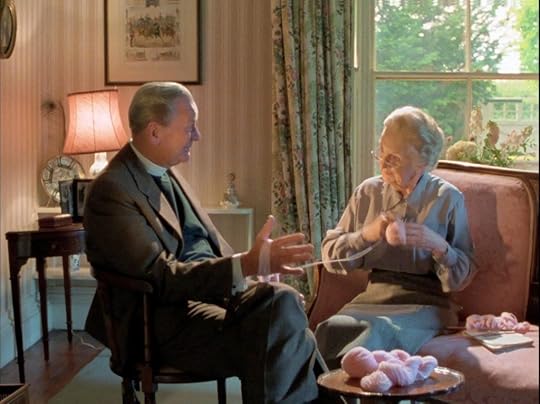
(Miss Marple. Köt és figyel.)
No most egy novellában látszik igazán, mi a mystery crime veleje: a rejtvény. Ezekben a történetekben legfeljebb jelzésszerűen van jelen a társadalmi tagozódás, a jelzésszerűnél csak egy leheletnyivel több bennük a jellemrajz – és mivel mindezek le vannak csupaszítva a szerkezetről, világos, mi is ez az egész: szimpla társasjáték szerző és olvasó részvételével. Ez a kötet kétharmadát elfoglaló elbeszélésfüzérben leplezetlenül ki is van téve: van egy csokor decens angol úriasszony és úriember, akik teázás közben bűneseteket dobnak be a közösbe, amiket aztán igyekeznek megfejteni. Mondom, színtiszta társasjáték, amiben lelkes amatőrök rendőrségesdit játszanak. (Az más kérdés, hogy mivel a decens egyének között ott ül bizonyos Miss Marple is, ezért sok esélyük a többieknek nincs – mintha én állnék le Messivel dekázni, vagy kihívnám zsákolási versenyre LeBron Jamest.) Ilyen erővel Activity-zhetnének is. És most lelki szemeim előtt meg is jelent egy elfeledett Agatha Christie-kézirat, amiben az írónő mérsékelten tiszta tudatállapotban megírja, ahogy a nyugalmazott rendőrkapitány megpróbálja elmutogatni az „Indiana Jones és a Végzet Temploma” című filmet, és a csattanó: a kertész találja ki.
Különben az elbeszélés-forma arra is ráébresztett, hogy Miss Marple (akit eddig sokkal jobban kedveltem a tojásfejű belgánál) engem picit idegesít. Az egy dolog, hogy ha egy kifejezetten otthonülő öregasszony testvérek között is 180-200 életellenes bűncselekménnyel kerül közvetlen kapcsolatba, akkor nem lehet túl jó vibe-ja, én kerülném. Azon is túlteszem magam, hogy a kötögetésen és a gyilkosságok felgöngyölítésén kívül kedvenc hobbija az álszerénykedés és a tapasztalathiányos (magyarul: nála fiatalabb) emberek ekézése. De ezt a kötetet olvasva arra is rá kellett jönnöm, hogy az ő nyomozási módszere tulajdonképpen a homeopátia. Eszébe jut egy eset, ami hasonlít a szóban forgó ügyre, és ebből levonja a következtetést, hogy akkor a megoldás is ugyanaz. Értjük a logikai bakugrást: hasonló, tehát ugyanaz. Ami a dühítő: hogy a végén még igaza is van. Nem annyira a szürkeállomány dolgozik ilyenkor, hanem az intuíció. Persze mondhatjuk erre, hogy ez az intuíció csak egy nagyon is létező, csak épp a felszín alatt zajló gondolkodási folyamat megjelenési formája, és valóban, Christie a Miss Marple-regényekben jobban ki is domborítja ezt – de az elbeszélésekben, nyilván terjedelmi okokból, néha csak a puszta benyomás marad. Miss Marple kötögetés közben felnéz, és egyszerűen tudja, hogy ki a gyilkos. Mert emlékezteti megboldogult Henry nagybácsijára, aki tíz éve egy esős vasárnapon… blablabla, blablabla.
Ha mindebből valaki azt a következtetést vonná le, hogy nekem nem tetszett ez a kötet, akkor téved – mondhatnám úgy is, hogy nem egy Miss Marple. Mert közben meg tetszett. Egy olyan rendezett atmoszférájú világot ábrázol, amit ugyan a vénkisasszonyok gonoszként írnak le, de valójában nekem nagyon is kellemesnek tűnik. Talán mert ilyen kis madárcsontú szuperhősök dolgoznak azon, hogy ha kizökkent az idő, helyre tolják azt.
(Miss Marple. Köt és figyel.)
No most egy novellában látszik igazán, mi a mystery crime veleje: a rejtvény. Ezekben a történetekben legfeljebb jelzésszerűen van jelen a társadalmi tagozódás, a jelzésszerűnél csak egy leheletnyivel több bennük a jellemrajz – és mivel mindezek le vannak csupaszítva a szerkezetről, világos, mi is ez az egész: szimpla társasjáték szerző és olvasó részvételével. Ez a kötet kétharmadát elfoglaló elbeszélésfüzérben leplezetlenül ki is van téve: van egy csokor decens angol úriasszony és úriember, akik teázás közben bűneseteket dobnak be a közösbe, amiket aztán igyekeznek megfejteni. Mondom, színtiszta társasjáték, amiben lelkes amatőrök rendőrségesdit játszanak. (Az más kérdés, hogy mivel a decens egyének között ott ül bizonyos Miss Marple is, ezért sok esélyük a többieknek nincs – mintha én állnék le Messivel dekázni, vagy kihívnám zsákolási versenyre LeBron Jamest.) Ilyen erővel Activity-zhetnének is. És most lelki szemeim előtt meg is jelent egy elfeledett Agatha Christie-kézirat, amiben az írónő mérsékelten tiszta tudatállapotban megírja, ahogy a nyugalmazott rendőrkapitány megpróbálja elmutogatni az „Indiana Jones és a Végzet Temploma” című filmet, és a csattanó: a kertész találja ki.
Különben az elbeszélés-forma arra is ráébresztett, hogy Miss Marple (akit eddig sokkal jobban kedveltem a tojásfejű belgánál) engem picit idegesít. Az egy dolog, hogy ha egy kifejezetten otthonülő öregasszony testvérek között is 180-200 életellenes bűncselekménnyel kerül közvetlen kapcsolatba, akkor nem lehet túl jó vibe-ja, én kerülném. Azon is túlteszem magam, hogy a kötögetésen és a gyilkosságok felgöngyölítésén kívül kedvenc hobbija az álszerénykedés és a tapasztalathiányos (magyarul: nála fiatalabb) emberek ekézése. De ezt a kötetet olvasva arra is rá kellett jönnöm, hogy az ő nyomozási módszere tulajdonképpen a homeopátia. Eszébe jut egy eset, ami hasonlít a szóban forgó ügyre, és ebből levonja a következtetést, hogy akkor a megoldás is ugyanaz. Értjük a logikai bakugrást: hasonló, tehát ugyanaz. Ami a dühítő: hogy a végén még igaza is van. Nem annyira a szürkeállomány dolgozik ilyenkor, hanem az intuíció. Persze mondhatjuk erre, hogy ez az intuíció csak egy nagyon is létező, csak épp a felszín alatt zajló gondolkodási folyamat megjelenési formája, és valóban, Christie a Miss Marple-regényekben jobban ki is domborítja ezt – de az elbeszélésekben, nyilván terjedelmi okokból, néha csak a puszta benyomás marad. Miss Marple kötögetés közben felnéz, és egyszerűen tudja, hogy ki a gyilkos. Mert emlékezteti megboldogult Henry nagybácsijára, aki tíz éve egy esős vasárnapon… blablabla, blablabla.
Ha mindebből valaki azt a következtetést vonná le, hogy nekem nem tetszett ez a kötet, akkor téved – mondhatnám úgy is, hogy nem egy Miss Marple. Mert közben meg tetszett. Egy olyan rendezett atmoszférájú világot ábrázol, amit ugyan a vénkisasszonyok gonoszként írnak le, de valójában nekem nagyon is kellemesnek tűnik. Talán mert ilyen kis madárcsontú szuperhősök dolgoznak azon, hogy ha kizökkent az idő, helyre tolják azt.

March 6, 2014
Agatha Christie is the most widely published author of all time, outsold only by the Bible and Shakespeare. Her books have sold more than a billion copies in English and another billion in a hundred foreign languages.
I don't know about you, but I think that's a pretty impressive back cover blurb.
This complete collection of Miss Marple stories is my first experience with the famous spinster/amateur sleuth, and it was enjoyable, even if the long time St. Mary Mead's resident didn't stack up to Sherlock Holmes in my mind. Aunt Jane is quite a character nonetheless, and I can understand her appeal both when the stories where released and even now.
Bottom line: a nice collection of classic mystery shorts, which will most likely appeal to mystery fans, but particularly those who enjoy Christie's many other works.

July 8, 2011
Miss Marple: The Complete Short Stories (1985) by Agatha Christie (all stories originally published 1960 or earlier). This collection includes all the Miss Marple stories from The Thirteen Problems, The Regatta Mystery, Three Blind Mice, and Double Sin. The first of a set of stories centered around Miss Marple, her nephew, and some friends who comprise the "Tuesday Night Club"--a gathering where each member submits the story of mystery to which only they know the answer. The others are supposed to try and figure out the answer. Of course, Miss Marple outshines them all. Later stories show her involved in mysteries as they happen to folks in St. Mary Mead and to her friends in other villages. A very nice, comfortable little collection. ★★★
"The Tuesday Night Club": Here Sir Henry Clithering tells the story of poisoning. Three people sat down to a dinner and it seems that all three ate the same things. But only one of them dies of arsenic poisoning (or even gets sick). How was it done? And who did it? Miss Marple knows.
"The Idol House of Astarte": Dr. Pender takes center stage next with a tale of a seemingly impossible murder cloaked with a bit of mysticism. The murder was committed on the night of a costume party near the grove of Astarte. The grove was on the estate of Sir Richard Haydon, a man who was rival of his cousin Eliot for the love of the beautiful Dianna Ashley. The grove contained a mysterious summer house which was rumored to have been a place where secret rites were held long ago. Diana decided to dress the part of Astarte--appearing in a mysterious glow in the summer house. The vision startled Sir Richard and he then stumbled to the ground. when the others reached him, he was dead from a knife wound...but there was no knife to be found.
"Ingots of Gold": Raymond West, Miss Marple's nephew and a famous author, tells of a visit at the home of his friend John Newman. Newman has started a search for a Spanish ship, which has been rumored to have sunk off the Cornish coast during the rout of the Spanish Armada--with a cargo of gold. Also in the vicinity Inspector Badgworth who is more interested in the recent sinking of the Otranto, a ship that most definitely did have gold ingots aboard but the gold has been stolen. Newman disappears and when he's found tied up in a hollow near the cliffs, he tells West and the Inspector that he ran afoul of the men who have absconded with the ingots. Can Miss Marple get to the bottom of this mystery?
"The Bloodstained Pavement": Joyce is the artist in the group and she tells a story that speaks to her artistic eye--noticing details that only an artist...or another woman like Miss Marple might see. Her story also takes place in Cornwall in a small coastal village where she had gone to paint. A couple comes to the same hotel as does a previous acquaintance of the husband's. The three arrange to meet at a nearby beach--the couple rowing to the sight and the other woman walking along the coast. Later, Joyce notices the wet bathing things hanging out to dry while she is painting and chatting with a man from the town. She's aghast when she sees that she has painted bloodstains on the pavement in front of the hotel. The man tells her a story of previous violence at the hotel and says that whenever someone sees the bloodstains, then a death will follow within 24 hours. Two days later, she reads in the paper that Margery (the wife of the pair) had disappeared while swimming in the sea at another location. A week later her body is found with a wound in the head. Was it just a fatal accident or was it murder?
"Motive v. Opportunity": Next up is the attorney Mr. Petherick. He tells the club about Simon Clode, a wealthy client who has long since passed on. At one time he had a granddaughter on whom he doted, but she died while young. Clode became more and more obsessed and depressed by her death and turned to a questionable spiritualist to contact his daughter in the afterlife. After several "conversations" with the little girl, he decides to leave Eurydice Spragg, the medium, everything he has to the disadvantage of his niece and two nephews. Mr. Petherick disapproved, but had no valid reason to prevent the short and to-the-point will from being witnessed and signed in his presence. After Clode died, everyone was surprised when the envelope containing this latest will was opened and the paper was blank. The club investigates, but it seems that those who had a motive to substitute a blank page had no opportunity and those who had an opportunity had no motive. Miss Marple sees straight through to the truth.
"The Thumbmark of St. Peter": Miss Marple tells the story of her niece Mabel who wed unwisely and soon regretted it--for her husband was a bit of bully and they quarreled often. After one particularly heated argument, the husband died mysteriously the next night. Small villages just can't resist gossip and soon rumors are flying round that Mabel has poisoned her husband. Mabel called upon her aunt to help her out of her mess. Miss Marple was able to discover that the man was indeed poisoned and the guilty party was soon identified.
"The Blue Geranium": This time the story-telling takes place around the table at the Bantrys. Arthur Bantry tells about his friend George Pritchard, who had a very irritable, semi-invalid wife with a fondness for psychics. Mrs. Pritchard consults Zarida, the last in a long line of such women, who gives her a dire warning: On the full moon, she must watch for the signs. A blue primrose means caution, a blue hollyhock means danger, and a blue geranium means death! Over the course of the moon's phases, the signs appear--on her floral wallpaper flowers that were never blue before suddenly change color. And on the morning she is found dead within her locked room, there is a blue geranium just above her bed.
"The Companion": Dr. Lloyd tells of two middle-aged women he saw when on a holiday (for his health), Miss Mary Barton and her companion Miss Amy Durant. He was sure that they were just the type of women that nothing exciting ever happened to. But he was wrong. The very next day Miss Barton is drowning and Miss Barton attempts to bring her ashore and save her. Dr. Lloyd appears on the scene and artificial respiration is unsuccessful. The next thing he knows, Miss Durant is dead too. She apparently committed suicide and left a note that seemed to indicate that she was remorseful for having caused Miss Barton's death. But there's more to the story...as Miss Marple knows.
"The Four Suspects": Sir Henry gives us another tale about Dr. Rosen who was instrumental in the downfall of a secret German organization. The doctor knew that eventually members of the group who had escaped punishment would seek him out and exact revenge, but he was satisfied that he had done the right thing and hoped to finish a research project before they got to him. He is found dead at the bottom of his staircase--possibly an accident, possibly not. The four members of his household fall under suspicion, but they all claim to have been out at the time (but no corroboration of their whereabouts). Miss Marple uses clues from the story and her own knowledge of gardens to point out the culprit.
"A Christmas Tragedy": Miss Marple relates the time she was certain that a man was going to kill his wife while they were all staying at the same hotel over the Christmas holidays. There were several "accidents" which could have been fatal. But when the wife is killed in what looks like a burglary gone wrong, the husband has a cast iron alibi. If Miss Marple hadn't noticed two key facts while on the scene, the murder might not have been solved.
"The Herb of Death": Mrs. Bantry takes her turn at presenting a puzzle for the group. She tells of a dinner party where fox gloves leaves were mixed in with sage and everyone at the dinner became ill. Everyone recovered except the ward of the host. The young woman died and it was initially thought that the leaves were simply mixed in by mistake. But Miss Marple spots the clues that prove murder...and correctly names the murderer as well.
"The Affair at the Bungalow": Jane Heiler, a beautiful actress, tells this story. She presents it as having happened to "a friend," but the others are quite sure that the story is Jane's own. While on tour with a play, she was called in by the police to be identified by a young man who claimed she had written a letter and requested his presence at a certain bungalow which belonged to another actress. He had met her there and then been drugged. A robbery had taken place at the bungalow and he is being held as a suspect. But when Jane arrives at the police station, the man says that she isn't the right woman. What really happened? Miss Marple knows...even though she says she doesn't while the group is all together.
"Death by Drowning": Rose Emmett has been found drowned in the river near St. Mary Mead. She was pregnant and her lover had refused to marry her so everyone thought she had killed herself. But Miss Marple knew she'd been murdered. When she hears that Sir Henry Clithering is in town for a visit, she asks him to investigate. She has no proof and doesn't think the local police will take her reasons seriously. She writes down the name of her suspect and asks Sir Henry to find a way to discover whether she's correct. When an apparently unshakeable alibi is produced, it begins to look as if Miss Marple has made her first mistake....but Christie fans know that can't be possible.
"Miss Marple Tells a Story": Mr. Petherick brings a man accused of murdering his wife to see Miss Marple. When the man sees the elderly sleuth, he's doubtful that she can help him, but Petherick convinces him to tell his story. Mr. Rhodes and his wife were staying at a hotel. She had gone to bed and he was working in the adjoining room. Only he and a chambermaid (who brought fresh towels) had access to the rooms and there are witnesses who can state that no one else came near the rooms. The case looks very black against Mr. Rhodes and he didn't impress the jury much at the inquest. But never fear...Miss Marple can prove his innocence if anyone can.
"Strange Jest": Two cousins, Edward Rossiter and Charmian Stroud are introduced to Miss Marple at a party. They become convinced to share a problem with the lady. It seems that their recently deceased uncle had always told them that they'd be well taken care of when he was gone. But when he died, they found that he had sold securities and withdrawn his money from the bank with no evidence as to what was done with it. He had talked a lot about gold and burying your treasures in the garden, so the pair had gone on a digging spree with no luck. After Miss Marple hears what happened on his deathbed, is taken to the house where he lived, and has a good look round, she's able to help the young people find their inheritance in an unlikely place. But then elderly men do sometimes like to have their little jokes.
"The Case of the Perfect Maid": Miss Marple's maid asks her mistress to help her cousin Gladys--also a maid. Though Gladys is a bit outspoken in her ways, she's an honest girl. But now there is a stain on her character. She had been working for the Misses Skinner and one of the ladies' brooches had gone missing. It was found but then, after a dish was broken, Gladys was given notice and now people are starting to talk. Miss Marple has barely begun to work when the Skinners find a paragon to replace Gladys...but all is not what it seems.
"The Case of the Caretaker": Miss Marple has had the flu and is still feeling rather peaked, so Dr. Haydock brings her a little puzzle to get her mind off her troubles. He has written up the details of mysterious death and wants to see if she can give him the solution. The story concerns the return of handsome Harry Laxton to the village of his childhood. The boy who was a bit of scapegrace has done well for himself and married a beautiful young woman of wealth. He takes over what's left of his childhood home--tears it down and builds a lovely house for his new bride. But the villagers can't give up the gossip about his past and there's one person who is very upset that the old house has been torn down. When tragedy strikes, who is behind it?
"Tape-Measure Murder": Mrs. Spenlow is late for her appointment with Miss Pollitt, the dressmaker. Miss Pollitt has been ringing and knocking at the door to no avail. Mrs. Spenlow's neighbor soon notices the commotion and comes to help--when Miss Hartnell tries to look in the windows, she discovers Mrs. Spenlow dead on the hearthrug. Everyone is convinced that the husband did it, after all the man showed so little emotion when he was told his wife was dead. And what kind of alibi is it to say that he'd received a phone call from Miss Marple asking him to come to her cottage and then the lady wasn't home. Miss Marple is certain he's telling the truth, but how to prove it?
"Greenshaw's Folly": Raymond West winds up witnessing an old lady's will and finding out that she needs someone to compile her grandfather's diaries for publication. He suggests his niece Louise for the job and then, after only two days at the lady's home at Greenshaw's Folly, she witnesses a murder that couldn't have happened. Miss Marple is able find out how it was done and by whom.
"Sanctuary": Diana "Bunch" Harmon is intent on placing her flower arrangements in the church when she finds a dying man on the chancel steps. The man tries to speak, but is only able to say "sanctuary" and something that sounds like her husband, the vicar's name Julian. She gets help quickly, but nothing can be done to save the man who was shot. His relatives arrive--insist that he'd been depressed lately and must have killed himself and seem more concerned about collecting his possessions (especially his coat) than they are about the man's death. Bunch can't get his last words out of her head and she takes the problem straight to Miss Marple. The two women find themselves in the middle of a rather exciting adventure and eventually discover why the man was seeking sanctuary.
First posted on my blog My Reader's Block.
"The Tuesday Night Club": Here Sir Henry Clithering tells the story of poisoning. Three people sat down to a dinner and it seems that all three ate the same things. But only one of them dies of arsenic poisoning (or even gets sick). How was it done? And who did it? Miss Marple knows.
"The Idol House of Astarte": Dr. Pender takes center stage next with a tale of a seemingly impossible murder cloaked with a bit of mysticism. The murder was committed on the night of a costume party near the grove of Astarte. The grove was on the estate of Sir Richard Haydon, a man who was rival of his cousin Eliot for the love of the beautiful Dianna Ashley. The grove contained a mysterious summer house which was rumored to have been a place where secret rites were held long ago. Diana decided to dress the part of Astarte--appearing in a mysterious glow in the summer house. The vision startled Sir Richard and he then stumbled to the ground. when the others reached him, he was dead from a knife wound...but there was no knife to be found.
"Ingots of Gold": Raymond West, Miss Marple's nephew and a famous author, tells of a visit at the home of his friend John Newman. Newman has started a search for a Spanish ship, which has been rumored to have sunk off the Cornish coast during the rout of the Spanish Armada--with a cargo of gold. Also in the vicinity Inspector Badgworth who is more interested in the recent sinking of the Otranto, a ship that most definitely did have gold ingots aboard but the gold has been stolen. Newman disappears and when he's found tied up in a hollow near the cliffs, he tells West and the Inspector that he ran afoul of the men who have absconded with the ingots. Can Miss Marple get to the bottom of this mystery?
"The Bloodstained Pavement": Joyce is the artist in the group and she tells a story that speaks to her artistic eye--noticing details that only an artist...or another woman like Miss Marple might see. Her story also takes place in Cornwall in a small coastal village where she had gone to paint. A couple comes to the same hotel as does a previous acquaintance of the husband's. The three arrange to meet at a nearby beach--the couple rowing to the sight and the other woman walking along the coast. Later, Joyce notices the wet bathing things hanging out to dry while she is painting and chatting with a man from the town. She's aghast when she sees that she has painted bloodstains on the pavement in front of the hotel. The man tells her a story of previous violence at the hotel and says that whenever someone sees the bloodstains, then a death will follow within 24 hours. Two days later, she reads in the paper that Margery (the wife of the pair) had disappeared while swimming in the sea at another location. A week later her body is found with a wound in the head. Was it just a fatal accident or was it murder?
"Motive v. Opportunity": Next up is the attorney Mr. Petherick. He tells the club about Simon Clode, a wealthy client who has long since passed on. At one time he had a granddaughter on whom he doted, but she died while young. Clode became more and more obsessed and depressed by her death and turned to a questionable spiritualist to contact his daughter in the afterlife. After several "conversations" with the little girl, he decides to leave Eurydice Spragg, the medium, everything he has to the disadvantage of his niece and two nephews. Mr. Petherick disapproved, but had no valid reason to prevent the short and to-the-point will from being witnessed and signed in his presence. After Clode died, everyone was surprised when the envelope containing this latest will was opened and the paper was blank. The club investigates, but it seems that those who had a motive to substitute a blank page had no opportunity and those who had an opportunity had no motive. Miss Marple sees straight through to the truth.
"The Thumbmark of St. Peter": Miss Marple tells the story of her niece Mabel who wed unwisely and soon regretted it--for her husband was a bit of bully and they quarreled often. After one particularly heated argument, the husband died mysteriously the next night. Small villages just can't resist gossip and soon rumors are flying round that Mabel has poisoned her husband. Mabel called upon her aunt to help her out of her mess. Miss Marple was able to discover that the man was indeed poisoned and the guilty party was soon identified.
"The Blue Geranium": This time the story-telling takes place around the table at the Bantrys. Arthur Bantry tells about his friend George Pritchard, who had a very irritable, semi-invalid wife with a fondness for psychics. Mrs. Pritchard consults Zarida, the last in a long line of such women, who gives her a dire warning: On the full moon, she must watch for the signs. A blue primrose means caution, a blue hollyhock means danger, and a blue geranium means death! Over the course of the moon's phases, the signs appear--on her floral wallpaper flowers that were never blue before suddenly change color. And on the morning she is found dead within her locked room, there is a blue geranium just above her bed.
"The Companion": Dr. Lloyd tells of two middle-aged women he saw when on a holiday (for his health), Miss Mary Barton and her companion Miss Amy Durant. He was sure that they were just the type of women that nothing exciting ever happened to. But he was wrong. The very next day Miss Barton is drowning and Miss Barton attempts to bring her ashore and save her. Dr. Lloyd appears on the scene and artificial respiration is unsuccessful. The next thing he knows, Miss Durant is dead too. She apparently committed suicide and left a note that seemed to indicate that she was remorseful for having caused Miss Barton's death. But there's more to the story...as Miss Marple knows.
"The Four Suspects": Sir Henry gives us another tale about Dr. Rosen who was instrumental in the downfall of a secret German organization. The doctor knew that eventually members of the group who had escaped punishment would seek him out and exact revenge, but he was satisfied that he had done the right thing and hoped to finish a research project before they got to him. He is found dead at the bottom of his staircase--possibly an accident, possibly not. The four members of his household fall under suspicion, but they all claim to have been out at the time (but no corroboration of their whereabouts). Miss Marple uses clues from the story and her own knowledge of gardens to point out the culprit.
"A Christmas Tragedy": Miss Marple relates the time she was certain that a man was going to kill his wife while they were all staying at the same hotel over the Christmas holidays. There were several "accidents" which could have been fatal. But when the wife is killed in what looks like a burglary gone wrong, the husband has a cast iron alibi. If Miss Marple hadn't noticed two key facts while on the scene, the murder might not have been solved.
"The Herb of Death": Mrs. Bantry takes her turn at presenting a puzzle for the group. She tells of a dinner party where fox gloves leaves were mixed in with sage and everyone at the dinner became ill. Everyone recovered except the ward of the host. The young woman died and it was initially thought that the leaves were simply mixed in by mistake. But Miss Marple spots the clues that prove murder...and correctly names the murderer as well.
"The Affair at the Bungalow": Jane Heiler, a beautiful actress, tells this story. She presents it as having happened to "a friend," but the others are quite sure that the story is Jane's own. While on tour with a play, she was called in by the police to be identified by a young man who claimed she had written a letter and requested his presence at a certain bungalow which belonged to another actress. He had met her there and then been drugged. A robbery had taken place at the bungalow and he is being held as a suspect. But when Jane arrives at the police station, the man says that she isn't the right woman. What really happened? Miss Marple knows...even though she says she doesn't while the group is all together.
"Death by Drowning": Rose Emmett has been found drowned in the river near St. Mary Mead. She was pregnant and her lover had refused to marry her so everyone thought she had killed herself. But Miss Marple knew she'd been murdered. When she hears that Sir Henry Clithering is in town for a visit, she asks him to investigate. She has no proof and doesn't think the local police will take her reasons seriously. She writes down the name of her suspect and asks Sir Henry to find a way to discover whether she's correct. When an apparently unshakeable alibi is produced, it begins to look as if Miss Marple has made her first mistake....but Christie fans know that can't be possible.
"Miss Marple Tells a Story": Mr. Petherick brings a man accused of murdering his wife to see Miss Marple. When the man sees the elderly sleuth, he's doubtful that she can help him, but Petherick convinces him to tell his story. Mr. Rhodes and his wife were staying at a hotel. She had gone to bed and he was working in the adjoining room. Only he and a chambermaid (who brought fresh towels) had access to the rooms and there are witnesses who can state that no one else came near the rooms. The case looks very black against Mr. Rhodes and he didn't impress the jury much at the inquest. But never fear...Miss Marple can prove his innocence if anyone can.
"Strange Jest": Two cousins, Edward Rossiter and Charmian Stroud are introduced to Miss Marple at a party. They become convinced to share a problem with the lady. It seems that their recently deceased uncle had always told them that they'd be well taken care of when he was gone. But when he died, they found that he had sold securities and withdrawn his money from the bank with no evidence as to what was done with it. He had talked a lot about gold and burying your treasures in the garden, so the pair had gone on a digging spree with no luck. After Miss Marple hears what happened on his deathbed, is taken to the house where he lived, and has a good look round, she's able to help the young people find their inheritance in an unlikely place. But then elderly men do sometimes like to have their little jokes.
"The Case of the Perfect Maid": Miss Marple's maid asks her mistress to help her cousin Gladys--also a maid. Though Gladys is a bit outspoken in her ways, she's an honest girl. But now there is a stain on her character. She had been working for the Misses Skinner and one of the ladies' brooches had gone missing. It was found but then, after a dish was broken, Gladys was given notice and now people are starting to talk. Miss Marple has barely begun to work when the Skinners find a paragon to replace Gladys...but all is not what it seems.
"The Case of the Caretaker": Miss Marple has had the flu and is still feeling rather peaked, so Dr. Haydock brings her a little puzzle to get her mind off her troubles. He has written up the details of mysterious death and wants to see if she can give him the solution. The story concerns the return of handsome Harry Laxton to the village of his childhood. The boy who was a bit of scapegrace has done well for himself and married a beautiful young woman of wealth. He takes over what's left of his childhood home--tears it down and builds a lovely house for his new bride. But the villagers can't give up the gossip about his past and there's one person who is very upset that the old house has been torn down. When tragedy strikes, who is behind it?
"Tape-Measure Murder": Mrs. Spenlow is late for her appointment with Miss Pollitt, the dressmaker. Miss Pollitt has been ringing and knocking at the door to no avail. Mrs. Spenlow's neighbor soon notices the commotion and comes to help--when Miss Hartnell tries to look in the windows, she discovers Mrs. Spenlow dead on the hearthrug. Everyone is convinced that the husband did it, after all the man showed so little emotion when he was told his wife was dead. And what kind of alibi is it to say that he'd received a phone call from Miss Marple asking him to come to her cottage and then the lady wasn't home. Miss Marple is certain he's telling the truth, but how to prove it?
"Greenshaw's Folly": Raymond West winds up witnessing an old lady's will and finding out that she needs someone to compile her grandfather's diaries for publication. He suggests his niece Louise for the job and then, after only two days at the lady's home at Greenshaw's Folly, she witnesses a murder that couldn't have happened. Miss Marple is able find out how it was done and by whom.
"Sanctuary": Diana "Bunch" Harmon is intent on placing her flower arrangements in the church when she finds a dying man on the chancel steps. The man tries to speak, but is only able to say "sanctuary" and something that sounds like her husband, the vicar's name Julian. She gets help quickly, but nothing can be done to save the man who was shot. His relatives arrive--insist that he'd been depressed lately and must have killed himself and seem more concerned about collecting his possessions (especially his coat) than they are about the man's death. Bunch can't get his last words out of her head and she takes the problem straight to Miss Marple. The two women find themselves in the middle of a rather exciting adventure and eventually discover why the man was seeking sanctuary.
First posted on my blog My Reader's Block.

January 30, 2012
Rated high on Fan shelf only for the admirable clever old Miss Jane Marple, beloved of page and screen, here in 20 from The Tuesday Club, Regatta, Three Blind Mice aka Mousetrap, Double Sin and other stories. Black lace cap on "piled up masses of snowy hair, matching "mittens" gloves, erect alert posture, keen "faded blue eyes", spots of pink blushing her cheeks at some of the secrets hidden behind quiet village facade. Jane knits quietly, observes carefully, remembers long, applies human behaviors universal from small inconveniences to serious crimes, thwarts plots, solves, and occasionally prevents, murders.
Tuesday weekly visitors present six early experiences, recently solved usually by confession of participants: Sir Henry Clithering ex-Commissioner of Scotland Yard, nephew writer Raymond West, artist Joyce Lemprière, elderly clergyman Dr Pender, wizened bespectacled solicitor Mr Petherick. Six are told at a dinner party held by Colonel and Dolly Bantry, where their houseguest Sir Henry asks they invite Jane. The rest are neighbors, acquaintances, nephews or godchildren who bring her their problems. Originally "The Thirteen Problems (Miss Marple, #2)", all are contained in "Miss Marple: The Complete Short Stories" set of 20. ("The" prefaces all but 3,5,10,14.) http://www.goodreads.com/review/show/...
I Tuesday Club
1 "Tuesday Night Club" first case is from retired Scotland Yard Commissioner Sir Henry Clithering. Jane's solution is specific to the era of the incident. Blotting paper recovers letter by extravagant rakish chemical salesman Mr Jones, about "wife, dead, hundreds and thousands".
2 "Idol House of Astarte" is site of costume party attended by clergyman (honorific Dr) Pender. Lovely flirting Diana poses in a garden grove folly, cries she is goddess Astarte, her touch is death. Her rich fiance Richard Haydon falls at her feet, stabbed to death, no trace of weapon. Next night, heir Elliot wounded at same place, knife left from unknown assailant.
3 "Ingots of Gold" are sought by John Newman, acquaintance who invites Jane's nephew writer Raymond West for Cornwall Whitsuntide week. West wakes to sight of gardener, host missing. Newman says he was knocked unconscious and tied up by smugglers, pointing to lorry tyre mark from local inn landlord ex-con Kelvin.
4 "Bloodstained Pavement" is subconsciously painted in beneath red bathing suit, by artist Joyce Lemprière at Cornish seaside inn. After husband Denis seen meeting gaudily painted red-dressed Carol, his mousy wife vanishes swimming.
5 "Motive v. Opportunity" is by narrated by solicitor Mr Petherick. Despite deserving nephew and nieces, the old client Simon Clode mourned a grand-daughter, and Petherick witnessed him write a new will designating spiritualist Spragge as main beneficiary. Months later, the sealed envelope from a safe contained blank paper.
6 "Thumbmark of St Peter" is a dark spot on a fish, seen by Jane as the answer to her prayer 10-15 years ago. Her niece Mabel had bought arsenic and quarrelled with violent husband Geoffrey Denman, who had "insanity in the family", seen in his live-in father, still strong except for eyes and brain. Geoff suddenly died in stomach agony, delerious, rambling about "a pile o' fish", on his father's nurse's night out. Poisoning was attributed to mushrooms, then to his wife.
7 "Blue Geranium" on the wallpaper changed color and apparently scared gullible hypochondriac Mary Pritchard to death. The instigating fortune-teller Zarida, claimed wrongly by current nurse Copling to be referred by previous nurse pretty Carstairs, vanished. Dinner hosts Dolly and Colonel Bantry defend stalwart husband George. Jane ensures George has not married Carstairs.
8 "Companion", Amy Durrant, rescued by employer Mary Barton, could not be revived from drowning by Dr Lloyd, long ago practicing on Grand Canary Island, now grizzled village practitioner. Mary acted suspiciously and later drowned herself. Dr Lloyd says one lady was plumper, confirms the survivor gained weight, and no suicide's body found.
9 "Four Suspects" were all out of each other's sight, says Sir Henry, including Charles Templeton, his own agent, protecting retired spy. Dr Rosen feared murder, had fatal fall down stairs. Niece Greta was planting bulbs. Cook for 30 years Gertrud was in the kitchen. Similarly-faithful gardener Dobbs was in shed on elevenses. The assassin's go signal must have been in the morning letters or seed catalog. Letter addressed to Rosen with capitalized names plus, oddly, Honesty, he had tossed onto table, claiming not to know signature Georgina.
10 "A Christmas Tragedy" is at a Keston Spa Hydro, where patients drink waters for health. Jane tried to warn rich besotted wife Gladys Sanders that her husband was dangerous; the situation is so familiar. The maid Mary died first from septic (infected - before penicillin) finger. Jane finds the wife's body, face-down, ice-cold, and stops the husband from turning it over. When the police come, the hat has moved off the head, to the side, the husband alibied.
11 "Herb of Death" was foxglove picked with the sage by Sylvia, the very lovely but dim ward of rich Sir Ambrose, not that old but with a weak heart, guardian who opposed her fiance, but after a year had given in. All the guests, including the Bantrys, narrator Dolly, fell ill; the girl died.
12 "Affair at the Bungalow" is burglary of jewels given by the owner to his mistress resident. A playwright is arrested, after being invited in by an imposter and supposed maid. Narrator, more beautiful than bright actress Jane Helier, confuses pseudonyms assigned for anonymity, and her tenses, and claims not to know the truth.
13 "Death by Drowning" of pregnant single tease Rose Emmott was murder. Jane knows who, and enlists Sir Henry visiting the Bantrys, to find proof for police. Dr Haydock saw body's arm bruises; lad Jimmy saw couple with wheelbarrow and heard Rose's former beau, Joe, whistling. Landlady Mrs Barrett claims boarder, big shy carpenter Joe, home building furniture, and says never mind knocking buggy, used to carry washing, not baby.
II Regatta
14 Miss Marple Tells a Story in a doddering distracting dithering manner. Sir Henry brings Mr Rhodes, accused of his hypochondriac hyperdramatic wife's murder. Found stabbed by her own stiletto paper-knife (also cut book pages), in locked room next door, the only visitor was a chambermaid bearing hot water bottle. When informed the wife had complained of threatening letters, Jane asks if any lone female guests shared their hotel, and if they can describe her servant who opened her door.
III Three Blind Mice aka The Mousetrap and other stories
15 Strange Jest - Eccentric bachelor great-great-uncle Mathew tapped his eye grinning on his deathbed. Actress Jane introduces sleuth Jane to stop heirs, engaged cousins Charmaine and Edward, from digging holes to find treasure.
16 Tape Measure Murder - Dressmaker Miss Politt finds Mrs Spenlow strangled. Victim was florist when married gardener after their first employer's jewels stolen, now enthused with redemptive religious fad. Stiff-lip second husband defended by Jane.
17 The Case of the Perfect Maid - Fake paragon maid Mary Higgins vanishes with jewels from malingering invalid Emily Skinner, her bluff sister Lavinia, and residents of all four flats in Old House.
18 The Case of the Caretaker - Dr Haydock brings Jane a story to solve from his niece Clarice Vane, friend of beautiful heiress, whose new husband village scapegrace Harry Laxton rebuilt Kingsdean. Louise died, thrown from horse scared by ex-caretaker Mrs Murgatroyd now in new cottage.
IV Double Sin and other stories
19 "Greenshaw's Folly" owner Miss Greenshaw invites sight-seeing Raymond and friend to tour inside, the library unused since her builder grandfather's time, full of diaries, and to witness her will designating as heir housekeeper Mrs Cresswell, permanently feuding with handsome gardener Alfred. Marple predicts murder. Louise, relative of Joan (Joyce in Tuesday Club), hires on to edit and transcribe grandfather diaries, but on her second day, sees her employer die from an arrow to the throat, gasping "he shot me".
20 "Sanctuary" is the dying word from a gut-gun-shot victim the vicar's wife finds in the church. His apparent sister and her husband, the Eccles claim his coat and watch engraved Walter, but call him Bill, oops, William. Suspicious, Diana "Bunch" Harmon consults her god-mother Marple, house-sitting in London for Raymond & Joan (Joyce in Tuesday Club). A cloakroom ticket, suitcase retrieval, theft and chase make this the most unusual and my favorite of the "bunch".
Tuesday weekly visitors present six early experiences, recently solved usually by confession of participants: Sir Henry Clithering ex-Commissioner of Scotland Yard, nephew writer Raymond West, artist Joyce Lemprière, elderly clergyman Dr Pender, wizened bespectacled solicitor Mr Petherick. Six are told at a dinner party held by Colonel and Dolly Bantry, where their houseguest Sir Henry asks they invite Jane. The rest are neighbors, acquaintances, nephews or godchildren who bring her their problems. Originally "The Thirteen Problems (Miss Marple, #2)", all are contained in "Miss Marple: The Complete Short Stories" set of 20. ("The" prefaces all but 3,5,10,14.) http://www.goodreads.com/review/show/...
I Tuesday Club
1 "Tuesday Night Club" first case is from retired Scotland Yard Commissioner Sir Henry Clithering. Jane's solution is specific to the era of the incident. Blotting paper recovers letter by extravagant rakish chemical salesman Mr Jones, about "wife, dead, hundreds and thousands".
2 "Idol House of Astarte" is site of costume party attended by clergyman (honorific Dr) Pender. Lovely flirting Diana poses in a garden grove folly, cries she is goddess Astarte, her touch is death. Her rich fiance Richard Haydon falls at her feet, stabbed to death, no trace of weapon. Next night, heir Elliot wounded at same place, knife left from unknown assailant.
3 "Ingots of Gold" are sought by John Newman, acquaintance who invites Jane's nephew writer Raymond West for Cornwall Whitsuntide week. West wakes to sight of gardener, host missing. Newman says he was knocked unconscious and tied up by smugglers, pointing to lorry tyre mark from local inn landlord ex-con Kelvin.
4 "Bloodstained Pavement" is subconsciously painted in beneath red bathing suit, by artist Joyce Lemprière at Cornish seaside inn. After husband Denis seen meeting gaudily painted red-dressed Carol, his mousy wife vanishes swimming.
5 "Motive v. Opportunity" is by narrated by solicitor Mr Petherick. Despite deserving nephew and nieces, the old client Simon Clode mourned a grand-daughter, and Petherick witnessed him write a new will designating spiritualist Spragge as main beneficiary. Months later, the sealed envelope from a safe contained blank paper.
6 "Thumbmark of St Peter" is a dark spot on a fish, seen by Jane as the answer to her prayer 10-15 years ago. Her niece Mabel had bought arsenic and quarrelled with violent husband Geoffrey Denman, who had "insanity in the family", seen in his live-in father, still strong except for eyes and brain. Geoff suddenly died in stomach agony, delerious, rambling about "a pile o' fish", on his father's nurse's night out. Poisoning was attributed to mushrooms, then to his wife.
7 "Blue Geranium" on the wallpaper changed color and apparently scared gullible hypochondriac Mary Pritchard to death. The instigating fortune-teller Zarida, claimed wrongly by current nurse Copling to be referred by previous nurse pretty Carstairs, vanished. Dinner hosts Dolly and Colonel Bantry defend stalwart husband George. Jane ensures George has not married Carstairs.
8 "Companion", Amy Durrant, rescued by employer Mary Barton, could not be revived from drowning by Dr Lloyd, long ago practicing on Grand Canary Island, now grizzled village practitioner. Mary acted suspiciously and later drowned herself. Dr Lloyd says one lady was plumper, confirms the survivor gained weight, and no suicide's body found.
9 "Four Suspects" were all out of each other's sight, says Sir Henry, including Charles Templeton, his own agent, protecting retired spy. Dr Rosen feared murder, had fatal fall down stairs. Niece Greta was planting bulbs. Cook for 30 years Gertrud was in the kitchen. Similarly-faithful gardener Dobbs was in shed on elevenses. The assassin's go signal must have been in the morning letters or seed catalog. Letter addressed to Rosen with capitalized names plus, oddly, Honesty, he had tossed onto table, claiming not to know signature Georgina.
10 "A Christmas Tragedy" is at a Keston Spa Hydro, where patients drink waters for health. Jane tried to warn rich besotted wife Gladys Sanders that her husband was dangerous; the situation is so familiar. The maid Mary died first from septic (infected - before penicillin) finger. Jane finds the wife's body, face-down, ice-cold, and stops the husband from turning it over. When the police come, the hat has moved off the head, to the side, the husband alibied.
11 "Herb of Death" was foxglove picked with the sage by Sylvia, the very lovely but dim ward of rich Sir Ambrose, not that old but with a weak heart, guardian who opposed her fiance, but after a year had given in. All the guests, including the Bantrys, narrator Dolly, fell ill; the girl died.
12 "Affair at the Bungalow" is burglary of jewels given by the owner to his mistress resident. A playwright is arrested, after being invited in by an imposter and supposed maid. Narrator, more beautiful than bright actress Jane Helier, confuses pseudonyms assigned for anonymity, and her tenses, and claims not to know the truth.
13 "Death by Drowning" of pregnant single tease Rose Emmott was murder. Jane knows who, and enlists Sir Henry visiting the Bantrys, to find proof for police. Dr Haydock saw body's arm bruises; lad Jimmy saw couple with wheelbarrow and heard Rose's former beau, Joe, whistling. Landlady Mrs Barrett claims boarder, big shy carpenter Joe, home building furniture, and says never mind knocking buggy, used to carry washing, not baby.
II Regatta
14 Miss Marple Tells a Story in a doddering distracting dithering manner. Sir Henry brings Mr Rhodes, accused of his hypochondriac hyperdramatic wife's murder. Found stabbed by her own stiletto paper-knife (also cut book pages), in locked room next door, the only visitor was a chambermaid bearing hot water bottle. When informed the wife had complained of threatening letters, Jane asks if any lone female guests shared their hotel, and if they can describe her servant who opened her door.
III Three Blind Mice aka The Mousetrap and other stories
15 Strange Jest - Eccentric bachelor great-great-uncle Mathew tapped his eye grinning on his deathbed. Actress Jane introduces sleuth Jane to stop heirs, engaged cousins Charmaine and Edward, from digging holes to find treasure.
16 Tape Measure Murder - Dressmaker Miss Politt finds Mrs Spenlow strangled. Victim was florist when married gardener after their first employer's jewels stolen, now enthused with redemptive religious fad. Stiff-lip second husband defended by Jane.
17 The Case of the Perfect Maid - Fake paragon maid Mary Higgins vanishes with jewels from malingering invalid Emily Skinner, her bluff sister Lavinia, and residents of all four flats in Old House.
18 The Case of the Caretaker - Dr Haydock brings Jane a story to solve from his niece Clarice Vane, friend of beautiful heiress, whose new husband village scapegrace Harry Laxton rebuilt Kingsdean. Louise died, thrown from horse scared by ex-caretaker Mrs Murgatroyd now in new cottage.
IV Double Sin and other stories
19 "Greenshaw's Folly" owner Miss Greenshaw invites sight-seeing Raymond and friend to tour inside, the library unused since her builder grandfather's time, full of diaries, and to witness her will designating as heir housekeeper Mrs Cresswell, permanently feuding with handsome gardener Alfred. Marple predicts murder. Louise, relative of Joan (Joyce in Tuesday Club), hires on to edit and transcribe grandfather diaries, but on her second day, sees her employer die from an arrow to the throat, gasping "he shot me".
20 "Sanctuary" is the dying word from a gut-gun-shot victim the vicar's wife finds in the church. His apparent sister and her husband, the Eccles claim his coat and watch engraved Walter, but call him Bill, oops, William. Suspicious, Diana "Bunch" Harmon consults her god-mother Marple, house-sitting in London for Raymond & Joan (Joyce in Tuesday Club). A cloakroom ticket, suitcase retrieval, theft and chase make this the most unusual and my favorite of the "bunch".

May 9, 2024
Mini-Me Marples
Review of the William Morrow Kindle eBook (November 5, 2013) of the collection first released by Penguin Putnam & Dodd Mead (1985) which collected 20 short stories originally released 1932 (13), 1939 (1), 1950 (4), and 1961 (2).
The first 13 stories here were released as the first Miss Marple collection The Thirteen Problems (1932) aka The Tuesday Night Club which I already reviewed here. I won't repeat those summaries here. The other 7 stories in this anthology are:
14. Miss Marple Tells a Story (originally in The Regatta Mystery and Other Stories) (1939) Miss Marple tells her nephew Raymond and his wife Joan about a time when she helped solve the murder of a Mrs. Rhodes in which Mr. Rhodes had been the prime suspect.
15. Strange Jest (originally in Three Blind Mice and Other Stories) (1950) Miss Marple helps her friends who are seeking a buried treasure.
16. The Case of the Perfect Maid (same as 15.) Miss Marple helps to clear the name of Gladys, a maid who had been dismissed on the suspicion of stealing a brooch.
17. The Case of the Caretaker (same as 15.) Doctor Haydock brings a mystery to Miss Marple when she is at home recovering from the flu. Why is the caretaker of the childhood home of Mr. Laxton tormenting the new Mrs. Laxton when they move into the new house they have built over the old site.
18. Tape-Measure Murder (same as 15.) Dressmaker Mrs. Spenlow is found dead in her dress shop. Mr. Spenlow is a suspect but he insists that he was with Miss Marple, who denies it.
19. Greenshaw's Folly (originally from Double Sin and Other Stories (1961) Miss Marple becomes involved when her nephew Raymond West meets a Miss Greenshaw who is willing her oddly named house to her companion Miss Crenshaw, instead of her nephew. Then Miss Greenshaw is found shot dead by an arrow. Trivia Along with story #7 The Blue Geranium from The Thirteen Problems, this is the only Miss Marple short story adapted for the TV series Agatha Christie's Marple (2004-2013). Most of the episodes were based on the Miss Marple novels and a few were based on stories in which Miss Marple did not even appear originally.
20. Sanctuary (same as 19.) A man is found shot in a church by the vicar's wife Mrs. Bunch Harmon, a friend of Miss Marple. The man claims "sanctuary... sanctuary" before dying. Miss Marple helps to solve the mystery of who the man was and why he came to the church.
All of these were typically delightful Miss Marple stories, although being on the short side they didn't get into 5 territory. #19 had probably the most ingenious crime.
Review of the William Morrow Kindle eBook (November 5, 2013) of the collection first released by Penguin Putnam & Dodd Mead (1985) which collected 20 short stories originally released 1932 (13), 1939 (1), 1950 (4), and 1961 (2).
“Oh, yes,” said Raymond. “Murder is a speciality of hers.”
“But my dear, how intriguing. What do you really mean?”
“I mean just that,” said Raymond. He paraphrased: “Some commit murder, some get mixed-up in murders, others have murder thrust upon them. My Aunt Jane comes into the third category.”
The first 13 stories here were released as the first Miss Marple collection The Thirteen Problems (1932) aka The Tuesday Night Club which I already reviewed here. I won't repeat those summaries here. The other 7 stories in this anthology are:
14. Miss Marple Tells a Story (originally in The Regatta Mystery and Other Stories) (1939) Miss Marple tells her nephew Raymond and his wife Joan about a time when she helped solve the murder of a Mrs. Rhodes in which Mr. Rhodes had been the prime suspect.
15. Strange Jest (originally in Three Blind Mice and Other Stories) (1950) Miss Marple helps her friends who are seeking a buried treasure.
16. The Case of the Perfect Maid (same as 15.) Miss Marple helps to clear the name of Gladys, a maid who had been dismissed on the suspicion of stealing a brooch.
17. The Case of the Caretaker (same as 15.) Doctor Haydock brings a mystery to Miss Marple when she is at home recovering from the flu. Why is the caretaker of the childhood home of Mr. Laxton tormenting the new Mrs. Laxton when they move into the new house they have built over the old site.
18. Tape-Measure Murder (same as 15.) Dressmaker Mrs. Spenlow is found dead in her dress shop. Mr. Spenlow is a suspect but he insists that he was with Miss Marple, who denies it.
19. Greenshaw's Folly (originally from Double Sin and Other Stories (1961) Miss Marple becomes involved when her nephew Raymond West meets a Miss Greenshaw who is willing her oddly named house to her companion Miss Crenshaw, instead of her nephew. Then Miss Greenshaw is found shot dead by an arrow. Trivia Along with story #7 The Blue Geranium from The Thirteen Problems, this is the only Miss Marple short story adapted for the TV series Agatha Christie's Marple (2004-2013). Most of the episodes were based on the Miss Marple novels and a few were based on stories in which Miss Marple did not even appear originally.
20. Sanctuary (same as 19.) A man is found shot in a church by the vicar's wife Mrs. Bunch Harmon, a friend of Miss Marple. The man claims "sanctuary... sanctuary" before dying. Miss Marple helps to solve the mystery of who the man was and why he came to the church.
“Murder?” said Miss Marple.
“Yes,” said Bunch. “Murder. That’s why I came to you, darling.”
Bunch’s remark might have seemed incongruous to an ignorant listener, but in certain spheres Miss Marple had a reputation for dealing with murder.
All of these were typically delightful Miss Marple stories, although being on the short side they didn't get into 5 territory. #19 had probably the most ingenious crime.

February 5, 2019
I do believe this book is the perfect “one chapter before bed” read! The stories are engaging, without being stressful. Miss Marple will set all to rights before you turn off the light. This volume can settle you into 20 sleeps via ALL the Marple short stories Christie published. The stories are drawn from The Tuesday Club Murders, The Regatta Mystery, The Three Blind Mice and Double Sin, giving you the equivalent of many books previously published separately (these short stories are only the Miss Marple portion). I’m thrilled to have received it as a Christmas gift in 2018!
The mysteries have a historical feel about them now, as Christie’s England is decades behind us, but Miss Marple is timeless. She’s charming, elegant, humble, and smart. Some of the stories were familiar to me, and I think I’ve read them before, though they are still enjoyable. Others were new, and I will enjoy learning their particulars with repeat reading. When hearing of a murder in my community (which has not happened yet!), I imagine myself saying, “that reminds me of the actress, Jane Helier. I remember Miss Marple gave her wonderfully appropriate and insightful advice.” I wouldn’t mention The Affair at the Bungalow, because that would be overdoing it. I wouldn’t want others to find me either pretentious or rambling!
Miss Marple has always been my favorite. I remember reading her as a child, and trying to SOAK up the world, so I could understand people like Miss Marple understood them. I wanted to grow up to be like her – wise, helpful, comfortable, amiable and kind! Miss Marple is a great-grandmother whose mold I have longed to grow into, but her observations about human nature inform and enrich my mind through my years of aging. Maybe someday I’ll grow to her level!
I love this book as bedtime reading to the point that I’m now considering asking for Hercule Poirot The Complete Stories for Christmas 2019! Though I don’t have the affection for him that I do for Miss Marple, I can imagine it would also be a worthy addition to the home library. I do not make permanent shelf space for all Christies. Many I am content to check out from the library for variety and return. But my favorites, like The Complete Short Stories of Miss Marple, I am happy to own and (occasionally) share. Highly recommended!
Publishing Notes:
This title, Miss Marple: The Complete Stories contains all the short stories Agatha Christie published featuring the adorable Miss Marple. If you own this one, you do not need to buy any others (unless you want travel sizes under 350ish pages). This binding contains:
13 Stories of the Tuesday Club Murders
1 Story from the Regatta Mysteries
4 Stories from Three Blind Mice
2 Stories from Double Sin
The Tuesday Club Murders was also published as The Thirteen Problems.
Miss Marple's Final Cases features 6 Marple short stories and two other stories without her. All 6 of the Marple Stories are included here. The other two without her are not included.
Double Sin, The Regatta Mysteries, Christmas Pudding, and Three Blind Mice all feature short stories with a mix of detectives. All the Miss Marple stories are included in Miss Marple: The Complete Stories. If you would also like the Hercule Poirot (Agatha Christie's other famous sleuth), you can read Hercule Poirot: The Complete Stories OR Hercule Poirot's Casebook and then you will have all his titles as well.
Hercule Piorot, The Complete Stories, 1984
https://www.goodreads.com/review/show...
The Murder of Roger Ackroyd (my favorite novel of Agatha Christie, which happens to feature Poirot), Christie, 1926
https://www.goodreads.com/review/show...
For more Miss Marple by Agatha Christie, there are 12 novels featuring the spinster sleuth. See,
Miss Marple Omnibus, Vol 1
https://www.goodreads.com/review/show...
The mysteries have a historical feel about them now, as Christie’s England is decades behind us, but Miss Marple is timeless. She’s charming, elegant, humble, and smart. Some of the stories were familiar to me, and I think I’ve read them before, though they are still enjoyable. Others were new, and I will enjoy learning their particulars with repeat reading. When hearing of a murder in my community (which has not happened yet!), I imagine myself saying, “that reminds me of the actress, Jane Helier. I remember Miss Marple gave her wonderfully appropriate and insightful advice.” I wouldn’t mention The Affair at the Bungalow, because that would be overdoing it. I wouldn’t want others to find me either pretentious or rambling!
Miss Marple has always been my favorite. I remember reading her as a child, and trying to SOAK up the world, so I could understand people like Miss Marple understood them. I wanted to grow up to be like her – wise, helpful, comfortable, amiable and kind! Miss Marple is a great-grandmother whose mold I have longed to grow into, but her observations about human nature inform and enrich my mind through my years of aging. Maybe someday I’ll grow to her level!
I love this book as bedtime reading to the point that I’m now considering asking for Hercule Poirot The Complete Stories for Christmas 2019! Though I don’t have the affection for him that I do for Miss Marple, I can imagine it would also be a worthy addition to the home library. I do not make permanent shelf space for all Christies. Many I am content to check out from the library for variety and return. But my favorites, like The Complete Short Stories of Miss Marple, I am happy to own and (occasionally) share. Highly recommended!
Publishing Notes:
This title, Miss Marple: The Complete Stories contains all the short stories Agatha Christie published featuring the adorable Miss Marple. If you own this one, you do not need to buy any others (unless you want travel sizes under 350ish pages). This binding contains:
13 Stories of the Tuesday Club Murders
1 Story from the Regatta Mysteries
4 Stories from Three Blind Mice
2 Stories from Double Sin
The Tuesday Club Murders was also published as The Thirteen Problems.
Miss Marple's Final Cases features 6 Marple short stories and two other stories without her. All 6 of the Marple Stories are included here. The other two without her are not included.
Double Sin, The Regatta Mysteries, Christmas Pudding, and Three Blind Mice all feature short stories with a mix of detectives. All the Miss Marple stories are included in Miss Marple: The Complete Stories. If you would also like the Hercule Poirot (Agatha Christie's other famous sleuth), you can read Hercule Poirot: The Complete Stories OR Hercule Poirot's Casebook and then you will have all his titles as well.
Hercule Piorot, The Complete Stories, 1984
https://www.goodreads.com/review/show...
The Murder of Roger Ackroyd (my favorite novel of Agatha Christie, which happens to feature Poirot), Christie, 1926
https://www.goodreads.com/review/show...
For more Miss Marple by Agatha Christie, there are 12 novels featuring the spinster sleuth. See,
Miss Marple Omnibus, Vol 1
https://www.goodreads.com/review/show...

April 26, 2019
First: a note. This anthology has all of the Ms. Marple stories in it, so it already has the entire content of The Thirteen Problems (or The Tuesday Club Murders). So yes, if you have a copy of this, you no longer need to acquire the latter.
Regarding the book - whew! It was a highly compulsive read. I was thinking of just tasting a story or two before going to bed but ended up devouring the entire thing in two nights. That's how addictive these bonbons are.
The first two-thirds of the book has the incomparable Ms. Marple getting invited to various gatherings/dinners where a guest presents a mystery for everyone else to solve. I love how she was disregarded at first, and how with each successive outing she grew in their estimation by getting the better of them. She is a gracious dame who doesn't have to blow her own horn because she is supremely confident of her capabilities. Just as murder will out, brilliance will too.
My favorites are the following:
1. The Idol House of Astarte - a pagan goddess possesses a society beauty, leading to one preternatural, seemingly divine killing.
2. Motive v. Opportunity - spiritualism, chicanery, a will, and an ingenious stratagem to set things right.
3. The Blue Geranium - horrifying tale of a death curse that slowly, inexorably comes to fruition.
4. A Christmas Tragedy - in a contest of wits, Ms. Marple may lose the battle, but she always wins the war.
5. The Case of the Caretaker - a rich heiress marries a ne'er-do-well and settles down in his hometown, in an accursed palatial house. It has shades of Endless Night in it, but the tragic trope never gets old.
6. Sanctuary - an escaped convict who's marked for death seeks not only sanctuary but also redemption in a twilit church.
I'm rating this book 8/10 or 4 unputdownable stars out of 5.
Regarding the book - whew! It was a highly compulsive read. I was thinking of just tasting a story or two before going to bed but ended up devouring the entire thing in two nights. That's how addictive these bonbons are.
The first two-thirds of the book has the incomparable Ms. Marple getting invited to various gatherings/dinners where a guest presents a mystery for everyone else to solve. I love how she was disregarded at first, and how with each successive outing she grew in their estimation by getting the better of them. She is a gracious dame who doesn't have to blow her own horn because she is supremely confident of her capabilities. Just as murder will out, brilliance will too.
My favorites are the following:
1. The Idol House of Astarte - a pagan goddess possesses a society beauty, leading to one preternatural, seemingly divine killing.
2. Motive v. Opportunity - spiritualism, chicanery, a will, and an ingenious stratagem to set things right.
3. The Blue Geranium - horrifying tale of a death curse that slowly, inexorably comes to fruition.
4. A Christmas Tragedy - in a contest of wits, Ms. Marple may lose the battle, but she always wins the war.
5. The Case of the Caretaker - a rich heiress marries a ne'er-do-well and settles down in his hometown, in an accursed palatial house. It has shades of Endless Night in it, but the tragic trope never gets old.
6. Sanctuary - an escaped convict who's marked for death seeks not only sanctuary but also redemption in a twilit church.
I'm rating this book 8/10 or 4 unputdownable stars out of 5.

March 13, 2014
Miss Jane Marple is an awesome creation of Agatha Christie. Almost as sedentary as Nero Wolfe, she sits in her small house, in her small village, in the English hinterlands and solves some extraordinary mysteries.
This collection spans almost the entire existence of Miss Marple as detective. For me, these stories are the best format (better than the novels) to enjoy her brain power. In over thirty years of writing (and I believe over 20 years of aging), Miss Marple evolves. I advise to ignore the images of her on film. Actors, such as Margaret Rutherford, are entertaining but not really representative of the "true" Miss Marple. (The BBC's Joan Hickson may be the best.) She begins in a black costume as 19th Century as Whistler's Mother wears. She even wears black "mittens" to keep her hands warm as she knits in proximity to her fireplace. In later stories she does venture out of St. Mary Mead, but most everything begins in this village.
Jane Marple, elderly spinster, has a unique understanding of evil and can solve crimes that stump others by analogizing the situations to events and people in her own little village. Her methodology, she says, is anchored in her conviction that human nature rarely changes. Most others, "including policemen" are "far too trusting in this wicked world." She is determined in her pursuit of information and she has a keen memory and is tied into every aspect of village gossip. She reads two newspapers each day including The Times of London.
In the earlier stories, she isn't a very nice person, but she seems to mellow as time goes on. Some of the regulars include the vicar, Sir Henry Clithering (ex-commisioner of Scotland Yard) and her nephew (a famous author). This collection proved to be a great addition to the nightstand.
This collection spans almost the entire existence of Miss Marple as detective. For me, these stories are the best format (better than the novels) to enjoy her brain power. In over thirty years of writing (and I believe over 20 years of aging), Miss Marple evolves. I advise to ignore the images of her on film. Actors, such as Margaret Rutherford, are entertaining but not really representative of the "true" Miss Marple. (The BBC's Joan Hickson may be the best.) She begins in a black costume as 19th Century as Whistler's Mother wears. She even wears black "mittens" to keep her hands warm as she knits in proximity to her fireplace. In later stories she does venture out of St. Mary Mead, but most everything begins in this village.
Jane Marple, elderly spinster, has a unique understanding of evil and can solve crimes that stump others by analogizing the situations to events and people in her own little village. Her methodology, she says, is anchored in her conviction that human nature rarely changes. Most others, "including policemen" are "far too trusting in this wicked world." She is determined in her pursuit of information and she has a keen memory and is tied into every aspect of village gossip. She reads two newspapers each day including The Times of London.
In the earlier stories, she isn't a very nice person, but she seems to mellow as time goes on. Some of the regulars include the vicar, Sir Henry Clithering (ex-commisioner of Scotland Yard) and her nephew (a famous author). This collection proved to be a great addition to the nightstand.

April 3, 2025
3.5
This volume - bringing all Miss Marple stories together in one place - might be best appreciated by those who are (here) meeting the lovely lady for the first time. I had already met her - by way of reading the first four full-length novels in which Miss Marple appears.
I was sort of preferring her the way she appears in novels - so reading her in short story form felt a bit... rudimentary.
Throughout the 20 stories included, there is little change in actual format - so the overall tone can feel a bit repetitive, even if the details bring a welcome variety.
None of these stories are bad - and a few of them ('Motive v. Opportunity', 'The Blue Geranium', 'The Companion', 'The Four Suspects') stand out as somewhat superior.
Bottom line: the collection makes for a diverting casual read - and, with Miss Marple, you're certainly in good company.
This volume - bringing all Miss Marple stories together in one place - might be best appreciated by those who are (here) meeting the lovely lady for the first time. I had already met her - by way of reading the first four full-length novels in which Miss Marple appears.
I was sort of preferring her the way she appears in novels - so reading her in short story form felt a bit... rudimentary.
Throughout the 20 stories included, there is little change in actual format - so the overall tone can feel a bit repetitive, even if the details bring a welcome variety.
None of these stories are bad - and a few of them ('Motive v. Opportunity', 'The Blue Geranium', 'The Companion', 'The Four Suspects') stand out as somewhat superior.
Bottom line: the collection makes for a diverting casual read - and, with Miss Marple, you're certainly in good company.

April 1, 2017
Just great.
It has one of my favorites - it sends me to Google every time. As an American I have no knowledge of "all my eye and Betty Martin". Even after looking it up, it makes no sense to me.
Although it may have been the first time for "Sanctuary". That one didn't seem to ring any bells.
I did notice on this read a number of elements of later novels of hers. Maybe like Eugene O'Neill she never wasted a scene or a plot-line.
This is at least the second time I have read these stories, or at least most of them. But not for many years.
It has one of my favorites - it sends me to Google every time. As an American I have no knowledge of "all my eye and Betty Martin". Even after looking it up, it makes no sense to me.
Although it may have been the first time for "Sanctuary". That one didn't seem to ring any bells.
I did notice on this read a number of elements of later novels of hers. Maybe like Eugene O'Neill she never wasted a scene or a plot-line.
This is at least the second time I have read these stories, or at least most of them. But not for many years.

December 30, 2013
Twenty short stories all featuring my favorite Christie character, Miss Jane Marple. This book is perfect to pick up any time and reminds me of an expensive box of assorted chocolates--each story is different from the others and each is totally delicious.

June 12, 2022
agatha christie & miss marple fan, but all the short stories at once was a lot. #relatable all the times miss marple is delayed in speaking because she miss counted her knitting

June 8, 2022
I've read several of these before - it's why I just finished reading all the novels. Wonderful short stories with some biting social commentary.

September 1, 2014
One of Agatha Christie’s most endearing and popular characters, the white-haired, sweet but canny, sometimes-given-to-rambling Miss Jane Marple first appeared in a book in 1930 – and continued to appear, in various novels as well as short stories, over the next nearly 50 years. This book is a compilation of all the Miss Marple stories, culled from three books: The Thirteen Problems (known in America as The Tuesday Club Murders); Miss Marple’s Final Cases; and The Adventure of the Christmas Pudding.
While not as intricately plotted (obviously, given the constraints imposed by length) as the Miss Marple novels, these are good examples of the art of writing detective stories. There are some delicious, even definitely spooky mysteries (How did a reddish-pink geranium on a wallpaper turn blue, shortly after the invalid in the room had been warned by a fortune teller that a blue geranium would mean death for her – as it did? What made Richard Haydon fall dead when Diana Ashley – dressed as a pagan priestess – struck him with a dramatic curse?). There are neat little clues hidden in full sight, which only someone with as keen an eye – and as good an understanding of human nature (credited, of course, to her many long years in the village of St Mary Mead) – as Miss Marple could recognize for what they are. There are red herrings, utterly baffling mysteries, even puzzles which aren’t crimes at all.
Not every story is perfect; there are a few – Miss Marple Tells A Story, for example, or The Case of the Perfect Maid – which seemed a little too far-fetched to me, as far as their resolution was concerned. The majority, however, are superb little detective stories with very clever resolutions: my favourites are The Blue Geranium, The Four Suspects, Tape-Measure Murder (which, I think, could have been better named: the title is a spoiler!) and Sanctuary.
While not as intricately plotted (obviously, given the constraints imposed by length) as the Miss Marple novels, these are good examples of the art of writing detective stories. There are some delicious, even definitely spooky mysteries (How did a reddish-pink geranium on a wallpaper turn blue, shortly after the invalid in the room had been warned by a fortune teller that a blue geranium would mean death for her – as it did? What made Richard Haydon fall dead when Diana Ashley – dressed as a pagan priestess – struck him with a dramatic curse?). There are neat little clues hidden in full sight, which only someone with as keen an eye – and as good an understanding of human nature (credited, of course, to her many long years in the village of St Mary Mead) – as Miss Marple could recognize for what they are. There are red herrings, utterly baffling mysteries, even puzzles which aren’t crimes at all.
Not every story is perfect; there are a few – Miss Marple Tells A Story, for example, or The Case of the Perfect Maid – which seemed a little too far-fetched to me, as far as their resolution was concerned. The majority, however, are superb little detective stories with very clever resolutions: my favourites are The Blue Geranium, The Four Suspects, Tape-Measure Murder (which, I think, could have been better named: the title is a spoiler!) and Sanctuary.

September 22, 2012
I am a really big fan of Agatha Christie. I have been reading her stories since I was quite young, probably beginning in grade school. Miss Marple has always been my particular favorite, though there will always be in my heart a soft spot for the astute Belgian and his Captain Hastings. That said, there are some rather unpleasant things scattered throughout her work that bear mentioning in light of modern common standards of decency. One could be reading along, fully immersed in the village life or bustling city, and all of a sudden a character will drop an ethnic slur and none of the other characters even bat an eye. It's quite jarring and immediately reminds one that her works were completed between two and three generations ago when the world seemed to be quite a different place. There is also, more often than the ethnic slurs, I believe, a casual sort of animosity towards Jewish people that must be reckoned with. Her stories are so interesting, her dialogue usually so natural feeling, but one is never too far away from a hardlined position on hanging people or a jingoistic attitude that is so ingrained as to almost go unremarked upon. Anyway, I love her books, but I don't think that, even if she hadn't passed eleven years before I was born, I would ever invite her to tea.

June 23, 2020
Not only brilliant cozy mysteries, but also very funny and not always in a very obvious way; Christie constantly undermines her own heroine's main axiom that human nature is always the same, since in every story there are people that are not what they look like, and stereotypes are early inserted only to be destroyed later on by the cunning Miss Marple.

Read
September 19, 2021Miss Marple, you clever old girl! I loved the last story, especially seeing Bunch Harmon again.

July 25, 2024
[3.4~3.5] Miss Marple was my work commute companion this week, and while I prefer the full-length novels, I’ll admit it’s not easy to keep track of a new crime and new suspects when you go through 3-4 short stories in a row while half my brain is focused on playing defense with the slew of reckless drivers on the road 😂 I’ll definitely have to give the ebook a try.

August 17, 2010
This book of short stories about our favorite fluffy old lady detective Miss Jane Marple of St. Mary Mead is the last of my reading on Miss Marple; I read this book in August 2010 and again in July 2022, so this is the third time I have read these stories. And I very much enjoyed reading them again and again.
Thirteen of these stories come from the short story collection The Thirteen Problems; one is from The Regatta Mystery and Other Stories, four are from Three Blind Mice and Other Stories, and the last two stories come from Double Sin and Other Stories. And in all of these stories Miss Marple shines to advantage, being able to cut to the quick in any mystery to find the solution, since her many years of living in a small English village made her aware of just about anything that could happen to any person in any relationship.
I do regret that I am done with my Miss Jane Marple reading, but I loved reading about her (one of my goals is to grow up to be just like her, even though I am not an English spinster). And I have plenty of Hercule Poirot books yet to read.
----------------------------------------------------------------
I read this book in 2010, and I was looking for a book to read before bed, and purchased this one from Amazon as a Kindle book; I did not mind at all reading it again, and will note that I love short stories and / or short chapters in my book. And I love reading Agatha Christi, and loved re-reading this book.
In the English village of St. Mary Mead lives Miss Jane Marple, a never-married old lady devoted to her knitting and to her numerous nieces, nephews, and godchildren. She is also a sharp observer of human nature, and maintains that every shade of human experience can be met with when one obverses one’s neighbors in a small village, where it would seem that everyone knows everyone else (and knows all about everyone else).
This book of short stories begins with a house party held by the novelist Raymond West, the novelist, who has invited several friends and his Aunt Jane. He proposes that each person relate a mystery that only that person knows the details of what happened, how, and why; on observing that there are only five people to play, his Aunt Jane notes that she is one of the company, and would like to participate (while she tends to her knitting in her chair). To everyone’s surprise, Miss Jane Marple turns out to be able to ferret out the answer each time. As the book progresses, the local police (not to mention current and retired personnel at Scotland Yard) learn that the sweet little old lady living in St. Mary Mead is someone valuable to consult in mysteries.
At some point I will look up more Miss Marple mysteries; for the present, I am very happy to have read (or re-read) this short story collection.
------------------------------------------------------------------------------
First Reading: August 2010
I do like a book with either short stories or short chapters (or both) for my nightly reading before I retire; and this book of all of the Miss Marple short stories fit my requirements quite well, as I was reading two or three of the twenty stories each night. In my misspent youth I read a lot of Agatha Christie, and my favorite character of hers was always Miss Marple, so I loved this book.
Miss Jane Marple is, without putting too fine a point on it, an old lady; never married, she has lived in the English village of St. Mary Mead for all of her life. She has a wide circle of friends, nephews, nieces, and god-children, and is usually seen tucked in the corner in an easy chair, knitting. She is dressed in the fashion of her bygone youth, in tweeds and white gloves. Her nephew is the well-known author Raymond West, who has a tendency to underestimate his aunt.
The outstanding fact about Miss Marple is that she has a lifetime of common sense, which she is called upon time and time again to use in the solving of murder mysteries. She often mystifies her listeners by recalling, after hearing the details of a particular instance, of an instance that she knows of personally that happened to someone in St. Mary Mead that seems to have no bearing on the current instance, and which leaves her listeners thinking she is becoming a dotty old woman; but invariably she is able to use her knowledge of life in a small English village to solve murder mysteries that have left everyone else baffled.
These stories were published originally between 1932 and 1979, but they age remarkably well (as does Miss Marple). I enjoyed them thoroughly (though one does wish, sometimes, that Miss Marple could be proved wrong), and hope that I age as well and as gracefully.
Thirteen of these stories come from the short story collection The Thirteen Problems; one is from The Regatta Mystery and Other Stories, four are from Three Blind Mice and Other Stories, and the last two stories come from Double Sin and Other Stories. And in all of these stories Miss Marple shines to advantage, being able to cut to the quick in any mystery to find the solution, since her many years of living in a small English village made her aware of just about anything that could happen to any person in any relationship.
I do regret that I am done with my Miss Jane Marple reading, but I loved reading about her (one of my goals is to grow up to be just like her, even though I am not an English spinster). And I have plenty of Hercule Poirot books yet to read.
----------------------------------------------------------------
I read this book in 2010, and I was looking for a book to read before bed, and purchased this one from Amazon as a Kindle book; I did not mind at all reading it again, and will note that I love short stories and / or short chapters in my book. And I love reading Agatha Christi, and loved re-reading this book.
In the English village of St. Mary Mead lives Miss Jane Marple, a never-married old lady devoted to her knitting and to her numerous nieces, nephews, and godchildren. She is also a sharp observer of human nature, and maintains that every shade of human experience can be met with when one obverses one’s neighbors in a small village, where it would seem that everyone knows everyone else (and knows all about everyone else).
This book of short stories begins with a house party held by the novelist Raymond West, the novelist, who has invited several friends and his Aunt Jane. He proposes that each person relate a mystery that only that person knows the details of what happened, how, and why; on observing that there are only five people to play, his Aunt Jane notes that she is one of the company, and would like to participate (while she tends to her knitting in her chair). To everyone’s surprise, Miss Jane Marple turns out to be able to ferret out the answer each time. As the book progresses, the local police (not to mention current and retired personnel at Scotland Yard) learn that the sweet little old lady living in St. Mary Mead is someone valuable to consult in mysteries.
At some point I will look up more Miss Marple mysteries; for the present, I am very happy to have read (or re-read) this short story collection.
------------------------------------------------------------------------------
First Reading: August 2010
I do like a book with either short stories or short chapters (or both) for my nightly reading before I retire; and this book of all of the Miss Marple short stories fit my requirements quite well, as I was reading two or three of the twenty stories each night. In my misspent youth I read a lot of Agatha Christie, and my favorite character of hers was always Miss Marple, so I loved this book.
Miss Jane Marple is, without putting too fine a point on it, an old lady; never married, she has lived in the English village of St. Mary Mead for all of her life. She has a wide circle of friends, nephews, nieces, and god-children, and is usually seen tucked in the corner in an easy chair, knitting. She is dressed in the fashion of her bygone youth, in tweeds and white gloves. Her nephew is the well-known author Raymond West, who has a tendency to underestimate his aunt.
The outstanding fact about Miss Marple is that she has a lifetime of common sense, which she is called upon time and time again to use in the solving of murder mysteries. She often mystifies her listeners by recalling, after hearing the details of a particular instance, of an instance that she knows of personally that happened to someone in St. Mary Mead that seems to have no bearing on the current instance, and which leaves her listeners thinking she is becoming a dotty old woman; but invariably she is able to use her knowledge of life in a small English village to solve murder mysteries that have left everyone else baffled.
These stories were published originally between 1932 and 1979, but they age remarkably well (as does Miss Marple). I enjoyed them thoroughly (though one does wish, sometimes, that Miss Marple could be proved wrong), and hope that I age as well and as gracefully.
Displaying 1 - 30 of 1,143 reviews