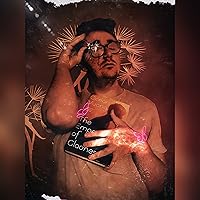
The stories brought together in this collection introduce for the first time in English the dazzling speculative imaginings of Djuna, one of South Korea’s most provocative SF writers. Whether describing a future society light years away or satirizing Confucian patriarchy, these stories evoke a universe at once familiar and clearly fantastical. Also collected here for the first time are all six stories set in the Linker Universe, where a mutating virus sends human beings reeling through the galaxy into a dizzying array of fracturing realities. Blending influences ranging from genre fiction (zombie, vampire, SF, you name it) to golden-age cinema to Conrad’s Heart of Darkness, Djuna’s stories together form a brilliantly intertextual, mordantly funny critique of the human condition as it evolves into less and more than what it once was.
Film critic and speculative fiction writer Djuna, who first appeared as an online presence in the early 1990s, has steadfastly refused to confirm any personal details regarding age, gender or legal name, or even whether they are one person or multiple. Djuna is widely considered one of the most prolific and important writers in South Korean science fiction. They have published nine short story collections, three novels, and numerous essays and uncollected stories.
Djuna (듀나) is a pseudonym and this author has also used the alias Lee Youngsoo.
Djuna is a novelist and film critic, and a former chair of the Korean Science Fiction Writers Union. For more than twenty years they have published as a faceless writer, refusing to reveal personal details regarding age, gender, or legal name. Widely considered to be one of South Korea’s most important science fiction writers, Djuna has published ten short-story collections and five novels.
Bardzo oryginalny zbiór opowiadań. Jeśli szukacie czegoś nowego w tym gatunku, to będzie świetny wybór.
Osobiście najbardziej podobały mi się początkowe historie. Była nawet jedna o wampirach!
W drugiej części książki mamy zbiór powiązanych ze sobą kilku dłuższych opowiadań dziejących się w jednym uniwersum - tutaj niestety czułam się lekko zagubiona (co nie znaczy, że było źle, bo koncepty nadal były mega ciekawe).
Myślę, że kiedyś wrócę do tej książki, może wtedy mi się lepiej ułoży w głowie :) Pozycja naprawdę warta uwagi!
tak jak pisałam, pierwsze kilka opowiadań były mega, pozostałe w jednym uniwersum (poczytajcie posłowie, to wszystko będzie jasne) niestety totalnie nie mój vibe, nudziłam się i mi się nie podobały. Uroki zbiorów, co nie? Pierwsza cześć 7/10, druga 3/10, więc średnia 5/10 ⭐
„Wszystko co dobre, umiera tutaj” na pewno zaskoczy was obrazowym warsztatem pisarskim Djuny oraz intrygującymi pomysłami. Nie jest to pozycja która powaliła mnie na kolana, ale była bardzo przyjemnym powrotem do mojej przygody z literaturą koreańską!
w czasach niekończących się dyskusji o przyszłości świata, w którym sztuczna inteligencja staje się powszechnym rozwiązaniem, ten zbiór jest lekturą obowiązkową nie tylko dla każdego fana literatury sci-fi. Djuna spekuluje nie tylko na temat wizji przyszłości (a nawet przeszłości!) ale także szuka odpowiedzi na pytania dotyczące kondycji ludzkiej. wpływ rodzimej kultury koreańskiej oraz fascynacja krajami Zachodu przenikają się wzajemnie, nadając opowiadaniom głębi.
The Linker Universe was surprisingly similar to Star Trek, with its Hollywood stars wearing latex masks and pretending to be aliens.
Everything Good Dies Here: Tales from the Linker Universe and Beyond is a compilation of speculative fiction/sci-fi stories and a novel, translated by Adrian Thieret from various original sources by Djuna (듀나).
듀나 is the pen-name of a Korean writer, and film critic, whose real identity is unknown, and a name that was acquired almost by accident, as explained in this interview in Clarkesworld, and with a deliberate and obvious nod to Djuna Barnes, but also to the protagonist of Ellery Queen's Jr. Mystery Stories Series.
The book has been published by Kaya Press as part of their Magpie Series in Global Korean Literature.
The material included in the collection is as follows, with original publication dates shown although some of the stories are translated from later, slightly revised, versions:
Part I The Rabbit Hole 토끼굴 (2006) Through the Mirror 거울 너머로 건너가다 (2007) Memoir of a Joseon Bride 구부전 (2015) Pentagon 펜타곤 (1997) Under the Sphinx 스핑크스 아래서 (2000)
Part II The Bloody Battle of Broccoli Plain 브로콜리 평원의 혈투 (2011) Sea of Fog 안개바다 (2011)
Jezebel 제저벨 (2012)
"Jezebel" is a novel in four stories, with the other two stories in Part II connected works from the same 'Linker Universe', "The Bloody Battle of Broccoli Plain" in particular serving as an introduction to this setting.
The author comments in a translated afterword Kaya Press worried that the readers of this translated volume might have difficulty following the Linker Universe world, bit I don't think there's any particular need for this afterword, especially since "The Bloody Battle of Broccoli Plain" and "Sea of Fog" have been included alongside Jezebel. Besides, aren't readers of genre fiction already used to jumping headfirst into new and unfamiliar worlds? Romaing unguided into new and unfamilar territory is, after all, the fun of speculative fiction.
The stories in Part I are unconnected but some share a theme of Hollywood culture.
The author's explanation of the origin of the Linker Universe is that combining Lamarckism with Von Neumann machines would allow me to fill the universe with countless Star Trek-like planets and species without falling afoul of Clement's Paradox, and I suspect the reader's enjoyment of this may hinge on their reaction to that sentence ("fascinating, what a great idea", or "what?").
The Linker world has alien lifeforms visiting the earth, specifically at first Korea on April 1, 2009. The lifeforms are a combination of self-replicating machines (cf Von Neumann) and a virus, the Linker Virus (링커 바이러), that seems to cause a sort of adaptive and rapid evolution in humans (cf Lamarckism). They aren't hostile to humans as such, but not benign either, simply indifferent, regarding earth and humankind as a base from which they can reproduce and spread out to other planets. And humanity in turn piggybacks of their faster-than-light ships to spread through the galaxy, the virus meaning they adapt to, and adapt, the environments of the planets (cf Clement's Paradox).
The initial typography of the aliens takes its inspiration from Hollywood movies - and Hollywood movies serve as something of a touchstone for the diaspora (the boat, Jezebel, which gives the novel its name taken from the Bette Davis movie):
Although each type of terrestrial machine appeared in many different forms, the functional role of each type was distinct and persistent. Type As were responsible for manufacturing and construction. Type Bs destroyed things and killed people, and delivered the resulting raw materials to Type As. Type Cs acted like extremely cautious soldiers who concentrated solely on passive defense. Type Bs and Cs provided the materials and protection necessary for Type As to build the structures that came to be recognized as Type Ds. It was obvious that Type Ds were, like their colleagues, living creatures endowed with artificial intelligence.
This taxonomy was important. It showed that the invaders were not simply a single entity working in concert like an army intent on obeying orders. Instead, they were a group of individuals who had chosen to cooperate with each other for their own personal benefit.
For a while, people called the machines whatever they liked. Type B machines alone were referred to using dozens of different monikers ranging from the fairly straightforward and descriptive 'Starfish" or 'Soldier Ant’ to the flashier 'Butcher,' 'Slaughterer’, ‘Crashhead," or ‘Megatron.’ South Koreans like Cheongsu just called them "Myeong-bak fuckers" after their despised president. It was Wendy Hobbs, a graduate student at Glasgow University, who gave the machines their common names. In a series of viral videos uploaded to YouTube in December of 2009 she assigned the name of a male movie star to each category of terrestrial machine. Type As, the builders, were calle Guinnesses. Type D machines, the building-like structures, were called Oliviers. And Type Bs and Cs, the soldiers, were called Waynes and Coopers respectively.
Hobbs's own experiment showed that the spaceship-type aliens could likewise be divided into four categories. Type As were the largest of these flying machines and did not descend to planets. Type Bs, fish-shaped spaceships like the one that first landed on Earth, shuttled between planets and the Type As in space. Type Bs all carried within them Type Cs, small flying machines that looked a bit like Cartier brooches and served primarily to gather information and collect samples. Type Ds were the depots that would appear in orbit above planets once the terrestrial machines dropped off by Type B shuttles had established themselves.
Hobbs named these flying machines after women. Type A spaceships were called Garbos, Type D depots were called Dietrichs, and Type Bs and Cs were Adjanis and Deneuves respectively. These names made some people uncomfortable at first, but as is usually the case in such situations, popular opinion ruled the day. (The fact that Hobbs herself was beautiful and resembled Hannah Murray probably played a part in this.)
There are literary references as well - such as a Vladimir, a lepidopterologist obsessed with the taxonomy of a Linker-virus infected species of butterfly, whose last Kinbote-like words concern the Name of God (c.f. Pale Fire).
It all makes for an interesting mix, if one where the characters have a much better idea of what's going on that the reader's. Which, the translator notes in his afterword, is part of Djuna's style - realistic narrators whose thoughts and associations follow their logic not that of an expository novel, although this is in part counter-balanced by parts of Jezebel being stories recounted to newcomers to a particular planet.
Not really my thing - I wouldn't read an English-language equivalent - so 3 stars for taste, although 4.5 for what it wants to be.
One of the only books i’ve read that blends this zany, illogical sci fi universe (like that of hitchhiker’s guide) with some bluntly gruesome elements of horror. Djuna’s brain is so fascinating to me, it keeps me coming back for more
I truly don’t understand how this writer isn’t a superstar of sci fi fiction, I am reminded of the inventive realities of iain m banks just because this stuff is so fun and so new and not stale. Everyone read this!!!!
“She viewed the world from her own perspective, and her book reflected that-nothing more, nothing less. So what if it wasn't true? We are no longer in the age of Darwin and the HMS Beagle. No one looks to explorers for objective information. All discoveries are personal experience, and in a book like this, people give more weight to the perspective of the author than to the informational content.” -p.179
“Throughout the course of our lives, reality sometimes collides with our imagined fictional worlds. These discordances illustrate the limits of our imagination, but they do not mean our fictional worlds are real.” -p.187
“But the thing is that when people spend their whole lives playing a game, the game turns into something more. The game becomes life, becomes history, becomes the universe.” -p.281
“From that point onward, I felt like we were standing in front of the Wonderful Wizard of Oz. I felt that something was hiding behind that artificial strangeness and toying with us. That what I saw was at most just an illusion of an explanation. I also understood why I couldn't discern the ghost faces right in front of me. What I until then had believed my eyes were seeing amounted to nothing more than the sentence, 'several ghosts are standing in front of me.’ The sentence told me that the ghosts were there, but no matter how many adjectives I added to it, I would never be able to clearly see what they looked like.” -p.411
I hear scholars referring to science fiction as speculative fiction nowadays. This is a short story collection but the stories aren't short. Part I has unrelated stories. Memoir of a Joseon Bride is my favorite from this anthology because of the vampires. I love Korean vampire/zombie stories! Part II should be a separate novel since those stories focus on the Linker Universe. Aliens/machines invade everywhere and harvest resources. The machines are also used to travel to different worlds. Those traveling spaceships had human stowaways similar to train jumpers. The migration spread viruses, accelerated genetic mutations, and caused power struggles across the universe. One story mentioned how knowledge was lost and recreated after a society lost or destroyed their library cube. The travel reminds me of Star Trek. The space machines go to different worlds, interact with and upset the locals, and shit hits the fan. I enjoyed the dark humor. Political problems and violence that the virus facilitated throughout the universe were fascinating. I was confused most of the time. A taxonomy chart and map would've been helpful. I lost track of the many different worlds and types of aliens/characters. I'm still confused.
umm it was cool like halfway through i was like do i even enjoy this is the translation too stilted does the worldbuilding leave something to be desired is it corny and then a small part of me was like no....(whispering)...... its okay you are just really depressedddd........... thats why you havent given a book five stars since januaryyyyyyyhhhhhh...... also there is a weird racist bit in the jezebel section.....
Początek cudowny, dziwny, ale przez to naprawdę dobry. Ale im dalej tym gorzej. Opowiadania, które były ze sobą powiązane były po prostu nudne i chwilami nie miały sensu. Od razu miało się ochotę iść dalej.
so wonderfully weird and consistent in its application of themes and the plotline is amazing. it is a bit of a tougher read than the other two from the same series. I would still highly recommend it, just not as your first read in Korean science fiction/short stories.
6/10. I’ve always wondered what it would be like for an author to come up with a completely original universe and this feels like the culmination of that thought. Some of the short stories here are incredible; mainly the Sinners-esque vampire takeover and the message to the movie critic were MEMORABLE and ASTONISH me. But the Linker universe, as gargantuan as it feels handling these complex issues, needed a sort of anchor to root the reader into the rules of this world, and I didn’t feel like we got that. Even still, highly recommend this if you want some sci-fi that’s get you thinking questions about the universe.