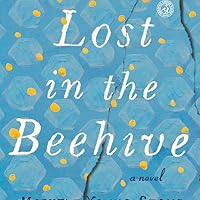
This is a magical book, introspective, dreamy and atmospheric. When I was first considering reading it, I read that it compares to Marilynne Robinson's writing, and that grabbed me. If you need a strong plot and zero ambiguity, it's not for you.
Although I've seen it described as a love story, I see it more as a woman who was obsessive compulsive in terms of her relationship with her equally obsessive compulsive younger partner, then falling into a life of despair after he permanently fled. Now, decades later, she comes to terms with herself and her own worth.
Blythe and her beloved, Gil (short for Gilead) lived by the sea. Both were initially united by grief, after Blythe's first love and Gil's older, adult brother was killed during the American Civil War. Blythe walks the beaches of Cape Cod, and sees that the 12 year old Gil has fashioned a hut made from scraps found along the beach. He is fascinated by birds, and uses the feathered wings as part of the hut's construction, including a swan's wing strung from the ceiling, along with windows made from the eye sockets of a sperm whale, and other discarded items found in the sand.
At first their relationship is thankfully platonic, but once Gil is 17, Blythe romances him and they eventually marry. Today, we're uncomfortable with that, since he is underage. It's hard to say what their fellow Cape Cod neighbors thought of their relationship, and there are no details of Gil's parents and what they think. Such practical details as how Blythe supported herself are also left unanswered. The story is told through Blythe, and she focusses only on Gil, and his love of birds, taxidermy, and the job she got for him at the local Life Saving Station. Rather than being a simple lifeguard, he actually organizes and goes out on rescues for foundering ships, an extremely dangerous and heroic job. Somehow he finds the time to build a hotel, and take tourists out hunting. The practical details are scant.
But his grief over his older brother's death moves him to find the spot where he died, which is on the coastline much further south, in North Carolina. He suddenly quits his job in Cape Cod and goes to North Carolina, and starts a new life almost identical to that he enjoyed with Blythe. Same type of heroic job, another hotel, another tourist guide job, and more taxidermy and publishing articles about ornithology. He also finds another wife. Yet there are many clues that he continued to love Blythe, despite leaving her multiple times, and finally, for good.
Just as he creates things that require ten gazillion tiny steps, she too has similar interests. It takes her five years to make herself a wedding dress of grey silk with an outer layer of grey silk tatted lace. This isn't your typical lacey wedding dress. This one has finely detailed images of various sea birds and constellations worked into it.
The crux of the story is that one day a young woman shows up at Blythe's now decaying home. Blythe is appalled and resentful, as this person is Gil's daughter by his second wife, announcing herself as "Gillian", pronounced with a hard G. Gillian was just a child when Gil either died or disappeared, and she wants to learn about her father. She doesn't quite realize that her dad had a first wife, and abandoned her, and doesn't immediately believe anything Blythe says.
The writing in this novel is breathtaking: At one point we learn about how Blythe and Gil together repaired a seine net. While doing the work, Blythe imagines Gil at sea, hauling it out of the water into his dory. "Gil hauled it hand over hand ... bubbles clinging along the four inch squares of mesh like dewdrops pearled on a spider's web. A school of sea trout flowed beneath the boat, and all along the net's reach. The tiny bubbles of air were as good as a sold wall, for the fish would not swim past them, out through the net's gaping holes. Something insubstantial as a bubble became solid as a prison bar, holding the fish bunched right against the sea, so that they became their own jailers.
We're no better than the fish, I thought. How easy to find obstacles where there are none, locking ourselves inside our own inconsequential thoughts."
Outside of Blythe's relationship with Gil, we know nothing of her life until Gillian arrives, and we learn some details of Blythe's present situation, but mostly we learn about her past life with Gil. She truly has imprisoned herself in Gil's life.
Although she has sacrificed her entire life to this strange man who comes and goes like the tide, finally to never return, she is a strong woman. Her short, pithy sentences to Gillian establish that. She suffers no fools.
The longer Gillian stays, the more we learn about Blythe's present day life. Although Gil's beach hut has finally collapsed, she continues to live in what was once their grand home, with a front door window made of ruby stained glass. At some point, she clearly could afford to have a laundress. Blythe walks past the woman's home, and sees that she makes quilts out of fabric secreted away from the clothing people have trusted her to wash. Blythe assumes she does this out of revenge. She spots a quilt with one of Gil's buttons, and a patch of one of Blythe's summer gowns. Clearly she has given the laundress reason to be exacting revenge, but Blythe doesn't consider that. Instead, she only imagines the woman and her husband sleeping "beneath a seething discontent".
The author's afterwards explains how she created these characters and their situations. The novel is based on actual people and events, Gil being locally known as the man with two wives. This is a beautifully detailed imagining of what the first wife must have experienced. I strongly recommend it to the right kind of reader.