A bold challenge to rethink the humanities as intimately connected to the superhuman and to “decolonize reality itself.”
What would happen if we reimagined the humanities as the superhumanities ? If we acknowledged and celebrated the undercurrent of the fantastic within our humanistic disciplines, entirely new cultural worlds and meanings would become possible. That is Jeffrey J. Kripal’s vision for the future—to revive the suppressed dimension of the superhumanities, which consists of rare but real altered states of knowledge that have driven the creative processes of many of our most revered authors, artists, and activists. In Kripal’s telling, the history of the humanities is filled with precognitive dreams, evolving superhumans, and doubled selves. The basic idea of the superhuman, for Kripal, is at the core of who and what the human species has tried to become over millennia and around the planet.
After diagnosing the basic malaise of the humanities—that the truth must be depressing—Kripal shows how it can all be done differently. He argues that we have to decolonize reality itself if we are going to take human diversity seriously. Toward this pluralist end, he engages psychoanalytic, Black critical, feminist, postcolonial, queer, and ecocritical theory. He works through objections to the superhumanities while also recognizing the new realities represented by the contemporary sciences. In doing so, he tries to move beyond naysaying practices of critique toward a future that can embrace those critiques within a more holistic view—a view that recognizes the human being as both a social-political animal as well as an evolved cosmic species that understands and experiences itself as something super.
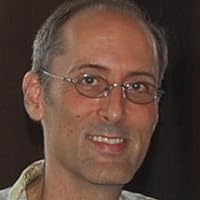
Jeffrey J. Kripal, Ph.D. (History of Religions, The University of Chicago, 1993; M.A., U. Chicago; B.A., Religion, Conception Seminary College, 1985), holds the J. Newton Rayzor Chair in Philosophy and Religious Thought at Rice University, where he serves as Associate Dean of Humanities, Faculty and Graduate Studies. He also has served as Associate Director of the Center for Theory and Research of the Esalen Institute in Big Sur, California.
"A library is not a sign of accomplishment. It is a sign of desire.” My bumper sticker now for my book collection
"One can affirm gnostic transcendence and insist on moral social justice, and precisely because the Human is epistemologically Two and not one. We can stand up for justice and gnosis and even assert that they are ontologically connected, even when they are split or separated in a particular historical case. We need not deny one good for the sake of the other"
My favorite part was the comparison/contrast between Harold Bloom and Foucault. Highly recommend. Hopefully a full review in the future.
A favorite quote: “in order to affirm, assess, and integrate both the flowing lava and the hardened rock of the islands on which we have lived for millennia, we very much need the superhumanities. We need society and its magic. We need culture and the consciousness it encodes. We need the cooled rock and the molten lava. We need suspicion and trust. We need the moral no and the ecstatic yes.”
Much of Prof. Kripal's recent books have been published by commercial publishers for general audiences. With this book, Kripal is published by a university press, and thus writing to speak more to his academic colleagues. However, he does not get lost too far into esoteric academic jargon and still writes in a surprisingly laid-back and friendly manner one finds in his general public release books. This made for a very readable experience.
This book is very similar to his previous book The Flip but with more self-reflexivity and engagement with the academic intellectual canon found in the humanities. I was particularly interested with his argument that Nietzsche is a misunderstood mystic rather than just a deconstructionist as his work is generally presented. This section makes me want to do a Nietzche reread in the near future. I also enjoyed the final chapter that delved into what psychoanalysis, critical race theory, postcolonial theory, queer theory and ecocriticism can lend towards a superhumanities scholarship that includes the transcendent ecstatic experience
This a great follow-up to The Flip that builds upon a lot of the foundation he set forth in that book.
I don’t know. I’m very sympathetic to Kripal’s project (this is his fourth book I’ve read), but something rubbed me the wrong way here. He adopts a slightly more desperate tone as he supposedly crystallizes the main thread running through his work, which had the opposite effect as intended and set off my skeptical alarm bells - I found myself reading with more suspicion than usual. I also found both the main thread and the supposed call to action rather muddled, and at the end of it am somehow unsure what I actually gained from it. I remember The Human is Two. The Human is Two, over and over. From what I can tell, this is a similar claim made by Jung’s “spirit of the depths/spirit of the times.”Maybe I’ve just already internalized this claim, partly since it’s implicit in his previous books, and so felt less invigorated by it now? Or maybe my reading comprehension has taken a nosedive and this book just went over my head. I kept looking for the main takeaway of each section, what argument was actually being built, and I just couldn’t find it.
Take paranormal phenomena seriously as windows into fully studying the human experience, accept that there is some transcendent aspect to the human, relax your dogmatic materialist ontology, recognize the long history of this line of thinking throughout a bunch of famous humanities scholars, see what happens if you do the same…
I don’t know. I don’t know how to articulate it but something feels missing from this equation, even though I don’t necessarily have any disagreement with it.
I’ve been following Jeffrey Kripal’s books for quite a few years now. I do have to say upfront that this one is quite academic, and is not an easy read. As I noted elsewhere (Sects and Violence in the Ancient World), I started reading it three or four years ago and eventually put it down. I had a conversation with the author that convinced me I should pick it back up, and I’m glad I did.
In case you’re wondering, Kripal has long advocated taking the paranormal into account when studying the humanities. Not to debunk, but to learn. This has earned him some scorn among many academics, but he’s onto something important, in my opinion, and we should listen. It’s important that Kripal is an accredited academic, a religion professor at Rice University, and that the University of Chicago Press publishes his books. This one is probably not the first one to start with, but it is a suitable part of a necessary conversation.
Kripal takes seriously the accounts of what we might call “paranormal activities.” Not all people who see a ghost or a UFO are lying or delusional. Such things have been reported since people started writing. Since science typically dismisses anomalies (and Kripal is an advocate of science) they get left out of the discussion. Kripal explores what might happen if they’re put back in the discussion. The end result? The Superhumanities.
Jeffrey Kripal’s work has helped me become a better Christian – though I’m not sure that’s the outcome he might have wanted or predicted. I previously read Kripal’s works Roads of Excess, Palaces of Wisdom, and Secret Body, which outlined his lifelong work to investigate religious scholarship as its own form of transgressive spiritual experience. Superhumanities, in that same vein, argues that writing and comparative religious investigation stem from and occur as personal spiritual experiences above empirical explanation. Most insightful in this volume is Kripal’s critique of contemporary academia, which sees negative critique as the only valid method of intellectual engagement. In contrast, he cites (among others) William James’ appreciative work on psychic phenomena and Charles Taylor’s observations about multiple moral realities. He here develops his theory of “The Human as Two,” that humans simultaneously exist in a sensorily-mediated environment that helps us to survive, but also that we occasionally have access to the umediated reality that surrounds us – the reality that we often call Nirvana or God.
Kripal spends one chapter investigating Christian responses to the “supernatural” (a term introduced by Thomas Aquinas to differentiate paranormal experiences approved by the church from those that were not). It is this vein of research that I find most exciting. We spent a few sessions of the class on Theology of the Holy Spirit frankly discussing the possibilities of the paranormal and its use in progressive theological circles (a la Walter Wink’s work on powers and principalities and Richard Beck’s progressive spiritual warfare). As people leave the mainline churches because of their intellectual tendencies and their superficial similarity to social clubs or nonprofits, I am convinced that the growth of the 21st century progressive Christian church is in practicing increasingly radical techniques of communal care and spiritual healing far beyond what we can conceive or imagine. Jeffrey Kripal is helping me construct some theological imagination. ________________________________________
I love all of Jeff's books, but this one is my favorite - it's so concise and the argument is so easily followed and with so much evidence. And it seems like he has perfected that ability to speak to the audience as he moves through the material. And it agrees with my own basic worldview from reading across the religious traditions that we are meant to be Superhuman.
Too many words to say little, too much appeasing of the left intelligentsia before saying what he wants to say, which when he does say is not that revolutionary.