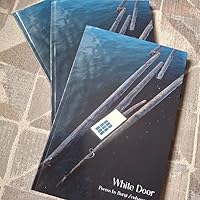
The coming-of-age chronicle of a queer Latinx Southerner.
In C. T. Salazar’s striking debut poetry collection, the speaker is situated in the tradition of Southern literature but reimagines its terrain with an eye on the South’s historic and ongoing violence. His restless relationship with religion (“a child told me there was a god / and because he was smiling, I believed him”) eventually includes a reclamation of the language of belief in the name of desire. “I felt myself become gospel in your hands,” the speaker tells his beloved. And, as the title poem asserts, a headless body “leaves more room for salvation.”
Though Salazar’s South is not a tender place, the book is a petition for tenderness, revealing in both place and people the possibilities for mercy, vulnerability, and wonder. The lyric I, as it creates an archive of experience, is not distanced from the poems’ subjects or settings, but deeply enmeshed in a tangled world. In poems with lush diction, ranging from a sonnet crown to those that explore the full field of the page, Headless John the Baptist Hitchhiking seeks—and finds—where the divine “Praise our hollow-bell bodies still ringing.”
First, I have to say, I just love the title of this collection! It makes me smile. It also foreshadows the poetry that follows, a poetry filled with rich interiority, the speaker's questioning and searching, and sometimes finding--a journey made vivid in the poems' incredible imagery and brilliant turns.
This collection is so full of honest anguish and tenderness, or maybe the hope of tenderness. I love the reclamation of religious imagery, and it’s gentle but poignant definition of love.
In this astounding debut collection, the poet describes the bones that have built his Latinx heritage, exhumed and reburied with dignity, archived like heirlooms; defines the borders and boundaries and the politics of displacement; explores the unanswered question of religion; ponders heartbreak and how “forgiveness gathers inside / the exit wounds”; elegizes love and sings songs of praise for the gospel of the body.
YOU CALLED ME CASTAWAY AND I CALLED YOU
darling + I could believe the soul is a crater—the impact of your hands on my chest. Fingertips & lips, forest + & fire. You taste like cinnamon, or cyanide. + My body: bees in a bottle. + I’ve seen a boy go missing inside himself, so I searched for him in cracked church bells & shot-out lightbulbs. I found him at the bottom of a lake + in my lungs. You pulled him out, but he never looked + the same dressed in all those fishhooks. + I could say surrender until it sounds like a song or salve. I could hold your love in my mouth & make pearls of it.
Favorite Poems: “Sonnet for the Barbed Wire Wrapped Around This Book” “All the Bones at the Bottom of the Rio Grande” “Traveler But I Scarcely Ever Listened” “When the Crows Came” “Saint Toribio Romo of Guadalajara Finally Stopped Praying” “Triptych Just Before Mass” “Mostly I’d Like to Be a Spider Web” “Parable about Changing My Name + An Elegy” “It’s Easy to Become King of a Place No One Wants to Live In” “Poem with the Head of Homer in It” “Incident Number to Be Determined” “Forgive Yourself for Seeing It Wrong” “Self-Portrait As Headless John the Baptist Hitchhiking” “Poem Ending with Abraham’s Suffering” “You Called Me Castaway and I Called You”
I enjoyed reading these poems so much. I picked up this collection because I really love the poem from which this book takes its title, and I was so pleased to find that the others are in a similar vein. Christianity mixed with darker and sometimes violent nature imagery really created a Southern Gothic kind of vibe for me that I really enjoyed. The poems often had a complexity to this layered imagery that I didn’t always fully grasp in every instance, but that’s something I enjoy in poetry because then there’s more for me to discover when I revisit this collection in the future.
“forgetting is a kind of mercy / eventually even the cemetery / forgets it is a cemetery and looks like an open field.” —“Poem with the Head of Homer in It,” page 29
haven’t been reading much because my life got Busy but jesus christ guys what a way to dip my toe into reading. the imagery is literally INSANE. i needed to bash my head into a brick wall then throw myself into a void and never come out. anyway. highly recommend btw
I loved every poem in this collection. Some of them were great; others were fantastic, sucker-punch-to-the-gut great. Salazar captures the religious Southern queer experience with this breathtaking collection and I cannot recommend it enough.
It’s a good debut collection but it’s obviously a debut, I’ll definitely be on the lookout for his next works though. Favorite poems: Saint Toribio Romo of Guadalajara Finally Stopped Praying Mostly I’d Like To Be A Spider Web Incident Number To Be Determined
Can't express how important perspectives like these are to articulating the nuance and complexity of our society's stunningly complex and excitingly variegated makeup, diverse constituents' many valuable layers and their instrumental contributions to a vast variety of impactful conversations. A compelling debut from a capable emerging voice it behooves all to keep central to your literary radars, filled with rich language and unique insight, and also among the most provocative namers and deft appliers of enjambment in recent memory, inspired titles like "Headless John the Baptist" and "Love, Circular Saw Blade" are almost micros in and of themselves, a reader is guaranteed not to soon forget! 😲✨ Additionally contains many of the most inventive and intriguing constructions in terms of concrete distribution of words, elements of visual poetry in columns, unique shapes and forms individual pieces assume, which I've ever encountered, a true pleasure to engage with, certainly makes the reader pause, think, and consider works more actively than familiar conventional modes, with impressive results...
I've been hearing raving reviews about Headless John the Baptist Hitchhiking, so I'm not sure what I'm missing? Perhaps I wasn't in the right headspace, and maybe it fell victim to high expectations after being hyped up. It is also very likely that my own lack of much religious background prevented me from feeling the full impact of these references.
Regardless, this is a strong debut (one of the best I've read in quite some time) with some riveting lines. I do think I will have to revisit it before the end of the year. Definitely go read this book.
This debut poetry collection is at the top of several end of the year lists. The title and beautiful cover immediately grabbed my attention. However, I didn’t feel much while reading the poems. Maybe they’re over my head?
Salazar is queer Latinx southerner who reclaims religious language to speak about love and suffering.
While most of the poems didn’t really strike a chord with me, there is one that did: “All the Bones at the Bottom of the Rio Grande.”
A slim volume, but it's brevity belies its depths. I may not always directly understand what the speaker is saying, but I absorb the truths and revel in the creative use of language. This is a collection I would like to read again as I'm sure there is so much more to discover and appreciate.
This was just so stunningly beautiful and makes me want to write - I’m so happy I stumbled across it at the library and can’t wait to read more of his work
Unfolding in four parts, this book, one I know I’ll reference a lot, reflects on awe, desire, faith, and Mississippi. After reading and rereading American Cavewall Sonnets this summer, Salazar’s debut poetry collection became a must-order. The gorgeous imagery (“my chest of bright stars”) and the gorgeous language (“Come cracked, come crawling cobblestone, come / with enough to drag yourself through this old drought”) keep calling me back. I definitely added “order Forty Stitches Sewing a Body Against a Ramshackle Night” to my to-do list. This year, I fell in love with Salazar’s writing and am hoping you have or will, too.