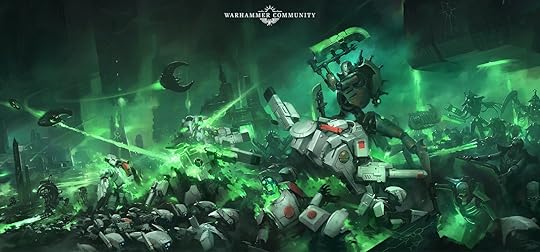
Never a good sign to find a story set in the grim darkness of the 41st millennium relatable, and that goes double if it's about the deceived, decaying necrons. But the exiled princeling Oltyx, stripped of his former glories, going through the motions on a doomed planet, occasionally overwhelmed by memories of how it felt to be alive...yeah. If only the planet had been under the endless killing sun of the necrontyr homeworld, instead of acid sleet, the correspondences would have been even spookier than the cast of undead robots. Of course, being by Nate Crowley (freshly promoted to greatest living Crowley!) it's all played as sitcom. Tomb-black humour, obviously, but this is one of the classic set-ups, isn't it, the fellow convinced he's better than this, marooned in a backwater with a bunch of freaks, except the decaying minds and ghouls of Sedh are far stranger than any denizen of Craggy Island, and also Oltyx is even stuck with some of them when he's alone, his suite of aristocratic enhancements including five specialised subminds, advisory riffs on his own consciousness. Or, as he more often experiences it, "trapped inside his own mind with what amounted to a squadron of passive-aggressive butlers".
That's the first section of the book; one doesn't want to give too much away about the rest, but let's say the second is body horror (with the complication that necrons don't exactly have bodies anymore, but some of them eventually take grotesque steps in a futile attempt to rectify that), and the third finally cuts loose with the setting's potential for truly apocalyptic battle scenes. All three, as it happens, recall aspects of the Twitter thread that first got Crowley noticed, back when a sentence like that didn't necessarily indicate something bad, which wasn't actually the 60 million years ago of Oltyx' memories, but bloody feels like it sometimes. At the same time, the novel encompasses all sorts of other concerns, from the way adult siblings still struggle not to push each other's buttons (painfully plausible that this might indeed outlast geological ages) to a running current of political commentary about dying empires, and an ontology in which whatever the ruler says, is true, no matter how deranged they might be. The occasional nods to Hamlet, and the dynasty being called Ithakas, felt a little like feints, though I think the latter may be more significant in the sequel; really, the family dynamic seemed to owe more to Denethor and sons, though Oltyx' dad isn't half so affable as that suggests. But hey, still stealing from the best, right? If I had a quibble it was more that, once things finally started looking up for Oltyx, it came across as implausible simply because the book had by that point done so well at establishing the 2020s mood whereby no matter how bad things seem, and they are, they can always get much, much worse.