Insightful, exciting, and deeply moving, Liz Rosenberg’s distinctive portrait of the author of Little Women reveals some of her life’s more complex and daring aspects. Moody and restless, teenage Louisa longed for freedom. Faced with the expectations of her loving but hapless family, the Alcotts, and of nineteenth-century New England society, Louisa struggled to find her place. On long meandering runs through the woods behind Orchard House, she thought about a future where she could write and think and dream. Undaunted by periods of abject poverty and enriched by friendships with some of the greatest minds of her time and place, she was determined to have this future, no matter the cost. Drawing on the surviving journals and letters of Louisa and her family and friends, author and poet Liz Rosenberg reunites Louisa May Alcott with her most ardent readers. In this warm and sometimes heartbreaking biography, Rosenberg delves deep into the oftentimes secretive life of a woman who was ahead of her time, imbued with social conscience, and always moving toward her future with a determination that would bring her fame, tragedy, and the realization of her biggest dreams.
Liz Rosenberg is an American poet, novelist, children's book author, and book reviewer. She is currently a professor of English at Binghamton University.
And now having endeavored to suit everyone by many weddings, few deaths, and as much prosperity as the eternal fitness of things will permit, let the music stop, let the lights die out, and the curtain fall forever on the March family.
The cover artwork for this new biography of Louisa May Alcott does not truly represent the book inside. What Liz Rosenberg has done in chronicling the life of this beloved author is amazing and much more complex than the delightful illustrations. The text is rich with detail and bursting with quotes from the journals of LMA, her family, and friends. This will be a daunting prospect for new readers, but many who love reading the LMA classics will greatly enjoy this in depth look at her life. I really need to reread not only "Little Women," but all the books that LMA penned featuring that family. After reading this biography I know that my experience will be greatly enriched.
Thank you to Candlewick and Edelweiss+ for a DRC in exchange for an honest review.
So as a bit of a disclaimer before I start with my actual review of Liz Rosenberg’s October 2021 middle grade biography Scribbles, Sorrows, and Russet Leather Boots: The Life of Louisa May Alcott, I do without any guilt and contrition whatsoever readily admit that as soon as I received my copy of Scribbles, Sorrows, and Russet Leather Boots: The Life of Louisa May Alcott, I immediately flipped to the back in order to read through both Rosenberg’s bibliography and her epilogue (which in my opinion should probably be titled as being an Author’s Note instead). Because I wanted to check if for one Liz Rosenberg in her bibliography lists not only books that portray a positive picture of Louisa May Alcott’s father Bronson (but also includes some of the more recent ones which often show Bronson Alcott as profoundly negative and majorly lacking as a husband and as a father) and if for two, in the author’s note, if in her featured epilogue Liz Rosenberg equally does not wax too much poetically and with support regarding Bronson Alcott’s idealism and his supposed exalted and as such above criticism status as being an abolitionist and educational reformer.
And unfortunately, the bibliography and the epilogue for Scribbles, Sorrows, and Russet Leather Boots: The Life of Louisa May Alcott I personally and academically do tend to find both of them a trifle lacking at times, not hugely substandard by any means, but yes, I for one certainly have noticed some personally annoying and frustrating bones of narrational, of textual contention.
For while I do truly appreciate that Liz Rosenberg seems to have done quite a lot of primary level research for Scribbles, Sorrows, and Russet Leather Boots: The Life of Louisa May Alcott and has thus gleaned much of her presented textual information about Louisa May Alcott and the entire Alcott family from journals, letters and the like (by both the Alcotts and their friends and acquaintances), and indeed also includes one extremely and lastingly negative towards Bronson Alcott modern biography (Eve LaPlante’s Marmee and Louisa: The Untold Story of Louisa May Alcott and Her Mother), that (and of course also in my humble opinion) far far too many of Rosenberg’s listed secondary sources such as for example Cornelia Meigs’ Invincible Louisa: The Story of the Author of Little Women as well as Susan Cheever’s Louisa May Alcott: A Personal Biography (amongst others) show Bronson Alcott as primarily an often and supposedly misunderstood idealist, a genius and therefore equally tend to make pretty much light of his narcissism, of his arrogance and actually seem to even insinuate that Bronson Alcott’s multiple and constant failures to adequately provide for his wife and four daughters as somehow being acceptable because of his charisma, his educational reforms, and that yes, a much more critical and roundly condemning of her father Louisa May Alcott contemporary biography such as Martha Saxton’s Louisa May Alcott: A Modern Biography does not even make an appearance in the bibliography for Scribbles, Sorrows, and Russet Leather Boots: The Life of Louisa May Alcott, is not included and has thus probably also not been perused by Liz Rosenberg, this has definitely made me more than a bit suspicious regarding the presented text of Scribbles, Sorrows, and Russet Leather Boots: The Life of Louisa May Alcott and how balanced and how necessarily critical Liz Rosenberg’s biography of Louisa May Alcott would be with regard to Bronson Alcott.
Furthermore, this also kind of rather pertains a trifle to the epilogue for Scribbles, Sorrows, and Russet Leather Boots: The Life of Louisa May Alcott, since while Liz Rosenberg fortunately refrains from hero worshipping Bronson Alcott and correctly and rightfully labels Louisa May Alcott’s father as being quite thoroughly dysfunctional, she does in my humble opinion still tend to cast an often much much too positive and laudatory light on Bronson Alcott and also seems to think that since his wife and in particular his daughters unconditionally loved, accepted and respected their husband and father and seemingly were not really even all that bothered with and by his arrogance and self centredness, that this somehow should for the most part mitigate Bronson Alcott’s shortcomings and failures as a human being (an attitude with which I both personally and intellectually absolutely and utterly do not at all agree and also will never agree).
And indeed, my misgivings upon having read through the epilogue and the bibliography of Scribbles, Sorrows, and Russet Leather Boots: The Life of Louisa May Alcott were and remain (in my opinion) at least partially justified, as I do have to admit that with regard to Liz Rosenberg’s actual text, that with regard to her biography of Louisa May Alcott as it is presented in Scribbles, Sorrows, and Russet Leather Boots: The Life of Louisa May Alcott, I certainly do feel somewhat conflicted and have vacillated between three and four stars. Because well, while I much appreciate that Rosenberg does in fact and thankfully NOT in any way ever consider Bronson Alcott as somehow being totally, utterly above and beyond condemnation and that she also gives multiple textual examples in Scribbles, Sorrows, and Russet Leather Boots: The Life of Louisa May Alcott of Louisa May Alcott’s father’s arrogance and narcissism, of Bronson Alcott behaving and acting majorly egotistically and as though the entire world was supposedly revolving around him and only around him (and that such mundanities like making money and supporting his family just did not really count, were both insignificant and not worth considering), Liz Rosenberg unfortunately still constantly and repeatedly points out to her readers in Scribbles, Sorrows, and Russet Leather Boots: The Life of Louisa May Alcott how charismatic and how much of an idealistic genius Bronson Alcott seems to have been and that his family’s acceptance and uncritical love seemingly (and like she also states in the epilogue) much mitigates and lessens his sociopathy and willful neglect of his family (something that I for one consider rather ridiculously frustrating, as with these words, Liz Rosenberg basically enables the at best neglectful and emotionally distant, and often verbally abusive behaviour of Bronson Alcott towards his family, towards his wife and daughters, basically condones the regularly inappropriate actions of a man clearly insane with personal arrogance, with narcissism and massively, problematically dysfunctional).
But while I do think that Liz Rosenberg’s Louisa May Alcott biography is still a bit too easy on Bronson Alcott (and thus only a three star rating for me), yes, Scribbles, Sorrows, and Russet Leather Boots: The Life of Louisa May Alcott also to and me does show a pretty nicely balanced account of Louisa May Alcott’s life (both of its tragedies and of its joys), and with Rosenberg also and definitely, appreciatively not ever making Bronson Alcott into some kind of paragon of transcendentalism (suitable for readers above the age of twelve in my opinion, but not much younger than that since the often and necessary encountered negativity and sadness in Scribbles, Sorrows, and Russet Leather Boots: The Life of Louisa May Alcott could perhaps be a bit much and daunting for younger and/or more sensitive readers).
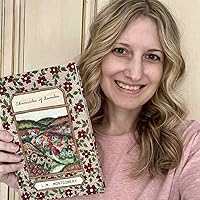
Finally, with regard to Diane Sudyka accompanying black and white illustrations (as well as the colourful and folk artsy book cover for Scribbles, Sorrows, and Russet Leather Boots: The Life of Louisa May Alcott, which I am assuming has likely also been rendered by Sudyka), personally I tend to find the pictures absolutely unnecessary and more than a bit distracting and equally much too cutesy for the seriousness of Liz Rosenberg’s presented text, since Louisa May Alcott’s life story is in my opinion and most definitely NOT the sweetness and light which Diane Sudyka’s artwork in my opinion always seems to rather visually imply (and not to mention that the cover image for Scribbles, Sorrows, and Russet Leather Boots: The Life of Louisa May Alcott for and to my eyes pretty much tries to show some kind of bucolic and in tune with nature utopian existence for the Alcott family, and in particular for Louisa and her sisters, but which Rosenberg’s writing of course and very obviously shows to have often been rather the exact opposite).
Louisa May Alcott is best known as the author of the popular classic Little Women. However, her life before she became a famous authoress was full of difficulty. She grew up poor and needy in an unstable though loving home. Her sisters, whom she immortalized as the March sisters, were her closest friends and companions. But it was her parents, Abbey and Bronson Alcott, who had the deepest influence on her life.
Bronson Alcott was insane. He literally had insanity running in his family tree. He told people he was "the Messiah of education", and thought he would completely reform the American education system. However, all his attempts to start a school failed miserably once the parents found out what nonsense he was teaching their children. He was more interested in his daydreams than in providing for his family's everyday needs, so it fell to Abby and eventually to Louisa to work and scrape to put food on the table.
To make a few dollars here and there, Louisa took odd jobs, sometimes as companion to rich relations, and she wrote little sensation stories and sketches for magazines. She also worked as a hospital nurse during the Civil War, where she contracted pneumonia and was treated with a medicine that had mercury in it. Her health never fully recovered, and she suffered from the effects of mercury poisoning for the rest of her life.
In the midst of illness and poverty, she began to write in earnest, eventually writing Little Women, which became an instant best-seller and made her a rich woman. She used most of her money to help her family, to fund her nephews' and niece's education, and to help the poor.
This book is not exactly pleasant to read, because Louisa's life was not exactly pleasant. There is a lot of heartache and disappointment. Someone in the family is almost always ill, collapsing from overwork, stressed and frustrated. One by one, friends abandon them, schemes for employment fall through, and relations die suddenly, leaving behind a grieving Louisa.
It was inspiring to read about how Louisa triumphed over her difficult circumstances, and I admire her courage and tenacity, and of course the brilliance of her writing. However, this book just made me sad. There is so much focus on the negative things in her life.
I think the illustrations make this look as if it should be a book for children or teens, but the subject material is quite dark at times. The art style is very cartoonish and fun, but the tone of the book is sad.
I was not particularly impressed with the writing style. It was fine, and I found it interesting to read, but there were little things that I felt could have been explained in a better way. Some of the information was repeated again in different chapters, and I felt it was redundant. I would have liked more of a focus on Louisa and her sisters, rather than so much of the book being taken up with weird Bronson and morose Abby.
Disclaimer: I received a copy of this book from the publisher in exchange for a free and honest review. All the opinions stated here are my own true thoughts, and are not influenced by anyone.
A quick, albeit depressing, look at Louisa May Alcott's unconventional life. Prior to reading this biography I knew nothing about Louisa's life. I had of course read Little Women many times and count it as a childhood favorite, but that is where my association with the author ended. It was interesting to learn about how unique her upbringing was, and how that shaped her into the woman who would do anything for her family, even at the detriment to her own health and ambitions. Dirt poor from a young age, Louisa knew what it was like to want more. She vowed that when she was older she would become a successful writer and no one would ever want for anything again. She slowly started having short stories published and a few small books, but when Little Women hit the market, she finally found her fame and success. She modeled the March sisters after her and her three sisters and she of course was the spitfire, Jo. As she promised no one in her family lacked for anything and Louisa worked herself to the bone and to an early grave trying to maintain that promise. It's sad that she never really seemed to do much for herself. An enlightening read.
the beginning is a somewhat heavy going, what with its focus on Louisa's parents; I'm not sure that young readers will make it through the morass of idealistic impoverishment to get to the much more interesting rest of the book that is all about Louisa! The second half was great reading. I feel I know her much much better (and am also glad that I don't have mercury poisoning d.v. Poor Louisa!)
SCRIBBLES, SORROWS, AND RUSSET LEATHER BOOTS is a comprehensive introduction to Alcott’s life for those becoming acquainted with Louisa and her family. It is also a well-researched, scholarly, yet exceedingly readable book that will excite Alcott enthusiasts. This is a YA book that will satisfy young and old alike. It is a valuable addition to the Alcott biographical canon.
An absolute must read for every Louisa May Alcott fan. An over 400 page, in-depth volume with delightful illustrations (I wish there were more), by the phenomenal Diana Sudyka. I hope this book will encourage a new generation to read Alcott's amazing works. I have been a fan since my pre-teens.
I loved this biography about Louisa May Alcott. It reads like a fiction novel and I was drawn to Louisa’s personality and all the similarities between her real life and the March family in “Little Women.” The Alcotts were a lot more dysfunctional, especially her father. Learning about New England in this time and the other great writers and transcendentalists was also fascinating. I didn’t know that Louisa struggled with chronic illness and chronic pain after being given mercury when she fell sick working as a nurse. Highly recommend!
⭐️⭐️⭐️⭐️⭐️
Content: PG-13. Examples: mention of demons; a man is gay and loves Louisa’s father; mention of their beliefs making them want to abstain from sex; a man has several extramarital affairs; a reference to child trafficking and children being kidnapped; suicide and mental illness; use of morphine.
I thoroughly enjoyed reading this biography of one of my all time favorite authors. Liz Rosenberg has done a great job of piecing together what is known of Louisa May Alcott's life for middle grade readers. I loved the inclusion of many of Alcott's well known, and some not so well known quotes. Diana Sudyka has enriched this book with her simple black and white artwork that encompasses Louisa May Alcott's homeliness. I did pick up on a few grammatical errors throughout but they are insignificant and do not detract from the amount of time, effort and research that has gone into this work that highlights a female author that was both of and ahead of her time.
Wow. I knew nothing about Louisa May Alcott. I have read many of her books, the obvious ones and a few not so obvious. She is someone who truly lived a life of trials and tribulations. Her father was a genius and also must have been seriously mentally I’ll. I never knew how autobiographical Little Women was. She and her three sisters lived in the 1800s in New England well educated because her parents were thinkers and readers. They also lives surrounded by some of the greatest minds in our history. Neighbors and close friends included Henry David Thoreau, Ralph Waldo Emerson, and Nathaniel Hawthorne. They often survived on very little and were lucky to have friends who helped feed and sustain them. This was well written for the intended middle readers/teen readers. I learned a ton, especially about resilience. What makes one person able to keep on pushing and going and giving of herself to others? (Alcott and her mother Abigail), while others remain stunted and unable to go on.
LITTLE WOMEN is one of my favorite books of all time. I've read it numerous times, but I've never known much about its author's real life. I was thrilled, then, to get SCRIBBLES, SORROWS, AND RUSSET LEATHER BOOTS from the publisher. With its charming middle-grade cover, I figured it would offer a good overview of Alcott's life, written at a level appropriate for junior high school kids and younger. I was right about the overview. Rosenberg offers an in-depth and intimate look at Alcott's experiences as a daughter, a sister, an author, a breadwinner, a suffragette, and more. Much of the material is bleak and dark. Rosenberg doesn't shy away from or gloss over these elements, making the book feel like it's most suited to an older audience, despite its juvenile appearance. The author doesn't talk down to her audience (although certain information is repeated more than necessary), but the text is still very readable. Despite its hefty 405 pages, it reads pretty fast. I found it fascinating. Also, quite sad and depressing. I came away from the book with new knowledge about Louisa May Alcott and with a new appreciation for her genius, duty, generosity, humility, and perserverance. I'll gladly read more about her very interesting life.
If I could, I would give this book 3 1/2 stars; since I can't, I'm rounding up.
Gripping biography of Louisa May Alcott. I'm not really a fan of Little Women, but I was completely engrossed in the story of her life. She was such an incredible person who went through so many difficulties while staying true to herself.
I enjoyed this quite a lot. Even though it was a basic juvenile read, I feel like it was still comprehensive and interesting, and I learned a lot more than I'd known before.
This is a thorough and well researched biography of the author of Little Women, focusing mostly on her childhood and the sorrows and suffering which molded her character. Rosenberg obviously has a lot of respect for her subject, Louisa May Alcott. The writing is clear and the points regarding Louisa's courage in the face of daunting challenges, her resolve, the uniqueness of her upbringing and her unexpected success are all emphasized.
Since it is a YA book, I hope there is enough "action" to hold young readers' interest, as the repetition of the number of household moves, dead-end jobs and family worries was at time grueling. I also wondered if for a YA audience more information should have been shared about the issues and cultural mores of the time, to contrast to the ideas of the Alcotts.
There was a lot more "action" in Alcott's life and most of it happened after the publication of Little Women, but like other biographers before her, Rosenberg leaves only 1/4 of the book to the success, the social activism and the cultural impact that followed Alcott's greatest achievement. I would like to hear more about her work for women's rights, especially.
It's a gorgeous edition with lovely illustrations! Well worth the read!
I can't put my finger on why this book bugged me. It isn't a bad book but it was disappointing not to love it since I adore House of Dreams so much. The illustrations are lovely and it is set up to be a really good book. But it felt like...I expected more from a modern author. First of all, this author falls into an old old trap with Miss Alcott in making a lot of assumptions about her romantic life. Yes, she had the Polish boy in her life and that story is documented and needs to be included, but there's a lot of speculating about how she "must have" had other romantic encounters which, given how much her sexuality and identity have ben questioned and debated over the years seems like an assumption we should have left a long time ago. I just felt like there was a lot of editorializing about her life, assumptions made, and even some accepting of prejudices of her time that were not what I expected from a modern author.
Read an early copy of this biography and absolutely loved it. As a long time Louisa May Alcott fan, I knew of course some of the similarities between Louisa and her famous Jo March-- but now I know much more in depth about the ways (many) they were alike, and also the ways (some surprising) in which they were different. I sailed away admiring Alcott even more as a person, an advocate for many important causes (women's rights, suffrage, abolition, equal pay) than when I began. Once started, I couldn't put this down till I finished, read through breakfast, read during dinner-- it was so absorbing, engaging and well written. --I will look for her book about L M Montgomery, author of Anne of Green Gables. Apparently I have the same literary taste as the author Liz Rosenberg
Louisa May Alcott has always been one of my favorite authors. I learned so much about her real life and challenges by reading this biography. On my calendar I have one one her quotes: "If only I could write something spendid that would set other hearts on fire" That is what she did!
The moral of this story is that selfish and bad fathers have the full ability ruin a child's entire life.
---------------------------------------------------------------------------------- (Also that mercury poisoning is awful & that's a tragedy that could have been avoided for so many people). ----------------------------------------------------------------------------------
On the other hand, I admire Louisa more than I can say. Louisa led a good life, if a hard one, despite her father's terrible raising and selfish way. And there is much to learn from her selflessness, especially compared to the people who took advantage of it. You have to wonder what she deleted from her history when she edited her papers and letters before her death, and you have to wonder how her interactions with her family truly were, as we can never know how they actually responded to her generosity and care in the moment. Clearly there was love from both sides, but you can also see that Louisa so often put herself last that she may have been too self-deprecating to record any praise. Louisa May Alcott's endless commitments to her family and to the world around her went unrewarded by those she helped but there is no doubt she sacrificed and worked hard for them (and for total strangers in wartime and the poor and sick around her), the true marker of love.
Little Women has always been a favorite, and the author someone I loved, but I never knew that much about her. With my trip to Boston coming up (and a visit to Orchard House) I wanted to finally read this out of my TBR. This was a great read! It feels nothing like a Juvenile biography, is in depth and well researched it seems to me. The writing doesn't condescend & she doesn't shy away from the hardest parts of Louisa's life. While many complaints I've seen in reviews say that the beginning focuses too much on her parents, I have to say two things: 1. You can't truly know a person without knowing her parents. This is all the more true for Louisa as Bronson Alcott, who seems so unsuccessful to me from this reading, even managed to overshadow her own DEATH. His idealism made him selfish and lazy when his family needed him most and this is what shaped Louisa's entire life and philosophy. 2.The beginning was incredibly interesting. It didn't feel dense with unimportant details. Louisa was the focus even when telling her parents story.
The end of this story was the saddest. I truly hoped to find out that, at the very least, she would have her family around her as she died. But no, Bronson, one last time, stole the show. Shame on the reporters of her death as well. Louisa was the true success in her family and it says much that I read Little Women and knew of Louisa, admiring her work, for years before I even heard Bronson's name. No longer is she "Bronson Alcott's Daughter"-- he is simply "Louisa May Alcott's Father".
Although marred by a handful of copyediting errors, this engaging biography about Louisa May Alcott, will be a must-read for fans of the author. Having read Little Women several times and Little Men a couple of times as well as another biography about Alcott, I knew quite a lot of what is presented here. However, Liz Rosenberg has a gift in revealing Alcott in all her complexity through anecdotes and snippets of her own writing. Throughout the narrative, it's clear that Louisa was an energetic, curious, imaginative child who grew up to have some of those characteristics muted due to her upbringing, her family's poverty, and her own illness after a stint as a nurse during the Civil War. The influence of parents, both independent and stubborn in their own ways, and her father's experiments with education and childrearing, are apparent in much of the text. Having grown up hungry when crops failed or money ran out but also rich in her family's famous friends, including Henry David Thoreau and Ralph Waldo Emerson, Louisa quickly realized that if financial security were ever to be within her family's grasp, it would have to be at her doing. Thus, she wrote, and small amounts of money came in. Eventually, she channeled her own formative years and those of her three sisters in Little Women, her breakout publication. Fans of the book will be delighted to read about the aspects of her real life than informed the fictionalized version and how unexpected fame came to Alcott. It seems that she could barely enjoy the accolades and financial security that came her way due to her health issues and doctors' misdiagnoses of her ailments. There are conjectures about some of Louisa's actions and motivation as well as a possible romance when she was in Europe, all of which only adds to the complexity of this author whose work remains in print even to this day. I'm not sure how popular Little Women [the book] is today, and no doubt there will be those who will dismiss it as outdated, but this biography certainly provides insight into the mind of an author and her times and will help readers appreciate her work even more. Maybe it will also kindle renewed interest in Alcott and her work or at the very least prompt a rereading of Little Women, filled with love, heartbreak, ambition, and unforgettable characters. It's clear that Rosenberg immersed herself in Louisa's world and her writings. As a side note, ink drawings introduce each chapter, showing a playful side to Louisa and honoring the book's various settings in New England. I would have been perfectly content without their inclusion, but they may draw in some adolescent readers.
First sentence: "On a dismal November day, I found myself, and began my long fight," Louisa May Alcott wrote about her entrance into the world on November 29, 1832. She called her birth day "dismal," though records show a mild autumn all across the United States. Louisa must have been thinking of the family's mood, the inner rather than the outer weather.
Premise/plot: What you see is exactly what you get: a MG biography of Louisa May Alcott. There are illustrations [by Diana Sudyka] at the start of each chapter. This is in part a straight forward biography of Louisa May Alcott. For many chapters, this is seeing her as a daughter, sister, student. Much [oh-so-much] is said about her parents, her siblings, and how she was raised. Bronson Alcott, well, he was a CHARACTER to say the least. Her mother, also, had her moments. I can't imagine it was an "easy" or "easygoing" childhood for any of the children. Once she comes of age and is a published author--though success wasn't immediate or continuous--the book softens a bit into biography + literary commentary. Her works are introduced and discussed--both unsuccessful and successful.
My thoughts: I have decided that sometimes it may be better not to know too much about an author. That's not to say I disliked this biography. It's just that if you have a warm, cozy, comfy view of Louisa May Alcott--probably from reading Little Women a little too literally--then that happy, rosy image will be shattered/crushed. Her life is a bit dismal, in some ways.
I didn't really like her parents. Bronson was definitely WAY, WAY, WAY above my maturity level. I detested him. I wasn't as angry perhaps with Abby [aka Marmee] because I could pity her for having to put up with her husband AND shouldering so much in life. But she has her own issues.
I do think the book shares just enough details to flesh Louisa May Alcott out.
I appreciated that this book doesn't seem to have an agenda. So many books about Louisa May/Jo March seem to focus so much on questioning her sexuality, her gender identity, her private life. This book does not do that.
I enjoyed the overview and details of Louisa May Alcott's life but I found the execution to be a bit clunky in this biography. The very appealing illustrations skew quite young (middle grade), particularly in their child-like depiction of Louisa well into late twenties, early thirties, while the text seems to aim towards a more young adult audience. While roughly chronological, the chapters tend to be thematic and thus jump around a bit in the timeline. Whole phrases and sentences were repeated multiple times in different chapters. On the other hand, the chapter on Louisa's time as a nurse during the Civil War categorically states it was the dosing with calomel and its resultant mercury poisoning that destroyed Louisa's health for the rest of her life even as she recovered from pneumonia. This is repeated (again, often using the same phrases) multiple times after that, only to be informed for the first time, some hundred of pages later, that there is still debate as to the cause of Louisa's continuing ill-health. Still, the subject was interesting enough to continue past the choppiness, illuminating experiences I was only vaguely familiar with and filling in with a lot more, especially towards the end of her life that I had never known about.
It was so lovely to read this book. I have been a fan of Little Women since girlhood, and I have been to Concord, MA - mainly at Walden Pond and Fairy Pond, but I have plans to see Orchard House and more eventually.
It was so good to learn the life story of Louisa May Alcott. I have heard bits and pieces of her life and knew that Little Women was drawn from her own story, but I wasn't sure how much. I am so sad about what happened to her during her time as a nurse and how her really wonderful health was changed forever. I feel she could have had a longer life otherwise.
Her upbringing was unique and difficult for a child of that time. I am glad to hear that Henry David Thoreau and Ralph Waldo Emerson were so close to their family and even taught the Alcott girls. That was so exciting to read about, as a fan of theirs.
I learned way more than I thought I would while reading this. I do think sometimes, things were repeated a bit too much and this book felt longer than it was.
I will do something by-and-by. Don't care what, teach, sew, act, write, anything to help the family; and i'll be rich and famous and happy before I die, see if I won't! -Louisa May Alcott-
Biasanya saya jarang membeli buku tentang biografi seseorang, kecuali ada yang sangat spesial atau hadiah. Penulis yang satu ini, jelas sangat spesial. Little Women karyanya membuat saya sampai memiliki Puri Little Women, sebutan para sahabat untuk tumpukan koleksi saya yang berjumlah sekitar 300-an.
Buku ini juga saya peroleh via jastip BBW tahun lalu. Sang jastip mengerjakan semuanya sendiri, dari promosi, mencari buku titipan, hingga pengiriman. Jadi wajar jika butuh waktu untuk bisa sampai ke rak eh ke timbunan saya. Jadi bukan model jastip yang mengamankan sekian buku dengan harapan laku kemudian menaruh di sembarang tempat jika tidak laku.
I had this on my shelf for a while and decided that since I recently found an old, beautiful copy of Little Women, it was time to read it.
I didn’t realize it was meant for teens but I thoroughly enjoyed it. It’s a light biography, meaning I found it very readable and not bogged down with details that weren’t necessary. I came away with a brand new appreciation for Alcott’s books and plan to read her other titles. This woman went through so much in her lifetime and was so unselfish. The fact that she wrote such a wonderful story like Little Women, which is based on her own relationship with her sisters, makes me love it even more. I can’t wait to read the other gems she wrote.
Seriously, this is a great introduction to the life of Louisa May Alcott. You’ll be cheering for her from start to finish!
This book is being passed around my Bookgroup (we focus on children’s and YA) so it was my turn.
I knew nothing of Louisa May Alcotts life so this was an easy read to fill that gap. Written for that American audience of students who must read biographies of the famous. Not something we push in Australia.
LMA certainly had it tough, the lack of food and warmth must have been debilitating to the families health. I can’t understand the admiration and devotion to her father who seems egotistical, selfish and a philanderer from the hints in the book which I felt were glossed over.
The illustrations were rather twee for my taste.
And what happened to her niece?
Overall informative and like others maybe one day I will visit Concord and the famous home.
The Life of Louisa May Alcott was filled with many trials, poverty, and hours of work. It is so interesting to get an indepth look at her family and the experiences that shaped her as a writer. I've only read one of her books (well, I've re-read it multiple times) and to see some of the works that were inspired by life was interesting.
Her mother Abby summed up one of their years (1841-42) as heroic. "It was a period in my life, " she wrote, "more fully of hardships, doubts, fears, adversities; struggles for my children; efforts to maintain cheerfulness and good discipline." Louisa wrote in a journal, "If I think of my woes, I fall into a vortex of debts, dishpans and despondency awful to see." She was waiting "for the Lord to give me a lift," she added, only half joking.
Ok, if I'm being honest, I felt like this book was a little dry, slow moving and with that in consideration long for kids aged 11-15, especially because not many kids that age (that I know) know and/or care who Louisa May Alcott is.
With that being said, I learned so much about this phenomenal woman and have started to really look up to her! She was strong, independent and talented with a heart of gold. A role model for women and girls everywhere!
Liz Rosenberg’s biography of “Little Women” author Louisa May Alcott is informative; providing insights into the turbulent home life of the Alcott family. As a young reader, I admired Louisa; as an adult who has taught her work to another generation, I found that this biography increased my respect for Louisa. I read the Kindle version, which may be different from the printed one, although it appears to be identical. I give it four instead of five stars because at times the narrative drags and because of the lack of either in-text citations or footnotes.
I found this a compelling biography, presented with sympathy and passion, in spite of the fact that the writing is a little unorganized and at times repetitive. I’m also confused about the audience for this book - it’s designed and described as a middle-grade bio but the writing, context, and subject matter are more appropriate for an older reader. I do recommend for adults, if you like LMA, classic lit, and history.