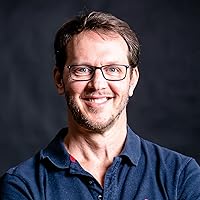
Wilderness guide Sicelo Mbatha shares lessons learnt from a lifetime's intimate association with Africa's wildest nature.
Black Lion begins in rural South Africa where a deeply traumatic childhood experience - a cousin being dragged away by a crocodile - should have turned him against the surrounding wilderness. Instead, he was irresistibly drawn to it. As a volunteer at Imfolozi Nature Reserve, close encounters with animals taught him to 'see' with his heart and thus began a spiritual awakening.
Drawing from his Zulu culture and a yearning to better understand human's relationship to nature, Sicelo has forged a new path to nature with an immersive, respectful and transformative way of being in the wilderness. As humanity hurtles into the anthropogenic 21st century, Black Lion is an urgent reminder of how much we need wilderness for our emotional and spiritual survival.
'A brave account of a natural disaster, and of achieving reconciliation with the predatoriness of life.' Richard Mabey on Mbatha's essay, Letting Go.
Well this is a truly sentimental one. I was walking through Exclusive Books two weeks ago and rounded a corner and nearly fell over - a familiar face was looking at me from the cover of a book.
In 2014 I was fortunate enough to have been led by Sicelo on a wilderness trail in iMfolozi. To this day it remains one of the most memorable things that I have had the privilege of experiencing. Nature needs no explanation but Sicelo perfectly acted as a conduit for us to deeply experience all that was around us - through meditation, poetry, stories and joy.
I didn't hesitate to read this book and was truly moved by his account of the spiritual power of the natural world. His passion for the bush shines through every page and anecdote and is seamlessly entwined with teachings about human nature and Zulu culture. His style of writing is as poetic as he is and I found it easy to turn the pages of the book.
Sicelo, you are a true champion for nature and for your community and the story that you have told is one rich in learnings and importance. Thank you for sharing your mind with the world.
This lyrical and heart-felt book helps to fill a yawning gap in African natural history prose. The overwhelming majority of such books have been written by white authors, underscoring a cultural divide that is seldom explored. Sicelo Mbatha is a Zulu from a poor rural background, and he brings an important perspective to African conservation that is missing from most such accounts. As such, this fine book joins "Changing a Leopard’s Spots: The Adventures of Two Wildlife Trackers," co-authored by Alex Van den Heever and Renias Mhlongo (my review of that can be read here: https://www.dailymaverick.co.za/artic... ) UPDATE: My Daily Maverick review of Black Lion can be read here: https://www.dailymaverick.co.za/artic...
The journey of reading this book has brought focus to what really matters to me in my life, to what it is to live with love and respect for all that is around me, human, animal, plant and mineral. To appreciate the connectedness and value that we all bring to each other and to remember how being with an open heart in a wild space can heal me and grow the space in my own heart.
My name is Sicelo Cabangani Mbatha. My wilderness name is Bhubeselimnyama – Black Lion.
Probably the most dangerous animal that we have in the area is the adder, provided you can find one when they are out from the spring onwards. We don’t have to be wary of properly dangerous animals like lions or crocodiles. Where Sicelo Mbatha lives though these animals are just a fact of life, something that was brough home to his when his cousin was taken by a crocodile when crossing a river.
It was as if I could sense the unbounded wonder of nature and life and earth. I wept because I did know how else to respond.
It didn’t make him want to go to the city, he wanted to stay in the Zulu homeland where he grew up, the draw of the natural world was too great to resist. He grew up as a child of nature, living a life that had been carried on that way for generations and learning it from the elders as they sat around the fire in the evening.
He began his working life, as many his age do, as a cow herder and it was being outside that reinforced his desire to become a game ranger. He passed his qualifications but did not have the money to be able to carry on his studies, so ended up working as a volunteer at the Mduba compound. It was here that he was to learn a lot of the skills, lion tracking, and monitoring rhino, that he would take through his career.
He would then become a trainee guide and best of all this was a paid position so he could properly support his young family. He thrived in this new position and learnt so much about the practical skills required in running a wilderness school. But it didn’t give him everything that he need, so when a position came up at Ezemvelo KZN Wildlife he applied and got it. It would be there where he would learn the next set of skills and become closer to the wilderness of Africa.
I really liked this account from Sicelo Mbatha of his life so far. It hasn’t been the easiest path that he has chosen to walk, but his heart is in the right place and he is happy with the choices that he has made. What comes across in the book is his passion for nature and all aspects of the natural world. At a deep level, he understands just how important it is to have a diverse world that is rich in specie, and that we as humans are just a part of that. Well worth reading to hear a new authentic voice in nature writing.
What a beautiful, unique voice. And soul. I found myself in a turmoil for the first third or so: loving the descriptions of his experiences, rolling my eyes at the heavyhanded Significance Junkie writing (I could feel my own new birth stirring within myself, the birth of some new wisdom and awareness [...] an awareness that here, intertwined, were perhaps the two most sacred strands of life. There’s a lot of that. No orchestral string crescendos due to technical limitations of the printed page, but I had little trouble imagining them.) Loving his ethics and vision, scoffing at the occasional intrusion of woo-woo. Then my brain shifted: I have my own forms of woo-woo; and, okay, I too marvel daily over a sunrise or a leaf or just a moment of wonder—I just don’t TALK about it, so let’s keep this confession between ourselves, okay? Once I made that mental shift, I just felt humility and awe.
Mbatha is a small fish in a small pond; promoting healing and, okay, wisdom; and now getting some press. Good. This book evoked Rilke: I live my life in widening circles / that reach out across the world. From all the way across the planet, his circle has reached me, and I’m infinitely grateful.
The journey of reading this book has brought focus to what really matters to me in my life, to what it is to live with love and respect for all that is around me, human, animal, plant and mineral. To appreciate the connectedness and value that we all bring to each other and to remember how being with an open heart in a wild space can heal me and grow the space in my own heart
A book that explores our relationship to nature through the imagery of the author whose beautiful descriptions of the flora and fauna of the African wilderness calm your soul. The Black Lion's journey echoes that of all humankind. His invitation to return to nature, the spirit of Ubuntu and peace resonates. Read this book, find your patch of nature (be it forest, field or veld) and heal.
Ik kocht Black Lion: Alive in the Wilderness vooral vanwege de omslag, die ik echt schitterend vind. Daarnaast zou dit gaan over de spirituele zoektocht van de schrijver, die zijn hele leven in de Zuid-Afrikaanse wildernis gewoond en gewerkt heeft. Genoeg dus wat mijn interesse wekte, en hoewel ik het zeker geen perfect boek vind, zijn er heel mooie ideeën over ons mens-zijn en onze relatie tot de natuur in terug te vinden.
Sicelo Mbatha groeide op in de Afrikaanse wildernis, als lid van het Zulu-volk. De natuur om hem heen speelde vanaf zijn geboorte een gigantische rol, net als bij zijn vriendjes en familieleden. Maar waar zijn naasten alleen maar dromen van een leven in de stad, blijft Mbatha gefascineerd door de planten en dieren waarmee hij omgeven is. Hij maakt een traumatische gebeurtenis mee wanneer zijn beste vriend wordt opgegeten door een krokodil en Mbatha niet in staat blijkt om zijn vriend te redden, maar zelfs dat weerhoudt hem er niet van om een carrière in de wildernis te ambiëren. Het is zelfs dezelfde wildernis die hem op den duur in staat stelt in het reine te komen met wat er op die dag gebeurde.
Puurste vorm Langzaam maar zeker werkt hij zich op tot begeleider van toeristen die iets hopen te vinden in de wildernis. En dan heb ik het niet over het zien van een olifant of een leeuw, maar over het vinden van verlichting, over het vinden van een manier om (beter) om te kunnen gaan met de tegenslagen in het leven. Mbatha ziet het als zijn persoonlijke doel om mensen de natuur in haar puurste vorm te laten ervaren om ze zo tot dezelfde inzichten te laten komen als die Mbatha kado zijn gedaan door zoveel tijd in de natuur te spenderen.
Zo leer je op hoeveel ontelbare manieren planten en dieren hun diensten verlenen aan alles wat binnen die wildernis leeft, of hoe je als mens vreedzaam naast andere levende wezens kunt leven. Je leert hoe je volledig in het moment kunt zijn (en hoe dat je gelukkig maakt) en hoe je je weer onderdeel kunt gaan voelen van een groter geheel.
Vervormde kijk Dat klinkt allemaal afgezaagd, maar ik denk dat bijna iedereen die nu leeft op een zekere manier die connectie tot de natuur kwijt is geraakt. We weten amper nog hoe het voedsel dat we eten bij ons terecht komt en ergens zijn we het rare idee gaan opvatten dat we geen onderdeel van de natuur zijn, maar dat we erboven staan en dat we haar naar hartenlust kunnen manipuleren. De vele crises die we te verduren krijgen, en die we in de toekomst nog op ons bordje krijgen, lijken een gevolg te zijn van die vervormde kijk op de werkelijkheid.
Black Lion laat uitstekend zien wat het persoonlijk en het algemeen belang is van helemaal opgaan in de wildernis, al is het maar voor een paar dagen. Het boek zit vol schitterende voorbeelden en steeds weer wordt de (spirituele) kracht die de natuur op een persoon kan uitoefenen onderstreept. Wat dat betreft is het echt wel een inspirerend en hoopvol boek dat laat zien dat we echt nog niet verloren zijn.
Saaiige passages Het boek is echter geschreven als een (auto)biografie die netjes van A tot Z alle feitjes oplepelt. Dat is niet de meest interessante vorm om zulke mooie ideeën en verhalen in te gieten. Mbatha is een heel interessant persoon, maar bij welke organisaties hij allemaal wanneer heeft gewerkt, dat is toch echt niet heel erg boeiend. Een ietwat eigenzinnigere compositie en een iets dunner boek hadden denk ik beter recht gedaan aan wat Mbatha over wil brengen en dan hadden ze die saaiige passages die er nu in zitten makkelijk achterwege kunnen laten.
Maar al met al vond ik Black Lion echt wel een bijzonder boek over een bijzondere man met een bijzondere kijk op zichzelf en de dingen om zich heen. Het zette me in ieder geval wel aan het denken, en zo’n tripje naar de Zuid-Afrikaanse wildernis is me als muziek in de oren gaan klinken. Mooie ontdekking dus, en dat in eerste instantie alleen dankzij die mooie omslag.
Black Lion tells the story of Sicelo Mbatha's life growing up in rural South Africa and his long career as a Wilderness guide. From an early age, he felt a deep connection to nature and the wildlife surrounding his community, setting him on a path to help conserve and celebrate all the beauty he saw. His ultimate goal would be to create a company that could help others, especially those from his own community, experience nature's healing powers.
It's not just the story of Sicelo's life and the many hardships he had to overcome to reach his dream that makes this book fascinating. It's also his refreshing view of nature and the wonders she has to offer all of us, whether in faraway places or just in our backyards. As Sicelo suggests, we need to open our senses and appreciate the other living things around us to understand that we can find deep connections and spiritual peace by immersing ourselves in this world.
I loved getting to know more about his Zulu culture, the vital role his kinsmen played in his journey, and how they could share so much knowledge acquired over generations but not always appreciated by others. Thankfully, there are people, like Sicelo, who do not want to see their traditions disappear over time. In Black Lion, he conveys his love for his heritage and community with honesty, humility, and vast knowledge of nature.
Frankly, this book is like a balm for the soul. And maybe the next best thing to stepping out into nature itself. No doubt, like everyone else who reads this, I suspect I'll be dreaming of a day when I can join a guide like Sicelo in discovering the African wilderness. But, until then, I'll be trying to appreciate all the nature in my area.
Thanks to LibraryThing for allowing me to read this book in exchange for an honest review. More reviews at www.susannesbooklist.com
I was attracted to this book because I recently finished Chris Bohjalian’s new novel, “The Heiress. That one take place in Africa’s Serengeti, and I thought that this one could increase my knowledge of a land I know that I will never see first-hand.
The author is a Zulu and lives in South Africa. It’s a world of difference between the Serengeti and the Imfolozi Nature Reserve, where Sicelo volunteered. I’m not sure exactly where this took, other than South Africa.
I did not get much out of this book. It lacks tension. I was not moved when Sicelo’s cousin was dragged away and eaten by a crocodile. The event was told from so far away, that this reader did not feel anything other than a small sadness and a shiver of “Dang! That had to hurt!” And that disturbed me.
Another problem that I encountered was the names of animals, trees, flowers, etc. that I had no idea I was and could not figure it out in the context of the narrative. I had no visuals that helped bring the items into focus.
I was impressed with one fact though. Getting to school was not easy. Sicelo and the other school children had to walk a “daily journey of fourteen kilometres there and fourteen kilometres” home. That’ s roughly 8.69 miles each way and no matter the weather, I can't imagine an American child doing that!
After a while, I felt like I was just reading words and falling asleep faster than I do when reading a book with which I could connect. I kept hoping for engagement, but it never came. Therefore, “Black Lion: Alive in the Wilderness” receives 1 out of 5 stars in Julie’s world.
This book has woken up my African soul and spirit.
I’m normally a fast reader, reading and absorbing at a pace. However, with Black Lion, I had to read it just before I went to sleep, often re-reading passages and highlighting what Sicelo Mbatha had written. I absorbed into my very being what I had read each night and it’s taken me two weeks to reach the final pages.
Sicelo Mbatha has woken up my African soul and spirit and asked me to look at my ancestors, my heritage, my link to the soil of Africa and remember walking on this often-boiling hot earth while I enjoyed the birds, insects, sea, and shells of the beautiful countryside.
I’ve studied many forms of holistic training over the years, with excellent results. However, something has always been missing - and now I have the answer – it was always there, from the day I was born, I am a child of Africa and must honour my roots and my ancestors and my deep love for where I came from.
Circumstances beyond my control saw me leave South Africa and settle in the UK. I accepted my new home and the customs expected of me. I am happy here. I enjoy the beauty that surrounds me, but there’s that hole in my life that only gets filled on my return to my land of birth. Covid has put pay to me visiting, with airline travel in chaos, but soon, very soon I will return to fill my heart with the essential ingredients so that I can return to the UK, able to continue my journey here.
Rony
Elite Reviews received a copy of the book to review.
From a young child growing up in rural Zululand, Sicelo Mbatha knew all he wanted was to live and work with nature and wildlife. Despite the trauma of losing his “soul-brother,” best friend and cousin to a crocodile at the age of seven, his love of the surrounding wilderness grew. In order to work in this environment, Mbatha volunteered at Hluhluwe-iMflozi Game Reserve. When a totally unexpected opportunity came along to train and work with the Wilderness Leadership School Mbatha became a trails guide. Drawing on his Zulu culture, and with the wise mentorship of colleagues, close encounters with animals and time spent in meditation in the bush, Mbatha learned to understand and gather spiritual wisdom. He guided others to know to see and hear what nature was saying, and how to enrich one’s life, awakening in them a deeper knowledge of the world with all its complexities. At times exciting, at times contemplative, this memoir is a reminder of how much we need nature for our own emotional and spiritual survival. Sadly we thought the over-romanticized descriptions, especially of the author's emotions as a young child, took away a lot of the authenticity of the book, and were unnecessary.
For the six-year-old Sicelo Mbatha, herding goats was no chore, but a joy, connecting him with nature, deepening his love of and desire to care for animals. This book is a sharing of the author’s deep love of all nature, his understanding that we are part of it, as it is part of us. He offers wisdom drawn from the wilderness where he is a guide, and recounts how his close encounters with dangerous animals dissolved the delusion of human – especially male – invincibility. There are passages here that are pure poetry, and the whole is inspiring. In particular, his reflections on the rite of passage and healing trails in which he has been involved are intensely moving. For example, he writes about a trail that brought together former enemies of the Northern Ireland conflict, for as he says, “the wilderness gives us space for grief’s work to happen.” P.168 Personal note: as someone who loves the bush, I experienced many emotional moments reading this book, and was several times on the edge of tears.
This is a striking narrative of the life of Sicelo Mbatha, a wilderness guide in South Africa. He recounts harrowing stories of encounters with the brutality of nature, but reframes that perception and continuously comes back to the wilderness and sanctuaries of South Africa as places of healing for himself and those he guides. Mbatha has remarkable encounters with wild animals, and has great respect for them, but somehow holds these encounters - as well as all experiences in nature - as sacred. Mbatha's descriptions of nature are active and engaging, showing that nothing in nature is ever frozen in time: all living things are constantly in communication and exchange with one another. It may be a hostile world at times, and it requires an adept guide to navigate these dangers, but Mbatha posits that what it has to offer is more than one could ever attain in material wealth.
I received this book as a gift from a friend upon her return from traveling to South Africa. I have had it for a couple years and it only recently called to me to pick it up and give it a read. In one word this book is SPECTACULAR!!! Sicelo Mbatha is an inspirational, beautiful human being who has my heart. It is now my greatest wish to go on a wilderness trail with him as my guide in Zululand.
The writing is breathtaking, the lessons are arrows straight to the heart -- this is a book I will reread, notate, and cherish my entire life. When I join him in the wilderness, I will carry this book with me for him to sign. I can only imagine the fragrant smells of Africa that the pages will absorb to carry home again.
Black Lion is a pleasure to read. The author, a gifted wilderness guide, shares his wonder and his love of the wild world. He brings all his love to the reader, a love, that is without sentimentality, for he shows us the harsh realities of life and death, inextricably entwined. Mbatha introduces us to his culture and the land that he walks; the people and some of the folk medicines of the area.
There is wisdom to be found in these pages. The author has put his philosophy of sharing and reciprocity into his tour company, uMkhiwane Sacred Pathways, which has a core goal to help the residents and the ecology of his part of South Africa.
I received a free copy from the publisher in exchange for an honest review.
Black Lion is well-written and Mbatha's personal stories are compelling. Unfortunately for me, I found the book veered too heavily towards passages about the wildlife and nature in Mbatha's region of South Africa. Some of these were interesting but they didn't hold my attention the way his personal stories did, and ultimately I didn't finish it. However, I think readers who enjoy non-fiction about the natural world will enjoy this book.
This is an autobiography of a Zulu man who became a wilderness guide and the many life lessons he learned along the way. He wants everyone to understand that they need to connect with nature in order to heal and have peace of mind. There are fascinating stories of encounters with dangerous animals but it's the lessons he passes on that make this book worth the time to read it. It even inspired a blog post for me which can be found at http://otherrambles.blogspot.com/2022...
Me ha encantado, y concuerdo en la mayoría de cosas que reflexiona en el libro. Como él mismo dice, no es solo un guía de safari, al final sus rutas se hacen una experiencia, de introspección y conexión con la naturaleza, de sanar y reconectar contigo mismo y con el planeta, de agradecimiento. Me gusta el detalle que le pone a todo, la observación, el ritmo… 10/10. Y la ayuda que presta a la comunidad, sin interés alguno, solo el bienestar para los suyos, en fin que un tío genial. Ojalá algún día poder aventurarse en uno de sus caminos😊
I really struggled to get into this book. Its mostly a panegyric about the iMfolozi nature preserve and nothing really happens. The bits where Mbatha shares stories of his own life are interesting but there's not enough of them to push the narrative along. I agree with the author that nature's awesome and I would much rather enjoy it first-hand than read about it.
Thank you to the publisher who sent me a free copy for review.
This was a really beautifully written memoir about the importance of our connection to the natural world, and how each step we take away from it damages us as individuals and a larger society.
It was a tiny bit repetitive in the middle section, but I appreciated how each part was divided up and written like it's own collection of essays so I could dip in and out and not feel like I was missing out on a single, long narrative.
This book is a wonderful glimpse into the wilderness of South Africa as told through Sicelo's unique perspective as a native and wilderness guide. His lessons in mindfulness, humanity, and compassion woven with breathtaking descriptions of his experiences are impactful and heart-rendering. I absolutely loved reading this book and now want to go on one of his wilderness experiences!
Finally, an indeginous real perspective on African conservation, which (sadly) still is a white male-oriented field. In this book, a South-African wilderness guide takes you through a spiritual journey, while explaining the world of animals and nature in a meaningful, poetic prose. I love Mbatha's way of describing the world. It was such a wonderful read.
I loved his descriptions of the time he spent in the bush and how at one he was with nature to . It was quite an eye opener reading how badly the volunteers were treated. I wasn't mad about the book, I found the details about his personal life a bit dull.
This book describes beautifully how some people are born with a knowing that there is more to life than what our five senses lead us to believe. I was gifted this book and I am so pleased that it landed in my lap.
Good to dip in and out of for some 'African wisdom', so rather endearing on that front, but packed so full of metaphors, meaning-of-life lessons and 'how nature can cure all' that it got a little bit dense - less of a read and more of a lesson...
I started out skimming like crazy but bit by bit the book reeled me in, until I was savouring every word , wiping tears from my eyes and digesting for days after. I could feel and smell the bush and my eyes were opened to the challenges of fellow humans and our planet. So raw
It's difficult to articulate the beauty and profound wisdom of this book. I loved moving through each chapter, as if I was joining Sicelo on a guided journey. It left a lasting impression. Sicelo's reverence of our natural world, and Bridget's writing is an absolute gift. Highly recommended!