

What do you think?

Everest 1922: The Epic Story of the First Attempt on the World's Highest Mountain
The dramatic and inspiring account of the very first attempt to climb Mount Everest, published to coincide with the centenary of the expedition of 1922.
The first attempt on Everest in 1922 by George Leigh Mallory and a British team is an extraordinary story full of controversy, drama, and incident, populated by a set of larger-than-life characters straight out of an adventure novel.
The expedition ended in tragedy when, on their third bid for the top, Mallory's party was hit by an avalanche that left seven men dead. Using diaries, letters, and unpublished accounts, Mick Conefrey creates a rich, character-driven narrative that explores the motivations and private dramas of the key individuals—detailing their backroom politics and bitter rivalries—who masterminded this epic adventure.
The first attempt on Everest in 1922 by George Leigh Mallory and a British team is an extraordinary story full of controversy, drama, and incident, populated by a set of larger-than-life characters straight out of an adventure novel.
The expedition ended in tragedy when, on their third bid for the top, Mallory's party was hit by an avalanche that left seven men dead. Using diaries, letters, and unpublished accounts, Mick Conefrey creates a rich, character-driven narrative that explores the motivations and private dramas of the key individuals—detailing their backroom politics and bitter rivalries—who masterminded this epic adventure.
312 pages, Kindle Edition
First published May 31, 2022
About the author
Mick Conefrey
14 books49 followersMick Conefrey is the author of the award-winning Adventurer’s Handbook and How to Climb Mont Blanc in a Skirt. An internationally recognised filmmaker, he has produced several BBC documentaries on mountaineering and exploration, including The Race for Everest. He lives in north Oxford with his family.
Ratings & Reviews
Friends & Following
Create a free account to discover what your friends think of this book!
Community Reviews
Displaying 1 - 30 of 62 reviews

September 25, 2022
While even regular uninterested people know the name of Edmund Hillary and his success at being the first white man to reach the summit of Mount Everest in 1953 (the other man with him was his Sherpa companion, Tenzing Norgay), few know of the first major attempt to climb the mountain in 1922. In fact, I (and Mick Conefrey) would argue that it is in fact the 1922 attempt that is the more important expedition.
A very British group of gents:
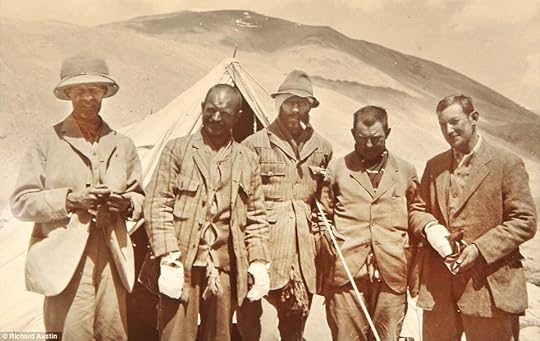
The 1922 attempt at Everest, being the first known historical account of anyone actually attempting to climb to the summit of Everest, is almost a story that writes itself. The grandeur of the moment, the experimental nature of using oxygen for the first time, the complete unknown over every ridge and through every crevice...it's a story that should draw anyone in to the nature of the unknown and the wild attempts to plan for it. First European encounters with mountainous Tibetan villages, the lack of any technology we take for granted today (e.g. lightweight tents, freeze-dried food, high efficiency propane fuels, clothing actually made for such an environment); heck, even the descriptions of mountainous vistas... ALL of it should easily make your soul stir for adventure, your mind float over the ice-capped peaks, and your limbs quiver with trepidation over the unknown of the next day.
Unfortunately, sometimes this book does that, and sometimes it doesn't. You see, the problem with the book is not the story; the story is perfect. The problem with the book is the writing. Mick Conefrey did an Extraordinary job in researching this book, and regularly cites relevant journal entries and letters to add color to the moment; however, the best written parts of this book are those same journal entries and letters. Coneferey's writing takes a high-flying colorful character like George Mallory, and makes him seem like a boring robot. Conefrey's descriptions of the Himalayan mountains, or Everest itself, pale in comparison to the journal entries of the expedition members; that is, if Conefrey decides to even describe them. Conefrey writes as though he's making an entry log: [They went here. Camped for the night. Traveled to the next village. Hired guides. Slept a day....etc:] (my hyperbolic representation, of course, but you get my drift). Conefrey has on his hands an immensely interesting story, with intriguing characters, and the most outstanding environmental setting one can ask for... and he writes them like a snore-fest.
Don't get me wrong, the book is good. Really good. It is an essential book for anyone interested in the history of Mount Everest mountaineering, and it is so well researched that I will be surprised if it does not become cited by students in future papers. Conefrey just needed a co-author; a writer who could bring the story he has to life. Who could make you taste the Yak-butter tea of the Tibetans, feel the biting chill on your face from the howling wind, feel the desperation in the minds of the men when they broke their oxygen valves at higher altitude than they could handle without it. The story is SO good, so very VERY good, it just needs a writers touch.
Allow me to give an example:
In Conefrey's description of the moment the party sees Everest for the first time, he says:
Everest was roughly sixty miles away to the south-west. At first it was hidden by cloud, but gradually the skies cleared, revealing both the North and East faces and the North-East Ridge running directly towards them.
Luckily, we also have George Mallory's journal entry of when he saw Everest the first time:
Mountain shapes are often fantastic seen through the mist: these were like the wildest creation of a dream. A preposterous triangular lump rose out of the depths; its edges came leaping up at an angle of about 70 degrees and ended nowhere. To the left a black serrated crest was hanging in the sky incredibly. Gradually, very gradually, we saw the great mountain sides and glaciers and aretes, now one fragment and now another through the floating rifts, until far higher in the sky than imagination had dared suggest the white summit of Everest appeared. And in this series of partial glimpses we had seen a whole; we were able to piece together the fragments, to interpret the dream. However much might remain understood, the center had a clear meaning as one mountain shape, the shape of Everest.
Ahh, that's more like it. Give me the lyricism, give me the passion through the words, show me the beauty of the moment, dammit, don't just tell me!
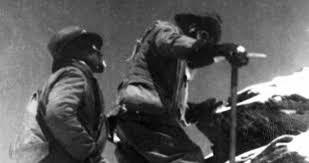
Mallory and Norton on their first attempt at the summit:
One thing Conefrey makes a very admirable effort to do, is to put this expedition in context. The historical moment of it, the technological moment of it, and the political moment of it; there is a lot about this expedition that is truly pioneering; even their interactions with the local remote Tibetans is a pioneering moment for any Western-European nation. The amount of tins of various foods they had to hoof along in backpacks should be a record. Conefrey wrote a fantastic Prologue and Afterword, and he clearly is passionate about the subject (and well he should be!), but unless the reader is passionate about the subject too then this book might not do it for them.
The 1922 expedition of the first attempt to climb Everest, was a landmark. It broke the altitude record, it showed the climbing world the known unknowns and the unknown unknowns, and the price of having to face both (sorry for the Rumsfeldian interjection but I couldn't help myself). In many ways the expedition was a enormous success, and also an enormous tragedy. Seven people lost their lives needlessly, due to the party's inability to accept their failure; the knowledge and experience the expedition brought back likely saved numerous lives of future mountaineers. This group of people, attempting to climb the tallest mountain in the world for the very first time ever, made history, made fools of themselves, and became legends.
If you have any interest at all in the first ever attempt to climb Everest, then read this book; the content is so good that it will hold your interest all the way through. Otherwise, better to get yourself some interest in it, and then come back and read this book; then its good content will hold your interest al the way through.
A very British group of gents:
The 1922 attempt at Everest, being the first known historical account of anyone actually attempting to climb to the summit of Everest, is almost a story that writes itself. The grandeur of the moment, the experimental nature of using oxygen for the first time, the complete unknown over every ridge and through every crevice...it's a story that should draw anyone in to the nature of the unknown and the wild attempts to plan for it. First European encounters with mountainous Tibetan villages, the lack of any technology we take for granted today (e.g. lightweight tents, freeze-dried food, high efficiency propane fuels, clothing actually made for such an environment); heck, even the descriptions of mountainous vistas... ALL of it should easily make your soul stir for adventure, your mind float over the ice-capped peaks, and your limbs quiver with trepidation over the unknown of the next day.
Unfortunately, sometimes this book does that, and sometimes it doesn't. You see, the problem with the book is not the story; the story is perfect. The problem with the book is the writing. Mick Conefrey did an Extraordinary job in researching this book, and regularly cites relevant journal entries and letters to add color to the moment; however, the best written parts of this book are those same journal entries and letters. Coneferey's writing takes a high-flying colorful character like George Mallory, and makes him seem like a boring robot. Conefrey's descriptions of the Himalayan mountains, or Everest itself, pale in comparison to the journal entries of the expedition members; that is, if Conefrey decides to even describe them. Conefrey writes as though he's making an entry log: [They went here. Camped for the night. Traveled to the next village. Hired guides. Slept a day....etc:] (my hyperbolic representation, of course, but you get my drift). Conefrey has on his hands an immensely interesting story, with intriguing characters, and the most outstanding environmental setting one can ask for... and he writes them like a snore-fest.
Don't get me wrong, the book is good. Really good. It is an essential book for anyone interested in the history of Mount Everest mountaineering, and it is so well researched that I will be surprised if it does not become cited by students in future papers. Conefrey just needed a co-author; a writer who could bring the story he has to life. Who could make you taste the Yak-butter tea of the Tibetans, feel the biting chill on your face from the howling wind, feel the desperation in the minds of the men when they broke their oxygen valves at higher altitude than they could handle without it. The story is SO good, so very VERY good, it just needs a writers touch.
Allow me to give an example:
In Conefrey's description of the moment the party sees Everest for the first time, he says:
Everest was roughly sixty miles away to the south-west. At first it was hidden by cloud, but gradually the skies cleared, revealing both the North and East faces and the North-East Ridge running directly towards them.
Luckily, we also have George Mallory's journal entry of when he saw Everest the first time:
Mountain shapes are often fantastic seen through the mist: these were like the wildest creation of a dream. A preposterous triangular lump rose out of the depths; its edges came leaping up at an angle of about 70 degrees and ended nowhere. To the left a black serrated crest was hanging in the sky incredibly. Gradually, very gradually, we saw the great mountain sides and glaciers and aretes, now one fragment and now another through the floating rifts, until far higher in the sky than imagination had dared suggest the white summit of Everest appeared. And in this series of partial glimpses we had seen a whole; we were able to piece together the fragments, to interpret the dream. However much might remain understood, the center had a clear meaning as one mountain shape, the shape of Everest.
Ahh, that's more like it. Give me the lyricism, give me the passion through the words, show me the beauty of the moment, dammit, don't just tell me!
Mallory and Norton on their first attempt at the summit:
One thing Conefrey makes a very admirable effort to do, is to put this expedition in context. The historical moment of it, the technological moment of it, and the political moment of it; there is a lot about this expedition that is truly pioneering; even their interactions with the local remote Tibetans is a pioneering moment for any Western-European nation. The amount of tins of various foods they had to hoof along in backpacks should be a record. Conefrey wrote a fantastic Prologue and Afterword, and he clearly is passionate about the subject (and well he should be!), but unless the reader is passionate about the subject too then this book might not do it for them.
The 1922 expedition of the first attempt to climb Everest, was a landmark. It broke the altitude record, it showed the climbing world the known unknowns and the unknown unknowns, and the price of having to face both (sorry for the Rumsfeldian interjection but I couldn't help myself). In many ways the expedition was a enormous success, and also an enormous tragedy. Seven people lost their lives needlessly, due to the party's inability to accept their failure; the knowledge and experience the expedition brought back likely saved numerous lives of future mountaineers. This group of people, attempting to climb the tallest mountain in the world for the very first time ever, made history, made fools of themselves, and became legends.
If you have any interest at all in the first ever attempt to climb Everest, then read this book; the content is so good that it will hold your interest all the way through. Otherwise, better to get yourself some interest in it, and then come back and read this book; then its good content will hold your interest al the way through.
June 10, 2022
This book concerns the second of Mallory’s three Everest attempts, and arguably the least written about. The previous being the year before, and the third, the much documented expedition of 1924 on which he died.
Conefrey attempts to get to the reason as to why the expedition failed.
Initially, it was a huge challenge to even get to the mountain, straddled between Tibet and Nepal, both of which were closed off to the world.
Funding was also incredibly difficult. But having overcome those hurdles, after many years of planning, the expedition was drastically poorly equipped with particular regard to clothing. It also suffered from a lack of food despite taking more than 800 cases of provisions, which included 24 bottles of champagne..
This is a book for devoted to the history of the mountain. Whereas much of what Conefrey relates is not new, his research is impeccable and there is plenty of minutiae, some of which is of interest.
There’s always a danger in this sort of book in becoming nostalgic in not simply recounting the facts, and Conefrey does fall into that trap on occasions, but overall the book was worth the read, if for nothing less than the half dozen or so snippets of information that I was not already aware of.
Conefrey attempts to get to the reason as to why the expedition failed.
Initially, it was a huge challenge to even get to the mountain, straddled between Tibet and Nepal, both of which were closed off to the world.
Funding was also incredibly difficult. But having overcome those hurdles, after many years of planning, the expedition was drastically poorly equipped with particular regard to clothing. It also suffered from a lack of food despite taking more than 800 cases of provisions, which included 24 bottles of champagne..
This is a book for devoted to the history of the mountain. Whereas much of what Conefrey relates is not new, his research is impeccable and there is plenty of minutiae, some of which is of interest.
There’s always a danger in this sort of book in becoming nostalgic in not simply recounting the facts, and Conefrey does fall into that trap on occasions, but overall the book was worth the read, if for nothing less than the half dozen or so snippets of information that I was not already aware of.

October 2, 2023
Took me a long while to finish, relatively dry and detailed account of the first attempts to climb Everest.

July 19, 2022
I was desperate and needed a book on Everest. Sadly this one didn’t get my juices flowing.

July 16, 2025
Unbelievable. I can’t get enough of Mt. Everest.

February 1, 2024
Another seemingly great topic that ended up being an unsatisfying read. The author writes in a workmanlike style which drains the story of drama and panache. It wasn't uninteresting, just un-thrilling, and un-moving. As usual, more and better-reproduced maps and photos would have helped. I have grievances about the editing as well (shocking!). Several times "they" is used when the rest of the sentence/paragraph is referring to a specific man. Not many men, not someone of unspecified sex. Why? Also, Conefrey (or, more likely, some clueless 23-year-old copyeditor) uses modern names for Indian cities (Mumbai, Kolkata) but then on the very same page refers to the capital of China as Peking. What on earth is going on here? This is distracting and completely ahistorical. At minimum, pick one era and stick to it. But it would be much more correct to use the place names that were in use at the time of the narrative. And if you are just so terribly uncomfortable using Bombay, then put a little author's note in the preface to explain your choice. This kind of thing is sloppy and maddening. Does anyone else get het up about this, or is it just me and I need to get over it?

Read
September 10, 2023Tenhle typ knížek moc nevyhledávám, protože jsem si dosud myslela, že číst o tom, jak někdo někam lezl, ještě navíc, když si fakta můžu přečíst na wiki, je dost nuda. Ale tohle nuda překvapivě nebyla a bylo to super!
Protože na wiki se obvykle nepíše nic o zákulisní řevnivosti, pletichaření anglických gentlemanů, jejich přebujelých egech nebo neuvěřitelné odvaze a odhodlání (záleží na úhlu pohledu), ani se moc necituje z dobových pramenů a dopisů účastníků (fakt fascinující).
A celou dobu jsem měla dilema, jestli jim mám vlastně fandit, nebo jim spíš kvůli jejich jisté koloniální nadutosti přát neúspěch. Ale každopádně jsem jim tak trochu záviděla, že skutečně mohli zažít ještě skutečné objevování.
Protože na wiki se obvykle nepíše nic o zákulisní řevnivosti, pletichaření anglických gentlemanů, jejich přebujelých egech nebo neuvěřitelné odvaze a odhodlání (záleží na úhlu pohledu), ani se moc necituje z dobových pramenů a dopisů účastníků (fakt fascinující).
A celou dobu jsem měla dilema, jestli jim mám vlastně fandit, nebo jim spíš kvůli jejich jisté koloniální nadutosti přát neúspěch. Ale každopádně jsem jim tak trochu záviděla, že skutečně mohli zažít ještě skutečné objevování.
This entire review has been hidden because of spoilers.

October 21, 2024
Another really solid and enjoyable Everest story from Mick Conefrey. He's definitely a go-to for me for historical mountaineering books now.

July 25, 2024
Maravilloso

August 9, 2022
Surprisingly inspiring, but not the best reading.
May 23, 2023
Sherpa you can’t be serious

January 29, 2023
Before George Mallory died on the North East Ridge of Everest in 1924, he was on Everest twice before. This is the story of the 1921 "Reconnaissance" when the British scouted out the approaches and topography for the first time, and their first official attempt at the summit in 1922. Mallory was on all three expeditions. This is a good recap, with enough detail, but if you want a thorough account, be sure to read Wade Davis's "Into The Silence" (which includes the 1924 expedition.)
Most people agree that Mallory never made the summit in 1924, although there is no evidence to prove he did or didn't, and if he didn't he got reeeeaally close. Conrad Anker found his body in 1999, just below the summit ridge, but Sandy Irvine's body is still somewhere on the mountain, along with the camera they took. I think it is very possible they made it, after studying all the various opinions, which of course would upend the Himalaya saga as we know it, and Edmund Hillary/Tenzing Norgay's 1953 success. Either way, with the South East ridge route eclipsing the popular imagination, thanks in great part to Krakauer's portrayal of the route as over-commercialized, and overwhelmed with client queues, the North East ridge and the West Ridge both hold their mountaineering mystique.
Most people agree that Mallory never made the summit in 1924, although there is no evidence to prove he did or didn't, and if he didn't he got reeeeaally close. Conrad Anker found his body in 1999, just below the summit ridge, but Sandy Irvine's body is still somewhere on the mountain, along with the camera they took. I think it is very possible they made it, after studying all the various opinions, which of course would upend the Himalaya saga as we know it, and Edmund Hillary/Tenzing Norgay's 1953 success. Either way, with the South East ridge route eclipsing the popular imagination, thanks in great part to Krakauer's portrayal of the route as over-commercialized, and overwhelmed with client queues, the North East ridge and the West Ridge both hold their mountaineering mystique.

August 15, 2022
Fascinating account of the first attempt at climbing Everest in the days before technical equipment was invented or the science behind the physiology of living at high altitude had been understood. Lots of gung-ho characters, rivalries, politics and bravery that ultimately resulted in a failed mission and it would be many years before the peak would be conquered.
September 2, 2025
A fundamentally interesting and entertaining book about the first two expeditions undertaken by the venerable George Mallory up Everest. I vowed to myself that after being thoroughly entertained by The Moth and the Mountain that I would return to the subject of mountaineering, specifically mountaineering up the highest slopes in the world, and I am glad that I did.
The people who were involved in these missions read like caricatures out of a late Victorian play. Whilst I do not doubt that an element of hyperbole is at play in this book, cast through the lens of the 21st century and a safer, generally less risk adverse world, the men who undertook the expeditions to Tibet, aided by generous donations of the upper echelons of British society were clearly an intrepid and determined bunch. It was surprising to me (and slightly disappointing) that much like those in the public eye today, several members of the two expedition teams where "nepo babies" who clearly relied on existing family connections and influence to get onto the team, yet behind the bravado they were more sensitive and aware than people perhaps gave them credit for. Clearly influenced by the roles a lot of them played within the British Army during various wars and the general trials of life during the 19th and 20th centuries, the character studies of their various diary entries and writings I found interesting and thought provoking on the whole. The simple fact of the matter is this; no matter how experienced they thought they were, the mountain clearly knew better and pretty much threw everything at them to make them fail in their ultimate goal. And yet they did not fail, setting two new world records for altitude camping and the highest ascent for humankind at the time.
At a time in life where I needed a clear distraction and a reminder of the human condition and what it means to be driven by an ultimate goal, this book served as a timely and suitably poignant reminder.
8.25/10, and I leave in search of even more mountain adventures. I will likely never go to the mountains of Tibet nor Nepal, but based on what I have read so far, I think I am content with that.
The people who were involved in these missions read like caricatures out of a late Victorian play. Whilst I do not doubt that an element of hyperbole is at play in this book, cast through the lens of the 21st century and a safer, generally less risk adverse world, the men who undertook the expeditions to Tibet, aided by generous donations of the upper echelons of British society were clearly an intrepid and determined bunch. It was surprising to me (and slightly disappointing) that much like those in the public eye today, several members of the two expedition teams where "nepo babies" who clearly relied on existing family connections and influence to get onto the team, yet behind the bravado they were more sensitive and aware than people perhaps gave them credit for. Clearly influenced by the roles a lot of them played within the British Army during various wars and the general trials of life during the 19th and 20th centuries, the character studies of their various diary entries and writings I found interesting and thought provoking on the whole. The simple fact of the matter is this; no matter how experienced they thought they were, the mountain clearly knew better and pretty much threw everything at them to make them fail in their ultimate goal. And yet they did not fail, setting two new world records for altitude camping and the highest ascent for humankind at the time.
At a time in life where I needed a clear distraction and a reminder of the human condition and what it means to be driven by an ultimate goal, this book served as a timely and suitably poignant reminder.
8.25/10, and I leave in search of even more mountain adventures. I will likely never go to the mountains of Tibet nor Nepal, but based on what I have read so far, I think I am content with that.
August 13, 2025
Ever since I took up mountaineering many years ago, George Mallory has lived in technicolor in my imagination, a lionheart of epic proportions. The famed climber was last seen 800 feet below the summit of Mount Everest during the British expedition to the mountain in 1924. Debates have raged ever since as to whether he and his climbing partner, Andrew “Sandy” Irvine, were the first men ever to reach the summit, as both perished in the mountain’s so-called Death Zone before they could report whether their daring bid was successful.
Perhaps it was Mallory’s failed ascents two years earlier that drove him to his ultimate fate in 1924.
Reading EVEREST 1922, Mick Conefrey’s exhaustively researched book recounting those first assaults on the titular mountain’s summit, Mallory emerges as a far more complex—and flawed—character than my imagination had previously rendered. Conefrey paints a portrait of an imperious climber oblivious to the striking beauty of the Himalaya and focused solely on grabbing mountaineering’s brass ring. During that earlier expedition, Mallory’s blind obsession with setting foot on Everest’s summit led him to ignore obviously dangerous conditions on the mountain, and his willing disregard caused the deaths of several other climbers he was leading.
But Conefrey’s historical opus is far more extensive than a treatise on Mallory, taking the reader back in time to mountaineering’s antiquated, early-twentieth-century approach writ large. Most surprising to me is the retelling of how the expedition’s climbers smoked cigarettes and imbibed hard liquor in storm-wracked camps shoehorned into the ice and snow at jetliner altitudes, in order to comfort themselves—not exactly a modern remedy for altitude sickness and hypothermia. Throughout EVEREST 1922, Mick Conefrey’s masterful writing weaves these and other little-known stories of the first attempt on the world’s highest mountain. For all those who love a good adventure story told extremely well, EVEREST 1922 is a must-read.
Perhaps it was Mallory’s failed ascents two years earlier that drove him to his ultimate fate in 1924.
Reading EVEREST 1922, Mick Conefrey’s exhaustively researched book recounting those first assaults on the titular mountain’s summit, Mallory emerges as a far more complex—and flawed—character than my imagination had previously rendered. Conefrey paints a portrait of an imperious climber oblivious to the striking beauty of the Himalaya and focused solely on grabbing mountaineering’s brass ring. During that earlier expedition, Mallory’s blind obsession with setting foot on Everest’s summit led him to ignore obviously dangerous conditions on the mountain, and his willing disregard caused the deaths of several other climbers he was leading.
But Conefrey’s historical opus is far more extensive than a treatise on Mallory, taking the reader back in time to mountaineering’s antiquated, early-twentieth-century approach writ large. Most surprising to me is the retelling of how the expedition’s climbers smoked cigarettes and imbibed hard liquor in storm-wracked camps shoehorned into the ice and snow at jetliner altitudes, in order to comfort themselves—not exactly a modern remedy for altitude sickness and hypothermia. Throughout EVEREST 1922, Mick Conefrey’s masterful writing weaves these and other little-known stories of the first attempt on the world’s highest mountain. For all those who love a good adventure story told extremely well, EVEREST 1922 is a must-read.

December 18, 2024
Book 49 of 2024
Picked this up for sale. Can't pass up a good Everest book. The blurb at the bottom of the cover says Conefrey writes with a similar poignancy to Krakauer in "Into Thin Air." Nah, but it's still an interesting read.
Pretty straight-forward non-fiction but I was drawn into the history of Everest expeditions. I've read a fair bit about 1996 and forward, but man, imagine how wild the mountain must have been as a relatively unknown slag heap. Crazily enough, even some of the guys in this book were working on the notion that oxygen was required for most to reach the top, and even in those first days, the debate about using oxygen in sport should be allowed was started.
Not being the perfect historical buff, I was not sure when Mallory went missing on the mountain. So you get through the 1921 expedition and I figured...1922 must be the year. Why else write a book about it? Given I've not read much about Mallory, the book was a sure page turner after that. Turns out, 1922 was not the year.
But enjoyed the read for historical purposes. Certainly, other books about Everest are more engaging. But Mr. Conefrey has reinvigorated my enjoyment of Everest books and I re-read Into Thin Air between finishing this one and getting on here to update my goodreads.
Picked this up for sale. Can't pass up a good Everest book. The blurb at the bottom of the cover says Conefrey writes with a similar poignancy to Krakauer in "Into Thin Air." Nah, but it's still an interesting read.
Pretty straight-forward non-fiction but I was drawn into the history of Everest expeditions. I've read a fair bit about 1996 and forward, but man, imagine how wild the mountain must have been as a relatively unknown slag heap. Crazily enough, even some of the guys in this book were working on the notion that oxygen was required for most to reach the top, and even in those first days, the debate about using oxygen in sport should be allowed was started.
Not being the perfect historical buff, I was not sure when Mallory went missing on the mountain. So you get through the 1921 expedition and I figured...1922 must be the year. Why else write a book about it? Given I've not read much about Mallory, the book was a sure page turner after that. Turns out, 1922 was not the year.
But enjoyed the read for historical purposes. Certainly, other books about Everest are more engaging. But Mr. Conefrey has reinvigorated my enjoyment of Everest books and I re-read Into Thin Air between finishing this one and getting on here to update my goodreads.

December 25, 2022
This book was fine. If you like Everest or mountaineering stories, it's worth a read. I found the pacing to be very slow, the details to be lacking, and the overall tone to be a bit vapid. The cover compares it to Into Thin Air and Touching The Void, both of which I've read and both of which were better than this book. I was frustrated that the book made me wait until the last chapter to get critical details, and a comparison to modern mountaineering. The photos and maps in the book were not good quality - the photos were grainy and the maps were not detailed enough.
The book also felt like it was only grazing on the topic of Sherpas, native Tibetans and colonialism. It touches on these topics, but then dances away from them with bare acknowledgement until the very end of the book, when it's summarizing itself. It acknowledged early on that there aren't many written records by the Sherpas, but then I would have liked the book to do a little more investigative research on the topic. Just one specific example.
Anyway, if you like Everest books, maybe check it out. But I'd recommend Into Thin Air first.
The book also felt like it was only grazing on the topic of Sherpas, native Tibetans and colonialism. It touches on these topics, but then dances away from them with bare acknowledgement until the very end of the book, when it's summarizing itself. It acknowledged early on that there aren't many written records by the Sherpas, but then I would have liked the book to do a little more investigative research on the topic. Just one specific example.
Anyway, if you like Everest books, maybe check it out. But I'd recommend Into Thin Air first.

March 11, 2024
⭐ 3.75/5 ⭐
Audiobook narrated by David Thorpe.
A detailed account of the first Western attempt to climb Everest and the trials and hazards faced in 1920s mountaineering.
- This is a very comprehensive account, and super detailed. I enjoyed this as I like knowing lots of little details but I can see how this could annoy readers who prefer a more action focused experience. For example, we get detailed histories on a lot of the climbers and in detail descriptions of the rations that were packed.
- The detail does lend itself beautifully to picturing landscapes. The aspects of the Himalayas travelled through and experienced by both the reconissence and attempt parties were vividly described and easily imaginable. I would happily read a book similar to this but dedicated to the culture of Tibet and the Himalayas.
- The author does a good job of addressing attitudes in climbing. There's intense and in-depth coverage over the benefits of supplemental oxygen throughout the book. Though not explicitly addressed until the end of the book and the epilogue, the author does discuss the treatment of Sherpas as both porters and guides and discusses some of the systemic racism faced by these people over the last century.
Thoroughly interesting and enjoyable. Would recommend to those who enjoy early 20th century adventure accounts and mountaineering.
Audiobook narrated by David Thorpe.
A detailed account of the first Western attempt to climb Everest and the trials and hazards faced in 1920s mountaineering.
- This is a very comprehensive account, and super detailed. I enjoyed this as I like knowing lots of little details but I can see how this could annoy readers who prefer a more action focused experience. For example, we get detailed histories on a lot of the climbers and in detail descriptions of the rations that were packed.
- The detail does lend itself beautifully to picturing landscapes. The aspects of the Himalayas travelled through and experienced by both the reconissence and attempt parties were vividly described and easily imaginable. I would happily read a book similar to this but dedicated to the culture of Tibet and the Himalayas.
- The author does a good job of addressing attitudes in climbing. There's intense and in-depth coverage over the benefits of supplemental oxygen throughout the book. Though not explicitly addressed until the end of the book and the epilogue, the author does discuss the treatment of Sherpas as both porters and guides and discusses some of the systemic racism faced by these people over the last century.
Thoroughly interesting and enjoyable. Would recommend to those who enjoy early 20th century adventure accounts and mountaineering.

May 27, 2023
A wonderfully well-written and highly accessible account of the first two expeditions to Mount Everest in 1921 and 1922; with an interesting and informative final chapter giving a brief resume of Everest exploration up to the present time, outlining some of the issues associated with the intense commercialisation of Himalayan climbing into essentially an expensive market for high-end tourism, despite all the dangers which still attend to climbing the world's highest peak. If this book had been furnished with references/citations for all the quotes and source material which it makes good use of it would be an invaluable tome. That said, there is a good bibliography pointing the reader on to further reading, both primary and secondary sources, and so, as such, it can be read as a good historical introduction to the early beginnings of Everest exploration. A very amenable book; well-worth reading.

November 7, 2025
some of my favorite ways mallory is described by his expedition fellows:
- ”…chaotic — he is a great dear but forgets his boots on all occasions” (bruce)
- ”… a very good stout hearted baby… quite unfit to be in charge of anything including himself… mallory cannot even observe the conditions right in front of him.” (longstaff)
”i feel like mallory is here just for the climbing.” (howard-bury (rephrased))
”for all his skill as a climber, mallory was regarded by his teammates as a slightly chaotic figure who was perpetually losing equipment and having problems with everything technical.”
”… such an innocent and incompetent traveller that he needed an officer to meet him in mumbai to make sure he got his luggage off the ship without forgetting anything” (hinks)
= finally the chaotic, sassy, god-complex representation i always needed
- ”…chaotic — he is a great dear but forgets his boots on all occasions” (bruce)
- ”… a very good stout hearted baby… quite unfit to be in charge of anything including himself… mallory cannot even observe the conditions right in front of him.” (longstaff)
”i feel like mallory is here just for the climbing.” (howard-bury (rephrased))
”for all his skill as a climber, mallory was regarded by his teammates as a slightly chaotic figure who was perpetually losing equipment and having problems with everything technical.”
”… such an innocent and incompetent traveller that he needed an officer to meet him in mumbai to make sure he got his luggage off the ship without forgetting anything” (hinks)
= finally the chaotic, sassy, god-complex representation i always needed
February 22, 2026
I’ve never read about Everest before, though I’ve read of modern expeditions on K2 and the history behind the first attempts at the world’s tallest mountain were interesting to me. The beginning was a little slow, but once you got through the part talking about funding the expedition and choosing worthy organizers and climbers for the 1921 and 22’ trips, then the story got much more interesting. I really liked the debate of oxygen vs no oxygen and seeing each “team” attempt the summit slightly differently. These were very tough, head strong men who if they were anything like Mallory had an ego, though put in a ton of hard work to achieve what they did. I would give this like a 3.8, it would be nice if there were more photos though I did find John Noel’s Everest film on YouTube which was cool.
July 21, 2022
Really good look at the Brits' first attempts at Everest. Makes me want to get my hands on his hard-to-find account of the '53 trek as well. Good combination of backroom politics and action in and around the mountain. Describes things well, though I could have taken even more detail on the actual climbing. Would echo the WSJ's recommendation of this book.
(Though, I've got to say, modern publishers' inability to deal sanely with pronouns anymore has totally driven me nuts. For instance, when George Mallory comes down with what he self-diagnoses as tonsillitis, Conefrey writes this: "It was a severe blow for someone who prided themselves on their fitness." Who writes or publishes a sentence like that with a straight face??)
(Though, I've got to say, modern publishers' inability to deal sanely with pronouns anymore has totally driven me nuts. For instance, when George Mallory comes down with what he self-diagnoses as tonsillitis, Conefrey writes this: "It was a severe blow for someone who prided themselves on their fitness." Who writes or publishes a sentence like that with a straight face??)

November 2, 2023
The story of the first expedition to climb Mount Everest.
This is a fascinating piece of history, taking you back to a time when Everest had not even been mapped. The development of rudimentary oxygen equipment and the controversy this generated was particularly interesting. The influence of the Sherpas and porters was sensitively covered, and I liked the analysis of the whole expedition. I felt that the story lost its punch towards the end however. I think that this might have been a better book if it covered the 1924 expedition as well, avoiding the clumsy references to it in the final chapter that assumes we are all experts. But an enjoyable book nonetheless.
This is a fascinating piece of history, taking you back to a time when Everest had not even been mapped. The development of rudimentary oxygen equipment and the controversy this generated was particularly interesting. The influence of the Sherpas and porters was sensitively covered, and I liked the analysis of the whole expedition. I felt that the story lost its punch towards the end however. I think that this might have been a better book if it covered the 1924 expedition as well, avoiding the clumsy references to it in the final chapter that assumes we are all experts. But an enjoyable book nonetheless.
November 28, 2022
An interestingly slow-paced history of one of the highlights of twentieth century mountaineering. Yes, of course it's a little-known tale about a well-known mountain. But perhaps it is Conefrey's detached view as a history writer which makes the story come together - if one is reading this for its historical import. If, on the other hand, you are looking for a dramatic account of mountaineering in its very earlier days in the Himalayas, this is not the book. It is not "Annapurna", nor "Into Thin Air". But I learned from it.

January 2, 2024
Pretty good read. Hope to get to base camp over the next few years so naturally have an interest. Felt as though there was a massive lead up to a less than dramatic climax. I think I was only let down because I had previously read ‘into thin air’, which made this a little ordinary. I think my biggest take from this book is the amount of effort it took to get from place to place back in the 1920s. In my opinion, the 1920s expedition shaped mountaineering, especially with the Introduction of oxygen, which was pretty epic.
November 16, 2025
One reviewer in The Spectator likened this book to Krakauer's Into Thin Air: A Personal Account of the Mt. Everest Disaster, but I found this one to be much drier. The book was well-written and well-researched, but it read more like a history book than an adventure story. I know more about the first attempt at Everest.

October 5, 2024
Really enjoyed this interesting and balanced account, highlights include:
- glacier lassitude being a real thing, not just something from The Ascent of Rum Doodle
- Kendal mint cake & brandy
- "There is only one motto for the Himalaya: when in doubt, don't."
And most importantly, the author doesn't shy away from highlighting the privilege of the British climbers, the modern circus, or the fact that the Empire made it certain that "we" would be the first to climb Sagamartha/Qomolangma.
- glacier lassitude being a real thing, not just something from The Ascent of Rum Doodle
- Kendal mint cake & brandy
- "There is only one motto for the Himalaya: when in doubt, don't."
And most importantly, the author doesn't shy away from highlighting the privilege of the British climbers, the modern circus, or the fact that the Empire made it certain that "we" would be the first to climb Sagamartha/Qomolangma.
January 11, 2026
First class read
Extremely well written book to the point that I felt I was accompanying the climbers up Everest even though I never left my armchair. Huge respect for those men. The unravelling of events in the book occurred in such a way that, even though they took place over one hundred years ago, they seemed as important to me now as something that happened last week. Can't wait for the author's next book which Has to be Everest: 1924.
Extremely well written book to the point that I felt I was accompanying the climbers up Everest even though I never left my armchair. Huge respect for those men. The unravelling of events in the book occurred in such a way that, even though they took place over one hundred years ago, they seemed as important to me now as something that happened last week. Can't wait for the author's next book which Has to be Everest: 1924.
August 4, 2022
The blurb review on the cover comparing this book to Jon Krakeur's is spot on. I attempted to read Wade Davis' " Into the Silence" but got lost in all the names and places and dates. "Everest 1922" does a superb job of presenting a large amount of information in a way that doesn't overwhelm you.

August 10, 2022
Before reading this, I thought the story would go into his final attempt to beat Everest. This covers only the first expeditions, but lays the groundwork, interestingly, for their last attempt. Conefrey does a great job presenting this piece of Everest history. I'm always a sucker for true polar, mountain and cave expeditons. Or, as a matter of fact, any historic expedition.
Displaying 1 - 30 of 62 reviews