

What do you think?

Tears Over Russia: A Search for Family and the Legacy of Ukraine's Pogroms
A sweeping saga of a Jewish family and community fighting for survival against the ravages of history.
Set between events depicted in Fiddler on the Roof and Schindler’s List, Lisa Brahin’s Tears over Russia brings to life a piece of Jewish history that has never before been told.
Between 1917 and 1921, twenty years before the Holocaust began, an estimated 100,000 to 250,000 Jews were murdered in anti-Jewish pogroms across Ukraine. Lisa grew up transfixed by her grandmother Channa’s stories about her family being forced to flee their hometown of Stavishche, as armies and bandit groups raided village after village, killing Jewish residents. Channa described a perilous three-year journey through Russia and Romania, led at first by a gallant American who had snuck into Ukraine to save his immediate family and ended up leading an exodus of nearly eighty to safety.
With almost no published sources to validate her grandmother’s tales, Lisa embarked on her incredible journey to tell Channa’s story, forging connections with archivists around the world to find elusive documents to fill in the gaps of what happened in Stavishche, Russia, that soon became Ukraine. She also tapped into connections closer to home, gathering testimonies from her grandmother’s relatives, childhood friends and neighbors.
The result is a moving historical family narrative that speaks to universal human themes—the resilience and hope of ordinary people surviving the ravages of history and human cruelty. With the growing passage of time, it is unlikely that we will see another family saga emerge so richly detailing this forgotten time period. Tears Over Russia eloquently proves that life is sometimes more compelling than fiction.
Praise for Tears Over Russia:
“An evocative and distressing account of her grandmother’s experiences during the wave of anti-Jewish pogroms that swept across Russia and Ukraine in the early 20th century. A vital personal record of Ukraine’s turbulent past.”
– Publishers Weekly
Praise for Tears Over Russia:
"While certainly an elegy to Jews dead, first by pogroms and later the Nazis, it is also a celebration of the essential work of librarians, archivists and genealogists. The bibliography alone makes this a valuable resource. This family history of Kyiv is especially potent in this season of Russian-Ukrainian strife, ironically with a Ukrainian Jew now at the helm...A timely and essential reading."
– Library Journal, starred review
Set between events depicted in Fiddler on the Roof and Schindler’s List, Lisa Brahin’s Tears over Russia brings to life a piece of Jewish history that has never before been told.
Between 1917 and 1921, twenty years before the Holocaust began, an estimated 100,000 to 250,000 Jews were murdered in anti-Jewish pogroms across Ukraine. Lisa grew up transfixed by her grandmother Channa’s stories about her family being forced to flee their hometown of Stavishche, as armies and bandit groups raided village after village, killing Jewish residents. Channa described a perilous three-year journey through Russia and Romania, led at first by a gallant American who had snuck into Ukraine to save his immediate family and ended up leading an exodus of nearly eighty to safety.
With almost no published sources to validate her grandmother’s tales, Lisa embarked on her incredible journey to tell Channa’s story, forging connections with archivists around the world to find elusive documents to fill in the gaps of what happened in Stavishche, Russia, that soon became Ukraine. She also tapped into connections closer to home, gathering testimonies from her grandmother’s relatives, childhood friends and neighbors.
The result is a moving historical family narrative that speaks to universal human themes—the resilience and hope of ordinary people surviving the ravages of history and human cruelty. With the growing passage of time, it is unlikely that we will see another family saga emerge so richly detailing this forgotten time period. Tears Over Russia eloquently proves that life is sometimes more compelling than fiction.
Praise for Tears Over Russia:
“An evocative and distressing account of her grandmother’s experiences during the wave of anti-Jewish pogroms that swept across Russia and Ukraine in the early 20th century. A vital personal record of Ukraine’s turbulent past.”
– Publishers Weekly
Praise for Tears Over Russia:
"While certainly an elegy to Jews dead, first by pogroms and later the Nazis, it is also a celebration of the essential work of librarians, archivists and genealogists. The bibliography alone makes this a valuable resource. This family history of Kyiv is especially potent in this season of Russian-Ukrainian strife, ironically with a Ukrainian Jew now at the helm...A timely and essential reading."
– Library Journal, starred review
335 pages, Kindle Edition
Published June 7, 2022
About the author
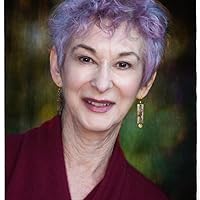
Lisa Brahin
1 book8 followersLisa Brahin is a Jewish genealogist, researcher and writer from New Jersey. Inspired as a young girl by Alex Haley’s ROOTS, she spent many summers audio taping the stories of her grandmother’s traumatic childhood during the 1917-1921 anti-Jewish pogroms in Ukraine. Those tapes were the primary source for her historical family saga, TEARS OVER RUSSIA: A Search for Family and the Legacy of Ukraine’s Pogroms (Publisher: Pegasus Books/Distributed By: Simon and Schuster: June 7, 2022).
With a lack of previously published sources to turn to, Lisa used her genealogical skills to locate and interview family members and former residents of her grandmother’s shtetl, Stavishche (which was a part of the Russian Empire at the time of her grandmother's birth, and is today located in Ukraine). Curators in four countries assisted her in finding unpublished documents, written in five languages, that would help to validate her grandmother’s tales.
Ms. Brahin is a graduate of George Washington University's Columbian College. On Jewishgen.org, the premier website for Jewish genealogy, she is a two-town project coordinator for the international Yizkor Book Project (Holocaust Memorial Book Project).
Lisa hopes that TEARS OVER RUSSIA will inspire continued interest in family history research. She also hopes her book will shine a light on a forgotten and underrepresented period of Jewish history – between the years described in FIDDLER ON THE ROOF and SCHINDLER’S LIST – that prefigured the horror that was to come.
Literary Agent: Kathryn Willms, The Rights Factory
Photo Credit: Special thanks to Diana P. Lang of Diana P. Lang Photography.
With a lack of previously published sources to turn to, Lisa used her genealogical skills to locate and interview family members and former residents of her grandmother’s shtetl, Stavishche (which was a part of the Russian Empire at the time of her grandmother's birth, and is today located in Ukraine). Curators in four countries assisted her in finding unpublished documents, written in five languages, that would help to validate her grandmother’s tales.
Ms. Brahin is a graduate of George Washington University's Columbian College. On Jewishgen.org, the premier website for Jewish genealogy, she is a two-town project coordinator for the international Yizkor Book Project (Holocaust Memorial Book Project).
Lisa hopes that TEARS OVER RUSSIA will inspire continued interest in family history research. She also hopes her book will shine a light on a forgotten and underrepresented period of Jewish history – between the years described in FIDDLER ON THE ROOF and SCHINDLER’S LIST – that prefigured the horror that was to come.
Literary Agent: Kathryn Willms, The Rights Factory
Photo Credit: Special thanks to Diana P. Lang of Diana P. Lang Photography.
Ratings & Reviews
Friends & Following
Create a free account to discover what your friends think of this book!
Community Reviews
Displaying 1 - 23 of 23 reviews

August 12, 2022
An extraordinary family history!
Immersive experience that made me feel like I knew these people and tasted their bread.
Immersive experience that made me feel like I knew these people and tasted their bread.

June 8, 2022
Set in the early 20th century, Brahin provides an account of her grandmother, Channa’s accounts of escaping the perils of Ukraine as pogroms across the country took the lives of hundreds of thousands of Jews. traveling first through Russia and then Romania, Channa’s family traveled over the course of three years in a group of approximately eighty, guided by an American who returned to aid his own family in their escape from the violence.
Brahin crafts a biography that reads like a suspense novel. At times I found myself forgetting this was a true story. This history feels all the more essential given Russia’s current invasion of Ukraine. This period of history is often times forgotten and yet needs to be remembered in the lead-up to the Shoah.
Brahin also does a lovely job of celebrating the work of historical researchers, librarians, and genealogists. These unsung heroes do the essential work of preserving such important histories.
I highly recommend this book and look forward to more from the author.
Brahin crafts a biography that reads like a suspense novel. At times I found myself forgetting this was a true story. This history feels all the more essential given Russia’s current invasion of Ukraine. This period of history is often times forgotten and yet needs to be remembered in the lead-up to the Shoah.
Brahin also does a lovely job of celebrating the work of historical researchers, librarians, and genealogists. These unsung heroes do the essential work of preserving such important histories.
I highly recommend this book and look forward to more from the author.
July 6, 2022
Tears Over Russia brought tears to my eyes, for several reasons. One, I have a direct connection to the story as my life partner was a Cutler (see footnote on page 211), so many of the characters were very real to me. Second, because of the author’s vivid account of the pogroms and the murder of thousands of Jews and destruction of their homes and property. To learn what these families endured to escape their homeland and make their way to the Golden Land is overwhelming. It struck me that those of us born here had no real idea of our ancestors’ journeys. The author was fortunate that her grandmother, Channa, (Anne) was willing to tell her stories and allow them to be recorded when so many of our grandparents didn’t want to talk about the painful past.
I am grateful to the author for her exhaustive research, and her persistence in telling the story of her family and their community in Stavische. While it reads like historical fiction, it’s well documented history, one that shouldn’t be forgotten. Even her appendices were fascinating! Of course, the parallels between events then and the current war in Ukraine are inescapable and they remained front and center in my mind as I read Tears Over Russia. A Jewish genealogist and researcher, Brahin turned her prodigious professional skills to uncovering her own family’s history, and in the process opens a window for so many of us who had been left to wonder about our roots.
I highly recommend Tears Over Russia to anyone whose family history dates from that era and geographical area, as well as those with an interest in Eastern European history.
I am grateful to the author for her exhaustive research, and her persistence in telling the story of her family and their community in Stavische. While it reads like historical fiction, it’s well documented history, one that shouldn’t be forgotten. Even her appendices were fascinating! Of course, the parallels between events then and the current war in Ukraine are inescapable and they remained front and center in my mind as I read Tears Over Russia. A Jewish genealogist and researcher, Brahin turned her prodigious professional skills to uncovering her own family’s history, and in the process opens a window for so many of us who had been left to wonder about our roots.
I highly recommend Tears Over Russia to anyone whose family history dates from that era and geographical area, as well as those with an interest in Eastern European history.

November 4, 2024
A well researched book about the pogroms in Ukraine during the early 20th Century. I learned a lot about Ashkenazi culture in then Russia and I enjoyed reading about the author’s family history and journey to the USA.
Read
August 28, 2022While it is challenging to follow the chronology and keep the various family lines distinct, the historical content is both valuable and heartbreaking.
December 31, 2025
About the time between fiddler on the roof and the holocaust. Interesting and not a time I know much about.

July 25, 2026
4.5 rated up because I think the content and family history is fascinating and worth sharing. "Tears Over Russia," could be a little slow at times and life after the family immigrated to the US was less compelling than the first 2 parts (only because they lived a very blessedly mundane life which was well earned after their traumatic journey to get there) but it was still a significant piece to include in the memoir and it would be cruel to critcize someone for not wanting to completely unpack the violence and horrors they'd witnessed to fill-up pages just because the rest of their life was normal. Plus, the original telling had been lost due to recording malfunction so having Grandma Anne retell her whole story twice must have been at least mentally, if not emotionally, strenuous on her so I won't criticize the story for not being "dramatic" enough because there was plenty of trauma already.
July 17, 2022
Tears Over Russia by Lisa Brahin is an incredible true tale of one man's rescue from almost certain death of almost 100 family members from the pogroms and rampant murder of the early part of the 20th century in what is now Ukraine. The author presents this history, worthy of a Hollywood epic in the vein of "Holocaust" or "Roots", that relates the insecurity/poverty/love/hatred/misery/randomness of the time and place, and though the cast of individuals can be confusing, their stories combine to give the reader a good sense of that period and their lives. This is an impressive work.

December 8, 2024
This was a carefully researched and thoughtful account of the author’s family and struggles in the Ukraine before coming to the United States. The book grabbed my attention with a personal story between the author and her grandmother. On page xiii, she explains that her book is, “Grandma Anne’s vivid account of her family’s survival during Russia’s deadliest wave of pogroms-when estimates ranging from well over one hundred thousand to nearly a quarter of a million Jews were annihilated during scores of riots that swept across the country…….”
The book starts and ends with personal stories. In between there is a timeline, a lot of history, and twenty-four pages of photographs that demonstrate how painstakingly the author completed her research. To reinforce this, the book concludes with forty-nine of appendices, two pages of Yiddish words, twenty-six pages of notes, and a seven page bibliography.
Overall, I enjoyed the narrative about the specific individuals. For me, there was a lot of history, and if I tried to read too carefully, I became easily distracted. Because I cared about the specific people, I read the historical parts, but very much looked forward to learning about the infividuals. So, for me, this was a brilliant approach. I was drawn in, learned a great deal of history, and then amazed by the strong characters and all they overcame to build and live successful lives in a new country.
Reading this at the start of December 2024, I did find myself questioning whether or not human beings have learned anything from history, or if we will continue to inflict the same pain and heartache that so many endured in the past. I personally felt that I knew the author and her family, and was amazed at all she learned despite the tragic pogroms that caused so much suffering, pain, death, and destruction.
The book starts and ends with personal stories. In between there is a timeline, a lot of history, and twenty-four pages of photographs that demonstrate how painstakingly the author completed her research. To reinforce this, the book concludes with forty-nine of appendices, two pages of Yiddish words, twenty-six pages of notes, and a seven page bibliography.
Overall, I enjoyed the narrative about the specific individuals. For me, there was a lot of history, and if I tried to read too carefully, I became easily distracted. Because I cared about the specific people, I read the historical parts, but very much looked forward to learning about the infividuals. So, for me, this was a brilliant approach. I was drawn in, learned a great deal of history, and then amazed by the strong characters and all they overcame to build and live successful lives in a new country.
Reading this at the start of December 2024, I did find myself questioning whether or not human beings have learned anything from history, or if we will continue to inflict the same pain and heartache that so many endured in the past. I personally felt that I knew the author and her family, and was amazed at all she learned despite the tragic pogroms that caused so much suffering, pain, death, and destruction.

January 31, 2026
Ukraine has a long history of antisemitism, with documented instances as far back as when it was still inhabited by some ancient Greek peoples. There were pogroms, organized massacres, against Jewish people in this region prior to both World War I and World War II. During these actions, thousands of people were murdered and thousands more were displaced. Families were torn apart for various reasons. This book highlights such instances and the search for family members and history.
I think it is important to note that there are shocking parallels between the racist ideologies of the pre-World War eras and current events in the world today. The targets have changed, but people have not. In these pogroms, the participants were business owners, artists, industrialists, public servants, and certainly those in charge. In our modern era, we see the same types of people aligning themselves with racist ideologies, terrible policies, terrible people. We see the same types of people defending atrocities all over the world, clumping together with other like-minded, hateful individuals to destroy lives. We see a startling lack of education, despite history having laid out a road map to ruin for us to consult. It is beyond comprehension that society has not advanced.
Overall, I found this book to be thought provoking for many reasons. I did not know a lot about the issues in Ukraine prior to World War II, as that was my specialization in school. I can make more sense out of the deep-rooted beliefs that people in Ukraine held at that time. If you are interested in antisemitism or the World Wars, this would be a good book for you.
I think it is important to note that there are shocking parallels between the racist ideologies of the pre-World War eras and current events in the world today. The targets have changed, but people have not. In these pogroms, the participants were business owners, artists, industrialists, public servants, and certainly those in charge. In our modern era, we see the same types of people aligning themselves with racist ideologies, terrible policies, terrible people. We see the same types of people defending atrocities all over the world, clumping together with other like-minded, hateful individuals to destroy lives. We see a startling lack of education, despite history having laid out a road map to ruin for us to consult. It is beyond comprehension that society has not advanced.
Overall, I found this book to be thought provoking for many reasons. I did not know a lot about the issues in Ukraine prior to World War II, as that was my specialization in school. I can make more sense out of the deep-rooted beliefs that people in Ukraine held at that time. If you are interested in antisemitism or the World Wars, this would be a good book for you.
July 24, 2023
Soon after author, Lisa Brahin, married, she began thinking about her Jewish maternal ancestry, shrouded in mystery. Her grandmother’s stories about fleeing pogroms in Ukraine had mesmerised her as a child and, as she entered this new phase of her own life, she longed to know more. This curiosity led Brahin on a search for truth that spanned years and involved meticulous research. The result, Tears Over Russia, is a beautifully written non-fiction narrative that reads like a novel.
Brahin eloquently weaves her family’s story, from the early 1900’s, with history, giving readers a poignant and authentic view of a Jewish family’s struggle to survive amidst brutal antisemitism. The level of detail Brahin provides is astonishing, like this letter written in 1918 from one rabbi to another, about attacks from bandits:
“The sources of income have stopped, and the lives of the residents hang by a thread. The bandits are not satisfied with ambush only, but invade by town, band by band, armed with swords, rifles, and grenades; they attack houses and rob them, enter the stores and take merchandise, then require tribute from the town.”
By the time I finished Tears Over Russia, I felt as if I knew Brahin’s grandmother, and I certainly had a far better understanding of the turbulent history in 1900’s Ukraine.
Tears Over Russia is an important and inspiring book that should be read by historians as well as those interested in navigating their own family history. It is a book that will stay with me for a long time.
Brahin eloquently weaves her family’s story, from the early 1900’s, with history, giving readers a poignant and authentic view of a Jewish family’s struggle to survive amidst brutal antisemitism. The level of detail Brahin provides is astonishing, like this letter written in 1918 from one rabbi to another, about attacks from bandits:
“The sources of income have stopped, and the lives of the residents hang by a thread. The bandits are not satisfied with ambush only, but invade by town, band by band, armed with swords, rifles, and grenades; they attack houses and rob them, enter the stores and take merchandise, then require tribute from the town.”
By the time I finished Tears Over Russia, I felt as if I knew Brahin’s grandmother, and I certainly had a far better understanding of the turbulent history in 1900’s Ukraine.
Tears Over Russia is an important and inspiring book that should be read by historians as well as those interested in navigating their own family history. It is a book that will stay with me for a long time.
March 28, 2023
This text was amazing. I'm truly at a loss for words because there is so little on this topic due to the burning and pilaging of churches/synagogues and other places of worship all across the Old Country that housed documentation like birth/death certificates, marriage certificates, etc.
I know in my own family personally, we have had the same problem in researching our own historical roots; and, while we are not Jewish (although recently, Ancestry made claims we do have some Jewish bloodlines), my family was chased out of Europe by the Tsarists/Soviets/Imperialist Germans/Nazi Germans, etc. due to our Slavic bloodline.
Not only that, but the fact that between the 1870s - post Second World War, lines across Europe were drawn and re-drawn countless times, so while our homeland is at the foothold of the Carpathian Mountains, the country origin can change depending on the year we are refering to in our research.
This book has inspired me to finally culminate all the documents and pictures I have found over the years to write my own book on parts of our family history, and will mainly focus on my great-uncle's journal that he wrote during his service in the Second World War after his parents came to America.
I can't thank you enough for sharing your family's story Lisa, this was a fantastic novel, and well worth the time and energy you put in this over the years!
God Bless you and your family.
I know in my own family personally, we have had the same problem in researching our own historical roots; and, while we are not Jewish (although recently, Ancestry made claims we do have some Jewish bloodlines), my family was chased out of Europe by the Tsarists/Soviets/Imperialist Germans/Nazi Germans, etc. due to our Slavic bloodline.
Not only that, but the fact that between the 1870s - post Second World War, lines across Europe were drawn and re-drawn countless times, so while our homeland is at the foothold of the Carpathian Mountains, the country origin can change depending on the year we are refering to in our research.
This book has inspired me to finally culminate all the documents and pictures I have found over the years to write my own book on parts of our family history, and will mainly focus on my great-uncle's journal that he wrote during his service in the Second World War after his parents came to America.
I can't thank you enough for sharing your family's story Lisa, this was a fantastic novel, and well worth the time and energy you put in this over the years!
God Bless you and your family.

January 23, 2023
The author explores the personal stories of those who survived the pogroms that wracked Ukraine in the wake of the First World War and Russian Revolution.
This is ultimately what I felt was the weak spot of the book - it kept the focus narrowly on one small community and the family of the author (understandably), but suffers from a lack of more comprehensive context of what was going in the wider region at the time. While the book captures the experience of being trapped in an ever-shifting political, social, and military maelstrom, the reader misses out on an opportunity to better explain the situation in Ukraine in 1917-1920.
This is ultimately what I felt was the weak spot of the book - it kept the focus narrowly on one small community and the family of the author (understandably), but suffers from a lack of more comprehensive context of what was going in the wider region at the time. While the book captures the experience of being trapped in an ever-shifting political, social, and military maelstrom, the reader misses out on an opportunity to better explain the situation in Ukraine in 1917-1920.

February 16, 2025
Remarkable!
(My wife's family possess a few stories that have been passed down about her family coming to America from the Ukraine before and after WW1. Luckily, my wife's Aunt interviewed, and captured on cassette during the 1970's, her mother's (My wife's Grandmother and oldest child of that generation) first hand account about her early family life and what it took to immigrate to America. No easy task!)
This book, Tears Over Russia, is a very compelling read about the trauma a whole community suffered and the how/why they ended up migrating to various countries, including America, starting in the early 20th Century.
(My wife's family possess a few stories that have been passed down about her family coming to America from the Ukraine before and after WW1. Luckily, my wife's Aunt interviewed, and captured on cassette during the 1970's, her mother's (My wife's Grandmother and oldest child of that generation) first hand account about her early family life and what it took to immigrate to America. No easy task!)
This book, Tears Over Russia, is a very compelling read about the trauma a whole community suffered and the how/why they ended up migrating to various countries, including America, starting in the early 20th Century.
December 15, 2023
Tears over Russia: A search for family and legacy of Ukraine’s Pogroms by Lisa Brahin
(Audiobook read on Everand app)
Between 1917 and 1921 (before World war 2) it us estimated that 100,000 to 250,000 Jews were killed in anti jewish pogroms across the Ukraine. This book shares the story of her Grandmother’s family during the time of the pogroms and their journey to the United States. It includes the challenges they faced adjusting in America as Well. Very interesting story about a time i had not heard about until this book.
(Audiobook read on Everand app)
Between 1917 and 1921 (before World war 2) it us estimated that 100,000 to 250,000 Jews were killed in anti jewish pogroms across the Ukraine. This book shares the story of her Grandmother’s family during the time of the pogroms and their journey to the United States. It includes the challenges they faced adjusting in America as Well. Very interesting story about a time i had not heard about until this book.

Read
March 6, 2025A long and agonizing book which i wanted to read, of course, but it made me sink into my chair and more depressed than i already am. I'm so afraid all of this is coming back. Words are being used today that are reminiscent of those times and it's coming from the height of power. It's unbelievable.
and people are cheering!
So much research and careful work went into this book. I'm surprised there is still a paper trail at all.
Looking at the faces of the descendants and the ancestors they might as well be my family, only mine was a little further away. The agony is the same.
and people are cheering!
So much research and careful work went into this book. I'm surprised there is still a paper trail at all.
Looking at the faces of the descendants and the ancestors they might as well be my family, only mine was a little further away. The agony is the same.

July 27, 2025
A detailed account of the pogroms against Jewish people in Ukraine around the time of the first World War. There is general information but the Author’s main focus and the context used is that of her family. Having one family as an entry point into this horrible time makes it easier to understand the devastation and lives lost.
June 25, 2023
Wonderful story. Poor choice of narrator.
October 23, 2023
Appreciate the effort to research and collate all these testimonials. Would have been excellent to incorporate more historical content of the circumstances and drivers for the various actions.

February 21, 2025
Audiobook
June 17, 2026
4.5 stars

June 30, 2022
An in-depth look at a Ukrainian community’s history and subsequent immigration to the US. I didn’t realize how many pogroms there were during the 19teens and 1920s. One of the most amazing stories was the mass exodus of almost 100 people led by one man.
My one critique is I got lost often with all the names and different families.
Thanks to Edelweiss and Pegasus Books for the complimentary copy.
My one critique is I got lost often with all the names and different families.
Thanks to Edelweiss and Pegasus Books for the complimentary copy.

September 23, 2022
I was so looking forward to this book based on my own genealogy work and particularly an interest in learning more about pogroms. (There seems to be very little written about them, certainly not in historical fiction.) But I’m afraid I was very disappointed.
To completely ‘fess up, I wound up skimming most of this book. Just keep that in mind if you read on.
First, my mistake. I thought this was historical fiction and I was looking forward to a fictionalized and emotionally rich account that would show me the human side of the thousands of Jews killed during the period of the pogroms. Unfortunately, the book turned out to be NON-fiction. Not my preferred genre.
Second, I found this very dry non-fiction — a compilation of chronological facts taken from the author’s considerable and detailed research into her family history. With tons of people (some with identical names) to keep track of.
On the plus side, I give the author kudos for shedding light on this seldom addressed chapter of history. And I did get a general sense of the impoverished and ever-threatened lives of Jews living in the Pale of Settlement, along with the many and time-consuming difficulties they faced in trying to leave their homeland for Palestine, another European country, or the United States. I just didn’t expect to have to also wade through the detailed stories of the lives of the author’s many relatives once they came to the U.S. To me, it all became tedious.
I wish Lisa Brahin had used her family story to illuminate the wider picture of Jewish persecution during this period. Instead, reading her book felt more like getting through a too-long and extremely personal term paper.
To completely ‘fess up, I wound up skimming most of this book. Just keep that in mind if you read on.
First, my mistake. I thought this was historical fiction and I was looking forward to a fictionalized and emotionally rich account that would show me the human side of the thousands of Jews killed during the period of the pogroms. Unfortunately, the book turned out to be NON-fiction. Not my preferred genre.
Second, I found this very dry non-fiction — a compilation of chronological facts taken from the author’s considerable and detailed research into her family history. With tons of people (some with identical names) to keep track of.
On the plus side, I give the author kudos for shedding light on this seldom addressed chapter of history. And I did get a general sense of the impoverished and ever-threatened lives of Jews living in the Pale of Settlement, along with the many and time-consuming difficulties they faced in trying to leave their homeland for Palestine, another European country, or the United States. I just didn’t expect to have to also wade through the detailed stories of the lives of the author’s many relatives once they came to the U.S. To me, it all became tedious.
I wish Lisa Brahin had used her family story to illuminate the wider picture of Jewish persecution during this period. Instead, reading her book felt more like getting through a too-long and extremely personal term paper.
Displaying 1 - 23 of 23 reviews