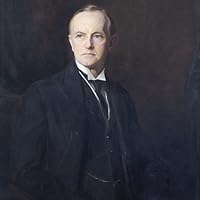
This book took me a little longer to read as the first 250 pages were a template out of a white hero's biography before the Civil War. The template is stale and I've read it a hundred times. White man from privileged background becomes something important and he is different because he knew/related to/or took in a person of color. This first third of this book was a slog due to this outdated script in which I found even the upbringing of John Marshall Harlan uninspiring (wanted to keep the Union together over abolition slavery), was a political moderate (the worst kind of politico), had a assumed half black brother who lived in the shadows (His story was more interesting in how he overcame massive odds to become as successful as he did and his later generations dwindled to abject poverty due to segregation and discrimination throughout the decades after Reconstruction.), and got his Supreme Court position as a political favor and winning geographic homeland. Also, John Marshall Harlan's parents were not at all on the cutting edge of original names for their offspring (John, James, Robert, Robert Junior, John Marshall Harlan II, etc.) This also led to a confusing flurry of what each unremarkable sibling did, save Robert, in the posh antebellum regions of Kentucky.
After you slog through the descriptive biography of mostly John, Robert, and their predecessors, you get to the meat of the book that was a bit more tasty. If the first 250 pages was a luke-warm hamburger from Mickey D's to fill your gullet, then the rest of the book was slightly overdone T-Bone steak that pairs well with a southern BBQ sauce.
John Marshall Harlan really took a hardline on the true meaning of legislation and post-war Amendments (13-15). This was most likely because of the influence of seeing his possible half brother Robert accomplish more than most whites. Credit Robert and the African-American experience. Current day ghouls like Roberts, Scalia, and Gorsuch try to imply or claim they are in the direction of Harlan, but we know that if their sorry asses were planted in the later half of the 1800s and early 1900s, they too would be relegated to the dust bin of history as being more of the same stogey white men that favored the oppressors of race and labor. You can already see these cretins in action with their rulings now, such as Shelby County v. Holder. At any rate, Harlan held a lonely position for some 80-odd years on civil rights and about 50 years on the issue of classism/labor.
Harlan's dissenting opinions were the seeds in which the modern civil rights movement and making the filthy oligarchs pay rested for legal arguments. It also shows once again that what is considered "radical" in normal oppressive American life is actually right. The lag time between Americans realizing what is really radical and what is really right is glacially slow and uncomplete as we can look around and see fatbacks still not up to speed on how to treat other human beings.
Harlan's first break with his white supremacist counterparts was in the Civil Rights Cases of 1883. After ruling against interracial couples (Remember, he was a "pragmatist" from Kentucky near the Civil War time), he found a conscience when it came to African-American's access to businesses. The Civil Rights Act of Act of 1875 was overturned 8-1, Harlan the lone dissenter. The northern white men that traded in justice for being able to do capitalism with their white rabid racist friends in the south, both on the bench, used a fig leaf to rip away rights. They said the 14th Amendment pertained only to state governments, not individuals and how they block others from participating in the economy (here's looking at you Masterpiece Cakeshop v. Colorado Civil Rights Commission). The Ku Klux Court also threw out the argument that the 13th Amendment applied to the case in which Harlan rightfully dissented:
"They are burdens which lay at the very foundation of the institution of slavery as it once existed [exclusion of blacks from businesses]...They are not sustained, except upon the assumption that there is, in this land of universal liberty, a class which may still be discriminated against, even in respect of rights so necessary and supreme that, deprived of their enjoyment in common with others, a freeman is not only branded as on inferior and infected, but, in the competitions of life, is robbed of some of the most essential means of existence."
In which many know and see today, politicos from both parties engage in double standards that would make a Batman villain blush. This was also true in 1883 and Harlan pointed it out when he focused the court to the fact that the Supreme Court once approved the use of municipal bonds to assist wealthy railroad companies under Congress' ability to regulate interstate commerce but now said they could not protect a man's right to get a beer at the local saloon because his pigment scared a man without pigment. Eighty-one years later, this argument would be used again in victory for civil rights.
As we enter the second and more severe Gilded Age, we see factories replaced with call centers and degrading service industries, we see Rockefeller and Carnegie replaced with Bezos and Musk, but we see the inequality and fire sale of our government done out in the open at an even higher level. Shit, Rockefeller, if his poor soul was alive, would probably take the side of anti-trust lawyers at this point. Just for mercy perhaps. Harlan saw the consequences of the first Gilded Age coming and the same spirit in his dissent at this time can ring loud today.
First, his cheap souled colleagues argued in United States v. E.C. Knight Co. that manufacturing monopolies were not in fact unhealthy for a competitive capitalism that we hear more than a dead horse. Weird that these fat-faced plutocrats "forgot" the innovation of vertical integration (here's looking at you Google and Microsoft) when it came to the same people they slobbered on cigars with. As is the theme of the book, Harlan dissented:
"The Constitution, which enumerates the powers committed to the nation for objects of interest to the people of all the states, should not therefore be subjected to an interpretation so rigid, technical, and narrow that those objects cannot be accomplished...
...A general restraint of trade has often resulted from combinations formed for the purpose of controlling prices by destroying the opportunity of buyers and sellers to deal with each other upon the basis of fair, open, free competition [here's looking at you Amazon]...Combinations of this character have frequently been subject of judiciary scrutiny, and have always been condemned as illegal because of their necessary tendency to restrain trade."
Then Harlan gets a little more sassy in which could be argued today against behemoth conglomerate companies:
"It is said that there are no proofs in the record which indicate an intention upon the part of the American Sugar Refining Company and its associates to put a restraint upon trade or commerce...Was it necessary that formal proof be made that the persons engaged in this combination admitted in words that they intended to restrain trade or commerce? Men who form and control these combinations are too cautious and wary to make such admissions orally or in writing."
Guess Harlan didn't foresee 2021. They're pretty brazen about their shit now.
During the same period of American history, the income tax was bandied about to expected scorn from those that monopolized profits and socialized costs. The progressive movement was in its nascent stage and William Jennings Bryan just got to the national scene. On a side note, I did learn for the first time that George Washington proposed a wealth tax and Hamilton personally defended it in the nation's capital. That goes against everything I learned and assumed by the landed gentry slave owners that broke away from Britain to accumulate more wealth. Also punctures a hole in the hackneyed arguments I hear from those with fewer working cells in their prefrontal cortex.
Again, the elite class of scum suckers fought tooth and nail against paying anything that would lessen their hoarding of money by even a cent. In smoky backrooms across major cities of the nation the conspiracy to smother the idea of a permanent income tax was at work. The gargoyles on the Supreme Court graciously gave the monied class ample time and sway in defeating the income tax. They, instead of paying a 2% income tax, wanted taxes to fall mainly on the peasantry below and that Congress did not have the purview to pass such a law. Accusations of socialism, assault on American values (I guess except George Washington's and Alexander Hamilton's), destruction of property through taxation, and the mob of poor ruining everything was thrown out into the public discourse (sound familiar?). Again, Harlan dissented:
"It [argument that Congress cannot pass an income tax bill] strikes at the very foundations of national authority, in that it denies to the general government a power which is or may become vital to the very existence and preservation of the union in a national emergency, such as that of war with a great commercial nation, during which the collection of all duties upon imports will cease or be materially diminished. It tends to reestablish that condition of helplessness in which Congress found itself during the Articles of Confederation."
He continues with pizzazz:
"Let me illustrate this...In the large cities of financial centers of the country, there are persons deriving enormous incomes from the renting of houses that have been erected, not to be occupied by the owner, but for the sole purpose of being rented. Nearby are other persons, trusts, combinations, and corporations, possessing vast quantities of personal property, including bonds and stocks of railroad, telegraph, mining, telephone, banking, coal, oil, gas, and sugar-refining corporations, from which millions upon millions of income are regularly derived. In the same neighborhood are others who own neither real estate, nor invested property, nor bonds, nor stocks of any kind, and whose entire income arises from the skill and industry displayed by them in particular callings, trades, or professions; from the labor of their hands, or use of their brains.
And it is now the law, as this day declared, that...Congress cannot tax the personal property of the country, nor the income arising either from real estate of from invested personal property...while it may compel the merchant, the artisan, the workman, the artist, the author, the lawyer, the physician, even the minister of the Gospel, no one of whom happens to own real estate, invested personal property, stocks, or bonds to contribute directly from their respective earnings."
And with that, he laid bare the still current class warfare tactic of the privileged rich cutting and running while leaving the mass majority of the country holding the bill. And what did the media of yesterday, just like today focus on? The way in which he dissented being so darn disrespectful.
In Plessy v. Ferguson a wealthier class of Creoles that were now delegated to the underclass with African-Americans didn't so much like the treatment they were now receiving as white Americans across the political spectrum abandoned the ideals of Reconstruction. Frederick Douglass wouldn't even show support for this case as he knew that one, was an intersection of class and race in which he knew race would be abandoned for class and two, white supremacy was at such a fever pitch, that any precedent set would hurt more than help. And that is what ended up happening.
The case was a challenge to the Separate Car Act passed by the newly minted racist Louisiana state government. While the advocacy group funded by wealthy creoles focused on segregation, they like Frederick Douglass predicted, ignored the travesties of lynching and Klan violence. And as predicted, a Supreme Court that sold their soul to the devil long before this case ruled against it. Their argument, just because they needed one, rested on the constitutionality of Louisiana's state police power to keep residents safe because mixing pigments is as explosive as juggling dynamite. And because white people were nice enough to even give blacks a rail car to ride in. Of course, Harlan dissented:
"Sixty millions of whites are in no danger from the presence here of eight millions of blacks. The destinies of the two races in this country are indissolubly linked together, and the interests of both require that the common government of all shall not permit the seeds of race hate to be planted under the sanction of law. What can more certainly arouse race hate, what more certainly create and perpetuate a feeling of distrust between these races, than state enactments which, in fact, proceed on the ground that colored citizens are so inferior and degraded that they cannot be allowed to sit in public coaches occupied by white citizens...
The sure guarantee of the peace and security of each race is the clear, distinct, unconditional recognition by our governments, national and state, of every right that inheres in civil freedom, and of the equality before the law of all citizens of the United States, without regard to race. State enactments regulating the enjoyment of civil rights upon the basis of race, and cunningly devised to defeat legitimate results of the war under the pressure of recognizing equality of rights, can have no other result than to render permanent peace impossible and to keep alive a conflict of races the continuance of which must do harm to all concerned."
While Harlan's contemporaries saw it fit to go easy on their whites of the South that were once driven to traitorous behavior because of their love to enslave others, he would not budge:
"Justice promotes peace; the legal recognition of prejudice and injustice can only perpetuate those ills."
"...in view of the Constitution, in the eye of the law, there is in this country no superior, dominant, ruling class of citizens. There is no caste here. Our Constitution is color blind and neither knows nor tolerates classes among its citizens. In respect of civil rights, the humblest is the peer of the most powerful. The law regards man as man, and takes no account of his surroundings or of his color when his civil rights as guaranteed by the supreme law of the land are involved."
Plessy v. Ferguson held on for 80 years and Frederick Douglass' fears came to pass.
Harlan took on opinions for dissent that still are to be remedied today. As America realized its dream to become an imperial nation, the ideals of the Constitution should be enjoyed anywhere an American flag flew took a back seat of a hooptie going over a cliff near Kilauea. The U.S. decided to start this quest by fighting up the ladder of imperial powers beginning with Spain. In a start to a long historic pattern, the U.S. trumped up a tragedy to produce war. After liberating Spain's colonies, we made them our own within minutes. Now the question is whether outside the actual states of the union, does the ideals we hold so dearly in the Constitution can apply to other, darker, people? Of course the court of yesteryear did not think so. These were the Insular Cases in which the U.S. decided that non-Anglo-Saxons were incapable of handling their own governing and deserving rights. But again, Harlan dissented:
"Although the states are constituent parts of the United States, the government rests upon the authority of the people, and not on that of the states."
"The wise men who framed the Constitution and the patriotic people who adopted it were unwilling to depend for their safety upon what, in the opinion referred to, is described as certain principles of natural justice inherent in Anglo-Saxon character which need no expression in constitutions or statutes. They proceeded upon the theory-the wisdom of which experience has vindicated-that the only safe guarantee against government oppression was to withhold or restrict the power to oppress. They well remembered that Anglo-Saxons across the ocean had attempted, in defiance of law and justice, to trample upon the rights of Anglo-Saxons on this continent."
"Whether a particular race will or will not assimilate with our people, and whether they can or cannot with safety to our institutions be brought within the operation of the Constitution, is a matter to be thought of when it is proposed to acquire their territory by treaty...A mistake in the acquisition of territory...cannot be made the grounds for violating the Constitution is not to be obeyed or disobeyed as the circumstances of a particular crisis in our history may suggest the one or the other course to be pursued. The People have decreed that it shall (Scalia not a fan of this word) be the supreme law of the land at all times."
This would be his largest dissenting opinion yet to be realized, even though we have a bunch of shitbaggers (like carpetbaggers but those who put someone else's honor in a bag and shit on it) in the Supreme Court claim Harlan's spirit. Not even the great professor of Harvard Law, Barack Obama could measure up to Harlan's legal opinion on treatment of other people on claimed U.S. soil.
To conclude, by geography and privilege, an underwhelming moderate during the greatest crisis our country faced since the revolution became a Supreme Court Justice that raised eyebrows among the African-American and civil rights minded populace. Harlan surprised most when he became the lonely voice for the masses in a time period that saw racial and class oppression ramp up to unprecedented levels until…like now. His dissenting opinions planted the seeds of justice to later bloom long after he became worm food. Many didn’t realize or acknowledge it during his own time and I hope Sotomayor or Kagan are those voices today as things look just as grim if not grimmer.
The grifting shitbaggers of today love to claim the honor of Justice John Marshall Harlan like Gorsuch who repeatedly cites Harlan as a role model and hangs pictures of him to supplement the fact, to Chief Justice John Roberts who admires Justice Harlan so much he moved his picture to the inner sanctum of the most undemocratic body in the world of democracies, to Justice Scalia (Rest In Piss) who claims Harlan was an originalist while he decided directly against issues that Harlan decided opposite.
If you are a fan of judicial history and law, you’ll love this book. If not, you’ll still like it, except for the long slog of the first 250 pages. After that, it is a reminder of what this country could have been then and now.
3.5/5