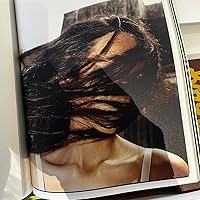
War - in the mind of the fragile Bea B., in the infinite icy landscape she journeys through, in Vietnam, in 10,000 years of human history. The war of the title is not merely a war of arms but a generalised state of violence permeating every atom of Le Clezio's creation. Bea B. searches for clues for the origin of the evil. Under her searching gaze the most everyday objects - advertisements, cars, light bulbs - reveal extraordinary dimensions, as the earth trembles on the brink of cataclysmic explosion.
Jean-Marie Gustave Le Clézio, better known as J.M.G. Le Clézio (born 13 April 1940) is a Franco-Mauriciano novelist. The author of over forty works, he was awarded the 1963 Prix Renaudot for his novel Le Procès-Verbal (The Interrogation) and the 2008 Nobel Prize in Literature.
Fin de siècle is how I see the the mid 1960s, just before the sexual, social, cultural and other ‘revolutions’ started shaping the metaphysical experience. Le Clezio is just such a ‘revolutionary’ pioneer, a kind of warm up act for the French New Wave, propping up, say, Godard’s cinematic dystopia (isn’t Pierre le Fou and Weekend glorious anarchy?) with experimental literary deconstruction. This was an era, remember, of challenging the sub specie aeternitatis of the status quo: in this fluid environment, Le Clezio (reminiscent to no small extent to his British co-horts Ann Quinn, John Brunner, Tom Mallin, whilst elsewhere Clarice Lispecter was blazing forth some South American PoMo and so on and so forth), declares war on consumerism, commercialism, all kinds of isms really, as befits a strapping 1970 trail blazer cum rebel without a cause. Valiant effort, but no cigar.
Le Clezio's other books were pretty dark and all, but they seem like friendly little Harry Potter novels in comparison to War. Hell, just the 40 page description, done in the style of a prophetic rant, of a war torn apocalypse that may or may not be taking place in the character's mind, yet somehow strangle bears an abstract resemblance to the US in 2009 in certain regards, is enough as it is.
For the most part, if you've read Le Clezio, you pretty much know what you're getting here:
lots of scenes with a person walking and describing every day common occurrences in really long drawn out surreal and eery terms, not alot of actual things going on, some kind of artfully described Bosch like existent or non-existent hell both external and internal, etc.
The difference is that you're just getting alot more of it in a manner far more intense and rapid than usual. I'm not sure if I (or the book) could decide if it was a proto-70's-Ballardian dystopic sci-fi novel, a surrealist manifesto, a philosophical tract, or an end of days religious pamphlet. Either way, it worked. It's just that, well, my mind is rather f#$#ed.
How far away one was. How much one had forgotten. There was no more free space outside, there were no more plains or mountains. There was no more blue sky with clouds floating in it, no more sun, no more wind or rain. All that was lost. There was no more beach stretching its white-pebbled length, sloping gently down into the sea, with lines of waves breaking diagonally across. Since early childhood the girl had been in flight, without knowing it. They were all pursuing her. They had set their packs of savage dogs upon her, they had forced her to run on and on . . . But there is no escaping the war. It snuffles you out, in the darkest recess of your hiding-place, and drives you from your hole. Then there is no choice but to be off again, to go a little farther still.
* Someone has made an attempt to understand. One day, someone began thinking about war, wanted to find out what war was all about, and how it would end. Someone has wanted to break windows in order to breathe, has wanted to launch words in quest of this kind of peace. Then, has vanished. Those who will see peace are not yet there, have not even been conceived. I myself am not really sure that I am born.
110613: whoa. this is unique, surrealistic, imagistic, experimental work of prose- hesitate to call it a 'novel' but it is too long to be a 'poem', though it does create memorable tableau, it has no real characters, only a few, unstable names, it has no immediately perceived plot, only wandering through war, through history, city, jungle, war, war, war- it reminds me of the possibility of words...
what is this state of being called 'war'? is it between masses of people who do not have cause but consent, for this seems almost defining the condition of people, or is it all peoples against the world, whatever the nature of that world is, or is it the essence of the violent human world and the people are only acting war out...
what is this book 'war'? read it quickly, read it in two sittings, but then that is maybe just me, whose artistic preference is images and not necessarily words. not referring to any corpus of previously read literature, not simply because not read, but this is not word games, allusions, puns, and as far as voices go... this is multiple, this is unclear, this is only sometimes Bea and sometimes JMG...
like it a lot, but is only a four because it gets very dense and frustrating towards the end, it is dark, almost wilfully opaque, though love the way he describes advertising, billboards, magazines, porn, roadwork, slum, department store, driving down random targets, airplane takeoff, waiting for a subway train, all just in what you see, you the only real character in the book, you the reader...
Une merveille... Un livre presque exclusivement descriptif de la genèse du monde à travers les yeux de Béa B. Une jeune fille qui découvre le monde et tous les objets dont il dégorge. Juste une merveille. Une langue simple, des phrases simples, des objets simples, mais des sens assez complexes et philosophiques. C'est ce que j'ai beaucoup apprécié. Attention au grand boulversement du tout dernier chapitre!
Jamais, je n'ouvrirai l'interrupteur d'une ampoule avec cette même passivité qu'avant, jamais je ne téléphonerai à personne sans se souvenir de la conversation téléphonique de Bea B et Monsieur X, jamais aussi je ne contemplerai les villes du même regard. Bref, un livre qui va vous bousculer d'une façon ou d'une autre sans que vous n'y consentiez, mais vous l'apprécieriez.
basically more of the same as the giants and the book of flights, but it's good.
"Forests, rivers, grasslands, grottoes, valleys: all are towns, now! Vertical posts, covered drains, esplanades, cellars, streets. Each day, something is torn away. On the surface of the Earth, deep in man's heart. Enough suffering! Let nature change its name: let it now carry a street name, a number, the symbol of a brand-new block. As for those who baulk, those who close their eyes, and those who photograph a blade of grass trembling in the breeze: may they all be crushed by the steamrollers, may they vanish pulverised into the snout of the pounding machine!"
"Beauty has been invented by the tiny-minded. Together, they have raised the pretentious monuments that defy space and time. For centuries on end they have been creating their towers of stone and cement, their squat breakwaters that keep the sea at bay, their tarred roads that bisect deserts. They have done all that and more. They have inverted panes of glass with bottomless reflections, great walls of liquid colour that sparkle with light and life, mirror-cliffs that a single pebble hurled by a single hand could smash to smithereens. Inside these cages they have stored their wealth, their priceless treasures, mountains of gold-dust and precious stones. And these treasures comprised mountains of corpses and rivers of blood. Century after century, this eager throng has been constructing its machines with their gleaming engines, their wheels, their crankshafts. Forces of energy were broken down, then imprisoned in vast ovens. Sweet sap flowed from all the trees, the earth was disembowelled, rivers of mud were diverted from their paths. So much labour, so much power, everywhere!"
A formless narrative concerning war as a sort of permanent state of existence – it permeates everything, not just actions on the battlefield, but in the energy and stress of everyday life – light bulbs, juke boxes, modern life they all seem to be instruments of war. There is a sort of narrative about a young woman called Bea B and there is a Monsieur X. Bea B seems to be adrift in this world of violent energy. It is a curious mixture of war protest writing and Sixties social mores – the fast paced loud colourful cultural world of that time and its sexual liberation seems all blended together. It seems to make little distinction between war and other states of social order, so that it is at risk of saying nothing about war - if everything is permanently at war with itself then there isn’t much to say about actual war. More, it seems to be a novel that is enthralled by the modern world of cars, skyscrapers and planes – in this way it feels almost like a futurist novel, seeing the energy of the machine age as a fundamental force. There is no rootedness in the novel, the girl Bea B can be anywhere and everywhere, she writes in a diary ‘ezejot diary’ at certain points, and Mons X seems at times to be an embodiment of or voice of war – he goes off on a sort of biblical narrative of conflict at one point, but all in all the novel has the feeling of free ranging random thoughts and observations on modern life with only the loosest connecting thread and possibly not much to say about what it sees. There is little poetry in the novel, the eye is attentive and sees everything but only states the existence rather than attempting description or any metaphorical language.
Any book that can include a passage like this with absolute conviction when describing something as simple as a city street and make the feeling behind it palpable is just an instant five stars - one of the golden rules of books:
"There will be other, far stranger signs: in the dark streets you will see great red letters light up like lightning flashes as they wink on and off among doors and shop windows. The words will advance in file, then erase themselves, then reappear once more. Terrible insane words casting their hooks wildly, words which will say things such as SHLAK! SLURP! KWIK! BOOPS! PFFTSHSHGONG! RÔÔÔÔÔ! and you will know fear. For no-one escapes these words."
Like an alien's view of life on earth. Bleak, nonsensical, funny, scary, at times beautiful and strangely hopeful. Completely unlike anything I've read before. Loved it.
Le Clezio's WAR is not so much a novel as a fictional discourse on the strange relationship between man and his internal and external environment. Thus, if the reader is seeking the comfort and security of a world where cause and effect are linked to produce a climax, as in the traditional novel, he will be disappointed. For there are no 'characters' as such, only a roving consciousness that inhabits the essence of things and creatures. To be fair, as in the author's equally engaging Terra Amata,there are named characters (Bea B and Mr X) through whose labyrinthine consciousness we wander, but they are evanescent creatures, not rooted, subject to strange transformations, difficult to pin down, but not difficult to identify with. For,as he does in Terra Amata, Le Clezio is able to delve even into the consciousness of an ant.
'And suddenly he would disappear in the human sea, he would vanish, swallowed up, unconscious, and no one would ever know that he'd been there.' Thus Chancelode in Terra Amata experiences the moment of terror felt by every large-brained upright mammal that he is but a fragment in a universe without meaning or purpose. But Chancelode will forget this primal terror by going to a funfair or watching girls on the beach; he will be caught up in that delicious whirlpool we call life. But ever the terror, the knowledge that Prospero had that 'Our little life is rounded with a sleep.' Le Clezio presents us again in WAR with an evolving universe in which homo sapiens appears and disappears in a blink. There is delight, but precious little comfort or security in a Le Clezio fiction.
This of course raises questions, not only phlosophical, psychological and teleological, but novelistic. For Le Clezio is not a novelist in any traditional sense. If you want ripping yarns you must seek elsewhere. For me he recalls another great French writer, a very special novelist who shatters our genre expectations, Marcel Proust. It you love Proust you will enjoy Le Clezio. There's no point giving a conventional plot summary of these fictions, for there is no plot. The only character is Mankind or Everyman, as in the Morality Plays, but here there is no morality being played out. There is no prospect for even symbolic immortality. If you want to experience (at second hand of course) Eliot's 'fear in a handful of dust' read Le Clezio. Ants figure quite largely in Terra Amata. They've been around longer than us, and should 'know' more about survival. We are on a head-on collision course, is the underlyong theme of WAR. Ants are better organised as a species. Man is a latecomer to this planet and probably an early departer. Many will not wish to know this. The beautiful fiction WAR is not for them.
We are latecomers true, but meanwhile, as Hamlet says to the watchers at Elsinore, 'every man hath business and desires.' Le Clexzio shows these in all their energy and ultimate futility. But there is hope, not so much for mankind as for the universe as a whole. Chancelode or Le Clezio in Terra Amata knows that he is doomed and even writes his own epitaph (a highly comic scene set in a museum thousands of years hence. Man is a curious creature - in both senses - and this need to discover is what Le Clezio celebrates. For, according to Darwin (who we celebrate this year) every microscopic act has an effect on the universe as a whole. Thus the flapping of a butterfly's wing in Peru may trigger a volcano in Japan. Only large-brained mankind needs to know or believe this. Any signal sent out in, say, Timbuctu in 2009 has an influence on animal or plant behaviour millennia hence. Difficult to accept? Yes, but then, we're only human, aren't we. Like Darwin, Le Clezio celebrates this fact. C
This could well be the most intense book I've read so far. From the first page Clezio draws the reader into the book with short punchy sentences that create a sense of great urgency, focussing on the concept of war whilst disorientating the reader with bomb like explosive insight. The net effect is one of being over-awed by the power of the language, it is as if you are cast into the middle of this war trying to find a path to the fragile Bea and together figure what is going on here.
Short Faulkner style descriptions of war sit alongside Proust-esque descriptions of Bea's mind finally culminating in a Final speech that reminds on the Epic speeches of Atlas Shrugged, just done right;
'Beauty has been invented by the tiny-minded. Together they have raised the pretentious monuments that defy space and time...Inside these cages they have stored their wealth, their precious stones. And these treasures comprised mountains of corpses and rivers of blood'
At times the book can drag, this is due largely to moving from such intense passages to longer beautiful descriptions from Bea's memory yet never lasts long enough to be a problem. This book seems to hit so many nails on the head in terms of the meaning of things.One sympathizes with Bea whilst still retaining a critical distance, is she bringing a stop to this war, or is the war just in her mind, is it in everyone's mind?
Thoughtful and thought-provoking, recommended if you have some time to set aside for some focused reading. Often stunning.