

What do you think?

The Deepening Stream
A Persephone reader wrote on her blog I Love Reading: ‘I loved this book. It’s the coming of age story of Matey Gilbert. We first meet Matey (her name is Penelope and the nickname is never explained) as a small child, living in France with her parents and siblings Priscilla and Francis. All three children are scarred by the experience of tiptoeing around their parents. Matey learns to cope by avoiding confrontation and through the love of her dog, Sumner. I admired the accuracy of Dorothy Canfield Fisher’s psychological insights into the mind of a sensitive child like Matey even though I have never really been interested in books written from a child’s eye view: usually I skim the opening chapters of biographies too, especially when they go back several generations. However, here it was compelling. Once Matey grows up and visits Rustdorf, her future home, I couldn’t put the book down. This is where she begins to develop as a person, the deepening stream of her personality begins to emerge from her troubled childhood.’
But above all this book is absolutely extraordinary about life on the home front in France during WW1. Matey has a miraculously happy marriage. Then in 1915 she and her husband make the decision to go and help the French war effort. The description of their life in France is quite simply stunning and one can safely say to anyone reading this – you will never read anything like it, and never forget it. As the novelist and critic Diana Birchalls wrote to us: ‘This is the best evocation of what domestic life was like in France during WW1 I have ever read’ and it will undoubtedly prove to be the most memorable book on the subject that any Persephone reader has ever read as well.
Our proofreader (always a wise voice) wrote: ‘I loved the book! She has the best description I’ve ever seen of absolute total exhaustion in the scene where Matey is helping the doctor with the wounded soldiers returned from the Front. Also such fascinating stuff about America’s early, and later, responses to the war in Europe. It feels like lived experience of being on the Home Front in France during WW1 – not to mention her very lived experience of Quakerism. It is one of the few books where, as a Quaker, I can recognise her experience in Meeting, and on matters of ethical banking, and conscientious objection – and it’s not too over-idealised, which can be easy to do. It must have been progressive for its time in its references to the pleasures of sex for a woman. I felt it was a very new, very interesting voice for me.’
And our preface writer Sadie Stein concludes: ‘It is a mystery to me why The Deepening Stream is not listed alongside Testament of Youth, A Farewell to Arms and Parade’s End as a definitive WW1 novel… Without ever taking the reader into the trenches, DCF makes us feel how war grinds you down, until one’s receptivity to tragedy is necessarily blunted… The Deepening Stream is strikingly modern: domestic hurts are addressed with complete seriousness; the pain of the war, meanwhile, is rendered intimate. The focus remains tight, unsparing, humane. By the time I read her taut descriptions of the ravages of the Somme, I realised I had come to respect DCF as what she is – a great American writer – and The Deepening Stream as a neglected treasure of the last century.’
Preface by Sadie Stein.
The endpapers are taken from a design for a 1914-23 chiffon voile by Margaret Macdonald Mackintosh.
But above all this book is absolutely extraordinary about life on the home front in France during WW1. Matey has a miraculously happy marriage. Then in 1915 she and her husband make the decision to go and help the French war effort. The description of their life in France is quite simply stunning and one can safely say to anyone reading this – you will never read anything like it, and never forget it. As the novelist and critic Diana Birchalls wrote to us: ‘This is the best evocation of what domestic life was like in France during WW1 I have ever read’ and it will undoubtedly prove to be the most memorable book on the subject that any Persephone reader has ever read as well.
Our proofreader (always a wise voice) wrote: ‘I loved the book! She has the best description I’ve ever seen of absolute total exhaustion in the scene where Matey is helping the doctor with the wounded soldiers returned from the Front. Also such fascinating stuff about America’s early, and later, responses to the war in Europe. It feels like lived experience of being on the Home Front in France during WW1 – not to mention her very lived experience of Quakerism. It is one of the few books where, as a Quaker, I can recognise her experience in Meeting, and on matters of ethical banking, and conscientious objection – and it’s not too over-idealised, which can be easy to do. It must have been progressive for its time in its references to the pleasures of sex for a woman. I felt it was a very new, very interesting voice for me.’
And our preface writer Sadie Stein concludes: ‘It is a mystery to me why The Deepening Stream is not listed alongside Testament of Youth, A Farewell to Arms and Parade’s End as a definitive WW1 novel… Without ever taking the reader into the trenches, DCF makes us feel how war grinds you down, until one’s receptivity to tragedy is necessarily blunted… The Deepening Stream is strikingly modern: domestic hurts are addressed with complete seriousness; the pain of the war, meanwhile, is rendered intimate. The focus remains tight, unsparing, humane. By the time I read her taut descriptions of the ravages of the Somme, I realised I had come to respect DCF as what she is – a great American writer – and The Deepening Stream as a neglected treasure of the last century.’
Preface by Sadie Stein.
The endpapers are taken from a design for a 1914-23 chiffon voile by Margaret Macdonald Mackintosh.
616 pages, Paperback
First published January 1, 1930
About the author
Dorothy Canfield Fisher
178 books155 followersAlso wrote under the name Dorothy Canfield.
Library of Congress Authorities:
Fisher, Dorothy Canfield, 1879-1958
See from: Canfield, Dorothy, 1879-1958
See from: Fisher, Dorothea Frances Canfield, 1879-1958
See from: Fisher, John Redwood, Mrs., 1879-1958
Some fiction works continued to be published under her maiden name after marriage.
Dorothy Canfield Fisher (February 17, 1879 – November 9, 1958) was an educational reformer, social activist, and best-selling American author in the early decades of the twentieth century. She strongly supported women's rights, racial equality, and lifelong education. Eleanor Roosevelt named her one of the ten most influential women in the United States. In addition to bringing the Montessori method of child-rearing to the U.S., she presided over the country's first adult education program and shaped literary tastes by serving as a member of the Book of the Month Club selection committee from 1925 to 1951.
(from Wikipedia)
Library of Congress Authorities:
Fisher, Dorothy Canfield, 1879-1958
See from: Canfield, Dorothy, 1879-1958
See from: Fisher, Dorothea Frances Canfield, 1879-1958
See from: Fisher, John Redwood, Mrs., 1879-1958
Some fiction works continued to be published under her maiden name after marriage.
Dorothy Canfield Fisher (February 17, 1879 – November 9, 1958) was an educational reformer, social activist, and best-selling American author in the early decades of the twentieth century. She strongly supported women's rights, racial equality, and lifelong education. Eleanor Roosevelt named her one of the ten most influential women in the United States. In addition to bringing the Montessori method of child-rearing to the U.S., she presided over the country's first adult education program and shaped literary tastes by serving as a member of the Book of the Month Club selection committee from 1925 to 1951.
(from Wikipedia)
Ratings & Reviews
Friends & Following
Create a free account to discover what your friends think of this book!
Community Reviews
Displaying 1 - 24 of 24 reviews
March 4, 2022
I remember in 2014, at the beginning of commemoration of the First World War, being incensed when some clot pronounced that Sebastian Faulks' over-rated novel 'Birdsong' was 'THE book of the First World War'. Huh? What about all the brilliant novels written by people who had actually lived through the War and experienced it? Novels like A P Herbert's 'The Secret Battle'; Patrick MacGill's 'The Great Push'; Victor Yeates's 'Winged Victory'; Frederic Manning's 'The Middle Parts of Fortune'; Ian Hay's 'The Willing Horse' and 'The First Hundred Thousand'; Rebecca West's 'The Return of the Soldier'; Henry Williamson's amazing series of semi-autobiographical novels in his 'Chronicle of Ancient Sunlight' sequence. Of course only one of the books in this list was written by a woman. So hats off to Persephone for re-publishing this excellent novel by Dorothy Canfield Fisher, who had played a prominent part in humanitarian aid in France during the War.
Not that this is exactly a book about the First World War. It is the story of Matey Gilbert, a young girl growing up and becoming a woman in America at the end of the 19th century and early years of the 20th. The War occupies one of the novel's four parts but it is a fundamental life-changing part of Matey's story. This is an extraordinarily well-written book with fully rounded and developing characters. It is firmly rooted in its own time but it has themes which are timeless. Towards the end Matey says, 'what an awful thing life turns into when you always plan for how it's going to look from the outside. You don't know how miserable it makes you on the inside!' - that seems topical. The book has Proustian overtones in its concern with memory, passing time and ageing; speaking of which, Proust's 'Finding Time Again' - there is another book to put ahead of 'Birdsong' on the list of great First World War novels.
Not that this is exactly a book about the First World War. It is the story of Matey Gilbert, a young girl growing up and becoming a woman in America at the end of the 19th century and early years of the 20th. The War occupies one of the novel's four parts but it is a fundamental life-changing part of Matey's story. This is an extraordinarily well-written book with fully rounded and developing characters. It is firmly rooted in its own time but it has themes which are timeless. Towards the end Matey says, 'what an awful thing life turns into when you always plan for how it's going to look from the outside. You don't know how miserable it makes you on the inside!' - that seems topical. The book has Proustian overtones in its concern with memory, passing time and ageing; speaking of which, Proust's 'Finding Time Again' - there is another book to put ahead of 'Birdsong' on the list of great First World War novels.

January 12, 2024
What an extraordinary book! I wonder if my review can do it justice. Although presented as a novel, it’s evident that it was closely based on the writer’s own experiences leading up to and during the Great War. And Matey, the protagonist is doubtless a person very like Dorothy Canfield Fisher herself. A photograph of the author as a young woman clearly tells us that this is a person of remarkable character!
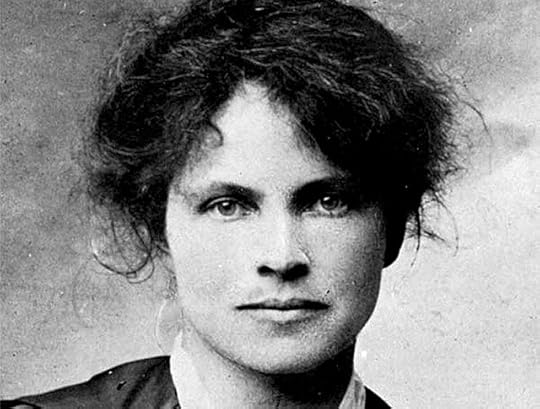
This is a book that begins quietly in an arms-length fashion — and then sneaks up on you. Beginning with thirteen year old Matey’s sojourn in Paris, embraced in the Vinet family’s intensely devoted life of learning, the story took on a powerful emotional momentum:
… during these quiet hours, the dimly-lighted room became filled with something which softened her little-girl heart till she could hardly bear it.
I found myself helplessly (and, I suppose unreasonably) envious of those children, the wonderful education that was lavished on them despite (or perhaps because of?) their straightened finances.
As we follow Matey into the early years of her marriage, her character expands and deepens. I’ve rarely read a book that so tellingly explores the truths and complexities of married love. Even without knowing anything about this writer’s personal history, we know that this is a woman who has truly lived. There’s a vitality here that could only stem from personal experience.
There is such extraordinary insight into Matey’s self-awareness, of the child that remains within: as a young mother, she ”stepped out of an evening with her husband for a last look at the stars, held out a hand to little Matey with her dog.” And an understanding of what it means to become one with a place: a house, a garden, a few trees (p 253); and what it can mean to truly embrace life, all of it — joy, pain, loss, birth, even death (p 285). In the midst of the pain of labor, Matey understands that ”This too was part of the banquet spread before the living.”
Sadie Stein, in her preface to this Persephone edition, suggests placing this book alongside Testament of Youth and All Quiet on the Western Front as a seminal book of the Great War. I heartily agree. Certainly, Fisher’s grasp of the refugee’s dilemma is superb: the overwhelming disillusionment of refugees seeking only to return to that spot on the globe whence they had been displaced, even if nothing there remained, neither kin nor home nor possessions.(p 520)
I’m not sure this statement will make sense to anyone reading my thoughts here but there is somehow, throughout this book, a prevailing aura of goodness, of a possible rightness in human affairs. There are so many passages that made me want to stand up and cheer! Surrounded as we are today by so many examples of the failures and transgressions of mankind, this is a book that — despite having been written over 90 years ago and dealing with the horrors of war — offers welcome reassurance of a possible better world.
Highly recommended.
This is a book that begins quietly in an arms-length fashion — and then sneaks up on you. Beginning with thirteen year old Matey’s sojourn in Paris, embraced in the Vinet family’s intensely devoted life of learning, the story took on a powerful emotional momentum:
… during these quiet hours, the dimly-lighted room became filled with something which softened her little-girl heart till she could hardly bear it.
I found myself helplessly (and, I suppose unreasonably) envious of those children, the wonderful education that was lavished on them despite (or perhaps because of?) their straightened finances.
As we follow Matey into the early years of her marriage, her character expands and deepens. I’ve rarely read a book that so tellingly explores the truths and complexities of married love. Even without knowing anything about this writer’s personal history, we know that this is a woman who has truly lived. There’s a vitality here that could only stem from personal experience.
There is such extraordinary insight into Matey’s self-awareness, of the child that remains within: as a young mother, she ”stepped out of an evening with her husband for a last look at the stars, held out a hand to little Matey with her dog.” And an understanding of what it means to become one with a place: a house, a garden, a few trees (p 253); and what it can mean to truly embrace life, all of it — joy, pain, loss, birth, even death (p 285). In the midst of the pain of labor, Matey understands that ”This too was part of the banquet spread before the living.”
Sadie Stein, in her preface to this Persephone edition, suggests placing this book alongside Testament of Youth and All Quiet on the Western Front as a seminal book of the Great War. I heartily agree. Certainly, Fisher’s grasp of the refugee’s dilemma is superb: the overwhelming disillusionment of refugees seeking only to return to that spot on the globe whence they had been displaced, even if nothing there remained, neither kin nor home nor possessions.(p 520)
I’m not sure this statement will make sense to anyone reading my thoughts here but there is somehow, throughout this book, a prevailing aura of goodness, of a possible rightness in human affairs. There are so many passages that made me want to stand up and cheer! Surrounded as we are today by so many examples of the failures and transgressions of mankind, this is a book that — despite having been written over 90 years ago and dealing with the horrors of war — offers welcome reassurance of a possible better world.
Highly recommended.
September 11, 2024
The Deepening Stream begins by describing Matey Gilbert's childhood in France, growing up in a curiously dysfunctional family. Canfield Field completely captures the feelings of Matey as a young girl in a way that makes you feel you are really inside her mind. I was completely won over by little Matey and her perception of life as she saw it. (And to my fellow GR dog devotees- a little orphan dog called Sumner makes his appearance during these years - the bond Matey and Sumner develop is totally a reason to read this book ☺️!)
Despite the difficult family life, Matey goes on to make a very happy marriage, (I will admit this section was overly long) but it’s the third part of this divided novel that makes this a truly memorable read and as one critic wrote ‘The best evocation of what domestic life was like in France during WW1’.
In 1915 Matey (who was bilingual) and her husband and two young children make the decision to go and help the French war effort. This was not so much a portrayal of the blood shed on the frontline but a unique perspective from a Parisian woman’s point of view of doing her bit for the war effort; reaching out and working as a community to survive. I was absolutely gripped during these pages. The ending was perhaps not quite so strong but nevertheless very satisfying.
It was not until I finished T.D.S that I realised just how much it had quietly drawn me in and absorbed my thoughts. Between reading, I would be thinking about the futilities of war or thinking about the individuals whose lives had been irrevocably changed. Having grown up with Matey, I felt I had made a friend for life and I’m certainly not going to forget her (or Sumner!) any time soon
Just on an aside:
Canfield Fisher was responsible for bringing the Montessori method to the US, and Eleanor Roosevelt even named her as one of the ten most influential women in America for her tireless work on improving literacy amongst the masses.
Several years ago I worked in a voluntary capacity as a Montessori assistant a few hours a week, I absolutely loved it and I learnt so much about the method. Its unique perspective on a child’s development is reflected in Canfield’s writing which is perhaps why she excelled at developing such believable characters.
Despite the difficult family life, Matey goes on to make a very happy marriage, (I will admit this section was overly long) but it’s the third part of this divided novel that makes this a truly memorable read and as one critic wrote ‘The best evocation of what domestic life was like in France during WW1’.
In 1915 Matey (who was bilingual) and her husband and two young children make the decision to go and help the French war effort. This was not so much a portrayal of the blood shed on the frontline but a unique perspective from a Parisian woman’s point of view of doing her bit for the war effort; reaching out and working as a community to survive. I was absolutely gripped during these pages. The ending was perhaps not quite so strong but nevertheless very satisfying.
It was not until I finished T.D.S that I realised just how much it had quietly drawn me in and absorbed my thoughts. Between reading, I would be thinking about the futilities of war or thinking about the individuals whose lives had been irrevocably changed. Having grown up with Matey, I felt I had made a friend for life and I’m certainly not going to forget her (or Sumner!) any time soon
Just on an aside:
Canfield Fisher was responsible for bringing the Montessori method to the US, and Eleanor Roosevelt even named her as one of the ten most influential women in America for her tireless work on improving literacy amongst the masses.
Several years ago I worked in a voluntary capacity as a Montessori assistant a few hours a week, I absolutely loved it and I learnt so much about the method. Its unique perspective on a child’s development is reflected in Canfield’s writing which is perhaps why she excelled at developing such believable characters.

May 27, 2012
I only recently struck up an acquaintance with Dorothy Canfield Fisher, and I like her enormously, even if she frequently is unsubtle and over-earnest about her (agreeably) progressive anti-materialist and anti-classist convictions. The book at hand is an autobiographical bildungsroman published in 1930. Matey, born in 1883, is the daughter of a professor of French literature at a Midwestern college. She grows, spends some time in France during her father's sabbaticals, witnesses the strain her parents' inharmonious marriage places on the whole family, and like them learns to develop a protective veneer of "company manners," the dismantling of which is one of the main strands of the book. Matey goes on to college and marries (sadly, the men Canfield Fisher considers worthy of her heroines are seldom believable characters), and has children. The novel thus far is a slow, albeit absorbing, accretion of events. Then the Great War comes. That section of the book was as compelling as anything else I've ever read about WWI, and was the first account, fictional or otherwise, that I've read of what it was like to live as an ordinary citizen in France at that time. The ending is slightly disappointing, in that Fisher loses her grip on the narrative a bit. Matey becomes less of a character and too much of a conduit for a lot of authorial philosophizing. But that's a quibble. This was a novel that completely absorbed me, and I will pounce on whatever book of Canfield Fisher's that I find next. And goodness, it is refreshing to hear a voice from the past that articulates many injustices so clearly. It reminds one that we can't give a free pass to any long ago author who's casually racist or otherwise offensive on the grounds of "that's just how the times were." Dorothy Canfield Fisher is proof that there were people who knew better.
A completely minor side note: I read this book concurrently with a reading aloud of Peter Pan to my son, and was curious to note that both books feature scenes in which an older sister sets quizzes to younger siblings on the layout of the homes they have left behind. Maybe DCF read Barrie. Otherwise though, the two books could not be more different...
A completely minor side note: I read this book concurrently with a reading aloud of Peter Pan to my son, and was curious to note that both books feature scenes in which an older sister sets quizzes to younger siblings on the layout of the homes they have left behind. Maybe DCF read Barrie. Otherwise though, the two books could not be more different...

March 28, 2025
The Persephone description for this book actually tells you everything you need to know.
They admit to not finishing The Deepening Stream on their first attempt, but later it captured their hearts when they pushed through the slow beginning and made it to part 3. I can see exactly what they mean.
It's true that the second half of this 600-page beast is far superior to the glacial pace of the first half-- it depicts the psychological destruction of living through wartime, whether one sees battle or not --but a whopping 300 pages of slow build is just too much for me to rate it any higher. Had I not read the promises in the Persephone description, I would have abandoned ship.
They admit to not finishing The Deepening Stream on their first attempt, but later it captured their hearts when they pushed through the slow beginning and made it to part 3. I can see exactly what they mean.
It's true that the second half of this 600-page beast is far superior to the glacial pace of the first half-- it depicts the psychological destruction of living through wartime, whether one sees battle or not --but a whopping 300 pages of slow build is just too much for me to rate it any higher. Had I not read the promises in the Persephone description, I would have abandoned ship.

June 9, 2026
I’ve read quite a few books about both World Wars, and some of them - brilliantly written - broke my heart, gave me perspective, made me hopeful, and left me devastated. I honestly believed nothing could move me more. Then The Deepening Stream proved me wrong. At times, I could barely breathe.
What made this read even more special was that the author herself lived through experiences strikingly similar to those of her heroine, which gave the story an extraordinary sense of authenticity.
What made this read even more special was that the author herself lived through experiences strikingly similar to those of her heroine, which gave the story an extraordinary sense of authenticity.

October 10, 2008
I absolutely love this book! (Found at a library book sale for 25 cents. Bought a copy for my mother as a gift - $30 - so hard to find, but well worth it.)
The next time I read it (because it is worth another read), I'll add a more in-depth book report.
The next time I read it (because it is worth another read), I'll add a more in-depth book report.

August 17, 2026
One of the most rich and beautiful stories I’ve ever read
January 12, 2021
This is a good book even if you have never heard of it. I learned about it in a Quaker Memorial Minute. It turns out that there are a lot of Quaker details including the comfort in silent/expectant worship and the struggle with pacifism/war. Half of the book is the major characters serving in France during WWI years before and after the US enters the war—he serves at the front in an ambulance corps (similar to the role his father played in the Civil War) and she helping all manner of refugees and soldiers on leave, etc in Paris. They take their young children who attend lycee (school) and provide distraction for many. The first half is coming of age and struggling to understand family relationships as parents move from university town to university town. You can imagine that much of it is autobiographical. There’s lots to enjoy but I found it LONG.

October 10, 2015
Finally, I finished!
This was an interesting book to learn what it was like to live in Paris during the first World War. Contemplative and semi-autobiographical, it would appeal to the generation who lived through the war and who had to make sense of what they experienced.
This was an interesting book to learn what it was like to live in Paris during the first World War. Contemplative and semi-autobiographical, it would appeal to the generation who lived through the war and who had to make sense of what they experienced.

May 12, 2017
I enjoyed this semi-autobiographical historical fiction by Dorothy Canfield Fisher. I have read DCF books for years and knew little about the author. She is an excellent writer and made some difficult and unselfish choices in her life which she shares in this book.

December 21, 2016
Very well written.

February 3, 2024
A lovely, sprawling novel about life, love, hurt, and the choices we make in life.
The novel, published in 1930, draws heavily on Canfield Fisher’s own life experiences: growing up as a professor’s daughter in a succession of university towns, a sabbatical in France, a happy marriage, and joining the First World War effort in France in 1915. It’s a very thick book, divided in four parts that are separate from each other.
The first part, describing main character Matey’s childhood and upbringing, was to me the strongest. With unspairing honesty and razor sharp detail, CF details the unhappy marriage of Matey’s mother and father and the deep effect it has on her and her siblings. Matey’s older sister Priscilla is psychologically maimed for life, not being able to bear the incessant warfare, abuse and hurt her parents inflict on each other, as a result thinking herself never being able to marry. Her brother Francis, on the other hand, less sensitive, emulates their father’s casual cruelty and social climbing, shaping his life after his father’s standards. Matey, the youngest, is able to escape her home mainly by the changing times relaxing the constraints of girls. As a child, she is allowed to stay out all day, playing with the neighborhood children, like her sister hadn’t been able to. When the family moves to France for a year, she is provided with a loving, intellectual French family household to take care of her during the day while her parents are busy. And back in the US, when she is deeply unhappy, a small dog gives her both the love she needs and the ability to escape outdoors in the evenings. I was deeply moved by both Matey’s struggle and Priscilla’s hinted-at deep depression.
The second part of the novel describes Matey emerging from her unhappy childhood and meeting, then marrying, a distant cousin living in the countryside. She is wary of entering into marriage, wondering when her caring Adrian will turn into her cruel father, but to her surprise, this never happens and it turns out to be a very happy marriage. Her husband’s family are Quakers, which provides us with some very dated, quaint speech in the dialogues (“thy” and “thee”) and sentimental philosophical discussions, which at times became tedious. However, this is somewhat balanced by the well-drawn portrait of Matey and her siblings and their interactions. I found myself pondering just how their childhood had each affected them, and marveling at how well CF conveys this.
The third part starts at the declaration of WWI. After a long time of agonizing and getting letters about the terrible situation in France, Matey and her husband decides to take their children and go to Paris. Adrian is to volunteer as an ambulance driver and Matey to take care of what’s left of the French family that had taken her in as a child. This section is a large part of the book, and made me feel somewhat conflicted. On one hand, it’s an interesting war document of life on the ground - CF herself lived through the war in Paris. On the other hand, it’s sentimentally described, with most people being impossibly noble although despairing. I was also jarred at the French family suddenly starting to talk like Quakers with “thy” and “thee” (why??). The main point that CF wants to get across is that people’s goodness and caring for each other is what can defeat war and make life worth living for.
In the concluding part, the war is over and Matey’s family return to their village in the US to begin life again.
This is such a beautifully written book. I was mesmerized and had a hard time putting it down. It’s not a perfect novel - it’s sprawling, uneven, dated in parts, and occasionally sentimental. But it’s also a wonderful, deeply felt novel, a pleasure to read and a wealth to savor. I loved Matey and the others and wanted to find out what happened to them. I didn’t love this quite as much as The Home-Maker m, which to me is an almost perfect novel, but it was definitely a four-star read.
The novel, published in 1930, draws heavily on Canfield Fisher’s own life experiences: growing up as a professor’s daughter in a succession of university towns, a sabbatical in France, a happy marriage, and joining the First World War effort in France in 1915. It’s a very thick book, divided in four parts that are separate from each other.
The first part, describing main character Matey’s childhood and upbringing, was to me the strongest. With unspairing honesty and razor sharp detail, CF details the unhappy marriage of Matey’s mother and father and the deep effect it has on her and her siblings. Matey’s older sister Priscilla is psychologically maimed for life, not being able to bear the incessant warfare, abuse and hurt her parents inflict on each other, as a result thinking herself never being able to marry. Her brother Francis, on the other hand, less sensitive, emulates their father’s casual cruelty and social climbing, shaping his life after his father’s standards. Matey, the youngest, is able to escape her home mainly by the changing times relaxing the constraints of girls. As a child, she is allowed to stay out all day, playing with the neighborhood children, like her sister hadn’t been able to. When the family moves to France for a year, she is provided with a loving, intellectual French family household to take care of her during the day while her parents are busy. And back in the US, when she is deeply unhappy, a small dog gives her both the love she needs and the ability to escape outdoors in the evenings. I was deeply moved by both Matey’s struggle and Priscilla’s hinted-at deep depression.
The second part of the novel describes Matey emerging from her unhappy childhood and meeting, then marrying, a distant cousin living in the countryside. She is wary of entering into marriage, wondering when her caring Adrian will turn into her cruel father, but to her surprise, this never happens and it turns out to be a very happy marriage. Her husband’s family are Quakers, which provides us with some very dated, quaint speech in the dialogues (“thy” and “thee”) and sentimental philosophical discussions, which at times became tedious. However, this is somewhat balanced by the well-drawn portrait of Matey and her siblings and their interactions. I found myself pondering just how their childhood had each affected them, and marveling at how well CF conveys this.
The third part starts at the declaration of WWI. After a long time of agonizing and getting letters about the terrible situation in France, Matey and her husband decides to take their children and go to Paris. Adrian is to volunteer as an ambulance driver and Matey to take care of what’s left of the French family that had taken her in as a child. This section is a large part of the book, and made me feel somewhat conflicted. On one hand, it’s an interesting war document of life on the ground - CF herself lived through the war in Paris. On the other hand, it’s sentimentally described, with most people being impossibly noble although despairing. I was also jarred at the French family suddenly starting to talk like Quakers with “thy” and “thee” (why??). The main point that CF wants to get across is that people’s goodness and caring for each other is what can defeat war and make life worth living for.
In the concluding part, the war is over and Matey’s family return to their village in the US to begin life again.
This is such a beautifully written book. I was mesmerized and had a hard time putting it down. It’s not a perfect novel - it’s sprawling, uneven, dated in parts, and occasionally sentimental. But it’s also a wonderful, deeply felt novel, a pleasure to read and a wealth to savor. I loved Matey and the others and wanted to find out what happened to them. I didn’t love this quite as much as The Home-Maker m, which to me is an almost perfect novel, but it was definitely a four-star read.

January 12, 2022
I knew that there were Americans who went over to France to help in the early days of World War 1, for example, Ernest Hemingway, who became quite a celebrity in his town because of it. But this book features the most amazing young Quaker couple - Adrian and Matey, who don't need to go (they have two young children), but for personal and moral reasons, feel they must. Matey's testament to what she sees and does in Paris during those years brings it all alive for us. We have never been invaded; our men have not been conscripted, we have not fought to get resources from relief agencies.
Many many good things in this book: read no further if you don't want spoilers, be warned that it's a very long, really too long, novel.
The first half of the book deals with Matey's upbringing and her essential dislike of her parents who seem to her very false. But Matey keeps an open mind and tries to take on board what other evidence she finds about her parents and their competitive relationship. She is ready to reassess them after their deaths. But she is a sad and lonely soul when she meets Adrian. Their love, and the town of Rustdorf, seem to be her salvation, and she becomes a person who saves others through remembering her own emotional experience. At a critical moment, for example, she remembers the emotionally healing experience of owning a dog. She is a person always ready to go the extra mile for unfortunate people in a way we have completely forgotten today, but she also reminds us that knowing just one rich or influential person can save weeks of effort and heartbreak.
She witnesses the US soldiers coming to Paris and writes about it in fascinating terms - the crowd loves them because they can see they are brutal. The Parisians also love President Wilson when he arrives for the Peace conference, and at this point, Matey's heart sinks into the ground because she knows that however good his intentions and resolve, he will be outplayed by others - rich people like her banker brother - and that any essential fairness in the settlement will be trashed by those who want a return on their money.
Many many good things in this book: read no further if you don't want spoilers, be warned that it's a very long, really too long, novel.
The first half of the book deals with Matey's upbringing and her essential dislike of her parents who seem to her very false. But Matey keeps an open mind and tries to take on board what other evidence she finds about her parents and their competitive relationship. She is ready to reassess them after their deaths. But she is a sad and lonely soul when she meets Adrian. Their love, and the town of Rustdorf, seem to be her salvation, and she becomes a person who saves others through remembering her own emotional experience. At a critical moment, for example, she remembers the emotionally healing experience of owning a dog. She is a person always ready to go the extra mile for unfortunate people in a way we have completely forgotten today, but she also reminds us that knowing just one rich or influential person can save weeks of effort and heartbreak.
She witnesses the US soldiers coming to Paris and writes about it in fascinating terms - the crowd loves them because they can see they are brutal. The Parisians also love President Wilson when he arrives for the Peace conference, and at this point, Matey's heart sinks into the ground because she knows that however good his intentions and resolve, he will be outplayed by others - rich people like her banker brother - and that any essential fairness in the settlement will be trashed by those who want a return on their money.
March 5, 2022
An earnest account of Matey's life from disillusioned child to exhausted but aware First World War survivor. Matey and her husband Adrian leave America for Paris at the beginning of the war. He is a pacifist and becomes an ambulance driver; she decides to use her inheritance to help ordinary men, women and families to survive.
Exhausted by the end of it the family finally returns to their longed for home. But it's no longer the same, not so much because the place has changed, but that Matey and Adrian have. They are so used to living a highly adrenalised life thanks to war, that by comparison, everything ordinary in their small town is lack lustre and lacking in meaning.
Matey's realisation, at the end of the novel, is that she needs to find value from "ordinariness".
This sounds a bit po but it works. It sounds a genuinely important truth for those war weary men and women.
I started off the book thinking I was going to be bored (yet another war book!) and ended it in tears, so moved by Matey's leaps of understanding.
Exhausted by the end of it the family finally returns to their longed for home. But it's no longer the same, not so much because the place has changed, but that Matey and Adrian have. They are so used to living a highly adrenalised life thanks to war, that by comparison, everything ordinary in their small town is lack lustre and lacking in meaning.
Matey's realisation, at the end of the novel, is that she needs to find value from "ordinariness".
This sounds a bit po but it works. It sounds a genuinely important truth for those war weary men and women.
I started off the book thinking I was going to be bored (yet another war book!) and ended it in tears, so moved by Matey's leaps of understanding.

April 17, 2022
A fine book. There were sections that interested me greatly, esp those set during the war in France. Overall the writing did not spark joy in me, was not of a concise style that I prefer, and at times I felt I was stuck in a sleepy Saturday afternoon Hollywood film. This is unfair to the writer, as her work is not without beauty. It’s just not a style or approach to storytelling that gets me excited. The book is really two novels made one. It felt like a very long plodding book and I did not bond with Matey, sadly. I would have preferred to read the latter half, with a much briefer first part.
Not a Persephone I will re-read sadly.
Not a Persephone I will re-read sadly.

August 18, 2025
It is so hard to write a review of a novel first published in 1930 by a female author ahead of her time. It is divided into 4 parts and I thoroughly took my time reading and diving into the language. Part III centers on WWI in France. However, the novel is really about the central character coming of age. The life of Matey.
P. 182 repeats in the final chapter and really encompasses so much
I think for most this moves too slow but I enjoyed the pace. I dog eared pages… that read… along these lines… “This too was part of the banquet spread before the living.” P. 285
P. 182 repeats in the final chapter and really encompasses so much
I think for most this moves too slow but I enjoyed the pace. I dog eared pages… that read… along these lines… “This too was part of the banquet spread before the living.” P. 285

August 25, 2025
I chose this as a chance to read something from outside my usual sphere. It’s one of the handsome Persephone editions and the very tangibility of it being something substantial and worthwhile may have helped my choice. Whilst it’s a serious minded look at a woman’s life, dipping in from early childhood through to mid adulthood, it’s not a heavy read, and in many ways startlingly modern in portraying life, and choices, yet now nearly a century on from its writing. The WW1 section is a very powerful portrait of that war from within the French home front. Low key, but nuanced and vivid.

June 18, 2024
This is a Pulitzer Prize finalist from 1931. Enjoyed the section describing life in France during World War I. I imagined what it might have been like for my paternal grandmother who immigrated to the US from France at that time.

January 18, 2026
Really beautifully written. Not a page turner but more like a calming experience to read. Great character development and insight.

August 7, 2020
2.5 star
June 10, 2024
'The Deepening Stream' is a rather perceptive title as the story unfolds to show the lead protagonist developing from a sensitive child, living under the cloud of her parent's fractious marriage with a transient lifestyle resulting from her Fathers work, into a woman who forms a stable loving family and becomes a force of nature throughout the war in her determination to help others. Dorothy Canfield Fisher conveys to the reader how the depth of our childhood memories continue to form our sense of place and identity in adulthood and how ones efforts no matter how small can make in the face of discord and war.
A moving and thought provoking read about humanity, family and community with insights into Quaker life, experiences of living in Paris during WW1 and America during the early twentieth century. Whilst this book begins slowly, rather sprawling in parts, it ended in being a very contemplative read.
A moving and thought provoking read about humanity, family and community with insights into Quaker life, experiences of living in Paris during WW1 and America during the early twentieth century. Whilst this book begins slowly, rather sprawling in parts, it ended in being a very contemplative read.

May 10, 2023
An extraordinarily insightful novel. I have just finished reading it and am struggling to find words to characterise it! At well over 500 pages it is perhaps not a surprise. Canfield Fisher's understanding and illumination of a child's experience, in the first part of the book, is remarkable. Her exploration of the experience of the First World War from the perspective of an American woman in France doing what she can to assist her French friends and many, many other people, is extraordinary. War seen from the less familiar perspective of those who are faced with the task of responding to and coping with the fallout from war is examined in intensely human terms. And afterwards, how do we go on with life? How do we resist despair? How do we find the strength to put one foot in front of the other and how do we 'return' to our pre-war existence in any meaningful sense? An important character reveals to Matey, the protagonist, that war is not in a 'separate compartment' from life. Everything about it - and about humanity - is there in everyday life already.

May 11, 2025
To the extent that someone could lives-stream the experience of living in Paris during WWI, this book (at least the 2nd half) is the result.
The first half is the slow maturation of a young woman (and, to some extent, of her sister) amidst a material comforts and good education, but a tense family life. Both parts of the book are beautifully written and absorbing.
The first half is the slow maturation of a young woman (and, to some extent, of her sister) amidst a material comforts and good education, but a tense family life. Both parts of the book are beautifully written and absorbing.
Displaying 1 - 24 of 24 reviews