Award-winning author Linda LeGarde Grover interweaves family and Ojibwe history with stories from Misaabekong (the place of the giants) on Lake Superior
Long before there was a Duluth, Minnesota, the massive outcropping that divides the city emerged from the ridge of gabbro rock running along the westward shore of Lake Superior. A great westward migration carried the Ojibwe people to this place, the Point of Rocks. Against this backdrop—Misaabekong, the place of the giants—the lives chronicled in Linda LeGarde Grover’s book unfold, some in myth, some in long-ago times, some in an imagined present, and some in the author’s family history, all with a deep and tenacious bond to the land, one another, and the Ojibwe culture.
Within the larger history, Grover tells the story of her ancestors’ arrival at the American Fur Post in far western Duluth more than two hundred years ago. Their fortunes and the family’s future are inextricably entwined with tales of marriages to voyageurs, relocations to reservation lands, encounters with the spirits of the lake and wood creatures, the renewal of life—in myth and in art, the search for meaning in the transformations of our day is always vital. Finally, in one man’s struggles, age-old tribulations, the intergenerational traumas of extended families and communities, and a uniquely Ojibwe appreciation for the natural and spiritual worlds converge, forging the Ojibwe worldview and will to survive as his legacy to his descendants.
Blending the seen and unseen, the old and the new, the amusing and the tragic and the hauntingly familiar, this lyrical work encapsulates a way of life forever vibrant at the Point of Rocks.
Linda LeGarde Grover is a professor emeritus of American Indian Studies at the University of Minnesota Duluth. She is coauthor of A Childhood in Minnesota: Exploring the Lives of Ojibwe and Immigrant Families 1880–1920 and author of a poetry chapbook, The Indian at Indian School. Her 2010 book The Dance Boots won the Flannery O'Connor Award for Short Fiction as well as the Janet Heidinger Kafka Prize. Her novel The Road Back to Sweetgrass is the Wordcraft Circle of Native Writers and Storytellers 2015 fiction award recipient. Linda's poetry collection The Sky Watched: Poems of Ojibwe Lives has received the Red Mountain Press 2016 Editor's Award and the 2016 Northeastern Minnesota Book Award for Poetry. Grover’s essay collection Onigamiising: Seasons of an Ojibwe Year received the 2018 Minnesota Book Award for Memoir & Creative Nonfiction as well as the Northeastern Minnesota Book Award for Memoir, her novel In the Night of Memory the 2020 Northeastern Minnesota Book Award for fiction as well at the UPAA (Upper Peninsula Publishers & Authors Association) U.P. Notable Book Award.
Grover is an enrolled member of the Bois Forte Band of Ojibwe.
Linda’s book helped me see the neighborhood where I grew up in a new way. Linda lived at the end of the same street I lived on, so although our families didn’t socialize, I knew Linda and some of her brothers who were in my high school class.
I loved seeing our city from a Native American perspective. I drive past the Point of Rocks, which is a focal point for the book, every day. Now, I think about that Native American man who came out of a crack in the rocks there every time I pass it. I had never heard the story Linda mentions about him.
The book wends its way (rather like the St. Louis River which flows alongside Duluth) from the past – Linda’s ancestors – around tales of Nanaboozhoo (a Native spiritual being), to closer to the present, when Linda comes to terms with her enigmatic and wayward grandfather. As a former neighbor, I was most interested in the first and last parts of her book because it gave me glimpses into what went on in that house at the end of the street.
Gichigami Hearts has been called “genre-bending” because it mixes memoir and poetry with legends. This mix might work better for some people than others. I found it unusual and refreshing. Just think of all the stories about your childhood home that live inside others (or yourself) and are waiting to come out!
Did you ever sit around listening to the older people in your life swapping stories? A big part of this book is like that. Except you dont know the places and aren't related to the people. There isn't anything to draw you in to these people.
So then you're that kid again, first looking around for a map or something to connect with, then flipping to the end of the book to see if it gets better, then wondering how long you have left for it to end so you can do something else.
It is mercifully short. The saving grace was the inclusion of folklore, which I love. The extra explanations could be useful for those completely unfamiliar with Ojibwe or other Indigenous worldview. If you are familiar, it comes across as too much telling and not enough showing. The telling vs showing is the major stumbling block of this book. There is one small moment where the folklore and family stories intertwine beautifully, and had that style worked throughout, then this could have been magnificent. Instead, I'd recommend reading this if you are from Duluth and want to hear stories from a family there, otherwise, get a good introductory folktale book.
Thank you to Linda LeGarde Grover, University of Minnesota Press, and Netgalley for an advanced ecopy in exchange for an honest review.
I thoroughly enjoyed this book. I grew up in Duluth just uphill from the Point of Rocks featured in a few of the essays. This book weaves together the history of several Duluth neighborhoods, traditional Ojibwe stories, and experiences of the author’s family and community through generations spanning the fur trade, Indian boarding schools, to present day. I really enjoyed reading stories about Nanaboozhoo and his twin Ma’ingan (wolf) and the spirits that live in Lake Superior in one chapter, and in the next chapter stories about the family who owned the shoe repair shop my mom would bring our backpacks to be repaired. The author beautifully captures the simultaneous mystical and gritty experience of Duluth and the surrounding area in a way that really resonated with me.
Terrific history of Duluth, MN and neighboring areas, and a history of the author's family and the stories close to her heart. I'll never look at the Point of Rocks the same way again.
I bought the book at Zenith Books in Duluth and on the way there I found myself wondering about the various neighborhoods. I had no idea that the book that was recommended to me when I asked for a book by an Indigenous author would answer those questions.
I live in Northern MN and had no idea there was a residential school in a neighboring town. I'll be searching put more info.
Linda LeGarde Grover has done it again. I will never look at a bunny, a porcupine, or the Point of Rocks the same way ever again.
Her stories remind me of Faulkner's quote, "The past is never dead. It's not even past." I learned a great deal from her family's history, especially regarding the boarding schools.
This is an Ojibwe family and cultural history of Duluth and the North Shore of Lake Superior told through family memories, poems, and stories. While the short real and fictional stories were good, the book ended up feeling more like a scrapbook than an integrated history.
Reading this book is like listening to an older family member recounting traditions and stories. The significance of the story becomes apparent over time, through repetition and retelling that reveal new details or truths. It might take a moment to adapt to the authors style or cadence but it is worth it.
Very Good book. Stick with it. The first part is very specific to Duluth with a lot of locations mentioned that could distract readers outside of Duluth but then that is not the heart of the book so don't let it distract you.
p. 16: In Anishinaabe tradition, knowledge has been cared for and passed down from generation to generation by way of the oral tradition. One of the strengths of this way of teaching and learning is that no single person knows all things; rather, many people know parts of the story. This means that the worldview and teachings are woven into the tribes, communities, and families, a tapestry of knowledge.
many descriptions of misaabekong (Duluth) places...
p. 27: description of "the point of rocks"...not sure I know exactly where this is, could find it?
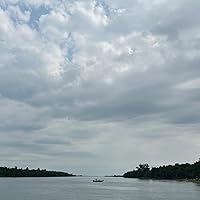
p. 47: "To live on the shore of Lake Superior is to live with orientation to water, sky, and forest. Standing on the rocks at the shoreline, hundreds of miles of forest are at one's back, the vastness of Gichigami at the front; the sky and water meet at the horizon, ever more elusive to anyone traveling toward it. We see that same horizon today from Duluth and all the way up the North Shore of Gichigami, horizon to the east and land to the west, water and sky meeting in that elusive, ever more distant beauty that it always has. " (and then...also on this page, with that description, George Morrison, Ojibwe painter.)
p. 51: the story of INGO..."he was never idle or lonely; content, if he had pondered such a thing, he might have wondered how a man would have time in his life for interactions with other people."
p 70: "I expect he was looking through the buildings and cars, which are tangible yet really only temporary, placing people and happenings from earlier times."
p. 110: "...his destined work, which was to walk the earth."
p. 141: the traveling song: "It is because of you that I walk."
In the waning days of summer 2022 my wife and i hopped in the car and took a drive up the Michigan peninsula to spend a few days at the famed Mackinac Island. Michigan wasn't new to us, but the island was, and whenever I embark on a trip I always try to track down a local bookstore and purchase at least one book by a local author telling a story rooted in the place we are visiting.
In this case I went with the familiar, having come across this book by an indigenous author detailing Duluths history from the perspective of her Ojibwe past. I have always loved visiting Duluth, and this intimate composition, which is part Memoir, part lore, affords it a deeply personal touch.
The book moves easily between the particular locale of a shoe repair shop or a childhood home, for example, to the lands rich spiritual heritage, stretching from the rocks that frame the city to the waters below and framed against the story of the authors ancestors. Anchoring these stories is a portrait of the familiar Point of Rocks. Having driven the highway that breaks into majestic views of this valley and these cliffs many times, I was able to conjure this image as a way of stepping into the greater imagination of Grivers winding and meandering journey.
This book gives us the tools to see both that which is visible and that which lies unseen, recognizing that both shape the reality of this place as part of the cities ethos and Govers shared heritage.
This is my first book by this author, and it was an amazing journey. This book provides vivid and beautiful descriptions of the landscape supported by the legends, stories and myths that have developed throughout the ages. I enjoyed the various descriptions as well as the wonderful writing. The statements that cause deep thinking, for example, how natives named places in terms of locative words, “American Indian names and words for places see to be descriptive of the notable natural area while so many America/English names for places ear a specific person’s name like Duluth”. The author provides a look into not only the Native past, American/English past but also her own families past which really makes the book.
Thank you to Netgalley, the author and publisher for an DRC. #GichigamiHearts #NetGalley
Gichigami Hearts is definitely a love note to the author’s Ojibwe heritage and the areas of which she grew up and the history of the place for her ancestors. The first two “chapters” talk heavily in her own life and ties into the importance of stories that keep these memories alive. Chapters three and four explore more into the life of times long long ago, which I really enjoyed. Particularly that of Nanaboozhoo.
Being Ojibwe and Potawatomi, but far more disconnected with my Ojibwe ancestry, I loved getting to hear these stories from an Ojibwe lens. That was really special for me and endeared this book to me.
I got this book in a GoodReads giveaway. This collection of personal memoirs, poems, and Ojibwe mythology explores the connections between individuals, history, and the world around us. I loved the inclusion of family photos and parallels between the myths and her relatives lives and I immediately recommended it to my fellow High School English Teacher who teaches a mythology class and is always looking for more Native American and own voice stories. My only critique is that it is too short. I know the author has other books. I will need to check those out.
I read this as part of the One Book Northland event. It incorporated some interesting traditions and culture of the Ojibwa which was special. However her tone and content were vapid and forgettable. If I'm not enjoying a story I find I get more hung up on certain grammar and editing issues and I found a few of those as well. It seemed more out of place than engaging and definitely repeated itself unnecessarily.
This is a personal and family memoir, with poetry and stories that have been handed down orally for generations ny the Ogibway people. At times its is beautifully written, at other times wordy and repetitive to where i got confused. (The sentences are long and complicated, and i actually started counting the words. Fifty to 70 word sentences were not unusual.) After all that, many of the stories were good enough to stick with the book.
Ojibwe writer and University of Minnesota Duluth professor Linda LeGarde Grover's second collection of essays intertwines folklore and history, with a focus on her family's history with Misaabekong, the place of the giants. Discusses the quiet devastation of residential schools on Ojibwe people.
this was the book club pick for December - a lovely collection of short stories from the Ojibwe that call Duluth home. it details how spiritually connected they are to the land, how they’ve had to evolve over the centuries, and how deeply essential it is to Indian culture that they continue to pass these stories on. both beautiful and tragic.
I learned much about Onigamiising, of the neighborhoods of 1950s and '60s Duluth, of family and connections. These separate stories could have benefitted from better editing when brought together into a collection, to avoid some of the repetition, but enjoyed them none the less.
I enjoyed this book. The author did a great job of weaving family stories, myths and legends together to form a collection that offers a strong sense of time, place and history centered on Ojibwe culture. Not only was this an engaging read, I feel that I truly learned from her writing.