“Our country has enough studies of failure and despair to last several lifetimes. Ferguson and Witcher do something much more interesting in this they examine Black entrepreneurial success —under some of the most challenging conditions—and offer reflections on what we might learn in order to make such success available to even more people today. The result is both inspiring and instructive.” —Robert L. Woodson, Founder of the Woodson Center and author of several books including Lessons from the Least of The Woodson Principles
If we face America’s racial history squarely, will it mean that the American project is a failure? Conversely, if we think the American project is a worthy endeavor, do we have to lie, downplay, or equivocate about our past?
In this book, we use the classical liberal lens to ask Americans on the political right to seriously reckon with America’s deep racial pain—much of which arises from violations of rights that conservatives say they deeply value, such as property rights, freedom of contract, and the protection of the rule of law. We ask those on the left to take a hard look at the failed paternalism, and in some cases, thoroughgoing racism of past progressive policy. All Americans are asked to apply their concern for individual rights and constitutional order fairly to our historical record. What readers will find are deep injustices against black Americans. But they will also find black entrepreneurs overcoming amazing obstacles and a black community that has created flourishing institutions and culture.
Exhausted by extremism on both left and right, a majority of Americans—black and white—love this country and want to do right by all of its citizens. In Black Liberation Through the Marketplace , readers will come away with a better understanding of black history and creative ideas for how to make this nation truly one with liberty and justice for all.
The author, a libertarian economics processor, lays out the classical liberal perspective for how slavery, Jim Crow, and even some contemporary federal policies have served to harm the Black American community. In contrast to the general conservative view, the author demonstrates that there are institutional and collective obstacles not just individual failures that continue to hold back the Black community. Simultaneously, she refutes the progressives’s obsession with radical government interference to solve these problems by showing that there are readily available solutions that already exist within the United States’s constitutional and traditional framework — Liberalism.
One of the interesting outcomes of the book is to point out the logical inconsistencies of the United States’s two major political groups (progressives and conservatives) through their somewhat random grouping of policy positions. Each side’s ideological commitment to their favored policies has prevented them from rationally understanding many of the the fundamental issues faced by the Black community which has led to misaligned policies and failure to make meaningful differences.
Throughout the course of the book, the author demonstrates how Black Americans have been successful at achieving success through focusing on education, strong civil society, and free market entrepreneurship. Furthermore the author addresses how misguiding government policies in policing, education, city planning, and labor reform have worked together to inhibit and even reverse their progress as a whole.
I do not recommend this book. Admittedly, I detest many things regarding its substance!
However, I did purchase a used copy because it is good to know what the enemy is pushing. Beware the folly of Libertarians, those that sculpt economic philosophies and the shenanigans of classically liberal scholars.
First, it is ludicrous to confidently state that the solution to the "black problem" is merely a happy jaunt down the highway leading to pro-property rights lane, pro-small business avenue, and pro-market boulevard. History has repeatedly shown that the racist soak fabric of our American flag cloaks the crimes of: government agencies, corporations, other institutions, and individuals. So these travels are not a cure all or necessarily productive long term. This is not to say it is not a worthwhile endeavor, just not a simple solution. Equality before the law has never been the USA strong suit.
As a so-called "Black" man, a descendant of enslaved people and indigenous people, admittedly, I have major issues with this book.
Unless memory fails nowhere in the book, does the Libertarian representative (at least one of the authors) address the racism that continues to grow in their party. Why should any thinking American take them seriously when they do not acknowledge and show (via receipts) an attempt to clean their own "house?"
The Libertarian Party has a sizeable insurgency of alt-right sympathizers with racist tendencies. This is a fact. These people are not turned away because the party needs foot soldiers.
This said, the strategy the author(s) use to win confidence in this book is sickening. [There are more than what I will share. Please do not think this is all.] The authors reinforce the racism of the White Nationalist party (Republicans) by highlighting individual failures being a cause for "holding back" the Black community. This can be said of anyone but is classically used by right leaning folks to eliminate discussions of: predatory capitalism, systemic racism and its intersection with class struggle. Tools or realities fashioned against so-called "African Americans." Don't you know that if you just strengthen the institutions of 'civil society' and alter (what is commercially deemed aka white determination at play) culture in the black community, all will be well.!? This is the same game powerful racist whites and the poor white race soldiers have used since Reconstruction.
Then they chase that with a sugary shot. One that functions to hedge their bets. The shot that soothes the white paternalism in the Democratic Party. How?, by acknowledging the fact that structural racism exists. This is the needle used to shoot the feel-good (but bogus) intellectual pesticides into the vein of the political fence sitting descendants of enslaved people and others.
Then, the withdrawal of the needle by (to keep in line with the watered down voguish conservative worldviews aka Libertarian) declaring we do not need government interference.
It is depressing that they forsake their intellectual integrity by ignoring power does not concede unless forced or heavy handedly convinced to relent. This is obvious historical reality. The authors even admit that: contemporary policing, labor reform, and failures in education have driven backward past achievements. Yet the authors keeps the faulty lens that prohibits them from acknowledging an overwhelming force, aka "good" forces in government, is required via policy/law and enforcement of said policy/law to prevent malfeasance and exploitation by those who work against progress for actualizing full self determination.
I am no economist, nor am I a scholar. But I can reason, I seek to comprehend and am diligent at studying trends, and I love history. That said...I have found many academics I have encountered on the right of the political spectrum, pat Black people on the head, and claim there is a contemporary confusion over the term capitalism. The author also does this.
Granted, some people carelessly throw around terms, but capitalism is a system of European origins in which private companies control industry and trade.
Industry and trade dominated then and now by mainly European descendants (when addressing the global North) who form monopolies, fund the lobby machine, file lawsuits to alter laws that maintain a strangle hold on most black people in America. The ownership and means of production by blacks have been historically retarded, prevented or destroyed by systems governed primarily by whites. So when you have an economy based on competition you can see how racial animus generated by whites towards blacks is one of many tools, in this team sport of racism, which prevents most blacks to consistently make a profit and grow their business. If they are fortunate to endure, it can reasonably be argued that their growth potential or stability would be even better without interference. Private property and ownership of resources are key aspects of a capitalist society, no? However, blacks are purposefully maintained on the end of selling our labor (at basement level wages) to mainly white capitalists who are influenced by... if not accepting of white supremacy and predatory capitalist ventures.
Also, the book gaslights many blacks who know American chattel slavery was a capitalist institution.
Libertarians and white conservatives are hell-bent on denying that the American economy benefited greatly from slavery. They deliberately sidestep reality by stating that "the owners of slaves made out well, but no one else did." Maybe others did not profit in the same manner as their betters, but they did achieve benefit. Owners leasted out their "contraband" their human livestock to other whites who were at times lower on the social economic scale.
These academy molded charlatans who steer the conversation want you to accept that the system of chattel slavery retarded economic growth on the whole. As if blacks profited from being enslaved. As if this mattered to my ancestors as they were savagely exploited and harmed. It is now common knowledge that the enslaved black people were worth more than all the manufacturing in our country. That is before the Rebellion aka Civil War began. In fact, some historians state that blacks who were enslaved were "worth" more than every: factory, bank, and railroad combined. This said poor whites who were not slave owners still profited from the institution of chattel slavery. Many strive to increase their social-economic status by owning property such as land and African human livestock.
Historically, the black church has been a place of safety and a place of education. White politicians know the black church can easily be weaponized (especially those that consider themselves evangelical) by paying off church leadership to indoctrinate the members. Guide them towards a certain political idealogy or soften their hearts for the acceptance of a particular candidate or agenda. So, of course, I was not surprised when the Christianity perspective slithered within their text. Oh, the shy focus of how some Christian groups accomplished good altruistic outcomes within the black community. Cheap tactic that appears innocuous unless you are hip to the game.
Go back to the Black Church institutions. I noted an entire chapter was given to the black church, and what they claim was their role in forging "a black American identity" during the antebellum period and beyond. You better miss me with that slight of hand. But I will not tackle this here.
My critique is not to be taken as an indirect claim. A claim that Dr. Ferguson does not want to help the Black community, my community.
On a positive note, I deduced that Dr. Ferguson and Witcher’s examination of the violence and repeated extraction of dignity endured by my people both before and after the ratification of the 13th amendment was adequate but far from painting a clear picture.
However, it clear this accounting was done only to: 1) shield them from being in denial of documented happenings and 2) it service their agenda of sermonizing that black people suffering resulted from "the failure to apply" classically liberal principles to blacks. No..no..no that is beyond insulting! Many people I know were schooled early of our ancestors' treatment. No power or no equality will create hellish realities. You can not apply rights or common sense reasoning to one who sees you as subhuman!
This book did not convince me that: classical liberal values, feeding capitalist longings, and worshipping the ideal of free markets fixes all or even most corruptions delivered by the hands of primarily European Descendants and their POC traitors/minions that empower: companies, lobby groups, think tanks, alphabet agencies, and institutions to continue to function as a parasitic nightmare for so called "black" Americans. So you can imagine that reliance on civil (code for white), society, or nonpolitical institutions is problematic and inane.
This book is merely an academic exercise on futility. The author can not admit that the United States is and always has been a fundamentally racist country. This is huge as it shows the goliath the authors think their ideas can conquer via a paradigm shift. Until they can at least realize that the rhetoric of constitutionalism is still meant for whites and that individual liberty is a façade for structures of white supremacy, then the book is spinning its wheels. When you lay the power of capital on this, then we can see this book is anemic at best.
Addendum- I mostly have left wing leaning preferences but I do not support the current political duopoly. I am not a Democrat. I think of myself as a political atheist.....of sorts. I do not wholeheartedly support any social or economic theories. I see Capitalism as far more bad than good. America is my home and my ancestors blood and tears are in this soil. I am not going anywhere.
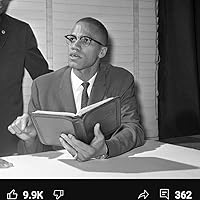
I agree with Malcolm X when he said..."You show me a capitalist, and I'll show you a bloodsucker."
This is an excellent book on how classical liberals view the problem of racial inequality in the U.S. From a pro-property rights, pro-market, pro-entrepreneur, pro fair trade perspective, the authors comb through the development of the Black community and economy in U.S. history and highlight many instances where racism and government policy harmed this population. They offered excellent details and summary of black history. The authors encouraged support of black social network and entrepreneurship, and removal of well-meaning but harmful policy such as affirmative action. It also seems the authors were writing from a Christian perspective because they celebrated the important role of the black church in black history and highlighted attempts by Christian groups to support the poor and those suffering from harmful policies (e.g. prison ministry). It took me a long time to read through this book but it was worth it. I would recommend it to my kids when they are older.
I decided to read this book after hearing an interview with the author on a David French podcast. French said it was difficult to decipher whether it was “left-coded” or “right-coded,” which intrigued me.
The book is essentially a libertarian interpretation of Black America—its woes, its successes, potential solutions, etc. A few insights I gained:
-How bad the economics of slavery are, in addition to being horrendous (labor with no incentive for efficiency, free labor depressing wages for all, etc,)
-Southern plantation owners did not view themselves as capitalists but rather a golden mean between the “savage” Indians and the Commerce-obsessed North
-The influence of the Black Church
-The racist motivation of progressive 20th century policy
And much more that I’m now too lazy to get into. Pretty good read!
Black Liberation through the Marketplace is well researched, and comprehensive. While reading I didn’t feel as though there was an agenda was way trying to be pushed but instead a commentary from an author as they brainstormed what happened and what we could do to change it. This book was refreshingly void of pathos and instead was strictly “argumentative” without being cold and heartless. While it is impossible to get a full understanding Black exclusion in the marketplace in 350 pages, I thought the points that were touched on did a good job of providing a complete picture. More than anything for me, this book asked me to think. It asked me to consider what steps I could, we could realistically take to make better this world brought before us. That is empowering. To know that there really is a potential for a path forward.
The authors warn that it’s a roller-coaster ride, and they aren’t kidding. While primarily libertarian, they accept (and demonstrate) validity in many counter arguments by the left and right. They offer a variety of curious proposals, which refreshingly are calls to action for individuals rather than calls for sweeping social schemes. I was certainly moved out of my comfort zone and have some hard thinking to do in the weeks ahead to reconsider some things that I was heretofore sure of.
After hearing meeting Dr. Ferguson and hearing her speak, I purchased a copy of the book. It can be an emotionally difficult read at times, given our failings towards the Black community. However, Dr. Ferguson provides multiple different avenues of how current society can empower Black communities. Namely, through markets, classical liberal values, and capitalism (not to be confused with cronyism).
Fantastic read. I wish I had read the book quicker.
This book has a lot of great information about black history in the post-Civil War ear up through the present, and goes into detail about some of the horrible things that happened, how black institutions were created to help black communities and subsequently destroyed, and how they can be rebuilt. Definitely some stuff they didn't teach in school. I'd never even heard of the Colfax Massacre before reading this, for just one example.
I learned a lot from reading this book - about Booker T. Washington, about free markets, even about the positive roles played by Black Masonic organizations. Most importantly, seeing solid arguments for a robust free market in a community as the foundation for growth in our urban communities - as well as in rural communities where race might not be a factor, but poverty certainly is. I strongly encourage others to add this to their reading lists.
This book is prodigiously researched and has a fascinating thesis. However, it is prolix and academic, and appears to have been written for academics, not the general reader. I found it tough going and gave up.
I have been impressed with what I have read of Rachel Ferguson this spring. The following review landed this new book on my to-read.... https://lawliberty.org/book-review/ma...