Sono sessantenni panciuti e stanchi quelli che sguazzano nella piscina dell’esclusivo club Ma’adi, per lo più militari in pensione, generali e alti gradi dell’esercito egiziano. Fra loro c’è il capitano Ni’mat, ex pilota di caccia che ha combattuto nella guerra dei Sei Giorni, quella del 1967 contro Israele che si è conclusa con una sonora sconfitta dell’Egitto e, quindi, sua. A un certo punto il club viene invaso dai giovani, i ragazzi della locale squadra di nuoto venuti ad allenarsi, e i vecchi sono costretti loro malgrado a lasciare la piscina e rifugiarsi al tavolo sotto il pergolato. Fra loro non c’è il capitano Ni’mat, che va a mettersi su una sdraio in disparte da dove osserva, divertito e ammirato, i corpi lisci e flessuosi dei giovani che guizzano agili nell’acqua azzurra. Poi quell’osservazione diventa contemplazione, e il capitano Ni’mat è il primo a sorprendersi del rapimento estatico da cui è travolto e al quale non sa ancora dare un nome. Il libro racconta il viaggio dell’ex militare, sposato e padre di due figlie, nella propria tardiva omosessualità: una scoperta di se stesso esaltante, quando in una successione di torridi incontri sessuali prova un piacere mai provato prima, e allo stesso tempo devastante, quando si rende conto che la deriva presa dalla sua vita va contro tutte le regole del vivere sociale, tanto più in un paese come l’Egitto, sempre più succube della rigida morale islamica. La difesa della propria individualità contro le convenzioni del sistema è l’ultima battaglia del capitano Ni’mat.
Né à Settat, au Maroc, en 1946, il fait ses études à Casablanca, puis s’oriente vers une carrière scientifique. Il atterrit à Paris dans une école d’ingénieurs en travaux publics. En 1968, au milieu des évènements qui secouent la capitale, il écrit des poèmes… et s’enivre. En 1972, il revient au Maroc, se forme à l’informatique, devient informaticien puis journaliste littéraire au Matin du Sahara et au Temps du Maroc. À partir des années 90, il écrit dans la fièvre. En 1992, après la parution de Demoiselles de Numidie aux Éditions de l’Aube, il renonce à éditer ses textes jusqu’à ce que Salim Jay l’introduise auprès des Éditions de la Différence, qui éditera l’ensemble - considérable - de son œuvre inédite. Mohamed Leftah est mort au Caire, où il résidait depuis 2000, le 20 juillet 2008.
Il tempio di Kôm Ombo, non lontano da Assuan, in quella parte di Egitto che si chiamava Nubia. Da qui arriva Islam, il domestico del capitano.
Appena ho preso questa decisione ne ho realizzato il suo lato originale, quasi iconoclasta, nella società in cui vivo. Questo diario privato è infatti una forma di resistenza al gruppo, all’oralità chiacchierona e ai suoi cliché, un’affermazione di me, dell’individuo nella sua singolarità unica, tutte nozioni che per la schiacciante maggioranza dei miei compatrioti appartengono al campo dell’impensato, per non dire dell’impensabile.
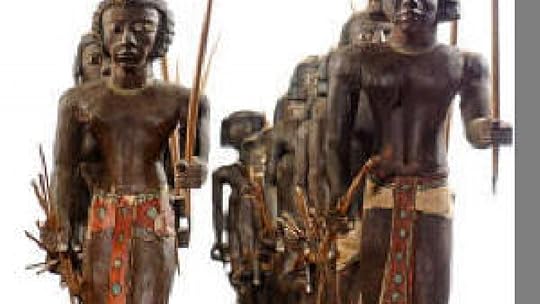
Pelle più scura, corpi forti e possenti, perfetti guerrieri: i Nubiani.
A volte succede di imbattersi in chicche completamente inaspettate come questa che ignoravo nel modo più assoluto, così come mi era sconosciuto il suo autore, purtroppo già morto (vita piuttosto breve: 1946 - 2008). Pagina dopo pagina (non sono molte, il romanzo è breve), pur nella sua notevole diversità, una scrittura a base di tale garbo empatia e ironia non poteva non farmi pensare al nostro Fabio Bartolomei. Leftah sa essere divertente e toccante, leggero ma profondo, in questa, che se ho ben capito, è la sua ultima prova, pubblicata postuma, come tutte le altre scritte in francese, da un autore marocchino che ha scelto di vivere in Egitto.
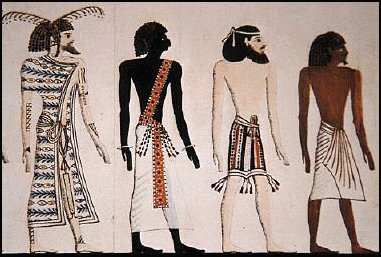
I faraoni dalla pelle scura.
E proprio lì, in Egitto, al Cairo, nei suoi quartieri più borghesi e popolari, è ambientata questa storia, raccontata in terza persona da un narratore, che però man mano cede sempre più il passo alla prima persona del diario del capitano Ni’Mat. Ufficiale radiato dall’esercito per punizione dopo la sconfitta bruciante della Guerra dei Sei Giorni (giugno 1967) – che sembrerebbe però riscattata da quella del Kippur, di soli pochi giorni più lunga (diciannove contro i famosi sei) che il trionfalismo arabo ed egiziano considerano splendida e luminosa vittoria – vive una lunga pensione che da prematura è con i decenni diventata perenne. Le figlie sono a studiare all’estero (in Occidente, in un ambiente e una cultura meno chiusi di quelli egiziani, dice a chiare lettere Leftah), la moglie è una presenza affettuosa, solida, consolidata. L’abitudine trionfa nella vita del capitano e della di lui consorte.
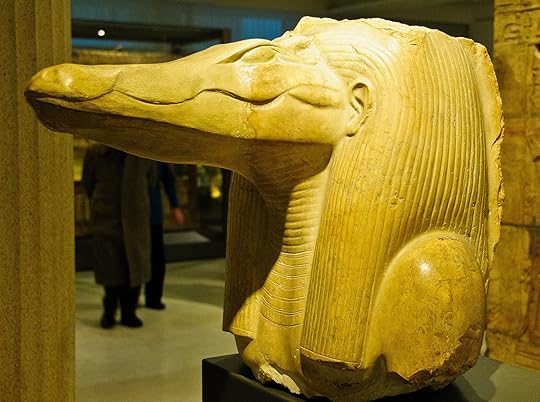
Sobek, il dio coccodrillo.
Se non che nella piscina del club sportivo dove entrambi si recano – a giorni e orari diversi, perché donne e uomini non possono bagnarsi nella stessa acqua – vengono convogliati anche i giovani allievi nuotatori, corpi ben più atletici e scattanti di quello troppo in carne del capitano. I giovani nuotatori accendono la fantasia del capitano. Che si rende conto di quanto sia bello e giovane il suo domestico…
Mentre racconta una storia che potrebbe essere buffa, ma invece è tenera e romantica, e anche dolorosa, Leftah ragiona sulla società del paese che l’ha accolto, sulla religione islamica, sull’omosessualità, su perbenismo e bigottismo.
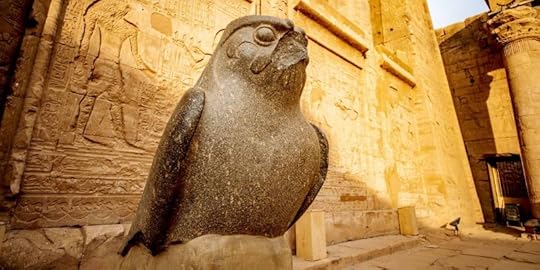
Horus, il dio falco.
Pur senza avere la carica trasgressiva dell’amore che ho vissuto per un anno – oggi non lo definirei maledetto, quanto piuttosto fuori dal comune – e che mi ha fatto conoscere un’altra faccia della felicità, questo diario mi appare a modo suo come un’altra maniera di affermare la mia individualit controil gruppo e le sue regole.
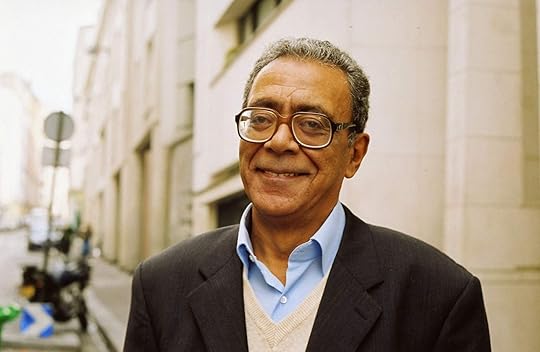
Mohamed Leftah: 14 maggio 1946 a Settat in Marocco – 20 luglio 2008 a Il Cairo, Egitto.
This is a quick read about some homosexual behavior and reactions to it, written by a Moroccan but set in Cairo. It stirred up controversy when it was published in 2008, and this English translation just became available on June 7th. I think the translator did a good job on it. Considering the different cultural norms, aesthetics, attitudes, and experiences in this novel, some might get alarmed or be offended by it. It rang true for me, and I appreciated what the author had to say and how he said it. I am glad it came out in June. Happy Pride to all LGBTQ+!
It has a sensibility that reminds me of Thomas Mann's classic Death in Venice. The club swimming pool is used for some effective contrasts a few different times. The novel speaks to the complexity of each person's identity, and the different options and opportunities across gender, class, sexual orientation, and age in the Egyptian society, particularly as a growing fundamentalism is taking hold across the land. The main character, a retired military figure of some affluence, feeling the downward spiral of the aging process, experiences and pursues yearnings he didn't realize he had. This triggers a change of behaviors and events that affects others beyond himself. The focus, though, is primarily on him, his thoughts and feelings.
This is the first novel by Mohamed Leftah to be translated into English. I wish I could read Arabic, I would read his other books. I really enjoyed this and found it engaging and interesting. The story follows Captain Ni'mat's, a veteran of at least two wars, the second being the Egyptian lost to Isreal in 1967. Since then, he has been retired and living a quiet but comfortable life in Cairo. The captain starts to find himself being drawn to the swimmers at his local club, being enamoured by their bodies and youthfulness. He begins to look at his Nubian house boy with passion and soon he gives into his passion and later that develops into love. The novel speaks to the complexity of each person's identity, and the different options and opportunities across gender, class, sexual orientation, and age in the Egyptian society, particularly as a growing fundamentalism is taking hold across the land
Citaat : Het water - opnieuw in beweging, levend - werd in alle richtingen doorsneden door lichamen waarvan sommige de blankheid en de elegantie bezaten van de heilbot. Review : Pas in 1992 publiceerde Mohamed Leftah (Marokko, 1946) zijn eerste roman, en de tweede kwam veertien jaar later. Bij de Franse uitgeverij La Différence verscheen in de jaren erna zijn hele oeuvre. Ongeveer de helft postuum - Leftah overleed in 2008 in zijn woonplaats Caïro. Leftah's laatste roman verscheen postuum in 2011, en is nu ook vertaald: De laatste strijd van captain Ni'mat dat nooit in zijn vaderland Marokko mocht verkocht worden.
In dit boek ontdekt een gepensioneerde piloot van het Egyptische leger zijn latente homoseksuele verlangens. Captain Ni'mat geniet van het schouwspel van het juniorenzwemteam dat de oudjes op middagen uit het buitenbad komt verdrijven. De vrienden gaan de kant op, maar de voormalige gevechtspiloot is gegrepen door de schoonheid van de om hem heen wervelende lichamen en blijft in het bad. Na een verwarrende droom laat hij zich ontmaagden door zijn jonge Nubische bediende Islam. In zijn nadagen beleeft captain Ni'mat met deze donkere jongeling de liefde van zijn leven. De liefde is wederzijds maar de maatschappij keurt ze niet goed. Dit boek is een mooie roman over ouder worden, en het is tevens een pleidooi voor de vrijheid van het individu.
Ni'mat moet tot zijn groot ongeluk ondervinden dat daarvoor in het steeds strenger islamitische Egypte van eind vorige eeuw geen plaats was. Machisme was de norm en al wie daar niet aan voldeed, werd uitgestoten en was voorbestemd om een paria te worden. De ik-figuur schrijft in dagboekfragmenten over zijn visie op mannelijkheid, zijn interpretatie van zijn gedrag en over de betekenis van het lid zijn van de groep, zijn passie en liefde voor zijn minnaar en zijn gevoelens tegenover zijn echtgenote, met wie hij alles kan uitpraten en ook financieel afhandelen.
De verteller beschrijft heel bloemrijk en ook poëtisch over zijn homoseksueel ontluiken, maar toont ook op wrange wijze de sociale uitsluiting van de eenling die zich niet naar de regels van de groep schikt. Deze soms schokkende roman geeft een intrigerend beeld van een homofobe samenleving waarin wet, moraal en godsdienst zéér verstikkend kunnen werken.
4.1! There’s just too much complexity packed in this very readable exploration of a man’s sexuality late in life. It’s at once a love story and a liberation as it is a subversive condemnation and mirror to society. This can be seen as it jumps between the vernacular and the deeply literary as Ni’mat makes sense of his circumstances and life since lived.
Beyond that, it’s the exploration of power that isn’t made explicit on text but deeply permeates every page in this book that makes this a stand-out. Leftah is not just asking us to inhabit the life of a man trying to find his streak of individuality that goes against collective norms and beliefs and question why society should condemn someone’s sexual expression and belief even at death’s door. He’s also asking us to examine the power structures that allows Nim’at to find love in Islam, his teenage “factotum” from a Nubian displaced community (one displaced for the sake of a hydroelectric dam meant for the country’s use). He also goes further to complicate that by showing Ni’mat acceptance of being the “khawala” in this already messy relationship where Ni’mat is submitting but at the same time holding the purse strings and societal power. What is society’s contribution to Islam’s situation and what is it to Ni’mat? How is this different from Abu Hassan’s tomb?
Tbh, there’d just too many themes packed in between the lines ranging from examination of masculinity and virility to statehood, religiosity, national/community pride. Sitting with this more after reading it just keeps unraveling more stuff and I’m glad the translation seems to have maintained the multiple intersecting dualities held in this novella.
This entire review has been hidden because of spoilers.
Ambientato in Egitto, il capitano Ni’Mat si sta godendo la pensione dopo una vita ricca di successi, con una moglie e delle splendide figlie. È proprio in questa atmosfera di pace che scopre di essere compiaciuto dalla visione di corpi maschili e di ricavarne un certo appagamento: la sua vita cambierà completamente. È un racconto breve, sono poco più di 130 pagine, dove seguiamo la presa di consapevolezza della propria natura da parte del capitano Ni’Mat e i suoi pensieri che analizzano in maniera lucida le rigide contrapposizioni moderne. È un alternarsi di azioni e ragionamenti che lasciano poco spazio ai sentimenti. È una lettura pregna di informazioni legate anche alla cultura islamica. Non ha fatto breccia nel mio cuore, ma è una storia sicuramente interessante per conoscere una realtà di cui si parla poco.
Een zeer poëtisch en erotisch boek dat een inkijk geeft in de Arabische/Islamitische cultuur en hun kijk op homoseksualiteit. Schitterend uitgewerkte personages nemen je mee in een onbekende wereld vol tradities en geboden. Een aanrader!
Ho trovato abbastanza deprimente questo racconto della scoperta e dell'accettazione del proprio orientamento sessuale da parte di un uomo, ex militare, ormai sessantenne. Deprimente perché Ni'mat sembra avere una scoperta monca, poiché nella relazione con il giovane Islam non sembra esserci altro che l'appagamento sessuale provato attraverso il sesso anale vissuto nel ruolo di passivo. Questo racconto, di fatto, non è che un grandissimo inno al sesso anale (come se questo fosse prerogativa esclusiva del mondo omosessuale, per altro). Del giovane Islam sappiamo poco o nulla. Ci deve bastare sapere che è un uomo prestante e tutto muscoli, sempre a disposizione della fregola del suo "padrone" ormai sfatto. Porsi alcuni dubbi relativamente alla disparità di rapporto tra un uomo di 60 anni e il suo servitore di forse meno di 18 anni? Perché mai? Indagare il fatto che quest'ultimo si rivolga quasi fino alla fine dandogli del lei e chiamandolo "capitano"? Scherziamo? L'autore voleva esplorare la tematica omosessuale nel mondo arabo e patriarcale nei primo decennio del 2000(in un'epoca comunque di chat, di Grindr e che non è quella degli anni '60 o '80)? Ci è riuscito? Io non credo sia riuscito nemmeno in questo. Ripeto, il racconto sembra semplicemente parlare dell'esplorazione del piacere anale. Il che va benissimo, ma allora poteva essere ambientato ovunque. Non mi sembra ci sia praticamente altro. Amore, quotidianità, perfino attenzione per l'altro. Nulla, nulla di ciò. Perfino il tema della discriminazione è trattato con totale vacuità. Un peccato, una delusione. Un racconto monco scritto in sostanza, da una prostata felice.
Erotische roman over een ouder wordende man die zijn homoseksuele voorkeur ontdekt. De seks wordt gedetailleerd beschreven. Toch gaat het (naar mijn gevoel) meer om de psychologische evolutie die het hoofdpersonage doormaakt. Het verhaal speelt zich af in Egypte, waar de streng-islamitische moraal de samenleving in hoog tempo in haar greep krijgt. Het boek is verboden in sommige islamitische landen.
I’m not rating this novel right now because I’m still letting the dust settle. A sad, troubling story of a man trying to find happiness and make sense of his life and culture, the book has passages that broke my heart, and also passages of graphic sex that I don’t know we’re needed to make his point.
A somewhat unusual novel. None of Mohamed Leftah's other work seems to have been translated into English, so hard to compare. What makes it most compelling is that it reads like it could be a memoir (and perhaps it is), which would be daring and radical for the time/place. Rather too explicit for my taste, but part and parcel of the story.
I didn't really enjoy Leftah's writing style-- too purple and repetitive, in ways that I don't think can be chalked up to the translation. I also think this would have benefitted from being a bit longer, in order to give some of Ni'mat's realizations more time to grow and develop in believable ways.
This is a well-written tale of a man who discovers a forgotten/ignored/unrealized part of his identity late in life, in a society that is not accepting of individual expression or differences. It is told with respect and some rather interesting musings by the Captain.
What is written as a “love story” is simply an imbalance of power with the taking advantage of an underage teen. Regardless of intent, this book reads worse than “Call me by your name”.
I was intrigued by the premise of this story but the execution leaves a bunch of gaps of moments or feelings I wanted (needed) to see explored to feel satisfied fully by this narrative.
Captain Ni'mat's is a veteran of at least two wars, the second being the Eqyptian loss to Isreal in 1967. Since then, he has been retired and living a quiet but comfortable life in Cairo. However, suddenly, he finds a new passion...a love for his young Nubian house boy.
He finds himself warring with himself and his society...including his closest friends. In addition, he has hard decisions to make about his life and his marriage. He starts seeing his society in a totally different way than he ever had before, and feels like finally, he is an individual, not just part of the crowd.
The ending is sad, and he is lonely but has at least had an awakening and experienced a love that he never thought he would.
It is a very moving story, and one feels sorry for his circumstances but it is also a very erotic, arousing story of love and sexual desire fully expressed.
****Something that I failed to report on the first reading of this novella was that there is some strong homo-erotic and a personal defense homosexual freedom in this story. Yes, the story ends in sadness but it is not un-diluted by a certain joy that the events of the story took place.