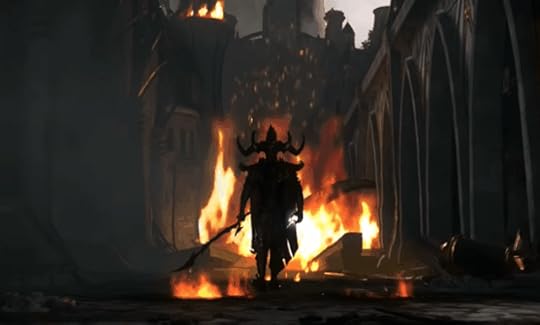
The third book in the Time of Legends series begins the epic tale of the Sundering. Malekith triggers a tragic sequence of events that plunges the realm of the elves into a civil war from which they will never recover.
Gav spent 14 years as a developer for Games Workshop, and started writing novels and short stories in the worlds of Warhammer and Warhammer 40,000 when the Black Library imprint was launched in 1997.
He continues to write for Black Library, and his first 'homegrown' novel series The Crown of the Blood has been released via Angry Robot.
Currently living in Nottingham, Gav shares his home with his loving and very understanding partner - Kez, and their beautiful little boy - Sammy.
There was once a time when all was order, now so distant that no mortal creature can remember it. Since time immemorial the elves have dwelt upon the isle of Ulthuan. Here they learnt the secrets of magic from their creators, the mysterious Old Ones. Under the rule of the Everqueen they dwelt upon their idyllic island unblemished by woe. When the coming of Chaos destroyed the civilisation of the Old Ones, the elves were left without defence. Daemons of the Chaos Gods ravaged Ulthuan and terrorised the elves. From the darkness of this torment rose Aenarion, the first of the Phoenix Kings, the Defender. Aenarion’s life was one of war and strife, yet through the sacrifice of Aenerion and his allies, the demons were defeated and the elves were saved. In his wake the elves prospered for an age, but all their grand endeavours were to be for naught. The warrior-people of Nagarythe found little solace in peace and in time would turn upon each other and their fellow elves. Where once there was harmony, there came discord. Where once peace had prevailed, now came bitter war. Heed now the tale of the Sundering.
After having pushed back the daemons of Chaos and saved Ulthuan from annihilation, the warrior king Aenarion is dying. His son Malekith aspires to rule as Phoenix King in his father’s place, but the elves do not want a second military leader to be crowned in a new era of peace. Instead, the First Council chooses another prince, Bel Shanaar, to rule them. Malekith returns to his realm of Nagarythe, and soon departs Ulthuan, a ruthless prince filled with envy and ambition…
Warhammer Fantasy might be the must underappreciated fantasy universe ever created. After reading Heldenhammer, the tale of Sigmar’s unification of the human tribes and the formation of the Empire, I decided to make the tale of Malekith and the elves my second Warhammer trilogy. I did not regret it for one moment.
While the Sigmar books gave the impression of a relatively limited setting, this book is a peak into a fantasy world that’s been created with master craftsmanship. In Malekith is the story of the elves, their beginnings and their wars against the legions of Chaos. Here is the story of the dwarves and their settlement of the great Mountains at the Edge of the World. Here is the story of the grand mythos that forged the Old World in truly ancient times. And the story of a primitive, nomadic people living at the edge of the Chaos Wastes: humans.
I would strongly recommend any fantasy lover to read this book to see what the Warhammer world has to offer. It is popcorn fantasy, sure, but popcorn fantasy at its finest.
Malekith was my first foray into the Warhammer Universe, and in hindsight, I have to say it took me too long to sample this wonderful place. Sure, some will argue that the world of Malekith is yet another retreaded version of LOTR with a bit of Moorcock mixed in, but to me, even while such criticism holds a small sliver of truth, I honestly could careless because this stuff is good. Warhammer has gained another fan!
But why should anyone consider reading the novel Malekith?
The world of warhammer itself is why, for this is world building done right. As you read, past heroes and villains rise before your eyes, bestriding civilization and clashing with steel and magic to forge the world where our flawed elven prince resides. And you realize with undeniable conviction that the Prince of Nagarythe’s story is of immense importance to the future of this world, and that all history stretching forth will, in small or large part, be influenced by Malekith’s choices. Indeed, as the pages turn, you even understand that Malekith’s own fate is influenced in part by the choices his own father, Aenarion, made centuries before, making it clear that even as mighty and flawed as Malekith is, he is but a small droplet in the vast ocean of warhammer history. That is what this novel offers: the weight and breath of a complete history that - unlike many fantasy novels - rings true to life in so many ways, making you wish to discover all its stories.
Well, if it so wonderful, why did I only give it 3 stars you ask?
Like all things, Malekith does have it’s flaws. To me, the writing bogs down into too much detail of actually bloodletting and not enough details of the people who fight the battles. It also does too much telling me what happens instead of letting me see it unfold in a story setting. And lastly, the chapters where the author tells the story through Carathril instead of Malekith just seem out of place. Don’t get me wrong, I like Carathril, especially his neutral view of the main characters, but he is introduced, relates his part of the story then disappears for chapters with no explanation before reappearing to say more only to vanish yet again. It did not work for me.
So if you do not mind elves and dwarves in your fantasy and want to sample a fantasy world of legendary breadth, this would be a good place to see if warhammer is to your liking.
God damn! Gav Thorpe really knocked it out of the park with this one! Malekith was a terrific adventure, full of exploration and ambition, betrayal and violence. So many twists and turns it'll make your head spin! The pacing was excellent, the characters were well rounded and believable, and each grew as they went through their respective arcs. The action was intense and the intrigue kept me on the edge of my seat! This first tale of the downfall of the Elves was phenomenal, and I can't wait to read what's next!
This is probably the most epic fantasy I have read in my life, which is no small feat considering the fact that I have devoured everything by authors such as Terry Brooks, Raymond E. Feist and David & Leigh Eddings, am quite familiar with later authors such as Robert Jordan and Terry Goodkind and am fond of Dungeons & Dragons stuff. Nevertheless, this is the first Warhammer novel which I finish (I have started Malus Darkblade but did not like it) and I did it because I love the Eldar Path trilogy from the Warhammer 40 000 setting (in case you are wondering, one is medieval fantasy, the other a space opera), which was also written by Gav Thorpe. The book chronicles the life of Malekith, a noble Elven prince, who dreams to inherit the throne of his father, with disastrous consiquences to his own people. In the beginning, the other Elven princes choose another one to be their King and Malekith travels to distant lands in which he builts a vast empire. This is the first part of the book and it is wonderful - for the first time since many, many years, when I read books like The Lords of the Rings, Magician and The Elfstones of Shannara - I felt like a kid, completely enhtralled by the tales from a distant, nordic land, populated with elves, dwarves and awesome monsters. However, there is a subtle difference between "Malekith" and those books - while Tolkien, Brooks and Feist always remain optimistic, "Malekith" is quite grim, even when Malekith is still mostly heroic and less villainous. Still, you root for him when he fighst monsters, admire his friendship with the High King of the dwarves and marvel at his discovery of a strange, exotic city where time and space are meaningless. The second part of the novel tales a much sadder tale. The High King of the Dwarves is no more and Malekith returns to the land of elves and the poisonous ambition to the throne is still there. However, he faces greater obstacles when he discovers than the Elven nations are caught by powerful cults, who participate in hideous religious rithuals. Dark betrayal awaits Malekith when he discovers the true nature of the cults and yet he finds an opportunity there, which will allow his fo fulfil his destiny. And a sad destiny it is indeed... Words are to weak to describe to you how powerful and wonderful this book really is. Gav Thorpe is a master when describing the world and the psychology of Elves and Eldars and manages to make them both alien and close to you. He also effortlessly creates a Tolkienisque feeling of scope and epicness and I am talking Silmarillion scope, not Hobbit or The Lord of the Rings. Fans of epic fantasy will be charmed to find nods to other series here and there (the name of the Elven King Bel Shannaar is quite similar to Jerle Shannara even if the character is not and the strange city in the Chaosrealm reminded me of the Eternal City from the Riftwar Saga), but the whole feel of the book is of a unique and original tale, even if told with familiar tropes. Thorpe's greatest power, however, is his ability to make you feel and even root for his characters, who are quite often very flawed, in the case of Malekith simply evil - and not as a "grey" character like in A Game of Thrones, but dark, bad character, like a Sith Lord or Sauron... and still you can understand his motivations and tragedy. My only criticism is the abrupt ending - as a technique it is original and worked perfectly in "Path of the Warrior", but here it feels pretty rushed. However, this is a minor con of otherwise fantastic novel. Truly recommended for fans who long for something which will bring them the echo of true epic fantasy.
Gone back to an old favourite series in the Sundering: the opening book, Malekith, telling the backstory of one of my favourite characters in the Warhammer Fantasy universe, is a grim tragedy worthy of Darth Vader as Prince Malekith sinks into cruelty, hatred and atrocity in his rage at being denied the throne he sees as his birthright...
In this novel, Gav Thorpe tells the background of the Incel King, sorry, the Witch King, Malekith. The character is compelling, complex, and has all the hallmarks of a great protagonist-turned-antagonist. After seeing the structure of Asur civilization from his perspective, you'll have a tough time siding with Tyrion when the End Times roll around.
For a newer fan of Warhammer, the beginning might be a bit rough since the whole story predicates on the Asur Princes basically making a backroom deal to never allow Aenarion's son Malekith to ascend to the Pheonix Throne, a backstabbing comparable in magnitude to the Montreal Screwjob, a magnitude that I feel is somewhat lost thanks in part to Morathi's humorously Karen-like screeching whenever the question of Pheonix King comes up. And speaking of Morathi, Games Workshop are undisputedly cowards of the highest order for not continuing the Oedipus-ian relationship between the two. I fully expect mother-son magical bondage incest to be canon in the Old World reboot, GW, get on it.
Back to Malekith, the only complaint I have with his character is a little inconsistency. Sometimes he's in protagonist mode, nicely explaining things patiently to his subjects, particularly when he's interacting with the Dwarves. Other times Gav remembers, oh wait this guy is supposed to be willing to annihilate the world with Chaos and fire before planting a throne in the ashes... "Here, let's have him threaten to execute someone for not using his full titles. That should remind the audience not to cozy up to him just yet." Other than this minor and mostly forgettable complaint, Malekith's character is executed almost flawlessly and gives the reader a fantastic scope into the mind of the Witch King.
The side story featuring Crone Hellebron and her ascent to Hag Queen and creating the Brides of Khaine is quite good as well, and I applaud Gav for his restraint on avoiding some cliche scenario with her father and Malekith's second in command, Alandrain. That would've been so easy, but instead her arc is fantastic and leads into one of the only good parts of the subsequent novels.
Overall, like so many fantasy trilogies, here it seems the author was contracted to write three books but only felt like putting effort into the first one. Easily the best of the trilogy, and I'd say the only one really worth reading. Want to know how the story of The Sundering actually ends? The 40 second cutscene at the start of Total War: Warhammer 2 or a quick 100 word summary off the Wiki should do the trick, instead of reading another 2 whole (garbage) novels.
Luckily, I'm only reviewing the first one here, so 5/5 stars, 100% would recommend.
Warhammer fluff at its worst. The writing is so sloppy and half of it doesn't even make sense. Malekith climbs on top of a shaggoth and hacks its head off while one of his arms is broken. Morathi gives her son Indraugnir v.2 and betrays him in the next chapter. Eataine is portrayed as more susceptible to pleasure cults because it's rich and idle, but the cults are rooted in Nagarythe, which is portrayed as super-martial-disciplined. On page 384, Malekith manages to both "pause to consider" and "speak without hesitation".
Forget the tragic, scarred, terrifying villain who barely gets driven off Finuval Plain- this book's Malekith has the temperament of a pissed off nine year old and spends the vast majority of the book dicking around with numbingly stupid politics, fighting token enemies, and backstabbing other characters with minimal backstory or meaning.
Don't read this book if you like Asur. Don't read it if you like Druchii. Don't read it if you like Gav Thorpe. Don't read it.
Not the peak of the series as I am enjoying The Shadow King even more but goddamn this is a good trilogy and it is criminally underrated. Only 871 ratings is insane.
Aenarion, Uniter of Ulthuan and the whole of the elven race, the first Phoenix King, and defender of the world during the first two Chaos Incursions has passed. After much debate between the Princes of Ulthuan, Aenarion's son Malekith is not chosen as Aenarion's successor. It is decided that Malekith's older half sister will wed Bel Shanaar, and bel Shanaar would rule. malekith is fine with this ruling, and returns to his realm of Nagarythe were he rebuilds his realm and prospers. Growing bored of the day to day rule, Malekith sets out across the see to the elven colonies to look for adventure which he desires greatly. After leading the defense of the forsworn colony against an orc invasion, he expands the colonies and forges an alliance with a race the elves never met before, the Dwarves. After a while there is little left to explore and little adventure to be had. So Malekith sets off on an expedition to the Chaos Wastes. Finding a circlet laced with great magical power in a pre human settlement, Malekith spend decades mastering the powers of the circlet before returning home to lead the elven armies against his own mother and her Slaaneshi pleasure cults. Taking his own mother prisoner she slowly twists him even further till he willingly commits treachery against Bel Shanaar and attempts to become the new Phoenix King, as is his right. Walking into the fires of Asuryan is the final test for all those who would claim the title of Phoenix King. Malekith makes his attempt, but the fires reject him and burn him horribly.
Gav Thorpe spins a great tale of how The Sundering begins, a great book.
For those of you not familiar with the Warhammer universe, Malekith is the king of the Dark Elves, a cruel and heartless leader who will gleefully expend the lives of anyone he pleases to achieve his own ends. This book, however, is dedicated mostly to the time when he was a noble and upright prince of the Elven kingdom of Ulthuan with the last quarter (roughly) of the book telling the story of how his ambition caused him to turn to dark powers. So it's the classic 'hero falls into darkness' plot, but then who said the Warhammer universe was teeming with originality? Nevertheless the story is enjoyable, the action sequences lack the usual gore factor of other Warhammer novels but then this is the Age of Heroes in the Warhammer world so perhaps the dark gothic factor has yet to kick in, and they were still exciting in the traditional sense. The description of some of the famous landmarks of the Warhammer world was particularly good, I felt, in that they offered enough for a newcomer to get a good idea of what the things looked like, while not belabouring the point so much that people already in the know would get bored. All in all this was an enjoyable read, and has something to offer to anyone, familiar with the Warhammer world or not. There is no doubt however that pre-existing knowledge of the Warhammer world will allow you to get more out of it, even if it does mean that you already know how the story ends.
Having read the background on the Dark Elves for WHFB I knew the story. In reading Gav Thorpe's novel I have a greater apprecitation for Malekith and his followers. In many ways I was reminded of Mordred and Morgan LeFay, another infamous M and M pairing of mother and son, when you see the ambition of Morathi push her son Malekith to achieve new heights. At times I found myself feeling sad for the prince, but then he would speak or do something in such an arrogant fashion that it was quickly forgotten. All-in-all an enjoyable read. If in the first few chapters you find yourself feeling a little uneasy about the pace of the book, it will pick up and quickly move to the end.
О чем: Сеттинг Warhammer FB. Самая ранняя по хронологии книга из доступных. После непростой победы над вторгшимися в мир силами Хаоса, эльфы решают не избирать правителем Малекита - сына прошлого Короля-Феникса, что стал героем и мучеником этой самой войны. Приняв новость более менее спокойно, Малекит решает прославиться как завоеватель новых земель и строитель колоний, но скрытые амбиции ещё дадут о себе узнать...
Персонажи: Можете сразу переходить к блоку "повествование". Персонажей здесь нет, есть лишь статисты и то, крайне схематичные. Главным героем, как не сложно догадаться, является Малекит.
Повествование: В целом, "Малекит" - едва ли можно назвать художественным произведением. Это нечто среднее между хроникой, учебником истории и мифами Древней Греции. Текст представляет собой максимально сухой пересказ событий (условный пример: Минуло две сотни лет и Малекит повел армию на север. Разбив лагерь под стенами города он приказал солдатам...). Со временем пересказ начинают разбавлять совершенно безжизненные диалоги и просто тонны лишних описаний. Серьезно, вся структура романа - это чередование "исторических" фактов, многостраничных описаний и несодержательных диалогов. Это плохо даже по меркам Вархаммера, и даже кодексы (раздутой вариацией которых является данный "роман") читаются намного лучше.
Мнение: На самом деле я даже не представляю для кого этот роман написан. Что-то интересное в нем могут найти лишь заядлые фанаты бэка Warhammer FB, но с другой стороны нужен ли им пересказ уже известных событий, раздутый до неприличия скучными описаниям и схематичными диалогами пустых и безжизненных персонажей? Желание бросить данное чтиво у меня появилось уже странице эдак на 40й, но ситуацию спасло появление моих любимых дворфов. Дальше читал в основном из-за них и закончил уже по инерции. По факту "Малекит" - всего лишь графоманский фанфик по известным событиям сеттинга. Без динамики, интриги, персонажей, драмы, диалогов и какой-либо художественной ценности. Однако некое удовольствие от него получить можно, т.к. сами события представляют некоторый интерес. Вот только их следовало ужать хотя бы в 2-3 раза и написать в виде литературного произведения, а не исторической статьи. Естественно желание читать оставшуюся Историю Раскола (ещё тысячу страниц) это "произведение" отбило начисто.
Оценка 5/10. Не хватило: всего, что должно быть в художественном произведении. Кроме описаний, конечно же. Рейтинг "goodreads" - 3.91/5 Моя группа Вконтакте - https://vk.com/ashborndetv
Long before the World That Was, looooong before THE EMPIRE defended the world from Chaos, Ulthuan was home to the elfs. The titular character is the Prince of Nagarythe, the northern Ulthuan kingdom of discplined warrior elfs. The first half of the book is Malekith's journey east to rescue an elven colony under attack from greenskin scum... but as he heads inland, he runs into the most interesting short people, the dwarfs! This book is the story of the legendary friendship between the elfs and the dwarfs. But there is a problem... Malekith's mother is Morathi, wife of the first Phoenix King, Aenarion. Malekith should by all rights be the Phoenix King... but the other elf leaders passed on him and instead choose Bel-Shanaar to lead. Malekith wants revenge, so he wanders far and wide to find some way to strike back at those who humiliated him.
The second half of the book is from some dude named Carathril's point of view. I guess the intent was to show how regular elfs struggle to contain the pleasure cults popping up and wreaking havoc throughout Ulthuan, but it's a strange choice. We know Malekith isn't the goody two-shoes everyone thinks he is, and we're reading the book because we want to know his story, so why not tell this part from his point-of-view as well? Malekith is easy to understand because he's good enough to be owed *something* even if he's not the top guy. (Reminds me of Triple H.) Carathril is a generic fantasy dude. He's OK as a side character, but how angry would Malekith be if this scrub had thwarted his plans?
I enjoyed the friendship between Carathril and Aerenis, but I thought the author could've done much more with Carathril and Drutheira. As with most Warhammer books, the women are either witches or victims... except of course for Morathi, who is the literal witch queen and the absolute opposite of a victim.
I picked this up because it was one of the books in the necklace that came with the Total War: Warhammer 2 Collector's Edition. I suspect most readers wanted to know how mommy's favorite son become mommy's *favorite* son, but that isn't answered here... Maybe it'll be covered in one of the other books in the trilogy?
From behest the day I picked this mere tome from my dusty shelves I blessed it with such bold expectations. I dared not think if it could ever wholly suffice them; the fabled legends of Ulthuan holding a rich significance within me, with the Sundering being the zenith of the bloody, millenia-old, never-ceasing war but lo! Was I wrong with such a base hypothesis.
The story has its foundings barely a handspan after the cataclysmic creation of the Vortex, the magically nulling void centered within Ulthuan to drain magic from the world, and with it the manifestation of the servants of the Dark Gods. Though such significance as to this event, arguabley the greatest battle within the bounds of history, is not spoken of much, or to any particular depth, especially when one considers how the crowing of Bel-Shaanar, is yet a lowly year after the death of both Aenarion and Caledor and their equally triumphant and bereaved victory; Though the reasoning behind the denial of Malekith`s claims are well documented, the false joy expressed by the Prince masking his utter loathing, whilst Morathi shrieks her protestations towards the contempt of her son.
Seeking to abate the glory-hungering song within his tainted blood, Malekith and a host of the Nagarythe sail towards the Old World, to forge themselves their own kingdom, a barb to the pride of the crowned Pheonix King, an insult to his dominance over the true land of the Elves. Through the blood of his warriors, the thrust of gleaming silver tipped spears and arcs of flaming brands, Malekith builds his colony from the ashes of Athel Toralien, the milestone of his fruitful empire.
As the tides of savage Orcs are slain and pushed ever further, the denizens of Chaos routed, driven by the Princes lust for glory and taste for blood, the Naggarothi stumble upon the peculiar folk, so named the Dwarfs. Short where the Elves are tall, stocky where they are gangly, gruff to noble, and gritty to graceful, these two races, upon the wealth-gilded pinnalces of their race, their empires flourishing, as the darkness is ever abated, meet within the vast forests of the Old World, perturbed as one-another, concealing outright disgust with faint amusement and mockery.
Malekith travels towards the mountain holds of the Dwarfs, the jewel-encrusted summit of his ambassadorial trip, to talks within the mighty fortress of Karaz-A-Karak. It is here, admist the descriptive genius that Gav Thorpe paints so truly magnificently, that the underling demeanour of Malekith is revealed. His inferior views of the Dwarfish-folk, and the timely assassination to those who would ursurp his newfound alliance shatters any fictorial pictures we had of the Prince, with the ruthless, single-minded and power-thirsting son of Aenarion, his infamy knows him for.
Years, decades, centuries and even millenia flow away, as trade flourishes between the coastal Kingdoms of Ulthuan and its colonies, their coffers bulging with grain and gold. But as with any empire, it can only flourish so high before waning and floundering within the spoils of excess, depicted here, as the hedonistical Cults of Excess and Pleasure, their figurhead Morathi, Malekiths unholy mother.
Athel Toralien, as beautifully cemented later within the tome that is [B:]Shadow King[/B:] too falls under the excessive shadow of the cults, and rife with disgusts, our Prince heads towards the glacial crown of the world, the warping and magically infused Wastes, poisened by the might of Chaos, yet confined to its pitiful existance by the Vortex. Battling through the evil-worshiping tribes of early humanity, warp-mutated beasts and the fell daemons of Chaos itself, the party descends upon the blighted kingdom of long since vanished halflings, skeletal figures of foul breeds of Elf and Human.
And yet it is here. Upon the grandure of the blasted Wastes, within the warping echoes of the city, does Malekiths destiny finally manifest and abide his whims. Plucking the Circlet of Iron, an arcane crown of power-imbued metal, gifting the young Prince an audience to the lairs of the Chaos Gods themselves. Transversing through the blighted, coalescing, bloody and excessive kingdoms, Malekith, unknowingly condeming his warriors to slaughter, truly grasps the profanity of his birthright.
Whilst her son plys the seas of the world and tempts the wrath of the Chaos Gods, tilling the Wastes for ever greater glorious and foolish deeds, the taint of evil seeps slowly back into the newly freed isle, as cults spring from ever grang city, isolated farmstead and noble port. Bel Shaanar orders the cleansing of such vile practices, beneath of the banner of Malekith and Nagarythe, newly returned, with Ulthuan the ripe fruit for him to pluck from the conquest of war. With the ample and bloody culmination of such a vast campaign the storming of Anlec and the overthrow of the forbidden cults.
Ulthuan is led, blindly into blissful peace, once more, as the Prince of Nagarythe, now unleashes the Cults founded my Morathi, to cause spontaneous anarchy and unrest within the realms of the Elves once again. Malekith grips this feverant degeneration of Bel Shaanars power, forcefully poisening the Phoenix King, making his way upon the Dragon Ship Indraugnir, to the Shrine of Asuryan.
And it is upon this pyramid of white marbled and gold, that the cloying veil of century spun falsity drops: Malekith, his pent up and millenia agression and distrust, nourished by Morathi and provocked by the ignorance to his plea by the remaining Princes, slaughters near all the assembled throng of nobility. Knights of Anlec clash with stoic Phoenix Guard upon the docks, whilst the foul blade of Malekith is swung in magic-spitting arcs, every fiery sweep decapitating yet another Prince, as his hold upon the Pheonix Crown grows ever yet more, his dreams yet closer.
The blasphemous slaughter within the halls of the Creator God ends, alabaster steps stained by tacky rivulets of dripping crimson, as the once gallant and righteous protagonist, now turned blood-stained antagonist, casts his arrogance swaythed form into the fiery chasm as his father did millenia before, not to be blessed by the Allfather but burnt, as his vile body is wracked by white-hot fire, burning his mind and reducing his mortal form to ash, screams bubbling from scorched lips to a soul-gnawing crescendo, as Malekith crawls back towards the dais, away from Asuryans wrath, and so, the Sundering truly begins...
Rated at an impressive 4 stars from a potential of 5, for intoxicating prose, a gloriously weaved character that is Malekith, with substantial development through the read, his heroic and little-known rise and the magnitude of his traitrous and imfamous fall, with action from former page to latter. Though beautifully detailed at times, lacking badly at others, with bristling sieges, yet poor skirmishes, dimishing the perfection made manifest, ever so slightly.
My preconceptions - as majestic and high as the sky-touching towers of Tor Anroc itself - sated perfectly, my love of Elves quelled.
This entire review has been hidden because of spoilers.
1983, Games Workshop came out with the first edition of Warhammer Fantasy Battles. 1984, Marvel Comics releases Thor comic #344, introducing a villainous elf character. Both are named Malekith, both are scarred by horrible burns, forced to hide their faces behind twisted masks, both swear oaths of vengeance against those who betrayed them, both have the same f*ing name. Coincidence?
Whatever is the case, Malekith (the Warhammer version) makes for an interesting character-study. Born the son of a great hero, destined for greatness, trained in the arts of war and magic, he set out across the world fighting in distant lands, constructing colonies and forging alliances that helped to bring his people into a golden era. He fought back the demons in the north, put down an uprising that sought to plunge the elves into civil war, gained the love and admiration of his people, but is never given the title that is rightly due to him. Though he may be severe and even malicious, it's easy to see how unfair his situation is and you can sympathize with him. That's the goal of the book in the end, to give a logical explanation for the split between the Asur and the Druchii. To that extent, the book does a great job. It's detailed and expansive, covering a myriad of important events such as the elves' first encounter with the dwarves, the birth of the cults of Khaine, the many battles and courtroom debacles. It gives you an immersive account of the history of the Asur while also detailing the rise and fall of one of Warhammer's most interesting personae.
My only problem is with the book's frequently exaggerated numbers. It's clear that the author is trying to do everything on a huge scale but that often works against the book's believability. A host of 50, 000 soldiers appeared; malekith came with a retinue of 5,000 knights; there were 500 kings and thanes, etc. Where in the heck do you keep 500 kings? Are there 500 throne rooms? How many tents do you need to house 50,000 soldiers? How do you even fit that many soldiers on a single field? And the elves live for so long they're practically immortal. Malekith himself is like 1,600+ years by the end of the novel. How do you sustain a populace that basically doesn't age? For this type of thing, you really have to suspend your disbelief.
This is my 3rd read of this book, I am reading alongside a friend, who has never read them, but was always a big fan of High Elves in WFB.
Excited to share this series with him a dove in.
There is a lot to like in the series, the action is well done, but spaces far enough apart that it doesn't become too much. The pacing of the book is really good, considering it covers 1600 years of events (and hammers home just how LONG elves live).
My favorite part of the book has to be where the elves meet the dwarves, watching that relationship grow, and seeing each race's opinions on each other.
However, dragging down some of this is how unlikable Malekith is. I think this is purposeful, after all he does end up the villain of the series, but unlike say Horus, where you see why people follow him, it is really difficult to see why non-Nagarythi trust him at all. He is always exuding the "I should have been king" energy. Combined with somewhat of a complainer/whiner personality, Malekith just isn't likable.
Since he is THE protagonist of the book, this really, really could make parts tough to get through. It does a solid job establishing the rest of the trilogy, and was enjoyable, just not amazing.
If I could, I would give the book a 3.5, worth a read, but not mindblowing.
Let me start by saying that I, in general, am not a Warhammer fan per say. My husband, however, loves it. He plays the tabletop and PC games all the time. He continually talks about the lore surrounding the game to me and, honestly, I started to become more and more intrigued. So, for Christmas last year, I asked for some Warhammer books to delve more into the fantasy myself. This is the first Warhammer book I have read and I really enjoyed it! Gav Thorpe does a fantastic job taking the story of Malekith, which extends over thousands of years, and giving it a great flow that's easy to follow, which is no easy feat. The character of Malekith is portrayed in such a way that I had a hard time deciding whose side I was on throughout the entire book! If you have ever watched House of the Dragon (the Game of Thrones offshoot) Malekith's character will remind you of Daemon Targaryen. He's a character with several layers that you love to hate. Even after reading the end, I still don't know if I would pledge allegiance to him or not. I am looking forward to the second book in The Sundering series. If you have any interest at all in the lore of Warhammer, this is definitely a great place to start!
My first Warhammer army was the Dark Elves and I have been having Malekith as my main email address for 22 years. While I might not be the angsty teenager I was then, the story, esthetics and culture of the Druchii are still among my favorite in the setting.
I first read Malekith shortly after it came out and thought it was okay, gave it 3 stars but was apparently not compelled enough to get the rest of the Sundering series. Fast forward 15 years later and these kinds of Warhammer Fantasy novels are extremely hard to find on the second-hand market. I was super excited to complete the Sundering series at this year’s Deventer Bookmarket, and started my re-read of Malekith on the same day. And damn was this so much better than I remember it being.
As the first book in the story about the Elven civil war, consequent sundering of Ulthuan’s northern regions and the exodus of the Dark Elves it starts of by setting the stage with the years after the death of Aenarion and how the Elves dealt with their new-found peace. From the first scene we see how Morathi’s intents to continue Aenarion’s bloodline for the throne in her son, Malekith. He, however, accepts the ruling of the other princes and is passed for the role of new Phoenix King. The first act is pretty much entirely from his POV as he struggles with his new place in the world and spearheads the elven colonies across the seas. The second act is him finding his new calling and returning to Ulthuan where the final act launches us into the civil war proper.
A lot of the story is, of course, abbreviated in the Warhammer tabletop army and rulebooks, but the way Thorpe builds the characters and events that lead up to these cataclysmic conflicts is intriguing, interesting in its historical parallels and tragic in every way. Where I remember not being particularly impressed with Thorpe’s writing the first time around, I kept being pleasantly surprised by the efficiency and deftness of the prose with occasionally fantastic visual descriptions. The plot’s focus is sometimes a bit too selective in what to highlight. The first contact and forging of alliance with the Dwarves is treated in a lot of detailed scenes while we don’t see the situation in Ulthuan for a thousand years and most of the spreading of dark god cults that is to split the island happen off-page. Likewise, there are schemes and secrets going on behind the Elven politics but the way this intrigue and public knowledge is treated is often left to the narrator, not the actions and words of characters. There are some great scenes with Morathi and Carathril in direct contact with these cultists and I wish we got more of those.
There is a large cast spread across over 1,5 millennia so we might not see some of them for centuries. The cast of main characters is thankfully kept smaller, even though I would have liked to have more personality for some of the princes. While, in general, the Warhammer setting historically includes less women, the elven culture is one of the outliers in lore as their society (apart from the stratification) had the most gender-equality. There are a decent amount of female characters in the book, but I still would have liked to see more. The main driving force of the plot is the dynamic between Malekith and Morathi. Asa a huge Star Wars fan this element always has been a parallel to the Palpatine-Anakin relationship and even goes as far as burning the pupil to suit him in a magical armor and cement his place as the right hand of evil. Malekith is mostly an antihero, from the get go he is portrayed as impossibly arrogant, obsessed with his legacy and heritage and perceived cultural/racial superiority. He is powerful, skilled and a gifted leader, but also a blunt tool with a lack of subtlety and a shorter temper than the general height of his new mountain-dwelling friends. His restless search for purpose and drive to better himself and his people (in that order) lead him to making rash, violent and dangerous decisions. That is not to say he is devoid of redeeming qualities, just that one should never be deceived by his motives and end goals. I absolutely adored every moment Morathi had and part of me wishes there was more of it. She’s cunning, fiercely intelligent, patient, ruthless and determined in her goals playing the long game, striking and manipulating from the shadows. And that is besides the immense magical power she wields which is a joy and awesome to see on the rare occasions that call for it. Like I said, the dark god cults she leads could have done with more perspective. As it stands, they sometimes veer into the more cartoonishly evil, undoing some of the mystery and power behind Morathi. Carathril plays a pivotal part of being the herald of Bel Shanaar, the current Phoenix King, and it is through him that we see the general perspective of the Elves in Ulthuan. He ties the story together through being both in contact with the Phoenix King, Malekith and the other princes. Bel Shanaar himself is a benevolent, contemplative if a bit aloof ruler. He often appears to put great value in the council of the princes and makes informed, though delayed, decisions. In many ways he is the opposite of Malekith though I never got the sense he is an intrinsically good person, just good at politics. High King Snorrie of the Dwarves plays a crucial role in the first act of the book. Through him we see Malekith actually try to be a good person and friend, setting aside parts of his arrogance for the greater good of both peoples. He is fun, gruff and (along with Malekith and Morathi) one of the more mythical mortal characters of the setting.
I have never been very interested in Alith Anar, and he and his family only featured briefly in this novel, but I am determined now to finish this series and will start Shadow King soon, since in the end I really did enjoy this one!
The first breaking into the Warhammer franchise and I think I chose the right book with right amount of intrigue and also fast-paced combat. Sometimes the political side of the book got boring but I saw meaning in it building the story and it kept me reading. Honestly the plot twist I did not see coming at all and the end left me sort of split with the thoughts of, ‘was he really that insane and hungry for power he would fruitlessly do that?!’ And ‘surely with how strategic, powerful and cunning this leader has been throughout the book why is this his ending?!’
With that being said, I felt split on the ending of this book but I also hunger for more from Gav now as I found this intriguing and reminded me why I love fantasy novels all over again after a long hiatus from reading.
If you’re on the fence, just take the plunge and see if it fits. As you can see there is numerous great reviews but also mediocre/bad reviews of this book but I enjoyed it and look forward to finishing this trilogy.
I thoroughly enjoyed this start to the Sundering trilogy. I especially liked the main character Malekith. He is a powerful and good intentioned individual whose ambition, pride and arrogance get the better of him and cause all of his noble ideals and goals to be consumed in anger, jealousy and his desire for power. Its certainly not a new story to be told but it is written in an enjoyable fashion that doesn't feel dull or stale. It also takes place in a time period of the old world that I am very unfamiliar with and the relationship that develops between the elven and dwarven nations is fascinating to watch. I do very much recommend this book and think it is an excellent entry in the Warhammer world.
Malekith the Witch King is an iconic antagonist in the Warhammer fantasy universe. I was introduced to him while reading the Malus Darkblade books. He left a deep impression and I wanted to know more about him. This book is almost like his origin story. The narratives in the book is similar to a historical chronicle. This is the opening chapter to the history of elves, how their race was divided and split into two, in a very important event in Warhammer fantasy known as The Sundering. This book s action packed but it also has a lot of political intrigues. I found the book interesting and it is also fun to read, albeit slow at some places. Overall I had a great time with this book and I think this is one of the "must read" book if you wish know more about the Warhammer fantasy lore.
Better than twilight, no vampires just an edgy prince and his cutie patootie gang heading to the new world to hit up some dwarven pubs, unfortunately his mom is an ass (she is a milf tho) and pushes him to do his laundry, which he doesn't, leading to her having to do it as he goes on a quest to get a new hat. He works with his former bull on his return to the donut and re captures his bedroom, unfortunately his mom left cleaning products around so he has a hard time ruling over his bed room. Unfortunately for Malekith his room starts smelling so he gets his mom and they clean his room together, sadly Malekith gets in an unfortunate accident cleaning under his bed and the book ends.
Tldr: good book pacing with dwarves a bit slow but very enjoyable.
This entire review has been hidden because of spoilers.
Mundo de fantasias, con discordia causada por una doble sucesion al trono, las manos de la oscuridad siempre encuentran un camino para sembrar el caos, no importa cuantoas tierras conquiste un rey, ni cuantas guerras gane.
El caos se siembra a partir de las semillas del odio mas pequeño.
Entretenido cuanto menos, no aporta mucho a mis conocimiento sobre elfos y fantasia, pero las tramas estan llevadas bien
I absolutely adored this novel, which is the first Warhammer Fantasy novel I've read (having been reading the Warhammer Heresy and 40k Sci-Fi novels the past couple of years). Chronologically, it is set in "The Sundering" series, which in short tells of a civil war between elves and is a great place to start for anyone new to Warhammer fantasy. I'd actually start by reading the short story "Aenarion" which can be found in the Time of Legends short story compilation and then reading just the prologue in "Blood of Aenarion" to get the best chronological understanding. I loved it so much I'll be moving onto the next short story "The Bloody Handed", before the next book in the Sundering trilogy, "Shadow King". You can pick up the trilogy and two related short stories in the Warhammer Chronicles Sundering anthology.
Liked the book quite a lot, but can't tell if it is because it is written well, or because I am a dark elves fanboy. Classic trip to the dark side story with surprising amount of character development.
Amazing book set in Warhammer history. This story is the embodiment of the phrases "the road to hell is paved with the best intentions" and "Pride is the root of all sin". So far I really enjoy Gav's writting and it really gives you a picture of events.
The fall of the elves from the point of view of the elf who caused it. I didn't expect to enjoy Malekith as a character as much as I did. The most unassailably arrogant of elves, it was like reading the diary of an 80s cartoon villain at points, and I definitely enjoyed it.
Read this a long time ago, but I recall the story of how the elves of the Old World split into High and Dark to be an interesting one. However, as is the case with many warhammer books, the writing is pulpy and comes accross more as fan service as opposed to a novel that stands on its own laurels.