Why our failure to consider the power of animals is to our deep detriment
Animals are staging a revolution—they’re just not telling us. From radioactive boar invading towns to jellyfish disarming battleships, this book threads together news accounts and more in a powerful and timely work of creative, speculative nonfiction that imagines a revolution stirring and asks how humans can be a part of it. If the coronavirus pandemic has taught us anything, it is that we should pay attention to how we bump up against animal worlds and how animals will push back. Animal Revolution is a passionate, provocative, cogent call for us to do so.
Ron Broglio reveals how fur and claw and feather and fin are jamming the gears of our social machine. We can try to frame such disruptions as environmental intervention or through the lens of philosophy or biopolitics, but regardless the animals persist beyond our comprehension in reminding us that we too are part of an animal world. Animals see our technologies and machines as invasive beings and, in a nonlinguistic but nonetheless intensive mode of communicating with us, resist our attempts to control them and diminish their habitats. In doing so, they expose the environmental injustices and vulnerabilities in our systems.
A witty, informative, and captivating work—at the juncture of posthumanism, animal studies, phenomenology, and environmental studies—Broglio reminds us of our inadequacy as humans, not our exceptionalism.
Ron Broglio is Associate Professor of Literature and Culture and Sustainability Scholar at Arizona State University Global Institute of Sustainability.
Ron Broglio and Marina Zurkow's Animal Revolution is a truly strange book. I went into it expecting something similar to Jason Hribal's Fear of the Animal Planet (which I adored,) but ended up with something more creative. The book sort of mixes poetic story telling with factual histories and philosophical analysis. I ended up rereading the back after a while to be reminded of what the blurb was. I had not heard of "speculative nonfiction" before this as I always assumed that the "speculative" in "speculative fiction" was part of what made it fiction. Apparently, there is a whole genre which takes information from real historical facts and imagines or predicts a story. I am still unsure where the line is between the nonfiction and fiction methods of writing (as they sound pretty similar to me.) A good speculative fiction story uses reality is a catalyst for creation. Either way, I understand what the book is going for.
I do wish that Broglio would have fleshed out his understanding of other animals' behavior, consciousness, experiences, and desires just a little bit more before writing this book. There were many times that I was left thinking, "you are almost there." That said, I am coming from a pretty radical place in terms of how I see other-than-human animals (as an ethical, collective liberation style, vegan who believes in reducing or eliminating my harm and exploitation of others as far as is possible and practicable in all areas of my life.) Many other readers may find themselves at a different place, which may make this book a good jumping off point if the writing style works for you.
I found some of the speculative nonfiction to feel more fictional than actual fiction- often to the point of anthropomorphism. I do not use that word the way many people intent on excusing harm towards other animals misuse it (such as claiming any assumption that another animal is anything other than a thoughtless meat machine is "anthropomorphism.") Real anthropomorphism for instance is a barbecue place with a sign depicting a pig in human clothes happily grilling her own dismembered body parts. But, I digress. What I mean is that the way he writes nonhuman animals' stories seems not to take their experiences that we are able to predict and understand into account enough. Along with the speculative nonfiction part, the book moves through different styles which at times are quite academic.
The reason I say that Broglio is "almost there" is that he is obviously excited and fascinated by various accounts of nonhuman animals resisting their exploitation by humans. But, the ideas and ways of expressing them feel unfinished at times. There is a lot of binary language and referring to other animals with objectifying or disparaging words such as "it" or "invasive." These are common mistakes made by people who have not fully integrated their understanding of other animals as more than objects. However, I was left wondering at times if this was intentional. Many of the sections in the book seem to take the reader on an adventure, ultimately having a better respect for or understanding of other animals in the end. We begin with a story about "vermin" and end with a declaration that there are these rad creatures just living life who deserve as much.
The philosophical musings are interesting at times and brought up important points often left out of discourse around the lives and cultures of other animals. Often, in order to persuade people to have respect for them, people will describe animals as "innocent" or "babies" or "just like us," none of which is inherently true. People who seek to exploit animals will use the opposite arguments as their reasoning- that nature is savage or that animals are inferior in x way. Broglio does neither. He acknowledges that there are differences between species that mean there are things that other animals experience that we will never truly understand as we are not them (and vice versa.) But, instead of using this as a way to reduce animals to the few things humans can wrap our heads around, he uses this reality to call attention to the countless things we never could imagine that will often exceed the abilities, sensations, etc that humans are limited to. He acknowledges animal revolution, language, and culture- as those are the best human words we have- and also acknowledges that humans' exploitation and oppression of other animals is a big part of what has prevented these things from being centered or even noticed in human fields of view. Nonetheless, other animals are integral parts of our cultures and story telling. Rather than telling the reader to see other animals differently, he urges us to integrate them and who they truly are (outside of what can be taken from them by us) more into our realities.
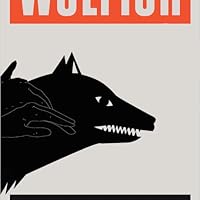
Marina Zurkow's illustrations throughout the book were also strange and interesting. Some of them can be seen on the cover above, but there are more inside. Combining her artistic talent with Broglio's creative writing styles makes the book an almost avant-garde art project and I mean that positively. Overall, I don't know if I "love" this book or not. I am still chewing on it. But, I am glad I read it, if only for the experience of something very different. I have read many books on human and other animal liberation and have never read one quite like this.
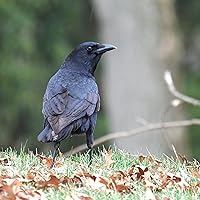
Animals are revolting all around us: wild ravens claw peace pigeons out of the sky making a mockery of empty symbolism, sheep commando roll over cattle grids to graze on prize-winning pastoral gardens, chimps and octopi execute prison escapes with the precision timing of heist films, and radioactive boar thrive hundreds of miles from Chornobyl in the borders of Germany.
These are moments of radical break with the commonsensical, ruptures of our human umwelten and human supremacy. And while they're contained through remarks that designate such animals as stupid, stubborn, or aberrant, a radical energy brims beneath the surface capable of releasing us from ideology.
Demystification doesn't always involve a rational argument. It can sweep over you as an overwhelming terror or wonder at the newly possible. So many books of the past decade have touched on the negative aspect of this: climate change, pandemics, oil spills, extinction. Animal Revolution is (thankfully) about joy, even in moments of tragedy and speciesist violence. It's about reclaiming the voices of animals by, not speaking for them, but by giving them space, leaving actions open for interpretation, so that sentience can emerge.
Little vignettes depict the many animal capacities for intent, communication, and pleasure, as well as unintentional accidents that emerge in the collision of animal and human umwelten. Invasive species and jellyfish blooms are tragedies tied to colonisation and exploitation, yet they're moments of animal subversion as well, when we humans, with our lofty intents, are befuddled and undone. They're tools to tear away at the tapestry of imperialism, and much easier to deploy to your conservative uncle, than a passage from Federici or Haraway.
———————————————————
cw: bestiality
Lastly, for you freaks out there, there's a story about a scientist dropping acid with his dolphin test subjects to try and communicate with them, and it ends with his assistant giving handjobs to a dolphin who can't focus in class because he's obsessed with her legs.
Coming in under 150 pages, this bit of non-fiction packed a bunch in each of its tight chapters. What unites all the real-world accounts and the theme of revolution in this book is not dissimilar to what I found Jeff VanderMeer striving to do with the experimental writing of Dead Astronauts: humans’ awareness of the world is constrained by their own ability to percieve. This does not suggest that “if we only tried a bit harder”. Rather, using an analog from the book, consider that dogs have 2 color cones in their eyes: green and blue. And humans have 3 color cones: green, blue plus red. “A butterfly has 5 color cones, and we are left to speculate: What is it that the butterfly sees that we don’t?” This is a book about how nonhuman persons go about doing what they do, sometimes undoing what humans have been doing for themselves. This is a book asking of the reader to offer hospitality towards those not like them, by simply imagining that which we will never fully be able to perceive. Besides, there are no “animals”. They don’t care what we call them.
I'm an avid consumer of nature writing and this book is like nothing else I've read! A compact analysis combining zoology, philosophy, ecology, and incredibly interesting tidbits on how we humans clash and then try to make up with animals and this thousands of years long complicated relationship... Even if philosophy is not your main course (it's not mine), this is a refreshing read, and it has tens and tens of interesting stories that can get you started on more reading and discovery. (Disclaimer: I did receive an advance reading copy through a goodreads giveaway, but this is my true opinion as an avid reader and nature lover. I've particularly enjoyed the challenged of reading something slightly outside my usual sphere of preference).
“Can we care beyond ourselves?” This book was a fascinating, succinct look into a whole new modality of both past and present theory to expand the borders of empathy and give new life to understandings of revolution as we view it.
The first few chapters felt disjointed to me, but by the 5th chapter the overarching narrative began to flow. I admire Broglio’s ability to pursue complex concepts and break them down to bite sized pieces to be accessible for both those versed in theory and individuals who may be traversing into new territory.
What in the hell did I just read? I really liked this - and yea, speculative non-fiction is a great category to put it in. Appreciated the reframing of our relationship w animals and the natural world in such quirky ways. Gonna use a chapter in a “nature” class I teach.