

What do you think?

Antisocieties
ANTISOCIETIES is a collection of ten stories about isolation - what it does to people, and what isolated people do to each other and themselves. An ominously quiet town. A haunting young adult novel from the turn of the century. Two starving captives frozen in agony. A young boy from a doting family. A man in a cheap Halloween mask. A succession of portraits of people trapped in their own identities, some of whom insist on their own ideas because they would have nothing at all without them. People for whom being seen by another is terrifying. And, like any collection of portraits, ANTISOCIETIES is also a collection of speculative mirrors ...
117 pages, ebook
First published May 15, 2021
About the author
Michael Cisco
93 books521 followersMichael Cisco is an American weird fiction writer, Deleuzian academic and a teacher, currently living in New York City. He is best known for his first novel, The Divinity Student, winner of the International Horror Guild Award for Best First Novel of 1999.
He is interested in confusion.
He is interested in confusion.
Ratings & Reviews
Friends & Following
Create a free account to discover what your friends think of this book!
Community Reviews
Displaying 1 - 30 of 77 reviews

October 29, 2025
Here are ten Michael Cisco tales about individuals in isolation. I found one story particularly upsetting and have made it the focus of my review. Below this review, I have a link to another review of a story from the collection-Milking.
INTENTIONALLY LEFT BLANK
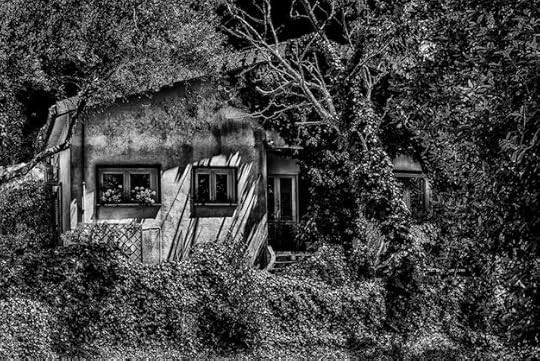
Years ago, for reasons connected to my wife’s family, I had occasion to make several visits to Renovo, a small town nestled in the mountains of central Pennsylvania. Renovo had once been a booming railroad hub before the Second World War, but after the war the railroad work began to dwindle, until in 1968 the Pennsylvania Railroad officially closed all the Renovo shops. Thereafter, Renovo became a dismal, depressing little town for anyone, like myself, who happened to walk its nearly deserted streets.
Each time I took my walks, I sensed something definitely off about the men, women, boys, and girls of Renovo. I wouldn’t say it was as if I were observing the inmates of a large psychiatric ward, but as I made my way up and down the sidewalks—passing the post office (the one remaining fresh-looking building on the main street) with its well-tended lawn, and a couple of bars (the only remaining thriving businesses)—there was a collective strangeness I found flat-out unsettling.
Michael Cisco takes this small-town strangeness to the outer reaches of the extreme in his story Intentionally Left Blank, where ghosts or other supernatural phenomena are not needed for it to qualify as a tale of horror.
It all starts one summer when the unnamed teenage narrator—a lad I’ll call Matt—tells us he’s staying with his Aunt Gabrielle, since his mother is in the hospital following a suicide attempt and his father has gone back to the base. Aunt Gabrielle lives in a white stucco house, one of a dozen houses built close together amid a tangle of intertwining cables, on a hilltop just up the road from a small town. Since there’s no one his age around, Matt feels “kind of stuck,” with not much to do.
Matt takes up residence in the guest room that juts out over the edge of the hill, where he can see into the backyard and garage of Dr. Wilson, a retired dentist and Civil War buff—an ordinary sort of older man. But then a bit of weirdness: Matt spots a shadow through a tarp—a guy helping Dr. Wilson with his car, a big guy with “some kind of wiggly things sticking out of their head.” Understandably perplexed, Matt wonders why such an odd happening was never mentioned by anyone living on the hill.
But then, a few days later, more weirdness: Matt gets a better look—a big man in the same sagging purple sweater is working in Dr. Wilson’s garden, wearing a rubber Halloween mask. When the man turns, Matt first takes it for a green gorilla mask, then a zombie, and then—seeing snake heads wiggling in the shaggy fake hair—he recognizes it as a Medusa mask, the eyes filled in with staring Medusa eyes “sort of sloppily painted there with paint like two splashes of bird shit.” How can this big guy see? Matt figures there must be slits under the eyes.
Matt tries to figure out what’s going on. As a product of our highly pragmatic and rationalist American society, he surmises the guy must have a gross face. But why doesn’t he wear some kind of medical mask for people with facial deformities instead of “some cheap, shitty drugstore mask”? However, the weirdness intensifies. Matt walks over to his Aunt Gabrielle and the woman she’s talking to—a Mrs. Figiel from across the street—and asks the ladies what’s the deal with the guy in the Medusa mask. The answer he receives is deeply disturbing: they say, without a trace of emotion or upset, yes, that guy usually has the mask on.
Michael Cisco provides many telling details to sustain a creepy, uncanny atmosphere and a mysterious tone as the tale unfolds. Matt’s anxiety and unease increase, especially as the days pass and he realizes there is more than one man wearing a Medusa mask working for Dr. Wilson. And why, Matt wonders, is the Halloween store in the small town still open in the middle of summer? He begins to question whether he is the strange one for caring so much, since nobody else seems to pay any mind. And the pressing issue: why doesn’t it bother them?
Then it happens: Matt finally musters the courage to ask the masked men a question. He receives a two-word answer. Those two words haunt him and drive him to leave his aunt’s house on the hill, go down into town, and enter the Halloween store. What follows is eerie—deeply eerie—leading the reader to reflect on a number of philosophic questions.
A prime question: What happens when what is accepted as “normal” is, in fact, profoundly disturbing? It might not be people wearing rubber Medusa masks, but what if you go to a small town and nearly all the townsfolk waddle around with misshapen, blob-like bodies? And what if those blobs spend most of their waking hours plopped in front of the idiot box—aka TV—pumping themselves full of booze and pills? Such is the plight of the vast majority of men and women in small towns across the country. Does this stinking, suffocating idiocy qualify as horror worthy of a horror story? I think the answer is obvious.
Milking - https://glenncolerussell.blogspot.com...
INTENTIONALLY LEFT BLANK
Years ago, for reasons connected to my wife’s family, I had occasion to make several visits to Renovo, a small town nestled in the mountains of central Pennsylvania. Renovo had once been a booming railroad hub before the Second World War, but after the war the railroad work began to dwindle, until in 1968 the Pennsylvania Railroad officially closed all the Renovo shops. Thereafter, Renovo became a dismal, depressing little town for anyone, like myself, who happened to walk its nearly deserted streets.
Each time I took my walks, I sensed something definitely off about the men, women, boys, and girls of Renovo. I wouldn’t say it was as if I were observing the inmates of a large psychiatric ward, but as I made my way up and down the sidewalks—passing the post office (the one remaining fresh-looking building on the main street) with its well-tended lawn, and a couple of bars (the only remaining thriving businesses)—there was a collective strangeness I found flat-out unsettling.
Michael Cisco takes this small-town strangeness to the outer reaches of the extreme in his story Intentionally Left Blank, where ghosts or other supernatural phenomena are not needed for it to qualify as a tale of horror.
It all starts one summer when the unnamed teenage narrator—a lad I’ll call Matt—tells us he’s staying with his Aunt Gabrielle, since his mother is in the hospital following a suicide attempt and his father has gone back to the base. Aunt Gabrielle lives in a white stucco house, one of a dozen houses built close together amid a tangle of intertwining cables, on a hilltop just up the road from a small town. Since there’s no one his age around, Matt feels “kind of stuck,” with not much to do.
Matt takes up residence in the guest room that juts out over the edge of the hill, where he can see into the backyard and garage of Dr. Wilson, a retired dentist and Civil War buff—an ordinary sort of older man. But then a bit of weirdness: Matt spots a shadow through a tarp—a guy helping Dr. Wilson with his car, a big guy with “some kind of wiggly things sticking out of their head.” Understandably perplexed, Matt wonders why such an odd happening was never mentioned by anyone living on the hill.
But then, a few days later, more weirdness: Matt gets a better look—a big man in the same sagging purple sweater is working in Dr. Wilson’s garden, wearing a rubber Halloween mask. When the man turns, Matt first takes it for a green gorilla mask, then a zombie, and then—seeing snake heads wiggling in the shaggy fake hair—he recognizes it as a Medusa mask, the eyes filled in with staring Medusa eyes “sort of sloppily painted there with paint like two splashes of bird shit.” How can this big guy see? Matt figures there must be slits under the eyes.
Matt tries to figure out what’s going on. As a product of our highly pragmatic and rationalist American society, he surmises the guy must have a gross face. But why doesn’t he wear some kind of medical mask for people with facial deformities instead of “some cheap, shitty drugstore mask”? However, the weirdness intensifies. Matt walks over to his Aunt Gabrielle and the woman she’s talking to—a Mrs. Figiel from across the street—and asks the ladies what’s the deal with the guy in the Medusa mask. The answer he receives is deeply disturbing: they say, without a trace of emotion or upset, yes, that guy usually has the mask on.
Michael Cisco provides many telling details to sustain a creepy, uncanny atmosphere and a mysterious tone as the tale unfolds. Matt’s anxiety and unease increase, especially as the days pass and he realizes there is more than one man wearing a Medusa mask working for Dr. Wilson. And why, Matt wonders, is the Halloween store in the small town still open in the middle of summer? He begins to question whether he is the strange one for caring so much, since nobody else seems to pay any mind. And the pressing issue: why doesn’t it bother them?
Then it happens: Matt finally musters the courage to ask the masked men a question. He receives a two-word answer. Those two words haunt him and drive him to leave his aunt’s house on the hill, go down into town, and enter the Halloween store. What follows is eerie—deeply eerie—leading the reader to reflect on a number of philosophic questions.
A prime question: What happens when what is accepted as “normal” is, in fact, profoundly disturbing? It might not be people wearing rubber Medusa masks, but what if you go to a small town and nearly all the townsfolk waddle around with misshapen, blob-like bodies? And what if those blobs spend most of their waking hours plopped in front of the idiot box—aka TV—pumping themselves full of booze and pills? Such is the plight of the vast majority of men and women in small towns across the country. Does this stinking, suffocating idiocy qualify as horror worthy of a horror story? I think the answer is obvious.
Milking - https://glenncolerussell.blogspot.com...

March 15, 2021
A rather short collection of 10 stories, ANTISOCIETIES packs a wallop of unsettling weirdness into its 125 pages.
Not going to lie, I have not read anything by Michael Cisco before this. I see that I own a lot of anthologies in which he is featured but, (story of my life), I haven't read them yet. I do know Grimscribe Press and I know they only put out quality work, so when they offered me the chance to read this collection, I took full advantage of the opportunity and here we are.
If you're expecting a straight up horror collection, you probably should be looking elsewhere. That's not to say that some of these stories aren't horrific, because they are, but the most common thread among them is...uncertainty.
I'm not going to talk about all the stories, but I will talk about the ones that made the biggest impression on me.
INTENTIONALLY LEFT BLANK: When a man goes to live with his grandmother, he familiarizes himself with her small tight-knit community. Soon thereafter, he spots a man wearing a mask. Who is he? What's up with the mask? I found this tale disconcerting and still find myself thinking about it and at this point, I read it almost a month ago.
MILKING was my second favorite story here. A boy living in a beach house, where his parents are always quiet and there is always a glass of milk waiting for him on the table in the morning. Here, we have another story that has had lingering effects on my brain because
THE STARVING OF SAQQARA I don't even know what was going on here, but it was a compelling tale of a man in search of a sculpture/statue that disappeared.
SACCADE: My favorite of the collection! For me, this story was the pinnacle of unnerving. I'll admit that I was unfamiliar with the word saccade, so I looked it up, (though the narrator of this tale provides a definition as well.) This is what I found. SACCADE: a rapid movement of the eye between fixation points. What if your eyesight was so keen that you could see letters in that tiny blur between the letters that are actually printed? Yeah, think on that unsettling little thought for a moment. I don't know...for whatever reason just the thought of that creeped me out.
All of the stories here were good, but for me, the ones I've listed above were the standouts. Not all of the narratives had a clear point of beginning and end, or cause and effect; which is why I said above if you're looking for uncomplicated straightforward horror tales, this volume might not be for you. But if you enjoy the type of tale that you leaves you unsettled, disconcerted, and thinking about certain aspects and characters, turning them over and over in your mind? This is ABSOLUTELY the book for you!
Highly recommended to fans of Weird Tales!
Available May 15th, 2021.
*Thank you to Grimscribe Press for the paperback ARC of this book in exchange for my honest feedback. This is it!*
Not going to lie, I have not read anything by Michael Cisco before this. I see that I own a lot of anthologies in which he is featured but, (story of my life), I haven't read them yet. I do know Grimscribe Press and I know they only put out quality work, so when they offered me the chance to read this collection, I took full advantage of the opportunity and here we are.
If you're expecting a straight up horror collection, you probably should be looking elsewhere. That's not to say that some of these stories aren't horrific, because they are, but the most common thread among them is...uncertainty.
I'm not going to talk about all the stories, but I will talk about the ones that made the biggest impression on me.
INTENTIONALLY LEFT BLANK: When a man goes to live with his grandmother, he familiarizes himself with her small tight-knit community. Soon thereafter, he spots a man wearing a mask. Who is he? What's up with the mask? I found this tale disconcerting and still find myself thinking about it and at this point, I read it almost a month ago.
MILKING was my second favorite story here. A boy living in a beach house, where his parents are always quiet and there is always a glass of milk waiting for him on the table in the morning. Here, we have another story that has had lingering effects on my brain because
THE STARVING OF SAQQARA I don't even know what was going on here, but it was a compelling tale of a man in search of a sculpture/statue that disappeared.
SACCADE: My favorite of the collection! For me, this story was the pinnacle of unnerving. I'll admit that I was unfamiliar with the word saccade, so I looked it up, (though the narrator of this tale provides a definition as well.) This is what I found. SACCADE: a rapid movement of the eye between fixation points. What if your eyesight was so keen that you could see letters in that tiny blur between the letters that are actually printed? Yeah, think on that unsettling little thought for a moment. I don't know...for whatever reason just the thought of that creeped me out.
All of the stories here were good, but for me, the ones I've listed above were the standouts. Not all of the narratives had a clear point of beginning and end, or cause and effect; which is why I said above if you're looking for uncomplicated straightforward horror tales, this volume might not be for you. But if you enjoy the type of tale that you leaves you unsettled, disconcerted, and thinking about certain aspects and characters, turning them over and over in your mind? This is ABSOLUTELY the book for you!
Highly recommended to fans of Weird Tales!
Available May 15th, 2021.
*Thank you to Grimscribe Press for the paperback ARC of this book in exchange for my honest feedback. This is it!*

May 7, 2021
"Antisocieties" is the perfect title for Michael Cisco's new collections. The stories all deal with solitude, alienation and conflicts, whether inner or with the outside world. But Cisco's genius doesn't lie in the scenarios themselves, nor in their narratives: what makes this stories stand out and reach the point of terrifying perfection is that the invisible enemy, the greatest threat all characters (and the readers) face is contained within language it self, or rather - to be more precise - is language itself. Language, in Cisco's world is not a mode of communication, but a mode of destruction and revelation, very much in accord with Derrida's deconstruction, for those familiar with it. Cisco's stories can be read in many ways: as belonging to a genre or genres, as metaphors, as allegories or as meaningful fragments. All these readings are true, yet none is complete. As in Derrida, the possible key - which often reveals nothing - is hidden behind the words, behind the sentences, behind the paragraphs. Also similar to Derrida, there is a metaphysical way of reading "Antisocieties", in which language in its double reality of "said" and "unsaid" points to a superior (and terrifying) reality that we cannot grasp, but yet is undeniable, as language itself and its ambiguities are undeniable. Life, fiction and language become liminary, that is to say entwined in such a way that only the unsaid can make us distinguish (slightly) each entity. A total reading experience and a successful experiment, "Antisocieties" is the best example of what "antigenre" lit should be.

November 18, 2021
I enjoyed this a lot more than The Divinity Student. It's relatively (though not entirely) free of the stylistic quirks that annoyed me about the earlier book.
This kind of ambiguous weird tale is so hard to pull off. An overall atmosphere of unease might be sustained, meandering toward some surprising non-resolution. (IMHO, not even Aickman the master succeeds consistently.)
For example, "The Starving of the Saqqara" starts with an obsessive art experience (which I can relate to, ha!), eventually drawing us into an equally obsessive quest. But I thought the ending needed more.
Similarly, I love the setup of the next story, "The Purlieus". No, Cisco does not spell out what a "purlieus" is; apparently it means "an adjoining region or space", which is delightfully amorphous as a title. The innocent opening scene in the park, the unwelcome stranger, the odd fairy tale, then the deliciously disruptive surprise. Unfortunately I'm less excited with the second half. I love unreliable narratives, but this one seems a bit labored. And I love ambiguous endings, but I'm not sure this one worked for me.
There are terrific ideas here. The amputation sheet, whoa! And the doctor and his algorithms in "Water Machine". But the treatments are often too longwinded for my taste, and prone to Cisco's customary flourishes. I do understand many of his fans love this kind of writing.
2.5 stars, rounded up generously.
(This collection doesn't seem to be available at the Kindle store. However, digital copies can be downloaded from the grimscribe site, with the generous suggestion to pay what one wants.)
This kind of ambiguous weird tale is so hard to pull off. An overall atmosphere of unease might be sustained, meandering toward some surprising non-resolution. (IMHO, not even Aickman the master succeeds consistently.)
For example, "The Starving of the Saqqara" starts with an obsessive art experience (which I can relate to, ha!), eventually drawing us into an equally obsessive quest. But I thought the ending needed more.
Similarly, I love the setup of the next story, "The Purlieus". No, Cisco does not spell out what a "purlieus" is; apparently it means "an adjoining region or space", which is delightfully amorphous as a title. The innocent opening scene in the park, the unwelcome stranger, the odd fairy tale, then the deliciously disruptive surprise. Unfortunately I'm less excited with the second half. I love unreliable narratives, but this one seems a bit labored. And I love ambiguous endings, but I'm not sure this one worked for me.
There are terrific ideas here. The amputation sheet, whoa! And the doctor and his algorithms in "Water Machine". But the treatments are often too longwinded for my taste, and prone to Cisco's customary flourishes. I do understand many of his fans love this kind of writing.
2.5 stars, rounded up generously.
(This collection doesn't seem to be available at the Kindle store. However, digital copies can be downloaded from the grimscribe site, with the generous suggestion to pay what one wants.)

August 6, 2021
Favorites: "Milking," "Stillville," "The Starving of Saqqara," "Oneiropaths"
The end of "Oneiropaths" is one of those things I kinda wish I hadn't read because already I know I'm just going to keep thinking about it and thinking about it and getting more and more freaked out. Great stuff!
The end of "Oneiropaths" is one of those things I kinda wish I hadn't read because already I know I'm just going to keep thinking about it and thinking about it and getting more and more freaked out. Great stuff!

November 12, 2025
Una colección de relatos weird muy peculiar. Michael Cisco es para mí el más weird de los weirds.
En sus relatos muchas veces no ves que haya una historia clara pero sus geniales ideas y su particular lenguaje hacen de leerlo una gran experiencia.
Muchas veces las historias no tienen un final o principio claro. No es tarea fácil entrar en su peculiar estilo que incluso diría que supera a alguien como Aickman en extrañeza. Muchas veces te quedas perplejo o con la pregunta sobre lo que acabas de leer.
No todos los relatos me gustaron por igual pero destaco los siguientes:
Intencionalmente dejado en blanco(***): Un hombre va a vivir con su madre y después de conocer a la gente del barrio descubre a un vecino que siempre lleva una extraña máscara y se obsesiona con él. El título tiene guasa por su no aparente final.
Ordeñando(***): Un niño que vive en una ciudad junto al mar tiene curiosidad por una habitación que sus padres tienen cerrada a cal y canto y cuyo contenido no le dejan ver. Parece que allí dentro ordeñan a un extraño ser del que sacan la leche que él desayuna cada dia. Bizarro.
Villa inmóvil(***): Un chico se muda a un barrio donde todo el mundo actúa como robots y todo parece programado. Ir al trabajo, todos a dormir a la misma hora, todos saliendo a trabajar al mismo tiempo. Este patrón lo irrumpirá una chica a la que conoce en el trabajo.
Antisociedades(****): En la línea del terror corporativo de Thomas Ligotti. Esta historia nos lleva a un mundo donde los oprimidos celebran su opresión como necesaria para el orden mundial, y están agradecidos a sus opresores por “correcciones”, como la amputación de piernas, que los hacen competentes en su tarea, porque incluso sus mentes y lenguaje son objeto de control total.
Oneirópatas(****): Se trata de la perdida total de la identidad de una mujer al ser constantemente observada por un hombre que penetra en sus sueños. Otra idea muy original.
Sacudida(****): El mejor relato por su originalidad. El narrador del cuento padece de "sacudidas", Un movimiento rápido del ojo entre los puntos de fijación. Esto le permite leer entre líneas y descubrir nuevas palabras ocultas debajo de las palabras que podemos leer en un texto. Misteriosamente estas palabras piden ayuda. Un argumento muy original que da para más que para un relato.
Que Michael Cisco haya logrado ser un autor de cierto éxito con una narrativa tan extraña y particular me tiene anonadado. Es como mezclar a Kafka, Burroughs, Ligotti, Lynch y Aickman. Imagínate lo raro que es esto. Bienvenidos al mundo de Michael Cisco. El más anticomercial de los escritores de terror.
En sus relatos muchas veces no ves que haya una historia clara pero sus geniales ideas y su particular lenguaje hacen de leerlo una gran experiencia.
Muchas veces las historias no tienen un final o principio claro. No es tarea fácil entrar en su peculiar estilo que incluso diría que supera a alguien como Aickman en extrañeza. Muchas veces te quedas perplejo o con la pregunta sobre lo que acabas de leer.
No todos los relatos me gustaron por igual pero destaco los siguientes:
Intencionalmente dejado en blanco(***): Un hombre va a vivir con su madre y después de conocer a la gente del barrio descubre a un vecino que siempre lleva una extraña máscara y se obsesiona con él. El título tiene guasa por su no aparente final.
Ordeñando(***): Un niño que vive en una ciudad junto al mar tiene curiosidad por una habitación que sus padres tienen cerrada a cal y canto y cuyo contenido no le dejan ver. Parece que allí dentro ordeñan a un extraño ser del que sacan la leche que él desayuna cada dia. Bizarro.
Villa inmóvil(***): Un chico se muda a un barrio donde todo el mundo actúa como robots y todo parece programado. Ir al trabajo, todos a dormir a la misma hora, todos saliendo a trabajar al mismo tiempo. Este patrón lo irrumpirá una chica a la que conoce en el trabajo.
Antisociedades(****): En la línea del terror corporativo de Thomas Ligotti. Esta historia nos lleva a un mundo donde los oprimidos celebran su opresión como necesaria para el orden mundial, y están agradecidos a sus opresores por “correcciones”, como la amputación de piernas, que los hacen competentes en su tarea, porque incluso sus mentes y lenguaje son objeto de control total.
Oneirópatas(****): Se trata de la perdida total de la identidad de una mujer al ser constantemente observada por un hombre que penetra en sus sueños. Otra idea muy original.
Sacudida(****): El mejor relato por su originalidad. El narrador del cuento padece de "sacudidas", Un movimiento rápido del ojo entre los puntos de fijación. Esto le permite leer entre líneas y descubrir nuevas palabras ocultas debajo de las palabras que podemos leer en un texto. Misteriosamente estas palabras piden ayuda. Un argumento muy original que da para más que para un relato.
Que Michael Cisco haya logrado ser un autor de cierto éxito con una narrativa tan extraña y particular me tiene anonadado. Es como mezclar a Kafka, Burroughs, Ligotti, Lynch y Aickman. Imagínate lo raro que es esto. Bienvenidos al mundo de Michael Cisco. El más anticomercial de los escritores de terror.

February 16, 2025
A wonderful ode to the loners, the isolators, and the ones who can sense that invisible pulse in the world that no one else seems to see. Cisco deeply understands the beauty and destruction of the outsider.

June 3, 2021
(Originally published at carsonwinter.com)
Michael Cisco is a helluva writer—anyone who’s seen his author bio knows that. Anyone who’s talked to another weird lit fan knows that The Divinity Student, The Great Lover, or any of his many other novels or short stories are lauded with the enthusiasm of a zealot. Michael Cisco—like Ligotti, like Aickman—is a brand of weird all his own.
Which is why Antisocieties was such an enticing offer. While many of my weird fiction aficionados swear by Cisco’s work, I’d never actually read anything by him. My loss. Antisocieties came across my radar as a release from Grimscribe Press—that newish, high-quality publisher of Ligottian and Ligotti-adjacent literature.
Full disclosure: I’m an itinerant gusher when it comes to everything Grimscribe has done. I love Vastarien (in which I’ve been published, so take everything I say with a quarry of salt), their recent Gemma Files collection, and Nicole Cushing’s novella The Half-Freaks. So, know this: if you are like me and find most anything that comes from Grimscribe agreeable, this will most likely agree with you too.
Antisocieties is a slim volume that is remarkably cohesive. The back copy reveals it to be “a collection of ten stories about isolation.” This focus, matched with its rather short length, make Antisocieties feel incredibly focused as a work of art. Each story unfolds in a sort of dreamy despair, where a first-person narrator comes into contact with the strange, absurd, or unknowable—and through this process, highlights their own or another’s loneliness.
“Intentionally Left Blank” opens the collection with a tale of a young boy who witnesses a friend of a neighbor always wearing a Medusa mask. There’s a pervasive creepiness in this story, as it does directly involve a Halloween mask—but it’s more apt to refer to the situation as absurd than horrific. The mask continuously vexes the child, because, well—it’s fucking weird. But, unfortunately for his sense of belonging, he’s the only one who feels this way. When he brings it up to his guardian, the character response is confused, unsure; as if someone living day-in and day-out in a cheap Halloween mask were nothing notable at all. “Intentionally Left Blank” uses this absurdity to create an atmosphere of melancholy isolation—where one’s own experience and perspective can become a prison when no one else can share in it.
Antisocieties, it should be mentioned, is not so much weird horror as purely weird. While the stories flirt with horror tropes, they never succumb to the sorts of big horrific set-pieces or twist endings that one might associate with the genre. These stories are largely meditative, fine-tuned to the human experience, and impeccably crafted. One of these, “Stillville,” felt the most Ligottian and least horror simultaneously—telling the dystopic tale of a narrator conforming, breaking with conformity, and discovering love. “Stillville” doesn’t take place in our world so much as a distortion of it—but the emotions involved are very much the same. In a genre that sometimes has trouble expressing the heartfelt, “Stillville” is a welcome reminder that even Weird fiction is ultimately about people.
The relative brevity of this collection means that each story has room to shine without being overtaken by another, or worse, rendered as a blur amidst its volume. There are many highlights in this collection, including “My Hand of Glory,” “The Purlieus,” and “Oneiropaths,” but one I’d like to talk about specifically is the collection’s closing story. “Water Machine” might be where Antisocieties gets the closest to more traditional weird horror, and as the finale, its familiarity is almost musical. “Water Machine” is Cisco’s final chord, where he brings us to tonal resolution. This story is fascinating, not just in its ideas, but also its execution. The set-up is timeless: a doctor’s case notes on a peculiar patient. But where it ends is one of the stranger places I’ve seen a story go, and takes isolation and its connection to personhood to an interesting extreme. Here, we touch upon the Lovecraftian, with occult math and a mannered authorial voice—but the result is something much grander and intimate than its humble influences
As the world begins to wake, rubbing the sleep from its eyes as vaccinations are issued and Summer rolls in full of promise and metaphorical rebirth—it’s hard not to think of Antisocieties as a reflection on the last year. For many of us, isolation was not a literary theme, it was reality. It was a very real monster we saw every day, whether we were working from home or trying to justify our reality to others who rejected it. With the pandemic came baggage. And with baggage, comes art. Antisocieties, because of where we are now, feels like a restless grappling with the year that came before it. A call to the void. A recognition of, a testament to, a somber tribute—to loneliness as the human condition. Antisocieties, to its credit, doesn’t try to solve any of these problems. But it hears them, it empathizes. And sometimes, that’s enough.
Michael Cisco is a helluva writer—anyone who’s seen his author bio knows that. Anyone who’s talked to another weird lit fan knows that The Divinity Student, The Great Lover, or any of his many other novels or short stories are lauded with the enthusiasm of a zealot. Michael Cisco—like Ligotti, like Aickman—is a brand of weird all his own.
Which is why Antisocieties was such an enticing offer. While many of my weird fiction aficionados swear by Cisco’s work, I’d never actually read anything by him. My loss. Antisocieties came across my radar as a release from Grimscribe Press—that newish, high-quality publisher of Ligottian and Ligotti-adjacent literature.
Full disclosure: I’m an itinerant gusher when it comes to everything Grimscribe has done. I love Vastarien (in which I’ve been published, so take everything I say with a quarry of salt), their recent Gemma Files collection, and Nicole Cushing’s novella The Half-Freaks. So, know this: if you are like me and find most anything that comes from Grimscribe agreeable, this will most likely agree with you too.
Antisocieties is a slim volume that is remarkably cohesive. The back copy reveals it to be “a collection of ten stories about isolation.” This focus, matched with its rather short length, make Antisocieties feel incredibly focused as a work of art. Each story unfolds in a sort of dreamy despair, where a first-person narrator comes into contact with the strange, absurd, or unknowable—and through this process, highlights their own or another’s loneliness.
“Intentionally Left Blank” opens the collection with a tale of a young boy who witnesses a friend of a neighbor always wearing a Medusa mask. There’s a pervasive creepiness in this story, as it does directly involve a Halloween mask—but it’s more apt to refer to the situation as absurd than horrific. The mask continuously vexes the child, because, well—it’s fucking weird. But, unfortunately for his sense of belonging, he’s the only one who feels this way. When he brings it up to his guardian, the character response is confused, unsure; as if someone living day-in and day-out in a cheap Halloween mask were nothing notable at all. “Intentionally Left Blank” uses this absurdity to create an atmosphere of melancholy isolation—where one’s own experience and perspective can become a prison when no one else can share in it.
Antisocieties, it should be mentioned, is not so much weird horror as purely weird. While the stories flirt with horror tropes, they never succumb to the sorts of big horrific set-pieces or twist endings that one might associate with the genre. These stories are largely meditative, fine-tuned to the human experience, and impeccably crafted. One of these, “Stillville,” felt the most Ligottian and least horror simultaneously—telling the dystopic tale of a narrator conforming, breaking with conformity, and discovering love. “Stillville” doesn’t take place in our world so much as a distortion of it—but the emotions involved are very much the same. In a genre that sometimes has trouble expressing the heartfelt, “Stillville” is a welcome reminder that even Weird fiction is ultimately about people.
The relative brevity of this collection means that each story has room to shine without being overtaken by another, or worse, rendered as a blur amidst its volume. There are many highlights in this collection, including “My Hand of Glory,” “The Purlieus,” and “Oneiropaths,” but one I’d like to talk about specifically is the collection’s closing story. “Water Machine” might be where Antisocieties gets the closest to more traditional weird horror, and as the finale, its familiarity is almost musical. “Water Machine” is Cisco’s final chord, where he brings us to tonal resolution. This story is fascinating, not just in its ideas, but also its execution. The set-up is timeless: a doctor’s case notes on a peculiar patient. But where it ends is one of the stranger places I’ve seen a story go, and takes isolation and its connection to personhood to an interesting extreme. Here, we touch upon the Lovecraftian, with occult math and a mannered authorial voice—but the result is something much grander and intimate than its humble influences
As the world begins to wake, rubbing the sleep from its eyes as vaccinations are issued and Summer rolls in full of promise and metaphorical rebirth—it’s hard not to think of Antisocieties as a reflection on the last year. For many of us, isolation was not a literary theme, it was reality. It was a very real monster we saw every day, whether we were working from home or trying to justify our reality to others who rejected it. With the pandemic came baggage. And with baggage, comes art. Antisocieties, because of where we are now, feels like a restless grappling with the year that came before it. A call to the void. A recognition of, a testament to, a somber tribute—to loneliness as the human condition. Antisocieties, to its credit, doesn’t try to solve any of these problems. But it hears them, it empathizes. And sometimes, that’s enough.

June 2, 2021
An intensely isolating read, I had to put the book down between stories to feel like I was a social being with a support system again. The cold and often simple way that Michael Cisco captures the essence of seclusion is incredible. From the first story "Milking" Cisco writes, "His father laughed inaudibly." Such a callous and unfeeling way to laugh, with no true happiness or warmth. I genuinely felt chilled from this story.
The story "Stillville" is one that I think everyone can relate to, as it pertains to wanting to go so deeply into routine, the status-quo of being alone, and the ease with which humans can habitually become 'still' and 'undisturbed' by change, love, and connections. A terrifying way to exist.
The book's namesake story, "Antisocieties," encapsulates how much people think they want to be alone and often become the worse for it since humans are social creatures; the confusion and self-doubt that we feel when faced with others after being in our own minds. It so gently prods the psyche with small associations that are actually very big, "He enters the park, which slopes down to the water before him on all sides. A single person sits alone, centered on nearly every bench, all facing the water."
A sense of going mad is prevalent and wickedly disquieting in my two favourite stories in this collection - "Saccade" and (my most favourite) "Water Machine."
Truly a masterpiece by Michael Cisco and another knockout published by Grimscribe Press. Anything Grimscribe puts out, I will read, knowing full well that I'm in for a cerebral treat.
The story "Stillville" is one that I think everyone can relate to, as it pertains to wanting to go so deeply into routine, the status-quo of being alone, and the ease with which humans can habitually become 'still' and 'undisturbed' by change, love, and connections. A terrifying way to exist.
The book's namesake story, "Antisocieties," encapsulates how much people think they want to be alone and often become the worse for it since humans are social creatures; the confusion and self-doubt that we feel when faced with others after being in our own minds. It so gently prods the psyche with small associations that are actually very big, "He enters the park, which slopes down to the water before him on all sides. A single person sits alone, centered on nearly every bench, all facing the water."
A sense of going mad is prevalent and wickedly disquieting in my two favourite stories in this collection - "Saccade" and (my most favourite) "Water Machine."
Truly a masterpiece by Michael Cisco and another knockout published by Grimscribe Press. Anything Grimscribe puts out, I will read, knowing full well that I'm in for a cerebral treat.
February 10, 2022
One of the best collections of short fiction I've ever read. Wow.
Like the best combination of Lynch and Ligotti imaginable, with maybe a sprinkling of Robert Chambers?
I need to read more Michael Cisco.
Like the best combination of Lynch and Ligotti imaginable, with maybe a sprinkling of Robert Chambers?
I need to read more Michael Cisco.

June 26, 2021
I have yet to read a Michael Cisco book that isn't awesome, but this one has "Water Machine," which is messing me up like mad. Mandatory reading if you're into the bizarre type of stuff.

January 30, 2022
The stories in this volume blew me away. If I had the means, I would write Michael Cisco and ask him to take me on as a student. Everything in here spoke to me, through stories about isolation and the mind, the use of Linguistics, Philosophy, and great writing these stories captivated me. I will certainly be grabbing more of his work in the near future.

July 5, 2021
So many places within the abyss of loneliness. An inspired and skillfully wrought collection.

October 12, 2024
Michael Cisco’s Antisocieties is a haunting collection of ten stories, each exploring desolate landscapes of human isolation and its terrifying consequences. The protagonists in these tales inhabit a shadowy world, one where solitude isn’t just a condition but an identity, at times fiercely guarded, at others, desperately clung to. Cisco’s protagonists either embrace their loneliness, finding in it a sort of tragic solace, or they’re drawn to fleeting, illusory connections—a glimmer of hope in the oppressive distance, something they can’t fully reach or understand. In every narrative, Cisco’s masterful use of distinct voices paints these internal worlds in vivid detail, allowing the reader to descend into each character’s suffocating alienation.
The stories are unsettling, leaving behind a residue of sorrow that wells up from the core of the human experience. Take, for instance, the eerie story of a man who loses his saccadic blindness, only to see horrifying messages scrawled within the streaks of his visual field—messages that seem to cry out from an unseen, unknowable source. The line between perception and madness becomes blurred, and Cisco questions whether these apparitions are merely products of a disturbed mind or glimpses of a horrifying reality. Through this, Cisco subtly explores the broader theme of connection: What is real, and what is merely a projection of the human longing to be seen, to be acknowledged? The terror comes not from what’s visible, but from what remains just out of sight, in the corners of the mind.
The themes of language and consciousness—how closely they intertwine, blur, and betray one another—resonate throughout the collection. Cisco explores the idea that language itself might be a form of consciousness, a self-perpetuating force that creates and controls human beings rather than merely serving as a tool for expression. In one story, a man becomes obsessed with cryptic pleas for help that he begins to see hidden between the lines of his books, leading to unsettling questions about whether these messages are real or born of his own desperate search for connection. This idea—that the lines between reality and imagination blur as language becomes a living, almost autonomous force—recurs in many of the stories, leaving the reader with the lingering, terrifying possibility that our words might outlive us, even as they erase us.
Cisco’s world is barren and cold, filled with streets emptied of human warmth, where characters are trapped, not only by oppressive systems but also by the prison of their own identities, or the lack thereof. Antisocieties is ultimately about isolation’s dark embrace and the question of whether escape is even possible. In every line, in every chilling revelation, Cisco asks us to consider whether human connection is ever truly attainable, or if we are, in the end, all lost—cut off from each other, living in the shadow of a language that writes us, even as it keeps its deepest secrets hidden.
The stories are unsettling, leaving behind a residue of sorrow that wells up from the core of the human experience. Take, for instance, the eerie story of a man who loses his saccadic blindness, only to see horrifying messages scrawled within the streaks of his visual field—messages that seem to cry out from an unseen, unknowable source. The line between perception and madness becomes blurred, and Cisco questions whether these apparitions are merely products of a disturbed mind or glimpses of a horrifying reality. Through this, Cisco subtly explores the broader theme of connection: What is real, and what is merely a projection of the human longing to be seen, to be acknowledged? The terror comes not from what’s visible, but from what remains just out of sight, in the corners of the mind.
The themes of language and consciousness—how closely they intertwine, blur, and betray one another—resonate throughout the collection. Cisco explores the idea that language itself might be a form of consciousness, a self-perpetuating force that creates and controls human beings rather than merely serving as a tool for expression. In one story, a man becomes obsessed with cryptic pleas for help that he begins to see hidden between the lines of his books, leading to unsettling questions about whether these messages are real or born of his own desperate search for connection. This idea—that the lines between reality and imagination blur as language becomes a living, almost autonomous force—recurs in many of the stories, leaving the reader with the lingering, terrifying possibility that our words might outlive us, even as they erase us.
Cisco’s world is barren and cold, filled with streets emptied of human warmth, where characters are trapped, not only by oppressive systems but also by the prison of their own identities, or the lack thereof. Antisocieties is ultimately about isolation’s dark embrace and the question of whether escape is even possible. In every line, in every chilling revelation, Cisco asks us to consider whether human connection is ever truly attainable, or if we are, in the end, all lost—cut off from each other, living in the shadow of a language that writes us, even as it keeps its deepest secrets hidden.

June 5, 2023
Michael Cisco is a bit difficult to read. Some stories don't make sense and the vast majority you will be scratching your head saying "what?"
Overall I will say I didn't enjoy it. I would rate 4 out 10 but as you can see in the reviews here I am not the majority.
You've got here 11 tales that should deal with Isolation. But not everything is "isolation" of places. It can be isolation of mind, feelings etc.
Intentionally left blank - the man with a mask...who is it? What happened :\
Milking , what a heck are they milking?
Starving of Saqqara - what a heck? So a guy was searching for a stature but I didn't understand the plot or reason or even WHY
the purlieus is a strange tale about something, Cisco never really let us know what is about...
Antisocieties - made me remind me of Matrix...
Water Machine - psychology turn 360º?
My hand of glory is a confusing tale, and I couldn't understand what was going on...
Saccade was interesting tale. First of all google what saccade is. I didn't knew this term. IT's a rapid movement of the eye betweeen fixation. IT's like that example of that phrase, the horse of the the soldier was black. Did you read the two "The"? This story explains a bit of how our mind\eyes work when reading and how it is done. The story itself is about tiny blur letters inbetween other letters that tell a story/message. I was reading the story and trying to find of hidden messages. Didn't find any BUT...
And there are other stories... overall as I 've said I was confused most of the time...
Overall I will say I didn't enjoy it. I would rate 4 out 10 but as you can see in the reviews here I am not the majority.
You've got here 11 tales that should deal with Isolation. But not everything is "isolation" of places. It can be isolation of mind, feelings etc.
Intentionally left blank - the man with a mask...who is it? What happened :\
Milking , what a heck are they milking?
Starving of Saqqara - what a heck? So a guy was searching for a stature but I didn't understand the plot or reason or even WHY
the purlieus is a strange tale about something, Cisco never really let us know what is about...
Antisocieties - made me remind me of Matrix...
Water Machine - psychology turn 360º?
My hand of glory is a confusing tale, and I couldn't understand what was going on...
Saccade was interesting tale. First of all google what saccade is. I didn't knew this term. IT's a rapid movement of the eye betweeen fixation. IT's like that example of that phrase, the horse of the the soldier was black. Did you read the two "The"? This story explains a bit of how our mind\eyes work when reading and how it is done. The story itself is about tiny blur letters inbetween other letters that tell a story/message. I was reading the story and trying to find of hidden messages. Didn't find any BUT...
And there are other stories... overall as I 've said I was confused most of the time...

May 27, 2021
Formally inventive, but also one of Cisco's most accessible books. Also? Creepy as hell.

March 14, 2021
One morning I woke up and I lived in a world conjured from antisocieties.
Then I realised I was in a dream when I did actually wake up.
Characters young and old, inquisitors entering terrifying thresholds and minutes, transitions, a metamorphosis with strange weird haunting aspects, there are prisms of living contained, speculative deciphering awaiting the reader with clear readable prose with a fews tales needing a reread to comprehend the art present in these works.
Withholding and revealing the conjurer takes you on many journeys, interloping with the real and surreal intertwined, obscurities and complexities vividly laid down with psychological potency.
There has been mention of the author Kafka like from readers, these shorts, my first reading of his works, I would add maybe Kafka with Camus and Jose Saramago kind of styled writing.
Brief words on stories contained:
Intentionally Left Blank:
A brief encounter with a different looking big person on a weekend break.
Milking:
A young inquisitive soul, Lucas and his dog Smokey, at home with parents. A case of a strange smell in an unused room.
Stillville:
I join you too in stillness.
First person narrative man lives in stillness and works too.
My Hand of Glory:
Did you get a Hand of Glory for Christmas
Main character tells he did and more.
I am getting one, it’s in the post.
The Starving of Saqqara:
One tells of a statue in a museum and it the missing of it.
The Purlieus:
Ones love for snowy. And there is a beast.
Saccade:
Discourse on state of saccadic being.
Antisocieties:
It’s a cold November day.
There is an administrator a park one person on each bench and a river void of birds in the air the show is about to begin and thus forth Cisco takes you.
Oneiropaths:
Dreams and special dreams talk.
Water Machine:
A case of the water machine.
Also @ https://www.more2read.com/review/antisocieties-by-michael-cisco/
Then I realised I was in a dream when I did actually wake up.
Characters young and old, inquisitors entering terrifying thresholds and minutes, transitions, a metamorphosis with strange weird haunting aspects, there are prisms of living contained, speculative deciphering awaiting the reader with clear readable prose with a fews tales needing a reread to comprehend the art present in these works.
Withholding and revealing the conjurer takes you on many journeys, interloping with the real and surreal intertwined, obscurities and complexities vividly laid down with psychological potency.
There has been mention of the author Kafka like from readers, these shorts, my first reading of his works, I would add maybe Kafka with Camus and Jose Saramago kind of styled writing.
Brief words on stories contained:
Intentionally Left Blank:
A brief encounter with a different looking big person on a weekend break.
Milking:
A young inquisitive soul, Lucas and his dog Smokey, at home with parents. A case of a strange smell in an unused room.
Stillville:
I join you too in stillness.
First person narrative man lives in stillness and works too.
My Hand of Glory:
Did you get a Hand of Glory for Christmas
Main character tells he did and more.
I am getting one, it’s in the post.
The Starving of Saqqara:
One tells of a statue in a museum and it the missing of it.
The Purlieus:
Ones love for snowy. And there is a beast.
Saccade:
Discourse on state of saccadic being.
Antisocieties:
It’s a cold November day.
There is an administrator a park one person on each bench and a river void of birds in the air the show is about to begin and thus forth Cisco takes you.
Oneiropaths:
Dreams and special dreams talk.
Water Machine:
A case of the water machine.
Also @ https://www.more2read.com/review/antisocieties-by-michael-cisco/

March 28, 2024
Some I didn’t get and a few that were really good to read through. Out of the 10, Stillville, Oneiropths, Water Machine and Intentionally Left Blank stood out to me, in that order.
3.5/5 I’d say.
“She told me, too, that she had only come to fear death all the more, because she now believed that, in death, you are forever exposed to a gaze, to the steady and unblinking gaze of an unknown watcher in a dream that cannot end.”
3.5/5 I’d say.
“She told me, too, that she had only come to fear death all the more, because she now believed that, in death, you are forever exposed to a gaze, to the steady and unblinking gaze of an unknown watcher in a dream that cannot end.”

May 21, 2025
oh YES. I was into this. In particular, I enjoyed "Intentionally Left Blank," "Milking," "Oneiropaths," and "Water Machine" especially. It's been a good amount of time since I last read something in the weird fiction-adjacent realm that I actually found pleasing. Good stuff.

November 8, 2025
Lots of cool ideas, but the quality of the writing varies significantly between stories. 'Water Machine' is clearly very strong.
September 24, 2026
suchhh a vibe. i can't pick a favourite story. i'm sad to have finished it but very much looking forward to my next Cisco read.
May 13, 2021
This one was a doozy. Michael Cisco's Antisocieties is a complex and rewarding collection that, at its core, presents ten studies of loneliness and isolation. He plays with the idea that each person is trapped within their own head and every personal reality has a chance of becoming a unique and confusing nightmare. Cisco's ability to give voice to such a varied roster of mad people is astounding and many of these stories will stay with me for a long, long time. Highly recommend this book if you enjoy weird fiction, specifically the work of Thomas Ligotti and Jon Padgett.
Standout stories for me were: Stillville, The Starving of Saqqara, Saccade, Antisocieties, and Water Machine.
Standout stories for me were: Stillville, The Starving of Saqqara, Saccade, Antisocieties, and Water Machine.

June 2, 2021
It only makes sense to finish this one while dealing with a bout of insomnia.
Honestly, probably my favorite collection Grimscribe Press has put out, while also being probably the most impenetrable. Smarter people than I can tease out the meanings, but the melancholy and loneliness dripping from these stories can be a lot, but the fact that the author can so easily evoke these emotions, incredible.
Honestly, probably my favorite collection Grimscribe Press has put out, while also being probably the most impenetrable. Smarter people than I can tease out the meanings, but the melancholy and loneliness dripping from these stories can be a lot, but the fact that the author can so easily evoke these emotions, incredible.

October 5, 2021
Really wonderful collection of unnerving tales. My favorites were “Milking,” “Intentionally Left Blank,” “Stillville,” and “Water Machine.” I love how these stories leave things open for the reader, and I know I’ll revisit at least those favorite stories again in the future. Michael Cisco has not only a beautiful way with words but a dark creativity with fresh ideas unlike anything else I’ve read.
Highly recommend!
Highly recommend!
March 26, 2021
Yeah, Cisco. Found myself consistently trying to draw parallels in real life - like all these stories are quasi-parables, or metaphors for the Outsider. Some are blackly humorous (maybe just me). I can’t stop thinking about the last story in the collection “water machine”. Intriguing stuff.
February 19, 2024
“She told me, too, that she had only come to fear death all the more, because she now believed that, in death, you are forever exposed to a gaze, to the steady and unblinking gaze of an unknown watcher in a dream that cannot end.”

November 26, 2021
Having finally gotten around to reading this, the first thing I have to say about it is "yep, it's still Michael Cisco!" But beyond that, I'll say that most of the stories read very straightforward, for him, even if I'm not sure at all what happens in them. They range from the seemingly...fairly... mundane all the way to the deliciously weirdly strange, and I found this to like in all of the stories, even the ones I wasn't as heavily into. For my tastes, the book got better as it progressed. The latter stories held a more hallucinogenic, bizarre atmosphere than most of the earlier stories, and these are what draw me to his writing. Saccade and beyond were my favorites, though My Hand of Glory was nicely odd as well. If you're a Cisco fan, definitely seek it out! If not, consider starting with The Narrator or Divinity Student. His short fiction is definitely harder to grok than his novels, for me.
September 25, 2022
The kind of prose one finds but rarely

April 23, 2022
Phenomenal. Can't wait to read more of Cisco's work.
Displaying 1 - 30 of 77 reviews