Hvað leynist bak við bláan einkennisbúning og silkislæðu, sólbrúna húð og rauðlakkaðar neglur? Dauð rödd söguhetjunnar býður þér að kaupa tollfrjálsan varning og þegar þú afþakkar boðið heldur hún áfram ganginn með þennan klunnalega en vellyktandi vagn á undan sér. Hægt í átt að ljósinu og endalokum þeirrar undraverðu sögu sem nefnd hefur verið Dyngja. Hún hófst um miðbik 20. aldar á litlum bæ við rætur Ódáðahrauns og þaðan barst hún lengra inn í landið; frá hálendi Íslands út í geim og að lokum til tunglsins.
Sigrún Pálsdóttir is a writer and historian. Born in Reykjavík in 1967, she completed a PhD on the history of ideas at the University of Oxford in 2001, after which she was a research fellow and lecturer at the University of Iceland. She worked as the editor of Saga, the principal peer-reviewed journal for Icelandic history, from 2008 to 2016, and she has been a freelance writer since 2007. She first came to prominence as a writer of historical biographies. Her debut in 2010 was the acclaimed Þóra biskups (Thora: A Bishop’s Daughter), followed by Ferðasaga (Uncertain Seas) in 2010, the story of a young couple and their three children who were killed while sailing from New York to Iceland aboard a ship torpedoed by a German submarine in 1944. Her first novel, Kompa (That Little Dark Room), was released in 2016 and her second, Delluferðin, in late 2019. Pálsdóttir’s biographies have been nominated for the Icelandic Literary Prize, the Women’s Literature Prize and the DV Cultural Prize for Literature. Her book Ferðasaga was chosen as the best biography of 2013 by booksellers in Iceland. Kompa, her debut novel, was nominated for the Icelandic Women’s Literature Prize in 2016 and in 2019 was published in the US by Open Letter (University of Rochester’s literary translation press) under the title History. A Mess.
Théodora was no ordinary young woman. Her combination of reticence and persistence made her somehow strange.
Boudoir (2026) is Lytton Smith's translation of Dyngja (2021) by Sigrún Pálsdóttir.
This is the second novel by the translator/author in English after the fascinating History. A Mess.
Both novel are published by Peirene Press in the UK (and Open Letter in the US), a wonderful press, first under the stewardship of Meike Ziervogel for 14 years, and for the last five years by Stella Sabin and James Tookey.
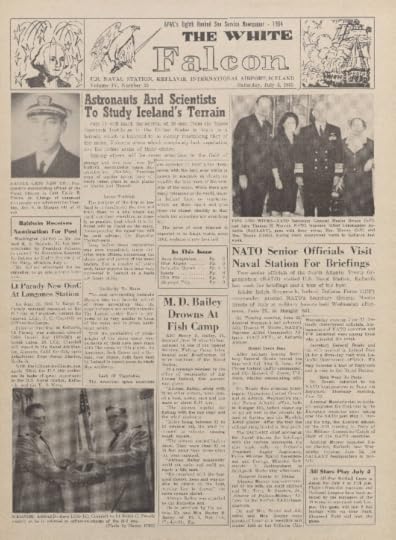
The original title contains a play on words, dyngja being both a women’s inner room, bower, or weaving room; but also a shield volcano. And a crucial scene in the novel plays out in the Ódáðahraun lava fields, where (in real-life, as in the novel), NASA astronauts came to train in 1965 and again in 1967, the area believed by scientists to be the closest on earth to the lunar landscape.
The novel is narrated from the perspective of Théodora, aka Teddy. In 1962, when it opens she is a teenager living with her parents on a farm near to Ódáðahraun. A visiting photographer, Mr Cooper, from the US Army Map Service, added by a locsal scientist from the Icelandic National Survey, are surveying the area, but when the latter badly twists his ankle on the rocks, the two come to the farm in search of help, and Cooper ends up co-opting Teddy (who he initially assumes is a boy) to help him. Reviewing her findings later in America, he realises she is numerically gifted, something of which she and her parents were aware, but which had not proven terribly useful in her current domestic situation.
Mr Cooper writes, from the US, to Teddy and her parents urging her to go to college. And the story that follows over the next 9 years takes Teddy from her remote cottage, first north to the coastal town of Akureyri, then south to the capital; spend the night in a remote cave with one of the training NATO astronauts; form an odd relationship of convenience with a childhood admirer; land a pilotless plane; and work in a bank, where she dabbles in cheque fraud to finance her ambitions to become a commercial pilot.
Throughout Teddy, a memorably drawn character, displays the mixture of stubborness and opacity referred to in the opening quote:
Sigurdur rose from his desk. He looked at her, this young woman he couldn't figure out. A strange bird, as he sometimes put it to his colleagues when she could not hear him. For despite being perceptive and shrewd, she sometimes seemed to him disconnected from her surroundings, out to sea. Or, rather, she was on a constant journey between worlds and would change topics on the slightest occasion, saying something that ended a conversation or silenced a group. It wasn't that her words were in any way inappropriate, but that they seemed arbitrary, abstract, nothing more than the result of reflections whose source no one could fathom.
and encounters sexism, people assuming she can not do what she clearly has done, and who judge her on the looks rather than her ability.
"Her name is Theodóra. She goes by "Teddý". And she is a cashier at the National Bank in town.' It did not take Frank long to work out which of the three women sitting behind the counter was the one he needed to see. Her fringe almost covered her eyes, causing the onlooker's attention to focus on her unusually full, pale lips, which opened very slowly as if the world had suddenly changed gears: 'Good morning? The voice, while not exactly unfriendly, was flat and the girl's attitude seemed distant.
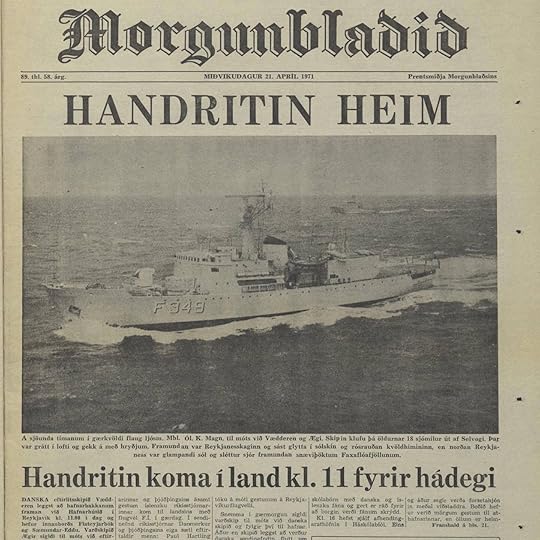
Throughout, the novel contains references to Iceland's history of the period and the broader world context - a crucial scene that puts a seeming end to her pilot ambitions, but takes her on a different route, taking place in April 1971, the day the long-campaigned for return of 13th and 14th century historical documents from Denmark to Iceland took place:
The close third-person narration alternates with vignettes, not ordered chronologically, from Teddy's subsequent 33 years as a air stewardess, from 1971 to 2004, told in italics as memories, and in one crucial case a dream, rather than in the moment narration.
And the novel contains a wonderful 'aftermath' a few months later where Teddy, not yet 60, finally achieves her ambitions, drawing on her one night in the lava field with an astronaut, but in different a way that confounds the expectations of the businessmen who patronised her in her former guise.
Engrossing.
Peirene Press
Founded in 2008, we’ve been a key player in the thriving UK independent publishing scene for over a decade, publishing books from 25 countries and 20 different languages. Traditionally a publisher of European novellas in translation, we now publish writing from all over the world and are expanding our list to publish literary fiction of all shapes and sizes. Our books are regularly listed for significant UK literary and translation prizes, including the International Booker Prize, and in 2023 we won the Dublin Literary Award with our book Marzahn, Mon Amour by Katja Oskamp, translated from German by Jo Heinrich.
Our subscribers are the foundation of everything we do at Peirene. Their support and commitment empowers us to make bold editorial choices and to invest in ambitious, thought-provoking writing.
Algjörlega frábær. Teddý elst upp í á bæ við Suðurárbotna, einn af draumastöðum þessa lands, og er dreymir stóra drauma. Vil ekki segja of mikið til að spilla ekki fyrir öðrum en ég mæli svo sannarlega með þessari bók. Höfundur hefur greinilega vandað vel til verka því allar flugtendar lýsingar stóðust uppá punkt og prik.
A fun immersion into the world of 60/70s Iceland – complete with linoleum flooring, avocado bathrooms and smoking in planes. It begins with Teddy a slightly terse mathematically talented teen in rural Iceland, being co-opted to help some US scientists to explore the local lava lakes. We then follow Teddy as she fights for her place in the world, through various historical events; the moon landing – interested to find out that Iceland missed these being televised because of the national broadcaster being on holiday - the 1975 Women’s strike, the return of the Icelandic Sagas from Denmark … The writing is very minimal, it has that ‘blink and you will miss it’ aspect so I had to keep going back and rereading certain passages to make sure that what I though had happened had actually happened. It was like a breath of fresh air to read though; there was not a superfluous word in the entire book. Great setting and character.
Ung kona úr sveit að berjast í heimi karlmanna til að gera það sem hana langar til. Sniðuglega samin bók, uppbyggingin þétt og stíllinn seiðandi. Hraun og malbik setja mark sitt á söguna og söguhetjan gefst aldrei upp. Góð bók.
Hún Teddý! Ég hló og grét, ekkert neins staðar ofsagt, lesandanum eftirlátið að draga ályktanir. Af hverju var enginn búinn að segja mér almennilega af þessum höfundi?
Góð saga. Áhugaverð sviðsmynd. Umhverfið skemmtilegt þar sem frelsi Ódáðahrauns og hrátt Breiðholtið í byggingu mynda ramma um afmörkuð tækifæri konu í karlaheimi. Vel gerður sögulegur og umhverfislegur rammi. Hins vegar óþarflega sundurlaus og hrá eins og handrit sem eftir er að fínkemba og mýkja,