

What do you think?

Heroes Reborn: America's Mightiest Heroes
Heroes Reborn: America’s Mightiest Heroes Omnibus
Discover a world without Avengers! Tony Stark never built an iron armor. Thor is a hard-drinking atheist who despises hammers. Wakanda is dismissed as a myth. Captain America was never found in the ice. Instead, this planet has always been protected by Earth's Mightiest Heroes: the Squadron Supreme of America! But who is responsible for this altered Earth? Why is the vampire-hunting Blade the one man who remembers how things should be? And what will he do about it? It's the complete saga of a world reborn, featuring familiar faces as you've never seen them before! Collecting HEROES REBORN (2021) #1-7; HEROES RETURN #1; HEROES REBORN: HYPERION & THE IMPERIAL GUARD; HEROES REBORN: PETER PARKER, THE AMAZING SHUTTERBUG; HEROES REBORN: MAGNETO & THE MUTANT FORCE; HEROES REBORN: YOUNG SQUADRON; HEROES REBORN: SIEGE SOCIETY; HEROES REBORN: SQUADRON SAVAGE; HEROES REBORN: MARVEL DOUBLE ACTION; HEROES REBORN: AMERICAN KNIGHTS; HEROES REBORN: NIGHT-GWEN; and HEROES REBORN: WEAPON X & FINAL FLIGHT.
568 pages, Hardcover
First published November 1, 2022
About the author
Jason Aaron
2,351 books1,718 followersJason Aaron grew up in a small town in Alabama. His cousin, Gustav Hasford, who wrote the semi-autobiographical novel The Short-Timers, on which the feature film Full Metal Jacket was based, was a large influence on Aaron. Aaron decided he wanted to write comics as a child, and though his father was skeptical when Aaron informed him of this aspiration, his mother took Aaron to drug stores, where he would purchase books from spinner racks, some of which he still owns today.
Aaron's career in comics began in 2001 when he won a Marvel Comics talent search contest with an eight-page Wolverine back-up story script. The story, which was published in Wolverine #175 (June 2002), gave him the opportunity to pitch subsequent ideas to editors.
In 2006, Aaron made a blind submission to DC/Vertigo, who published his first major work, the Vietnam War story The Other Side which was nominated for an Eisner Award for Best Miniseries, and which Aaron regards as the "second time" he broke into the industry.
Following this, Vertigo asked him to pitch other ideas, which led to the series Scalped, a creator-owned series set on the fictional Prairie Rose Indian Reservation and published by DC/Vertigo.
In 2007, Aaron wrote Ripclaw: Pilot Season for Top Cow Productions. Later that year, Marvel editor Axel Alonso, who was impressed by The Other Side and Scalped, hired Aaron to write issues of Wolverine, Black Panther and eventually, an extended run on Ghost Rider that began in April 2008. His continued work on Black Panther also included a tie-in to the company-wide crossover storyline along with a "Secret Invasion" with David Lapham in 2009.
In January 2008, he signed an exclusive contract with Marvel, though it would not affect his work on Scalped. Later that July, he wrote the Penguin issue of The Joker's Asylum.
After a 4-issue stint on Wolverine in 2007, Aaron returned to the character with the ongoing series Wolverine: Weapon X, launched to coincide with the feature film X-Men Origins: Wolverine. Aaron commented, "With Wolverine: Weapon X we'll be trying to mix things up like that from arc to arc, so the first arc is a typical sort of black ops story but the second arc will jump right into the middle of a completely different genre," In 2010, the series was relaunched once again as simply Wolverine. He followed this with his current run on Thor: God of Thunder.
Aaron's career in comics began in 2001 when he won a Marvel Comics talent search contest with an eight-page Wolverine back-up story script. The story, which was published in Wolverine #175 (June 2002), gave him the opportunity to pitch subsequent ideas to editors.
In 2006, Aaron made a blind submission to DC/Vertigo, who published his first major work, the Vietnam War story The Other Side which was nominated for an Eisner Award for Best Miniseries, and which Aaron regards as the "second time" he broke into the industry.
Following this, Vertigo asked him to pitch other ideas, which led to the series Scalped, a creator-owned series set on the fictional Prairie Rose Indian Reservation and published by DC/Vertigo.
In 2007, Aaron wrote Ripclaw: Pilot Season for Top Cow Productions. Later that year, Marvel editor Axel Alonso, who was impressed by The Other Side and Scalped, hired Aaron to write issues of Wolverine, Black Panther and eventually, an extended run on Ghost Rider that began in April 2008. His continued work on Black Panther also included a tie-in to the company-wide crossover storyline along with a "Secret Invasion" with David Lapham in 2009.
In January 2008, he signed an exclusive contract with Marvel, though it would not affect his work on Scalped. Later that July, he wrote the Penguin issue of The Joker's Asylum.
After a 4-issue stint on Wolverine in 2007, Aaron returned to the character with the ongoing series Wolverine: Weapon X, launched to coincide with the feature film X-Men Origins: Wolverine. Aaron commented, "With Wolverine: Weapon X we'll be trying to mix things up like that from arc to arc, so the first arc is a typical sort of black ops story but the second arc will jump right into the middle of a completely different genre," In 2010, the series was relaunched once again as simply Wolverine. He followed this with his current run on Thor: God of Thunder.
Ratings & Reviews
Friends & Following
Create a free account to discover what your friends think of this book!
Community Reviews
Displaying 1 - 7 of 7 reviews

February 7, 2023
I've struggled with the entirety of Jason Aaron's Avengers run and this hasn't changed that. Blaze finds himself living in a reality where the Avengers were never assembled, and the Squadron Supreme of America are the world's protectors / violators. The series goes to to show in details how a non-Avengers reality will be as we get to see this reality's Peter Parker, Tony Stark, Thor, Reed Richards, mutants, aliens etc. For what the story lacks in originality it makes up a little bit for in scope and pretty awesome continuity checking.
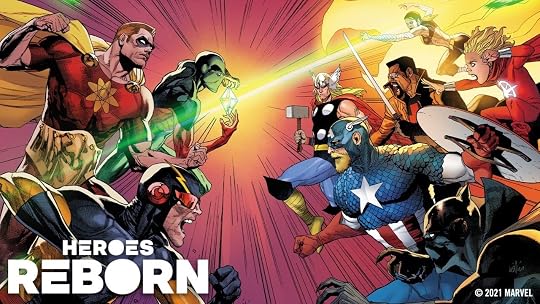
This feels like a COVID pandemic project, where Aaron had some spare time on his hands? Obviously inspired by both the ridiculously original genius alternate Marvel reality event Age of Apocalypse, as well as the original Heroes Reborn, but it's the lack of originality for the core concept that makes this a wasted opportunity, although once again huge props to the remarkable continuity of the detail it went into creating a 'What if the Avengers never were' reality.

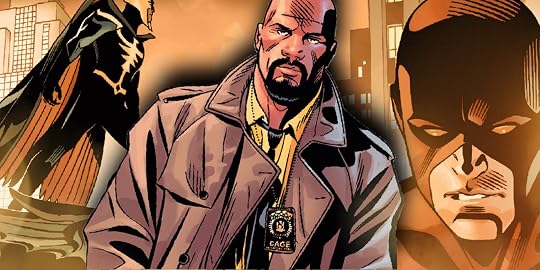
And just to rub it in, this series has some of the meatiest Black hero roles in a major event with Blade, T'Challa, Luke Cage and Misty Knight(!) getting solid air time. Overall a 6 out of 12, Three Star read.
Marvel reading order: King in Black -> Heroes Reborn -> Infinite Destinies
2023 read
This feels like a COVID pandemic project, where Aaron had some spare time on his hands? Obviously inspired by both the ridiculously original genius alternate Marvel reality event Age of Apocalypse, as well as the original Heroes Reborn, but it's the lack of originality for the core concept that makes this a wasted opportunity, although once again huge props to the remarkable continuity of the detail it went into creating a 'What if the Avengers never were' reality.
And just to rub it in, this series has some of the meatiest Black hero roles in a major event with Blade, T'Challa, Luke Cage and Misty Knight(!) getting solid air time. Overall a 6 out of 12, Three Star read.
Marvel reading order: King in Black -> Heroes Reborn -> Infinite Destinies
2023 read

December 17, 2022
It is an interesting iteration of Marvel's version of DC's Justice League, I suppose. This group is definitely more brutal than other groups I remember reading about (well, other than that hard-core group composed of members from different realities that attacked Atlantis and ripped Namor's head from his body), and it shows in the series. The artwork in the main series was s0-so for me; there were some solid pictures in the main series, but most of it felt "meh" to me. The tie-in issues were a bit of a mixed bag for me, too (although there were some storylines I wished had gone on for another issue or three to explore those lines a bit further ). The pacing was a bit "off" for me because of the numerous flashbacks throughout the main issues of the series.
This series does not give us time to "explore" this alternate world like the twelve-issue Squadron Supreme series did; I cannot decide how much the "flashbacks" helped the story progress. I suppose some of it was helpful whereas some of them were not; the more helpful flashbacks were the "short stories" at the end of each issue and then the other "tie-in" issues created for this limited series.
This series was really odd, though.
I know the story basically takes place overnight for Blade, but I still found myself wondering how long it takes place in the timeline of the story itself. It seems like it was maybe a week? In any case, it was amusing to read (see) how much some of these characters mirrored their DC counterparts and whatnot. Nighthawk was nuts as Marvel's "Batman", that is for certain! I would say he was the closest to mirroring DC's character except that Nighthawk gains "super strength" after the sun sets whereas Batman "remains" a man; both characters have that distrust of everybody else, both characters "know everything" (it seems like; at the very least, they never reveal more than they have to at any given moment); one "major" difference is that Batman at least seems to care for his teammates on some level whereas this iteration of Nighthawk no longer seems to care about any of his teammates (or hardly anybody else, for that matter). it is funny - as I am typing this, it struck me how really bland the other Squadron Supreme characters kind-of are in comparison; it seems like Nighthawk might be the best fleshed-out character of the team since he stands out the most to me. Nighthawk was a real jerk in these stories and he really reminded me of the Nighthawk from the Supreme-universe in Marvel's "Max" line of comics. At the same time, there are so many remarks and comparisons and whatnot made comparing Nighthawk to Batman that I could not quite decide if it was meant to make a mockery of Batman or not.
In any case, Power Princess (Princess Zarda) was pretty awesome in various respects. Maybe hilarious is a better way to put it. She loves to fight, she loves to brawl, she loves to wage war. She seems like she'd be "perfect" for either Ares or Hercules, to be honest. There are some great images of her, too. I loved the image of her in issue 6 when she is fighting All-Gog - she just looks totally bad-to-the-bone and not somebody you'd want to mess with.
The end of the series felt anticlimactic and was a bit of a disappointment for me. I don't know how to describe it; it just felt like a bit of a letdown. Not quite a giant letdown, but like maybe it was supposed to go one a bit longer but got cut back? Still though, despite the Avengers "winning" in the end and reality being restored, it felt like this series merely reinforced the "issues" the JLA (mainly Superman) had with the Avengers in the Jla Avengers crossover event - that the Avengers did not do enough to "make things right" in the world, that they did not work hard enough to improve the situations in the individual states of the U.S. as well as other countries around the world. The Squadron Supreme also levies this accusation against the Avengers, that they do not do enough to protect the world as well as to protect the downtrodden on the planet. So it is the JLA's accusation taken to an extreme, but I am not sure if it really proved a point. I am not sure what I expected when reading this compilation, but I did not expect to be as letdown as I was. In the end, I am glad I took a chance on reading it, but we will see if I ever read it again.
This series does not give us time to "explore" this alternate world like the twelve-issue Squadron Supreme series did; I cannot decide how much the "flashbacks" helped the story progress. I suppose some of it was helpful whereas some of them were not; the more helpful flashbacks were the "short stories" at the end of each issue and then the other "tie-in" issues created for this limited series.
This series was really odd, though.
I know the story basically takes place overnight for Blade, but I still found myself wondering how long it takes place in the timeline of the story itself. It seems like it was maybe a week? In any case, it was amusing to read (see) how much some of these characters mirrored their DC counterparts and whatnot. Nighthawk was nuts as Marvel's "Batman", that is for certain! I would say he was the closest to mirroring DC's character except that Nighthawk gains "super strength" after the sun sets whereas Batman "remains" a man; both characters have that distrust of everybody else, both characters "know everything" (it seems like; at the very least, they never reveal more than they have to at any given moment); one "major" difference is that Batman at least seems to care for his teammates on some level whereas this iteration of Nighthawk no longer seems to care about any of his teammates (or hardly anybody else, for that matter). it is funny - as I am typing this, it struck me how really bland the other Squadron Supreme characters kind-of are in comparison; it seems like Nighthawk might be the best fleshed-out character of the team since he stands out the most to me. Nighthawk was a real jerk in these stories and he really reminded me of the Nighthawk from the Supreme-universe in Marvel's "Max" line of comics. At the same time, there are so many remarks and comparisons and whatnot made comparing Nighthawk to Batman that I could not quite decide if it was meant to make a mockery of Batman or not.
In any case, Power Princess (Princess Zarda) was pretty awesome in various respects. Maybe hilarious is a better way to put it. She loves to fight, she loves to brawl, she loves to wage war. She seems like she'd be "perfect" for either Ares or Hercules, to be honest. There are some great images of her, too. I loved the image of her in issue 6 when she is fighting All-Gog - she just looks totally bad-to-the-bone and not somebody you'd want to mess with.
The end of the series felt anticlimactic and was a bit of a disappointment for me. I don't know how to describe it; it just felt like a bit of a letdown. Not quite a giant letdown, but like maybe it was supposed to go one a bit longer but got cut back? Still though, despite the Avengers "winning" in the end and reality being restored, it felt like this series merely reinforced the "issues" the JLA (mainly Superman) had with the Avengers in the Jla Avengers crossover event - that the Avengers did not do enough to "make things right" in the world, that they did not work hard enough to improve the situations in the individual states of the U.S. as well as other countries around the world. The Squadron Supreme also levies this accusation against the Avengers, that they do not do enough to protect the world as well as to protect the downtrodden on the planet. So it is the JLA's accusation taken to an extreme, but I am not sure if it really proved a point. I am not sure what I expected when reading this compilation, but I did not expect to be as letdown as I was. In the end, I am glad I took a chance on reading it, but we will see if I ever read it again.

January 12, 2024
The main story is marginally ok. It has some interesting thoughts about which Marvel characters correspond with which DC characters, but it lacks any real sense of immediacy or danger; it doesn't seem to build on anything or lead anywhere. Or, if it does, it wasn't obvious to me.
But then there are hundreds of pages of one-shots which are almost uniformly dull. I think an interested reader should just read the regular miniseries of 7-or-so issues and definitely skip all the other stuff.
But then there are hundreds of pages of one-shots which are almost uniformly dull. I think an interested reader should just read the regular miniseries of 7-or-so issues and definitely skip all the other stuff.

November 23, 2021
A very long What if story. It’s entertaining ad fun but in the end it doesn’t matter or hold significants to any of the characters.

March 11, 2023
I know this event has been widely panned, and I went in expecting not much besides the batshit explodo that’s defined Aaron’s Avengers run.
But I completely fell in love.
Forget Heroes Reborn, this is more like Amalgam 2.0. The DC/Marvel mashup of it all is a blast, and both the main series and the spin-off issues all have a sense of joy playing around in this mashup universe.
But I completely fell in love.
Forget Heroes Reborn, this is more like Amalgam 2.0. The DC/Marvel mashup of it all is a blast, and both the main series and the spin-off issues all have a sense of joy playing around in this mashup universe.
December 26, 2025
Blade wakes up in a new America, one without the Avengers instead they have the Squadron Supreme (using existing Marvel Characters to create a team that is scarily close the JLA and honestly... it's kinda awesome). It's up to Blade to find what's happened to the Avengers and "assemble" them. Can he and his new teammates bring the world back to reality?
So much fun...
So much fun...
April 5, 2026
I enjoyed this a lot more than I thought I would. the actual event was a bit too short at only 7 issues in my opinion, and most of the actual plot happens in the last 3 issues since the first 4 issues are used to develop the squadron supreme so it could've used more time to breath, but I really loved the tie-in chapters alongside the event and this Omnibus as a whole.
Displaying 1 - 7 of 7 reviews