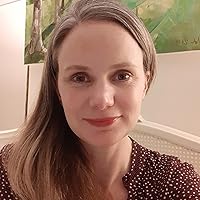
Despite plant-based diets being associated with some of the best health outcomes, myths about the need for meat, dairy and eggs in the diet persist. Following a Q&A format, two medical doctors (who both specialise in cancer treatment, one in the UK and one in Canada) answer all the commonly asked questions and concerns raised when people first consider transitioning to a plant-based diet. How do you get enough protein? Is it safe for children? Is soya problematic for hormones? Simple and straightforward answers are supported with the scientific background making this book also the go-to guide for health professionals who are increasingly meeting patients and clients who have chosen a plant-based diet.
I have been very interested in plant-based nutrition for nearly a decade and I have read from a wide range of authors like Colin T. Campbell, Valter Longo, David Katz, Brenda Davis, Will Bulsiewicz, Dean Ornish, Dean & Ayesha Sherzai and many others. In my sincere opinion Shireen & Zahra Kassan’s “Eating Plant-Based” compares -more than favourably- with the best work of the authors I just listed. It is extremely clearly written and exceptionally referenced using hundreds of peer-reviewed scientific articles (not blog entries, popular literature or web page links as commonly found in many lower quality nutrition literature). I particularly liked the “Question & Answer” format of the book making it an exceptional reference tool for anyone with questions on virtually any topic related to plant based nutrition. It was also certainly one of the most unbiased books on plant-based nutrition I have had the pleasure to read. The authors clearly attempted to use the -best- available scientific literature (Meta-analyses, RCTs and large cohort studies) to support all of their answers and always attempted to help the reader interpret less clear or more surprising results.
Highly recommend this one to anyone either already 100% plant-based or simply plant-curious. You are sure to learn a lot from this pearl of a book!
I was looking forward to reading this book ahead of its publication, and am not disappointed! This is the exactly the kind of book on plant-based nutrition I have been looking for: comprehensive, evidence-based and clearly laid out (I love the Q&A style). As GP with a particular interest in nutrition and lifestyle medicine, this is a resource I'll be returning to (and recommending to patients and colleagues) time and again.
I'm in awe of the work that Shireen and Zahra have put into writing this book - to have distilled such a complex topic into such an accessible format really is an amazing achievement. Thank you!
I am conflicted about this book. I was fully prepared to love it, based on my own increasingly plant-based diet (yes, I know: confirmation bias, etc.). And there is a lot of good information in here. However, the more I read, the more uneasy I became. The authors seem to make excuses for any studies that show a plant-based diet may not be as effective as an ominvore diet. For example:
In chapter one, we get the following: The Adventist Health Study 2 showed that "... vegans had a 55% increased risk of developing a hip fracture compared with omnivores... [T]his figure sounds alarming but, in absolute terms, amounts to 1.5 extra hip fractures per 1000 vegans per year." No big deal.
But the authors NEVER use the same reasoning in reverse. Instead, in chapter 8, we are told that "... replacing 3% of protein from red meat, eggs and dairy with plant sources could reduce the risk of dying from any cause and from CVD by the order of 10-25%. That is huge!"
The authors point out that a lot of studies are problematic because they are sponsored by the very industry that is trying to bolster sales of a specific food. But we are reminded of this far more often when a study shows possible benefits for non-plant-based diets.
I am fully convinced that eating more plants is good for me. And I appreciate that the authors included studies that don't always favor the plant-based alternative. But I am troubled that the non-plant-based benefits are mostly explained away as statistical noise or as poorly-designed studies or as simply not relevant for one reason or another, while studies that show plant-based diets as beneficial are presented without the same skepticism.
One last observation: if a study showed any kind of negative response to a plant-based diet, the authors pointed out that a lot of junk food is plant-based (potato chips, candy, soda, ultra-processed anything, etc.) so being vegan doesn't necessarily mean that a person eats in a healthy manner. The authors emphasized that a healthy vegan diet must be "planned" to include all necessary nutrients, and if a study with negative results didn't control for this it was dismissed. However, the studies showing negative consequences for diets that included animal products never raised this same point. The need to include all necessary nutrients in an omnivorous diet was never pointed out, and the studies were not dismissed as they were if the negative results came from a plant-based diet.
I loved reading this book from start to finish. It is a fantastic, extremely comprehensive resource that is beautifully written and packed with scientific references. I also found it very readable and loved that it didn't shy away from the big questions e.g. is fish good for us? is a plant-based diet suitable for children?
Eating Plant Based belongs on the bookshelf of every single health professional who wants to improve the health of their patients, as well as anyone who wishes to reduce their risk of chronic disease. As a nutritionist, I will be recommending it to all my clients who have questions about a plant-based diet. Highly recommend!