

What do you think?

Unofficial Britain: Journeys Through Unexpected Places
LONGLISTED FOR RSL ONDAATJE PRIZE 2021
There is a Britain that exists outside of the official histories and guidebooks - places that lie on the margins, left behind. A Britain in the cracks of the urban facade where unexpected life can flourish.
Welcome to Unofficial Britain . This is a land of industrial estates, factories and electricity pylons, of motorways and ring roads, of hospitals and housing estates, of roundabouts and flyovers. Places where modern life speeds past but where people and stories nevertheless collect. Places where human dramas play stories of love, violence, fear, boredom and artistic expression. Places of ghost sightings, first kisses, experiments with drugs, refuges for the homeless, hangouts for the outcasts.
Struck by the power of these stories and experiences, Gareth E. Rees set out to explore these spaces and the essential part they have played in the history and geography of our isles. Though mundane and neglected, they can be as powerfully influential in our lives, and imaginations, as any picture postcard tourist destination.
There is a Britain that exists outside of the official histories and guidebooks - places that lie on the margins, left behind. A Britain in the cracks of the urban facade where unexpected life can flourish.
Welcome to Unofficial Britain . This is a land of industrial estates, factories and electricity pylons, of motorways and ring roads, of hospitals and housing estates, of roundabouts and flyovers. Places where modern life speeds past but where people and stories nevertheless collect. Places where human dramas play stories of love, violence, fear, boredom and artistic expression. Places of ghost sightings, first kisses, experiments with drugs, refuges for the homeless, hangouts for the outcasts.
Struck by the power of these stories and experiences, Gareth E. Rees set out to explore these spaces and the essential part they have played in the history and geography of our isles. Though mundane and neglected, they can be as powerfully influential in our lives, and imaginations, as any picture postcard tourist destination.
304 pages, Paperback
Published July 8, 2021
About the author
Gareth E. Rees
12 books52 followersGareth E. Rees is a writer of fiction and non fiction. His books include Sunken Lands (Elliott & Thompson 2024), Terminal Zones (Influx Press 2022), Unofficial Britain (Elliott & Thompson, 2020), Car Park Life (Influx Press 2019), The Stone Tide (Influx Press, 2018). His first book 'Marshland' was reissued in 2024 by Influx Press in a new expanded edition.
‘What he seeks out is the magical in the mundane, the bizarre happenings in plain sight’
- Deborah Moggach, The Times
‘What he seeks out is the magical in the mundane, the bizarre happenings in plain sight’
- Deborah Moggach, The Times
Ratings & Reviews
Friends & Following
Create a free account to discover what your friends think of this book!
Community Reviews
Displaying 1 - 30 of 68 reviews
September 16, 2025
This was a fascinating insight into places in Britain that are right in front of us, but the majority never give a second thought to. One of these as an example is Spaghetti Junction. A nightmare of a junction to travel on, but underneath, these roads offer a home and shelter to people living beneath it. It was rather humbling to think about.
Rees covered a section which involved multi-storey carparks, a place in which people leave their vehicles to go elsewhere, but also a place where unfortunate people have climbed their stairwells to the very top, just to jump to their deaths.
Abandoned places kind of thrill me, as an amateur photographer I enjoy photographing these sites so this book opened my eyes to new possibilities. This was well written and very interesting, I would certainly read more from Rees.
Rees covered a section which involved multi-storey carparks, a place in which people leave their vehicles to go elsewhere, but also a place where unfortunate people have climbed their stairwells to the very top, just to jump to their deaths.
Abandoned places kind of thrill me, as an amateur photographer I enjoy photographing these sites so this book opened my eyes to new possibilities. This was well written and very interesting, I would certainly read more from Rees.

August 2, 2020
Inspired by and partly based on the eponymous website of which Rees is the founder and curator, this book is a travelogue of sorts, except that it celebrates those aspects of the British landscape that are often overlooked on the assumption that they are ugly, uninteresting and nondescript – electricity pylons, motorways and flyovers, hospitals, industrial estates and retail car parks (already the subject of an earlier book by Rees – Car Park Life).
The philosophy behind this approach is easy to explain. Landscape does not have any objective meaning. It acquires its connotations only insofar as it acts as a backdrop to the communities living in it. It is a blank slate onto which we project our memories and experiences, our individual and collective joy, love, loss, grief. Once we grasp this, we should no longer be surprised that people can be as emotionally attached to a flyover as to a breath-taking mountain. Or that ghosts and legends should inhabit twentieth century housing estates as much as they plagued medieval castles and Victorian mansions in earlier times. Accordingly, the book takes us on a strange journey along miles of tarmac, with stops at abandoned factories, ghostly carparks and industrial wastelands haunted by mythical men-beasts.
Rees writes in an engaging style, effortlessly combining urban folklore and personal memoir, history and psychogeography, road-trip narrative and gonzo journalism. In this regard, I spotted parallels with two other books I read and enjoyed recently, both of which provide an idiosyncratic view of the landscape of the British Isles: Richard King’s The Lark Ascending, an exploration of 20th Century British (mainly English) music and its connection to landscape, and Edward Parnell’s Ghostland, a memoir presented through the prism of the biographies of British ghost story writers and the places that influenced them.
Unofficial Britain is, in my view, the strangest of the three books and, at times, the scariest. Rees is a writer of weird fiction and folk horror who has contributed to anthologies such as Unsung Stories’ brilliant This Dreaming Isle. Although this book is a work of non-fiction, it shares the same themes and concerns as the author’s fiction: a predilection for the weird and the strange, the magic – sometimes dark, sometimes benign – which haunts the everyday, the realm of the Natural snaking its way into the urban landscape. Reese also shares with other writers of the same ilk (such as Gary Budden) a sense of Deep Time:
"What I learned on this journey is that everything changes and yet little does. Landscapes overlay landscapes, in ever-turning cycles. The flyover where a viaduct once stood. The Victorian workhouse that became a hospital. The steelworks on the site of a monastery. The burial cairn surrounded by a busy interchange. Motorway earthworks that rise alongside their Stone Age predecessors. The pretty bend on the river that became a dirty dockland then a ramshackle trading estate then an artist’s hub then an estate of luxury waterside high-rises… The past is never absolutely destroyed by recycled into mutant strains. It seeps through the layers of a place and takes on new guises to give us goose-bumps and chills.
The passage above is typical of the best bits of the book where the author turns poet – literally so at the end of the chapters, each of which concludes with a sort of modern-day ballad. Rees is a bard singing the praises of a weird, urban Albion.
For the full, illustrated review head to: https://endsoftheword.blogspot.com/20...
The philosophy behind this approach is easy to explain. Landscape does not have any objective meaning. It acquires its connotations only insofar as it acts as a backdrop to the communities living in it. It is a blank slate onto which we project our memories and experiences, our individual and collective joy, love, loss, grief. Once we grasp this, we should no longer be surprised that people can be as emotionally attached to a flyover as to a breath-taking mountain. Or that ghosts and legends should inhabit twentieth century housing estates as much as they plagued medieval castles and Victorian mansions in earlier times. Accordingly, the book takes us on a strange journey along miles of tarmac, with stops at abandoned factories, ghostly carparks and industrial wastelands haunted by mythical men-beasts.
Rees writes in an engaging style, effortlessly combining urban folklore and personal memoir, history and psychogeography, road-trip narrative and gonzo journalism. In this regard, I spotted parallels with two other books I read and enjoyed recently, both of which provide an idiosyncratic view of the landscape of the British Isles: Richard King’s The Lark Ascending, an exploration of 20th Century British (mainly English) music and its connection to landscape, and Edward Parnell’s Ghostland, a memoir presented through the prism of the biographies of British ghost story writers and the places that influenced them.
Unofficial Britain is, in my view, the strangest of the three books and, at times, the scariest. Rees is a writer of weird fiction and folk horror who has contributed to anthologies such as Unsung Stories’ brilliant This Dreaming Isle. Although this book is a work of non-fiction, it shares the same themes and concerns as the author’s fiction: a predilection for the weird and the strange, the magic – sometimes dark, sometimes benign – which haunts the everyday, the realm of the Natural snaking its way into the urban landscape. Reese also shares with other writers of the same ilk (such as Gary Budden) a sense of Deep Time:
"What I learned on this journey is that everything changes and yet little does. Landscapes overlay landscapes, in ever-turning cycles. The flyover where a viaduct once stood. The Victorian workhouse that became a hospital. The steelworks on the site of a monastery. The burial cairn surrounded by a busy interchange. Motorway earthworks that rise alongside their Stone Age predecessors. The pretty bend on the river that became a dirty dockland then a ramshackle trading estate then an artist’s hub then an estate of luxury waterside high-rises… The past is never absolutely destroyed by recycled into mutant strains. It seeps through the layers of a place and takes on new guises to give us goose-bumps and chills.
The passage above is typical of the best bits of the book where the author turns poet – literally so at the end of the chapters, each of which concludes with a sort of modern-day ballad. Rees is a bard singing the praises of a weird, urban Albion.
For the full, illustrated review head to: https://endsoftheword.blogspot.com/20...

September 11, 2026
‘If you look closely enough, all landscapes can be fascinating and any object, no matter what its material, can be freighted with meaning.’
With that quote in mind, what does the author plump for first? The electricity pylon. You know what, he is not wrong. I have stood under a pylon and listened to the hum. It is a weird sensation. Sort of otherworldly. This huge alien object that looks like it can walk especially with all that electricity coursing through it.
Then there are roundabouts with their sculptures, models or standing stones on them. Hauntings on housing estates ‘…there is no reason why a twentieth-century terraced house on a council estate cannot be as racked with emotional energies as a sixteenth-century Tudor cottage.’ How about nuclear power stations? Fascinating right? On the coast so the water can cool the rods but such a contrast to the landscape. Back to that otherworldly motif.
The huge motorway flyovers. There was an article in the paper not long ago about houses that were under one of the motorway flyovers here in England. Incredible to see. There are urban myths and multistorey car parks and hospitals.
As is the case with these types of books some chapters are better than others. This book was not quite a four star book for me but is a little better than a three. Certainly the subject matter is a lot different than any other books I have read.
With that quote in mind, what does the author plump for first? The electricity pylon. You know what, he is not wrong. I have stood under a pylon and listened to the hum. It is a weird sensation. Sort of otherworldly. This huge alien object that looks like it can walk especially with all that electricity coursing through it.
Then there are roundabouts with their sculptures, models or standing stones on them. Hauntings on housing estates ‘…there is no reason why a twentieth-century terraced house on a council estate cannot be as racked with emotional energies as a sixteenth-century Tudor cottage.’ How about nuclear power stations? Fascinating right? On the coast so the water can cool the rods but such a contrast to the landscape. Back to that otherworldly motif.
The huge motorway flyovers. There was an article in the paper not long ago about houses that were under one of the motorway flyovers here in England. Incredible to see. There are urban myths and multistorey car parks and hospitals.
As is the case with these types of books some chapters are better than others. This book was not quite a four star book for me but is a little better than a three. Certainly the subject matter is a lot different than any other books I have read.

September 26, 2020
Well this book was certainly an eye opener for me, it wasn't long ago that I found out the kid from Home Alone was 40 and I felt really old...now I find out the the buildings of my youth are old enough now to potentially be haunted, I feel positively ancient now.
In this book Rees explores those places that are right in front of us but at the same time are almost hidden, Multi-storey car parks, industrial estates, pylons, flyovers and hospitals. These are the sort of places we take for granted, we have grown up around them and think of them as landmarks only, not many people realise there is so much life happening around or under them. To me the spaghetti junction is a nightmare of a road to navigate, but there are many who have found peace living beneath it, the way Rees describes things, it almost feels tranquil.
As a young lad I was a scout and we used to go exploring a lot, night-time walks into the countryside to find a farm, it was so eerie, large structures and abandoned machinery gave us a great time. Quite often we'd find ourselves pulled towards a large pylon, usually to listen to it's crackle and pretend we could hear voices. I have not explored like that in many years, my focus is usually looking for a bit of quite and some wildlife spotting, but after reading this I do fancy a walk around the local industrial estate and maybe a trip to the town centre to check out the car park.
One very interesting side of this book is Rees' many references to music, film and books which have all been inspired by these structures, most notable is the books by J.G. Ballard and any movie with a young lady being stalked in a car park. Rees meets many interesting people and manages to get some great stories from them.
My favourite part of the book was his trip up the M6, I have travelled that road many times on journeys up to Scotland and so far have missed out of so much....next time it will be different.
Absolutely loved this, such a strange idea for a book which makes perfect sense when you get to the end. Give it a go because Rees' words can be quite beautiful at times.
Blog review: https://felcherman.wordpress.com/2020...
In this book Rees explores those places that are right in front of us but at the same time are almost hidden, Multi-storey car parks, industrial estates, pylons, flyovers and hospitals. These are the sort of places we take for granted, we have grown up around them and think of them as landmarks only, not many people realise there is so much life happening around or under them. To me the spaghetti junction is a nightmare of a road to navigate, but there are many who have found peace living beneath it, the way Rees describes things, it almost feels tranquil.
As a young lad I was a scout and we used to go exploring a lot, night-time walks into the countryside to find a farm, it was so eerie, large structures and abandoned machinery gave us a great time. Quite often we'd find ourselves pulled towards a large pylon, usually to listen to it's crackle and pretend we could hear voices. I have not explored like that in many years, my focus is usually looking for a bit of quite and some wildlife spotting, but after reading this I do fancy a walk around the local industrial estate and maybe a trip to the town centre to check out the car park.
One very interesting side of this book is Rees' many references to music, film and books which have all been inspired by these structures, most notable is the books by J.G. Ballard and any movie with a young lady being stalked in a car park. Rees meets many interesting people and manages to get some great stories from them.
My favourite part of the book was his trip up the M6, I have travelled that road many times on journeys up to Scotland and so far have missed out of so much....next time it will be different.
Absolutely loved this, such a strange idea for a book which makes perfect sense when you get to the end. Give it a go because Rees' words can be quite beautiful at times.
Blog review: https://felcherman.wordpress.com/2020...

September 19, 2020
We all have our favourite parts of this country, one of my is West Bay in Dorset, it is a beautiful place to visit on the Jurassic Coast at the end of Chesil Beach. Sitting by the sea watching the boats come in and out of the harbour is a lovely way to spend a day. But even in this beautiful spot, there are things that you probably haven’t noticed on the fringes of our society and have stories of their own to tell.
Gareth Rees has been collecting these stories for a while now and placing them on his web site, Unofficial Britain and for the first time, they have been gathered in this book. He begins with the electricity pylon, a mundane enough object that unless you look for them, they will escape your notice. Pylons were designed by the architect Sir Reginald Blomfield. He did a classical design inspired by the shape of Egyptian obelisks; they are far more ornate than they need be. Pylons divide people, a fair number consider them a blot on the landscape but there are others who see them in a very different light. These pylon poets appreciate them for what they are and their presence in the landscape. The pinnacle of this ‘Worship of the Hum’ is best expressed by the author David Southwall and his creation of Hookland, a collection of weird folklore drawn from ancient rituals.
The stone circle is a ritual space that were constructed in from the Neolithic era onwards. They still have a presence in the landscape today and many people are drawn to them. Some people see that circular features in the modern cityscape have a similar draw to those ancient ones, and Rees goes into some detail about Glasgow after seeing a map on the pillar of a flyover. It was a map of the inner ring road filled in black. Known as urban geomancy, people study maps in detail to read and interpret them, much like ley lines. Even a modern-day replica of a stone circle that he visits at the Coul Roundabout in Fife. Even though it is new, it still feels alive.
Anybody should be able to feel a connection with place, no matter where they grew up or where they live, even in the densest concrete jungles or the most monotonous suburban sprawls
If you were to imagine a haunted house, the film world has tropes that spring to mind. It would be at the bottom of a lane, the vegetation would be dark and oppressive, windows would be broken and so on. He is seeking ghosts that can be found in relatively modern homes and he heads to Grimsby to investigate the presence of a ghostly nun and other supernatural events in the town. Poverty and lack of investment have turned estates that were once full of life and people into ghost homes. We can project our fears onto any inanimate object.
Remnants of factories and industrial sites that are shadows of their former glory are other places where their presence is still felt many years after they stopped being the main employers in their towns. He talks about sirens that would sound for no apparent reason at night waking people up and old industrial sites that had sinister and secret uses, places that even now can raise hairs on the back of your neck. Edgelands have a life of their own, some of it is natural, plants that cling onto life in the most unexpected ways and some of it manmade and often slightly unnerving. Offerings that have always been left in spiritual sites can now be found in places that you wouldn’t expect like the underpasses of motorways and interchanges; he is with friends when he finds a vintage doll holding flowers. They have a raft of questions that this inert doll is never going to be able to answer for them.
We know almost nothing of ritual items left by our ancestors, so how will an archaeologist of the future interpret the things that we are leaving behind? Some features of the urban landscape have reached cult status, one of those was the Redcliffe flyover in Bristol; it has been replaced by a roundabout, but its loss was mourned by many. Near the M32 they find a shrine, though which god it is honouring is a mystery. Spaghetti Junction has 1 million vehicles pass along its twisting roads, but most are utterly unaware of the river that flows underneath it and the wildlife that it supports.
Landscapes overlay landscapes and if you know how and where to look you can see the past clearly. Rees is fascinated by the thin places of this country, places where the past and the present overlap and he see this most clearly in the industrial estates that you can find in every town and city and the desolate areas that are there if you know where to look. They walk along Bromley Hall Road, past salvage businesses and knackers yards and stop to look at the fifteenth-century hall that is remarkably still there and is the oldest brick building in London. Concrete multistorey car parks are a bit of an eyesore unless you happen to have a thing about brutalist architecture. When I drive around them, they always feel a bit too small for the cars that they are supposed to be sheltering. Rees is in Bristol to discover the stories he has heard about hauntings in a particular building.
Near where I grew up was a huge mental institution called Brookwood Hospital. Most of the residents were gone by the mid-1980s, bar a few inside a 6m high fenced-off building. Before the rest was flattened to build homes on we used to play in the partially derelict buildings on the site. I don’t remember any ghosts at the time, but it could be creepy. Rees recounts stories of those that have seen movement behind windows of hospitals in Manchester and of shrieking that disrupted filming in an establishment in Nottingham. To close he heads north on the M6, an almost ritualist journey that he remembers well from his childhood and it is fitting that he ends up in Tebay South Service station where there are standing stones that that fit in even though they shouldn’t.
Sometimes the present can haunt the living as much as the past
I thought that this was an excellent book. I like his curiosity in anything and everything that he sees, be it modern or ancient and he searches for meaning in some form in his subjects. It is a heady mix of folklore, history, landscape and cityscape writing and all built on the foundation of psychogeography. He writes well too and gets the balance just right between being fact and unease with his subject matter. If you have the slightest interest about the place that you live and want to find out what goes on in those tiny triangles of land which most people avoid, then this is a good place to start. Can also recommend these books that pick up on similar themes:
Scarp: In Search of London's Outer LimitsScarp by Nick Papadimitriou
Edgelands by Paul Farleyand Michael Symmons Roberts
The Unofficial Countryside by Richard Mabey
Strange Labyrinth: Outlaws, Poets, Mystics, Murderers and a Coward in London's Great Forest by Will Ashon
Gareth Rees has been collecting these stories for a while now and placing them on his web site, Unofficial Britain and for the first time, they have been gathered in this book. He begins with the electricity pylon, a mundane enough object that unless you look for them, they will escape your notice. Pylons were designed by the architect Sir Reginald Blomfield. He did a classical design inspired by the shape of Egyptian obelisks; they are far more ornate than they need be. Pylons divide people, a fair number consider them a blot on the landscape but there are others who see them in a very different light. These pylon poets appreciate them for what they are and their presence in the landscape. The pinnacle of this ‘Worship of the Hum’ is best expressed by the author David Southwall and his creation of Hookland, a collection of weird folklore drawn from ancient rituals.
The stone circle is a ritual space that were constructed in from the Neolithic era onwards. They still have a presence in the landscape today and many people are drawn to them. Some people see that circular features in the modern cityscape have a similar draw to those ancient ones, and Rees goes into some detail about Glasgow after seeing a map on the pillar of a flyover. It was a map of the inner ring road filled in black. Known as urban geomancy, people study maps in detail to read and interpret them, much like ley lines. Even a modern-day replica of a stone circle that he visits at the Coul Roundabout in Fife. Even though it is new, it still feels alive.
Anybody should be able to feel a connection with place, no matter where they grew up or where they live, even in the densest concrete jungles or the most monotonous suburban sprawls
If you were to imagine a haunted house, the film world has tropes that spring to mind. It would be at the bottom of a lane, the vegetation would be dark and oppressive, windows would be broken and so on. He is seeking ghosts that can be found in relatively modern homes and he heads to Grimsby to investigate the presence of a ghostly nun and other supernatural events in the town. Poverty and lack of investment have turned estates that were once full of life and people into ghost homes. We can project our fears onto any inanimate object.
Remnants of factories and industrial sites that are shadows of their former glory are other places where their presence is still felt many years after they stopped being the main employers in their towns. He talks about sirens that would sound for no apparent reason at night waking people up and old industrial sites that had sinister and secret uses, places that even now can raise hairs on the back of your neck. Edgelands have a life of their own, some of it is natural, plants that cling onto life in the most unexpected ways and some of it manmade and often slightly unnerving. Offerings that have always been left in spiritual sites can now be found in places that you wouldn’t expect like the underpasses of motorways and interchanges; he is with friends when he finds a vintage doll holding flowers. They have a raft of questions that this inert doll is never going to be able to answer for them.
We know almost nothing of ritual items left by our ancestors, so how will an archaeologist of the future interpret the things that we are leaving behind? Some features of the urban landscape have reached cult status, one of those was the Redcliffe flyover in Bristol; it has been replaced by a roundabout, but its loss was mourned by many. Near the M32 they find a shrine, though which god it is honouring is a mystery. Spaghetti Junction has 1 million vehicles pass along its twisting roads, but most are utterly unaware of the river that flows underneath it and the wildlife that it supports.
Landscapes overlay landscapes and if you know how and where to look you can see the past clearly. Rees is fascinated by the thin places of this country, places where the past and the present overlap and he see this most clearly in the industrial estates that you can find in every town and city and the desolate areas that are there if you know where to look. They walk along Bromley Hall Road, past salvage businesses and knackers yards and stop to look at the fifteenth-century hall that is remarkably still there and is the oldest brick building in London. Concrete multistorey car parks are a bit of an eyesore unless you happen to have a thing about brutalist architecture. When I drive around them, they always feel a bit too small for the cars that they are supposed to be sheltering. Rees is in Bristol to discover the stories he has heard about hauntings in a particular building.
Near where I grew up was a huge mental institution called Brookwood Hospital. Most of the residents were gone by the mid-1980s, bar a few inside a 6m high fenced-off building. Before the rest was flattened to build homes on we used to play in the partially derelict buildings on the site. I don’t remember any ghosts at the time, but it could be creepy. Rees recounts stories of those that have seen movement behind windows of hospitals in Manchester and of shrieking that disrupted filming in an establishment in Nottingham. To close he heads north on the M6, an almost ritualist journey that he remembers well from his childhood and it is fitting that he ends up in Tebay South Service station where there are standing stones that that fit in even though they shouldn’t.
Sometimes the present can haunt the living as much as the past
I thought that this was an excellent book. I like his curiosity in anything and everything that he sees, be it modern or ancient and he searches for meaning in some form in his subjects. It is a heady mix of folklore, history, landscape and cityscape writing and all built on the foundation of psychogeography. He writes well too and gets the balance just right between being fact and unease with his subject matter. If you have the slightest interest about the place that you live and want to find out what goes on in those tiny triangles of land which most people avoid, then this is a good place to start. Can also recommend these books that pick up on similar themes:
Scarp: In Search of London's Outer LimitsScarp by Nick Papadimitriou
Edgelands by Paul Farleyand Michael Symmons Roberts
The Unofficial Countryside by Richard Mabey
Strange Labyrinth: Outlaws, Poets, Mystics, Murderers and a Coward in London's Great Forest by Will Ashon

April 6, 2022
3.5 (would probably be rounded down if push came to shove because the last few chapters weren’t as good as the earlier ones)
May 12, 2025
No book has ever motivated me to both admire and further explore the UK's built utilities and infrastructure like this one! Time to hug a concrete pillar. Frolick in the industrial park. Enjoy that huge mysterious factory chimney in the distance, stare at it in awe. Meditate in the middle of a roundabout. This book engages with ecologies of our local landscapes and connections to it in a whole new dimension, detangling the idiosyncracy of Britishness itself. The UK's urban landscapes are dissected, for they are strange landscapes, of some weirdly lively detritus, from a country that has unleashed hell upon the world for centuries, and now with the little space it has, meekly tied up in knots of concrete, the former utopias of malls and council flats, motorways, tattered dreams, and all the stories and existences, and transitional 'thin' spaces between. Whilst one can be haunted by these inadequacies and oddities of the dull British landscape, this book, with its fruitful storytelling and bouncing around the country, convinces you to feel at home with it. At home with the hauntedness, all the layers of the land, time, existences before in this wild country. All of which truly make home, in some paradoxical way. Stay with the hauntedness. And recognise what is constantly becoming, our land, our lively connections to it. This is how you keep at it out here!
The time of urbanite freak folk is here. Urban ecologies, of nature, sacred-ness, folklore, actually being all around us this whole time. Wherever you are. It does not lie 'over there' in the mossy woodlands and stone circles of the moors, or the past, it lies amongst wild pylons, under wild motorway canopies, and above, the many stories of buildings and stories within, arguments and love hurtling down motorways, that odd useless statue at your local retail park, plastered stickers on signs and graffiti tags, the story of your neighbourhood freak, your friend's little ghost story at this one hotel in some nobody town. There are *over-there's* everywhere, not urban vs nature as classic traditional British folklore as we know it goes, but industrial vs residential... social vs antisocial... development vs tradition.. built vs unbuilt/to be built... young vs old... self vs true self... all the lot. And through these rifts are canyons of rich stories to be passed down, decorating time, as all good folklore does. And even sound. Acoustically, folk music morphs from a jangly strum and cheer to hazey ambient, pulsing house, and gritty, industrial noise.
I enjoyed how the book would meander to some singular object, like 2 concrete steps, or a hospital trip, and it will spiral into this journey with layers of stories of what was before, the mental and physical realisations. Every bit of land, every person, every structure, has so much to it, all the time. Being receptive to this is fascinating, entrancing, a form of play, love... the energy of life! Deeply psychogeographical.
Also deeply enjoyed the poetry at the end of every chapter, and certain poetic, deep digressions into the meanings of folk and their causes, extracted from creating an urban, modern folklore. Egyptian art-inspired pylons, the blend of socio-political events with certain ghost stories in council flats of the 70s representing the British to be that of a scarred, paranoid state at the time... this allows one to look at folklore and the concept of 'haunting' in a whole new lens- all matters of the of the mind and self more than anything else physical.
This was a nice, quick, speedy read and my fastest time finishing a book in a while- there was never a dry bit, just consistent, lovely storytelling throughout. I was fully captivated, and life has been injected into the cityscapes I know so well. Also, very glad that I unknowingly have hit many of the places mentioned already! Is this romanticisation, is folklore romanticisation, or is this all something else, something new? I do get worried that some of this is just oogling at the lower-class (*wow, look at this grubby old town full of forgotten industrialisation, noise pollution and stories of people eating rats, how folky-hauntology!!!!*) which we need to watch out for, it's never a spectacle, should rather be more of a concern. But, the interesting stories such as abandoned utopian service stations, motorway postcards, dolls on bridges, can stay! Need more of these kind of books, please!
The time of urbanite freak folk is here. Urban ecologies, of nature, sacred-ness, folklore, actually being all around us this whole time. Wherever you are. It does not lie 'over there' in the mossy woodlands and stone circles of the moors, or the past, it lies amongst wild pylons, under wild motorway canopies, and above, the many stories of buildings and stories within, arguments and love hurtling down motorways, that odd useless statue at your local retail park, plastered stickers on signs and graffiti tags, the story of your neighbourhood freak, your friend's little ghost story at this one hotel in some nobody town. There are *over-there's* everywhere, not urban vs nature as classic traditional British folklore as we know it goes, but industrial vs residential... social vs antisocial... development vs tradition.. built vs unbuilt/to be built... young vs old... self vs true self... all the lot. And through these rifts are canyons of rich stories to be passed down, decorating time, as all good folklore does. And even sound. Acoustically, folk music morphs from a jangly strum and cheer to hazey ambient, pulsing house, and gritty, industrial noise.
I enjoyed how the book would meander to some singular object, like 2 concrete steps, or a hospital trip, and it will spiral into this journey with layers of stories of what was before, the mental and physical realisations. Every bit of land, every person, every structure, has so much to it, all the time. Being receptive to this is fascinating, entrancing, a form of play, love... the energy of life! Deeply psychogeographical.
Also deeply enjoyed the poetry at the end of every chapter, and certain poetic, deep digressions into the meanings of folk and their causes, extracted from creating an urban, modern folklore. Egyptian art-inspired pylons, the blend of socio-political events with certain ghost stories in council flats of the 70s representing the British to be that of a scarred, paranoid state at the time... this allows one to look at folklore and the concept of 'haunting' in a whole new lens- all matters of the of the mind and self more than anything else physical.
This was a nice, quick, speedy read and my fastest time finishing a book in a while- there was never a dry bit, just consistent, lovely storytelling throughout. I was fully captivated, and life has been injected into the cityscapes I know so well. Also, very glad that I unknowingly have hit many of the places mentioned already! Is this romanticisation, is folklore romanticisation, or is this all something else, something new? I do get worried that some of this is just oogling at the lower-class (*wow, look at this grubby old town full of forgotten industrialisation, noise pollution and stories of people eating rats, how folky-hauntology!!!!*) which we need to watch out for, it's never a spectacle, should rather be more of a concern. But, the interesting stories such as abandoned utopian service stations, motorway postcards, dolls on bridges, can stay! Need more of these kind of books, please!

Read
August 1, 2020Spun off from a site I'm dimly aware of but don't look at much, a celebration of and inquiry into the bits of the country from which we sometimes incline to turn away – the underpasses, multistorey car-parks and industrial estates. Sometimes it feels like a stretch – surely we already know that hospitals are places of destiny, and they're on TV at least as often as stately homes and village greens, even before this year made us yet more invested in the NHS as part of the national mythos (and the NHS yet more open to investment by bastards, whatever pretty lies we were told, but that's another story). Still, there's a certain eccentric appeal to the section where Rees just wanders a hospital without actually having a life-or-death reason to be there, as when he goes on a sort of motorway dérive. Parts of which do feel a little familiar if you're into this stuff – as also the chapter on council house poltergeists – but which is justified by the fragments of a new folklore for service stations which he constructs along the way. At its best, though, the book does serve as a reminder of those uncanny flashes we can sometimes feel but then forget, because they happened in places which don't really fit the supposed mood of spookiness, and for which I can certainly vouch: the only time I've ever seen a ghost was in the new-ish build garage of a suburban semi. Although elsewhere we are reminded of the question, how many people see a ghost without realising they're a ghost? And one figure I initially thought might be one when I saw him does make an appearance, a tramp of mystical aspect who's probably right behind Caitlin Moran as the most famous person from Wolverhampton. Odd details like this are the book's strongest suit: Glasgow's cursed underground; ring road hauntings; a replica stone circle on a roundabout where Rees feels more numinous charge than at the original a short distance away, simply because it's still part of the flow of people's lives. And I definitely go with his description of anyone who grew up on seventies and early eighties British TV as 'the haunted generation' – it feels a far better fit than Generation X. The epilogue, which unlike the unfettered wanderings of the book proper was written post-Event, notes how prescient its earlier references to Peter Dickinson's Changes books have become in an age of terrified idiots burning 5G masts, and sums the book's thesis up as a series of gradual hauntings: "After each new manifestation replaces the old, it too becomes worn, decayed and saturated with nostalgia to the point where some mourn its passing as others once lamented its coming. So the circle turns."
(Netgalley ARC)
(Netgalley ARC)
January 25, 2026
“What can seem at first ugly and soulless can gradually come to accumulate emotional resonance through the sheer power of persistence.”
This book reminds me how great Rees can write. When he’s on this sort of form he can really impress and inspire you to get out there and hunt down those mysterious places and spaces. This also provides a treasure trove of random and obscure books, documentaries and TV shows to hunt down too.
In saying that we could have done well without the inclusion of the forgettable poetry (or whatever it’s supposed to be?...) tagged on the end of each chapter, which seems a bizarre and confusing decision?...Another maddening aspect is his irritating habit of not finishing his stories?...Whatever happened to the Catman of Greenock?...And how did he and his pal get out the situation with the speeding car on the motorway?...These unfinished stories are just confusing and I think a better editor would have sorted these issues out.
But my moaning aside this was a really enjoyable read, Rees pushes into some really thrilling places in all sorts of lesser known parts of the United Kingdom. He really taps into the human need and fascination with those twilight spaces, steeped in urban mythology and dark history. Like Scooby Doo, wherever he wanders he seems to brush up against many a ghost and ghoul, turning underpasses, car parks and industrial estates into the most unsettling, ominous and alluring of destinations.

November 25, 2020
I wasn’t aware of Garth E. Rees and the website Unofficial Britain until only recently. In Unofficial Britain: Journeys Through Forgotten Places, Rees explores the unknown narrative of our modern-day Britain, in which we live from day to day and largely either take for granted or ignore completely.
Unofficial Britain: Journeys Through Forgotten Places, is Gareth E. Rees’s personal journey through the mystery and folklore of our Britain. This is not the Britain of our ancestors and the halcyon days of Empire but the story of modern constructions and how they themselves have managed to embed their own narrative within themselves. This is the story of electricity pylons, housing estates, roundabouts and motorways, creations of the, mostly, post-war Britain which we today either ignore, take for granted or embellish with the graffiti of this week’s town ‘artist’. However, once we look past these structures, which so often clash with older architecture creating a juxtaposition of grotesque visuality we find that these places have found their own stories.
Places like Spaghetti Junction have created their own rich cultural history, with its canals and fishing; a place where one can get lost in its maze, housing estates and motorways have become sites for regular hauntings, industrial estates are known for their use in television programmes, which have now all become part of the tapestry of our modern way of life.
For me, this is one of the most engaging parts of Unofficial Britain, as a writer who is creating folklore then the creation of this new myth and folklore which we are already surrounded by is something that drew me into the book. The idea that our concrete car parks or motorway service stations have become so embedded within our culture is something that not only I overlooked but something that I’d argue that most people don’t even give time to concern themselves. However, one of the striking aspects for me is that with the demolition of our past I have always felt that the heritage and tales we lose from that demolition is something we’d never recover, and in many ways losing a part of ourselves, but with new structures comes new stories for the future generations, which in many cases is now ourselves!
Unofficial Britain: Journeys Through Forgotten Places not only engages the reader but it’s a highly personal and highly entertaining book that now holds pride of place on my bookshelf. Rees not only reminds us not to forget our past but also embrace the future as there may be hope for us yet!
Unofficial Britain: Journeys Through Forgotten Places, is Gareth E. Rees’s personal journey through the mystery and folklore of our Britain. This is not the Britain of our ancestors and the halcyon days of Empire but the story of modern constructions and how they themselves have managed to embed their own narrative within themselves. This is the story of electricity pylons, housing estates, roundabouts and motorways, creations of the, mostly, post-war Britain which we today either ignore, take for granted or embellish with the graffiti of this week’s town ‘artist’. However, once we look past these structures, which so often clash with older architecture creating a juxtaposition of grotesque visuality we find that these places have found their own stories.
Places like Spaghetti Junction have created their own rich cultural history, with its canals and fishing; a place where one can get lost in its maze, housing estates and motorways have become sites for regular hauntings, industrial estates are known for their use in television programmes, which have now all become part of the tapestry of our modern way of life.
For me, this is one of the most engaging parts of Unofficial Britain, as a writer who is creating folklore then the creation of this new myth and folklore which we are already surrounded by is something that drew me into the book. The idea that our concrete car parks or motorway service stations have become so embedded within our culture is something that not only I overlooked but something that I’d argue that most people don’t even give time to concern themselves. However, one of the striking aspects for me is that with the demolition of our past I have always felt that the heritage and tales we lose from that demolition is something we’d never recover, and in many ways losing a part of ourselves, but with new structures comes new stories for the future generations, which in many cases is now ourselves!
Unofficial Britain: Journeys Through Forgotten Places not only engages the reader but it’s a highly personal and highly entertaining book that now holds pride of place on my bookshelf. Rees not only reminds us not to forget our past but also embrace the future as there may be hope for us yet!

June 2, 2025
This book was excellent and has totally redeemed Gareth E Rees in my eyes. I read his Marshland: Dreams and Nightmares on the Edge of London a little while ago and was unimpressed as I felt it would have worked better as a non-fiction with the psychogeography aspects. Unofficial Britain: Journeys Through Unexpected Places really achieves that non-fiction brilliance.
Rees explores all the forgotten places on the margins of society; roundabouts, motorway service stations, industrial estates, abandoned hospitals, then looks into the freaky and weird aspects of them including local folklore, tales of horror, historical source notes and random factoids. I was honestly fascinated and bewitched by the many different tales and anecdotes, I couldn't stop reading.
This was a library loan but I found that I was so invested, I purchased a copy for myself to read again in the future.
5 stars
Rees explores all the forgotten places on the margins of society; roundabouts, motorway service stations, industrial estates, abandoned hospitals, then looks into the freaky and weird aspects of them including local folklore, tales of horror, historical source notes and random factoids. I was honestly fascinated and bewitched by the many different tales and anecdotes, I couldn't stop reading.
This was a library loan but I found that I was so invested, I purchased a copy for myself to read again in the future.
5 stars

July 1, 2021
The plan was that I was going to read this book over several days. That plan has failed as I read this over two days. I found a book that was informative, brought back memories, made me chuckle and made me see things from a different perspective.
The synopsis for this book is great, it was what really drew me to the book. Places on the margins, places we pass by in our cars, places we see without noticing and how about the things that we are not even aware of even existing as we pass by?
The author has been walking and collecting stories of places that many of us pass by. These areas may be known to a small select few, such as locals or those that regularly use pathways, cycle routes or they are areas that we were aware of when we were younger and have now changed over the years.
landscapes change as do urban settings, where a factory once stood may now be just a shell or it could be a housing estate, school or part of new development. The area of these new builds is built upon the ground that has been used before. they have a history and for some, they are part of their own personal lives. Memories and stories can be built up, sometimes to keep youngsters away from an area because it is dangerous and sometimes with a genuine belief that there is something altogether different going on.
However these stories come about they have gradually worked their way into urban myths. Every area has these myths or there is a mysterious story or tale. The author uses these and other observations to create a book full of whispers, tales, ghostly anecdotes and histories.
He also adds so many things about areas that many of us do not even know about. For example, did you know the infamous Spaghetti Junction has a river below it? I didn't I just assumed it was a large grey mass of roads and flyovers, if you look on google it is quite surprising how much green there is around this area.
I loved the opening chapter of this book as the author deals with pylons. Yeah, those large metal structures that line the landscape providing electricity. I did chuckle as he mentions how they reminded him of triffids and aliens. I remember for me it was the alien crafts from H.G Wells War of the Worlds that they reminded me of as I grew up, and don't get me started on how the Daleks used to scare me!!!.
Talking of growing up, the author is a similar age to me and I think this helped me to relate as he mentions films, TV programs and things from the '70s that I grew up with. This sparked memories and things I had forgotten about over the years.
This is a book that really resonated with me. It is a book that is packed with randomness and also a whole lot of good stuff (apologies for the lack of finesse there!) It is a book of obscure tales, of snippets of history and of things hidden from many in our fast-paced lives.
Stories of our present are as important as those of our pasts. It is our experiences today that are the future history and I think this sort of book is great. It allows you to return and check things out, it prompts you to look things up and it encourages curiosity to go out and discover more. I have made a few notes from this book as to things I want to look at and explore more, it will probably be done from my computer and who knows where it will lead me next.
The author also has a fabulous website called Unofficial Britain, this is jam-packed with amazing stories, pictures, articles and it is well worth a look at.
This is a really good book to read and ponder over, to discover and learn more about the places on the edge, on the margins, where we pass and what we miss. It is one I would very definitely recommend.
The synopsis for this book is great, it was what really drew me to the book. Places on the margins, places we pass by in our cars, places we see without noticing and how about the things that we are not even aware of even existing as we pass by?
The author has been walking and collecting stories of places that many of us pass by. These areas may be known to a small select few, such as locals or those that regularly use pathways, cycle routes or they are areas that we were aware of when we were younger and have now changed over the years.
landscapes change as do urban settings, where a factory once stood may now be just a shell or it could be a housing estate, school or part of new development. The area of these new builds is built upon the ground that has been used before. they have a history and for some, they are part of their own personal lives. Memories and stories can be built up, sometimes to keep youngsters away from an area because it is dangerous and sometimes with a genuine belief that there is something altogether different going on.
However these stories come about they have gradually worked their way into urban myths. Every area has these myths or there is a mysterious story or tale. The author uses these and other observations to create a book full of whispers, tales, ghostly anecdotes and histories.
He also adds so many things about areas that many of us do not even know about. For example, did you know the infamous Spaghetti Junction has a river below it? I didn't I just assumed it was a large grey mass of roads and flyovers, if you look on google it is quite surprising how much green there is around this area.
I loved the opening chapter of this book as the author deals with pylons. Yeah, those large metal structures that line the landscape providing electricity. I did chuckle as he mentions how they reminded him of triffids and aliens. I remember for me it was the alien crafts from H.G Wells War of the Worlds that they reminded me of as I grew up, and don't get me started on how the Daleks used to scare me!!!.
Talking of growing up, the author is a similar age to me and I think this helped me to relate as he mentions films, TV programs and things from the '70s that I grew up with. This sparked memories and things I had forgotten about over the years.
This is a book that really resonated with me. It is a book that is packed with randomness and also a whole lot of good stuff (apologies for the lack of finesse there!) It is a book of obscure tales, of snippets of history and of things hidden from many in our fast-paced lives.
Stories of our present are as important as those of our pasts. It is our experiences today that are the future history and I think this sort of book is great. It allows you to return and check things out, it prompts you to look things up and it encourages curiosity to go out and discover more. I have made a few notes from this book as to things I want to look at and explore more, it will probably be done from my computer and who knows where it will lead me next.
The author also has a fabulous website called Unofficial Britain, this is jam-packed with amazing stories, pictures, articles and it is well worth a look at.
This is a really good book to read and ponder over, to discover and learn more about the places on the edge, on the margins, where we pass and what we miss. It is one I would very definitely recommend.
August 1, 2020
To start with what this is not, this is not a gazetteer of peculiar places in Britain you might one day fancy looking at. Neither is it a travel book, with the author digging up unusual roundabouts, touring power stations and moseying about unique housing estates. It is instead a quite circuitous, often structure-free look round Britain, trying to pre-empt a time when what we live in and adjacent to now, and how we live today, becomes the legend and fairy tale of a future Britain.
Perhaps because I was expecting something along the lines of what I've said it was not, I didn't really take to the opening chapter on power cable pylons, despite a few flashes of interest in their history and the growth of their use in the 1920s and 1930s. But clearer examples of the book's successes came quickly after – a look at roundabouts, and the idea that legends of the crossroads beneath them can just as easily be carried on long after we're gone; and our humdrum housing, and how if it gets haunted it's clearly little different to the token Victorian mansion. An Enfield poltergeist and others have made it to Hollywood, so the idea there is no psychogeography to be had in the routine estate or tower block is clearly incorrect. (And let's face it, what was the renaming of the road that contained 10 Rillington Place, or demolishing Fred and Rose West's home, if not an effort to immediately exorcise their demons?)
And if it's ghosts of the now getting ready for the future you want, what about the concatenation of stories to be found in a modern hospital? What vestiges of our life can be left on, and currently seen from, a motorway? All told it's not a bad book, but not great. I sought a structured format of some design, which the final chapter ironically proves we could have had, and less instant jumping from someone's artwork or film to autobiography to social history and back again. The writer can write, but also prefers to use five words where one would do. Still, he comes across as most erudite, living his subjects and knowing each and every small press publication to have ever mentioned anywhere he finds himself. There are considerations here that he surely nails, if you're his target audience – I found myself on the margins of that category a little too often, but even with this being less Fortean than I thought it would be, it was still reasonable company for a few hours.
Perhaps because I was expecting something along the lines of what I've said it was not, I didn't really take to the opening chapter on power cable pylons, despite a few flashes of interest in their history and the growth of their use in the 1920s and 1930s. But clearer examples of the book's successes came quickly after – a look at roundabouts, and the idea that legends of the crossroads beneath them can just as easily be carried on long after we're gone; and our humdrum housing, and how if it gets haunted it's clearly little different to the token Victorian mansion. An Enfield poltergeist and others have made it to Hollywood, so the idea there is no psychogeography to be had in the routine estate or tower block is clearly incorrect. (And let's face it, what was the renaming of the road that contained 10 Rillington Place, or demolishing Fred and Rose West's home, if not an effort to immediately exorcise their demons?)
And if it's ghosts of the now getting ready for the future you want, what about the concatenation of stories to be found in a modern hospital? What vestiges of our life can be left on, and currently seen from, a motorway? All told it's not a bad book, but not great. I sought a structured format of some design, which the final chapter ironically proves we could have had, and less instant jumping from someone's artwork or film to autobiography to social history and back again. The writer can write, but also prefers to use five words where one would do. Still, he comes across as most erudite, living his subjects and knowing each and every small press publication to have ever mentioned anywhere he finds himself. There are considerations here that he surely nails, if you're his target audience – I found myself on the margins of that category a little too often, but even with this being less Fortean than I thought it would be, it was still reasonable company for a few hours.
January 9, 2022
I'm not sure the subject of this quite lives up to the writing. Rees pokes around the mundane forgotten corners of England, exploring the history and myths around electricity pylons, roundabouts and old industrial estates. There's a rather shocking amount of ghost stories and urban myths collected around all of these, which are entertaining but kind of makes you wonder just how superstitious the modern Briton really is.
I'm not sure how much point there is to all of this architectural flotsam and jetsam, unless you're looking to create a campaign for a paranormal roleplaying game. But Rees's storytelling at least makes the trip entertaining.
I'm not sure how much point there is to all of this architectural flotsam and jetsam, unless you're looking to create a campaign for a paranormal roleplaying game. But Rees's storytelling at least makes the trip entertaining.

October 31, 2020
A wonderful book that is a like a travelogue through the side of Britain that we take for granted. Just when you thought that this sacred isle couldn’t get any weirder the author opens your eyes to the strangeness of the motorways, post war housing estates and industrial zones which occupy the outskirts of our cities and towns. The modern collides with an ancient and Pagan past, and folklore lives on through these now decaying monuments of the twentieth century. You will not look at your urban environment in quite the same way again.

November 13, 2024
I love taking a different perspective, so a book celebrating lost places, pylons, hospitals, and motorways is definitely something for me. Why do we seem to lose the fascination for derelict places when we grow up?

August 29, 2021
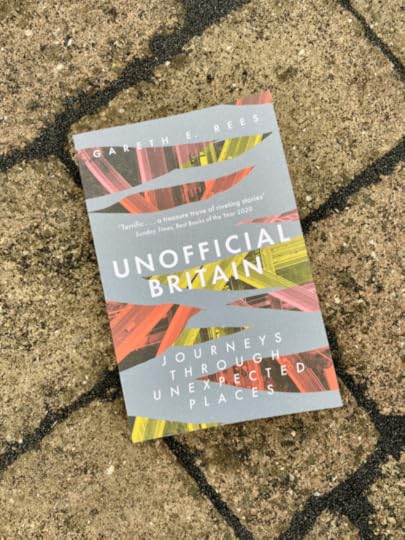
A quirky and interesting read that take you across Britain, exploring the urban landscape. “It is in the urban landscape, shaped by the seance half of the twentieth century, that over 80 per cent of us live” – which is a thought provoking opener.
He ponders the nature of the pylon; none of us are very from such almost iconic structures, dotting the landscape in every corner. He mentions the Pylon Man of Wigan, the sad case of a body found hanging from a pylon, a man who to this day remains unidentified. He then moves on to roundabouts, and highlights the shenanigans taking place at the Black Cat Roundabout near Chawston in Bedfordshire, where the image of a cat has attracted pranksters and vandals in equal measure. The steel cat structure erected on the roundabout was stolen multiple times and ended up in Sunderland at one point.
There are ghosts and ghouls aplenty and he goes to Grimsby (which in 2016 was voted the worst place to live in Britain and its High Street the unhealthiest in the country) and stays in the supposedly haunted Yarborough Hotel and ponders the design of Spoon’s carpets (it is owned by the delightful Wetherspoon chain). Demons appear all across the country and he cites the problems the Hodgson family had with their resident ghoul in Enfield. Actual ghost estates are the result of changing industrial landscapes and in South Wales, for example, where mining and steel industries have disappeared, housing estates stand virtually empty and derelict. Imagine looking at ring roads and flyovers afresh and pondering the remnants of the abandoned multi-storeys, municipal buildings and hospitals and the lives lived in their confines.
His explorations are all set in the context of history, and his musings are wonderfully reflective, offering a fresh take on the mundane elements that are just part of everyday life.
January 3, 2021
What a fabulous start to the year and a great Christmas present - highly recommended for those living in Britain who live in nondescript towns with little, on the surface, to recommend them.
This book is divided into 9 chapters. Starting with pylons (which I have always thought were a little underrated) and finishing with motorways, more specifically the M6, which I have spent a large portion of my life going up and down. In between we journey through housing and industrial estates, flyovers and underpasses, hospitals and factories, roundabouts and car parks.
The author makes the reader look at them in a different light - looking at the following that pylons have and the pull they exert on some individuals (who knew there was a pylon appreciation society?), and comparing multi-storey carparks to modern castles. In the final chapter where he drives up and down the M6 to experience it as itself, rather than as a conduit between destinations he points out that rather than being 'non-places' as someone has previously suggested they have 'distinct narratives, characters and identities...with powerful resonances in our memories'
He combines his own memories from his childhood and early adult life with the history of the structures - I knew all about the first part of the M6 back in the late 1950s but I didn't know, for example, that the first multi-storey car park was built in 1901. Added into the narrative are stories of hauntings and unexplained phenomena, interesting observations about the position of certain features in the landscape and references to many other interesting sounding books (I can see a shopping list developing).
This is a book I will go back to, not only because it inspires a new look at the mundane, but because the book is so well written and witty. This could be a contender for my favourite non-fiction book of the year.
This book is divided into 9 chapters. Starting with pylons (which I have always thought were a little underrated) and finishing with motorways, more specifically the M6, which I have spent a large portion of my life going up and down. In between we journey through housing and industrial estates, flyovers and underpasses, hospitals and factories, roundabouts and car parks.
The author makes the reader look at them in a different light - looking at the following that pylons have and the pull they exert on some individuals (who knew there was a pylon appreciation society?), and comparing multi-storey carparks to modern castles. In the final chapter where he drives up and down the M6 to experience it as itself, rather than as a conduit between destinations he points out that rather than being 'non-places' as someone has previously suggested they have 'distinct narratives, characters and identities...with powerful resonances in our memories'
He combines his own memories from his childhood and early adult life with the history of the structures - I knew all about the first part of the M6 back in the late 1950s but I didn't know, for example, that the first multi-storey car park was built in 1901. Added into the narrative are stories of hauntings and unexplained phenomena, interesting observations about the position of certain features in the landscape and references to many other interesting sounding books (I can see a shopping list developing).
This is a book I will go back to, not only because it inspires a new look at the mundane, but because the book is so well written and witty. This could be a contender for my favourite non-fiction book of the year.

June 18, 2024
I’m not quite sure what I was expecting when I picked this off the shelf, but it wasn’t what I got. Unofficial Britain is a ‘hauntological’ survey of some of the eerie spaces and locales of modern Britain. To some degree many of these are the usual suspects, featuring in any number of similar books and proliferating in certain corners of the internet: pylons, housing estates, ring roads, industrial estates, motorways, multi-storey car parks…, but Gareth E. Rees makes some interesting connections between past and present, myth and reality. His chapter on hospitals is particularly thought-provoking. I’m not convinced that these spaces, though undoubtedly capable of provoking disconcerting feelings, add up to a modern mythos - most people’s experiences of them are too personal and discrete for that, but Unofficial Britain certainly shines a light on otherwise neglected places and experiences.

July 31, 2021
Full of the sort of thing I'm interested in, this is top stuff, exploring the changing nature of landscape, and the haunted and uncanny potential of pylons, flyovers, factories, motorways and motorway services, industrial estates and abandoned hospitals. Beautiful writing, too, a thoughtful consideration of our views about the history of landscape and the intrusion of concrete, brick, metal and glass into what we perceive as the 'natural' world. Ballardian fun, poltergeists, roundabouts with megaliths on... I read it in one sitting and enjoyed it very much.
Lots of my Twitter pals are mentioned, which is always fun. PLUS I'm quoted which was an unexpected thrill!
Lots of my Twitter pals are mentioned, which is always fun. PLUS I'm quoted which was an unexpected thrill!

Want to Read
October 26, 2020Unofficial Britain is a compliment of stories which Rees has posted on his website under the same title.
His perspective of the landmarks we all see every day but with a new eye is quite refreshing, from multi story carparks, motorways to electrical pylons. It is a unique way in saying that the ordinary can be objectively extraordinary.
I think this novel is a great at discovering the unusual in our everyday surroundings. A great book for someone who has read a lot and wants something new and fresh. This is definitely a book I would get my dad for Christmas.
His perspective of the landmarks we all see every day but with a new eye is quite refreshing, from multi story carparks, motorways to electrical pylons. It is a unique way in saying that the ordinary can be objectively extraordinary.
I think this novel is a great at discovering the unusual in our everyday surroundings. A great book for someone who has read a lot and wants something new and fresh. This is definitely a book I would get my dad for Christmas.

December 21, 2023
Started off quite delightfully but then was disappointed that some chapters (mostly beyond the mid point) seemed like early drafts not quite fleshed out yet. Quite loose and speculative and like random thoughts at some points. Really lovely stuff about pylons and housing estates and the Glasgow subway and industrial estates and the Greenock catman though. Wld recommend River by Esther Kinsky for those that enjoy this

May 8, 2025
One of my favourite books of 2025 so far. This is a rag tag collection of strange and uncanny tales that, for once, don't happen in haunted forests or small villages. This is a tale of ghosts who play ring a roses round an electricity pylon, of black dogs haunting council estates and haunted terraces. This is magnificent and so much fun.

November 26, 2020
This is definitely where you end up having listened to far too much Frank Zappa. A unique and enthralling account of a unbwoken Bwitain in segments. Strange read, strange chap. Always good to be strange, it keeps things in perspective. Barfco Swill.

February 19, 2021
I loved the concept of this book but worried that, as with many non fiction books, it would end up being a real slog (for me). The reality was a million miles from this. I found it interesting and entertaining and it will make me look at the world in a different way. As we live in uncertain times with our travel prospects curtailed it shows the history and geography of our urban landscapes can provide the back drop to new more local adventures.

March 29, 2021
For a non fiction book this one was absolutely delightful and packed with short stories, folklore and tales of the modern urban world we find ourselves in today. I now know more than I ever thought I would about telephone pylons, the spaces beneath motorways, and haunted hospitals. An easy 5/5 for me!

October 11, 2020
I loved this book, it wasn't what I expected, and I enjoyed it all the more for this reason.
Gareth Rees writes with such passion and depth about his subject, and draws you in, making you think differently from the way you would have prior to reading this. Who would give a second thought to a motorway flyover, or see the social significance of a multi-story car park?
The more I read, the more I wanted to read. His insights are fascinating, the research and the lengths he has gone to, to get the information are amazing.
Unofficial Britain is a book that has made me, think, wonder and has brought back memories from my childhood. I too thought that Rank Service Stations were the height of sophistication as a child, going on holiday, it was essential to stop and sit at a sticky table and eat breakfast, it wasn't the same if we just drove past! I had forgotten all about this, and the wonder of walking over the bridge and seeing the cars whizz past.
Gareth has found social history amongst the most unusual and often overlooked parts of Britain. An inspired book.
Gareth Rees writes with such passion and depth about his subject, and draws you in, making you think differently from the way you would have prior to reading this. Who would give a second thought to a motorway flyover, or see the social significance of a multi-story car park?
The more I read, the more I wanted to read. His insights are fascinating, the research and the lengths he has gone to, to get the information are amazing.
Unofficial Britain is a book that has made me, think, wonder and has brought back memories from my childhood. I too thought that Rank Service Stations were the height of sophistication as a child, going on holiday, it was essential to stop and sit at a sticky table and eat breakfast, it wasn't the same if we just drove past! I had forgotten all about this, and the wonder of walking over the bridge and seeing the cars whizz past.
Gareth has found social history amongst the most unusual and often overlooked parts of Britain. An inspired book.

August 3, 2020
First, this is not a travel book in any traditionally known way, and it should not be read with the intention of discovering a new side of Britain that tourists do not see. Rather, this is a history book on urbanism, infrastructure, architecture, and industry, with a twist of memoir thrown in for good measure and it’s parallels to the way people view these everyday objects; he argues that like the castles of long ago, these roundabouts, hospitals, multi-story buildings, etc. are all bases of history in their own right. One could successfully argue that this book would be a basis of study in a sociology course.
The writing is dull and long-winded. What could take a few sentences becomes a page and a half of examples, one being in Chapter 1 with the rambling of various 1970s television shows and electricity. It reads like a textbook and thesis paper in the first person perspective. While chapters may have begun with the optimism of being interesting, the wordy way of the author led you down a rabbit hole where you found yourself wondering, “What is your point?” That’s about the moment where his writing returns to a memory of some point in his life where these “modern” buildings, roads, etc. and he tries to connect the dots through more meanderings, now dubbed research with some quotes from other books thrown in as well.
Lest not forget the plugs for the author’s other books he’s penned in his roundabout way of bringing together a chapter. Perhaps the one bit of amusement, are the ballads signaling the close of another chapter.
The premise is fine: what we see as ordinary, functional buildings and infrastructure are what future generations may visit as historical icons, or they may be simply be torn down and forgotten. The author, however, fails to engage and instead drags on with tedious commentary.
**I received an ARC of this book from NetGalley.
The writing is dull and long-winded. What could take a few sentences becomes a page and a half of examples, one being in Chapter 1 with the rambling of various 1970s television shows and electricity. It reads like a textbook and thesis paper in the first person perspective. While chapters may have begun with the optimism of being interesting, the wordy way of the author led you down a rabbit hole where you found yourself wondering, “What is your point?” That’s about the moment where his writing returns to a memory of some point in his life where these “modern” buildings, roads, etc. and he tries to connect the dots through more meanderings, now dubbed research with some quotes from other books thrown in as well.
Lest not forget the plugs for the author’s other books he’s penned in his roundabout way of bringing together a chapter. Perhaps the one bit of amusement, are the ballads signaling the close of another chapter.
The premise is fine: what we see as ordinary, functional buildings and infrastructure are what future generations may visit as historical icons, or they may be simply be torn down and forgotten. The author, however, fails to engage and instead drags on with tedious commentary.
**I received an ARC of this book from NetGalley.

November 7, 2020
Unofficial Britain by Gareth E Rees
Rating 4 / 5 Stars
Publication Date - 9/17/2020
** Thank you to Netgalley, Elliott & Thompson, and of course, Gareth E Rees, for an ARC in exchange for an honest review.
After moving to the UK 2 years ago, one of the best things I have done has been exploring the parts of Britain which are often overlooked in comparison to those places we know in a global sense (cities, historical sites etc). The places explored are not the most beautiful. We often assume they are ugly, uninteresting and not worth our trip to see them.
Rees gives these places new life. His ability to make them a beautiful piece of folklore and fiction which are a nod back to his roots as a writer of horror and weird fiction. The way he describes these locations is truly incredible.
Rating 4 / 5 Stars
Publication Date - 9/17/2020
** Thank you to Netgalley, Elliott & Thompson, and of course, Gareth E Rees, for an ARC in exchange for an honest review.
After moving to the UK 2 years ago, one of the best things I have done has been exploring the parts of Britain which are often overlooked in comparison to those places we know in a global sense (cities, historical sites etc). The places explored are not the most beautiful. We often assume they are ugly, uninteresting and not worth our trip to see them.
Rees gives these places new life. His ability to make them a beautiful piece of folklore and fiction which are a nod back to his roots as a writer of horror and weird fiction. The way he describes these locations is truly incredible.
August 11, 2020
Thank you Netgalley for an advance copy of this book
I really enjoyed this book!
Unofficial Britain is the website set up in 2014 by the author Gareth E Rees to chronicle experiences of the strange, out of kilter things that the contributors find in the urban landscape. Now e have the book which is both an introduction and guide to what can lie beneath the seemingly mundane cities in which we live. It covers aspects of Urban Wyrd, an offshoot of Folk Horror, and how city dwellers create their own myths and legends and that some have crept in from the countryside.
I find these types of book intriguing. After reading Orbital by Iain Sinclair, an account of his year long walk around the M25, I never felt the same way about that motorway again. Instead of being the UK’s biggest car park it became instead a gateway to interesting ideas and places to go. Unofficial Britain has had the same effect on me as I now want to go out and explore these places armed with insider knowledge.
The author begins by reminding the reader that our society is a constant state of flux. Each new wave of immigrants brings their own traditions and stories with them and they became absorbed into the collective unconsciousness. New buildings replace old ones but the traditions continue albeit with a shiny new concrete coat. The author mentions a local landmark, an industrial chimney in his home town, that was demolished. As he says ‘they are beloved landmarks that anchor us to a place.’ Once they’re gone do we feel that we’ve lost part of our memories?
I was surprised that people can become nostalgic about electricity pylons, those behemoths of power that bestride the countryside, resembling the totems to the Egyptian sun god Ra.
The book contains 9 chapters, an introduction, footnotes and a useful bibliography at the end. The chapters cover hospitals, ring roads, motorways, roundabouts and housing estates amongst others. These are all part of the urban landscape which we may regard as useful rather than inherently worth investigating. But did you know that roundabouts are often built over crossroads which have a dark history themselves as suicides were often buried under them. The author also considers that roundabouts and ring roads may be energy circles which makes a sort of sense. Underpasses as holloways – that was an intriguing thought.
The author has read Richard Mabey’s book, Unofficial Nature, with its view that nature isn’t just in scenic places but everywhere. I’ve often found amazing flowers and wildlife in the edgelands of cities and towns. The Haunted Generation also gets a mention. This is concerned with ‘70’s and 80’s children‘s TV and public information films of the era as well as the fictional places of Scarfolk and Hookland. These have provided much fruitful inspiration.
Multi-storey car parks are now a staple of cop and horror films and TV programmes. Dark, deserted, badly lit, heels clicking over concrete as a car suddenly revs or a hand comes over your mouth……the equivalent of walking down an empty dark street at night alone…Rees tells a few disturbing stories about some of them. . Mr Rees also claims that multi-storey car parks are ‘as weathered as castles’ and will they be abandoned due to COVID-19 as shoppers go online?
As he explores deeper into the other side of modern Britain he hears of a hermit in Northampton who lived on the central reservation of a motorway. He was supplied with food and other necessities by local Hindus who regarded him as a holy man. There’s also the Glasgow transport system that runs anti-clockwise or ‘widdershins’. This is generally considered to be the wrong way to go round something as it’s unlucky to walk widdershins around a church. Was the Glasgow system intentional or happenstance? And what of the roundabouts that have standing stones at their centre? Is it to keep the energy in or keep us out from disturbing it?
A Grimsby housing estate, the Nunsthorpe, spawned The Grimsby Ghostbusters! They’re still going strong and have investigated several cases. A crack house in a derelict house revealed a 1970’s time capsule above the crack den below. Furniture, family photos; all left behind by the inhabitants as if they’d left part of themselves behind. ‘A building can feel very eerie once its original purpose has gone.’ as Rees says,
The urban environment abounds with as many legends and myths as any ancient town. Motorway infrastructure is supposedly crammed with the bodies of either unlucky motorway workers or gangland victims. After all, who’s going to find them once they’ve vanished into the concrete?
He visits several motorway service stations. Once seen as glamorous and futuristic and designed to look like that they are now mundane, the vision now faded, and now indistinguishable from each other. It’s not an occasion to visit it any longer. There are haunted stretches of motorway as well with Stocksbridge on the M6 – were the manifestations brought to ’life’ (excuse the pun) by the coming of the motorway?
The author mixes elements of his own story, his memories, journeys and friends with his own research. COVID-19 makes an appearance and its possible effects on city life is discussed.
A book full of interesting ideas well told.
I really enjoyed this book!
Unofficial Britain is the website set up in 2014 by the author Gareth E Rees to chronicle experiences of the strange, out of kilter things that the contributors find in the urban landscape. Now e have the book which is both an introduction and guide to what can lie beneath the seemingly mundane cities in which we live. It covers aspects of Urban Wyrd, an offshoot of Folk Horror, and how city dwellers create their own myths and legends and that some have crept in from the countryside.
I find these types of book intriguing. After reading Orbital by Iain Sinclair, an account of his year long walk around the M25, I never felt the same way about that motorway again. Instead of being the UK’s biggest car park it became instead a gateway to interesting ideas and places to go. Unofficial Britain has had the same effect on me as I now want to go out and explore these places armed with insider knowledge.
The author begins by reminding the reader that our society is a constant state of flux. Each new wave of immigrants brings their own traditions and stories with them and they became absorbed into the collective unconsciousness. New buildings replace old ones but the traditions continue albeit with a shiny new concrete coat. The author mentions a local landmark, an industrial chimney in his home town, that was demolished. As he says ‘they are beloved landmarks that anchor us to a place.’ Once they’re gone do we feel that we’ve lost part of our memories?
I was surprised that people can become nostalgic about electricity pylons, those behemoths of power that bestride the countryside, resembling the totems to the Egyptian sun god Ra.
The book contains 9 chapters, an introduction, footnotes and a useful bibliography at the end. The chapters cover hospitals, ring roads, motorways, roundabouts and housing estates amongst others. These are all part of the urban landscape which we may regard as useful rather than inherently worth investigating. But did you know that roundabouts are often built over crossroads which have a dark history themselves as suicides were often buried under them. The author also considers that roundabouts and ring roads may be energy circles which makes a sort of sense. Underpasses as holloways – that was an intriguing thought.
The author has read Richard Mabey’s book, Unofficial Nature, with its view that nature isn’t just in scenic places but everywhere. I’ve often found amazing flowers and wildlife in the edgelands of cities and towns. The Haunted Generation also gets a mention. This is concerned with ‘70’s and 80’s children‘s TV and public information films of the era as well as the fictional places of Scarfolk and Hookland. These have provided much fruitful inspiration.
Multi-storey car parks are now a staple of cop and horror films and TV programmes. Dark, deserted, badly lit, heels clicking over concrete as a car suddenly revs or a hand comes over your mouth……the equivalent of walking down an empty dark street at night alone…Rees tells a few disturbing stories about some of them. . Mr Rees also claims that multi-storey car parks are ‘as weathered as castles’ and will they be abandoned due to COVID-19 as shoppers go online?
As he explores deeper into the other side of modern Britain he hears of a hermit in Northampton who lived on the central reservation of a motorway. He was supplied with food and other necessities by local Hindus who regarded him as a holy man. There’s also the Glasgow transport system that runs anti-clockwise or ‘widdershins’. This is generally considered to be the wrong way to go round something as it’s unlucky to walk widdershins around a church. Was the Glasgow system intentional or happenstance? And what of the roundabouts that have standing stones at their centre? Is it to keep the energy in or keep us out from disturbing it?
A Grimsby housing estate, the Nunsthorpe, spawned The Grimsby Ghostbusters! They’re still going strong and have investigated several cases. A crack house in a derelict house revealed a 1970’s time capsule above the crack den below. Furniture, family photos; all left behind by the inhabitants as if they’d left part of themselves behind. ‘A building can feel very eerie once its original purpose has gone.’ as Rees says,
The urban environment abounds with as many legends and myths as any ancient town. Motorway infrastructure is supposedly crammed with the bodies of either unlucky motorway workers or gangland victims. After all, who’s going to find them once they’ve vanished into the concrete?
He visits several motorway service stations. Once seen as glamorous and futuristic and designed to look like that they are now mundane, the vision now faded, and now indistinguishable from each other. It’s not an occasion to visit it any longer. There are haunted stretches of motorway as well with Stocksbridge on the M6 – were the manifestations brought to ’life’ (excuse the pun) by the coming of the motorway?
The author mixes elements of his own story, his memories, journeys and friends with his own research. COVID-19 makes an appearance and its possible effects on city life is discussed.
A book full of interesting ideas well told.
Displaying 1 - 30 of 68 reviews