In the months leading up to independence, in Delhi, Jawaharlal Nehru and Vallabhbhai Patel are engaged in deliberations with British Viceroy Dickie Mountbatten over the fate of the country. In Lahore, Sepoy Malik returns home from the Great War hoping to win his sweetheart Tara’s hand in marriage, only to find divide-and-rule holding sway, and love, friendships and familial bonds being tested.
Set in parallel threads across these two cities, Lahore is a behind-the-scenes look into the negotiations and the political skullduggery that gave India its freedom, the price for which was batwara. As the men make the decisions and wield the swords, the women bear the brunt of the carnage that tears through India in the sticky hot months of its cruellest summer ever.
Backed by astute research, The Partition Trilogy captures the frenzy of Indian independence, the Partition and the accession of the states, and takes readers back to a time of great upheaval and churn.
‘Lahore is breathtaking in scope, painful yet gentle to the touch.’ – Taslima Nasreen, author of Lajja and Shameless
‘Vivid and atmospheric.’ – Aanchal Malhotra, author of Remnants of a Separation
'Current, relevant and important. This is a voice which makes you question, rethink and reimagine the past as the future and the future as the past.' – Sabyn Javeri, author of Hijabistan
'Deftly weaves the big strands of history with the finer threads of human feeling.’ – Manu S. Pillai, author of The Ivory Throne: Chronicles of the House of Travancore
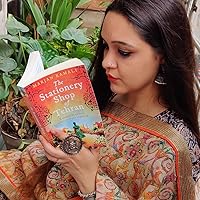
• Manreet Sodhi Someshwar's trilogy, which has won numerous awards, captures the spirit of India's partition. This trilogy begins with the book Lahore. The extent of my love for this cover cannot be expressed 💕. This book is all about extensive division;- the two most significant cities in Northern India at the time, Delhi and Lahore, are divided throughout Sodhi Someshwar's book. 💜
• Delhi, where Nehru, Vallabh Bhai Patel, and their allies, collaborating with Mountbatten, balanced a range of responsibilities, from courting the 565 chiefs of Indian princely states to debating an unyielding Jinnah's adamant demands for Pakistan. Lahore, located in the center of Punjab, is home to a sizable Hindu and Sikh population in addition to Muslims who were reasonably certain that Lahore would become a part of Pakistan.🦋
• The year 1947 is the setting for this book; it was not only the year of Indian independence, but it also saw one of the greatest tragedies in history—the partition of India and Pakistan. The narrative dealt with the devastation caused by the partition, the American Civil War, social inequality, the impact of politics and public policy on everyday citizens, friendship, and love. 🍄
• This book is beautifully written, and the narrative is in the third person. Lahore offers a behind-the-scenes glimpse into the political scheming and negotiations that brought India its independence. Lahore, the first book in the Partition Trilogy, focuses on the period between Mountbatten's arrival in India and India's independence, which occurred between February and August 1947.🌿
"Over millennia, the mighty Indus had deposited the alluvial soil of Panjab. In this land had flourished one of mankind's earliest civilizations. And now, the soil was so disturbed, it had taken flight even. Jawahar breathed deeply, the soil of Panjab laced with the flesh and blood of Panjabis filled his nostrils, mouth and eyes."
• The book demonstrates how decisions made in private affect the lives of those who must bear the consequences of those decisions. Everyone should, in my opinion, take a lesson from this historical chapter and become more aware of the ways in which some people can use the influence of innocent people to their advantage. So it's my 4 ✨ love.🐬
It is hard to review a book that you have been waiting two years for. A book you had high expectations from both because of the subject matter and the author. A book you pre-ordered because you wanted to grab it as soon as you could. And a book which lived up to expectations, yet left you without words. There have been many books written about the Partition. There are books that describe the high level political negotiations between the people who made history. And there are books written about the people who bore the brunt of Partition. Manreet Sodhi Someshwar’s ‘Lahore (The Partition Trilogy, #1)’ does both. In Delhi, Mountbatten, Patel and Nehru lay down their non-negotiables and engage in a game of give and take around it. In Lahore, till the very end, the coolie, Belli Ram, who was brought up by his friend Mehmood’s family refuses to accept Partition till be actually “sees” the line separating India and Pakistan. In Lahore, the ‘mad woman’, Billo, is thrown out of her home when she predicts a rain of blood, and takes up residence on the branches of a tree. In Delhi, Edwina Mountbatten shivers when she sees the unseasonal blooming of the Laburnums because when death is imminent, trees bloom and set fruit in a last ditch attempt to secure progeny. The stories of the people and events that make up history, alternate with those of the people who have to bear the consequences of those decisions. Many of those stories end at a climatic point, where you are forced to pause and process what you witnessed before you can move on. And, of course, at the end, she had both threads meet, however briefly. A reminder that Partition, eventually, was about people. People who survived. People who didn't. Dreams that were crushed. Pieces that were picked up. This book is particularly significant because it puts many events in their proper context. The British would have left behind two partitioned nations and 565 princely states. Today, people try to assign the blame for Partition on certain leaders, choosing to forget that it was they who stopped the Balkanisation. You will love ‘Lahore (The Partition Trilogy, #1)’ if you are interested either in the history of the subcontinent or in reading stories rich in human emotions. Take a bow, Manreet, for yet another masterly book.
‘Over millennia, the mighty Indus had deposited the alluvial soil of Panjab. In this land had flourished one of mankind’s earliest civilizations. And now, the soil was so disturbed, it had taken flight even. Jawahar breathed deeply, the soil of Panjab laced with the flesh and blood of Panjabis filled his nostrils, mouth and eyes.’
In early 1947, Jawaharlal Nehru welcomed to India the newly-appointed Viceroy, Lord Mountbatten. According to the British plan for India’s independence, Mountbatten would have a full fifteen months to set the affairs of the British Raj in order. In June 1948, he would hand over power to an independent India.
Of course, as pretty much any Indian knows, India became independent, not in June 1948, but in August 1947: a schedule that changed because of a corollary of independence. Partition.
This period, between Mountbatten's arrival in India, and India becoming an independent nation— between February and August 1947—is the focus of Manreet Sodhi Someshwar's Lahore, the first book of the Partition Trilogy.
Sodhi Someshwar divides her book between the two most important cities of Northern India at the time, Delhi and Lahore. Delhi, where Nehru, Vallabh Bhai Patel and their associates, working with Mountbatten, juggled various tasks, from wooing the 565 rulers of the Indian princely states, to reasoning with an obstinate Jinnah’s strident demands for Pakistan. And Lahore, in the heart of Panjab, home to substantial numbers of Hindus and Sikhs, besides the Muslims who were fairly secure in their belief that Lahore would be part of Pakistan.
Two narratives play out in this book, the pace increasing, the tension and desperation mounting as the book progresses. On the one hand, there is the Delhi narrative, a fictionalized account of real people, mostly politicians and administrators, grappling with the problems posed by the shift in power. On the other hand, there is the Lahore narrative, peopled by fictitious characters: the railway coolies and foster brothers Beli Ram and Mehmood; their friend the clerk Kishan Singh; Sepoy Sikandar Malik and his beloved, the beautiful Tara.
Sodhi Someshwar's grip on both narratives, her ability to balance fiction and non-fiction, is commendable. The fictitious characters, the common people, are portrayed with empathy, as they try to stem the tide of hate: continuing to love, to be friends with the ‘enemy’, to believe in a peaceful Lahore. And, inevitably, as they watch the world collapse around them.
When it comes to those in the upper echelons at Delhi, the author is able to convey the conflicting emotions of people like Nehru: euphoric, and also desperate. Through little details, culled from what is obviously very meticulous research, she succeeds in depicting these people, including the Mountbattens, as very real, flesh-and-blood men and women, with their frailties and flaws, their ambitions and fears. She delves into their pasts, bringing forth tiny details that make them more real: Patel’s frail digestion that required his long-ago jail-time jowar rotis to be soaked in water; Nehru’s frenetic pacing; Mountbatten’s deep-seated urge to clear the name of his much-maligned father. Famous historical figures, but seen as up close as the Beli Rams, the Kishan Singhs and Mehmoods of Lahore.
Communal strife, the blind hatred and brutal inhumanity of people who cannot see eye to eye with those of another religion: how these can devastate a land, are lessons that should have been etched in stone for India by the Partition. They are lessons Sodhi Someshwar manages to convey effectively through Lahore. This book offers a fine historical, factual look at the politics of Partition, as well as a deeply empathetic and sensitive insight into how those politics affected the populace.
Lahore is a worthy successor to classic Partition fiction—Khushwant Singh's Train to Pakistan, Bhisham Sahni's Tamas, and Saadat Hassan Manto's superb short stories among them. As heartbreaking, as hard-hitting, as searingly memorable.
Year 1947. The Year when India became Independent, a free country. Independence came but with a price and the price was partition. Partition to form two Independent dominions of Indian and Pakistan.
We know it, we have read about it in our history books but we seldom realize the intensity and influence of the political decisions during that time on the common people and society in those years. The communal tensions and changing political dimensions influenced the masses, it changed the lives of many people.
Set in months leading to Independence, Lahore, the first book in The Partition Trilogy gives us a behind the scenes look into the negotiations and the political skulduggery and a sneak peek into what was happening in the lives of common folks during that time through fictional characters which seem almost real.
To be honest, I was hooked from the very first page of this book, I felt like I have gotten transported back in time and everything is happening before my eyes and although I am kind of shielded as I am someone who is witnessing the story and I am not a part of it, still I felt so many different emotions while reading this.
This book is extremely gorgeous, inside and out, it will engulf you, when you finish reading it, you will be confused whether you devoured it or it devoured you.
So conflicted with this book. This could very easily be a 2 star or even a 1 star.
There was a lot to like. Firstly. The dual narrative between Lahore and Delhi gives you the understanding behind the big decisions made over Partition and by the key players involved (the Delhi parts) and then you get the terrible suffering and horror endured by the actual people and civilians (in Lahore). I thought the Lahore chapters were much better in terms of action, plot, characters and really getting to the heart of the human devastation in the lead up to partition. I feel like it read as two separate books at times though, the Lahore chapters reading as fiction and the Delhi chapters reading as a history book.
Secondly, I liked seeing the inter faith relationships between the characters: Beli Ram and Mehmood, Tara and Sikander etc. It really showed how communities were multi faith, working, living and marrying together in (mostly) harmony and just living together. There were a lot of characters to keep track of and I wish there had been more emphasis on delving into certain characters and their relationships more.
Finally, the visceral imagery of the horror and the build up of hatred between neighbours and friends reall cencapsulated that the real victims were the communities, especially the women.
BUT
I finished this with an extremely heavy heart. For me, it felt as though there was a lot of negative bias towards Muslims and Jinnah placing the blame on them for the violence and the reason for partition. The Muslim characters were, mostly, painted to be violent thugs with a deranged lust for extreme hatred and the desire for a homeland that were not considerate of any other faith's or people: they were the stereotypical villains who were uncaring, ravishing thugs. Jinnah and the other Muslim characters, apart from Mehmood, were portrayed as an extremely cold and unforgiving characters, the reason why decisions couldn't be made, whereas the other English, Hindu and Sikh characters were painted in a more positive light and more receptive to change. I don't know if this was done on purpose or was done subconsciously by the author, but it didn't sit right with me.
I wanted to love this because I am so passionate about Partition and the repercussions that are still felt 79 years on, but I just couldn't.
1947. A sweltering summer. The unforgiving heat matched only by the hatred of bloodthirsty mobs - consisting of soldiers demobilized from World War II and eager to rid Lahore of certain religious communities under the command of power-hungry politicians. Hindus, Muslims and Sikhs at each other’s throats in an attempt to grab control over Lahore’s - and Punjab’s - rich natural resources, including its fertile land and life-sustaining rivers. This serves as the background of Manreet Sodhi Someshwar’s “Lahore”, the first book in a trilogy on Partition by the author.
Two parallel narratives, taking place in Delhi and Lahore respectively, demonstrate the perspectives and responses of the rulers and the ruled of soon-to-be Independent India. In Delhi, Pandit Jawaharlal Nehru, Sardar Patel, and Viceroy Dickie Mountbatten negotiate the transfer of power, which include the unenviable tasks of persuading princes of 565 princely states to accede to India and dealing with Jinnah’s obstinate attitude towards creation of Pakistan. At the same time, Beli Ram, Mehmood, Shammi Joseph and others in Lahore are ordinary, working class folk belonging to different religious communities that have been coexisting in harmony in the same settlements for centuries. They attempt to make sense of an imaginary line that would result in the creation of a new country and a new identity associated with it, all the while trying to salvage their livelihoods and relationships in the backdrop of intense communal discord.
The author’s attempt at illustrating this differentiated experience of and engagement with Partition, by different groups of people is commendable. Her writing style is lucid, evocative and engrossing, making it difficult to put down the book.
However, the character development seemed to plateau about halfway into the book. After a point, they started feeling too straightforward and lacking complexities. Additionally, in an attempt to portray a holistic picture of the lived experience of Partition, the author tried to engage with multiple issues within 300-odd pages such as how women bore the brunt of the Partition violence and the effect of communal strife on intimate relationships. This dilution of attention could prevent readers from caring deeply about one particular issue.
Overall, the book is an absorbing and informative read. I would recommend it to anyone interested in Partition or modern Indian history.
In the year 1947, independence came with a price. All over the British India, Hindu, Muslim and Sikhs were seething with rage and bloodlust. Amidst the complete chaos of Indian political parties were the voices demanding a separate nation, Pakistan. Now war and death has come to the lanes of Lahore. With civil war and growing discrimination common people are torn between divisions. This book narrates the decisions of political leaders and British viceroy and events that followed.
This book certainly grabs attention due to it's historical theme and richly atmospheric background. It started off with a scene of political unrest, the demand for separate countries and what quickly follows is changing plots between two cities, Delhi and Lahore. The story runs in parallel plots of different family, all facing the dire consequences of a probable 'batwara'. A well researched book on an era reminisced as most important in our history. The writing style is good, simple but at some places it felt flat and monotonous. Lots of effort has been put to make the fiction part more realistic which in turn made it boring sometimes. However the settings are well crafted and well thought out.
This book is a balance between fiction and non fiction. The tension building in each chapter deserves praise and it's a good idea to put both the political side and the actual horrors of the partition. Although this book does not give the whole picture. I can hope to get more perspectives on the forthcoming books.
There are a few books that give you a book hangover after you finish it, Lahore is one such book. This book is based in the year 1947, a year no Indian can forget, not only was it the year of Independence, It was also a year of one of the worst tragedies for India; The India Pakistan partition.
I loved the way the author has split the book into two parts, Delhi and Lahore. Lahore has the story of common people, their emotions and how this partition impacted the population of the region and the Delhi portion talks about the political situation of the country, people involved etc.
The book shows how choices made by people in a closed room impact the lives of people who have to endure the pain of those choices. How communal hatred can push friends to become enemies and how it pushes people to an extent of being inhuman is beautifully described in this book. I feel everyone should learn from this chapter of history, know more about how some people can influence innocent people for their benefit.
This book is beautifully written and the narrative is in third person. Its fast paced and keeps the readers hooked.
I loved this book and it is a must read! Now waiting for the next one from the author!!
I’ve read 20-30 fiction books that featured Partition. 30 is probably a safe guess but I’ve lost count.
This is the first title that has given me a closer sense of what the big decisionmakers faced (or may have faced) and a broader sense of what “everyday people” may have experienced. Yes, Someshwar did a lot of research–20 years’ worth. Did Edwina really trade shoes with a male guest under the dining room table during a meal or was that scene created by the author? These scenes and details give a veneer of life and breath to these stories, imagined or based on truth. Another example is the casual depiction of Indu, Nehru’s daughter; and we see her doing a few walk-ons.
There are Hindu, Muslim, and Sikh characters (not much is said about Parsees and Christians and other groups). Importantly, the author depicts how profoundly entangled and intertwined these ethno-religious groups were and had been for generations. The violence was mainly carried out by men and the fratricide appears to have been prevalent and mutual. They had been integral to each other’s lives. And then the prospect and eventuality of Partition changed everything. Friends became enemies…and as the book frames it, brothers killed brothers. That speaks to the intimacy of those relationships.
I think the level of rage and betrayal speaks to, in great part, the pain that these people had against their British colonial oppressors (the British Raj was the ATM that helped the UK succeed during WWII at the time and I would suggest that the UK still benefits from those ill-gotten gains). Hurt people hurt people. And the most vulnerable and most available recipients of that rage were those closest to them. They couldn’t exact vengeance on their perpetrators—that’s the power of colonialism.
Louis “Dickie” Mountbatten, anointed by his cousin, the UK king, to facilitate a British exit (ha, an early Brexit) from the Raj, is showcased glowingly, as are his wife and daughter. Cyril Radcliffe, who was brought in to draw the lines, makes a brief appearance too. He is shown as a thoughtful but overwhelmed (and overheated) boundary draftsman. As presented, the British are fraught with conscientiousness and bewildered by the riots and native reliance on them to arbitrate. I think this perspective reflects more who wrote more about themselves in a positive light and had institutional supports to reify that limited/biased take. As such, I think the author could have been more critical of the Raj perpetrators.
The book also features Gandhi’s lieutenants, Jawahar Nehru and Vallabhbhai Patel. They seem to be doing their best…and even exert some heroic moments. But Dickie holds the reins. Jinnah and the Muslim League do not come off well. The Sikh contingent is barely there; Master Tara Singh makes brief appearance. I’m going to take some license here to say that India’s current nationalist extremism can likely be found in how Partition occurred. Another gift of British colonialism and hubris (same difference).
The fictional characters – Sepoy Malik (Muslim) and his love object Tara (Hindu), Kishan Singh and his three daughters (Sikh), and Mehmood (Muslim) and his friend/brother, Beli Ram (Hindu) – are the most affecting and compelling. They voice the confusion and heartache that Partition inflicts. They represent the profound conflict of personal and communal identities being torn and shredded… where a whole becomes readily segmented and separated for political gains (i.e., someone else's ego strokes). I think their stories “feel” more real than how the real-life people were depicted here. I find her characterizations of real-life people too biased and thus a bit flat.
The writing style is plainspoken, firm, and not prone to flourishes. The third-person perspective was consistent but at times I sensed it was a consistent narrator and likely the author herself. This was a bit disturbing as there are some racial epithets…at least they are now.
The storycrafting is compelling. I liked the concurrent timelines that lead us to that fateful date in August 1947.
I did purchase the next two books in the trilogy so I guess my count of Partition-themed titles will increase. I am intrigued to see how Someshwar handles Kashmir in particular. In Arundhati Roy’s The Ministry of Utmost Happiness, a character observes, “Kashmir was one of the few places in the world where a fair-skinned people had been ruled by a darker-skinned one. That inversion imbued appalling slurs with a kind of righteousness.”
Two interesting and revealing interviews with the author. The first led me to pick up this title.
…‘But in their years in India, the English have honed divide and rule to a fine art. The Government of India Act was meant to transfer power to Indians; instead, it cemented separate electorates for different communities.’
....‘can we blame the British for doing what they excel at? Divide and conquer. Since the Battle of Plassey.’ Jawahar snorted. ‘It was neither a battle nor was there a Plassey. Only in the British lexicon can bribing be the equivalent of fighting. And Palashi get mangled to Plassey.’
Bapu could not bear the thought of India being partitioned, but the bitter truth was that in the hearts of Indians, lines were already drawn.
‘now that the British are leaving, I should give them a return gift. No matter that they have overstayed their visit by 350 years … atithi devo bhava … A return gift is due nevertheless; a suitable one … So how about referendums in Scotland, Ireland, Wales? To allow their people to choose whether they want to stay united with England, and, if not, to simply part ways. A partition of Great Britain. Appropriate, no?’
Kashmir and Hyderabad were the two apples of princely India that were the rosiest, and on the thorniest branch too. Each state was the inverse of the other – Kashmir, a largely Muslim state with a Hindu ruler; Hyderabad, a Hindu state with a Muslim Nizam.
In the relatively clear stretch of airspace they were in now, he realized that there were two parallel columns, not one – each heading in the opposite direction. Marching with slow deliberation, east, west, the convoys were together yet apart, the distance of several feet between them serving for no man’s land. Here then was the boundary line of India and Pakistan. Not the one drawn by Cyril Radcliffe on a piece of paper. This living, leaving, heaving humanity in migration across the plains of Panjab, where they had cohabited for centuries in heterogenous communities, fleeing to the safe homeland of their coreligionists – this was the true Boundary Line.
I wanted to like this book; I really did. The author chose an excellent premise of emotion-pulling fiction interwoven with thoroughly researched historical fact. I was also grateful to her for providing a "Cast of Characters" to reference - more books should do this!
Nonetheless, it seems that the author has written very strong biases into her story. She provides thoroughly sympathetic portrayals of the Indian men (Vallabhbhai Patel, Jawaharlal Nehru) and the British men (Lord Dickie Mountbatten, Sir Cyril Radcliffe), and she narrates the history-making decisions from their perspective. But at the same time, every single description of the Muslim leader Mohammed Ali Jinnah was negative, casting the man as stubborn, querulous, cold, short-sighted, and indifferent to the violence his organization fomented. I scratch my head to understand why Jinnah never received the author's dignified treatment of being described in the 1st person, instead having to settle as the source of others' complaints, insults, and frustrations in the 3rd person. It was quite odd to come out of this story about British colonialism with more sympathy for the British over the (Muslim) subjugated population and its leaders.
One comes away from this book thinking that the real cause of partition and its bloody culmination was singlehandedly Jinnah and his Muslim League. Of course, this is not to say that the author did not detail violence from the Hindu RSS and the Sikh gangs, but she did not make any connections to their official leadership like she did with Jinnah and the Muslim League.
While I am too ignorant of the subcontinent's history to know if she was historically inaccurate, I find it difficult to believe that Jinnah was as unsympathetic and parochial as Someshwar has portrayed him. Even if he was those things, why was that the case? The case for Pakistan was officially stated in the Lahore Resolution of March 1940, and Muslim self-determination became salient at least as early as the Partition of Bengal in 1905, yet this book only takes place between February and October 1947. There is a lot of history unexplored by the author that could explain how Jinnah could come to desire an independent country for Muslims, without resulting to degrading him.
The author herself acknowledges her family's origins in Lahore and upheaval as they left what would become Pakistan for what is today India. I wonder if this colored her perspective like tea leaves in water.
I do not plan to read the remaining books in the trilogy.
The narrative unfolds along two primary threads: The political strivings in New Delhi and the anarchy on the ground in Lahore. Through the political maneuverings of these major characters- India’s first prime minister, Jawaharlal Nehru, home minister, Vallabhbhai Patel, and the last British viceroy of India, Lord Mountbatten- the difficult process of power handover and the formidable challenge of integrating 565 princely states into India is vividly portrayed. The latter is further compounded by Mohammad Ali Jinnah’s insistence on the creation of Pakistan. In a difference Lahore, also known as Laur embodies the impact, on people of these choices. The everyday residents of the city. Hindus, Muslims and Sikhs. Face challenges in sustaining their lives and connections amid increasing turmoil and growing divisions within the community.
This was interesting political historical fiction that revolved around end of the British rule, the independence of India, and how that caused political and religious upheaval that affected life of people in Punjab and other provinces.
The story was about the cataclysm of partition, civil war, social discremination, influence of politics and political decisions on common people, communal strife, friendship, and love.
This story showed how complicated things and situation was and how it worsened as the independence day came.
It was told in third person narrative from multiple perspective, set alternatively in Lahore and Delhi from Feb 1947 to Sept 1947. Lahore part told the story of common people through fiction characters while Delhi part was all about politics, political negotiations, what leaders were thinking, how civil war affected them, and under what condition political decisions were taken.
What I liked most was balance between fictional and nonfictional past of the story.
Why 4 stars- As this was plot and political driven story, I felt characters weren’t given enough depth. I was most interested in reading how they negotiated with 500+ Princely states and there wasn’t much detail on that, we just see one scene on the king of Bhopal creating the problem. I would have liked more such scenes or details on Viceroy and Sardar Patel’s conversations with these Princes and how they agreed to join India.
Overall, Lahore was thought-provoking, insightful, and emotional historical fiction about the India-Pakistan partition with well-balanced fictional and factual stories.
“” Bullock carts piled high with kitchen utensils,string cots,assorted household chattel;men pulling cattle;women with babies in their arms and tin trunks on their heads; children walking with the tread of elderly;all coated with dust,in raggedy clothes,barefoot,trudging,trudging and trudging.The Sun,merciless above them.
What promised land were they heading to? Wasn’t free independent India supposed to be that promised land? “”
The plot is two-fold with political conversations among the Nationalists forming the events at Delhi.The Parallel plot follows the life events of the fictional characters at undivided Panjab(Punjab). Inspite of most of us being aware about the consequences of the inevitable partition,the fictional narration provides a vivid image of the brutality suffered by the residents of both countries.
Set in 1947 (months leading up to Independence) ‘Lahore’ revisits the viciousness of Partition through the lives of Ordinary Citizens.
A relevant takeaway from the read; ‘Communalism over Humanity’ would never yield Peace.
A well researched book on the lines of political thriller !
Not a history enthusiast but I really enjoyed reading the book.
Looking forward to read ‘Hyderabad’ and ‘Kashmir’- upcoming books in the Series.
Lahore I is the first book in the series of Trilogy. Eagerly Awaiting the next two books in this series Hyderabad & Kashmir.I believe it's too difficult to review such a gem of a book.
The British left India in August of 1947, after three hundred years of Raj.The Subcontinent's were divided into two parts the Hindu majority India and the Muslim majority Pakistan.
"The world that day appeared perfect. Like a great wrong had been righted. India had shrugged off her shackles and had stood upright, ready to claim her rightful position on the world stage".
'Got it?' The women snarled. 'Got your free Hindustan? Got to be Raja ? You drove the angrej out so you could sit on the throne. Congratulations! But I prefer the English.With them at least we had our home'.
These two para from this book says it all.
Set in parts in Delhi and Lahore(Laur), this brings to you the picture of negotiations, political tricks, upheavals, carnage and sufferings that bought us the "Freedom".
In Lahore Belli Ram is bought up by his friend Mehmood's family for whom the idea of Hindu , Musalmaan, Sikh , Parasi is like a spice box, all assorted but still in the same box.
Pandit Jawaharlal Nehru and Vallabhbhai Patel in Delhi along with Viceroy Dickie Mountbatten are busy deciding the nemesis of the country. It's a state of war in Punjab, when Jinnah declared his wish for separate muslim country ' Pakistan'. 15th August 1947, the date is marked by Viceroy Mountbattenn to transfer the powers to a responsible Indian. The 565 Princely states left to be negotiated either to be a part of India or Pakistan.
In Lahore, Sepoy Malik returns from the war hoping to marry the love of his life 'Tara' , a mad woman 'Billo' is tossed out of her home and exorcised as keeps blabbering something about the blood rains. Kishan Singh, a clerk at Lahore Junction who long lost his wife , stays in a mixed mohalla of Sikh, Hindus and Musalmaan's along with his three daughters . As the men make the decisions and wield the swords, the women bear the brunt of the carnage that tears through India in the sticky hot months of its cruellest summer ever.
Though stating it a fiction,the author has managed to keep it true to the history. it's a well researched and narrated gem of a book that captures the frenzy of Indian Independence.
What do you think goes in the making of a nation? Is it the acquisition of land? The marking of borders? What happens when a country's leaders decide that it should be cut into two without thinking about what would be the consequences of their decisions? What happens to the people? Do they have a choice? Why do they end up becoming collateral damage for the choices of power hungry politicians?
These are some of the foremost questions I have. Even after reading so many narratives about the Partition these questions remain unanswered and @manreetsomeshwar through 'Lahore' does not try to answer these questions. In fact, if anything she raises more questions about how it was people who lost on both sides of the border, how it was the women who had to bear the brunt of the decisions that men made, and about if this was inevitable or could have been avoided?
'Lahore' is a book that humanises Partition, it is a book that puts life into characters and makes you feel for them so deeply that when these characters suffer your heart cries for them. It is a book that has characters who seem as real as it can be. It has characters that are Hindu and Muslim but care for each other than anyone bonded by blood would. It also has characters who are doubly traumatized because they had just fought and returned from World War II and now have to witness the riots that broke out right before Partition. It has characters that believed in the essential goodness of human beings unless they themselves became a victim, we have political leaders who think only about themselves, their evasiveness creating even more troubles and their ideologies not helping the citizens one bit.
'Lahore' is very well researched and somehow manages very well to encapsulate the madness of the months leading up to the Partition in a few pages. The writing is so refined that it reaches the heart. It's painful and makes your heart cry but at the same time it serves as a timely reminder of what could happen if differences are not respected.
The first partition trilogy Lahore by manreet Sodhi Someshwar is a book which as suggested by the title is based on the set of the many lies that was decided with the stroke of a pen. As political figures were deciding to their discretion how the lives of ordinary people were affected is the central premise of Someshwar's work. While the country paid the price by partition, the author explore how the common man was impacted. She captures these heart-wrenching moments in the narrative through the lives of a few characters who represent the universe altogether. In that way, Someshwar's research and hard work is reflected through the plot she constructs.
In my naive attempt to read about the untold stories of my country, I picked this up. An admonitory angle that covers the freedom and partition of the land we call our home. This one focused on Lahore, a city, a vessel that carries in it the stories of love, brotherhood, found family and death across the timeline of pre and post-independence.
A freedom that came with such a bloody price, how could one ever expect there to be a happy end? In the game of rulers, it's always the common folks that suffer. I rooted for Tara and Malik, for Kishan Singh and his family and wished that at least one of them would meet a happy end. But it would be delusional to think that, to hope that one could come out unscared after such experiences.
The events that occurred during the partition of Punjab were horrific, mostly deemed as riots based on religious discrimination, but if you really ponder to the core, I think there was something terribly wrong with those people, who felt it was okay to kill people for any reason. I know it's a work of fiction, but some stories land too close to the truth and this one just did that. The author did an amazing job bringing those unspoken dark areas to light that an average person may have heard in passing.
Thank you @manreetsomeshwar @harpercollinsin for the ARC copy. I am so grateful to have read this but also mentally scared. I have read something that I can never forget!
Lahore is an interesting book. It shows the partition of India through the common people as well as the people involved in politics. The story takes place in Lahore and Delhi. This story started getting interesting for me after a hundred pages. I think seeing Dickie Mountbatten, the last Viceroy of British India perspective in this book was quite unique. I don't think it has been explored before, alothough I may be mistaken. I had expected this book to be a heavy emotional read, and while it does have it's heartbreaking moments, it was well balanced with the politics. A book like this was definitely needed because it offers everything. From politics, to emotionally intense moments. Anyone can make out from the writing that the author did their research well. However, the fictional characters were not as well rounded as I would've liked. I don't know if 'well rounded' is the right word for what I'm trying to say. I felt bad for the characters, yes, but I couldn't feel their misery and heartbreak. I'm a very sensitive person and I connect with characters easily. So, this was not a problem I've ever faced before. The ending was almost confusing, to be honest. It felt incomplete. That said, I enjoyed the book and especially Jawaharlal Nehru and Vallabhai Patel's characters. I learned a lot of stuff from this book and I cannot wait to pick up the next book.
If you love books with bit of Royalty, history and patriotism, Lahore is a must read. It’s a literary political thriller and historical fiction, which is a bait for me. I’m a history buff and I have studied what happened during the independence but it was mere fact or statement, now I’m reading it in different perception of the leaders like Nehru, Patel and commoners, which is making me respect and admire them emotionally.
Things I love about this book ✨The Character list, which is missing in most of contemporary books. ✨ Showing the personal side of our leaders ✨ Nehru calling Indra Gandhi - Indu is the cutest🩷 (I loved Indu n Papu’s conversations) ✨ Mahabharat references (Yes!! The myriad Mahabharat references proved once again that it’s a classic and relevant to the political events of all time💫. ) ✨ The sentence structure was beautifully woven with metaphors and poetic narratives.
The common people’s story is so touching. I couldn’t imagine what they went through, no matter how I try to understand this. Their confusion, worries and how they must have braced themselves is making me proud of our ancestors🥺🫶. Even in helpless times, their will brought a change🩷. The reaction of Mallik’s parent’s reaction on his return from war is so cute and their response is of typical Indian parents. The relatability to the characters is making the book personal to me🩷🩷.
After the 1st book, I’m so eager to finish the next two books. BRB soon with the next two books.💋
The author has brought life to stories of India's partition we have all heard from our grandparents. She beautifully brought the dichotomy of the hardship encountered by a commoner and important political leaders. The topic is well-researched by the author. I recommend this book to all, especially those who loved "Train to Pakistan" by Khuswant Singh.
The book takes us to 1947, during the pre-partition era, in Delhi, where Jawaharlal Nehru, Sardar Patel, and Viceroy Mountbatten are discussing political affairs and in Lahore, where Sepoy Malik is returning from war to marry Tara. But the country's fate has a division, a partition! Now how this affected the lives of people is here in this book to read.
The book is a literary political thriller. It is heartbreaking but also engaging through the vivid fictional story. Through a fictional plot and characters, the author attempted to depict the emotions, misery, suffering and destruction of life during partition. She also focuses on the political aspect of the story, bringing the internal debate between leaders and political parties to light. As a result, it depicts leaders' political struggle as well as the lives changed by partition.
The author has done extensive research and includes facts and data in the book. Anyone interested in history or partition literature should read this book.
'Absolutely. And yet, the British have built the narrative that no Indian can speak for India—only for Bengal or Panjab, or for the Muslims or Hindus. The picture of a fragmented India has been essential to Raj's story. A lie told repeatedly becomes the truth. The Nazis said that, but the British have practiced it in India.'
I have read numerous books set during the 1947 partition. So when I picked this trilogy, I assumed that a similar plot of people suffering and then overcoming those situations might follow. But this trilogy is different!
Lahore: Book 1 of the partition trilogy is about what decisions, actions, and events of people and leaders of that time eventually led to partition and how it affected Lahore at that time.
This book has stories covering then-leaders, kings, communities, and citizens, and with each of these, this book never felt like a bore. For me, it was fascinating to learn of the unrest, difficulties, events, and actions that led to the partition covering all POVs related to Lahore.
Even though the book is based on the tragedy that Lahore people had to face, the narrative was astonishingly captivating. With well-researched content, it took me some time to familiarize and adjust myself to characters and changing POVs.
I love the vibrant cover as well as the writing. My favorite parts were Mehmood-Beli Ram friendship, Malik-Tara love, and Bapu-Nehru-Patel visionary leadership.
Overall, this is this is a great book for readers who love political thrillers with historical events based in Lahore set during 1946–1947.
Seventy-four years on, how has India dealt with Partition? The cleave, which many an idealist had thought would be an amicable one with the two countries co-existing in peace and tranquillity, has been marred by violence - of a military kind, certainly, but also, on a very basic level, of a popular kind, the variety that had its roots in events like Jinnah's Direct Action Day in 1946. Popularly told stories talk to us about how Hindus, Muslims and Sikhs all lived together in bonhomie pre-Partition; the truth is slightly more complicated, if one exists at all: they co-existed peacefully and happily in most cases, and in very specific circumstances. Rioting was always a popular sport in India, and mixed marriages weren't accepted gracefully (so we all know where the Hindu and Muslim radicals of India in 2021 get their ideas).
In Manreet Sodhi Someshwar's Lahore, the most admirable quality is its desire to locate some element of truth to what happened in the weeks and months leading up to August '47. In the times we live in, Someshwar would have found it easiest to just lump the violence on the RSS and HMS, with the Sikh groups thrown in for good measure, or on the Muslims - basically assign exclusivity to who was responsible. What we get instead is a measured depiction of violence as perpetrated by the Muslim League, spurred on by their leader's proclamations of the previous monsoon. That isn't to say that the book is Islamophobic, or that it berates only the League, but it seeks to place the blame as it should be placed.
It's a daring thing for a writer to do, especially in an atmosphere where people are quick to label you, where a contrarian view is not entertained (applies to both sides).
The novel, straddling common-people activities in Lahore and politicking in Delhi, is a packed piece - the sprawling cast of characters goes from the likes of a demobilised Johnny and a railway clerk to Nehru, Patel, and Mountbatten.
It's in the former narrative that it works best - ordinary people from different walks of life, in different stages of age, combatting a situation that is almost incomprehensible. You feel a sense of urgency in the narrative, the push-pull nature of a situation that is worsening not day-by-day but hour-by-hour, of the multiple characters who are all, to some extent, trying to put off a fate you know awaits them purely because you - the reader - know what happened.
In writing the politicians, Someshwar is on steady footing whilst tackling Patel, an enigmatic realist of a politician if there ever was one, the foil to Nehru. She has the deftness of Patel down pat, and the man himself was such an interesting anomaly among the numbers who formed our political crux in the 40s that a sense of literariness is almost natural to him. Tougher to execute is Nehru, perhaps because so much has been made of the man, so much has been read of him. Nehru's domination over India's political scene for the 50s was such that he feels stale, and the writing doesn't serve him as well as it does Patel. This is still okay, considering the deal Mountbatten gets: the narrative really unravels in dwelling upon this figure of history, India's last Viceroy and first Governor General. It's quite boring, really, and Mountbatten's obvious interest in Edwina and Nehru's relationship is poorly written.
I also wish Someshwar had found a better way to weave the multiple Mahabharata references into the narrative; as they sit in their present state, they're far too on the nose, constantly calling attention to themselves.
Whenever the book steps away from Lahore, it feels like a history lesson. When it stays in the city from which it takes its title, it flourishes. And that's what it really should have done because it's in the struggles of Beli Ram and Pammi that Lahore's real narrative lies, not on the lawns of the Viceroy's House and in the bungalows of Lutyens'.
It is February 1947, Lahore. Tension is high in the air as news of Independent India may soon be a reality, along with separate Pakistan, and the future of Lahore, Panjab, Bengal still uncertain. But common people in Lahore are already sensing change in their lives, as riots and lynching are slowly taking over their daily rigor. What was once an amalgamation of people from all three religions — Sikh, Muslim and Hindu religions is slowly dismantling into alienating and killing people.
The last viceroy to India Mountbatten arrived in Delhi along with his family, to hasten the process of handing over the power to the new government. Vallabhbhai Patel is concerned about the partition plans the British government has while finally leaving India and is in deep introspection on how to avoid the country being divided into multiple parts. Jawaharlal Nehru has his own reservations on the proposed partition plan, from the Congress’s perspective.
In Lahore, Beli Ram and Mehmood lived all their lives like brothers after Mehmood’s father adopted Beli Ram as a kid, till the partition fire reached them, with Beli Ram being targeted by the local mischief makers. Kishan Singh and his children were always cordial to their neighbors, with his daughter Pammi even being a close friend of Asad. Sepoy Malik is back home after the Second World War ended, hoping to reunite with his love Tara. As the politics are playing out with vested interests by the policy makers in Delhi, the citizens of Lahore are at the verge of a civil war. What happened in the months leading up to the Independence of India, forms the rest of the story.
The story runs in two parallel threads — one in Lahore with fictional characters and one in Delhi with real life characters, especially the leaders and politicians of those times. The tone of the book is serious and tense all through aptly mirroring the theme; the immense research done by the author reflects in the detailing. The story provides a balanced view by narrating from the point of view of different classes of people who were affected by the partition.
Partition is one incident from Indian history that has left permanent scars on the psyche of the citizens of the country and unlike a formal historical documentary, this book stands apart for its emotional connect, by narrating the humane side of Partition. The inclusion of fictional characters from all religious backgrounds helps the reader relate to how life would have been for each of them, as their world fell apart.
The story highlights how people can develop hatred and indifference for no true reason and get swayed by mass emotions. Since this is the first book in the trilogy the story only goes till September 1947 and there is more awaited in the next parts. The book is an essential read, especially for the current generation to get a more balanced view of an important historical milestone.
The book begins with fear hanging in the air. And the fear never leaves…as we turn each page; horrors and despair of the partition walk stealthily along with the sweet taste of freedom. Lahore I The Partition Trilogy is a searing account of anguish, dilemmas and horrors faced during the partition against the background of political drama for the great divide. Manpreet Sodhi Someshwar has created an amazing real-fiction account of the days leading upto August 1947. Beginning from February 1947, the book flits between Lahore and Delhi….. tales of lives being written and erased in the streets and bylanes of Lahore and hard pragmatism taking place in the corridors of power in Delhi for partition and freedom. Stories abound in Lahore. Sepoy Malik, the disgruntled soldier coming back from war to win the hand of Tara is overpowered by the flaming scenarios of communal hatred. Beli ram and Mehmood, both caught up in the senseless violence trying to save each others lives…. the part when Mehmood dons upon the role of a looter to save his life…. is heartbreaking and full of anguish. And Kishan Singh who dwells in a naïve world is devastated when his daughter Pammi goes missing in the violent fires raging all around. The frustration and anxiety of Jawaharlal Nehru and Sardar Vallabhai Patel is etched clearly onto the pages of the book and their great camaraderie flows smoothly through the pages. What usually happens in a historical fiction is that, facts and stories merge so easily…boundaries are blurred and the details are accepted as historical truth. But as Manpreet Sodhi Someshwar has said, “I have spent 20 years researching the partition ….my loyalty is with history”. https://www.youtube.com/watch?v=k-2mH... There are certain interesting observations which come up while reading the book. The casualness with which the British treated this exercise of partition and freedom except Mountbatten who wanted to leave a decent legacy behind. On page 169, she writes “Dickie could see why Congress Working Committee was thoroughly annoyed with the old man”…..fact or fiction? The book also brings to light the herculean effort required to translate freedom from paper to action. The accession of princely states. The drawing of boundary lines. The influx of refugees. The writing is poetic, but stark and brutal too. Beauty of birds, flowers, sky bring alive the pristine beauty of times untouched by climate change along with vivid images of blood and fury. The book flows easily between Lahore and Delhi, between blood and politics, between anguish and despair. The human characters give the book emotions and poignancy… a respite from the political and administrative chaos taking place in Delhi. You cannot remain unmoved or undisturbed after reading this book….its sequel ‘Hyderabad’ is out too and can’t wait to read it.
I’ve only heard of the horrors of partition in books and movies, and I think I will never understand the true extent of the pain and damage inflicted on us. Lahore: The Partition Trilogy harks back to the Mahabharata several times to draw parallels between the brewing communal tension in 1947 and the bitter rivalry between Pandavas and Kauravas.
It’s a timely reminder of the horrors that a polarized world can unleash.
Lahore (Book 1) is extensively researched–we are treated to minute details about the principal characters concerning the negotiation and deliberation of partition, such as Sardar Vallabhai Patel, Jawaharlal Nehru, V.P. Menon, Jinnah, Dickie and Edwina Mountbatten, and various Princes.
I was especially struck by the role of the women in the households of these political leaders–their quiet, steadfast contributions and support without which our illustrious leaders would not have been able to manage. For instance, Patel’s daughter, Manibehn sacrificed her own dreams to tend to her father. Yet, we rarely hear of these women or even know about them.
Lahore shows the effect of high-level political decisions on the ground-level reality–the confusion among the common people, the profiteering, and the rabble-rousing. The pain of people forced to leave their homes, their businesses, and their communities to fulfill the dream of Jinnah’s Pakistan radiates off the pages.
I had to put down the book a few times because the horrific imagery was getting too much for me.
Through fictional accounts of Hindu, Muslim, Sikh, and Christian families living in mixed communities in Punjab, we learn how people reacted to the whispers about partition. How local leaders capitalized on the political situation to promote their own separatist demands. How neighbors turned on each other as outside elements sowed mistrust and suspicion. And worst of all, how women suffered in the bloodthirsty game between men through no fault of their own. Women have been treated as nothing more than the guardians of “family honor”– objects to be bartered, snatched, and used at will.
As a reader looking in from the outside, you get a sinking feeling in the pit of your stomach as the unity of the Punjabis is ripped apart by divisive politics in Lahore and the elite politicians in Delhi watch on in impotent rage.
Freedom was wrested from the British but at a terrible cost to India. The memories of partition are fading as the generation that experienced it first-hand passes away. But we must not forget the lessons learned the hard way. Books like these will serve as a reminder of how communal tensions leave no winners.
This review is powered by Blogchatter Book Review Program.
The partition of India in 1947 is something that has affected a lot of families and even after 75 years, the wounds are still fresh in the minds of the people who experienced the horrors. This book explores the events that take place since the arrival of Lord Mountbatten up until a month after the independence day. I loved how using two parallel storylines in Delhi and Lahore, Manreet compares and contrasts the mindsets of the people in the two sets-one driving the partition, and the second being affected. The scenes are compelling and the thing that drives the story are the vivid and detailed descriptions, of both the scenes and the emotions. The language that she uses to build up the narrative, incorporating the local words and interweaving them with the main plot was something that did amaze me. It brought to the book a sense of ownership, a feeling that broke the walls and humanized the characters. As a masterful storyteller, her description of the pain and the sufferings of the people as they crossed the border in the second part of the book, helps you visualize and empathize with the events. Ending the book, the way it does, make you want to move on to the second book quickly.
The characters in the book are drawn from History, at least some of them, and while the book is classified as fiction, I am amazed by the level of research that must have gone into to create the people we see in the story. Be it Nehruji, or Vallabh Bhai Patel, or for that matter Lord Mountbatten and his family, each of them has an individualistic identity, one that makes them stand apart and the attention to detail is uncanny with cigarette brands and character quips being built up into the plot. Due attention is given to each characters’ mindset and their discussions with others and with themselves to set their characters.
Overall, a book I would recommend to anyone who wants to read about the partition and loves to read historical fiction that enthralls.
Recently someone asked me why I love to read partition stories a lot. They believed that somehow more or less the stories had the same facts, just different perspectives. What new could I attempt to find in it, given that at least once a month I do read a partition themed novel?
I didn’t know how to explain but I completely rejected the idea that the stories could be same and monotonous. Partition of India is not just an event that happened but it was a life shattering decision that changed the courses of millions of people residing in erstwhile India.
Innocent people were killed, ancestral homes were abandoned, families were separated and this was just the beginning. Lahore by Manreet Sodhi Someshwar is an account of the same time. However it was a little different than the rest as two parallel stories are entwined in the book: one following the course of the partition in Delhi amidst the leaders while the other compiling the common people’s stories in Lahore.
Being a Political Science student, the chapters placed in Delhi were both new and old at the same time. The facts were known, but the insights into the personal life and opinions of the leaders we had till date only read in books, was helpful in understanding the decisions they took. However my favourite part was when the novel focussed on Laur, talking about the lives of people just like us but unfortunately trapped in a civil war. The concern of a father, the fondness between the two lovers, the pampering of a mother, they were the parts my heart rejoiced in. When people died in the novel, it was pure agony, especially to realise that it happened to a huge extent in reality.
When I read these books, I read because it is something I can imagine and to a fraction relate to. Because they will never get old. The pain endured by them 75 years ago will always be heard and read, at least by me till I can.
India gained independence in 1947 and it came at a huge cost. A line was drawn on a map and millions of people were uprooted. Taking away our roots, our history, and our sense of belonging.
Set in the year 1947, Lahore is the first book in the Partition Trilogy by Manreet Sodhi Someshwar. Backed with years of research, it is a fictionalized account of the most tumultuous time of Indian history - the independence and the partition. About the negotiations and deliberations by decision-makers in Delhi and the impact on the commonfolk in Lahore.
The book is an interesting mix between fiction and non-fiction with two concurrent threads. Delhi explores the struggles of Vallabh Bhai Patel and Jawaharlal Nehru to retain the sovereignty of the yet to be free country in face of civil war and power-hungry politicians. It also explores the story of Dickie Mountbatten, India's first Viceroy, who was assigned the task of transfer of power with the aptly titled Operation Scuttle.
Alongside, we are made privy to the state in Lahore - before, during, and right after the partition. The story of railway coolies Beli Ram and Mehmood. Clerk Kishan Singh and his three daughters. World war veteran, sepoy Sikandar Malik and his sweetheart, Tara. Common people trying to make sense of something insurmountable.
The cover is breathtaking. The writing is lucid and has you turning the pages, although you can sense the looming doom. The narrative switches between the two threads with equal ease.
In a lot many ways, the book felt personal. Because these are the stories of my family too. Much like the author's, my family belonged to the other side of the border, Rawalpindi to be exact. As we lose the people who lived these experiences, we are losing the stories too.
I highly recommend the book. If you are a history buff or otherwise, it is an excellent read.