

What do you think?

Una vida de contrastes
Una vida de contrastes es el libro de memorias de Diana, la tercera de las seis hermanas Mitford (las otras cinco son Nancy la novelista, Pamela la experta en aves de corral, Unity la amante de Hitler, Jessica la comunista y Deborah la duquesa). Se narra aquí su matrimonio con Bryan Guinnes, una de las mayores fortunas de Inglaterra, pero sobre todo la relación con Sir Oswald Mosley, del que sería amante y con el que, una vez viudo, contraería matrimonio en 1936... ¡en casa de Goebbels! Mosley entonces era el líder del partido nazi británico, por lo que Winston Churchill —tío de Diana— los envió a ambos tres años a la cárcel, una experiencia, según ella, «bastante incómoda». Según el Sunday Times es una obra que se lee como una conversación brillante; sus personajes viven o mueren en una simple frase, le gusta reírse del lector con juicios indignantes y es por naturaleza incapaz de ser aburrida. Tiene esa facilidad para el absurdo que solo es posible desarrollar en grandes familias conversadoras, donde esos tesoros se guardan y se intercambian. Una autobiografía en verdad diferente.
443 pages, Paperback
First published January 1, 1977
Ratings & Reviews
Friends & Following
Create a free account to discover what your friends think of this book!
Community Reviews
Displaying 1 - 30 of 82 reviews

December 11, 2010
hmmm. The Mitfords were a fascinating family. I've read both Nancy and Jessica's more or less fictionalised accounts of their childhood, so when I found this book, I thought it might be interesting to see what their infamously pro-Nazi sister had to say. She was both beautiful and intelligent, and it started out with the trademark Mitford sarcastic wit about upper-class life in pre-war Britain. But as Hugh Thomas said in his review it's quite disconcerting when "the characters in a witty narrative suddenly stop being Lord Berners and Harold Acton ... and become Putzi Hanfstaengl, Magda Goebbels, and Hitler" (Diana was married to Oswald Mosley in Hitler's front room in 1936).
Even after she married Mosley and signed up whole-heartedly to his political views I still felt sympathy for her when, still breast-feeding a three-month old baby, she was arrested and imprisoned in Holloway for three years without ever being charged with anything. So her two youngest children lived through their earliest years without her. But her manipulative, disingenuous account of Mosley's career soon changed my mind. Mosley was a great guy, sadly misunderstood; his "security staff" were only protecting peaceful meetings from violent Marxists; Hitler was a charming man with impeccable manners, generous to his friends, who loved music. As for the Jews, there is little mention of them except when she points out with condescending common sense that really it was their fault for coming to Germany from Eastern Europe in the first place. Why, they had plenty of opportunity to leave before being exterminated, and "international Jewry" should have used its untold riches to provide a home for them in some suitably empty part of Africa.
Speaking of untold riches, once released from prison, with the war over, she and Mosley wasted no time buying a couple of stately homes and a yacht and resuming their former lives. She actually complains that two of their fellow prisoners, who had been living with her and Mosley in a house in the grounds of Holloway (rather than in dank cells like lesser prisoners), were released "penniless and with nowhere to go." They must have been desperately worried, she says, but there's no mention that she used any of her own wealth to help them, or indeed any of the other much poorer followers of Mosley who were her "friends" in jail and must have been destitute when released.
Thereafter the book is increasingly dull as the Mosleys flit about Europe with their similarly minded friends. Her whining about the "victimisation" of Mosley becomes increasingly tiresome and blinkered. "Many people ... reject truth in even the most trivial matters if it conflicts with a prejudice," she says. Quite.
So unsurprisingly, Decca remains my favourite sister, and if you want an introduction to the Mitfords, I recommend Hons and Rebels rather than this irritating account. I've given it two stars just because of the horrible fascination it exerted on me.
Even after she married Mosley and signed up whole-heartedly to his political views I still felt sympathy for her when, still breast-feeding a three-month old baby, she was arrested and imprisoned in Holloway for three years without ever being charged with anything. So her two youngest children lived through their earliest years without her. But her manipulative, disingenuous account of Mosley's career soon changed my mind. Mosley was a great guy, sadly misunderstood; his "security staff" were only protecting peaceful meetings from violent Marxists; Hitler was a charming man with impeccable manners, generous to his friends, who loved music. As for the Jews, there is little mention of them except when she points out with condescending common sense that really it was their fault for coming to Germany from Eastern Europe in the first place. Why, they had plenty of opportunity to leave before being exterminated, and "international Jewry" should have used its untold riches to provide a home for them in some suitably empty part of Africa.
Speaking of untold riches, once released from prison, with the war over, she and Mosley wasted no time buying a couple of stately homes and a yacht and resuming their former lives. She actually complains that two of their fellow prisoners, who had been living with her and Mosley in a house in the grounds of Holloway (rather than in dank cells like lesser prisoners), were released "penniless and with nowhere to go." They must have been desperately worried, she says, but there's no mention that she used any of her own wealth to help them, or indeed any of the other much poorer followers of Mosley who were her "friends" in jail and must have been destitute when released.
Thereafter the book is increasingly dull as the Mosleys flit about Europe with their similarly minded friends. Her whining about the "victimisation" of Mosley becomes increasingly tiresome and blinkered. "Many people ... reject truth in even the most trivial matters if it conflicts with a prejudice," she says. Quite.
So unsurprisingly, Decca remains my favourite sister, and if you want an introduction to the Mitfords, I recommend Hons and Rebels rather than this irritating account. I've given it two stars just because of the horrible fascination it exerted on me.

May 23, 2026
Read as a deep dive into the Mitford Universe . I learned a lot about Diana mostly that , as Oswald Mosely 's most ardent cheerleader , she remained firmly fused to the hotchpotch fascist belief system that swept him to prominence in the nineteen thirties .
Of the three writer sisters she is the least inventive and most of the book is a long long string of anecdotes, name dropping, eulogies about houses and unrepentant polemics with only the chapters on Hitler and her prison experience leaving a mark on the memory .
Most objectionable is her persistent fawning over Hitler who , in her experience , was a well mannered gentleman who loved cream cakes , despite his detractors assertions that he didn't . Well. I'm glad she pointed that error out ...
Most interestingly the money seemed to flow into the Mosely pockets after the war, as they moved from one stately pile to another . It was only after her husband's death that money became an issue .....
Of the three writer sisters she is the least inventive and most of the book is a long long string of anecdotes, name dropping, eulogies about houses and unrepentant polemics with only the chapters on Hitler and her prison experience leaving a mark on the memory .
Most objectionable is her persistent fawning over Hitler who , in her experience , was a well mannered gentleman who loved cream cakes , despite his detractors assertions that he didn't . Well. I'm glad she pointed that error out ...
Most interestingly the money seemed to flow into the Mosely pockets after the war, as they moved from one stately pile to another . It was only after her husband's death that money became an issue .....

July 3, 2012
Like many people I'm totally intrigued by the Mitfords, a wonderfully eccentric family. I have read and loved Hons and Rebels, other biographies of the family and a few of Nancy Mitford's novels. This however, was a disappointment. Knowing Diana's background I wanted to read this with a very open mind but I couldn't help disliking her. Even if you ignore her political leanings she comes across as spoilt, snobbish, deluded and obnoxious. That doesn't make the book bad though, what makes it bad is that the stories are mostly very dull to the point where I broke my own rule and started skipping paragraphs because I was bored. I don't mind name-dropping but there is no explanation behind most of these names, the fact that she assumes you should know who they all are only makes her more of a snob. Also the lapsing into German or French and assuming that us mere mortals can speak multiple languages. I know GCSE level French but no German so those particular 'punchlines' were lost on me.
I didn't come away from reading this book knowing any more interesting facts of stories about the Mitford's or the Mosley's than I had learnt in other, far more entertaining books. She probably gets an extra star out of five just because she was a Mitford. So there.
I didn't come away from reading this book knowing any more interesting facts of stories about the Mitford's or the Mosley's than I had learnt in other, far more entertaining books. She probably gets an extra star out of five just because she was a Mitford. So there.

May 23, 2022
It was interesting to read Diana Mitford Moseley account of her own life. The saga of the Mifords has been told so thoroughly elsewhere it would be impossible for her to evade the truth in her own account, but she tries, simply skipping over horrors she doesn't wish to deal with. Her beloved brother is there, then he isn't. Hitler is an interesting fellow, then they are at war and Diana is imprisoned as a dangerous individual.
People don't die. They just aren't there anymore. But other biographers and Mirrors sisters deal with unpleasantness, Diana watercolors her world and allows us to see it as she did.
Or, as she wants to have.
People don't die. They just aren't there anymore. But other biographers and Mirrors sisters deal with unpleasantness, Diana watercolors her world and allows us to see it as she did.
Or, as she wants to have.
May 28, 2017
If one is not repulsed when reading this book and through the chapters about fascist or nazi figures of the era, if one is not revolted to the very core and at an almost physical bordering nausea when reading the blinkered and entitled rich author's vituperation poured against those opposing the fascists, then one ought to examine one's own thinking, for one can safely bet one is a fascist.
Proliferation of evil is of course helped by active participation, voluntary subscription et al, but one of the vital components of the proliferation and victory is the standoff by those that could but don't oppose it, not because they lack force or any other reason, but only because they would rather not lose their privileges and the good life due to such opposition. So they not only watch as the neighbourhood bully bashes up the weak and the not so weak of the neighbourhood but manages to have others shut their doors and windows tight, and then the once famous moral tale of the fascist era comes to life. It goes something like this - when they came for communists, I was silent, because I was not a communist; when they came for socialists, Jews, Gypsies, handicapped, I stayed silent; when they came for me, there was no one left to protest!
US was late in joining the struggle against the fascist threat looming against human civilisation, because the so called isolationists were dominant in not only industry and media but generally the people too, since English had won the language battle by only a small margin, and a sizeable chunk in Midwest was German origin. If it were not for Japan attacking US, what would be the state of the world today is an unthinkable horror to imagine.
In England the situation was less opaque, and those in sympathy with not Germany as such but far more specifically the then nazi regime of Germany, called themselves fascists - and the chairman and more, its establishing member and its spirit, was Oswald Mosley, and upper caste member of the aristocracy of Great Britain, who was son in law of the ex Viceroy of India Lord Curzon. This book is the work of his second wife, who is a shadowy figure in the biography of daughters of Curzon, The Viceroy's Daughters. There, she is the catalyst for the heartbreak and death of the beloved second daughter of Curzon, and known for her trysts with the married father of several children whom she married in secret after Cimmie Curzon Mosley died.
When one is not a fascist, nor tolerant of the ideology therein or any form of totalitarian dictatorship, and if one is aware of the era when fascism almost destroyed human civilisation and all achievements thereof via an avowed aim of conquest of the world and enslavement of all people of not one particular race - when one is aware of the important events and persona of the first half of the twentieth century, in short, one is in quandary about this book. One does not wish to have discrimination based on a prejudice even if it is about a figure that belongs more on the society pages among shenanigans of the upper castes of the world that frolic unscathed by poverty or even any of slightest limitations to their fun by economy, and only connected to one of the worst known fascists of Great Britain via an affair, one that culminated in marriage only via her divorce from the young upper caste father of her two sons and death of her paramour's wife - mother of his very young brood of more than two - due chiefly to heartbreak.
But if one puts aside one's fear of disliking this on basis of one's horror of fascism or one's sympathy for the sweet unfortunate Cimmie, and one goes on to read it, one is in for a horror only macthed perhaps by the horrors in Milton's description of hell. No, Diana Mitford does not describe concentration camps of Germany or even the million starved to death in India by the British when they took away the harvests for British soldiers and left the poor peasants of India starving with news thereof muzzled by force of the empire. She in fact frolics about from house to house, city to city, with fun and food and parties and more, dresses and music and adoration by various persona of the era - including, chiefly perhaps, by the nazi supremo.
No, the horror is that she - after a careful denunciation of the holocaust once or twice, to cover - questions British for going to war, blames them for doing so for a distant Poland that did not matter to British Empire, and in the process causing the destruction of the Empire, thereby causing England to reduce from a world girdling empire to a small nation without power even in Europe - and she heaps this blame on British, mostly, with scarce a finger of blame pointed at the fascist powers for causing the war in the first place. No, in her book their leader could do no wrong, because he was nice to her and her sister, and if he wanted to occupy all of Europe, British should not have bothered until he attacked the British Empire. She is as completely a nazi as the top echelons of Germany accused at Nuremberg trials, and she blames the allies for being unfair at the said trials for not accusing a single non German even for seeming fairness of the trials.
She manages to quote repeatedly in favour of Mosley, and for someone unfamiliar with the era it might seem that it was surprising Mosley was not carried to the British Parliament or even the Buckingham Palace on shoulders of the countrywide adoration of the people of the country. Fact is, people were fond of their king who abdicated, but adjusted placidly to his leaving the country, and Mosley's popularity was not a thousandth if that of the ex king. The two couples were neighbours in France for a while until the Duke of Windsor died, and friends, unsurprisingly, given their state of exile due to their nazi sympathies albeit carefully covered with protestations of loyalty to their country they found it difficult to share travails of.
When not doing this defence of fascism and fascists of the era, and attacking all others, the woman brought up privileged and never brought out of blinkers of entitlement gives endless descriptions of places, food and personages she encountered across the continent and in the isles - it gets repetitive and bores one after a while, and one is anxious to finish the book only because when something is so
repulsive, one wishes to be fair and see if there is a saving grace. But through almost nine tenths of it, no there isn't. The author does not even mention the first Lady Mosley - or was she not titled because he was not yet? - more than about twice, and one wonders, was she unaware her husband's and his children's upkeep was only due to Curzon wealth, including the share of the eldest daughter who took care of the children, or does this Lady Mosley take it for granted she deserved it just as she takes it for granted Poland should not have been gone to war for by the British and the French?

November 24, 2009
If you are as fascinated with the fabulous Mitford sisters as I am, this is a must-read. Unfortunately, what you must learn is Diana is an unrepentant fascist and anti-semite who rationalizes it all in the most absurd fashion. It does round out the canon of books on the sisters...one way or another!

July 14, 2010
I have a morbid fascination with Diana Mitford Mosley. She was one of the most hated women in Britain in her lifetime, not because she was an unrepentant Fascist, but that she could not admit that her cause was inherently in error. I suppose that is what got hold of me: she was a celebrated beauty who married into great wealth, and then when her children were very young, she left everything for Oswald Mosley, who started the Britain Union of Fascists (BUF). She was married in Germany at the home of Dr. Goebbles with Hitler present. At the time Poland was invaded, she was almost completing negotiations to obtain a German radio wave to be used by the BUF for propaganda purposes. Mosely was an unrepentant serial adulterer; he married a daughter of Lord Curzon after having a fling with her elder sister. When his wife died, he began a long affair with her YOUNGER sister, while Diana waited for him in her small London home. She was imprisoned without charge at Brixton prison when her youngest son (with Mosley) was an infant, and was held for 3-1/2 years for activities that were deemed hostile.
What is so aggravating, not just to me as a reader, but to practically anyone who was in her social circle and in fact Britain itself, is Diana's way of glossing over facts that don't suit her and adopting an air of innocence in regards to her own behavior. She refused to ever repudiate Hitler and writes as though she doesn't know what all of the fuss is about; he was such a nice, civilized man and certainly there were other dictators worse than Hitler who were allies of Britain. She doubts that as many as 2 million Jews were killed, and if so, the Jews were given ample warning to get out of Germany and if they didn't...well, then! What was Germany to do? I have to say I liked reading ABOUT her, but was consistently irritated reading this book, as her inability to face the truth that she hitched her star to a man whose behavior suggests complete narcissism; Mosley is another being who was always right in her eyes. Which is probably appropriate as Diana had several characteristics herself. Wasted intellect.
What is so aggravating, not just to me as a reader, but to practically anyone who was in her social circle and in fact Britain itself, is Diana's way of glossing over facts that don't suit her and adopting an air of innocence in regards to her own behavior. She refused to ever repudiate Hitler and writes as though she doesn't know what all of the fuss is about; he was such a nice, civilized man and certainly there were other dictators worse than Hitler who were allies of Britain. She doubts that as many as 2 million Jews were killed, and if so, the Jews were given ample warning to get out of Germany and if they didn't...well, then! What was Germany to do? I have to say I liked reading ABOUT her, but was consistently irritated reading this book, as her inability to face the truth that she hitched her star to a man whose behavior suggests complete narcissism; Mosley is another being who was always right in her eyes. Which is probably appropriate as Diana had several characteristics herself. Wasted intellect.

December 16, 2013
*Special Content only on my blog, Strange and Random Happenstance during Mitford March Mach Deux (March 2014)
Diana Mitford felt stifled in her life with her family. When she went to Paris she got a sense of the enormity of the world and how she was admired for her beauty and wit. As soon as she could she made a prosperous marriage to the heir of the Guinness fortune and started her life surrounded by artists and poets and writers to fill the void she felt in her life. Yet this wasn't her true calling. Her true calling was to Oswald Mosley, the dynamic and married politician who founded the British Union of Fascists. She left her husband for him and spent her life dedicated to his causes and his happiness. They did eventually marry in Germany with Hitler as one of the only guests at the ceremony, which was one of the reasons they spent much of the war in prison. In A Life of Contrasts, Diana finally tells us her side of the story that captured headlines and made her one of the most memorable to those very notable Mitford sisters.
Frank Pakenham, the 7th Earl of Longford, had said of Diana in a review of her memoirs that she "lacked a dimension." I can think of no more perfect an insult than this for a woman who in her own writing comes across as a shallow, unfocused, self-centered, self-impressed, socialite. She is one dimensional, never bothering with anything below the surface. In fact, if you were to scratch her, I bet there would be more surface below the surface. Apparently being "the most glamorous Mitford Sister" means being the most superficial. Before reading about her life in her own words I wasn't predisposed to like her based on what I knew, but after reading Mary S. Lovell's book The Sisters, I was willing to give Diana the benefit of doubt. I was fully willing to let Diana surprise me with insights and details to the events of her life. To hear more about her feelings and thoughts on her marriages. But none of this presented itself. She had no depth coupled with a scattered writing style wherein she would change the subject every paragraph and sometimes every sentence. She never picked a thought and stuck with it unless it was to parrot Walter Mosley's ideologies to such an extent that I was made sick to my stomach and she literally disgusted me as a human being. I was left with the distinct feeling that the world would have been a better place without her in it, because really, what good did she ever contribute to society? Being pretty doesn't count, just FYI.
Diana's shallowness is evident in every line she writes in this book. Like minor celebrities she name drops like no tomorrow assuming that we will know who everyone is and be impressed with how much they love and adore her. Guess what Diana? Your day has come and gone and so have all your comrades in arms. Name drop all you want, all it shows is your own flaws in being needed to be validated by those around you because you had no inner life to sustain yourself. To need constant validation with artists demanding to paint her or draw her just made me want to smack her. The fact that Evelyn Waugh (one of the few celebrities I actually knew) was in love with Diana makes me not think more of Diana, but makes me think less of Evelyn.
Diana is also infuriatingly self-impressed, by all means Diana, don't translate all the French, Italian, and German for those who don't speak or read it to show us how worldly you are, I'm not going to bother to look it up on the assumption that it's just more of the same shit that came before. Also, with the book, she was given the chance to tell her side of the story, a story that has had many commentators and writers over the years, and she failed miserably. Her wedding to Bryan Guinness was glossed over in two seconds, as was her second marriage to Mosley. The fact that her sisters have written in more depth on her life shows that Diana has absolutely nothing to offer us.
Yet, it was this shallowness counterbalanced with bizarre political tracks that made me furious with her. You could feel at those times that it wasn't her voice by that of her master's, Walter Mosley. She was too shallow to have any true beliefs of her own so when she latched onto her idol Mosley, well, she took him all, even his opinions. Now that I've reached the "political tirade" section of my review, I firstly want to address the Hitler question. Diana has taken a lot of flack over the years for being unwilling to change her view of Hitler after the outbreak of war and his true desires and ambitions were revealed. Personally, I don't think that this in particular is what she should be criticized for. Hitler had to have been a charismatic and personable man in order to amass such a following and accomplish all that he did. I'm sure in a one on one setting he could be delightful. Therefore I don't blame Diana for being unwilling to take something back when her own experiences where different to public opinion. It was her opinion, one she is perfectly willing to stick to.
What I do think Diana should be criticized for is her parroting of horrid antisemitism. Yes, she is entitled to this view, but that doesn't mean it makes me like her, accept her, or even settle my nauseous stomach at some of the things she said. I came to not only really dislike her on a human level, but I revolt against all her ideologies. She actually states that what happened in the Holocaust could have been prevented if the Jews had just left Germany. Apparently they had plenty of warning, so they should have just moved on. Forget that these people have homes and lives and families, if they had just got up and gone history could have been different. In fact, in her opinion, if everyone would just go back where they came from, everything would be better for her. She didn't even want immigrants in England! While she never really outright states that she hates those who are Jewish or Black, the fact that she wants everyone to go back to where they came from shows a severe xenophobia that appears to be the sole aspect of her personality that isn't about her appearance. Also, extra ironic seeing as she lived in France and was therefore an immigrant herself. So by all means, if you want to read about a narcissist who will occasionally expound vitriolically on Jewry, well, Diana Mitford Mosley is the Mitford for you. She definitely isn't the Mitford for me.
Diana Mitford felt stifled in her life with her family. When she went to Paris she got a sense of the enormity of the world and how she was admired for her beauty and wit. As soon as she could she made a prosperous marriage to the heir of the Guinness fortune and started her life surrounded by artists and poets and writers to fill the void she felt in her life. Yet this wasn't her true calling. Her true calling was to Oswald Mosley, the dynamic and married politician who founded the British Union of Fascists. She left her husband for him and spent her life dedicated to his causes and his happiness. They did eventually marry in Germany with Hitler as one of the only guests at the ceremony, which was one of the reasons they spent much of the war in prison. In A Life of Contrasts, Diana finally tells us her side of the story that captured headlines and made her one of the most memorable to those very notable Mitford sisters.
Frank Pakenham, the 7th Earl of Longford, had said of Diana in a review of her memoirs that she "lacked a dimension." I can think of no more perfect an insult than this for a woman who in her own writing comes across as a shallow, unfocused, self-centered, self-impressed, socialite. She is one dimensional, never bothering with anything below the surface. In fact, if you were to scratch her, I bet there would be more surface below the surface. Apparently being "the most glamorous Mitford Sister" means being the most superficial. Before reading about her life in her own words I wasn't predisposed to like her based on what I knew, but after reading Mary S. Lovell's book The Sisters, I was willing to give Diana the benefit of doubt. I was fully willing to let Diana surprise me with insights and details to the events of her life. To hear more about her feelings and thoughts on her marriages. But none of this presented itself. She had no depth coupled with a scattered writing style wherein she would change the subject every paragraph and sometimes every sentence. She never picked a thought and stuck with it unless it was to parrot Walter Mosley's ideologies to such an extent that I was made sick to my stomach and she literally disgusted me as a human being. I was left with the distinct feeling that the world would have been a better place without her in it, because really, what good did she ever contribute to society? Being pretty doesn't count, just FYI.
Diana's shallowness is evident in every line she writes in this book. Like minor celebrities she name drops like no tomorrow assuming that we will know who everyone is and be impressed with how much they love and adore her. Guess what Diana? Your day has come and gone and so have all your comrades in arms. Name drop all you want, all it shows is your own flaws in being needed to be validated by those around you because you had no inner life to sustain yourself. To need constant validation with artists demanding to paint her or draw her just made me want to smack her. The fact that Evelyn Waugh (one of the few celebrities I actually knew) was in love with Diana makes me not think more of Diana, but makes me think less of Evelyn.
Diana is also infuriatingly self-impressed, by all means Diana, don't translate all the French, Italian, and German for those who don't speak or read it to show us how worldly you are, I'm not going to bother to look it up on the assumption that it's just more of the same shit that came before. Also, with the book, she was given the chance to tell her side of the story, a story that has had many commentators and writers over the years, and she failed miserably. Her wedding to Bryan Guinness was glossed over in two seconds, as was her second marriage to Mosley. The fact that her sisters have written in more depth on her life shows that Diana has absolutely nothing to offer us.
Yet, it was this shallowness counterbalanced with bizarre political tracks that made me furious with her. You could feel at those times that it wasn't her voice by that of her master's, Walter Mosley. She was too shallow to have any true beliefs of her own so when she latched onto her idol Mosley, well, she took him all, even his opinions. Now that I've reached the "political tirade" section of my review, I firstly want to address the Hitler question. Diana has taken a lot of flack over the years for being unwilling to change her view of Hitler after the outbreak of war and his true desires and ambitions were revealed. Personally, I don't think that this in particular is what she should be criticized for. Hitler had to have been a charismatic and personable man in order to amass such a following and accomplish all that he did. I'm sure in a one on one setting he could be delightful. Therefore I don't blame Diana for being unwilling to take something back when her own experiences where different to public opinion. It was her opinion, one she is perfectly willing to stick to.
What I do think Diana should be criticized for is her parroting of horrid antisemitism. Yes, she is entitled to this view, but that doesn't mean it makes me like her, accept her, or even settle my nauseous stomach at some of the things she said. I came to not only really dislike her on a human level, but I revolt against all her ideologies. She actually states that what happened in the Holocaust could have been prevented if the Jews had just left Germany. Apparently they had plenty of warning, so they should have just moved on. Forget that these people have homes and lives and families, if they had just got up and gone history could have been different. In fact, in her opinion, if everyone would just go back where they came from, everything would be better for her. She didn't even want immigrants in England! While she never really outright states that she hates those who are Jewish or Black, the fact that she wants everyone to go back to where they came from shows a severe xenophobia that appears to be the sole aspect of her personality that isn't about her appearance. Also, extra ironic seeing as she lived in France and was therefore an immigrant herself. So by all means, if you want to read about a narcissist who will occasionally expound vitriolically on Jewry, well, Diana Mitford Mosley is the Mitford for you. She definitely isn't the Mitford for me.
December 26, 2023
4,5 Estrellas
¡Por fin lo terminé!
Me di vueltas todo diciembre con Diana, pero no fue por falta de entusiasmo; fue el escaso tiempo que tenía para leer.
Qué mujer tan entretenida; lamentablemente su entusiasmo con la ideología nazi es lo que empaña una vida llena de contrastes como acertadamente titula el libro. Pero eso no quita su acertada visión de la política inglesa y su evidente decadencia desde la IIGM.
¡Por fin lo terminé!
Me di vueltas todo diciembre con Diana, pero no fue por falta de entusiasmo; fue el escaso tiempo que tenía para leer.
Qué mujer tan entretenida; lamentablemente su entusiasmo con la ideología nazi es lo que empaña una vida llena de contrastes como acertadamente titula el libro. Pero eso no quita su acertada visión de la política inglesa y su evidente decadencia desde la IIGM.

March 12, 2019
I determined to read Diana Mitford's life in her own words after reading Laura Thompson's The Six, in which Diana is clearly her favorite sister in spite of the unrepentant fascism/Nazi-ish-ism she espoused through the war and to the end of her life. Wow, I thought, how charming do you have to be to seduce a biographer into portraying you as a lovely person even after you said things like Hitler just wanted the Jews to leave Germany to the Germans, and they could have avoided getting killed if "world Jewry" (with their implied mountains of money) had helped them do that?
The first third of the book is practically unreadable. Diana ceaselessly name-drops names that were famous once but no longer, and jolts from one reminiscence to another without transition, even within a paragraph. When she comes to Unity and her travels to Germany, however, her narrative becomes much more coherent and engaging. From Unity's determination to meet Hilter (which they do, and how) to Diana's affair with BUF leader Oswald Mosley (and her marriage to him in the home of the Goebbels!!!) to their arrest without charge, there's not a moment of boredom.
Despite a family connection, Diana has a fair amount of scorn for Churchill, and not without cause. She feels that he was a warmonger who conjured up ultimatums to get Britain into war, while the British Union of Fascists was kindheartedly trying to keep them out of war. I suppose it's easy to see with hindsight why Britain definitely needed to get into the war (though not WWI!), but the thing is that Diana did have hindsight when she wrote this book, and she's still sticking to her fascism-cum-patriotic-pacifism. Also, Churchill failed to get her out of prison, where she had been thrown, without charge, still breastfeeding her newborn baby, and was kept for FOUR YEARS. Eating only bread and roquefort, apparently, because everything else was disgusting (and sometimes the sewage pipes got bombed and overflowed into the kitchen, giving everyone but her food poisoning). But prison ruined her "perfect digestion" and for the rest of her life she had bouts where all she could eat was boiled rice. I know lots of countries that claim to allow free speech actually lock people up for their views, or even their ethnicity, during war, but it's still galling to read about.
Throughout the book, I found Diana likable and literate, though she was clearly not a practiced longform author. I'm not sure if other readers' impressions of her as a person coming through her writing was tainted by their dislike of her ideas, or was their reaction to her scorn for those she felt were political hypocrites. Personally, I enjoyed that scorn, and there certainly were a lot of weenies who deserved it in her story. She also made me guffaw quite a bit, which always bumps a book up a notch in my opinion.
A lot of her defense of fascism is blaming communism. British communists were the violent agitators at BUF speeches that were reported in the news as violent fascist rallies. Stalin murdered more people than Hilter. The USSR was the reason Eastern Europe devolved into chaos in later years. It would be hard to contradict any of these assertions, but a criticism of communism isn't a defense of fascism, and to me at least fascism is an inherently less appealing ideology (at least communism is working toward an ideal!), so I was left understanding only marginally more about the appeal of Mosley and the BUF.
I also found that Diana's defenses of her political views sounded an awful lot like a parroting of Mosley's ideas. It would have been far more interesting to hear where she disagreed with her husband. Perhaps she didn't, but I got the impression that she was an independent mind who was not afraid to have her own ideas, so it would surprise me to learn that she wholeheartedly and without any reservations accepted every idea of Mosley's. I mean, she did just pack up and leave Brian Guinness when she fell in love with Mosley. That takes balls. Anna Karenina definitely couldn't handle the strain, and Vronsky wasn't even an unpopular political leader. Come to think of it, I think I enjoyed this more than Anna Karenina. Fiesty heroine! Or anti-heroine.
The first third of the book is practically unreadable. Diana ceaselessly name-drops names that were famous once but no longer, and jolts from one reminiscence to another without transition, even within a paragraph. When she comes to Unity and her travels to Germany, however, her narrative becomes much more coherent and engaging. From Unity's determination to meet Hilter (which they do, and how) to Diana's affair with BUF leader Oswald Mosley (and her marriage to him in the home of the Goebbels!!!) to their arrest without charge, there's not a moment of boredom.
Despite a family connection, Diana has a fair amount of scorn for Churchill, and not without cause. She feels that he was a warmonger who conjured up ultimatums to get Britain into war, while the British Union of Fascists was kindheartedly trying to keep them out of war. I suppose it's easy to see with hindsight why Britain definitely needed to get into the war (though not WWI!), but the thing is that Diana did have hindsight when she wrote this book, and she's still sticking to her fascism-cum-patriotic-pacifism. Also, Churchill failed to get her out of prison, where she had been thrown, without charge, still breastfeeding her newborn baby, and was kept for FOUR YEARS. Eating only bread and roquefort, apparently, because everything else was disgusting (and sometimes the sewage pipes got bombed and overflowed into the kitchen, giving everyone but her food poisoning). But prison ruined her "perfect digestion" and for the rest of her life she had bouts where all she could eat was boiled rice. I know lots of countries that claim to allow free speech actually lock people up for their views, or even their ethnicity, during war, but it's still galling to read about.
Throughout the book, I found Diana likable and literate, though she was clearly not a practiced longform author. I'm not sure if other readers' impressions of her as a person coming through her writing was tainted by their dislike of her ideas, or was their reaction to her scorn for those she felt were political hypocrites. Personally, I enjoyed that scorn, and there certainly were a lot of weenies who deserved it in her story. She also made me guffaw quite a bit, which always bumps a book up a notch in my opinion.
A lot of her defense of fascism is blaming communism. British communists were the violent agitators at BUF speeches that were reported in the news as violent fascist rallies. Stalin murdered more people than Hilter. The USSR was the reason Eastern Europe devolved into chaos in later years. It would be hard to contradict any of these assertions, but a criticism of communism isn't a defense of fascism, and to me at least fascism is an inherently less appealing ideology (at least communism is working toward an ideal!), so I was left understanding only marginally more about the appeal of Mosley and the BUF.
I also found that Diana's defenses of her political views sounded an awful lot like a parroting of Mosley's ideas. It would have been far more interesting to hear where she disagreed with her husband. Perhaps she didn't, but I got the impression that she was an independent mind who was not afraid to have her own ideas, so it would surprise me to learn that she wholeheartedly and without any reservations accepted every idea of Mosley's. I mean, she did just pack up and leave Brian Guinness when she fell in love with Mosley. That takes balls. Anna Karenina definitely couldn't handle the strain, and Vronsky wasn't even an unpopular political leader. Come to think of it, I think I enjoyed this more than Anna Karenina. Fiesty heroine! Or anti-heroine.
December 31, 2023
Mi última lectura del año fue esta autobiografía escrita por Diana, una de las famosas hermanas Mitford. Son más de cuatrocientas páginas narradas en primera persona, todo un retrato de lo que fue “una vida de contrastes” de lo más interesante: criada en una familia británica de siete hermanos, y sólo uno de ellos varón, Tom, con quien tuvo una relación muy estrecha. Pero estas memorias ahondan más en las figuras de sus hermanas Nancy, la escritora a la que admira y Unity, partidaria del nazismo de Hitler y puede que amante. De las otras hermanas como son Deborah, Pam y Jessica sólo da pinceladas de lo que fue su relación con ellas, quizás por no ser tan próximas en edad o por la distancia en cuanto a ideología política.
Diana es sobrina de Winston Churchill y es gracias a él que se va junto con sus primos a estudiar a París, a partir de este momento se convierte en una joven que lee y viaja mucho. De vuelta a Londres la presentan en sociedad y se casa con el aristócrata Bryan Guinness, con quién tiene dos hijos, pero terminan divorciándose lo que fue todo un escándalo para su familia que tardó en aceptar que se enamorase de Oswald Mosley, creador de la unión británica de fascistas.
El interés de Diana, junto con sus hermanos Tom y Unity por aprender el alemán les lleva a estar una temporada en Múnich y es allí donde llegan a conocer a Hitler. Coquetean con la ideología fascista, van a los discursos de Hitler e incluso ella habla “de los nuestros” como del bando al que pertenece. Como dato de lo más impactante de hasta donde su hermana Unity llegó por sus ideas, fue que se pegó un tiro cuando Inglaterra declaró la guerra a Alemania, porque no soportaba que ambos países a los que amaba se enfrentasen. Se salvó aunque tuvo que vivir con una bala dentro de su cabeza hasta su muerte. Son muchísimos los datos de todo el entorno social que conoce.
Mosley y ella estuvieron tres años en la cárcel y al salir crearon una editorial para publicar clásicos descatalogados. La biografía es amena en general y acompaña de imágenes, especialmente de la propia Diana, una mujer de espectacular belleza que falleció en 2003, sobreviviendo a todos sus hermanos y a su marido.
Diana es sobrina de Winston Churchill y es gracias a él que se va junto con sus primos a estudiar a París, a partir de este momento se convierte en una joven que lee y viaja mucho. De vuelta a Londres la presentan en sociedad y se casa con el aristócrata Bryan Guinness, con quién tiene dos hijos, pero terminan divorciándose lo que fue todo un escándalo para su familia que tardó en aceptar que se enamorase de Oswald Mosley, creador de la unión británica de fascistas.
El interés de Diana, junto con sus hermanos Tom y Unity por aprender el alemán les lleva a estar una temporada en Múnich y es allí donde llegan a conocer a Hitler. Coquetean con la ideología fascista, van a los discursos de Hitler e incluso ella habla “de los nuestros” como del bando al que pertenece. Como dato de lo más impactante de hasta donde su hermana Unity llegó por sus ideas, fue que se pegó un tiro cuando Inglaterra declaró la guerra a Alemania, porque no soportaba que ambos países a los que amaba se enfrentasen. Se salvó aunque tuvo que vivir con una bala dentro de su cabeza hasta su muerte. Son muchísimos los datos de todo el entorno social que conoce.
Mosley y ella estuvieron tres años en la cárcel y al salir crearon una editorial para publicar clásicos descatalogados. La biografía es amena en general y acompaña de imágenes, especialmente de la propia Diana, una mujer de espectacular belleza que falleció en 2003, sobreviviendo a todos sus hermanos y a su marido.

September 9, 2025
I am fascinated by the Mitfords. I love Nancy's books and writing.
Unfortunately, Diana doesn't really have the same writing talent. Most of this is quite plodding to read, and she really is the most unsympathetic character. It is very hard to like her.
The first bit of the book is interesting. The 2nd half really is just an account of her and Mosley's lovely houses and nice life and a lot of name dropping. She lived a gilded life, luxurious despite her mentioning her poor childhood, apart from the time she was in prison- which must have been awful, but she totally fails to see why it might have been felt necessary. She comes across as snobbish with very little care for anyone except herself. Her divorce from Bryan Guiness was swept away as quite the best thing for both, despite the fact that he was completely devastated according to other accounts I've read.
I think what makes me most angry is that even with hindsight (this book was written long after the war), she is still, if not quite denying the holocaust, playing it down. Hitler is wonderful in her eye, and Mosley can do no wrong.
Disliking someone doesn't necessarily mean that a book won't be good, and i found parts of this absorbing. But, mostly, I thought it wasn't particularly well written and quite boring in places.
Unfortunately, Diana doesn't really have the same writing talent. Most of this is quite plodding to read, and she really is the most unsympathetic character. It is very hard to like her.
The first bit of the book is interesting. The 2nd half really is just an account of her and Mosley's lovely houses and nice life and a lot of name dropping. She lived a gilded life, luxurious despite her mentioning her poor childhood, apart from the time she was in prison- which must have been awful, but she totally fails to see why it might have been felt necessary. She comes across as snobbish with very little care for anyone except herself. Her divorce from Bryan Guiness was swept away as quite the best thing for both, despite the fact that he was completely devastated according to other accounts I've read.
I think what makes me most angry is that even with hindsight (this book was written long after the war), she is still, if not quite denying the holocaust, playing it down. Hitler is wonderful in her eye, and Mosley can do no wrong.
Disliking someone doesn't necessarily mean that a book won't be good, and i found parts of this absorbing. But, mostly, I thought it wasn't particularly well written and quite boring in places.

April 1, 2020
Maybe I just don't get it
I had a really hard time with the frequent defense of Hitler in this book. Yes, concentration camps, racial and religious hatred and genocide have existed many times in history, but that doesn't make it ok. I think Mosley collected powerful and famous people and he was was one of her trophies. Because of her frequent name dropping and my lack of knowledge of British history and literature a lot of the book was incomprehensible to me. Luckily I comprehend some French or another part would have been something I couldn't understand. She dropped lots of quotes in French and German into the book.
It was just my impression that this book was written for the purpose of amazing and impressing the reader with her famous friends and knowledge. I wasn't amazed or impressed, just irritated that she ruined a great story with that.
That said, I will read more of her books and books about her. I think she's a very interesting person who lived a fascinating life.
I had a really hard time with the frequent defense of Hitler in this book. Yes, concentration camps, racial and religious hatred and genocide have existed many times in history, but that doesn't make it ok. I think Mosley collected powerful and famous people and he was was one of her trophies. Because of her frequent name dropping and my lack of knowledge of British history and literature a lot of the book was incomprehensible to me. Luckily I comprehend some French or another part would have been something I couldn't understand. She dropped lots of quotes in French and German into the book.
It was just my impression that this book was written for the purpose of amazing and impressing the reader with her famous friends and knowledge. I wasn't amazed or impressed, just irritated that she ruined a great story with that.
That said, I will read more of her books and books about her. I think she's a very interesting person who lived a fascinating life.

November 9, 2025
DNF. Just a list of rich people whose names have been dropped into the text for no interesting reason and 'surface level engagement with fascism' would be a generous description.
May 28, 2017
Looking at the cover photograph, one is slightly puzzled, is this the face the author repeatedly claims was painted by quite so many of the supposedly top artists of the day? One could explain that with her being of the top echelons of the society (- she claims they were brought up poor, but they do seem to move from one large country home to another, have seasons in London and holidays in France and Italy, while her father went on buying house after house; her first husband was a Guinness, and she says she did not know they were rich until she wanted a diamond tiara and he casually told her she has one somewhere around; she married another aristocrat, having divorced Guinness somewhere shortly before or after his father was Lord Moyne; and one of her sisters was married to Andrew Cavendish, who inherited Duchy of Devonshire due to the death of his elder brother in the war after his wedding to Cathleen "Kick" Kennedy, sister of John F. Kennedy) - this would be not too unlikely for a young woman of some attraction, but one keeps wondering what it is one sees in the face, for it isn't beauty.
Then somewhere at a quiet moment it comes to one, as things seem to - this is the face that literally illustrates in one's mind the actress who was paramour of the artist in an Agatha Christie work, about the artist dying as he painted the young woman. One of the most thrilling and satisfactory works of Agatha Christie, one wonders if she wrote it having seen this face, else it is too much of a coincidence this face fits that description quite so much, quite so well.
Even a reviewer of this work mustn't spoil so good a story as the particular work of Agatha Christie, for the reader who has not yet read it, but the character fits. This woman would not allow anything to stand in her way. And her fury is vented in this on not only communists and labour governments, but on Churchill - "cousin Winston" - whom she equates incredibly with Hitler whom she admired and loved, and on British in general unless they are the specific or nameless that stood by the fascist party Mosley founded and headed, She equates US and USSR as powers equally abominable in being outsiders in Europe and meddling by dividing it, and if this is not enough, takes care to quote someone who called the three allied leaders at Yalta "two pigs and a boar" - and just in case one did not get who is who, explains that boar was Stalin.
If one is not repulsed when reading this book and through the chapters about fascist or nazi figures of the era, if one is not revolted to the very core and at an almost physical bordering nausea when reading the blinkered and entitled rich author's vituperation poured against those opposing the fascists, then one ought to examine one's own thinking, for one can safely bet one is a fascist.
Proliferation of evil is of course helped by active participation, voluntary subscription et al, but one of the vital components of the proliferation and victory is the standoff by those that could but don't oppose it, not because they lack force or any other reason, but only because they would rather not lose their privileges and the good life due to such opposition. So they not only watch as the neighbourhood bully bashes up the weak and the not so weak of the neighbourhood but manages to have others shut their doors and windows tight, and then the once famous moral tale of the fascist era comes to life. It goes something like this - when they came for communists, I was silent, because I was not a communist; when they came for socialists, Jews, Gypsies, handicapped, I stayed silent; when they came for me, there was no one left to protest!
US was late in joining the struggle against the fascist threat looming against human civilisation, because the so called isolationists were dominant in not only industry and media but generally the people too, since English had won the language battle by only a small margin, and a sizeable chunk in Midwest was German origin. If it were not for Japan attacking US, what would be the state of the world today is an unthinkable horror to imagine.
In England the situation was less opaque, and those in sympathy with not Germany as such but far more specifically the then nazi regime of Germany, called themselves fascists - and the chairman and more, its establishing member and its spirit, was Oswald Mosley, and upper caste member of the aristocracy of Great Britain, who was son in law of the ex Viceroy of India Lord Curzon. This book is the work of his second wife, who is a shadowy figure in the biography of daughters of Curzon, The Viceroy's Daughters. There, she is the catalyst for the heartbreak and death of the beloved second daughter of Curzon, and known for her trysts with the married father of several children whom she married in secret after Cimmie Curzon Mosley died.
When one is not a fascist, nor tolerant of the ideology therein or any form of totalitarian dictatorship, and if one is aware of the era when fascism almost destroyed human civilisation and all achievements thereof via an avowed aim of conquest of the world and enslavement of all people of not one particular race - when one is aware of the important events and persona of the first half of the twentieth century, in short, one is in quandary about this book. One does not wish to have discrimination based on a prejudice even if it is about a figure that belongs more on the society pages among shenanigans of the upper castes of the world that frolic unscathed by poverty or even any of slightest limitations to their fun by economy, and only connected to one of the worst known fascists of Great Britain via an affair, one that culminated in marriage only via her divorce from the young upper caste father of her two sons and death of her paramour's wife - mother of his very young brood of more than two - due chiefly to heartbreak.
But if one puts aside one's fear of disliking this on basis of one's horror of fascism or one's sympathy for the sweet unfortunate Cimmie, and one goes on to read it, one is in for a horror only macthed perhaps by the horrors in Milton's description of hell. No, Diana Mitford does not describe concentration camps of Germany or even the million starved to death in India by the British when they took away the harvests for British soldiers and left the poor peasants of India starving with news thereof muzzled by force of the empire. She in fact frolics about from house to house, city to city, with fun and food and parties and more, dresses and music and adoration by various persona of the era - including, chiefly perhaps, by the nazi supremo.
No, the horror is that she - after a careful denunciation of the holocaust once or twice, to cover - questions British for going to war, blames them for doing so for a distant Poland that did not matter to British Empire, and in the process causing the destruction of the Empire, thereby causing England to reduce from a world girdling empire to a small nation without power even in Europe - and she heaps this blame on British, mostly, with scarce a finger of blame pointed at the fascist powers for causing the war in the first place.
No, in her book their - the then German regime's - leader could do no wrong, because he was nice to her and her sister, and if he wanted to occupy all of Europe, British should not have bothered until he attacked the British Empire. Along this argument, she not only disparages the British government and her "Cousin Winston" in particular, but equates him in a separate chapter with his opponent, comparing point by point, and goes to the length of disparaging the men who fought for the allies - although not a word about the men who went to war to conquer the world for their leader of Germans, attacking nation after nation and massacring chiefly civilians in an effort to wipe Europe clean of all others so that Germans could have "living room".
But when she asserts, quoting Mosley, that this position of theirs was because British empire was in jeopardy if British went to war with Germany, and that definitely what Britain should not have gone to war for was for a "distant" central or east European nation, unless British empire was attacked directly by Germany, and that Mosley personally too would have gone to war against Germany if the British empire were in fact in danger due to Germany attacking it directly - one wonders what geometry, what measurements they have been taught, in school or at home! Hallo, isn't central and eastern Europe closer to London, to all of mainland Britain, than most of the dominions and colonies, perhaps with exception of Hebrides or Channel islands, which should count among mainland Britain anyway?
She is as completely a nazi as the top echelons of Germany accused at Nuremberg trials, and she blames the allies for being unfair at the said trials for not accusing a single non German even for seeming fairness of the trials. She is scathing about suspension of her freedom of speech, and being sent to prison during war for being not only an outspoken fascist but a personal friend of Hitler amongst others in her family - her sisters, Mosley - and more, but is completely obliterating in her own mind or is being hypocritical about such rights being suspended in Germany even during the years she was visiting the country and its top echelon leaders personally.
To be fair she seems to have an inkling that those rights, even right to life, were not allowed the colonial subjects of British empire, and seems to be fine with it, which is usually called racism. This she does not mention much less discuss, but does at one point say she was disapproving of a European friend being bad to an Indian he brought to the party with him - so presumably she is ok with Dyer killing hundreds of civilians in India at Jalianwala where a tank was positioned at the single gate of the enclosed garden by him while all those enjoying a quiet time en famille in the garden were shot dead, men and women, babies and old.
She manages to quote repeatedly in favour of Mosley, and for someone unfamiliar with the era it might seem that it was surprising Mosley was not carried to the British Parliament or even the Buckingham Palace on shoulders of the countrywide adoration of the people of the country. Fact is, people were fond of their king who abdicated, but adjusted placidly to his leaving the country, and Mosley's popularity was not a thousandth if that of the ex king. The two couples were neighbours in France for a while until the Duke of Windsor died, and friends, unsurprisingly, given their state of exile due to their nazi sympathies albeit carefully covered with protestations of loyalty to their country they found it difficult to share travails of.
When not doing this defence of fascism and fascists of the era, and attacking all others, the woman brought up privileged and never brought out of blinkers of entitlement gives endless descriptions of places, food and personages she encountered across the continent and in the isles - it gets repetitive and bores one after a while, and one is anxious to finish the book only because when something is so repulsive, one wishes to be fair and see if there is a saving grace. But through almost nine tenths of it, no there isn't. The author does not even mention the first Lady Mosley - or was she not titled because he was not yet? - more than about twice, and one wonders, was she unaware her husband's and his children's upkeep was only due to Curzon wealth, including the share of the eldest daughter who took care of the children, or does this Lady Mosley take it for granted she deserved it just as she takes it for granted Poland should not have been gone to war for by the British and the French?
At some point one begins to wonder if one takes for granted a logical mind, a fair sense of justice and a good heart, and these are in fact not so obviously seen by everyone as a necessity, not at heart although much of the time they are paid lip service to. The second Lady Mosley is less bothered about paying such lip service, at that, and thinks - no, in fact demands as an obvious right - her privileges above the rest.
And necessarily thereby one is reminded of Galsworthy's portrayal of the British and their upper caste, and their creed of noblesse oblige, of an obligation to give life to public service for the country and even humanity, since they have had their livelihoods provided for unlike most of the rest.One reads his beautiful portrayals of England's landscape and seasons, and the creeds and thinking people live by. It is not merely mesmerising one into tranquillity, it is very reassuring too - and even though one knows that the world isn't as tranquil, as beautiful, one finds it soothing to let that portrayal be a corner of the world in one's mind.
And then one reads about this life, from this woman, and one wonders, just how many of the said upper caste are in fact brought up to live with this creed of noblesse oblige, of devoting the privileged life to public service, rather than not only living a circuit of party - holiday - townhouse season - country house summer - riviera and so on, but espousing it at the expense of the poor, the whole world? She would call this communism, but it is no more so than the Galsworthy characters who would be scandalised at such a thought.
October 16, 2022
🔻 Genre: Autobiography.
✔️Published in 1977.
👁 Point of view: First person.
🖊 My review: Diana Mitford Mosley was the fourth child and third daughter of David Freeman-Mitford, 2nd Baron Redesdale, and his wife Sydney. She was a first cousin of Clementine Ogilvy Spencer Churchill, Baroness Spencer-Churchill,(née Hozier); the second cousin of Sir Angus Ogilvy; and the first cousin, twice removed, of Bertrand Russell.
This memoire-autobiography is enjoyable to read, although in places it dragged and was tedious for me. Nevertheless, I found that Mosley’s recollections of Adolf Hitler and Winston Churchill were fascinating. In addition, her years spend in prison in the early part of The War were interesting; the deplorable conditions shocked me, and the people with whom she interacted made it all the more fascinating.
🔥 Dénouement: Matter of fact.
🔲 Excerpts :
Her observations on Adolf Hitler:
Take note:
On her second marriage, to Oswald Mosley, leader of the British Union of Fascists:
Whilst she was in prison:
Prison food:
One her admiration for the Duke of Windsor H.R.H. Edward:
On the Duchess of Windsor:
On her assertions that Hitler and Churchill were more alike than not:
🖋 The writing style: Casual and matter-of-fact.
🗝 What I learned: That the Mitford sisters were related to Clementine Churchill and Bertrand Russell.
💫 What I like best: The author’s memories of pre-War England and Germany.
📌 Would I read this again? Yes, but only for research.
🤔 My rating 🌟🌟🌟🌟🌟
◼️ Fun fact: I had heard of the Mitford Sisters in the past; this is a good start to learning more about them.
🏮Media form: Kindle Unlimited version.
*Bully beef: Bully beef (corned beef in the United States) is a variety of meat made from finely minced corned beef in a small amount of gelatin. The name "bully beef" likely comes from the French bouilli (meaning "boiled") in Napoleonic times. The cans have a distinctive oblong shape. Bully beef and hardtack biscuits were the main field rations of the British Army from the Boer War to World War II. It is commonly served sliced with bread.
✔️Published in 1977.
👁 Point of view: First person.
🖊 My review: Diana Mitford Mosley was the fourth child and third daughter of David Freeman-Mitford, 2nd Baron Redesdale, and his wife Sydney. She was a first cousin of Clementine Ogilvy Spencer Churchill, Baroness Spencer-Churchill,(née Hozier); the second cousin of Sir Angus Ogilvy; and the first cousin, twice removed, of Bertrand Russell.
This memoire-autobiography is enjoyable to read, although in places it dragged and was tedious for me. Nevertheless, I found that Mosley’s recollections of Adolf Hitler and Winston Churchill were fascinating. In addition, her years spend in prison in the early part of The War were interesting; the deplorable conditions shocked me, and the people with whom she interacted made it all the more fascinating.
🔥 Dénouement: Matter of fact.
🔲 Excerpts :
Her observations on Adolf Hitler:
🔸 Although I often saw him at luncheon and dinner and in the afternoon when Germans drink coffee, I never once saw him eat a cake of any sort, let alone a cream cake. His food was dismal. He was a vegetarian, he ate eggs and mayonnaise and vegetables and pasta, and compote of fruit, or raw grated apple, and he drank Fachingerwasser.
Take note:
🔸 Not allowing free travel is one of the typical features of socialism everywhere.
On her second marriage, to Oswald Mosley, leader of the British Union of Fascists:
🔸 M. [Oswald Mosley] and I were married on the 6th October 1936 in the drawing-room of the [Joseph] Goebbels’s Berlin house in Hermann Goeringstrasse. I was dressed in a pale gold tunic. Unity and I, standing at the window of an upstairs room, saw Hitler walking through the trees of the park-like garden that separated the house and the Reichskanzlei; the leaves were turning yellow and there was bright sunshine. Behind him came an adjutant carrying a box and some flowers. M. was already downstairs. The ceremony was short; the Registrar said a few words, we exchanged rings, signed our names and the deed was done. Hitler’s gift was a photograph in a silver frame with A.H. and the German eagle.
Whilst she was in prison:
🔸 On the wet floor a thin and lumpy mattress was put; there was no bed. A moment later came the crashes of cell doors being banged shut, then silence fell. I was in pain and the mattress was not very attractive, being both damp and hard. I sat on it and leant against the wall, making no attempt to undress. . . . The great worry was the filth and grime.
Prison food:
🔸 Washing up was a nasty affair, the plates were battered enamel, the forks bent and old, there was no soap and very little hot water. As soon as I decently could I abandoned this, communal style of living. I got a china plate of my own and avoided the dreadful enamel. In any case I could not eat the prison food, except for the delicious bully beef*; I made my ration of this last several days, otherwise I lived on prison bread and Stilton cheese sent me by M. We all shared our parcels from friends and relations.
One her admiration for the Duke of Windsor H.R.H. Edward:
🔸 I loved the Duke and have seldom met his like for charm. He was always ready to laugh and be amused and then his rather sad and anxious expression changed and his face lit up in a most engaging way. He had the almost miraculous memory that royal personages so cleverly cultivate and which everyone finds flattering. A favourite topic he could seldom indulge in, because so many of their guests were American or French or Spanish or German, was English families. He remembered people’s sisters and cousins and aunts. He would say: ‘Now let me see. Lady so and so was Lord so and so’s great aunt. Recto?’ He pronounced lady almost, though not quite, lidy. He remembered Grandfather. ‘When we were little kids at Sandringham we looked forward to Lord Redesdale’s visit. He always gave us a little presy.’ [present]
On the Duchess of Windsor:
🔸 The Duchess had an extraordinary talent in that department [as hostess] though both she and the Duke had the appetites of canaries and scarcely touched the delicious creations of their brilliant cook. Her clothes too were lovely, I never saw her in an ugly dress.
On her assertions that Hitler and Churchill were more alike than not:
🔸 Hitler and Churchill had more in common with one another than perhaps either would have been prepared to admit. . . . Both of them were ruthless; yet gentle and kind in private life. Both rather liked the company of women but seem to have had monogamous natures. Both strove for power, and liked it when they got it. Both were builders, each according to the means at his disposal. . . . Neither of them liked modern art, nor left-wing intellectuals, about whom they had strikingly similar things to say. Neither was partial to the goody-goodies. . . . Neither Hitler nor Churchill, whatever they may have said on the subject, really believed that war was the ultimate evil.
🖋 The writing style: Casual and matter-of-fact.
🗝 What I learned: That the Mitford sisters were related to Clementine Churchill and Bertrand Russell.
💫 What I like best: The author’s memories of pre-War England and Germany.
📌 Would I read this again? Yes, but only for research.
🤔 My rating 🌟🌟🌟🌟🌟
◼️ Fun fact: I had heard of the Mitford Sisters in the past; this is a good start to learning more about them.
🏮Media form: Kindle Unlimited version.
*Bully beef: Bully beef (corned beef in the United States) is a variety of meat made from finely minced corned beef in a small amount of gelatin. The name "bully beef" likely comes from the French bouilli (meaning "boiled") in Napoleonic times. The cans have a distinctive oblong shape. Bully beef and hardtack biscuits were the main field rations of the British Army from the Boer War to World War II. It is commonly served sliced with bread.
December 5, 2016
I'm not sure why but this book frustrated and annoyed me more than anything I have read - either in the press or as a book. I thought that it would be interesting to read, first hand, the story of one of the Mitford Sisters but this was quite ridiculous. Maybe part of it was due the massive changes over the last century between the 'haves and the have nots' and the fact that it was accepted that the upper classes were just that and better than those around them. This was the undertone to the whole of this book. A unerring belief that she was entitled to the lifestyle she had been born into and the life experiences that were gifted to her. Unusually, as a human being, she seemed completely incapable (or find it necessary) to experience life from others' points of view or consider that she was fortunate merely due to chance of birth and, actually, no better than those around her. The conceited narrative had various quotes in german and french but didn't feel it necessary to translate those for the mere mortals of readers who might not be fluent in either language. Really sums up the unpalatably snobbish attitude of this woman. I thought that I would have been intrigued having read this book. I was actually appalled that people really felt they had the way to behave as they did because of a chance of birth and am glad that things aren't quite so blatant in the twenty first century. As for her comments on the various people she met in her life (felt just like name dropping as opposed to anything informative) - don't think that I gained a lot. That Churchill had more elegant hands than Hitler? Not sure it's enhanced my appreciation of twentieth century social politics!

November 15, 2017
I was inspired to read Diana's autobiography after reading Anne de Courcy's biography of her (my review here: https://www.goodreads.com/book/show/1...). My impression of her remains the same - I do not like her as a person, and, as a writer, she has none of the wit of Nancy, or the spunk of Decca; but her life and her choices, and how she fits into the Mitford "mystique" is indeed compelling. My favorite part of this book is that Diana writes a lot about the little-known and oft-forgotten Mitford brother, Tom. Out of the seven Mitford siblings, Diana and Tom were the two closest in age - at 18 months apart - and they were clearly also closest in their affection for each other. Having read many books by and about the Mitfords, this is the first one where Tom is included in a significant capacity. Of her sisters, Diana was closest to Hitler-obsessed Unity (Unity was the next sister born after Diana, so the connection between Tom-Diana-Unity makes more sense knowing their attachment to each other was likely due to their birth order). And it was interesting to get more insight on Unity, as told by Diana. That said, Diana's unyielding respect for Hitler and her devotion to her Fascist husband, Oswald Mosley, is deeply disturbing. Those alliances, in addition to what seems to be her natural snobbism, make her come across as extremely unlikable. Though I guess I didn't read this book to try and "like" her.

January 6, 2010
Having read Anne de Courcy's biography of Diana I really wanted to read about her life in her own words. It was an interesting read - she was a very witty writer and obviously had a fascinating life, but I found it difficult to read in parts as she was always totally unrepentant about her fascism. She admits that the she didn't agree with people being killed in concentration camps but glosses over it by saying that, of course, the Russians did far worse and even the British had concentration camps at one time. She also has nothing but glowing praise for Hitler and details his positive qualities incessantly. Initially I felt it was strange that she devoted just a few paragraphs to her affair with Mosley and subsequent divorce but in the last couple of chapters written shortly before her death, she went into much greater detail about the scandal and how it affected the people around her. One thing I found interesting was the great sense of sadness the chapters seemed to take on when looking at the 60s onwards - the losses of friends, family and then her parents, Nancy and Mosley obviously had a huge impact

February 12, 2022
Si he llegado a terminarlo ha sido solo por una única razón: Fue un regalo hecho con la mejor intención ya que la persona que lo hizo sabe que las Mitford, Nancy, sobre todo, son especiales para mí y que me atrae todo lo británico y sobre todo cuando trata de clase alta y sus descaros, sus inteligentes respuestas que en realidad son salidas de tono, pero con una educación impecable.
De este libro lo único que me ha gustado ha sido la primera parte, la vida de las niñas Mitford.
Cuando Diana empieza a narrar su vida la historia se convierte en un mitin político donde ella hace gala de un gran victimismo que repugna.
De este libro lo único que me ha gustado ha sido la primera parte, la vida de las niñas Mitford.
Cuando Diana empieza a narrar su vida la historia se convierte en un mitin político donde ella hace gala de un gran victimismo que repugna.
December 4, 2014
often portrayed as an aristocratic nobody by those who do not always read with open minds,this very brief tour through her life is thought provoking and very much an emotional journey.
Diana was cursed or blessed with a face that was beautiful as it was serene............Mosely her second husband loved her for her completeness and her strength when the chips were down.She never wavers from her beliefs and talks of the Hitler that few knew .......I enjoyed this book very much and feel it is worth reading to see who this woman really was under the furs and jewels
Diana was cursed or blessed with a face that was beautiful as it was serene............Mosely her second husband loved her for her completeness and her strength when the chips were down.She never wavers from her beliefs and talks of the Hitler that few knew .......I enjoyed this book very much and feel it is worth reading to see who this woman really was under the furs and jewels

June 17, 2011
I find the Mitfords kinds of fascinating - Diana particularly (though Unity more, but she never wrote). This is interesting for her place at the sidelines of history and also for the astonishing lack of repentence. She clearly still believed not only Mosley was right but also Hitler.
Read
November 12, 2012An interesting if rather troubling read. Feel I now need to read a biography of her... A bit like Lawrence of Arabia.
September 14, 2008
Well-written and unapologetic.

October 8, 2019
nüüd olen vist lõpuks täitnud endale antud lubaduse lugeda läbi mõni raamat igalt Mitfordi õelt, kes vähegi mõne raamatu on kirjutanud. eelmine katse Dianaga lõppes kehvasti, sest sattusin tema artiklite ja raamatuarvustuste peale, mis olid nii kohutavad, et ma ei saanud aru, kes ja kus selliseid üldse avaldas. sellele küsimusele leidsin siit eluloost küll vastuse: nišiväljaanded, sh üks, mida ta ise toimetas ja välja andis. nojah.
ei saa küll öelda, et perekonna kirjutamistalent oleks Dianast mööda läinud. täitsa okei lugemine ses mõttes! (toimetada oleks küll võinud paremini, sest mainitakse kohutavat hulka nimesid ilma igasuguste selgitusteta, kes need inimesed on ja kuidas looga suhestuvad; ja prantsus- ja saksakeelsed fraasid-laused-lõigud jäetakse ka ülbelt tõlkimata.)
samuti ei väsi ma lugemast Mitfordide lapse- ja nooruspõlvest, millest siiani olen kuulnud põhiliselt pere noorimate, Debo ja Decca vaadet (pluss Nancy ilukirjanduslikku versiooni). aga vanusevahed olid ses peres nii suured, et esimese nelja lapse imelisest lapsepõlvest Asthallis kuulsidki viimased kolm Swinbrookis hiljem ainult legende. nii et Diana lähemad kirjeldused kulusid kenasti ära.
mul oli suur uudishimu selle suhtes, kuidas kirjeldab Diana oma poliitilisel põhjal tekkinud konflikti Deccaga. Decca ise ei hoia ses osas emotsiooni ja värve kokku ju. Diana, selgub, on kasutanud võimalust väärikalt vaikida - Decca nime mainitakse umbes kolmel korral ja väga neutraalselt. peatükis, kus ta avastab, et oih, räägin siin kogu aeg Nancyst ja Unityst, aga teistest õdedest võiks ju ka veidi, kirjeldab ta väga armsasti Pamelat ja Deborah't... ja sinna see jääb, Deccast ei head ega halba.
sõnaga, see raamat oli täiesti loetav ja nauditav niikaua, kuni pildile ilmusid Diana suured sõbrad Hitler, Göring, Goebbels ja Oswald Mosley. sealt edasi... oli ikka loetav, aga üpris sürreaalne kogemus. nt lõpupoole oli üks terve peatükk pühendatud Hitleri ja Churchilli võrdlusele inimestena - noh, nii isikliku sõbra seisukohalt. selgub, et täitsa ühtekad olid!
muidugi juba üksi Diana vanglakogemuse kirjelduse nimel tasub seda kõike lugeda. (Briti valitsus pani Diana ja tema abikaasa Oswald Mosley, briti fašistliku partei juhi, II maailmasõja ajaks vangi. nad olid sellest väga nördinud, sest ega siis see, et nad fašistid olid, ei tähendanud, et nad sõjas sakslaste poolt oleks olnud! nemad, selgub, ei olnud üldse mingi sõja poolt! oh te vaesekesed. aga ma täitsa usun, et vangis oli täpselt nii ilge olla, kui siin kirjeldatud on, ja see, kuidas Diana viidi sinna imetava emana viienädalase lapse kõrvalt, oli ikka päris nõme ka.)
ma arvan, et see vanglavärk teebki Diana elust kontrastide elu, sest muus osas oli see ikka üsna ühetooniliselt ülimalt privilegeeritud. hämmastav, kuidas - muidu ju üsna terase olemisega - proua seda ise ei tundunud üldse tajuvat. või noh, see oli tema meelest loomulik. uskumatu ränt käis nt selle üle, kuidas talle ja ta abikaasale veel mitu aastat pärast sõda passi ei antud, et nad saaksid Euroopas ringi reisida ja lõpuks mõnda toredamasse riiki kolida kui see õudne Suurbritannia. (niipea, kui see võimalikuks osutus, hakkasidki nad elama Prantsusmaal ja Iirimaal - jah, asi see siis ei ole kaht maja omada.) paar peatükki hiljem - veel suurem nördimus selle üle, kuidas igasugustel mustanahalistel lubatakse kolooniatest Inglismaale kolida ja end seal sisse seada - kuidas siis riigid ja valitsused aru ei saa, et igaüks peaks ikkagi jääma sinna, kus ta sündinud on, ja piirid ongi selleks, et need kinni panna!
oh ja muidugi need innovatiivsed lahendused juudiküsimusele, mis sel daamil välja pakkuda oli 30ndatest alates. kuna vihastada pole tagantjärele suurt mõtet, siis lihtsalt imestasin.
pean tunnistama, et veidi veider tunne oli seda raamatut Suurbritannias avalikus kohas lugeda (no mul oli Walesi rallil kahe kiiruskatse vahel selleks päris palju aega nt:)). muidu mul eriti ei ole küsimust, mida teised minust mõtlevad, aga seekord... püüdsin esikaane pigem varjus hoida.
ei saa küll öelda, et perekonna kirjutamistalent oleks Dianast mööda läinud. täitsa okei lugemine ses mõttes! (toimetada oleks küll võinud paremini, sest mainitakse kohutavat hulka nimesid ilma igasuguste selgitusteta, kes need inimesed on ja kuidas looga suhestuvad; ja prantsus- ja saksakeelsed fraasid-laused-lõigud jäetakse ka ülbelt tõlkimata.)
samuti ei väsi ma lugemast Mitfordide lapse- ja nooruspõlvest, millest siiani olen kuulnud põhiliselt pere noorimate, Debo ja Decca vaadet (pluss Nancy ilukirjanduslikku versiooni). aga vanusevahed olid ses peres nii suured, et esimese nelja lapse imelisest lapsepõlvest Asthallis kuulsidki viimased kolm Swinbrookis hiljem ainult legende. nii et Diana lähemad kirjeldused kulusid kenasti ära.
mul oli suur uudishimu selle suhtes, kuidas kirjeldab Diana oma poliitilisel põhjal tekkinud konflikti Deccaga. Decca ise ei hoia ses osas emotsiooni ja värve kokku ju. Diana, selgub, on kasutanud võimalust väärikalt vaikida - Decca nime mainitakse umbes kolmel korral ja väga neutraalselt. peatükis, kus ta avastab, et oih, räägin siin kogu aeg Nancyst ja Unityst, aga teistest õdedest võiks ju ka veidi, kirjeldab ta väga armsasti Pamelat ja Deborah't... ja sinna see jääb, Deccast ei head ega halba.
sõnaga, see raamat oli täiesti loetav ja nauditav niikaua, kuni pildile ilmusid Diana suured sõbrad Hitler, Göring, Goebbels ja Oswald Mosley. sealt edasi... oli ikka loetav, aga üpris sürreaalne kogemus. nt lõpupoole oli üks terve peatükk pühendatud Hitleri ja Churchilli võrdlusele inimestena - noh, nii isikliku sõbra seisukohalt. selgub, et täitsa ühtekad olid!
muidugi juba üksi Diana vanglakogemuse kirjelduse nimel tasub seda kõike lugeda. (Briti valitsus pani Diana ja tema abikaasa Oswald Mosley, briti fašistliku partei juhi, II maailmasõja ajaks vangi. nad olid sellest väga nördinud, sest ega siis see, et nad fašistid olid, ei tähendanud, et nad sõjas sakslaste poolt oleks olnud! nemad, selgub, ei olnud üldse mingi sõja poolt! oh te vaesekesed. aga ma täitsa usun, et vangis oli täpselt nii ilge olla, kui siin kirjeldatud on, ja see, kuidas Diana viidi sinna imetava emana viienädalase lapse kõrvalt, oli ikka päris nõme ka.)
ma arvan, et see vanglavärk teebki Diana elust kontrastide elu, sest muus osas oli see ikka üsna ühetooniliselt ülimalt privilegeeritud. hämmastav, kuidas - muidu ju üsna terase olemisega - proua seda ise ei tundunud üldse tajuvat. või noh, see oli tema meelest loomulik. uskumatu ränt käis nt selle üle, kuidas talle ja ta abikaasale veel mitu aastat pärast sõda passi ei antud, et nad saaksid Euroopas ringi reisida ja lõpuks mõnda toredamasse riiki kolida kui see õudne Suurbritannia. (niipea, kui see võimalikuks osutus, hakkasidki nad elama Prantsusmaal ja Iirimaal - jah, asi see siis ei ole kaht maja omada.) paar peatükki hiljem - veel suurem nördimus selle üle, kuidas igasugustel mustanahalistel lubatakse kolooniatest Inglismaale kolida ja end seal sisse seada - kuidas siis riigid ja valitsused aru ei saa, et igaüks peaks ikkagi jääma sinna, kus ta sündinud on, ja piirid ongi selleks, et need kinni panna!
oh ja muidugi need innovatiivsed lahendused juudiküsimusele, mis sel daamil välja pakkuda oli 30ndatest alates. kuna vihastada pole tagantjärele suurt mõtet, siis lihtsalt imestasin.
pean tunnistama, et veidi veider tunne oli seda raamatut Suurbritannias avalikus kohas lugeda (no mul oli Walesi rallil kahe kiiruskatse vahel selleks päris palju aega nt:)). muidu mul eriti ei ole küsimust, mida teised minust mõtlevad, aga seekord... püüdsin esikaane pigem varjus hoida.

February 9, 2023
Rose coloured glasses & a champagne hangover
Diana Mitford, one of the middle Mitford children, or rather, ‘Lady Mosley’ following her marriage to, ‘The Leader’ is quite possibly one of the most unaware people, ever. If you take Sally Quinn’s, ‘Finding Magic’, swallow a bunch of drugs & wash them down with a bottle of Dom, you have this book.
If that analogy doesn’t make sense, don’t worry - neither does this autobiography. One gets the distinct impression that there are about a million holes in Diana’s version of events. The fascinating part is just trying to get inside this woman’s head to try to figure her out. Spoiler alert: it doesn’t really happen.
I adore eccentric people & the aristocracy is certainly full of them. Unfortunately, A Life of Contrasts doesn’t really hold one’s attention save for a few very specific parts. If you’re expecting a deep dive in to Diana’s friendship with Hitler, think again. Breaking news from 1930s Germany: Diana Mitford never saw Hitler with messy hair, nor did she ever see him eat a cake of any kind. Certainly not a cream cake!
I wish that was a joke, but no. Diana feels the need to talk about Hitler not eating cake. Stop the presses.
For all of the banal, self absorbed autobiographies available, you’d think that given her upbringing and eccentric family life, Diana could have at least strung together a charming, witty memoir. She delivers fleeting moments, but unlike Nancy, Decca or even Debo, Diana lacks any semblance of warmth and virtually everything she’s written is hollow and superficial.
She gushes over Oswald Mosley & Hitler without giving a passing thought that the reason these men seemed to have such a ‘presence’ & were able to captivate people the way they did was because she was dealing with narcissists. She genuinely seems to believe that the holocaust wouldn’t have happened if ‘global Jewry’ (god help me, she’s serious!) had stepped in and helped German Jews relocate.
Whether you want to call her brainwashed, eccentric, insane or any number of things, she makes no apologies for her beliefs. I’d actually be able to respect it on some level if she had even the slightest bit of insight in to antisemitism or well… anything, but she really doesn’t. She even gives her Hitler stalking sister, Unity, a free pass saying that Unity just wanted to be popular & she had lots of Jewish friends. Does she find it strange or disturbing that her sister is literally stalking Hitler in hopes he’ll notice her? Nope. Not at all.
The letters between the Mitfords are more worth your time than this book. Ditto Decca’s, ‘Hons & Rebels’ or Debo’s, ‘Wait For Me’. Make no mistake, Diana is not a stupid person. She simply isn’t likeable. Unfortunately, she also lacks the complexity that would have otherwise made her a compelling character. As it is, you get nearly 400 pages of Diana playing, ‘follow The Leader’, taking what you thought was a silly childhood game to levels of vapid banality you’re quickly horrified to learn are even possible.
Diana Mitford, one of the middle Mitford children, or rather, ‘Lady Mosley’ following her marriage to, ‘The Leader’ is quite possibly one of the most unaware people, ever. If you take Sally Quinn’s, ‘Finding Magic’, swallow a bunch of drugs & wash them down with a bottle of Dom, you have this book.
If that analogy doesn’t make sense, don’t worry - neither does this autobiography. One gets the distinct impression that there are about a million holes in Diana’s version of events. The fascinating part is just trying to get inside this woman’s head to try to figure her out. Spoiler alert: it doesn’t really happen.
I adore eccentric people & the aristocracy is certainly full of them. Unfortunately, A Life of Contrasts doesn’t really hold one’s attention save for a few very specific parts. If you’re expecting a deep dive in to Diana’s friendship with Hitler, think again. Breaking news from 1930s Germany: Diana Mitford never saw Hitler with messy hair, nor did she ever see him eat a cake of any kind. Certainly not a cream cake!
I wish that was a joke, but no. Diana feels the need to talk about Hitler not eating cake. Stop the presses.
For all of the banal, self absorbed autobiographies available, you’d think that given her upbringing and eccentric family life, Diana could have at least strung together a charming, witty memoir. She delivers fleeting moments, but unlike Nancy, Decca or even Debo, Diana lacks any semblance of warmth and virtually everything she’s written is hollow and superficial.
She gushes over Oswald Mosley & Hitler without giving a passing thought that the reason these men seemed to have such a ‘presence’ & were able to captivate people the way they did was because she was dealing with narcissists. She genuinely seems to believe that the holocaust wouldn’t have happened if ‘global Jewry’ (god help me, she’s serious!) had stepped in and helped German Jews relocate.
Whether you want to call her brainwashed, eccentric, insane or any number of things, she makes no apologies for her beliefs. I’d actually be able to respect it on some level if she had even the slightest bit of insight in to antisemitism or well… anything, but she really doesn’t. She even gives her Hitler stalking sister, Unity, a free pass saying that Unity just wanted to be popular & she had lots of Jewish friends. Does she find it strange or disturbing that her sister is literally stalking Hitler in hopes he’ll notice her? Nope. Not at all.
The letters between the Mitfords are more worth your time than this book. Ditto Decca’s, ‘Hons & Rebels’ or Debo’s, ‘Wait For Me’. Make no mistake, Diana is not a stupid person. She simply isn’t likeable. Unfortunately, she also lacks the complexity that would have otherwise made her a compelling character. As it is, you get nearly 400 pages of Diana playing, ‘follow The Leader’, taking what you thought was a silly childhood game to levels of vapid banality you’re quickly horrified to learn are even possible.
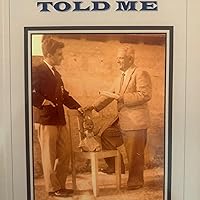
September 27, 2022
I almost gave up on this book during the first 100 pages which were not much more than a matter-of-fact account of the life events of a privileged member of the British aristocracy, devoid of much insight, emotion or honesty but liberally sprinkled with namedropping. The next 100 pages were much more interesting and included those qualities previously absent. All the way through this section the author exposes her admiration of Hitler whom she knew personally, and discounts or trivializes his evil doings by pointing out other evil doings and evil men around the world and by suggesting that British politicians and media were bias and hypocritical in targeting him. She strongly supported the British Fascists and their view that Britain should not have entered into war with Hitler and should have let Germany and Russia sort it out between them. She also suggests that the Jews were at least partly to blame for their own persecution by not getting out of Germany when encouraged to do so by the antisemitic laws passed by Hitler (she suggests that they should have moved to Britain or America). The author complains bitterly about her internment during the war although she did receive preferential treatment and privileges other prisoners did not. She emphasizes the point that she and her fellow fascists were never charged (perhaps they should have been interned in a camp rather that a common prison) but her indignation at the loss of her freedom is ironic given that they were fascist supporters. The last third of the book was mixed and at times reverted to something like the first part. Overall, a well written and interesting account of a fantastic life albeit an extremely privileged, self-centered and racist one.

September 24, 2019
I read this book because we've been watching Peaky Blinders on TV & there is a time overlap with her marriage to Oswald Moseley so I thought there might be some detail about the 1930s in the book. There was some correlation but not quite enough to round out my understanding fully of those times. As a biography, it seems a bit gabbled & she namedrops in such a way that it is clearly just the way she has been all her life knowing all the famous people that she was acquainted with, even though they would not be at all familiar to the reader. She is clearly of a lifestyle that really does not exist for many of us anymore nor ever did (i.e. constantly staying at other peoples houses & entertaining on a scale that I am not familiar with). Some interesting explanations about her friendship (& her sister Unity's) friendship with Hitler & some differing viewponts on what she thought of Churchill & the Conservative party around the time of WWII. She clearly was of a privileged set of people so I am not sure quite what the 'life of contrasts' was all about other than her claim to fame with being jailed during WW2 for her political beliefs & associations & thus suffering some unpleasant prison hardships. In terms of trying to understand the attractions of British fascism movement, there is little in the way of economic or social analysis - however, worth a read if you want to understand more about the Mitford family & grasp at some vague sociological aspects of the times.
July 11, 2020
A mix of high and low, big world events and comments from small grandchildren. Very guarded about her private life and the only emotions expressed were about war and relatives. The way she describes her first marriage, divorce and new relationship do come off as cold, but only due to the details about other (to me) insignificant things. She was born in a different time, so I will not judge. I enjoyed the parts where she complained in a sharp, witty way, and the overall views on politics and the human condition. Cannot understand people's outrage about her friendship with Hitler. I do of course think that the concentration camps and systematic killing of civilians were atrocious crimes, but as history is written by the winners, so many other equal atrocities have not receives as much press and cultural importance as that should have. It's deeply unfair to condemn on and turn a blind eye to all the others jus because not so many blockbuster movies have been made about them.
The book was a bit hard to follow, there are so many people mentioned, I could not keep track of them all (not ever her own siblings). A lot of internet searches to find out about who all the people she mentions are, which did make for an interesting experience.
The book was a bit hard to follow, there are so many people mentioned, I could not keep track of them all (not ever her own siblings). A lot of internet searches to find out about who all the people she mentions are, which did make for an interesting experience.

May 27, 2026
Oh, poor little rich girl. I'm really not sure how to rate this one. Lady Mosley is in turns charming, nauseating, funny, and sinister. I would be lying if I said she didn't satisfy my morbid curiosity. I was never bored by her, but I found her all the more disturbing because she could be so charming. So two stars for keeping me engaged, but minus three for being so disturbing.
Lady Mosley tries to defend her Nazi past by saying she knew Hitler before he instituted the Holocaust. Yet only a few pages later, she insinuates that the Jewish people brought the Holocaust upon themselves. Truly disgusting stuff. And let's not forget that she married Mosley in Joseph Goebbels' living room with Hitler in attendance. She all but defected to the Nazis, so I had no sympathy for her when she decried the poor conditions she had to contend with during her imprisonment, much of which was under house arrest with her husband. Cry me a river.
It does bother me that while Lady Mosley continues to be raked over the proverbial coals (deservedly so) for her support of Hitler and Naziism, her sister Jessica is largely given a free pass over her support of Stalin and communism. Can't we condemn both?
Lady Mosley tries to defend her Nazi past by saying she knew Hitler before he instituted the Holocaust. Yet only a few pages later, she insinuates that the Jewish people brought the Holocaust upon themselves. Truly disgusting stuff. And let's not forget that she married Mosley in Joseph Goebbels' living room with Hitler in attendance. She all but defected to the Nazis, so I had no sympathy for her when she decried the poor conditions she had to contend with during her imprisonment, much of which was under house arrest with her husband. Cry me a river.
It does bother me that while Lady Mosley continues to be raked over the proverbial coals (deservedly so) for her support of Hitler and Naziism, her sister Jessica is largely given a free pass over her support of Stalin and communism. Can't we condemn both?
Displaying 1 - 30 of 82 reviews