Based on the true story of the 1965 "dolphin house" experiment, this spellbinding novel captures the tenor of the social experiments of the 1960's in award-winning author Audrey Schulman's modern, feminist style. It is 1965, and Cora, a young deaf woman, buys a one-way ticket to the island of St. Thomas, where she discovers four dolphins held in captivity as part of an experiment led by the obsessive Dr. Bloom. Drawn by a strong connection to the dolphins, Cora falls in with the scientists and discovers her need to protect the animals.Recognizing Cora's knack for communication, Bloom uses her for what will turn into one of the most fascinating experiments in modern an attempt to teach the dolphins human language by creating a home in which she and they can live together.As the experiment progresses, Cora forges a remarkable bond with the creatures, until her great instincts clash with the male-dominated world of science. As a terrible scandal threatens to engulf the experiment, Cora's fight to save the dolphins becomes a battle to save herself.
Audrey Schulman is the author of three previous novels: Swimming With Jonah, The Cage, and A House Named Brazil. Her work has been translated into eleven languages. Born in Montreal, Schulman now lives in Cambridge, Massachusetts.
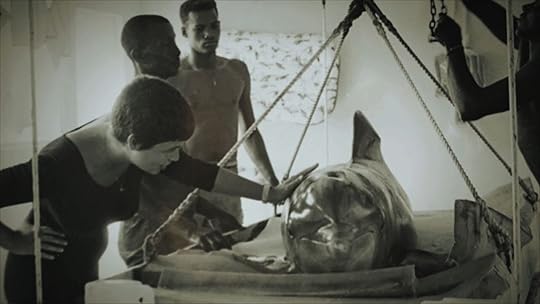
Audrey Schulman parte da una storia vera: quella di Margaret Howe che a ventidue anni diventa parte di un progetto di ricerca finanziato dalla NASA (e dalla Marina degli US) nonostante non abbia alcuno studio o titolo in merito, impiegata come addestratrice di delfini in un mini laboratorio-acquario sull’isola di Saint Thomas nei Caraibi. Siamo nel 1964. Il ricercatore capo è John C. Lilly, che ha convinto i suoi finanziatori che sia possibile comunicare con forme di vita extraterrestre (a margine della ricerca personale ne conduce una sua personale sugli effetti dell’LSD): nello specifico, alieni a parte, insegnerà ai delfini a parlare inglese. E chissà che anche i delfini non vengano da mondi altri e siano sostanzialmente delle creature aliene.
In questo romanzo Margaret diventa Cora e Lilly si trasforma in Blum. Così Schulman è più libera, e può pennellare, modificare, aggiungere. Per esempio, Margaret/Cora in queste pagine è una ragazza con seri problemi di udito: a otto anni per causa di una forte otite perde del tutto l’uso dell’orecchio sinistro e in buona parte anche di quello destro. Supplisce in qualche modo con dei pesanti occhiali che nella montatura nascondono un transistor. In questo modo la storia - oltre che quella di una giovane donna che diventa l’elemento umano di un minibranco di delfini (nella realtà furono tre, tutti reduci dalle riprese della serie Flipper, e quindi già abbondantemente abituati alla presenza umana: qui, invece, i delfini sono quattro e sembrerebbero provenire dal mare aperto) – diventa anche un emozionante studio di come un handicap si possa trasformare, con la dovuta sensibilità e applicazione, in una marcia in più. Cora, la ragazza sorda, ha meno distrazioni, si concentra sui delfini, diventa la ‘mamma’ del più giovane, al quale insegna a imitare i suoni del linguaggio umano. Per esempio, per accrescere il senso di “minoranza” di Cora, oltre che pressoché sorda, Schulman la trasforma in una ‘mezzosangue’, inventando una sua discendenza dagli indiani seminole. E magari anche questo, provenire da un popolo che viveva a contatto con la natura, acuisce il “senso” per i delfini di Cora, la sua facilità di relazionarsi ai magnifici cetacei.
Per esempio, credo che Schulman aggiunga ‘pepe’ trasformando pressoché tutti i personaggi maschili in degli sballati potenziali stupratori, con particolare predisposizione verso quest’ultima pratica da parte del più giovane e attraente del lotto. D’altra parte lei stessa ammette nelle sue note finali: mi assicuro che i miei romanzi presentino una trama solida e avvincente, la possibilità di violenza e un pizzico di sesso… I personaggi maschili di questo romanzo non sono gli uomini più simpatici del mondo. Ho deciso di costruirli così di proposito, per accrescere la suspense e l’isolamento di Cora. Cora finirà anni dopo con lo sposare il veterinario, l’unico uomo non prima di tutto maschio macho. Margareth invece sposò un fotografo, uno di quelli che arrivarono quando l’esperimento divenne celebre e cool e i media andavano a nozze con la ragazza in bikini che parlava ai e addestrava i delfini: ma probabilmente non sposò uno di quelli che fece scoppiare lo scandalo che portò alla fine dell’esperimento.
Ma tanto a vincere su tutto e tutti sono i delfini, meravigliose creature dall’intelligenza ancora alquanto imprevedibile e dalla impressionante capacità di linguaggio.
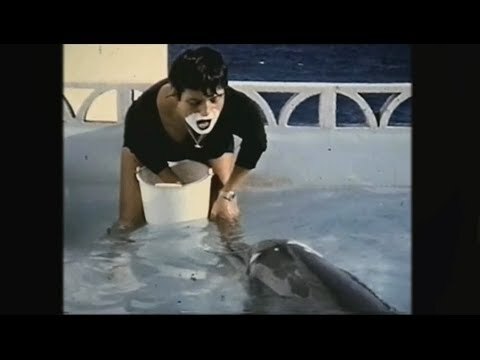
Margaret Howe si trasforma in una maschera con trucco e rossetto, colori forti e decisi, per aiutare Peter a vedere e memorizzare i suo imovimenti labiali.
Audrey Schulman, in her Author’s Note at the end of The Dolphin House, reveals that “since childhood, I have always been more awake when I’m around animals, more aware…However, recognizing that you, the reader, might not be as fascinated, I use every trick to keep you invested.”
To this, I have but one thing to say: “Audrey Schulman, you’ve found your true reader.”
I, too, am fascinated by animals, which is why I have loved everything this author has written – from the gorillas in Three Weeks in December to the bonobos in Theory of Bastards, to this, her latest book, which focuses on dolphins. Inspired by a true story of a young woman who lived in isolation with a male dolphin in the name of science, this book explores the social experimentation of the 1960s and the quest to teach dolphins to talk.
To raise the stakes (or to use the author’s words, to “use every trick”), the young woman, named Cora, is near-deaf, relying on hearing glasses and lip-reading. She is also a slightly built woman in the mid-60s, when most women played subservient roles to men. The connection – being trapped by a male-dominant world – is played out as Cora and the dolphins create a bond. (In one particularly telling line, the author writes about a male linguistic professor, “It seemed possible he found a woman involved with science more remarkable than a dolphin mimicking English.”)
The reader will learn a lot about dolphins in this book – their fierce intelligence due to their large, furrowed cerebellum, their consciousness, their enormous ability to empathize, their social connection to each other, their playfulness, their yearning to be free. Similarly, there is a lot here about the hearing impaired and how those with that impediment are like a mouse in a field of grass, needing to pay attention to survive. Mostly there is a lot here about the egotism of so-called “great” male scientists and how this egotism plays out in cruelty towards the so-called weaker sex (which is hardly that) and the intelligent lives we share our planet with.
I must unabashedly admit that I fell in love with these dolphins and when the social experiment gets going, I found myself enthralled and protective towards the youngest dolphin, Junior. I wanted him to keep safe. The bond that develops between Junior and Cora is as riveting as any bond between two humans can be.
I owe an enormous thanks to Europa Editions for enabling me to be an early reader of one of my favorite authors in exchange for an honest review.
This book for me stayed on a level that felt brittle and breezy where I was always aware that I was looking at an artificial construct of language vs. immersing myself in a story, for its relevance or its beauty or for some other reason. The words on the page never coalesced for me.
Schulman has a special, unique literary relationship with animals. She acutely examines the innermost essence of any mammal she writes about, like the literary equivalent of a “whisperer.” I cried for these dolphins, rooted for them and loved them because of Schulman. Their characters evolved and were as three-dimensional as humans. In the past, Schulman has navigated big game, primates, polar bears, and now dolphins in this intriguing tale of the relationships between humans and animals, between scientist and subject, and also between men and women. Inside these pages, I was hyperaware of the delicate balance between study and exploitation. Cora, a mostly deaf young woman working in St Thomas in 1965, is hired by Dr Blum, who is studying dolphins in captivity on the island. Although she had never worked in science or with dolphins before, she quickly becomes a natural. Before long, she becomes an integral part of an experiment to teach the dolphins to speak English.
Cora’s method is to have a house built for her and her chosen cetacean, Junior, a tailored house half filled with water for Junior to exist in, and some dry areas/rooms for Cora. A roof, flooded rooms, a veranda with walls—this was her “homearium,” as she called it. She lived in a bathing suit and spent 6 days/week training Junior. The scientists working on the project were men who overtly objectified Cora. Not only hearing impaired, she was small, lean, and attractive. The men eyed her with jealousy for her natural affinity with the dolphins, and they often treated her with contempt, just for being female.
Schulman brought me back to the days of the subjugated woman with impeccable precision. (This was also the days when scientists could hurt, maim, even kill animals in the name of progress). The neural experiments done on these dolphins brought me to tears, as I truly fell in love with Junior, as well as the other dolphins in captivity. THE DOLPHIN HOUSE was actually inspired by a true study that was done, including the shame and oppression that was placed on the female who joined the group of scientists. As the novel progressed, I was more and more riveted by the bond that formed between Cora and the dolphins, and was also astonished and disquieted by the tyranny of men, like Dr. Blum, who get to write the rules and control the milieu.
“He was the researcher, the established scientist, the showman. By standing here and talking, he claimed all the credit. She and Junior were no longer active participants who had worked hard and achieved the results. They were the experiment.”
Thank you so much to Europa Editions for sending me an ARC to read and review.
I loved this so much. I saw the ARC was available through Edelweiss and checked every day until it was approved, because I was going up to a cabin in the woods and I wanted it, fiercely. I really adored her last book, Theory of Bastards. That one was about bonobos. This one was about dolphins.
This novel retells the story of the real, controversial language studies of dolphins in the 1960s, in which a woman winds up living in a kind of apartment-pool full time with a dolphin, teaching him language. In the novel, the woman is deaf, and is really good at paying attention to the captive dolphins, although she has no formal training. It's the 1960s, and she's young and attractive, so of course she has to put up with no end of bullshit from the male researchers. This book does a good job at showing how women have to accommodate the men they work with, have to be untrue to themselves in order to be accepted by a male workgroup.
And the dolphins are so interesting and beguiling, the way they interact with each other and with the humans. Without being fake and heartwarming, this author brings animals to life on the page, and it sucked me in completely. Two days of reading by a wood fire with snow falling outside- perfect. Two days later, I'm still sad it's over.
This story is in part based on true events, about communication attempts back in the 1960s to teach English to dolphins. I was unsure what to expect from this but since I do like books about animals I thought I would try this. I will admit I don't know much about dolphins and I have certainly never seen the ocean before, but I do work with horses so I do know a bit about trying to communicate with another species. Its not exactly easy, especially when you first start. I remember how puzzled I was by a horse's chewing motions when they weren't eating and this gives me the ability to understand Cora in this story.
I did enjoy reading this. The writing is powerful and I certainly was swept into the strange experiment that Cora found herself in. And maybe even stranger is the fact she was a waitress. She didn't train to do this. In fact she stumbled onto this job by sheer chance, exploring the island of St Thomas. And then she is in this lagoon with four dolphins and these guys are offering her a job. $300 a week!
It sounds so fantastical doesn't it? And she never went to college. And she is deaf. But she can hear better under the water, something about the water contacting the bones... I guess the water carries vibrations or something. The book explained it way better than I can.
But its a very fascinating story. How do you communicate with another species, especially one so different? And Cora is so smart. She is definitely smarter than the three male scientists in here. And because she is deaf, that gives her the experience of watching people to understand body language so she transfers that to understanding dolphins.
I feel I learned a lot about dolphins from reading this. Its a fascinating story and the male scientists present danger in various forms too. You don't ever really know what they may do so that danger looms throughout the book. And you just have to hope that both Cora and the dolphins will be ok.
But I think one of the most important lessons in here is how Cora learns to stand up for herself. She grows and changes as a person.
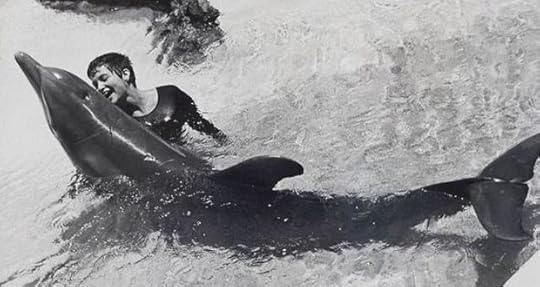
The Dolphin House, Audrey Schulman's sixth novel, is closely based on a real scientific scandal of the 1960s. A young white woman, Margaret Lovatt, lived with a male dolphin called Peter in a partly flooded house on the Caribbean island of St Thomas, hoping to teach him to communicate with humans by mimicking human language through his blowhole. Her early efforts were surprisingly successful, but the project was derailed when it transpired that Peter was rubbing himself on Lovatt to masturbate (in the wild, dolphins are very social and sexual) and that she allowed this to happen for the sake of the experiment. A sensationalised story in Hustler misleadingly entitled 'Interspecies Sex' destroyed the credibility of the research, and, Lovatt recalled decades later, 'The worst experiment in the world, I've read somewhere, was me and Peter.' Schulman sets out to rehabilitate Lovatt's work through her fictional protagonist, Cora, who, unlike Lovatt, has Native American heritage and is partly deaf.
Schulman challenges the prurient narratives that have grown up around the 'dolphin house' experiment, having Cora point out that this kind of interaction with animals may not be ethical but is hardly unheard of - her pig farmer father 'helped' boars along to encourage them to mate with sows, for example. She also explores Cora's own experience of sexual objectification and assault by the men who are in charge of the experiment, making Cora reflect on how mid-twentieth-century America views 'sex' - including, for example, plenty of non-consensual interactions between men and women. (Pointedly, Cora reads in the paper about a group of men who raped a woman who, unbeknownst to them, died before they started having sex with her - and who were then let off the charge of rape because corpses can't say no.) And beyond the 'sex scandal' element of this experiment, Schulman presents a fascinating and harrowing picture of research with dolphins in the 1960s, exploring both their innate capabilities and how little they're understood by their human captors. Cora is desperate to prevent the further exploitation of the dolphins she works with, but is ultimately unable to stop it.
This novel is so intelligent and so interesting that I'm struggling to work out why I didn't really click with it as a work of fiction (it would have been brilliant as a long essay). It doesn't help that the mood is relentlessly grim, even in the earlier, more joyful scenes where Cora is working with a group of dolphins. But the biggest problem for me was Cora herself. Schulman is so determined to rewrite Lovatt's reputation that I think she goes a bit too far. Cora is continuously idealised, always right in every situation, always there to tell the reader what they should think. The additions of her deafness and her Native heritage further amplifies this impression. I never really forgot that she was a fictional construction. So as non-fiction, this is brilliant; as fiction, it's a little lacking. 3.5 stars.
I received a free proof copy of this novel from the publisher for review.
This book struck me as a little strange. It is based on a true story, but the author made some odd changes to it. She made the main character deaf even though the researcher she is based on did not have any hearing loss. I understand she wanted to highlight her isolation from the world, but I feel like the Deaf community doesn't need more stories about how they're isolated. It was also a pretty repetitive book in that several things were mentioned several times (the main character's shaved hair, gender roles, her worry about the men) in close succession. I think I would have liked this more if it had stayed truer to the actual events it was portraying.
First some background information. In the mid-60's, I became fascinated by both the writings and research into dolphins by Dr. Lilly. Then I read the book by Mary Howe about how she lived with a dolphin in an aquarium for 24 hours a day and have never forgotten it. When NetGalley posted The Dolphin House as available for review, I requested a copy and was declined. NetGalley sent me the email address of the publicity person for the publisher, who kindly sent me a PDF of the book. I've just finished reading it in less than a day and a half.
Based on Lilly and Howe's memorable books (How many books that you read 55 years ago do you still remember vividly today?) Audrey Schulman's book brings the story of the dolphins in captivity and the scientist and trainers who work with them to three-dimensional life. I Often forgot to breathe or found myself surprised to be surrounded by air and not water. That's saying something about the transformative power of Schulman's writing.
Cora, briefly a Playboy Bunny and almost completely deaf since age 8, ends up being a dolphin trainer in St. Thomas. Because she was raised on a pig farm and also worked with horses, Cora has learned how to deal with animals by watching and understanding their body language.
Schulman brilliantly illustrates in Cora's experience the position of women at that time and contrasts it with strides that feminism has made over the decades. It's fascinating how Cora learns to adjust her own body language to appear less "feminine" and more "in charge".
Even if you are not an animal lover you will become emotionally involved with the four Dolphins Cora works with and trains. there is no doubt these creatures are amazingly smart. The youngest male, Junior, learns to make human speech sounds. This book, like no other I have read, will convince you that in dolphins and other cetaceans, we have non-human intelligent life right here on earth.
This compelling and beautifully written book will make you want to find more of Audrey Schulman's work asap.
Pulled in from the first few pages, this novel is based on true, controversial, NASA funded experiments performed with dolphins in 1965. Eager, young, deaf Cora is hired to work with four dolphins exploring whether they can be taught human language. Like scientific observation, this detailed and sometimes repetitive novel requires some patience, but it’s a fascinating look at women in science, animal rights and intelligence and human / animal connection.
The Dolphin House is based on the true events of the 1965 “dolphin house” experiment. Although achieving remarkable success, at the expense of the dolphins, the experiment was called into question after a scandal concerning the woman who lived with a juvenile in a ‘homearium’. A snippet at the end of the book from an article in the National Post, June 6, 2014 described Dr John C Lilly as ‘the wackiest and most polarizing figure in marine science history…’
Also set in 1965, Cora takes a one way ticket to St Thomas on impulse, hoping to find a job where she wasn’t at the mercy of the male clientele while waitressing. She was a solitary person, mainly because of her hearing problems and the confusion it caused sometimes. She relied on special ‘hearing’ glasses and lip reading and was most at home in water where she could actually, for whatever reason, hear sounds. Exploring one day, Cora discovers a lagoon fed with sea water and was surprised to see dolphins in the water. She encounters Dr Blum who asks her to take notes, as he disappears into the house on the other side of the lagoon. Cora is intrigued and before long she was in the water, hearing the sounds the dolphins made—agitated, scared.
Blum recognises something in Cora and hires her to document experiments and look after the well-being of the dolphins. Blum and his associates are decidedly unlikeable and creepy, drinking too much and using drugs, treating Cora herself as an exhibit—their behaviour, I suppose, reminiscent of the times and the typical male attitude towards women. Cora manages to put a halt to the crude, awful experiments that are being carried out by agreeing to live with Junior, the youngest of the dolphins, and trying to teach him human words.
It’s extremely hard to imagine someone living all day every day secluded in a glass enclosure, her only companion a dolphin, and the living accommodation suspended just above the water. Unsurprisingly, it began to take its toll on Cora, especially as she was on view to the men in the house. The details of dolphin behaviour are are fascinating, how they interact with each other, the comfort young dolphins need from the adults, in this instance transferred to Cora, and how, shockingly, dolphins can decide to just stop breathing and effectively, as some experts believe, commit suicide.
The story was a hard read in parts, but also an incredibly moving and heartbreaking one. Audrey Schulman portrays the dolphins so realistically, they became fully developed, complex and clever characters in their own right. I just wanted to see them get back to the ocean. The experiment performed on one of the dolphins was quite brutal and harrowing. There’s a fine line between studying animal behaviour and cruelty, exploiting helpless creatures in captivity, all in the name of science.
The main points of the novel seem to echo what really happened in the 1960s, and much of the accuracies and inaccuracies about the behaviour of dolphins is documented in the author’s note, showing them to be very intelligent, empathetic and social creatures. One incredible incident in particular in the book happens when Junior unintentionally knocks Cora unconcious. He then positions himself in such a way as to keep her head above water so she can breathe until she regains conciousness. This is taken from a very similar true life experience.
**review coming up after my brain is done processing what the heck did i just read??. I know that this story is adapted from true scientific experiments on the dolphins in the 1960's. I have read about this crazy mad scientist named Dr. John Lilly and his research assistant named Margaret Howe who volunteered to live with a young male dolphin in a house or room filled with water for 3 months, all for the sake of studying and teaching a dolphin if it could speak English just like a human does!. Yes i also get it the author's underlying message,the motive and the intention of writing and sharing about this controversial experiment (made more controversial as the scientist even used hallucinogenic drugs on the dolphin to make it learn faster and smoother!). Yes i get it the part of crazy (and to me useless) experiments done on marine mammals,by forcing them to learn to speak like a human's instead of we humans trying to breakthrough by understanding their languages instead?!. But what i did not get and understand is the execution of this story by the author, how she made this story seems not only creepy but also very weird?!,and the story seems to drag on and on,repetitively until i get bored and frustrated and almost wanted to dnf it a few times but i held back, all because of my curiousity of wanting to see how the story ends? Did Cora,the protagonist succeeded in helping Junior,the tested young,male dolphin (as opposed to Peter, the dolphin used in the actual experiment by Dr. John Lilly who spend his entire three months in isolation with his assistant, Margaret Howe, where they bonded socially and unpleasantly (sexually just like how Cora and Junior did in this story). Erti kata lain, ini betul2 kerja gila dan melanggar hukum alam dan abusive of not only human's right (in this case would be Cora) but most importantly animals rights!. Seriusly, cerita ni betul2 gila dan creepy. Aku suka mesej dia, on how the author is actually trying to create awareness about how cruelly and crazy experiments being done and tested on animals (which in this case dolphins. Unethical would be the right word for it i guess) but also how badly the men treated women in those days, how they perceive women as sex objects,how women been used and treated as experiment subject,about misogyny and gender discrimination on women (serius sakit hati tengok cara saintis lelaki 3 ekoq tu layan si Cora ni,dah la si Cora yang put all the efforts,bagi ideas dekat dorang macamana nak study and build trust with the dolphins more effectively, last2 depa 2 ekoq yang dapat nama, as they regarded Cora as only animal trainer not researcher semata2 sebab Cora takde credentials macam dorang, Cora is not from Havard University or from a science background like them, only a deaf woman who used to work at a bar with a meagre experience of working with animals at her parents farm). Pendek kata, cerita ni up to so many critical and quite interesting discussions and debates actually. Cuma paling tak puas hati dengan cara penulisannya sahaja. Padahal mesej cerita ni sangat penting, as it talks about conservation issues too, tentang animal rights, etika study marine mammals yang betul which is in their natural environment not in captivity and confinement, the boundaries of our research,pasal whaling and dolphinarium industry, and so much more. In short, this story is just creepy,disturbing and badly executed. It's just plain weird. Caution Warnings: Rape/Attempted rape, molest, really disturbing scenes of a dolphin trying to masturbate with its human trainer (in this case Junior the dolphin rubbing off his penis against Cora's calves several times every day), animal suicide, animal torture and cruelty (tebuk lubang dekat kepala dolphins sebab nak kaji otak dolphins, nak study if they can speak English like we do), animals starvation as a punishment for failing to do a task or as expected of them, animal and a human captivity and isolation, drug abuse, and so much more!.
I have loved the themes Schulman returns to, book after book, ever since I first read one of her earlier novels, _Swimming with Jonah_. In all of her books, she's always written about animals with intelligence, curiosity, incisive attention and scientific rigour, but this one, her most recent, tops them all.
I absolutely loved how she wrote about the dolphins and about the bond between them and Cora (the protagonist), but without romanticising them either. I loved that she included a list at the end of the book detailing which dolphin behaviors in the book were actually documented and which were fictionalized (this made me sigh with such happiness). Outside of its seamless and extremely compelling plot, the book also skewered hubris and sexism among scientists in a way that is totally scathing, on-point yet surprising at the same time. (That is to say, you'll get angry, but will chuckle too.)
When I was reading this book I didn't want to put it down, and when I finished it I wanted to read even more books about dolphins and their world (mostly in spite of humans, but yes, also in connection with humans). Despite everything that's dark about the human treatment of animals, about human hubris over the natural world (and there are so many reasons for despair), the book is also fundamentally hopeful at its core. It shimmers with love for its subject and a determination to carry out that love, in a way that I find transcendent.
4.5 stars from me because this book was just fascinating! I really appreciated that it was based on true events and that, at the end, the author took the time to highlight just what was fact versus fictionalized. I feel like I gained a deeper appreciation for and understanding of dolphins as a species as well as the work that especially female researchers have done to advance so many fields of study. I also applaud the fact that Schulman didn't shy away from the double standards or misogyny that exist/ed in the very fabric of scientific research. My only critique, and it could very well have been a completely intentional choice meant to replicate the repetitive nature of training, was the repetition of key details and phrases throughout the text. At times it got old, but not stale enough to keep me from reading.
Overall, super happy with this listen from Libro.fm and their ALC program!
Avvicente racconto del rapporto tra l'essere umano e altre specie in particolare i delfini. Partendo da un esperimento realmente svolto negli anni '60 in un centro della NASA, l'autrice ci avvicina a diversi temi in maniera convincente. Il fulcro della narrazione ruota attorno alla comunicazione con il diverso o con l'altro e alla visione tutta antropocentrica secondo cui lo strumento principale se non unico per la comunicazione sia il linguaggio umano, inteso come parola tanto tra esseri umani quanto con altre specie. Eppure la parola si mostra rapidamente e per varie ragioni inaffidabile e limitata. È un particolare approccio per un testo che si affida alla parola scritta per la sua esistenza e porta a riflettere sul punto di vista da cui si osservano le situazioni e la necessità di non giudicare e rimanere curiosi e aperti a diversi scenari per lasciarsi stupire dagli imprevisti.
DNF at about page 80 - so so so so annoying and repetitive, I couldn’t read anymore. Basically all that happened in the first 80 pages was the narrator saying a million times that her hair was wet and she couldn’t wear her hearing glasses.
If you have ever had pets, you know what it means to connect with an animal. You have probably felt the worry of leaving them by themselves for a few hours or days, and found much comfort in their company. The Dolphin House is the story of Cora, a young woman, whose fate leads to her four dolphins housed at a research facility lagoon. Dr Blum, the head of the facility, charges her with keeping the dolphins alive (when Core first arrives, the dolphins have not been eating) and later, in bargain for giving them freedom, she agrees to live with one of the dolphins and teach him language.
There are many things to love about this book, and yet at the same time, this is not an easy read. Set in the 1960s, the attitude of men depicted in this book is disheartening to read, and yet a reality of that era. Blum, Tibbet and Eh were all about letting Cora do the heavy lifting for their research on dolphins. All they were willing to do was drill holes in the dolphins’ brains, while she was the one who truly wanted to know the dolphins and wasn’t afraid to jump in the water and meet them in their natural habitat.
I learned so much about the amazing creatures that dolphins are through this book! The author, Audrey Schulman, has put a lot of research into this and I quite enjoyed her notes at the end of the book, separating the facts from fiction and the way she changed the timing of certain discoveries like dolphins being able to recognize themselves in a mirror. The first thing that Cora did when she started to study dolphins was jump into the water. Somehow, the men had not thought or bothered with that at all. Blum’s dream to teach language and communication to dolphins was purely based on being on land and keeping these lovely creatures captive. Through Cora’s perspective, I felt like I was making connections with these majestic animals as well, concerned about their wellbeing, curious about their nature and daily routines, while the whole time, worrying about what Blum and his team was going to do for them.
One of the highlights of this book for me was Cora herself. Cora had become deaf at the age of eight years and had since worn special glasses to help with hearing. It was disheartening to see how the three researchers behaved around her, knowing very well that they needed to look at her for her to lip read and understand them. At least with the dolphins, interestingly without the hearing aids altogether, Cora thrived. Having grown on a farm with animals, she was observant and apt at learning their patterns and routines.
I read The Dolphin House in two days. Cora and the dolphins drew me into their world. I loved Bernie, Kat, Mother and Junior and felt for them deeply. I have a lot more to say about this book and will be posting my full review on Armed with A Book on 30th April. Many thanks to the publisher for proving me a complimentary copy of the book through NetGalley in exchange for an honest review.
The style of writing disconcerted me at first. It's a little unusual. There's a kind of jaggedness to it, that I don't know how else to describe. However, I soon eased into it. I appreciate Schulman's clean and sparing, yet often surprisingly beautiful, prose. But what truly drew me in was the main character's bond with the dolphins, and the actions of the dolphins themselves. I felt so hard for them, sometimes even gasping at points in the narrative, or scowling in disgust at the male human characters. I had to read the book as quickly as I could to find out what would happen.
I don't know if Schulman has experience with deafness herself, but her powers of observation and empathy as a writer are incredible (as far as I can tell, being neither a person with deafness, nor a person studying dolphins). By coincidence I had just finished reading a book about what we know of senses in the animal kingdom, which deepened my appreciation of the research this book must have involved.
One way of summing up this book would be "Men ruin everything". But that would be reductionist. Far more than that, it is a gorgeous and heart-breaking story about cross-species empathy.
(With thanks to Europa Editions and NetGalley for this ebook in exchange for an honest review)
I liked this! Though I think it was mainly due to my personal preferences more than anything (I like animals so I’m not sure how anyone else would take this). I appreciated the inclusion of a partially deaf protagonist - Cora - and the approach to the conversations she heard or was a part of. It was mentioned she heard vowels better so when someone was speaking there would be consonants greyed out, possibly to show she missed those. There’s a lot of “reading between the lines” in this book especially in the latter parts, another aspect I liked. I thought nothing was really spelt out for the reader, allowing them to draw their own conclusions.
When a book is centred around dolphins you can't really go wrong; I marvelled at how beautifully intelligent and empathetic these creatures are.
Overall I enjoyed reading this book. It's important to note that I did read an 'uncorrected proof' that I found donated meaning the chapters felt a little disjointed at times and of course I can't fully comment on any changes made in the official publishing.
I loved the protagonist Cora although I was a little disappointed to find out the person this character was based upon (Margaret Lovatt) was not in fact deaf, as the concept of language was cleverly woven into the story. I enjoyed learning about the bonds Cora formed with the dolphins and was whole heartedly rooting for them all throughout.
I did however find the depictions of men in this story a little unnerving. I understand it's based in the 60s when women's rights were practically non existent, but I found myself hating every man in Cora's life. Surely she had come across a decent man at some point? Without giving away spoilers, I feel this book should come with a trigger warning for those who may be affected by the theme of sexual assault.
A good recommendation for dolphin lovers who are aware of unethical historical investigations. But on a personal level I just wished for a happier ending with human relationships for the characters in the story.
Wow. I picked this up on an end cap at the library on a whim and had no idea what to expect. Schulman kept me reading in a way that I haven’t read in a long time. I can’t remember the last time I finished a book in a week! It’s certainly different than anything I have read but was beyond interesting.
Some entries felt repetitive, but considering the daily work Cora’s teaching would require, this felt fitting. I’ve always been obsessed with dolphins (I used to answer dolphin trainer whenever asked “what do you want to be when you grow up”?) and love research so this book was a treat. Plus led me to many future reads about the real experiment and cetacean behavior!
Well, this was great! I had high hopes because I loved “The Cage” and because I already knew the true story this book uses as its foundation. My expectations were met. Audrey Schulman is so good at writing stories about the intersections of humans and animals or how humans are animals.
What an interesting, odd read. It definitely captured me and is semi-based on a true story. The sexual violence of the story is a lot to handle, but puts you in the shoes of an intelligent woman in science in the 1960s
Of course that's why I read this, this being the only thing I knew about the story, I was curious. The author that's a great job in creating a sympathetic story around what was mainly know for its outlandishness. It's a very well told story about communication. Some of the anti-patriarchal messaging was a bit on-the-nose at points, with characters being basically caricatures, but still, a fun read.
Would've still been interested in a less fictional account of this experiment though.
Music for this book: The Shape of Water (Original score) - Alexandre Desplat
"This word spoken by the muscled anus of his blowhole. Magic".
"How do you read the emotion of an animal with a fixed grin?"
"Thinking back on this time, she couldn't deny this possibility that deep in her heart, she thought a male was more valuable, worth protecting, worth listening to."
"At the age of 21, Cora got a job as a waitress at a club in Tampa."
There was a time when a male-dominated, rigidly hierarchical scientific community conducted experiments with little regard for animal welfare. This led to the development of ethical guidelines for the use of animals in research. Today, scientists are forced to consider alternatives to the use of animals in research, reducing their numbers, minimizing suffering and especially recognizing the dignity of sentient experimental animals. This novel is a fictionalized account of an actual research project that took place in the 60’s when such guidelines did not exist. A lay person, hired by a scientist, becomes appalled by the horrifying and exploitative nature his research project. With little recourse, she is forced to make a profound compromise to mitigate the damages. The outcome stands as a powerful example of communication and trust that can develop between humans and animals.
Cora quits her waitressing job in Florida and moves to St. Thomas with no goals in mind. Her hearing impairment has given her a special talent for communication. Recognizing this, Blum, a Harvard professor studying dolphins, hires her to oversee their welfare. However, he seems more interested in obtaining funding for his ill-conceived research and experimenting with psychedelic experiences than conducting real science. Blum’s male collaborators have similar shortcomings characterized by excessive alcohol consumption and casual sexism. They see Cora as unqualified because of her lack of formal training in research and, especially her failure to quantify her observations.
The plot involves Cora’s growing appreciation of dolphin behavior. She slowly begins bonding with four captive dolphins. Clearly, this becomes joyous for both Cora and the dolphins. After observing brutal surgeries with little obvious rationale or concern for the dolphins, Cora agrees to a compromise. The scientists will cease the surgeries if she assumes a mothering role for Junior, an adolescent male dolphin. The goal is to teach him to mimic human language. Obviously, Blum sees this plan as his ticket to fame and fortune. Cora and Junior are thus isolated together in a makeshift structure referred to as a “homearium.”
Schulman’s rambling narrative details the playful and mutual relationship that Cora develops with the dolphins, especially with Junior. Along the way, Schulman imparts some fascinating information about dolphin behaviors, like mating, sleeping, communicating, and even breathing. However, the most touching scenes come from the dolphins’ more human-like behaviors. The alpha male dies from something like “suicide” by deciding to just stop breathing. Junior has the need to suck on Cora’s toe before he can fall asleep. After Cora convinces Blum to free two females, their joy is wonderful. And especially Junior manipulates Cora into messaging his gums by assuring her that he will not bite by holding his mouth open using a ball. Notwithstanding its many strengths, this story suffers from its unfair characterization of the scientists and their families. They come across as self-involved, inhumane and lacking in the curiosity that is so evident in successful scientists.