Jump to ratings and reviews
Rate this book

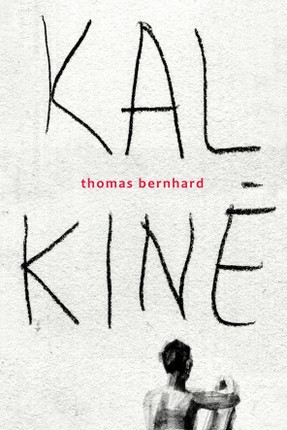
Kalkinė

Rate this book
Romanas „Kalkinė" (1970) parašytas ikiteisminio tyrimo principu, jame pasakojama tragiška vienos minties apsėsto Konrado istorija. Pagrindinis romano veikėjas ilgus metus rašo studiją apie klausą. Kad būtų lengviau įsijausti į temą, jis nutraukia ryšius su žmonėmis ir įsikuria apleistoje kalkių degykloje. Bandomuoju asmeniu tampa Konrado žmona – prirakinta prie vežimėlio ir priklausoma nuo jo malonės.

Iliuzijos aukos, žmogaus, kuris siekia neįmanomo, Konrado dvasinę sumaištį vaizdžiai atskleidžia ir šio savito romano parašymo stilius – jis karštligiškas, su atsikartojančiais žodžiais ir ištisomis frazėmis, su ilgais periodais ir vis intensyvėjančiu kalbėjimu.

Premijuotas ir apšmeižtas, garbintas ir koneveiktas nepakartojamo braižo rašytojas Thomas Bernhardas (1931–1989) – vienas žymiausių XX a. Europos kūrėjų. Jo kūrybinis palikimas didžiulis – penki eilėraščių tomai, 18 dramų, 27 prozos kūriniai ir įspūdinga penkių dalių autobiografija. Savo kūriniuose Bernhardas aštriai kelia žmogaus būties tragiškumo, vienatvės ir savinaikos temas.

224 pages, Hardcover

First published January 1, 1970

98 people are currently reading
3697 people want to read

About the author

Thomas Bernhard

288 books2,428 followers
Thomas Bernhard was an Austrian writer who ranks among the most distinguished German-speaking writers of the second half of the 20th century.

Although internationally he’s most acclaimed because of his novels, he was also a prolific playwright. His characters are often at work on a lifetime and never-ending major project while they deal with themes such as suicide, madness and obsession, and, as Bernhard did, a love-hate relationship with Austria. His prose is tumultuous but sober at the same time, philosophic by turns, with a musical cadence and plenty of black humor.

He started publishing in the year 1963 with the novel Frost. His last published work, appearing in the year 1986, was Extinction. Some of his best-known works include The Loser (about a student’s fictionalized relationship with the pianist Glenn Gould), Wittgenstein’s Nephew, and Woodcutters.

Ratings & Reviews

What do you think?
Rate this book

Friends & Following

Create a free account to discover what your friends think of this book!

Community Reviews

5 stars
728 (39%)
4 stars
710 (38%)
3 stars
317 (17%)
2 stars
81 (4%)
1 star
18 (<1%)
Displaying 1 - 30 of 202 reviews
Profile Image for Vit Babenco.
1,781 reviews5,775 followers
September 16, 2024
The novel consists of gossips and hearsay about the crime that has taken place at the lime works… And the lime works is an isolated, bleak and ugly place…
Even access from the east is often barred in winter, because the lime works is no longer a lime works and so the snow plow no longer comes as far as the lime works, obviously no snow plow is going to come this far out to a dead, abandoned lime works, Konrad is said to have told Wieser, no workmen, no lime production, no snow plow, he said; for the sake of an individual good-for-nothing Konrad and his wife…

Konrad residing in the lime works was working on the scientific book he called The Sense of Hearing… He heard voices no one else heard…
I was hearing with the utmost clarity from the opposite shore, while I hear everything too clearly, Konrad is supposed to have said, though the others never hear a thing, and in fact you yourself never hear anything from the opposite shore, Konrad said. It was a triumph, after all, to hear absolutely everything…

He has already been being at work for twenty years but he still couldn’t go nowhere… And there were always others to blame… He believes he’s unique…
None of the authors had any ability to do their own thinking, at all, Konrad said; all they are is professorial ruminants. The salient characteristic of our era is, after all, the fact that the thinkers no longer do any thinking of their own. What we have nowadays is whole armies, numbering in the millions, of apprentice workmen in science and history. But anyone who dares to say so runs the risk of being declared insane.
He whose life is ruled by futility hates the entire world.
Profile Image for Steven Godin.
2,782 reviews3,373 followers
August 6, 2020

Konrad is supposed to have said to Wieser....
Konrad is supposed to have said to Fro....
Konrad is supposed to have said to the inspector, according to Wieser....
Konrad is supposed to have said to Fro, according to Wieser....
Konrad is supposed to have told Wieser....
Konrad is supposed to have told Fro....
Konrad is supposed to have expressed it to Wieser....
Konrad is supposed to have said this....
Konrad is supposed to have said that....
Konrad is Supposed to....
Konrad is supposed to....
Konrad is supposed to...
And on...and on....and on... and on....!!

AARRGGHH!!!


There was a time when I loved reading Bernhard, and wasn't bothered by his repetitive style at all.
To me it even seemed fresh at the time. Well, I think that has now gone stale—big time!


The Lime Works drove me nuts—literally nuts!

Maybe I wasn't supposed to read it.
I suppose half of me is glad that I did.
The other half I suppose not.
Profile Image for Jim Elkins.
361 reviews454 followers
Read
January 28, 2025
Bernhard as an Addiction

The Bernhard addiction is nearly impossible, perhaps impossible, to break. When I read Gathering Evidence, I thought it would be my last Bernhard book, and I said why. But the reasons drain away, because his obsessive-compulsive, repetitive, unending and interminable, grammatically stringy rants just will not dissolve, just won't fade from memory: they are like adhesions, gluey things, earworms, like persistent memories of intransigent dissatsfaction or unhappiness.

I want to say, in a pastiche of Bernhard's characters' voices: How dare Jonathan Franzen, tidiest and most sincere of all bourgeois middlebrow American novelists, even cite Bernhard, as if they were members of the same species? A sort of Bernhardian bile rises in my throat when I think of Franzen's carefree mention of Bernhard in Freedom. This is Thomas Bernhard, who hated virtually all art, who found even Adorno's favorites, Schoenberg and Webern, distasteful — he liked Joseph Matthias Hauer, who composed endless colorless walls of dissonance without any of Schoenberg's virtuosity or Webern's compositional tricks. This is Bernhard, who despised even the bewildering hermetic insanity of Marianne Fritz, and this is Bernhard, who imagined a character in Old Masters who went to the museum in Vienna not because he liked art but because the museum had a single painting that he could actually stomach.

*
These notes were written sometime around 2008, when I was first reading Bernhard. Since then I have read and learned a lot more: how endings can ruin books, something he knew very well (review of Yes ); how to figure out when to stop reading him (review of Gathering Evidence ); whether he had a "late style" ( Woodcutters ); why his love of music shows how music and fiction may not mix (review of The Loser ); and a half-dozen others. The addiction is not cured, it's metastasized.

(Added 2025)
Profile Image for William2.
859 reviews4,045 followers
January 6, 2021
It’s all here, friends. Thomas Bernhard’s hatred of incompetence in all its forms. His hatred of physicians, who, after all, are complete hacks; his hatred of government functionaries, those blasé fuckers up of private lives; and let’s not forget hatred for the black hole that is the Austrian bourgeoise. All of these people, and more, should be taken out at dawn and shot. It would be a gift to all thinking people, of which there are few. Distressingly few.

And the way widespread criminality has limited all forms of private existence! It’s no wonder Konrad here, a Bernhardian madman in all respects, has chosen to spend the last pennies of his vast fortune on a defunct lime works, where he goes in order to think about his book, which he’s been thinking about for 25 years. The lime works is in a town called Sicking.

“...[There was the fact that] nobody grew old in Sicking. Although everybody gave the impression of being old, nevertheless. Wherever you went in Sicking, you would see nothing but old people, he said, even the children; if you looked at them hard enough, you were struck by the way they exhibited the repulsive mannerisms of the old.” (p. 50)

Bernhard was thirty-nine when he published this. He died at forty-seven after a life of suffering from acute pulmonary disease, which certainly speaks to his hatred of the medical profession. His work is unique in the harshness of its vitriol. This one seems typical. It starts with mild expostulation and grows in time to a hysterical rant.
Profile Image for David.
161 reviews1,747 followers
December 1, 2010
If you happen to love long, comprehensive physical descriptions -- the kind that many nineteenth century novelists (and Anne Rice) trafficked in -- you're out of luck with Thomas Bernhard, who at most restricts himself to a few general details about a person, place, or object and allows the situation or characterization to evoke physical appearances (often grotesquely) in the reader's mind. In other words, Bernhard crafts his worlds expressionistically.

Of the eponymous lime works building, the only details I recall Bernhard affording us (and these are not concentrated in a block of description, but distributed throughout as they pertain to action or characters) are that it is a masonry structure, it is (or seems) large, it is usually cold and difficult to heat, and it is secluded. Its seclusion is mentioned only insofar as it suits the protagonist Konrad's needs as a retreat where he might work, undisturbed, on his book The Sense of Hearing, which is to be a profound, groundbreaking, and genius treatise on, yes, the faculty of hearing. It's interesting, ominous, and evocative all at once that Konrad describes the lime works' isolation as so perfect that no one would be able to hear anyone screaming there. (Did I mention that not only Konrad, but his 'crippled,' helpless wife take up residence in the lime works? This should probably be cross-referenced with the screaming bit, I guess.) At any rate, the lime works is nearly unapproachable, bound on two sides by a lake and on one side by a rocky spur, and occluded on its front face by hedges and shrubbery.

Konrad, like most Bernhard protagonists, is more than a little crazy. In fact, in an Insanity Olympics attended by all the protagonists of Bernhard's novels, Konrad would probably place pretty highly, if not sweep the competition entirely. He has been attempting to finish (or -- I should say -- to begin) The Sense of Hearing for decades now. That's right. He hasn't set a single word to paper, but trusts in the genius of a work he has stored in his head. During the days at the lime works, and occasionally well into the nights, he conducts bizarre auditory experiments on his wife. It's a kind of pseudo-scientific torture, really, as Konrad utters sounds, for many consecutive hours, and expects his wife to 'react' to them. He observes, mentally compiles, and processes her reactions. Meanwhile, Mrs. Konrad spends all of her time in a wheelchair in her poorly-heated room in the lime works, requiring her husband to do everything for her -- change her clothes, feed her, bring her water, bathe her, and so on. As you might suspect, Konrad is not always terribly diligent in fulfilling his duties and sometimes doesn't bother to visit her in her isolated room in the lime works for a few days at a time.

Oh, and also he eventually murders his wife. Shoots her right in the head. This isn't a spoiler because it's reported in the first few pages of the book, but it definitely contributes to our impression of Konrad and the lime works throughout the book, which is essentially an attempt to reconstruct the events pertinent to the case by an insurance agent (the narrator).

I don't know about you, but the lime works that I am imagining in my head is a very gothic place. Of course, the architecture isn't gothic -- it's likely industrial and utilitarian -- but the atmosphere is. Cavernous rooms obliterated by darkness, coldness seeping in from the brickwork, long, endless corridors, a whole grim little world populated by an insane man and his prisoner-wife.

When I come up with a mental picture of the lime works, it actually resembles my high school, which looked more like an industrial processing plant (or concentration camp crematorium) than a picturesque Eden of learning. The building was comprised of two box-shaped wings, set perpendicularly, faced with brick the color of jaundice, and projecting a tall smokestack into the atmosphere. You never were quite sure whether you should be reporting to homeroom or punching in and heading off to the dimly-lit factory floor for first shift.

My point is that it is amazing what intricate, allusive worlds Bernhard manages to evoke with so few concrete details. I don't know that Konrad or his wife are ever physically described in the book, but I have a very clear, very specific idea of not what they might, but what they must look like. And let me tell you... they ain't pretty.
Profile Image for MJ Nicholls.
2,274 reviews4,848 followers
June 6, 2018
Anyone experiencing Bernhard for the first time would without pause slap the “meisterwerk” lapel on this one, for Bernhard’s style, once cracked, is an irresistible, ecstastic discovery. Having bombed eight Bernhards, I would suggest this is a wobblier and less assured lunge at the roaring polyphonic squall that categorises the real stunners (Correction, Woodcutters, Extinction and co), with the multiple he-said she-said reporter-narrators clogging up the flow of the demented manialogue into which we usually swim and thrash and drown. As the novel advances, the book hits a confident stride, and Bernhard emerges in victorious command of the truly distinctive voice that propelled him into the Austrian pantheon. Another exceptional, blackly humorous, and torturously woven exploration of the burden of thinking.
Profile Image for Francesco.
320 reviews
November 11, 2023
trama ridotta all'osso... si sa già dalla prima riga chi ha ammazzato chi... uno dei più bei e cupi romanzi mai scritti...

non sapremo mai il contenuto del più importante saggio sull'udito della storia della letteratura


se esiste una parola, un concetto su cui si basa l'intera opera di Bernard quella parola non può che essere quella... ESTINZIONE
Profile Image for Jeff Jackson.
Author 4 books527 followers
April 10, 2020
Maybe the mass quarantine wasn't the smartest time to read this a tale of extreme isolation where the main character purses every distraction to avoid writing his book while his mind slowly unravels until he commits a senseless murder....
Profile Image for Hendrik.
440 reviews111 followers
October 13, 2020
Sie aufschreiben, sie einfach aufschreiben, denke er immer, dieser Gedanke sei es, die Review einfach aufschreiben, hinsetzen und die Review aufschreiben, der seine Existenz voll ausfülle, nicht mehr der Gedanke an die Review, nur der Gedanke, die Review aufschreiben, von einem Augenblick auf den andern die Review aufschreiben; je mehr er aber von diesem Gedanken besessen sei, desto unmöglicher werde es ihm, die Review aufzuschreiben.
Profile Image for Yakup Öner.
175 reviews112 followers
January 30, 2021
Sabır talep eden dahiyane bir kurgu. Bu eserde anlatıcılar arasında geçişkenlik tam bir zeka egzersizi yaptırır. Ana karakter, iki arkadaşına, onlar da asıl anlatıcıya anlatıyor. O da dönüp bize anlatıyor. Bende eserin oluşturduğu; saplantılarla dolu bir şekilde hep an’ı beklemek, korkusuzca o an’a hiç bir zaman dahil olamayacağımıza kanaat getirmemizi gerektirir. Zihnin dizilimi hep sapmalar yaratır. Paranoyak derecesinde saplantılar ile donanmış karakterimiz, belki de modern hayattaki savrulmuş insanların bir şablonu gibidir. Eserin uyandırdıkları çok iyi diyebilirim. Tavsiye ederim.
Profile Image for Lee Klein .
911 reviews1,054 followers
October 9, 2015
Just what was needed: early October reimmersion in the expansively claustrophobic representation of intellectual and interpersonal ruthlessness expressed by an obsessive with an advanced sense of the tragicomic. I "enjoyed" this one, although Bernhard's technique isn't yet refined here. It's longer and more labyrinthine than most later novels -- other than his last novel/masterpiece Extinction. Not as "funny" as his later stuff, although there are many dark silent laughs that have nothing to do with amusement and more to do with recognition. It often seemed like the author's appreciation of his style and mode. Possibly darker than his others -- main characters are usually suicidal, not homicidal, plus for example the dream of the lime works painted entirely black, including the wife's wheelchair. I don't have too much to say about it -- for the most part, it's the same language, the same obsession with an unachievable delusional intellectual/artistic ideal (a totalizing work called "The Sense of Hearing" instead of a giant cone in the middle of the forest), the same general setting and geographic/psychic isolation, the same sort of characters and subcharacters, and a similar, at this point familiar reading experience (despite the more complicated POV in this based on gossip etc), the same old Bernhardian relentlessness that's always fun for a week or so but always makes me want to read something totally different ASAP before my brain over-acclimates to its ranting repetitive auto-negating thought processes. Loved this as an exaggeration of the inspired creative delusional mad genius, the sort of thing anyone who's ever had grand plans can relate to, most likely to a semi-scary degree. Only have "Gargoyles," "Frost," and "Three Novellas" left to go, meaning I'll complete a first read through all of Bernhard by fall 2018 if I read one of these a year each of the following three Octobers.
Profile Image for Hank1972.
209 reviews56 followers
December 8, 2020
Konrad e la moglie invalida si ritirano nella fornace, dopo aver quasi dilapidato la fortuna della di lui famiglia girovagando per mezza Europa. La fornace è luogo solitario tra lago e rupe, ulteriormente isolato dal resto della piccola comunità da alte siepi e inferiate opportunamente aggiunte dai nuovi abitanti. E’ il luogo ideale, pensa Konrad per scrivere finalmente il suo saggio sull’udito, già tutto nella sua testa da tanto, troppo tempo.

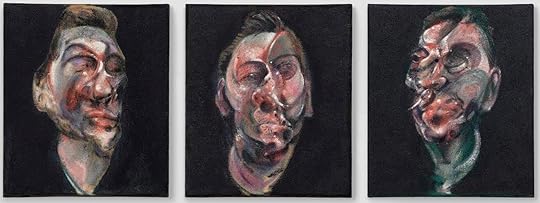
Tutti i beni della fornace sono stati liquidati per ricavarne di che vivere. E' rimasto un unico bene. E' un dipinto di Francis Bacon, colui che nelle arti visive recenti ha espresso a livelli eccelsi, con le sue figure urlanti, ingabbiate, deformate, la solitudine, l’inquietudine, la sofferenza psicologica dell’uomo moderno.

Bacon
[Francis Bacon, Three Studies for a Portrait of George Dyer, 1963]

E tutto questo è la fornace.

Bernhard ci asfissia con la sua scrittura, periodi lunghi, ripetizioni e alto ritmo, nessuna pausa, la trama non esiste. Soccombiamo sotto i colpi del monologo di Konrad, riportato in seconda e terza persona, e della la sua visione cupissima dell’uomo e della società.

Non c’è il ritorno nostalgico alla famiglia d’origine e all’infanzia dorata: “E in qualunque momento spalancasse una porta sulla propria infanzia, la spalancava sulle più fitte tenebre. Dalla sua infanzia non gli venivano che gelo e durezza.”.

Non c’è riscatto nel successo personale, anzi c’è la disperazione del fallimento. Rinchiudersi nella fornace, isolarsi dal resto del mondo, non darà i risultati sperati, è risultata un’idea sbagliata, “l’idea di un’idea, è sempre in ogni caso un’idea falsa, svilente….. La realtà è in realtà sempre diversa, è il contrario che — in realtà — è sempre la realtà.”. Il saggio sull’udito non vedrà mai la luce. C’è la forza immensa della mente e la difficoltà nell’esprimere e concretizzare il pensiero, la difficoltà creativa. “Mentre nelle teste di tutte le persone ci sono le cose più straordinarie, sulle loro carte si trovano sempre soltanto le cose più banali assurde e pietose.” “Le parole rovinano il pensiero, la carta lo rende ridicolo”. E la consapevolezza che il decadimento non solo fisico ma anche della forza mentale è quello che ci attende.

Non siamo capaci di prendere l’iniziativa, provarci, nell’eterna e vana attesa del momento giusto “perché non esiste mai in niente e in nessuna cosa il momento ideale e tantomeno il momento o l’attimo o l’istante preciso assolutamente ideale” per “afferrare la propria testa, con gesto fulmineo e spietato, e ribaltarla, rovesciandone il saggio sulla carta”.

E proviamo allora a rifugiarci nella piccola comunità coniugale, ma anche qui nessuna salvezza. “...contrarre un matrimonio, come stringere un’amicizia, vuol dire decidere di sopportare in piena consapevolezza una situazione di doppia disperazione e di doppio esilio, vuol dire passare dall’antinferno della solitudine all’inferno della vita in comune”. E tale è stato il rapporto tra Konrad e la moglie, un rapporto infernale, che vediamo nel suo svolgersi nella fornace tra angherie reciproche, che a volte ci strappano anche un sorriso (gli esercizi uditivi e la lettura alternata del Kropotkin, anarchico russso, e dell’Enrico di Ofterdingen di Novalis ce li ricorderemo). Con un crescendo di incomunicabilità (l'udito) e incompatibilità che porterà alle estreme conseguenze, fino all’omicidio della moglie.

Anche la società è disgregata, la convivenza e l’amicizia non sono possibili, la comunicazione limitata, la menzogna è imperante. Gli intellettuali non sono altro che ruminanti del pensiero, manovali della scienza e della storia, la gente è incapace e non ha volontà di ragionare e ascoltare (l'udito). “ognuno di noi deve rassegnarsi al fatto che viviamo in un mondo che non solo è terribile e terrificante ma anche assurdo”

E’ il mio secondo Bernhard. Perturbamento rimane al primo posto. Però come si fa a dare meno di cinque stelle. Come dice Pietro Citati ne La malattia dell'infinito: La letteratura del Novecento “Abbiamo l’impressione che sempre ci procura la vera arte: penetriamo in un altro mondo….Questa immaginazione cupa e allucinata, furibonda e puntigliosa, follemente estrosa e di una minuzia quasi pedantesca, apocalittica e quotidiana, è uno dei pochi doni che ci abbia riservato la letteratura degli ultimi anni.”
Profile Image for João Reis.
Author 108 books613 followers
May 22, 2021
After years of useless efforts, Konrad finally manages to buy the lime works from his cousin. He then drags his invalid wife to this cold, inhospitable place to at last write his book on the sense of hearing...
By turns hilarious and horrifying, and most time both hilarious and horrifying, The Lime Works bears the mark of master Bernhard's musical past and life-long literary genius. In his very distinguishable style, The Lime Works is a novel where dark humour meets the deep abyss of the human soul and all its obsessions.

"Whatever point a man like himself reached, arrived at, all he ever reached or arrived at was irritation, further irritation. But all of it is ultimately so comical, it's all more comical than anything, which is why, he is supposed to have said, it is all quite bearable after all, because it is comical. All we have in this world is the very essence of comedy (...)"

"Nothing can be accomplished without a measure of ruthlessness, Konrad said, because once you let yourself in for such a piece of work as this, you are letting yourself in for doing it with extreme ruthlessness, usually against the person with whom you are living, sharing your life, and who becomes your chief victim (...)"

"He goes through the mill of being incessantly derided. No one goes with him, unless he forces someone to go with him (...) But even if someone does come with him, Konrad is supposed to have said, he still walks alone, he walks alone into an intensifying solitude. He walks alone into an intensifying darkness, alone, because the thinking man always moves alone into an intensifying darkness."
Profile Image for Oscar.
2,235 reviews580 followers
April 6, 2020
Como todo Bernhard, en cuanto empiezas a leer te das cuenta que se parece mucho a ir estirando del hilo de un tapiz, en que estiras y estiras del hilo del tapiz y cada vez vas sabiendo más cosas del tapiz. Pero también es como recorrer una escalera de caracol, donde paradójicamente vuelves a acabar al principio de la escalera de caracol. Y según vas deshilando el tapiz y vas recorriendo la escalera de caracol, sabes que el narrador está contando, a través de los testimonios de Wieser y Fro, ambos administradores de terrenos, de cómo vivía Konrad en la Calera con la señora Konrad, y qué le llevo a asesinar a su mujer, enferma y en silla de ruedas, de varios tiros en la cabeza. Porque según cuentan, y aquí seguimos tirando del hilo y subiendo escaleras y volviendo sobre nuestros pasos, según Wieser o Fro o los dos, Konrad estaba obsesionado con su estudio, de título El oído, porque nadie había escrito todavía un estudio sobre el oído, y él lleva con el estudio tres décadas, pero sin llegar a escribir el estudio en papel, porque es intentar escribirlo, y cuando no le interrumpe su mujer pidiendo que le lea el Kropotkin, es alguien llamando a la puerta, que siempre están llamando, cuando no son funcionarios, son médicos o acreedores, y es que Konrad tiene aires de misántropo; o es su mujer que quiere cambiar de vestido, o sencillamente es que Konrad, que estaba totalmente preparado para escribir de una vez el estudio, que ya lo tiene escrito en su cabeza, pero que sólo le falta escribirlo en papel, ya no se ve con el ánimo adecuado para escribir el estudio. Así que camina por las habitaciones de la casa en la Calera, que son de una gran amplitud, y piensa en su estudio, así como practica sus experimentos con su mujer, el llamado método Urbantschitsch, que consiste en repeticiones durante horas y horas en el oído de su mujer de determinadas frases y letras, en tono muy bajo, para que después ella las repita. Y así vamos entrando en la cabeza de Konrad, en la locura. En fin. Es Bernhard.
Profile Image for Ubik 2.0.
1,072 reviews294 followers
September 25, 2023
“…lo scrittore che, a leggere i suoi scritti, non poteva che sembrare un pazzo che scrive…” (pag.187)

Da che io ricordi della decina di libri di Bernhard che ho letto, questa è la prima volta che il racconto si apre con un episodio forte: un efferato delitto; e non incorro in uno spoiler perché già nella seconda pagina l’uxoricidio eseguito da Konrad a colpi di fucile durante la notte di Natale è esplicitamente riferito dal narratore. Tutto lo scritto successivo è un cammino a ritroso che scandisce il progressivo deterioramento della mente del protagonista, delle condizioni della moglie e in generale di un rapporto coniugale che ha ormai raggiunto punte di sadomasochismo psicologico.

Tuttavia, nell’economia del romanzo il fatto di sangue riveste una rilevanza secondaria poiché, come sempre in Bernhard, il centro della narrazione non è occupato dagli eventi, subito definiti e quasi relegati ai margini del testo, ma dal soliloquio di Konrad espresso nella consueta prosa bernhardiana, con le martellanti reiterazioni di un flusso di coscienza che non dà tregua al lettore introducendolo in un labirinto di parole atte a riprodurre il caos di una psiche tragicamente ossessionata e disperata.

Teatro esemplare di questo dramma è “la fornace”, un ex opificio riadattato e nel corso del tempo privato di pressochè tutti i mobili, venduti o eliminati così che l’ambiente claustrofobico, metafora di un’Austria (in)felix e desolata, fornisce la sensazione di una prigione dove da anni la vittima invalida e il suo carnefice folle hanno progressivamente ridotto ogni rapporto col mondo esterno; un quadro cupo quindi, ma nella prosa di Bernhard la percezione incombente della tragedia lascia sovente il passo a parentesi di amaro e grottesco umorismo.

L’epicentro dell’alienazione mentale del protagonista è rappresentato dal saggio, ripetutamente menzionato nei suoi tormentosi monologhi, un’opera avente come oggetto “l’udito”, di cui Konrad non è mai stato in grado di mettere per iscritto una sola riga illudendosi di possedere in testa l’ispirazione ma incapace di esprimerne il testo.

E infine la comprensione di cosa accade davvero nella fornace (non solo nella notte di Natale ma nel corso degli anni) è ulteriormente alterata dall’assenza di un racconto diretto perché ogni cosa, ogni frase, ogni espressione è riportata da Wieser, Fro, Holler ed altri, in un fluire di testimonianze e di voci che non di rado si contraddicono fra loro e, come ha scritto qualcuno, sembrano assumere talora la veste di pettegolezzi.
Profile Image for Josh.
378 reviews259 followers
November 21, 2019
(4.5) When reading the blurb of this book, you would think it was a crime novel, but that could be far from what Bernhard is trying to display in this piece of work. Bernhard is a master sculptor of sentences that come out in a stream of consciousness, perhaps one of the best.

"The Lime Works" is a tale of a man who has been shaped by his youth, how he was raised, how he was treated and how lonely he was because that's all he ever was.

"Perhaps he had no right to say it, but he had a right to think it, that to look into this childhood was to look into a snake pit, into a hell. To open a door into his childhood was to open a door to darkness itself. Nothing but coldness and ruthlessness. In that pitch darkness the indifference and secret heartlessness emanating from his parents still made themselves felt."

It is also a tale of two people who need one another so much that it eventually led to the killing of one. The unhealthiness of keeping to their selves led them both down a path of mental demise.

"Basically, says Wieser, in killing his wife, Konrad had not killed primarily his wife but had, as it were in a sudden fit of abstraction, killed himself. For both the Konrads everything was destroyed in one moment."

The above is told from a very early stage of the book and the rest is primarily describing that he cannot finish his master auditory work, his life work which has taken him twenty years to write.

Imagine having something so important in your head for years upon years, never to write it down because in that act of finishing, you have nothing else to live for? The work itself is what keeps you going, fanatically thinking and testing your work out over and over, endlessly, keeping death at bay, living infinitely until the blackness comes and it's over. This is how Konrad is.

If by reading Bernhard, you expect to be taken by the first page or even the first half of the book, you are mistaken. You must keep on, traverse that path that he is leading you on and never let up, even if you feel anxious, feel nervous or feel a type of paranoia that doesn't let up.
Profile Image for JSou.
136 reviews252 followers
January 21, 2011
This book was crazy-good. I almost wish I could go hide out in some dark and dreary place (not as dreary as the lime works--nooooo thank you) for a day and re-read this in one straight shot. While reading this, I would immeadiately be so immersed in the story that even the smallest distraction would annoy me to no end. God forbid anyone tried to talk to me while I had this book in my hands; they certainly got the ol' stink-eye. This was basically a 241-page narrative--no chapters, no paragraphs. Just an incredible look into obsession and insanity.

What fascinated me most about this was not only the main character's obsessiveness with his idea and life's work, but how his obsession could twist around to such an intense procrastination. I think everyone may feel somewhat like this at times; I know I do (not in a bat-shit crazy way, though). Putting off an idea or distracting yourself with something else always seems a lot safer and easier than having to admit your idea could be a complete failure. Fear is a difficult emotion to handle, and denial seems to be a quick go-to method when it emerges.

There was so much in this book I loved, it's hard to express it all. If you haven't already, check out David's fantastic review, which was the reason I picked this up in the first place. Thanks, DK!

Profile Image for Szplug.
466 reviews1,508 followers
June 15, 2010
In the fictions of Thomas Bernhard, nature looms as an unknowable and menacing presence that permeates the entirety of the pathetic struggle through time that an alternately pitiable and contemptible humanity has ironically labelled existence. Faced with this implacable entirety from the dimmest flickering of consciousness, mankind has created a multitude of structures and systems—society, culture, religion, language—mated with abstract concepts—love, hate, happiness, hope—in an effort to convince himself that he has some measure of control or choice in the procession of his days that lead, inevitably, towards the penumbral mysteries of the grave. The protagonists of his novels have seen this desperate, strenuously performed enaction for what it is: a macabre charade. They believe that a grimly amused nature tempts its prisoners with glimpses and hints of its true nature, its reality, offering just enough to whet the appetite for further discovery without actually imparting sufficiently for aught but further confusion and error. Man has constructed language as a means of combining and making expressible his thoughts even as that language can only corrupt what it endeavors to communicate; he has built complicated societies in an effort to harness the collective energies of the society's members while ensuring that the energies unleashed serve only the deadly sins in tormenting and breaking those they were channelled to empower. These wracked individuals have been blessed with the intelligence and perception to dip deeply into the well of nature's great mystery called genius, but cursed with enough of the same to ensure that such gifts are only revealed through the wracked lenses of acute helplessness and despair. In an effort to convey the inadequacy of man's ability to describe what has been conceived in the depths of his mind, they careen in a disciplined dance around the throbbing edge of madness, teeter on the abyss of gibbering obsession, longing for the ability to unlearn what they've grasped while loathing this desperate and untoward desire for a return to ignorance and self-deception.

This is the bleak milieu in which The Lime Works takes place, a breathless, steely, morbidly humorous and exhausting forced march through the depressing story of Konrad, a reclusive eccentric who resides with his wife in an abandoned Lime Works (previously owned by a man who is either Konrad's cousin or his nephew) and who, as the novel opens, has just been arrested and confined (alternately in the local prison or mental institution) for having murdered his crippled spouse by shooting her with one of his beloved guns, a Mannlicher carbine. This is a tale of supposition and innuendo, as the reader is inundated with Konrad's monologues as recounted by his neighbors to the faceless narrator (a local insurance salesman, who occasionally informs about his success in selling policies to those he is interviewing). Konrad's life has been that of decades of misery caused by his inability to actually put to paper the elaborate, unorthodox investigation and summation of man's auditory capabilities that he has compiled entirely within the tortured confines of his mind. Perhaps aided, perhaps held back by the assistance of his chair-bound wife (victim of a curiously vague illness, and who may, or may not, be his sister) in his unique experimental method, Konrad has slowly and helplessly watched as his finances, his family and friends, his sanity, his life has leached away into the tenebrous strands of time with nothing to show but an increasingly fractured personality and enough bottled frustration to fuel a moon landing. The Lime Works presents the fascinating juxtaposition of a man who's life work is the study of hearing being the sole dispenser of dialogue, a man whose endless ability to ramble and rant apparently poured forth in waves upon the stolid and silent witnesses who freely and frequently put themselves in a position to receive such one-sided discourse. Of Konrad's great creation, The Sense of Hearing, there will never be anything other than such recollections; and it will never be determined whether this was, indeed, an inspired and landmark explication of man's auditory sense or the incoherent clucking of a madman.

Bernhard is not an easy writer to love, as he parses his own fixations into massive blocks of text that circle around repetition and obsession, ritual routine and denouncement—but there is a mineral beauty to the structure of his eccentric's rantings, the plight of the intellectual who cannot do that which he can conceive, and a humor that builds up in passages comparable with that of those other masters of dark comedy, Beckett and Kafka. Bernhard is fascinated with the mazes humans construct from the detritus of an experienced life, and the impenetrable walls that stand resolutely in certain paths that forbid any further movement forward. The act of creation is a brutal struggle, and the object, even if brought forth, will always be marred and imperfect, as noticeable for what it is missing as for what it conveys; and what of all those millions of other thoughts that weren't acted upon, that tormented with their awakening visions only to be whisked away on the next instant's breeze? For Konrad, the knowledge that whatever of his perfectly formed mental construction he finally musters will sufficient enough to put to paper will be, perforce, ridiculous, is enough to paralyze him from ever taking that vital step. Faced with such immobility, all he can do is try to escape its strictures through trivial distractions and incised brooding; and there is no possibility for relief here either, whether in isolation or company—a constant lack of company was as deadening as a constant immersion in company—the only way to stave of his impending murderous breakdown is through everyday deceit: the lie was about the only means of contact with another human being. Not for him the blandishments of enduring nature's hostility by commonplace deception—the ceaseless voice of compulsion he could hear was the ruthless whispering of Mannlicher truth.
Profile Image for [P].
145 reviews611 followers
April 7, 2015
It seems necessary when writing about Thomas Bernhard to use certain words or phrases to describe his work. I don’t think I have ever read an article or review that didn’t, for example, mention insanity, or ranting or run-on sentences or hate or tedium. If you wanted to you could play a Thomas Bernhard Review drinking game: suicide [take a sip], repetition [take a sip] and so on. The funny thing is that a positive review, and most of these reviews are positive, is meant to inspire people to read the book in question; and yet, even though I love Bernhard’s novels, reviews usually make them sound completely unappealing [I came across a reviewer the other day that imagined himself going into a bookshop and requesting something by Thomas Bernhard; the employee asks which particular book he wants, and he replies 'the interminable one.' Ha!] It’s a tough gig, I guess, but it is my intention to try and convince you that The Lime Works is approachable and fun to read [at least relative to his other books].

Before I get to that, it is worth saying something about the plot. The Lime Works is the story of Konrad, who purchases a property [the lime works of the title] for an exorbitant amount of money and moves into it with his crippled wife. He then turns the place into a kind of prison, putting up bars at the windows, and making it essentially inaccessible from the outside. Konrad believes that the lime works is the only place in which he can complete his work called The Sense of Hearing, a work that he will, in fact, never even begin to put down on paper. Konrad’s work involves exhausting experiments, which, it turns out, appear to involve shouting weird phrases at his crippled wife for hours on end. Konrad, we are told at the very beginning of the novel, eventually murders his wife by shooting her.

Now, the reason I wanted to begin by outlining the plot, when ordinarily I wouldn’t, is because no matter how sexy I want the book to sound in my review, there’s no getting away from the author’s preoccupations. If the above summary seems to you to be too dark, or just excruciatingly odd, then there is nothing I could say to change your mind. Furthermore, Bernhard’s novels are, for the most part, entirely plotless. It’s strange that his narrators always give the impression of wanting to tell a story – they claim to want to tell you about such-and-such and what happened to them – but often they don’t, not in detail anyway, and certainly not in a linear fashion. The Lime Works is, however, perhaps the closest Bernhard came to conventional storytelling, in that it has narrative momentum, and I imagine that this, for many, would be a tick in its column.

On those preoccupations: most of Bernhard’s books are concerned with damaged genius, or artistic or creative or intellectual people who are falling apart or are at odds with society. Sure, you could label most of them dangerously insane [take a sip], but they are, too, clearly very vulnerable [as are, of course, the people around them, like Konrad’s wife]. It is this vulnerability, this sense of things falling apart, this deep unhappiness, that, to some extent, accounts for how moving I tend to find Bernhard’s work. His focus is often on people who can’t act, who are paralysed by their madness or obsession. That is something I know myself; for example, these last few weeks I have been unable to read, to actually choose something to read, to hit on something that I think is fit to be read [for I think most things aren’t; that there are, in fact, only a very limited number of books worth reading]. I haven’t given up trying, oh no, but have instead spent those weeks picking up books and putting them down; fifty, sixty books; there are currently high stacks of them around my bed, giving the impression that I am trying to wall myself in.

Yet what makes The Lime Works easier to digest is that it doesn’t get entirely bogged down in his personal preoccupations [I use the phrase 'bogged down' here not all negatively, btw]. As noted previously, the book features a grisly murder, the motive for which is explored but never explained. It is, therefore, possible to read it simply as a kind of existential thriller or mystery or as an insight into the mind of a demented or maniacal man. As such, one could legitimately place it alongside novels like Lolita, Crime and Punishment, The Outsider or Sabato’s The Tunnel. So, it is, I think, likely to appeal to a greater number of people, people who cannot identify with Bernhard’s themes and ideas, but who enjoy a bit of psychokiller voyeurism. Bizarrely, it is Konrad’s more extreme actions [more extreme than Bernhard’s other protagonists] that might mean that this book will connect with more people; murder is gruesome, yes, but it is familiar.

Moreover, it is worth noting that The Lime Works is also Bernhard’s most domestic novel. Unless my memory is faulty, I don’t think any of his other work is centred around a relationship between a man and a woman; in any case, this one is certainly the only one I’ve read that so heavily features a marriage, or, more specifically, a dysfunctional marriage. And, my God, is it dysfunctional. For example, one recurring episode is Konrad forcing his wife to listen to him reading from a book by the Russian anarchist Kropotkin, whom she hates, while she, on the other hand, tries to convince him to read her favourite writer Novalis. Throughout the novel, both Konrad and his wife [who is his half-sister!] antagonise each other; as a couple they are chronically ill-suited, and yet can’t seem to live without each other.

It is a cliché to call Bernhard’s work funny [take a sip]; everyone who writes about him, much like with Beckett and Kafka, wants to impress upon you just how hilarious he is. In a way, I think the comedy is overstated. Sometimes people laugh at things that are strange, or outside of their experience or understanding; it is a kind of nervous or confused laughter, and I think that is, at times, what is happening when people read Bernhard. Something like Correction, for example, is not a comedy. I truly believe that. It is about a man who builds a cone-like structure for his sister in the centre of a forest. Most of us have never built a cone-like structure in the centre of a forest, and cannot understand why anyone would, so we tend to find the absurdity of the undertaking amusing. That’s fair enough, but screamingly funny it ain’t.

Furthermore, a lot of the laughs come as a consequence of the ranting [take a sip]. Ranting is funny because it involves a loss of control; it is, as I have stated before, a little like someone falling over. Yet the thing about someone falling over is that they are not necessarily doing it to amuse you; and I feel the same way about Bernhard’s rants. Having said that, The Lime Works, in my opinion, features more genuine jokes, is more obviously comedic. One of my favourite episodes is when Konrad is describing how his wife has been knitting mittens for him, mittens that, like his work on the sense of hearing, she never actually finishes because she keeps unpicking them and starting again. In fact, she does this so many times that Konrad comes to hallucinate about her unravelling wool! After spending a page or two on discussion of these mittens, during which Konrad explains how he tried to impress upon his wife how much he likes the mittens she is knitting, Bernhard, via Konrad, then delivers the classic punchline: there is nothing in the world I hate more than I hate mittens! Amazing. And genuinely, intentionally, very very funny.

Finally, I want to say something about the complex, sophisticated structure or set-up of the novel. Nearly all of Bernhard’s work is written in the first person, as is The Lime Works. However, whereas the narrator is usually a stand-in for Bernhard himself, a narrator who is observing or telling the story of another person, or other people, who are close to him, in this book Konrad’s story is told by, essentially, a whole village. It is presented as hearsay, or anecdotes, or accounts given to one man [an insurance salesman], who is subsequently relaying these accounts etc to the reader. So, while in, say, Correction, one never doubts that what we are told about Roithamer is true, because the one telling us his story is a close friend, who had access to both the man himself and his work, in The Lime Works one is definitely meant to doubt the veracity of what you are told. Indeed, it is often noted how contradictory some of the accounts are. I found this meta aspect of the book entirely engaging, because what it means is that Thomas Bernhard has given us a murder-mystery thriller in which not a single thing can be taken on face value.
Profile Image for Nathan "N.R." Gaddis.
1,342 reviews1,654 followers
Read
October 8, 2018
Yes I understand perhaps one of Bernhard's lesser works. Lesser read at any rate. I'll get to something else by him no doubt but listen. This is not the kind of thing for me. It's small it's claustrophobic. It's not quite bedeviled by the 1st=Person Narr pov but almost ; although it is saved by the subjunctive framing of the type "he supposedly said to xyz". That framing device I like very much and is perhaps why I continued.

I took this with me to mexico this past week for an exploration of the craft beer scene in Oaxaca. And let me tell you ; it is unexpectedly vibrant. I also took two other european volumes I didn't care for and held little investment in having only picked them up at a library sale for a buck a piece (this Bern piece too) because so many goodfolks here have bandied the names about and I was going to "check them out". The other two I didn't bother finishing. Fuck it. This 200=page novel genre ain't my bag (usually). So what.

So I went to the English language bookshop there near the San Thom church or whatever it's called (this review is fiction and I can't quote from the lime works or the other two euro novels cuz I left them in the little house we rented seeding the world with more fiction like I like to do) and picked up the recent volume from Deep Vellum Press which happened to be the third volume of a trilogy by Sergio Pitol (I'll be burning asphalt to get the first two vol's shortly) which is kind of a memoir or something but you should read it because it's sort of a reader's journal because a writer is just a fancy way of saying 'reader'. Anyway and I also picked up a cheap bargain copy of one I've meant to read now for a long time, Brás Cubas. These latter two, a mexican and a brazilian, thrilled me. And that latter even in the 1st=person culpa. [embarrassed that one of those euro authors I dnf'd was one specifically and frequently cited by Pitol, my new (possible) love.]

One other book I took but didn't get to ; because of the interposition of the mexican and the brazilian lit, is Singer's thing The Charnel-Imp. I do hope Alan understands ; I'll try to get there this week. If it don't rain too much.

And just a note, of apology, to those readers of these three authors I didn't get taken ahold of had my heart rendered by -- Just recently, even not counting the Pitol (who for sure will count) I've just stumbled head=long down two different author completionism caves and I can't really much want to be bothered with some cool author=folks already getting plenty of (deserved no doubt) attention. Naemlich :: Chandler Brossard and that hungarian guy that wrote Prae. (sorry, apparently the 'insert book/author' function don't function today.)

And so, what author have you fallen for recently.....(etc ; standard bookchat, what=have you)
Profile Image for Marcello S.
647 reviews292 followers
July 12, 2023
Quelle di Bernhard sono a grandi linee tutte variazioni di uno stesso libro: stessi concetti, stesso paesaggio, stesso vago tentativo da parte di ogni protagonista di non farsi prendere dalla disperazione. Al di là delle cose note - il monolite senza a capo con le pagine che ti arrivano dritte in faccia, le tendenze maniacali, l'isolamento, la malattia - trovo sia una questione di quanto funzionano (1) le ripetizioni, (2) il bilanciamento tra paradosso / comico / tragico, (3) i temi chiave che ritornano. E quanto, a distanza, tutto continua a girare in testa.
Per certi versi il Konrad della Fornace è riconducibile al Rudolf di Cemento, entrambi incapaci di trovare la condizione psicofisica ideale per iniziare a scrivere un saggio di estrema importanza, il primo sull'udito, il secondo su Mendelssohn. L'uxoricidio è la novità che subentra al(l'idea del) suicidio, un suo classico.
Qualche pagina l’avrei tagliuzzata, tipo gli ennesimi momenti in cui Konrad legge qualcosa a voce alta alla moglie, noiosi e non troppo efficaci. Ma è difficile non tenere conto (anche) del valore storico di questo libro nella definizione di un linguaggio - pubblicato nel 1970, successivo solo a Perturbamento tra i suoi da-leggere-a-tutti-i-costi.
Dopo Estinzione e Correzione, primi in classifica per distacco, uno dei risultati migliori.

[81/100]


Frasario minimo/

∞ Qualsiasi idea, così come qualsiasi idea di un’idea, è in ogni caso un’idea falsa, svilente. Questo, a pensarci bene, bisognerebbe saperlo.
∞ Qui, nella fornace, tutto è gelo.
∞ Nella testa si può avere tutto ed effettivamente tutti hanno tutto nella testa, ma sulla carta non c’è quasi nessuno che abbia qualcosa, avrebbe detto Konrad all’assessore, dice Wieser.
∞ La gente vuol far credere di essere ragionevole, ma non è ragionevole, la gente vuol far creder di sapere qualcosa, ma non sa nulla, la gente non fa altro che fingere.
∞ Io son sempre lì che cammino in su e in giù e ho paura di questo mio camminare in su e in giù, ne ho paura oggi come allora, come allora a Bruxelles anche oggi nella fornace ho paura di questo mio camminare in su e in giù e io cammino in su e in giù e cammino e mi fermo e penso, mi fermo e poi cammino e cammino e cammino.
∞ Contrarre un matrimonio, come stringere un’amicizia, vuol dire decidere di sopportare in piena consapevolezza una situazione di doppia disperazione e di doppio esilio, vuol dire passare dall’antinferno della solitudine all’inferno della vita in comune.
∞ Può succedere che quando uno ha accumulato un’enorme quantità di materiale per un saggio come questo (tutto accumulato nella sua testa) questo materiale gli distrugga il saggio, la possibilità che un saggio come questo venga distrutto dall’enorme e sempre più enorme accumulo di materiale, messo infine sotto forma di saggio, cresce in proporzione all’accumulo di materiale che occorre per un saggio come questo.
∞ A Konrad lassù giungeva dalla dépendance il suono delle risate di quei due, di Höller e di suo nipote, le udiva e pensava: che cosa significano queste risate? non sono sinistre queste risate?
Profile Image for Nilda.
50 reviews11 followers
quit
October 14, 2020
Bir kitabı kolay kolay yarım bırakmam ama artık boşuna okuduğum anladığım kitapları da okuyacağım diye kendimi zorlamıyorum. En son kendimi zorladığımda uzun bir süre kitap okuyamamıştım (Kara Kitap). Hiç gerek yok.

Fakat şunu belirtmeliyim ki sırf ben okuyamadım diye, bir kitap hakkında acımasızca bir eleştride bulunmaktan imtina ederim. Belki ben anlamamışımdır, olabilir.

Peki ben Kireç Ocağını neden bıraktım?

Kalemle altını çizerek bir ritim yakalayıp hızlı okuma yapabildiğim bir kitap olmuştu ama 5-10 sayfada bir ara vermek ihtiyacı duyuyordum ve hiç geri başlayasım gelmiyordu. Böylelikle kaç gecemi Kireç ocağından 20-25 sayfa okuyabilmek için heba ettim (Cevap 3 ya da 4 ama bence yeter).

Her kitabın bir zamanı vardır. (Bazı kitapların bazı kimseler için hiç bir zamanı yoktur.) Sanıyorum böylesine ARALIKSIZ, LAFLARIN SÜREKLİ DÖNDÜRÜLÜP TEKRAR EDİLDİLDİĞİ, FAZLASIYLA SAPLANTILI BİR KONUSU OLAN bir kitap okuma modunda değildim. Böyle kitaplar, biraz ön hazırlık, biraz da yürek ister. Ben çok ama çok hazırlıksız yakalandım.

Son olarak, kitaplığımda yarım bıraktığım kitaplar beni fazlasıyla huzursuz ediyor ama bu kitap hakkında konuşabilecek kadar fikir edindim, o yüzden büyük bir gönül rahatlığıyla rafında ait olduğu yere kaldırabilirim.

İyi akşamlar dilerim.
Profile Image for Eylül Görmüş.
754 reviews4,669 followers
May 2, 2024
"İnsanlarla münasebetimiz olduğunda akıllı insanlarla münasebetimiz olmuş olmuyor, insanlar akıllı olduklarını iddia ediyorlar ama akıllı değiller, insanlar bir şeyler bildiklerini iddia ediyorlar ama hiçbir şey bilmiyorlar, insanlar her şeyi yalnızca iddia ediyorlar."

Bu cümleyi önüme koysalar, kim yazmış sence bunu deseler, soru çoktan seçmeli olmasa bile hemen Thomas Bernhard diye yapıştırırdım. Edebiyatın en güzel huysuzu, en iyi homurdanan yazarı, takıntıları en sevilesi olanı.

Saplantı. Bu kitabı herhalde tek kelimeyle tarif etmem gerekse bunu seçerdim - gerçi Thomas Bernhard külliyatının tamamını bu kelimeyle özetlemek mümkün olabilir. Saplantılı karakterleri büyük bir saplantıyla yazıyor Thomas Bernhard ve ben kendisinin boğucu metinlerini çok seviyorum.

Sonunu başından öğrendiğimiz bir hikaye öğreniyoruz. Bir kireç ocağını mesken tutmuş, orada yaşamakta olan Konrad, karısını vuruyor. Kaç kurşunla vurmuş, planlayıp mı vurmuş aniden mi vurmuş, pişman mı olmuş tatmin mi, bunları bilmiyoruz. Zira Bernhard'ın sürekli "diyor Wieser, diye anlatıyor Fro" diye aktardığı türlü anlatıcılarımızın beyanları birbiriyle epeyce çelişkili.

Emin olduğumuz tek şey şu; Konrad saplantılı bir şekilde bir işe tutulmuş: "işitme" üzerine bir inceleme yazmak. Ve fakat asla yazamıyor. Henüz kafasında olduğu için "bilim" kategorisinde olan, kağıda dökebilse bir "sanat eserine" dönüşeceğini iddia ettiği işitmeye dair bu inceleme için her şeyden vazgeçmiş, engelli eşi üzerinde türlü deneyler yaparak güya incelemesi için veri toplayan Konrad, kendini işitemez ve göremez bir halde buluyor nihayetinde.

Bernhard'ın erken dönem eserlerinden biri bu kitap ve zor bir metin, zira bazen 1 sayfa süren cümleler var, paragraf yok, sayfalar dolusu sayıklama okuyoruz. Ama işte sayıklamanın da edebi olanı var hayatta. Konrad'ın sayıklamalarının içinde hayata, kusursuzluğa, sanata, gözleme, takıntıya, bireyselliğe, mülkiyete ve yalnızlığa dair çok şey saklı.

Çok boğucu ama tam da bu boğuculuğundan ötürü kudretli bir metin bence bu. Herkese önermem ama Bernhardın manyaklıklarına dair görece fikri olan okurlar sevecektir bence. Mesela ben. :)
Profile Image for Simon Robs.
505 reviews101 followers
April 27, 2021
I was "prepared" to read this TB book, my 8th now read out of sequence which poses no impediment to understanding - his books, so far, remain quite similar, they ALWAYS feature an unhinged CENTRAL figure who is paranoid and/or reclusive, misogynistic & misanthropic, has a sister whom he distrusts, parents/family he hates/distrusts, WOODCUTTERS, usually a house/domain that figures heavy, sickness/illness, suicide and/or obsessive thoughts thereof, and so on. "The Lime Works" IS that place in this novel, a cavernous fortress locked and bolted up against humanity in which our story takes place. Konrad and his crippled wife are who the narrators Fro & Weiser recount what takes place in a litany of drivel that Konrad is to have said to them in the various encounters to piece together (hindsight) what took place (REDRUM) in this farcical tragicomedy. I could not stop my reading/philosophical/narrative pattern conflating mind from conjuring a mashup to wit: "TLW's" +or-= "Waiting for Godot" meets "The Shining" (only backwards) - it fits, it really does. Konrad's "all work and no play makes Jack a dull boy" substituted for his incessant harping on about his unwritten but there in his head book "The Sense of Hearing" and his experiments surrounding which he uses to basically torture his captive wife-half-sister endlessly - although all the book is mostly told by those two stand ins for Vlad. & Estragon who are reduced to inanity listening to Konrad's yammering on about his seminal book to be written IF he can just not be distracted or get over the ennui of procrastination and so on ad nauseam.

All in all [his all] his books are very Beckettian as they each spin a web by yarning back and forth's constant chatter-like imbecilities spoken monologue style without breaks from start to finish. It might not work for everyone but I am now comfortably ensconced into his world of storytelling - to me it's almost full-on comedy. He IS, of course (TB) IN these books whether or not you believe to the contrary as the quote from "TLW's" states: "..the person didn't matter, no writer's person or biography ever mattered, his work was everything, the writer himself was nothing, despite the despicable vulgarity of all those who insisted upon confusing the writer's person with his work, the general public had been corrupted by certain historical and literary processes ... to confuse the written work with the writer's personal concerns, using the writer's person to effect a crippling of the writer's work ... reading him was like reading a madman, a writing madman, but he was in fact quite the opposite from a madman ... " on and on it goes. Are "woodcutters" choppers of wood or not? If a tree is cut in a forest by a madman does any "sane" person hear it? TIMBER!
Profile Image for Mary.
475 reviews945 followers
July 26, 2017
…not only was it a terrible, a horrifying world, but it was also a ridiculous world, but unfortunately each one of us had to resign himself to existing in a world that was not only terrible and horrifying, but also ridiculous, each and every one of us had to come to terms with this fact; how many hundreds of thousands, how many millions of people had already come to terms with it, even in his own unquestionably terrible, horrifying, and ridiculous country, our own country, the most ridiculous and most terrible of them all.
Profile Image for WillemC.
596 reviews25 followers
September 18, 2025
Eerste leesbeurt jaren geleden: 5/5

Tweede leesbeurt september 2025:

Konrad, de hoofdfiguur uit “Das Kalkwerk" (1970), heeft al decennialang een studie over het menselijk gehoor in zijn hoofd, maar er staat nog geen letter op papier. In de hoop daar nu eindelijk eens werk van te maken, koopt hij van een familielid een leegstaande kalkfabriek en trekt er samen met zijn in een rolstoel levende vrouw in; het lijkt hem namelijk de ideale omgeving voor wetenschappelijke activiteit: een kalme en geïsoleerde locatie, een “arbeidskerker”. Toch loopt alles anders af: na haar jaren als studieobject ge-/misbruikt te hebben, vermoordt hij zijn echtgenote op kerstavond met een jachtgeweer. Hoe het allemaal zo ver is kunnen komen, vernemen we via via: een naamloze levensverzekeringsmakelaar vertelt ons wat hijzelf en enkele figuren uit de entourage van Konrad – gebaseerd op hun eigen ervaringen of die van anderen - van het zaakje denken. Daardoor bestaat “De Kalkfabriek” uit een hele reek citaten (in citaten (van citaten (over citaten…))), waarvan we als lezer al snel de betrouwbaarheid in twijfel beginnen te trekken.

Bernhards derde roman is een soort neurotische, misantrope “In Cold Blood”, met in de plaats van een narratieve spanningsopbouw, een existentiële of filosofische (?). Konrad gaat gebukt onder door zelfsabotage veroorzaakte inertie en slaagt er niet in de gigantische etterbuil waar de studie na jaren in veranderd is al schrijvend open te snijden en zichzelf zo van een verpletterende last te bevrijden. Het grootste slachtoffer is uiteraard de echtgenote: een proefkonijn zonder naam dat door Konrad meegesleurd is in een koud isolement en gruwelijk aan haar einde komt door de enige echte actie die haar man in heel dit gebeuren onderneemt.

Los van enkele korte, nogal droge stukken over de Urbantsjit-methode – de proeven waaraan Konrad zijn vrouw onderwerpt – is dit verschrikkelijk verslavend leesmateriaal. Bernhards stijl begint op dit moment in zijn carrière echt vorm te krijgen en ook inhoudelijk valt alles stilletjesaan op z’n plaats: waanzin, misantropie, cultuurpessimisme, ... En wanneer je naar het einde toe onder Konrads obsessies nog wat liefde en medelijden bespeurt, krijgt wat eerst een grotesk, overdreven personage was, toch nog iets menselijks. Voor fans van “Oude Meesters”, “Ja” en “De dagschotelaars”. Tijd voor een nieuwe druk/vertaling trouwens, want deze - enige - Nederlandse editie dateert al van 1977 en is moeilijk te vinden. 4.75/5!

“Een kerkhof van ideeën en een perverse woestenij van neergehaalde hoogvliegers was ons land, door zijn schoonheid stond het, ons vaderland, voor niets dan voortdurende mislukkingen, vernederingen, verdrukking van iedere grootheid.”

“[…] terwijl toch aan de andere kant de hele wereld niets dan afleiding (van de studie) was.”

“Hij wilde niet weten hoeveel uitmuntende geestesproducten er door overhaasting en hoeveel er door traagheid verloren waren gegaan, hoeveel uitzonderlijke naturen door een dergelijke overhaasting of traagheid geestelijk vernietigd waren.”

“[…] hij was ook geen dierenvriend, omdat hij ook geen mensenvriend was, […] hij was zelfs een hartstochtelijke natuurhater en daarmee, een onvermijdelijk gevolg, een creatuurhater.”

“Eerst moest hij horen, dan kon hij zien, en daardoor kon hij denken.”

“[…] hij experimenteerde zich dood.”

“Terwijl er in de hoofden van de mensen de grootst mogelijke monsterachtigheden zaten, hadden ze op hun papier toch altijd alleen maar de groots mogelijke armzalig- en lachwekkend- en erbarmelijkheden.”

“De maatschappij beschermde zich voortdurend tegen geniale invallen door zich onafgebroken te beschermen tegen geesteszieken […].”

“[…] omdat hij de mensen haatte, haatte hij natuurlijk ook de functionarissen, want tegenwoordig was ieder mens een functionaris, iedereen was functionaris, allemaal functioneerden ze, er bestaan geen mensen meer, Wieser, er bestaan alleen nog maar functionarissen, daarom kan ik de uitdrukking functionaris niet meer horen, ik moet overgeven van het woord functionaris […].”

“Een week echter voordat hij zijn vrouw had doodgeschoten, had hij zich plotseling ingebeeld dat hij toch kou had gevat door het snel leegdrinken van een glas water.”
Profile Image for Sini.
600 reviews162 followers
February 11, 2023
"De kalkfabriek" is mijn vierde Thomas Bernhard, en naar mijn smaak de meest intrigerende Bernhard die ik tot nu toe las. Daar sta ik niet eens alleen in, want veel Bernhardkenners schijnen dit één van zijn hoogtepunten te vinden. Je moet wel een liefhebber zijn met enig doorzettingsvermogen: anderen zullen gek worden van de lange zinnen en obsessieve herhalingen, en helemaal depri van Bernhards enorme zwartgalligheid. Maar ik hou daar juist wel van, zoals ik ook wel gecharmeerd ben van de even kunstige als vreemde stijl en vorm van dit boek.

Hoofdpersoon is ene Konrad, die zijn leven lang bezig is met een totaal falende studie naar het gehoor, en die zijn vrouw heeft omgebracht. Wat mogelijk niet heel verrassend is gezien de totale mislukking van Konrads studie en leven, en het volstrekt gestagneerde huwelijk van Konrad met zijn letterlijk en figuurlijk verlamde echtgenote. Maar zowel het hoe als het waarom van die moord blijft in nevelen en dubbelzinnigheden gehuld, want de enige informatie die de lezer daarover krijgt bestaat uit geruchten, speculaties, elkaar soms tegensprekende getuigenissen uit de derde of vierde hand. De vertellende ik- figuur is niets meer dan een schim op de achtergrond, die ons doorgeeft wat Konrad gezegd of gedacht of gedaan zou hebben volgens ene Fro, ene Wieser, of volgens nog weer anderen. Daar worden we al in de allereerste zin op geattendeerd: "Maar in plaats dat ik tijdens dat op en neer lopen aan de studie denk, schijnt hij tegen Wieser gezegd te hebben, tel ik mijn stappen en word daardoor half gek". Ook alle zinnen daarna worden steeds doordesemd met "schijnt Konrad volgens Wieser gezegd te hebben", of "aldus Fro", of "aldus Wieser, volgens Fro". Daar moest ik wel aan wennen, en voor veel lezers zal het continu terugkeren van dit soort interrumperende toevoegingen te veel irritatie oproepen. Maar het past wel mooi bij de sfeer van verlammend en fnuikend falen waar dit boek om draait: Konrad is niet in staat ook maar een enkele onderneming tot een goed einde te brengen, en wij zijn niet in staat te doorzien wat hem precies drijft en wat hij precies doet. Of, nog anders geredeneerd: Konrad herhaalt steeds (aldus Wieser, volgens Fro) dat hij faalt en wel moet falen en dat dit voor iedereen in deze miserabele wereld geldt, en die herhaling wordt nog versterkt door het steeds herhaalde "aldus Frieser", "volgens Fro": de obsessieve herhaling dat wij alleen maar via geruchten of onbetrouwbare getuigenissen toegang hebben tot wat Konrad zegt en denkt.

Voorts past deze herhaling mooi bij de fuga- achtige stijl en opzet van het boek. "De kalkfabriek" heet nauwelijks alinea's en stukken wit: bijna alle bladzijden staan vol met allemaal woorden zonder tussenruimtes, en de zinnen zijn soms ellenlang. Tevens staan vooral de lange zinnen bol van herhalingen met kleine betekenisverschuivingen en nuanceverschillen, zonder tot conclusies te komen. Bovendien worden de thema's en motieven in latere lange zinnen weer met variaties herhaald en van betekenis verschoven, wat wel weer nieuwe invalshoeken oplevert maar nog steeds geen conclusies. Het boek is dus één langgerekt spel van terugkerende motieven en variaties op die motieven, steeds net anders van klankkleur en betekenis en woordvolgorde en context, en alle motieven worden naar mijn gevoel bij elke variatie rijker en complexer. Dat spel vond ik steeds mooier worden naarmate het boek langer duurde. Want het maakt dit boek heel melodieus, heel muzikaal, en van een grote esthetische schoonheid. Bovendien maakt het de obsessieve denktrant van Konrad enorm pregnant voelbaar, evenals de totale impasse waarin hij is ondergedompeld. Want Konrad herhaalt alles voortdurend en veelvuldig, omdat hij - of de verteller- er niet los van komt, en er is alleen maar herhaling met variaties zonder enige echte voortgang. Konrad is gevangen in de cirkel van zijn obsessies, en opgesloten in de onoplosbare paradoxen en onontkoombare mislukkingen waar - zo zegt Konrad, aldus tenminste Wieser, volgens Fro- ieder mens mee te maken heeft, maar dan zonder het te beseffen. Dat wordt scherp en raak verwoord. Maar het wordt vooral voelbaar gemaakt door de stijl: de bladspiegel zonder stukken wit als rustpunt of adempauze, de soms ellenlang in vicieuze cirkels draaiende zinnen, het steeds maar herhalen in steeds net iets andere vorm van hetzelfde falen. En van hetzelfde vergeefse wachten op een doorbraak uit de obsessieve kringloop van het falen.

De zinnen zijn bovendien ook op zichzelf vaak opmerkelijk pregnant. Citaatje: "En je had je hoe dan ook altijd aan de laagste aller menselijke elementen toevertrouwd, maar dat kon je niet iedere dag beseffen omdat je het anders moest opgeven, de hoop moest laten varen, principieel moest wanhopen, op de meest vernederende manier aftakelen, ten onder gaan. Sommigen geloofden zichzelf te kunnen redden door hun hoofd met fantasieën te bevolken, maar geen mens en dus geen hoofd kon er gered worden, er bestond een hoofd, en doordat dit hoofd bestond was het reddeloos verloren, louter verloren hoofden bevolkten louter verloren lichamen op louter verloren continenten, schijnt Konrad tegen Fro gezegd te hebben. Maar tegen mijn vrouw zo iets te zeggen, zou hetzelfde zijn als zo iets tegen een in de loop van miljoenen jaren stok- en stokdoof geworden steen te zeggen". Ook Konrads vrouw heeft het niet gemakkelijk, zo wordt vele bladzijden eerder al gezegd: "Alles deed haar pijn. Ze kon vaak niet meer zeggen wat haar meer pijn deed, haar lichaam of haar hoofd en ze wist niet of ze nu tegen de pijn in haar hoofd of tegen de pijn in haar lichaam moest vechten, hoofd en lichaam bestonden voor haar al lang uit één enkele pijn, en dat ze nog leefde kon ze alleen nog aan haar pijnen voelen". Dat schijnt Konrads vrouw gezegd te hebben, volgens Konrad tenminste, althans volgens Wieser. Veel mensen zullen dit vreselijke zinnen vinden, maar ik vind het prachtige crescendo's van hyperbolische wanhoop. Ook mooi vind ik hoe er in deze passages gevarieerd wordt op het motief van hoofd versus lichaam: beiden vol pijn, beiden even verloren. En zo gaat het boek dus 216 bladzijden lang door, in een adembenemend zwartgallige melodie vol van fnuikend falen.

Bovendien is "De kalkfabriek" gevuld met mooie symbolische beelden. Zoals de kalkfabriek zelf, die in de vele verschillende beschrijvingen steeds meer een Kafkaesk surrealistisch oord wordt, van groteske afmetingen en vol unheimliche kamers en gangen, zeer terzijde van de bewoonde wereld en vol verval. Die kalkfabriek is even onvoorstelbaar als de gerechtsgebouwen of het slot bij Kafka, en hij heeft eerder de vormen van een door nachtmerries vervormd spookbeeld dan van een echt gebouw. Precies daar, bewust zich afwendend van de walgelijke wereld der mensen maar ook in wanhopig makend isolement, werkt Konrad steeds tevergeefser en wanhopiger aan zijn ultieme studie over Het Gehoor. Dat wordt "het meest filosofische orgaan" genoemd, en de studie gaat gepaard met een streven naar uiterste aanscherping van de meest volstrekte sensibiliteit, zelfs voor geluiden vanuit de diepten die niemand anders hoort: "En natuurlijk hoor ik niet één enkel [geluid], nee vele duizenden geluiden hoor ik opstijgen en al die duizenden geluiden kan ik van elkaar onderscheiden. Alleen al over de waarnemingen van die duizenden geluiden uit het diepste punt van het water onder mijn raam heb ik verscheidene tientallen schriften volgeschreven, schijnt Konrad tegen Fro gezegd te hebben […]". Wat een mooie gedachte, wat een mooie, hoewel obsessieve studie. Wat een mooi streven naar gevoeligheid, naar een zo zuiver mogelijk gehoor, naar ultieme muzikale ontvankelijkheid ook. En wat een poging om met de geest te ontstijgen aan de grofstoffelijke materie. Maar juist die studie naar dat onderwerp mislukt dus totaal, en juist de volstrekte onmogelijkheid van die studie - en van het onderliggende verlangen naar ultieme zuiverheid en sensibiliteit- wordt vervolgens in vele verschillende variaties uitgemeten. Variaties die bol staan van impasse, van daadloosheid, van totaal verlamd wachten op dat ene juiste en geïnspireerde moment: het moment dat Konrad die hele alles ontstijgende studie in één enkele pennenstreek op papier kan zetten. Maar dat moment komt niet. Wat op mij des te meer indruk maakte, omdat Bernhard mij juist van de schoonheid van die studie zo meeslepend had overtuigd. En dat maakte het vergeefse wachten en worstelen van Konrad voor mij zelfs nog dramatischer en ontroerender dan het vergeefse wachten in Becketts "Wachten op Godot".

Dit boek is kortom doordrenkt van falen en mislukking. Maar de vorm en stijl ervan vind ik echt een triomf, door de niet geringe schoonheid en die melodieuze herhalingen, en vooral omdat juist die herhalingen en de treffende beelden mij extra doordrongen van het fnuikende falen en de onontkoombare mislukking. Gek genoeg werd ik bepaald niet somber van dit boek. Misschien vooral omdat ik de stijl zo bewonderde. Misschien ook omdat deze diep snijdende zwartgalligheid voor mij 'echter' voelt dan het oppervlakkige optimisme of de routineuze alledaagsheid van het dagelijkse leven. Misschien omdat het hyperbolische karakter van Bernhards zwartgalligheid mij ook wel eens aan het lachen maakt, zoals je ook kunt lachen om een grotesk lelijke karikatuur. Hoe dan ook: ik vond "De kalkfabriek" zeer fascinerend, vaak zelfs prachtig. En met Thomas Bernhard ga ik nog wel even door.
Author 6 books253 followers
April 14, 2019
Another superlative work by one of the few authors I love but would never recommend to anyone in their right mind.
Konrad the scientist keeps his crippled wife in the lime works near Sicking and does weird aural experiments on her hearing for the magisterial, life's work that has consumed him. The experiments consist of him saying random words at her repeatedly. All day. He ends up shooting her in the head. That's just the beginning of the novel. I use the term "novel" loosely because some will likely protest it, as it is one long, lengthy, stream-of-consciousness second- and third-hand monologue of Konrad describing his work, his obsession, his wife, and, ultimately, the destruction of all of it in the lime works.
Supreme literature, here, people!
Profile Image for Frabe.
1,196 reviews56 followers
January 3, 2023
Thomas Bernhard, ossessivo, narra di Konrad, pazzo o genio (è il dubbio della moglie, io propendo per pazzo), e del suo saggio sull'udito… tutto da scrivere.
Profile Image for Fulvio.
14 reviews2 followers
January 26, 2023
E' sicuramente più convincente di un testo motivazionale sulle ragioni per cui procrastinare e trascurare delle sfere della vita può essere deleterio.

L'autore parte da un gesto che il protagonista non è in grado di mettere in atto - scrivere un saggio, da lì che è solo la punta dell'iceberg sviluppa una trama tutta esistenziale in cui il personaggio non riesce a rispondere al disagio dello stare al mondo e costruisce\finisce in una rete di processi mentali, elaborati anche con fantasiosa creatività, angoscianti e claustrofobici, che lo portano ad una lenta e graduale disgregazione psicologica.

Lo scenario, ha un forte impatto visivo anche se calato nella realtà è a mio parere simbolico, metaforico.
Il luogo metafisico - la fornace, un fatto metafisico la trama stessa, che ci pongono continuamente tra realtà percettiva e realtà psicologica in rapporto ai luoghi e agli individui.
Displaying 1 - 30 of 202 reviews

Can't find what you're looking for?

Get help and learn more about the design.