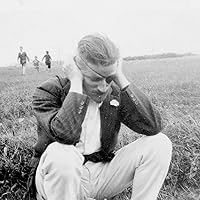
William Cuthbert Faulkner was an American writer. He is best known for his novels and short stories set in the fictional Yoknapatawpha County, Mississippi, a stand-in for Lafayette County where he spent most of his life. A Nobel laureate, Faulkner is one of the most celebrated writers of American literature and often is considered the greatest writer of Southern literature. Faulkner was born in New Albany, Mississippi, and raised in Oxford, Mississippi. During World War I, he joined the Royal Canadian Air Force, but did not serve in combat. Returning to Oxford, he attended the University of Mississippi for three semesters before dropping out. He moved to New Orleans, where he wrote his first novel Soldiers' Pay (1925). He went back to Oxford and wrote Sartoris (1927), his first work set in the fictional Yoknapatawpha County. In 1929, he published The Sound and the Fury. The following year, he wrote As I Lay Dying. Later that decade, he wrote Light in August, Absalom, Absalom! and The Wild Palms. He also worked as a screenwriter, contributing to Howard Hawks's To Have and Have Not and The Big Sleep, adapted from Raymond Chandler's novel. The former film, adapted from Ernest Hemingway's novel, is the only film with contributions by two Nobel laureates. Faulkner's reputation grew following publication of Malcolm Cowley's The Portable Faulkner, and he was awarded the 1949 Nobel Prize in Literature for "his powerful and unique contribution to the modern American novel." He is the only Mississippi-born Nobel laureate. Two of his works, A Fable (1954) and The Reivers (1962), won the Pulitzer Prize for Fiction. Faulkner died from a heart attack on July 6, 1962, following a fall from his horse the month before. Ralph Ellison called him "the greatest artist the South has produced".
I bought this story collection after a trip to New Orleans. While there, I visited the one-room boarding house in which Faulkner lived during his time in NOLA. He wrote his first novel there along with the pieces featured in this book. Now, the site is a bookstore named in his honor. Previously, I’d tried reading a popular novel of his and couldn’t get into it. Frankly, I still didn’t care much for the extremely short stories or poems. His regular short stories proved to be different. I immensely enjoyed them and honestly think I should reread the Sound and the Fury.
This collection of short stories represents some of Faulkner’s first published prose pieces. The book has little connection to New Orleans other than that Faulkner wrote the pieces while he was living in the city in 1924 and 1925 and most of them were published there. A few are set in New Orleans, but most are set either elsewhere or in indeterminate locations.
The book comprises three parts. The first, with the title “New Orleans,” is a collection of eleven very short pieces that were published in the New Orleans literary magazine The Double Dealer in January–February 1925. They are impressionistic profiles of anonymous people from a variety of professions and walks of life. They are mostly forgettable, except as a very early example of Faulkner’s prose.
The second part of the book is more interesting. It comprises sixteen longer stories that were published in the New Orleans Times-Picayune newspaper between February and September 1925. They range in subject and quality, but some display the beginnings of the prose virtuosity that Faulkner displayed in his later work. (Some also display the racial attitudes that were common in the South and elsewhere at the time.)
My favorites are “The Liar” and “Country Mice.” These stories showcase Faulkner’s gift for story-telling, with both using the device of an entertaining narrator telling a story within the story.
In “The Liar,” a man who has a reputation for telling tall tales is amusing his friends on the porch of a rural general store. He swears that in this case, the story he’s telling is true. But a stranger is also listening, for whom the story hits too close to home. One of the storyteller’s friends tells him that whether the story is true or false, he’s made a mistake either way. “And convicted of both truthfulness and stupidity, he turned his face bitterly to the wall, knowing that his veracity as a liar was gone forever.”
My other favorite story is “Country Mice.” While driving his luxurious automobile out in the country, a wealthy and sophisticated bootlegger tells about the time he and his brother had planned to make a killing by bringing whiskey from Montreal to New Haven to sell to Yale football fans. They had paid off the cops along their route and had everything figured out, but they were outfoxed by a “hick” justice of the peace and his sons.
The third part of the book is a critique of Sherwood Anderson’s books that was published in the Dallas Morning News in April 1925. Among the seven books that Faulkner evaluates, he sees fit to praise only Winesburg, Ohio and Horses and Men. His assessments of the other books are not particularly mean-spirited. But inasmuch as Anderson had befriended and mentored Faulkner, the younger writer’s conclusion that Anderson “has not matured yet, despite his accomplishments so far,” seems somewhat ungenerous.
Only a few of the stories in New Orleans Sketches really hold up on their own, but the book is worth reading if only to compare Faulkner’s first published prose efforts to his later work. Even literary giants have to start somewhere.
ეს კრებული ჯერ კიდევ 1925 წელს გამოიცა და უკვე ჩანს, რომ უილიამ ფოლკნერის მკითხველებს წინ დიდი თავგადასავალი ელით. მართალია ნიუორლეანური ჩანახატები ერთი ამოსუნთქვით იკითხება, მაგრამ ამ პატარა, თითქოს ერთი ხელის მოსმით დაწერილ, ამბებში გამოსჭვივის იოკნაპატოფას ოლქი თავისი დიდებული გმირებით, "გაუვალი" წინადადებით და ფიქრით, რომელსაც ვერასდროს მოიშორებ, თუ ამ მწერლის ერთ წიგნს მაინც გადაშლი.
Faulkner moved to New Orleans in 1925 at the age of 27 determined to write fiction. Up to then he fancied himself a poet. During his six month stay in New Orleans he published a group of "sketches" with the main New Orleans literary magazine, The Double Dealer. He also sold sixteen signed stories and sketches to The Times-Picayune.
Faulkner spent a portion of his time in New Orleans "sauntering in the Quarter and along the Mississippi River docks, and sitting at cafes and in Jackson Square" with the writer Sherwood Anderson. While in New Orleans Faulkner also began writing his first novel, "Soldier's Pay."
Take heart, aspiring writers and creators, for William Faulkner was not born William Faulkner. He had to work. These stories and sketches, which seem to flow chronologically, move from meh to good to maybe this guy will one day write "As I Lay Dying" and "The Sound and the Fury," the latter of which was published in 1929, just four years after he'd decided to write fiction.
His New Orleans Sketches were written in New Orleans, but they aren't really about New Orleans. Faulkner doesn't necessarily focus on that which makes New Orleans what it is; his subject is people. And, unlike his later creation, Yoknapatawpha County, these people just happen to live in New Orleans
All color and no substance. Picked up these sketches from earlier in Faulkner's career because I visited New Orleans and fell for the tourist trap that is the house he stayed in for a few months: the so-called "Faulkner House" which he neither owned nor occupied for longer than a year.
Like the house named for him, his sketches have only a superficial relationship to New Orleans. He is overly clever in his descriptions, and comes across contrived, like a 1920s William Gibson. Many of the stories seem to drive toward a point, a moral, or a distinct impression, but fail to deliver. It's a shame, because these sketches do have some raw material from which he could have made genuine charm.
His piece entitled "Sunset" is where he completely lost me. He writes a fictional back story to a news clipping about a black man who kills 3 men. Conceptually, I like it. However, Faulkner constructs a moronic negro cliche of a protagonist who's too dumb to know that "Af'ica" is another continent rather than a city down the road. It's a flat, numb characterization, and the narration uses the "N" word descriptively rather than in anger or in hatred, in damningly indifferent racism.
Faulkner wrote this even before his first novel, so as I read him more, I know his transformation from a heavy handed blockhead to a Nobel and Pulitzer Prize winning author will be the best story of all.
I am not a Faulkner fan and this set of sketches didn't help. These are definitely the beginnings of a man that would become a prize winning author, and you can "hear" his voice in these. It felt almost as if I was reading his incomplete ideas that he sketched out in a journal to see what would stick or revisit later. There are a few gems in here towards the end that are more developed short stories, but I think I will stick with Fitzgerald and Hemingway.
Just OK. A little let down by these stories, considering Faulkner’s reputation. I guess this is early work, just trying out some techniques to see what works, but a lot of times the writing seems to be coming from an author who thinks very highly of himself and believes overly complex descriptions of everyday objects is interesting or deep. This techniques is perhaps his background as a poet coming out. About half of the stories are interesting, with cute, full-circle narratives. The other half are stories that go nowhere and rely too heavily on characters’ mode of speaking (almost unreadable country dialects in some cases) as their apparent point of interest. Use of the N word and description of “the wealthy Jew” are painful reminders that this was written by a southern white man a hundred years ago.
New Orleans Sketches is comprised of sixteen vignettes Faulkner wrote in 1925 while living in the French Quarter of New Orleans. These pieces were published locally in the Times-Picayune and in the Double Dealer, and Carvel Collins, one of the first academics to recognize Faulkner as a major literary figure, collected the sketches into this book in 1958. “Sketches” is the most appropriate word to describe the pieces. These are not complete stories. Some of the sketches are more developed than others. Most of the stories are told through dialogue, and Collins, in his interesting Introduction, describes Faulkner as “grasping, in apprenticeship, for style.” In New Orleans Sketches Faulkner is experimenting with language and ways to tell stories.
Consider, for example, the opening paragraph of “Yo Ho and Two Bottles of Rum.” Here, Faulkner is describing a ship named Diana: “She was a sweet thing to see, wallowing like a great enceinte sow in the long swells of the Pacific. Rolling was her habit: from side to side she went even in the calmest sea, sighing and groaning like an elephant with an eternal bellyache, like a huge nondescript dog trying to dislodge fleas…” Clashing, ineffective similes, sudden, unrealized epiphanies, and rambling, sometimes incoherent anecdotes occur in almost all the representations, and it’s fascinating to think that only four years later Faulkner would publish The Sound and the Fury.
Most of the pieces’ characters are marginalized, either by society or inner demons. “Sunset,” the sketch that reads most like a fully developed short story, concerns a mentally challenged black man trying to board a ship and return to Africa. Numerous white men lie to and cheat the black man, and he ends up murdering several of the white men. Another piece describes a restaurant owner so consumed with jealousy for the imagined infidelities of his younger wife that he murders his young waiter because the restaurant owner erroneously believes the waiter is having an affair with his wife. Faulkner’s characters are either maligned by society or condemned to fail due to inner frailties. Yet, as Collins points out in his Introduction, “Faulkner perceives their (the characters’) hunger---for recognition, for love, for dignity---and makes it a major theme of these sketches.”
The pieces in New Orleans Sketches are largely amateurish and forgettable. They would be interesting for Faulkner scholars and also Sherwood Anderson scholars. Faulkner and Anderson interacted often when Faulkner lived in New Orleans in the mid 1920s, and for a brief time Anderson served as both a friend and mentor to Faulkner. Collins writes about this in the Introduction, and the last piece in the book is not fictional but an essay Falkner wrote analyzing the works of Sherwood Anderson. Finally, writers studying the early works of masters would find New Orleans Sketches adumbrates the characters and styles for which Faulkner would soon become famous.
Most of these early stories (all from 1925) by William Faulkner don't really work. But reading them as germs of what Faulkner would produce later, there is plenty to think about: I was struck, for example, by how policemen appear on the margins in nearly every story, which I think symbolizes Faulkner's efforts to observe, engage, and detain his unpracticed observations on his literary beat (here, le Vieux Carré -- later, he would do the same for Yoknapatawpha). For another example, I was intrigued to find that the first story that amused and resonated with me was the first ("Sunset") that finds Faulkner earnestly trying to write a black man. Setting all that side, though, I'd still read this collection over his direst late novels because here his personality as a young writer charms: lovelorn, loquacious, decadent, and scampish, I can see why his creative friends adored him and everyone else (I bet) couldn't stand him.
These sketches were Faulkner's first attempts at fiction writing, undertaken while he lived in the French Quarter - he was only 27 or so when he wrote the pieces in this book.
Frankly, the stories are weak. But this is essential reading for any Faulkner fanatic - it's here that he is crafting the early prototypes for characters such as Benjy (The Sound and the Fury) and Lena Grove (Light in August).
“Sketches” is a good term for this slim volume of prose. Some of the writing is indeed a pure character sketch, with no real story to it. Some rise to the level of short short stories. Much poetry in this prose. The nascent future author is present throughout. Good flavor of the Big Easy.
"Once upon a time–1925–there was an unknown American writer whose name was William Faulkner. In that far-off day there was no Faulkner Studies Associations; no academic conclaves were held to hunt down symbol and image in his work, and he gave no comfort to the ghost of Jefferson Davis.
He was not merely a heavily neo-Swinburnian poet; but he lived in bohemian quarters in New Orleans writing compassionate sketches for the Sunday features section of the Times-Picayune about crippled beggars, jockeys, bootleggers, idiots, Italian shoemakers, desperate Negroes. He had a passion for low company and an enormous admiration for Sherwood Anderson, who also lived in New Orleans at the time, and whose tender little story, “I'm a Fool,” Faulkner ranked with Conrad's Heart of Darkness as the two finest stories he had ever read. Under the influence of Anderson–and of artists and literary friends in New Orleans who were trying to escape the heavy scent of magnolia–the poet from the wastes of north Mississippi, who had tried everything and who was regarded back home as a failure and wastrel, now became, through the traditional opening step for American writers of newspaper sketches, a writer of prose and soon of fiction.
These sketches–most of them are from the Times-Picayune but some were first published in a famous New Orleans literary magazine of the Twenties, The Double-Dealer–are apprentice work, and the first ones are pretty bad."
Even Nobel Prize winners had their amateur hours. Faulkner's was spent doing an apprenticeship in New Orleans. Most of the vignettes aren't even stories—hence the lumping them together as sketches. Indeed, that's really all most of them are. Short pieces meant to capture some kind of atmosphere, published in newspapers, only collected and collated much later (in the 50s) because of the writer Faulkner would become. So, strictly for completists or fankids. The best things here are a story that is a dry run for Benjy Compson in The Sound and the Fury, and a couple of quirky comic pieces: "Chance" and "The Liar." The former is a cute rags to riches to rags fable, the sort of thing worthy of a Chaplin two-reeler. There is a wry and dogged humor in the main character's resilience in the face of his rise and inevitable fall. "The Liar" is another dry run, this time for the sort of country store back porch cud-chewing story that might feature V. K. Ratliff in perpetual war against the coming of the Snopes. Here the tale has to do with a perpetual bullshitter whose convoluted story means he will never be trusted as a liar again because this time his improbable tale turns true. A mature Faulkner would have milked this for even more comedy, for more economically. But you can see the Snopes mode in embryo here, so it's kind of fun for that. The rest of the material seems flat and (unfortunately) riddled with racial and compositional cliches.
This book, for the most part, contains Arno Schmidt's translations of a few Faulkner short stories. I don't really know anything about Faulkner, I am not the biggest fan of the short stories in this book (Arno Schmidt wasn't either, we learn from the afterword), and I have the intuition that these translations are also not the most appropriate. What makes this a beautiful book is however the inclusion of Schmidt's own "Piporakemes," one of the Ländliche Erzählungen (Bargfelder Ausgabe. Arno Schmidt Stiftung im Suhrkamp Verlag. Werkgruppe I-IV: Bargfelder Ausgabe. Werkgruppe I. Romane, Erzählungen, Gedichte, ... Caliban über Setebos: Werkgruppe I / BD 3), which describes the meeting of a smug academic ("Dr. Mac Intosh," an anagram of you know who) with a translator of a volume of Faulkner stories (possibly named "Schmidt?"). The 200 pages of Faulkner are an amazing prelude to the story.
La voce, l'accento erano del Middle West: evocavano grano sonnacchioso sotto un cielo azzurro e un velo di polvere, sulla vasta campagna; lunghe terre serene dove gli stimoli della fatica e del cibo e del sonno colmano la vita degli uomini. Sketches, bozzetti, schizzi di colore, questo sono i racconti raccolti da Il Saggiatore in questo libretto. Pagine che evocano, più che raccontare, che suscitano guizzi di emozione nel nitore della pagina senza, però, condurre lontano. I racconti sono brevi, i personaggi semplici eppure la descrizione di un fiore o lo sguardo di un personaggio (vedi Il regno di Dio) sembrano caricarsi di mille significati diversi, tutti vagamente accennati. I bozzetti di New Orleans possono essere apprezzati appieno forse solo da chi Faulkner ha già imparato a conoscerlo e amarlo nella complessità delle sue opere più famose, perché come afferma Carver Collins nella bellissima introduzione a questi 6 racconti, vi si ritrovano in nuce tutti i grandi temi del romanziere più tardo. Il suo realismo poetico, la trascendenza, il simbolismo religioso fanno qui solo capolino, pure il fascino di certe descrizioni è innegabile basti pensare al giovane vagabondo di Jackson Park in Da Nazareth o al capannello di uomini che assiepano l'emporio di Gibson in Il bugiardo e ancora all'urlo ferino e straziante dell'idiota in Il regno di Dio.
Certo, si tratta di racconti privi di una vera sostanza, uno spessore pregnante, vi si ravvisano piuttosto gli esercizi di stile di un giovane scrittore ancora in cerca della sua vera voce. La New Orleans evocata nel titolo è appunto anch'essa solo accennata, presente nel nome di un parco, nella pennellata di una strada ma sostanzialmente marginale rispetto all'economia dei racconti di Faulkner. E tuttavia, come ricorda sempre Carver Collins, il soggiorno a New Orleans è stato fondamentale per lo scrittore che, fino ad allora essenzialmente poeta, si è poi dedicato anima e corpo alla scrittura in prosa divenendo di fatto la voce narrante del Sud degli Stati Uniti. Una prosa netta, limpida, ricca di atmosfera per quanto esile nella sua brevità. Di sicuro ha stuzzicato la mia curiosità, il mio desiderio di conoscere l'umanità narrata da Faulkner nelle sue opere maggiori. Prossimo obiettivo? L'urlo e il furore.
This collection of short prose pieces was originally published in The New Orleans Times Picayune (NOLA's major local newspaper) in 1925; however, I'm not sure that Faulkner would be entirely pleased that they have been re-exposed to the light of day. The writing is rough, even amateurish, and the story lines of the pieces are often trite and stock. But in spite of the general weaknesses of the writings, there are thematic elements and character types in the pieces that would reappear in Faulkner's mature writings. What is absolutely amazing is that just two years after the publication of these mediocre writings, Faulkner had published two novels and was deeply involved in the creation of his masterpiece, The Sound and the Fury.
Seen as a step away from his failed attempts at poetry and his efforts to take on the challenges of prose writing, these stories are of value to Faulkner scholars and critics.
Not quite what I expected from the title - these are short stories rather than mere 'sketches' and they were written while Faulkner was living in New Orleans, but are mostly set elsewhere. Arranged in chronological order of publication, the book begins with the least accessible piece, a series of apparently unconnected monologues. A couple of the stories, such as 'Jealousy' and 'The Kid Learns' are so absurd, I can only assume some kind of parody was intended. However, I thoroughly enjoyed this collection once I got into it and there are some real gems here, of which 'The Liar' was a particular favourite. Here's a fantastic sentence from 'Yo Ho and Two Bottles of Rum' to whet the appetite:
"The chief gaped his toothless nut-cracker face at the first officer, replying as he did to all questions by sucking a gill of diluted whiskey into himself."
i did not start reading this book as the biggest william faulkner fan as i found some of the prose more tedious to read when i read as i lay dying. the short stories were a good introduction into his work as presented in more manageable chunks. while i did have to pay close attention to the narration in order to understand each of the stories, the effort was worth is as the subject matter was often humorous. i picked up this book when i was in new orleans and i thought the city would assume a bigger role in the short stories than it really did. still the stories stand alone in quality and they range prolifically in plot, setting, character, and narration. i would recommend rereading the stories for the full experience as its hard to pick up every detail faulkner includes in one sitting.
I obtained this book as a sort of souvenir from Faulkner House Books on a trip to New Orleans, having never read anything by Faulkner prior and this having been my first trip to NOLA. It was a good read for me, though my inexperience with both author and location may color that: the introduction section is hefty, maybe a fifth of the book, and provided a lot of context I found helpful. The prose itself is generous but open-ended in its imagery, which offered space for me to insert my own memories of the locations, architecture, and personalities I encountered. Overall, I enjoyed it, and was glad I picked it up.
I bought this little book at the Faulkner House in New Orleans. Most of these sketches were written while he lived there in 1925.
These are pretty much just literary sketches. They vary in their completeness. Some depict only a few moments in time, addressing a character within a setting. Others are very nearly short stories. All of them are interesting. Even before having published a novel, Faulkner's gifts are apparent: the ability to capture the mood of a place, portray the inner life of a character by mere external means, to speak in different voices, etc. Faulkner's early sparks later became diamonds.
Not a life-changing read, but an interesting and enjoyable one.
Supposedly the first fiction Faulkner wrote, these sketches show glimpses of his future work, in sometimes messy and sometimes brilliant forms. All written in the short period he lived in New Orleans on Pirate Alley, and a few on the boat on his way to France, they show his transition from being a poet to writing prose, but beyond that they also show how he took in his surroundings and created lives and personalities from the brief interactions with people in his everyday life. Facinating read, but not for everyone.
As a collection of short stories I took my time with this one. The gamut of stories work well in conjunction with each other, especially when you understand the whole point is to sort of mimic the newspaper articles about wealthy socialites. Faulkner had a way of presenting people in full view, flaws and all, t without judgement that I think people just weren’t prepared for. His lengthy prose and mimicry of southern dialect is a perfect time capsule. All together it works well! I enjoyed this and would probably read a story or two again during a slow morning with coffee
This was really not for me. My family got this for me from the Faulkner House after our trip to New Orleans because I thought it was the perfect souvenir, but after reading it, I think I'm just not a Faulkner fan. I found it difficult to engage with, for some reason, and even confusing as to whose head I was in at any given moment. That's what I disliked the most--maybe it's just not for someone with ADD. However, it's an interesting insight to New Orleans in the mid-1920s, and I think real Faulkner fans would really dig this for the historical and literary relevance.
New Orleans sketches is a collection of short stories that Faulkner wrote while he lived in New Orleans Louisiana in 1925. They are stories that highlight his first steps into the literary world. More importantly they are stories rich in qualities that would become known as southern literature. These qualities, unique to the genere that Faulkner shaped, can be classified as proto-southern-gothic because his themes in this collection range from disability to the grotesque. However, it important to note that not all these stories are set in the south. And While some stories might fail to entertain contemporary readers, this collection is definitely unique, and worth the read.