

What do you think?

The Fourth Political Theory #1
Четвъртият път: Въведение в четвъртата политическа теория
Двойникът на миналото е лъжлив спомен, продукт на изкуственото въздействие върху историческата памет. Блокажът на трансценденталния субект позволява миналото да се смени така, както се сменя видеокасета в уредба. В обществото се поставя алтернативна версия и така се осъществява подмяната на миналото.
Променяйки обаче миналото, ние директно променяме бъдещето. Ако е извършено съединение на две несъвместими в миналото писти, в бъдещето ще се разпространят отзвуци от вече новото химерично обединение. Бъдещето започва да блокира, семантиката на времето се размива, раздвоява се, утроява се.
С настоящето е по-сложно: за да бъде премахнато, трябва не просто да се блокира трансценденталната субективност, тя трябва да бъде ликвидирана. Това е възможно само при прехода от човека към постчовека. Работата по дешифрирането на генома, експериментите с клонирането, усъвършенстването на киборгите и роботите се правят именно в тази посока. Необходимо е да се селектира порода същества, лишени от субективно измерение, за които екзистенциалното измерение е недостъпно. Може да се симулира не само съзнанието, но също и подсъзнанието. В такъв случай настоящето ще изчезне, също както то не съществува за нечовешките същества – зверовете, машините, тревите, камъните.
Променяйки обаче миналото, ние директно променяме бъдещето. Ако е извършено съединение на две несъвместими в миналото писти, в бъдещето ще се разпространят отзвуци от вече новото химерично обединение. Бъдещето започва да блокира, семантиката на времето се размива, раздвоява се, утроява се.
С настоящето е по-сложно: за да бъде премахнато, трябва не просто да се блокира трансценденталната субективност, тя трябва да бъде ликвидирана. Това е възможно само при прехода от човека към постчовека. Работата по дешифрирането на генома, експериментите с клонирането, усъвършенстването на киборгите и роботите се правят именно в тази посока. Необходимо е да се селектира порода същества, лишени от субективно измерение, за които екзистенциалното измерение е недостъпно. Може да се симулира не само съзнанието, но също и подсъзнанието. В такъв случай настоящето ще изчезне, също както то не съществува за нечовешките същества – зверовете, машините, тревите, камъните.
688 pages, Paperback
First published January 1, 2009
About the author
Alexander Dugin
133 books494 followersAleksandr Gelyevich Dugin (Russian: Александр Гельевич Дугин, born 7 January 1962) is a Russian philosopher and activist. As a founder of the Russian Geopolitical School and the Eurasian Movement, Dugin is considered as one of the most important exponents of modern Russian conservative thought in the line of slavophiles. He earned his PhD in Sociology, in Political sciences, and also in Philosophy. During six years (2008 – 2014), he was the head of the Department of Sociology of International Relations in Sociological Faculty of Moscow State University. His publications include more than sixty books such as Foundations of Geopolitics, Fourth Political Theory, Theory of Multipolar World, Noomakhia (24 volumes), Ethnosociology. The influence of Dugin’s thought on modern day Russia (including political leaders) is recognized by not only his followers but also his philosophical and political opponents. His ideas are sometimes judged controversial or nonconformist but almost all agree that they are inspiring and original.
Ratings & Reviews
Friends & Following
Create a free account to discover what your friends think of this book!
Community Reviews
Displaying 1 - 30 of 128 reviews

October 31, 2020
I think it's official now: I'll never be invited to a DNC. I've lived in Russia, after all (under extremely mysterious circumstances that haven't yet been explained to anyone's satisfaction, not even close); I've been mentioned on the acknowledgments page of a pro-Trump book; and now I've chosen to review The Fourth Political Theory (2009) by Russian fascist Alexander Dugin, in which he advocates the dreaded...well, fourth political theory. Not the second, not the third. But the fourth.
That is, eventually he does. Sort of. In all seriousness, though, I read this book in hopes of getting a better understanding of Russian nationalism. Now that I've finished, however, I'm not sure that was the result. And while I feel an impulse to mock someone like Dugin, and that's an impulse I will probably honor, what's less comfortable is to first of all acknowledge that he makes some valid points.
If you can get past the redundancy and verbiage of his writing style, for example, the gist of the opening chapters reminds me of something a Russian friend said to me not long ago: essentially that Americans, consciously or unconsciously, tend to think of their society as the peak of modernity, and that the rest of the world, including Russia, is just a few steps behind them, on the same path, collectively desiring the same things and the same kind of life; and then that we Americans also tend to think that we can "guide" or help these other countries on their way (even helping to overthrow their democratically-elected governments, when these misguided people make the "wrong" choices), which is a worldview that has obviously led to a lot of problems throughout the past century. When Dugin criticizes that same spirit of arrogance and imperialism, or when he talks about how, after the end of the Cold War, liberalism dissipated into the air so to speak, taking on the appearance of reality instead of just one ideology among many, he doesn't sound far off from the leftist perspective of someone like Mark Fisher (although I think Fisher would've distinguished modern neoliberalism from classical liberalism, and, judging from what little I've read of his work, I think he would have rejected many of Dugin's values).
This is a common theme throughout the early chapters of Dugin's book- the notion, that is, that an idea can become so ubiquitous that people barely notice it as an idea to be accepted or rejected anymore; it simply fades into the background, becoming an unremarkable fact of the world. On the contemporary feeling towards Nietzsche's quote that "God is dead", for example, which was presumably once very disconcerting to people (just as it is said that people who went to The Exorcist in '73 really did scream and faint in the theaters), Dugin is actually pretty funny, as well as accurate: "The people of postmodernity are already so resigned to this event that they can no longer understand it- who died, exactly?"
But it takes a long time and a lot of recondite vocabulary to get to the upshot here, and honestly I'm still not sure I've got a handle on it. If I didn't know anything about Dugin outside of this book, I'm also not sure that I would have identified him through the text alone as a fascist- even if every so often he darkly mutters the kinds of things that fascists tend to darkly mutter, such as "total war and total peace are equally murderous"- because he is often so abstract and indirect, which makes for duller and duller reading as the book goes along, to the point that a bit of insane, visceral ranting actually might have been refreshing. Suffice to say that Dugin sees the twentieth century as a battle among three political theories- liberalism, communism and fascism, the latter two having been defeated- and that he believes the fourth should be centered around Heidegger's notion of Dasein, or "being." What exactly Dugin means by this remains pretty nebulous; or it did to me, anyway. Furthermore, according to Dugin, the world should be (or is, rather, has always been, should always be) divided into "civilizations" or "zones of influence." This could lead to some re-zoning, naturally, since "the Western border of the Eurasianist civilization goes somewhat more East of the Western border of the (sic) Ukraine, making that newly-formed government...fragile and not viable." Are Ukrainians, in Dugin's vision, going to have a say in the matter? I'll give you one guess, and your first hint is Crimea.
Is it a bit hypocritical, though, given the history of the United States, for us to tell Russia not to meddle in the affairs of its neighbors? I think so. Which is why the United States should stop doing it, also. But it's not much of a stretch to see Dugin's ideas as a mirror-image of that which he's trying to oppose.
But to get back to what those ideas mean in the real world. A friend and I were just talking about how anyone who writes or podcasts or tries to comment on things in any way is generally susceptible to the delusion that what we're doing has some small effect on the world. Unfortunately, in Dugin's case, it's not a delusion. According to Wikipedia, for example,
In the Kremlin, Dugin represents the "war party", a division within the leadership over Ukraine. Dugin is seen[by whom?] as an author of Putin's initiative for the annexation of Crimea by Russia. He considered the war between Russia and Ukraine to be inevitable and appealed for Putin to start military intervention in eastern Ukraine. A Skype video call posted on YouTube showed Dugin providing instructions to separatists of South and Eastern Ukraine...So as I read this book, I couldn't bring myself to forget that Dugin is someone whose words have consequences.
I still find that a bit difficult to wrap my head around, however, simply because I can't imagine this book firing anyone up. There are too many passages that read like this:
We must deal with the bifurcation of temporal constructions. It is time to address this question with all its implicit weight. Now, on the eve of the end of history, the edge of the descent into post-history, we could make the decision to give different ontological responses.Yeah! Let's go out and...! Wait, what are we gonna do, exactly? Run that by me one more time?
A lot of the second half of the book is bogged down in similar dehumanizing theory. There is something sad in how far removed a good deal of what Dugin writes about really is from the everyday concerns of most people. As I read, in fact, I started to imagine a different book. How about a memoir by someone who grew up in the Russia of the 90s, for example, or maybe the Donbas region of Ukraine, whose family maybe didn't have an easy time of it? And what if that person could describe how in Donbas they knew that Yanukovich was a crook, but at least he was a crook from their part of the country; and then what it was like when the revolution took place in Kyiv, and Russian media saturated Donbas with propaganda about neo-nazis? That is a story that even if I didn't agree with, I think I could empathize with- just as I have empathy for people in our country who were tired of losing their jobs and seeing their family members sent overseas to fight endless foreign wars, and took a chance on electing a president who's a bit of a psycho. In the broad outlines that I know them, these are comprehensible stories. The kind of person who would really be fired up by The Fourth Political Theory I find less comprehensible.
In other words, I have my doubts about how representative of the concerns of common people Dugin's book really is, regardless of his proximity to elite power in Russia. The opposition to certain aspects of globalization I get, the reverence for Tradition (Dugin often capitalizes this word) I acknowledge is a thing that some people feel, and Dugin's irredentism I think is very relevant, but I can't shake the suspicion that it would be a mistake to pore over Dugin's thoughts about, for example, the circularity of time (even though they're sometimes interesting), and conclude that this is what the man or woman in the street in Moscow is thinking about on a daily basis; or even what a typical Russian nationalist, if we can say that there is such a thing, is obsessing over.
On the other hand, maybe that's just it. Maybe the sense of being called to a sacred task is enhanced, not diminished, by the esotericism of the language. And if you've never encountered this kind of language before, I can imagine Dugin's very lack of clarity could make what he's saying seem profound. But even that dynamic doesn't occur in a vacuum. When people are dissatisfied, for whatever reasons, ideas like Dugin's are going to be more appealing. But if we started trying to address the sources of people's dissatisfactions, at least those that can be addressed by society, instead of thinking of people as mindless cult members beyond help, maybe we'd start to put the Dugins and even the Trumps of the world out of business.
But the book consists mostly of repetitive, unclear writing (that is to say, unclear thinking) by someone with a large vocabulary and a comfort with sitting back and encouraging other people to go get wounded or killed for the sake of his half-baked ideas. There's nothing impressive or innovative about that. It's an old story- just check out Demons by Dostoevsky, or Kissinger's memoirs.

April 24, 2016
This review has in mind St Cheetos the Prophet.
The phrase that best sums up Dugin's approach is "Negating the Logic of History." Dugin begins by listing the three most common (and modern) ideologies:
Liberalism: the individual is the normative subject
Fascism: race or nation is normative subject
Communism: Class
The second and third options failed, leaving liberalism in charge.
4th political theory: Dasein is the acting subject.
Liberalism is the broad, architectonic worldview that hinges on several assumptions (the challenging of which will entail a drone strike). Classical Liberals defined freedom as “freedom from.” There should be no ties on an individual’s will. It is these individuals, acting alone but taken as a whole, who form the circle of liberal action.Lacking a telos by definition, liberalism is hard-pressed to explain what we have freedom for.
Against this Dugin posits Heidegger's Dasein as the acting subject of the 4th Political Theory. Dasein is a way to overcome the subject-object duality. It is inzwichen, the “between.”
One valuable insight of Dugin's is his pinpointing the bigotry of Western liberals. All societies must accept liberalism in its current manifestation. What if you don't want to? Well, if you don't have natural resources you are probably okay. Otherwise, look out.
Liberal ideology is necessarily evolutionary. The concept of progress takes one from barbarism to technologism and the more refined way of life of the markets. This is what Dugin calls "The Monotonic Process:" he idea of constant growth, accumulation, steady progress by only one specific indicator (60). In other words, in a system only one value (x) grows. Only one thing (or a small group of things) accumulates. Applied to either machines or biological life, this is death.
Modern political options have all seen progress and time in a linear fashion. Even more so, because of time there must naturally be progress. By contrast, Dugin suggests that
T1: Time is a social phenomenon with its structures arising from social paradigms (68).
By this he wants to safeguard the idea that there can be “interruptions” and reversals in the flow of time. History does not simply teach the march of capitalism upon earth (borrowing and adapting Hegel’s phrase).
Nevertheless, and perhaps unaware, Dugin remains close to the linear view. He does note that time is “historical” (70) and from that draws a very important, Heideggerian conclusion: it cannot be objective.
Why not? The acting subject, the historical observer (whom we will call “Dasein,” but this is true also of the individual in liberalism) is finite. He doesn’t have a god’s-eye view on history. Of course, that’s not to say it can’t be real or reliable per the observer, but we don’t have the Enlightenment’s dream of a god’s-eye application of reason to reality.
Dugin then analyses how Leftist and Conservatism evolved in the 20th century.
Finally, he ends with a dense and staggering discussion on the nature of time. Kant denied that by mere perception we have access to the thing-in-itself. Therefore, if the being of the present is put in doubt, then all three moments (past, present, future) become ontologically unproveable. From the perspective of pure reason, the future is the phenomenon, and hence, it is (157).
Kant puts time nearer to the subject and space nearer to the object. Therefore, time is subject-ive. It is the transcendental subject that installs time in the perception of the object.
The phrase that best sums up Dugin's approach is "Negating the Logic of History." Dugin begins by listing the three most common (and modern) ideologies:
Liberalism: the individual is the normative subject
Fascism: race or nation is normative subject
Communism: Class
The second and third options failed, leaving liberalism in charge.
4th political theory: Dasein is the acting subject.
Liberalism is the broad, architectonic worldview that hinges on several assumptions (the challenging of which will entail a drone strike). Classical Liberals defined freedom as “freedom from.” There should be no ties on an individual’s will. It is these individuals, acting alone but taken as a whole, who form the circle of liberal action.Lacking a telos by definition, liberalism is hard-pressed to explain what we have freedom for.
Against this Dugin posits Heidegger's Dasein as the acting subject of the 4th Political Theory. Dasein is a way to overcome the subject-object duality. It is inzwichen, the “between.”
One valuable insight of Dugin's is his pinpointing the bigotry of Western liberals. All societies must accept liberalism in its current manifestation. What if you don't want to? Well, if you don't have natural resources you are probably okay. Otherwise, look out.
Liberal ideology is necessarily evolutionary. The concept of progress takes one from barbarism to technologism and the more refined way of life of the markets. This is what Dugin calls "The Monotonic Process:" he idea of constant growth, accumulation, steady progress by only one specific indicator (60). In other words, in a system only one value (x) grows. Only one thing (or a small group of things) accumulates. Applied to either machines or biological life, this is death.
Modern political options have all seen progress and time in a linear fashion. Even more so, because of time there must naturally be progress. By contrast, Dugin suggests that
T1: Time is a social phenomenon with its structures arising from social paradigms (68).
By this he wants to safeguard the idea that there can be “interruptions” and reversals in the flow of time. History does not simply teach the march of capitalism upon earth (borrowing and adapting Hegel’s phrase).
Nevertheless, and perhaps unaware, Dugin remains close to the linear view. He does note that time is “historical” (70) and from that draws a very important, Heideggerian conclusion: it cannot be objective.
Why not? The acting subject, the historical observer (whom we will call “Dasein,” but this is true also of the individual in liberalism) is finite. He doesn’t have a god’s-eye view on history. Of course, that’s not to say it can’t be real or reliable per the observer, but we don’t have the Enlightenment’s dream of a god’s-eye application of reason to reality.
Dugin then analyses how Leftist and Conservatism evolved in the 20th century.
Finally, he ends with a dense and staggering discussion on the nature of time. Kant denied that by mere perception we have access to the thing-in-itself. Therefore, if the being of the present is put in doubt, then all three moments (past, present, future) become ontologically unproveable. From the perspective of pure reason, the future is the phenomenon, and hence, it is (157).
Kant puts time nearer to the subject and space nearer to the object. Therefore, time is subject-ive. It is the transcendental subject that installs time in the perception of the object.

December 19, 2016
"you [USA] are not anymore boss"
"nobody has monopoly of truth"
"we have our special Russian truth"

"The Most Dangerous Philosopher in the World", in:
http://bigthink.com/paul-ratner/the-d...

UPDATE
With the Ukraine invasion Russia has collapsed any idea of "euroasianism", according to the Dugin's expression. Russia has been seriously sanctioned by the West, its economy risks collapse and even China is reluctant about offering help. Russia runs the risk of becoming a pariah, an isolated nation*. Dugin's 4th Theory has collapsed as well. He'd better start sketching the 5th one.
*"Putin turned Russia into North Korea" (according to economist and former Yeltsin advisor Anders Åslund)
Die Zeit, of 20th March 2022
https://www.spectator.co.uk/article/r...
UPDATE
Aleksandr Dugin: The far-right theorist behind Putin's plan (12/04/2922)
https://www.youtube.com/watch?v=Du7fO...
-Is Putin following his blueprint?
UPDATE
https://www.youtube.com/watch?v=RjShG...
UPDATE
Vladimir Putin's May 9th
"Russia wants to defeat the entire West"
A conversation with the Moscow sociologist Greg Yudin about the society of lies, mythical simplifications and the new Russian fascism.
in: https://www.zeit.de/kultur/2022-05/wl...
UPDATE
"Either sovereignty or the West. And it is irreversible."
in: https://www.geopolitika.ru/en/article...
UPDATE
3rd of October 2022
About the book
Dugin thinks of himself as the alternative to "failed" philosophical systems like communism, fascism or liberalism. Yes, some are West philosophical systems. I reckon he’s well-versed regarding the old and contemporary political thought in Europe.
In a way, he makes me recall the Vietnamese philosopher, Ho Chi Minh, who, early on, in his life, before becoming a leading figure against colonialism and the US presence in Vietnam, went to the West to “study the enemy” (namely to France and the USA).
If you search carefully you’ll easily find (on YouTube, namely) Dugin conducting interviews in Europe apropos certain philosophers (Heidegger, for example; or Alain de Benoist). He should be thankful to the West philosophical tradition (starting in Greece). Instead, he wants war and destruction. He’s a supporter of the Ukraine invasion and some politicians believe in him (Putin, namely). Sad.
UPDATE
https://www.newyorker.com/news/our-co...
UPDATE
https://www.arktosjournal.com/p/the-r...
UPDATE
https://alexanderdugin.substack.com/p...
"nobody has monopoly of truth"
"we have our special Russian truth"
"The Most Dangerous Philosopher in the World", in:
http://bigthink.com/paul-ratner/the-d...
UPDATE
With the Ukraine invasion Russia has collapsed any idea of "euroasianism", according to the Dugin's expression. Russia has been seriously sanctioned by the West, its economy risks collapse and even China is reluctant about offering help. Russia runs the risk of becoming a pariah, an isolated nation*. Dugin's 4th Theory has collapsed as well. He'd better start sketching the 5th one.
*"Putin turned Russia into North Korea" (according to economist and former Yeltsin advisor Anders Åslund)
Die Zeit, of 20th March 2022
https://www.spectator.co.uk/article/r...
UPDATE
Aleksandr Dugin: The far-right theorist behind Putin's plan (12/04/2922)
https://www.youtube.com/watch?v=Du7fO...
-Is Putin following his blueprint?
UPDATE
https://www.youtube.com/watch?v=RjShG...
UPDATE
Vladimir Putin's May 9th
"Russia wants to defeat the entire West"
A conversation with the Moscow sociologist Greg Yudin about the society of lies, mythical simplifications and the new Russian fascism.
in: https://www.zeit.de/kultur/2022-05/wl...
UPDATE
"Either sovereignty or the West. And it is irreversible."
in: https://www.geopolitika.ru/en/article...
UPDATE
3rd of October 2022
About the book
Dugin thinks of himself as the alternative to "failed" philosophical systems like communism, fascism or liberalism. Yes, some are West philosophical systems. I reckon he’s well-versed regarding the old and contemporary political thought in Europe.
In a way, he makes me recall the Vietnamese philosopher, Ho Chi Minh, who, early on, in his life, before becoming a leading figure against colonialism and the US presence in Vietnam, went to the West to “study the enemy” (namely to France and the USA).
If you search carefully you’ll easily find (on YouTube, namely) Dugin conducting interviews in Europe apropos certain philosophers (Heidegger, for example; or Alain de Benoist). He should be thankful to the West philosophical tradition (starting in Greece). Instead, he wants war and destruction. He’s a supporter of the Ukraine invasion and some politicians believe in him (Putin, namely). Sad.
UPDATE
https://www.newyorker.com/news/our-co...
UPDATE
https://www.arktosjournal.com/p/the-r...
UPDATE
https://alexanderdugin.substack.com/p...

September 12, 2015
The compilation and translation of this work save it from a single-star rating; the team at Arktos is exceptional in this regard. The ideas expressed therein, however, are convoluted, deliberately obscurantist, and in many cases plainly nonsensical. Dugin's understanding of Orthodox Christianity is perhaps his greatest intellectual deficit, though he does no good service to the phenomenology or hermeneutics of Heidegger, either. His goal to overcome post-modernism with post-modernism has resulted in what is perhaps the greatest collection of nihilist drivel in recent memory.
Compounding this disappointment is the promise of the book to offer a fresh alternative to contemporary geopolitics and worn-out Occidental ideologies. What it provides instead is a poorly executed re-hashing of turn-of-the-century Slavophile ideas that have already been better reinterpreted by authors like Oswald Spengler. Combine utter ignorance of Hiedeggerian philosophy with a clumsy re-introduction of Nikolai Danilevsky's historiography based on a semi-digested Spenglerian framework; stir well and add some stirring but empty phrases, and you have Dugin's entire intellectual framework in a nutshell.
In short, Spengler said it better without all the pseudo-philosophy and even that's in dire need of an update.
Compounding this disappointment is the promise of the book to offer a fresh alternative to contemporary geopolitics and worn-out Occidental ideologies. What it provides instead is a poorly executed re-hashing of turn-of-the-century Slavophile ideas that have already been better reinterpreted by authors like Oswald Spengler. Combine utter ignorance of Hiedeggerian philosophy with a clumsy re-introduction of Nikolai Danilevsky's historiography based on a semi-digested Spenglerian framework; stir well and add some stirring but empty phrases, and you have Dugin's entire intellectual framework in a nutshell.
In short, Spengler said it better without all the pseudo-philosophy and even that's in dire need of an update.

January 9, 2018
In Europe and its recent offshoot America, also known as “The West” is the tendency to speak and think of European experiences as if they were universal experiences. This is called Eurocentricism: that what the West thinks of as right and good is indeed right and good for the rest of the world. The practice recognises only European actors and actions as the primary driving forces in the world. It reinterprets all of humanity’s common history to present our (the West’s) superiority as both inherent and inevitable. Its prescriptions for the rest of the world are “to be more like us.” Being “more western” is good. Being “less western” is backward and bad. In that, it is imperialist, racist and chauvinistic. The rise of America since the 20th century as a unipolar military and cultural power has violently thrust this phenomenon onto the Slavs, the Chinese and the Arabs.
Russia has decided to react. Russia, under Putin, has decided to resist this military and cultural hegemony. In Ukraine and the Middle East, Russia has said “No” militarily to America’s unipolar decision making. They have also said “No” to the narrative that describes everything Western as “good” and everything Russian as “bad.” Culturally, this is why Russia’s news channels (RT.com) is so important. It continuously points out Russia’s, China’s and Turkey’s behaviour as normal, and everything about America’s actions as abnormal, bad and hypocritical. (And oh how we go apoplectic when given a taste of our own medicine! In Ukraine and Syria, Russia is fighting back with militarily weapons. With their public media channels, they’re fighting back with cultural weapons. Enter Alexander Dugin.
Dugin, has become known as the man who best explains Putin to the West. The trolls and the fake news industry have been muddying Dugin’s history and his reputation. Stick to his books or what he actually says in English on YouTube. He is a sociologist and public intellectual in Russia who has published more than 40 books, and speaks many languages.
In this book, Dugin acknowledges that The First Political Theory, Liberal Democracy defeated the Second and Third political theories, Socialism and Fascism as a means of organising the economy and Society. For reasons and on evidence that we all know, he says that Liberal Democracy is failing and that a Fourth Political Theory is needed.
I accepted Dugin's critique of Liberal Democracy whole heartedly (this takes up the first 20% of the book )and I would highly recommend it to anyone vaguely dissatisfied with the West and wanting to know why. However, the remainder of the book is indecipherable. I cannot figure the characteristics of this Fourth Political Theory from what I've read. (Perhaps Stephen Borthwick's review explains that.)
Russia has decided to react. Russia, under Putin, has decided to resist this military and cultural hegemony. In Ukraine and the Middle East, Russia has said “No” militarily to America’s unipolar decision making. They have also said “No” to the narrative that describes everything Western as “good” and everything Russian as “bad.” Culturally, this is why Russia’s news channels (RT.com) is so important. It continuously points out Russia’s, China’s and Turkey’s behaviour as normal, and everything about America’s actions as abnormal, bad and hypocritical. (And oh how we go apoplectic when given a taste of our own medicine! In Ukraine and Syria, Russia is fighting back with militarily weapons. With their public media channels, they’re fighting back with cultural weapons. Enter Alexander Dugin.
Dugin, has become known as the man who best explains Putin to the West. The trolls and the fake news industry have been muddying Dugin’s history and his reputation. Stick to his books or what he actually says in English on YouTube. He is a sociologist and public intellectual in Russia who has published more than 40 books, and speaks many languages.
In this book, Dugin acknowledges that The First Political Theory, Liberal Democracy defeated the Second and Third political theories, Socialism and Fascism as a means of organising the economy and Society. For reasons and on evidence that we all know, he says that Liberal Democracy is failing and that a Fourth Political Theory is needed.
I accepted Dugin's critique of Liberal Democracy whole heartedly (this takes up the first 20% of the book )and I would highly recommend it to anyone vaguely dissatisfied with the West and wanting to know why. However, the remainder of the book is indecipherable. I cannot figure the characteristics of this Fourth Political Theory from what I've read. (Perhaps Stephen Borthwick's review explains that.)

July 27, 2018
Dugin, "Putin's brain" is an interesting character, and in my opinion certainly a bad actor on the world stage, but he does have a few relevant ideas here and there.
This book, which touts itself essentially as a critique of the three major political ideologies of the recent past (liberalism, communism and fascism) has some ups and many downs, with the highlight thankfully being the very last few pages on the metaphysics of chaos, a true gem of an essay. The analyses of conservatism and Marxism had quality aspects, but the work as a whole frequently is derailed into tar pits of often almost entirely empty philosophizing and quite strange conclusions to draw from regarding the state of things.
Dugin's conceptualization of liberalism (including it's original expression as classical liberalism, of which libertarianism sprouts from) is as enemy # 1, a truly evil ideology born of the most corrupt society, the West. Even though he vaults valid criticisms of it here and there, I can't take this position remotely seriously, as it rather poorly and clumsily does not make the distinction between crony capitalism and real free markets, globalism vs. nationalism, republics vs. democracies, or the endless hedonistic degeneracy of progressivism and the rational self interest of individualism.
His incredibly pretentious and entirely abstract, not remotely pragmatic "solutions" involve converting the subject of history from the individual or the group to Heidegger's 'dasein', to move from rational back to magical thinking, and to move to a civilizational model instead of that of nation-states. On top of all this, it seems unsaid but fairly certain that he is a Luddite, which is equally cringeworthy as much of the rest of it, which often involves whole chapters of pointless waffling just to get the point where he admits he has no real idea or plan for his "Fourth Political Theory". Near the end of the book he finally says that it may look something like National Bolshevism, of which I have zero interest in.
Dugin is irrational and more than a little insane. He has embraced his "Fourth Political Theory" probably too literally, which includes an alarming concession to mania and schizophrenia in the stead of any sort of rationality. I'm not kidding about this bit. I'm into shamanism and psychopomp myself, but I think this man has spent too much time trapped in his own deranged and pathetic mind. Either that, or the lead poisoning from the plumbing in his shitty flat has finally set in. He is truly a dangerous individual, and it is horrifying to think he has Putin's ear. The work reads as a case study of the worst aspects of a demented mutant Russian psyche, and is almost entirely void of genuine, constructive suggestions for the future, or an honest look at the West.
I can't wait to not read the rest of his books ;)
This book, which touts itself essentially as a critique of the three major political ideologies of the recent past (liberalism, communism and fascism) has some ups and many downs, with the highlight thankfully being the very last few pages on the metaphysics of chaos, a true gem of an essay. The analyses of conservatism and Marxism had quality aspects, but the work as a whole frequently is derailed into tar pits of often almost entirely empty philosophizing and quite strange conclusions to draw from regarding the state of things.
Dugin's conceptualization of liberalism (including it's original expression as classical liberalism, of which libertarianism sprouts from) is as enemy # 1, a truly evil ideology born of the most corrupt society, the West. Even though he vaults valid criticisms of it here and there, I can't take this position remotely seriously, as it rather poorly and clumsily does not make the distinction between crony capitalism and real free markets, globalism vs. nationalism, republics vs. democracies, or the endless hedonistic degeneracy of progressivism and the rational self interest of individualism.
His incredibly pretentious and entirely abstract, not remotely pragmatic "solutions" involve converting the subject of history from the individual or the group to Heidegger's 'dasein', to move from rational back to magical thinking, and to move to a civilizational model instead of that of nation-states. On top of all this, it seems unsaid but fairly certain that he is a Luddite, which is equally cringeworthy as much of the rest of it, which often involves whole chapters of pointless waffling just to get the point where he admits he has no real idea or plan for his "Fourth Political Theory". Near the end of the book he finally says that it may look something like National Bolshevism, of which I have zero interest in.
Dugin is irrational and more than a little insane. He has embraced his "Fourth Political Theory" probably too literally, which includes an alarming concession to mania and schizophrenia in the stead of any sort of rationality. I'm not kidding about this bit. I'm into shamanism and psychopomp myself, but I think this man has spent too much time trapped in his own deranged and pathetic mind. Either that, or the lead poisoning from the plumbing in his shitty flat has finally set in. He is truly a dangerous individual, and it is horrifying to think he has Putin's ear. The work reads as a case study of the worst aspects of a demented mutant Russian psyche, and is almost entirely void of genuine, constructive suggestions for the future, or an honest look at the West.
I can't wait to not read the rest of his books ;)

November 1, 2020
One curious observation I have made recently is that the reading habits of so-called reactionaries and traditionalists doesn't really reflect their outspoken hatred of all things liberal, modern and "enlightened". I have dealt with two distinct sects of them, and in both, most members seem to have gotten half their education from watching youtube videos. That's from people who absolute loathe technological progress, by their own admission.
The Fourth Political Theory is an example of this habit, and one source of it. Two-hundred pages of decrying modern western degeneracy and the fruits of the Enlightenment and the French Revolution, yet half its sources are post revolutionary Frenchmen, and it owes more to post-modern epistemology than it does to the writings of the Church Fathers. In a book talking at length about spirituality, I think I found exactly one quote from the Bible, and while it was clever, it only served rhetorical purposes. This book is soulless, and, I suspect, deliberately dishonest. Rogue philosophy? Hardly, this is an academic work, written for an academic audience, or an audience thinking it's academic. Erudite? When it comes to geopolitics, maybe, but that's a fraction of the book. Dugin has amassed an impressive philiosophical library, but his thought is unsystematic, his wisdom filled with holes. Alas, the traps laid for us autodidacts! On history, he is confused, he variously locates the origins of liberal thought with Locke, then into the "eighteenth century" (with the French Revolution?), then with Hegel again, if I am not mistaken. On economics, he doesn't know left from right and up from down. Yet his work is complex and demanding, so I am not surprised that young, intelligent aspiring scholars are lulled in by works such as these. It is long known, and widely decried as commodification, how spam mails, obstructive advertisements and mobile games mess with the reward centers of our brain, yet the commodification of anti-consumerist philosophical treatises is not spoken of, and the motives should be obvious. The mind is grateful to be challenged by bombastic references to obscure philosophers that serve some grand political theory of everything, even when there is little of substance to it.
Dugins main idea is that there are three political theories, although paradigm would have been a more fitting term: Communism, fascism, and liberalism. Communism he equates with Marxism and with the obvious offshoots of Marxism, like social democracy. Fascism is national socialism and, well, fascism. Liberalism is the oldest theory of the three, and the only one that's still alive, whereas fascism died on the battlefield and communism succumbed to illness. This trichotomy forms the background of his entire philosophy, and it doesn't hold up. It's both artificial and unhistorical, in ways which make me doubt Dugins competence. This is not a great thinker who stumbled, it's a mediocre one who was never up to his task.
I'll begin with communism, which he regards as the theory that makes equality its main focus. That, I think, is fair enough. What isn't fair is that he seems to grant the Marxists a monopoly on communism. Any other group that he considers communistic derives from the Marxists. However, equality has been a topos in political discussions for hundreds of years. The Levellers, Taborites, Anabaptists, all made much of equality. So did certain utopians within the Church and outside it. The French Revolution had very strong egalitarian elements, both Lord Acton and Erik von Kuehnelt-Leddihn, from what I know also Tocqueville, saw it more as a communistic than as a liberal uprising. Why, then, does Dugin act like communism was Marxism? I believe because he just didn't reflect enough, and because his historical education seems to be mediocre, which should come as no surprise, as he seems to regard history as a social construct. Moreover, he doesn't seem to have properly differentiated essence and accident. Otherwise, he might have come to the conclusion that the essence of communism was a drive for (material) equality, and all else Marxism had to offer was an accident: The labor theory of value, alienation and exploitation, the stages of history, etc. Dugin didn't seem to have anything of the sort in mind, and so he simply overlooks the question of how communism can be dead if its main focus, equality, is alive and well as a political topos and has even overtaken freedom or morality as a slogan.
Next comes fascism, and here, the problems are even worse. Dugin locates the focus of communism in equality, and the focus of liberalism in the individual, but he locates the focus of fascism in both the state and the race. How this did not strike him as unacceptably odd, I do not know. To me, this suggests that fascism and national socialism are distinct, as they are. If they are, Dugin should have found the focus elsewhere, perhaps in what race and the state have in common. Perhaps the ethnos? Perhaps, but Mussolinis conception of the living, breathing, organic state could theoretically do without that, so I am not sure if that can be called the essence of (italian) fascism. This may sound strange, but Italian Fascism, at least in theory, lends itself more to universalism than to ethnocentric anarchism. You could have a fascist world state, but not a fascist congregation of anarchistic communities, not in Mussolinis or Gentiles framework. (That both ideas seem equally outlandish is a great example as to why you should talk to political philosophers as you talk to children. Like children, they say they're hungry when they just want candy.) Furthermore, Dugin overrates the traditionalist element of National Socialism and Fascism, and underrates their egalitarianism. Both were socialistic. Strasser was killed, I hear? Goebbels wasn't, and if you carefully eradicate all mention of Jews from his pamphlets, many people wouldn't notice a Nazi wrote them.
Next comes Liberalism, which is Dugins archenemy, because the other two theories are dead, he says, but it's obvious to me he has independent, personal reasons for liking fascism and communism. The bulk of the book concerns liberalism, and liberalism is what he sets his own fourth theory in contradiction to. Liberalism is the theory that has the individual for its object. Liberalism is about "freedom from": Freedom from the state, from authority, from responsibility, from family and social bonds, from spirituality, and, eventually, even from yourself, which brings us to post-liberalism, in which people want to be free from their bodies, from their gender identity, and from their personality.
Dugin could have written a fascinating book had he differentiated politics and psychology properly. Politically, I am a libertarian, but if you saw me with my family, you would think I was the reincarnation of Lenin. I still divide the candy equally, and despite earning enough to move out for good and live in a prestigious neighborhood, I chose not to. I am just a family man who hates to pay taxes. I want freedom from taxation, but not freedom from responsibility, spirituality, family life, or my gender identity. I know I am no exception. Marx' was a horrible husband and two of his children died from malnutrition while he earned a good income, Rousseau gave all his children to foster homes, while Rothbard, the father of anarchocapitalism, was monogamous all his life and even slammed the door on Ayn Rand when she suggested he should divorce his wife. What about the Catholic historians I mentioned earlier, who were staunch liberals (von Kuehnelt-Leddihn even called himself an anarchist at one point), yet deeply loyal to the Church and their families?
Dugins fear of liberalism is perfectly valid if we look at liberalism in a psychological sense. Psychological liberalism and political liberalism do not correlate, however, and I would say that's no coincidence. It's not the responsible family men that go to daily mass that need to externalize their morality through the state, calling for ever harsher legislation. It's not them that see in everyone a wild animal to be subdued, knowing themselves to be wild animals that are subdued by the fear of criminal persecution. When you can handle freedom well, you don't yearn for slavery. When you take responsibility for yourself, you don't seek fault in others, you don't want to correct others, and you don't want an all-powerful state to give you what you "really" deserve.
Dugin, then, misdiagnosed the illness, and this error runs throughout the book and renders most of his objections invalid. To make matters worse, he also seems to have a very weak grasp of liberal theory. He knows some names, Mises, Rand, Hayek, but he never talks of their theories in the great detail with which he describes obscure socialists and post-modernistic philosophers. At one point, he says that Rand claimed that poor people are automatically base for that reason, while being rich made you virtuous. She didn't, I can think of several poor characters in Atlas Shrugged that were portrayed sympathetically, and even more rich characters that weren't. He knows sixteen shades of socialism, but he lumps the Austrian School, the Chicago School and Objectivism together, and he never touches on their practical objections to socialism. Likewise, he seems oblivious to the fact that England and France brought forth different strands of liberal thought. So did Spain, but he doesn't seem to know the Salamanca School at all. He treats liberalism as a homogenous mass, and yet, it is his main object of criticism, if not to say hatred.
Communism is the senile old uncle, fascism the rabid old yeller that sadly had to be put down, but Dugin makes many concessions to them. His own theory, which he leaves to others to construct properly, takes all the Marxist critiques of capitalism at face value, but laments its materialism and lack of spirituality. It takes from fascism ethnocentrism, but mixes it with cultural relativism, saying that there are no "better" or "worse" culture. Why, then, does Dugin hate western culture? Why can't he say that capitalism and television are part of American culture and should be respected by the future Eurasian Bloc, as long as they don't cross the Atlantic Ocean? And why, if all cultures are equally valid, are racist and imperialist cultures wrong in their racism and imperialism? I think Dugin only took up ethnocentrism to have an answer to the universalist ambitions of the evil liberals across the Atlantic. That's how he constructs his theory, as an answer to "liberalism", taking the good from "communism" and "fascism", and what's good in them is whatever they oppose to liberalism, except when Dugin thinks it's bad after all. Oh yeah, and he wants to throw some spirituality into the mix. Also Dasein. He's a big fan of Martin Heidegger, and he cannot shut up about it.
I was struggling with myself on whether I should give this book two stars. It gave me some food for thought, it had a few good sentences (seldom more than sentences), but I couldn't imagine anyone being a better person or a more capable thinker after reading this. The last chapter of the book settled this question. Here, Dugin speaks of how we must rediscover the Logos, by delving into Chaos and finding the order within it, sacrificing Aristotelian logic along the way. Finding order in prefect chaos and being in non-being is not only a stupid idea, it's an evil idea. The Bible makes it clear enough that all things were made by God through Christ, the Logos. To try and find reason elsewhere is to posit a creator besides God, and to find fault in Gods perfect, harmonious order. Whatever one thinks of primordial matter that God shaped the world from, one won't find logic in there, as reason can only come from God, God being Truth Itself.
The Fourth Political Theory is an example of this habit, and one source of it. Two-hundred pages of decrying modern western degeneracy and the fruits of the Enlightenment and the French Revolution, yet half its sources are post revolutionary Frenchmen, and it owes more to post-modern epistemology than it does to the writings of the Church Fathers. In a book talking at length about spirituality, I think I found exactly one quote from the Bible, and while it was clever, it only served rhetorical purposes. This book is soulless, and, I suspect, deliberately dishonest. Rogue philosophy? Hardly, this is an academic work, written for an academic audience, or an audience thinking it's academic. Erudite? When it comes to geopolitics, maybe, but that's a fraction of the book. Dugin has amassed an impressive philiosophical library, but his thought is unsystematic, his wisdom filled with holes. Alas, the traps laid for us autodidacts! On history, he is confused, he variously locates the origins of liberal thought with Locke, then into the "eighteenth century" (with the French Revolution?), then with Hegel again, if I am not mistaken. On economics, he doesn't know left from right and up from down. Yet his work is complex and demanding, so I am not surprised that young, intelligent aspiring scholars are lulled in by works such as these. It is long known, and widely decried as commodification, how spam mails, obstructive advertisements and mobile games mess with the reward centers of our brain, yet the commodification of anti-consumerist philosophical treatises is not spoken of, and the motives should be obvious. The mind is grateful to be challenged by bombastic references to obscure philosophers that serve some grand political theory of everything, even when there is little of substance to it.
Dugins main idea is that there are three political theories, although paradigm would have been a more fitting term: Communism, fascism, and liberalism. Communism he equates with Marxism and with the obvious offshoots of Marxism, like social democracy. Fascism is national socialism and, well, fascism. Liberalism is the oldest theory of the three, and the only one that's still alive, whereas fascism died on the battlefield and communism succumbed to illness. This trichotomy forms the background of his entire philosophy, and it doesn't hold up. It's both artificial and unhistorical, in ways which make me doubt Dugins competence. This is not a great thinker who stumbled, it's a mediocre one who was never up to his task.
I'll begin with communism, which he regards as the theory that makes equality its main focus. That, I think, is fair enough. What isn't fair is that he seems to grant the Marxists a monopoly on communism. Any other group that he considers communistic derives from the Marxists. However, equality has been a topos in political discussions for hundreds of years. The Levellers, Taborites, Anabaptists, all made much of equality. So did certain utopians within the Church and outside it. The French Revolution had very strong egalitarian elements, both Lord Acton and Erik von Kuehnelt-Leddihn, from what I know also Tocqueville, saw it more as a communistic than as a liberal uprising. Why, then, does Dugin act like communism was Marxism? I believe because he just didn't reflect enough, and because his historical education seems to be mediocre, which should come as no surprise, as he seems to regard history as a social construct. Moreover, he doesn't seem to have properly differentiated essence and accident. Otherwise, he might have come to the conclusion that the essence of communism was a drive for (material) equality, and all else Marxism had to offer was an accident: The labor theory of value, alienation and exploitation, the stages of history, etc. Dugin didn't seem to have anything of the sort in mind, and so he simply overlooks the question of how communism can be dead if its main focus, equality, is alive and well as a political topos and has even overtaken freedom or morality as a slogan.
Next comes fascism, and here, the problems are even worse. Dugin locates the focus of communism in equality, and the focus of liberalism in the individual, but he locates the focus of fascism in both the state and the race. How this did not strike him as unacceptably odd, I do not know. To me, this suggests that fascism and national socialism are distinct, as they are. If they are, Dugin should have found the focus elsewhere, perhaps in what race and the state have in common. Perhaps the ethnos? Perhaps, but Mussolinis conception of the living, breathing, organic state could theoretically do without that, so I am not sure if that can be called the essence of (italian) fascism. This may sound strange, but Italian Fascism, at least in theory, lends itself more to universalism than to ethnocentric anarchism. You could have a fascist world state, but not a fascist congregation of anarchistic communities, not in Mussolinis or Gentiles framework. (That both ideas seem equally outlandish is a great example as to why you should talk to political philosophers as you talk to children. Like children, they say they're hungry when they just want candy.) Furthermore, Dugin overrates the traditionalist element of National Socialism and Fascism, and underrates their egalitarianism. Both were socialistic. Strasser was killed, I hear? Goebbels wasn't, and if you carefully eradicate all mention of Jews from his pamphlets, many people wouldn't notice a Nazi wrote them.
Next comes Liberalism, which is Dugins archenemy, because the other two theories are dead, he says, but it's obvious to me he has independent, personal reasons for liking fascism and communism. The bulk of the book concerns liberalism, and liberalism is what he sets his own fourth theory in contradiction to. Liberalism is the theory that has the individual for its object. Liberalism is about "freedom from": Freedom from the state, from authority, from responsibility, from family and social bonds, from spirituality, and, eventually, even from yourself, which brings us to post-liberalism, in which people want to be free from their bodies, from their gender identity, and from their personality.
Dugin could have written a fascinating book had he differentiated politics and psychology properly. Politically, I am a libertarian, but if you saw me with my family, you would think I was the reincarnation of Lenin. I still divide the candy equally, and despite earning enough to move out for good and live in a prestigious neighborhood, I chose not to. I am just a family man who hates to pay taxes. I want freedom from taxation, but not freedom from responsibility, spirituality, family life, or my gender identity. I know I am no exception. Marx' was a horrible husband and two of his children died from malnutrition while he earned a good income, Rousseau gave all his children to foster homes, while Rothbard, the father of anarchocapitalism, was monogamous all his life and even slammed the door on Ayn Rand when she suggested he should divorce his wife. What about the Catholic historians I mentioned earlier, who were staunch liberals (von Kuehnelt-Leddihn even called himself an anarchist at one point), yet deeply loyal to the Church and their families?
Dugins fear of liberalism is perfectly valid if we look at liberalism in a psychological sense. Psychological liberalism and political liberalism do not correlate, however, and I would say that's no coincidence. It's not the responsible family men that go to daily mass that need to externalize their morality through the state, calling for ever harsher legislation. It's not them that see in everyone a wild animal to be subdued, knowing themselves to be wild animals that are subdued by the fear of criminal persecution. When you can handle freedom well, you don't yearn for slavery. When you take responsibility for yourself, you don't seek fault in others, you don't want to correct others, and you don't want an all-powerful state to give you what you "really" deserve.
Dugin, then, misdiagnosed the illness, and this error runs throughout the book and renders most of his objections invalid. To make matters worse, he also seems to have a very weak grasp of liberal theory. He knows some names, Mises, Rand, Hayek, but he never talks of their theories in the great detail with which he describes obscure socialists and post-modernistic philosophers. At one point, he says that Rand claimed that poor people are automatically base for that reason, while being rich made you virtuous. She didn't, I can think of several poor characters in Atlas Shrugged that were portrayed sympathetically, and even more rich characters that weren't. He knows sixteen shades of socialism, but he lumps the Austrian School, the Chicago School and Objectivism together, and he never touches on their practical objections to socialism. Likewise, he seems oblivious to the fact that England and France brought forth different strands of liberal thought. So did Spain, but he doesn't seem to know the Salamanca School at all. He treats liberalism as a homogenous mass, and yet, it is his main object of criticism, if not to say hatred.
Communism is the senile old uncle, fascism the rabid old yeller that sadly had to be put down, but Dugin makes many concessions to them. His own theory, which he leaves to others to construct properly, takes all the Marxist critiques of capitalism at face value, but laments its materialism and lack of spirituality. It takes from fascism ethnocentrism, but mixes it with cultural relativism, saying that there are no "better" or "worse" culture. Why, then, does Dugin hate western culture? Why can't he say that capitalism and television are part of American culture and should be respected by the future Eurasian Bloc, as long as they don't cross the Atlantic Ocean? And why, if all cultures are equally valid, are racist and imperialist cultures wrong in their racism and imperialism? I think Dugin only took up ethnocentrism to have an answer to the universalist ambitions of the evil liberals across the Atlantic. That's how he constructs his theory, as an answer to "liberalism", taking the good from "communism" and "fascism", and what's good in them is whatever they oppose to liberalism, except when Dugin thinks it's bad after all. Oh yeah, and he wants to throw some spirituality into the mix. Also Dasein. He's a big fan of Martin Heidegger, and he cannot shut up about it.
I was struggling with myself on whether I should give this book two stars. It gave me some food for thought, it had a few good sentences (seldom more than sentences), but I couldn't imagine anyone being a better person or a more capable thinker after reading this. The last chapter of the book settled this question. Here, Dugin speaks of how we must rediscover the Logos, by delving into Chaos and finding the order within it, sacrificing Aristotelian logic along the way. Finding order in prefect chaos and being in non-being is not only a stupid idea, it's an evil idea. The Bible makes it clear enough that all things were made by God through Christ, the Logos. To try and find reason elsewhere is to posit a creator besides God, and to find fault in Gods perfect, harmonious order. Whatever one thinks of primordial matter that God shaped the world from, one won't find logic in there, as reason can only come from God, God being Truth Itself.

November 9, 2013
What do I think? Let me see...hmm...well I didn't want to purchase this book in the physical, so I bought it electronically so I could forget about it some day. Thus I forget when this book inevitably pisses me off, I have to remember to not throw my phone against the wall. This book is overly complicated and overly simple at the mind numbingly same time.

October 22, 2020
“How deeply one sympathizes with the Russians when one encounters the realities of the lives of the people and not the propagandistic pretensions of their government.” - George Kennan, ‘Memoirs: 1925-1950’
The next person in line approaches the window. He’s here with his family, for his daughter, who just turned five. She smiles at me. His wife is Russian but speaks with some tri-state accent, maybe Staten Island. They turn to sit down.
I call him back to the window. I ask him where he’s from. I know the answer is “New Jersey.” I ask him where he went to high school, he says somewhere in Bergen county. I smile briefly, notice that he is deathly serious in his mannerisms, and my face contorts accordingly. I know he is some kind of dangerous person. I ask him what he’s doing in Russia, he says that he’s here with his family. I ask him where he works, he says he is an English teacher. I push him to answer why he doesn’t move back to the U.S., he doesn’t answer. I step away to speak with my manager. I return five minutes later and wish him goodbye.
——————————————-
When I was in Ukraine, in Donetsk in 2013-14 and witnessing the madness going on around me, I stubbornly visited my favorite cafes and met with my friends as if to insist through my habits that life would return to normal and the Russian separatists/invaders would disappear. As much as I sat at those cafes, life never went back to normal and I was forced to leave sooner than planned. As the war claimed more and more lives in eastern Ukraine, I wondered, knowing that it was all for nothing, what would ignite in the soul of a 21-year-old Russian the desire to fight in an undeclared war in a foreign, yet familiar country for an obtuse purpose.
Having read interviews with wounded regular Russian soldiers who claimed they were fulfilling orders of their superiors by fighting in Ukraine, I feel certain that few of them have actually heard of Alexander Dugin, let alone read any of his work. I feel happy for them that they have not read oppressive books like the ones Dugin writes, because reading this book (in original Russian) was at times exhausting. It was exhausting because Dugin is clearly a well-read individual and has the capacity to draw the reader into agreeing with his discourse on the west and how much of the motives of American interventionism are veiled attempts to implement U.S. strategic foreign policy goals under the guise of “supporting democratic initiatives.”
Sometimes, after Dugin makes a great point, sometimes in the very next sentence, I found myself disgusted by his conclusions, if not simply baffled. Yes, empires still exist, yes, sometimes things get done more efficiently with a more authoritarian government. Wait a second. Did you just suggest that minority ethnicities are always destined to be subsumed by majority ones? That may or may not be true, but is it something we should all encourage and hope for?
Did you just say that MTV is responsible for the moral ills in the world right now? This was written in 2010, to me it seems a little banal to blame cable TV for....Wait, did you just accuse surfers of corrupting world youth? Like, people on surfboards?
Tskhinvali is the capital of South Ossetia. Dugin asserts that the world changed in 2008, after the Russian military, provoked into war against Georgia, repealed a Georgian offense and pushed them nearly all the way back to Tbilisi, in the name of saving the South Ossetians and marking their territory, as if to draw a line to the U.S. to say, “this is where you stop, this is our space.” Prior to this, Russian leaders were “under the spell of the liberal political theory” and were presumably too afraid to “stand up for their values.” When seen through this prism, wars in Georgia and Ukraine, support for anti-western regimes in Belarus, Moldova, support for breakaway regions and republics in Europe, agitating in western countries against pro-EU and pro-NATO political parties and initiatives all make sense. Dugin is an unabashed supporter of the idea of Russian hegemony in a reimagined Russian empire which he labels “Eurasia,” and the theory he espouses, “Eurasianism,” is just a label for that new Russian empire in his head. Russia could be ruled by a king or a dictator and Dugin would be fine with either, as long as the country remained in its role as a world superpower. Dugin is a fascist in the broadest sense of the word; he is a supporter of an authoritarian, ultranationalist project in Russia that celebrates dictatorship (Putin, even though he is mildly criticized in this book) and promotes the strict regimentation of society. To call “Eurasianism” a political theory misses the mark; it’s actually a political project that has slowly been realizing itself since this book was published.
“The Fourth Political Theory” is not a book promoting a theory that will actually improve the quality of any individual person’s life (Dugin eschews individual freedoms). It is a book, however, that must be read by anyone wishing to understand the most deranged, paranoid sort of political views a person, Russian or otherwise, might hold of the world around him.
The next person in line approaches the window. He’s here with his family, for his daughter, who just turned five. She smiles at me. His wife is Russian but speaks with some tri-state accent, maybe Staten Island. They turn to sit down.
I call him back to the window. I ask him where he’s from. I know the answer is “New Jersey.” I ask him where he went to high school, he says somewhere in Bergen county. I smile briefly, notice that he is deathly serious in his mannerisms, and my face contorts accordingly. I know he is some kind of dangerous person. I ask him what he’s doing in Russia, he says that he’s here with his family. I ask him where he works, he says he is an English teacher. I push him to answer why he doesn’t move back to the U.S., he doesn’t answer. I step away to speak with my manager. I return five minutes later and wish him goodbye.
——————————————-
When I was in Ukraine, in Donetsk in 2013-14 and witnessing the madness going on around me, I stubbornly visited my favorite cafes and met with my friends as if to insist through my habits that life would return to normal and the Russian separatists/invaders would disappear. As much as I sat at those cafes, life never went back to normal and I was forced to leave sooner than planned. As the war claimed more and more lives in eastern Ukraine, I wondered, knowing that it was all for nothing, what would ignite in the soul of a 21-year-old Russian the desire to fight in an undeclared war in a foreign, yet familiar country for an obtuse purpose.
Having read interviews with wounded regular Russian soldiers who claimed they were fulfilling orders of their superiors by fighting in Ukraine, I feel certain that few of them have actually heard of Alexander Dugin, let alone read any of his work. I feel happy for them that they have not read oppressive books like the ones Dugin writes, because reading this book (in original Russian) was at times exhausting. It was exhausting because Dugin is clearly a well-read individual and has the capacity to draw the reader into agreeing with his discourse on the west and how much of the motives of American interventionism are veiled attempts to implement U.S. strategic foreign policy goals under the guise of “supporting democratic initiatives.”
Sometimes, after Dugin makes a great point, sometimes in the very next sentence, I found myself disgusted by his conclusions, if not simply baffled. Yes, empires still exist, yes, sometimes things get done more efficiently with a more authoritarian government. Wait a second. Did you just suggest that minority ethnicities are always destined to be subsumed by majority ones? That may or may not be true, but is it something we should all encourage and hope for?
Did you just say that MTV is responsible for the moral ills in the world right now? This was written in 2010, to me it seems a little banal to blame cable TV for....Wait, did you just accuse surfers of corrupting world youth? Like, people on surfboards?
Tskhinvali is the capital of South Ossetia. Dugin asserts that the world changed in 2008, after the Russian military, provoked into war against Georgia, repealed a Georgian offense and pushed them nearly all the way back to Tbilisi, in the name of saving the South Ossetians and marking their territory, as if to draw a line to the U.S. to say, “this is where you stop, this is our space.” Prior to this, Russian leaders were “under the spell of the liberal political theory” and were presumably too afraid to “stand up for their values.” When seen through this prism, wars in Georgia and Ukraine, support for anti-western regimes in Belarus, Moldova, support for breakaway regions and republics in Europe, agitating in western countries against pro-EU and pro-NATO political parties and initiatives all make sense. Dugin is an unabashed supporter of the idea of Russian hegemony in a reimagined Russian empire which he labels “Eurasia,” and the theory he espouses, “Eurasianism,” is just a label for that new Russian empire in his head. Russia could be ruled by a king or a dictator and Dugin would be fine with either, as long as the country remained in its role as a world superpower. Dugin is a fascist in the broadest sense of the word; he is a supporter of an authoritarian, ultranationalist project in Russia that celebrates dictatorship (Putin, even though he is mildly criticized in this book) and promotes the strict regimentation of society. To call “Eurasianism” a political theory misses the mark; it’s actually a political project that has slowly been realizing itself since this book was published.
“The Fourth Political Theory” is not a book promoting a theory that will actually improve the quality of any individual person’s life (Dugin eschews individual freedoms). It is a book, however, that must be read by anyone wishing to understand the most deranged, paranoid sort of political views a person, Russian or otherwise, might hold of the world around him.

Read
August 6, 2023Western liberalism's destruction is the most pressing existential responsibility facing humanity - this according to Russian political philosopher, Alexander Dugin, who claims the terminal point of the postmodern West is the total erasure of the metaphysics of man.
It's easy to imagine that liberalism, due to its exaltation of the individual above all else, is the most agreeable to the notion that man is made in the image of God and therefore, couldn't be guilty of this accusation of supreme heresy; however, an overwhelming amount of evidence demonstrates that the presumably deified man as the principal subject of the liberal ethos serves as a mere accessory or obstacle subordinated to the objectives of the state.
It's something about the way liberalism asserts the primacy of the individual but subordinates him to the market, promises him the joys of a chosen identity but destroys all the institutions and associations that would allow an authentic one to unfurl. Perhaps because its entire cultural, economic, and sociopolitical structures function as tributaries to an complex economic apparatus that seeks global domination.
The individual, a single unit of complex personality and the provenance of liberal ideology, is overtaken and dissolves into this unimaginably colossal force of economic imperatives. Man and all his associations and intrapersonal relationships must conform themselves to the fiscal demands of the state and all its concomitant institutions, which forms a syndicate that wields an absolute, inescapable power. This syndicate is obviously criminal, although that's for a different discussion. What's important to this particular topic is the fact that it functions as the constitutive architecture of human teleology, yet is grotesquely impersonal and inhuman.
Make no mistake, this book is definitely a polemic against Western Liberalism, although I find it to be a necessarily restrained one. Dugin's denunciations are searing and impassioned, and you do sense his hatred of the West, but the fervor of his critique lends itself more to a sense of urgency related to the recognition of Western liberalism and the necessity of constructing a political program in response. Based on some of the other reviews I read, people are genuinely upset by the insinuation that Dugin is important to the geopolitical conversation. People can bicker about the reach of his influence or whether he is actually 'Putin's Philosopher' but what can't be denied is the brilliance of this book in successfully transforming the almost exclusively materialist, calculative considerations and critiques of geopolitics, which revolve around logistics, resources, and power relations, and reconstituting it along spiritual lines. This is the most ambitious goal of this text - the primary political response to this relentless march of global desecration, according to Dugin, should begin with the resacralization of culture, politics, and man. It could be argued that liberalism's paramount accomplishment was the eradication of religious or spiritual referents as legitimate resources for addressing political dilemmas, as these have always instinctively appealed to men throughout history and would provide the most resistance to explicitly secular forces. This has created an overarching support structure that neutralizes the invocation of authentic appeals to anything other than the base materialism that finds expression in rationality, science, and technics. Dugin's Fourth Political Theory is an attempt, or even an exhortation, to reclaim the divinity of all humanity and that to do this necessitates a metaphysical revitalization within the political realm. Dugin says, "The Fourth Political Theory is conceived as an alternative to postliberalism, but not as one ideological arrangement in relation to another. Instead, it is as an incorporeal idea opposed to corporeal matter; as a possibility entering into conflict with the actuality, as that which is yet to come into being attacking that which is already in existence."
Aside from the undeniable validity of many of his arguments as well as felt reality currently being experienced by many Americans that no amount of Rousseauian sentimentality can change, the furious objections to this book (it is banned on Amazon) and the way it continues to agitate in certain circles mostly has to do with its spiritual implications. Invoking high philosophy or recasting global politics within the framework of the spiritual, or even asking for a reevaluation of the many presumptions underlying objective reality is so anathema to the ideological entrenchments contained within the Western personality.
Fourth Political Theory - a (very) brief outline + bourgeois vampirism
Dugin begins by giving a brief, bare bones historical outline of the three primary ideologies that have animated world events and political discourse over the last 300 years or so. There is liberalism, which arose in the 18th century, which was considered to be the defining legacy of the Enlightenment and whose triumph over the two remaining ideological forces led to the infamous declaration that we had reached "the end of history." This pronouncement marked the beginning of a post-political era, where ideological disputes had been resolutely settled on the global stage. Communism and Fascism were challenges to the Liberal order, but they both failed.
The ideological expression of liberalism is bourgeois capitalism and the individual becomes the normative subject in political considerations - this as opposed to the Communist subject of class and the Fascist subject of the state.
Eventually liberalism morphed into postmodernity, a kind of pseudo-religious set of unspoken principles, whose main essence is velocity and inertia, accompanied by an unquestioned certainty about its inevitable leviathan creep. In practice, it has exclusively become the standard process of civilization around which all other political, cultural, social, and human practices revolve. Intrinsic to this ideology is the necessary move toward monopoly hence its obvious conjunction with globalization - or the satanic practice of cultural destruction and replacement with a set of economic objectives that reinforces the priorities and standing of the imperial core (America).
Globalization is ultimately a process of subordination and enslavement to the unipolar order of American hegemony that, not surprisingly, enacts itself in multitudinous ways, but perhaps most conspicuously along racial lines. According to Dugin, "Globalization is nothing more than a globally deployed model of Western European, or, rather, Anglo-Saxon ethnocentrism, which is the purest manifestation of racist ideology."
The media-driven, fanatical preoccupation with race on the domestic front could be better understood as a kind of strategic deflection or a psychological projection at scale as a form of imperial cultural/psychological management or self-preservation. Harnessing and concentrating the expenditure of political energy where it can be siphoned off in two minute hate episodes superficially satisfies a deeply ingrained, albeit low-effort, American pragmatism while fulfilling the duties of spectacle and the psychic needs of different classes/groups of narcissists, who never forgo an opportunity for public performance. This method of misdirecting and depleting political power by investing it in spectacle politics is intrinsic to the postmodern ethos and functions as a negation of the political altogether. To note, globalism doesn't exclusively organize itself along a racial caste system, but since the issue has been browbeaten into the modern consciousness, I used it as an example to show how postmodern "spirituality" is always an effort to exhaust potent moral energies by funneling them through the 'expression of modernity's spirit' which seems to indisputably culminate into narcissism at scale. This proves the Gramscian theory that "control over the cultural apparatus of society is a prerequisite for holding power" which holds true for these astroturfed social justice causes that manages messaging, codifies language, and socially punishes any kind of public dissent or disagreement.
This pneuma (vital spirit) undergirding any particular ideology (which simultaneously functions as a theology), more often than not, indulges in delusive theoretical navel gazing, but when put into practice manifests itself in the tangible realities of institutions and people, where utopian wet dreams, characteristic of every political ideology, can be discarded. This strips down and lays bare much of ivory tower theorizing and forces one to contend with the real. It asks: What are the consequences of this particular ideology? Who (classes or groups of people) and what (institutions)
are the most compatible with its expression? Which are not? And what does it mean for the ethical and practical credibility of its decrees that this is the case? What are the features - economically, culturally, psychologically - of the classes where we do find it most ardently embraced and expressed? What does this suggest about its moral validity? Which of its grandiose claims become falsifiable in light of certain information? What rubric are we using to reach conclusions about its legitimacy?
Recently, we have been in an endless cycle of catastrophe politics - crises mostly manufactured by the entertainment news media and political pundits, yet still pertinent for offering valuable insight due to the fact that they elicited very robust political responses across the population. Evaluating these responses through the lens of liberalism and postmodernity and the essential claims and demands of each. Let's speedrun through these:
1) Donald J Trump was democratically elected to the Presidency of the United States despite proven interference by his Democratic contender that suggested he colluded with Russia to steal the election. This accusation of a stolen election was a springboard for the embarrassing ad nauseam news cycle that would become the Russiagate scandal, which has been thoroughly disproven. 2) COVID - a novel coronavirus emerges. Gotta flatten the curve. Gotta stay in your house. Get a mask for your two year old. Here's some mandated experimental gene therapy unless you want to get fired. 3) Mid COVID - Black Lives Matter means you can take a break from the coronavirus killer. Get out, have some fun, do some marching, defund the police, post it on Instagram - you are such an interesting and morally compelled person. 4) January 6th - unarmed people ran into the Capital (that sacred, hallowed ground where illegal wars are launched and Glass-Steagall repealed) after the doors were basically opened to them with a bunch of Feds egging them on. Medals awarded for shooting to death an unarmed woman. Offenders currently rotting in prison. 5) Ukranian proxy war against Russia. Taxpayer funding Nazi coalitions - literal ones; not Fred, who lives in a 1500 sq ft house, makes $37K a year, and wears a 'Make America Great Again' hat.
Just a quick synopsis of these events establishes a consistent throughline of political dynamics as they relate to class and who exactly benefited from these episodes without delving too much into each of them - it's so obvious what's going on here. In short, 'it's the bourgeois, stupid.' The entire political apparatus and all its subsidiaries, as well as the American Pravda, who works so diligently to sell you state narratives in between Pfizer commercials, is organized around the social, economic, and cultural desires of middle class white people, who themselves, are cultural fabrications. Crudely characterized, they are self-conscious to the point of neuroticism yet completely lack self awareness, they usually have some wealth or equity (owning a home) as well as some discretionary income to spend on status objects or experiences that are conspicuously associated with their class (travel etc.); they have a significant online presence that usually spans across many social media platforms, which serves as an interface between their private lives and their public personas - they are diligent in curating this public identity. Ideally, they would like to live in something resembling a theme park with 'lots to do' and 'lots of places to eat' - somewhere nice and clean, sterile, hygienic, and, based on empirical evidence, racially monolithic (thankfully, this is where we find the most most ardent anti-racists willing to fight the good fight). Having been infantilized by mass culture, their energies are devoted to avoiding boredom, giving them the psychological orientation of a child - one who never emerges from their own solipsistic fantasies. Theirs is a world of therapeutic megalomania, enormous investments into their own inner world and efforts at 'personal evolutions' :
"When one lives in the liberation atmosphere of Berkeley, California, or in the intoxications of small doeses of unconstriction in a therapeutic group in one's hometown, one is living in a hothouse atmosphere that shuts out the reality of the rest of the planet, the way things really are in this world. "
The commonality between all of these primary characterizations is how they all point back to the self if they even emerge from the self at all. Either way, a brief psychological profile of the bourgeois is pertinent because it becomes clear they are the perfect idealization of the 'individual' for the purposes of liberalism. In a kind of tit-for-tat, they repeatedly offer their 'heft' to the pursuits of the state - no matter if they are international wars that leaves mounds of corpses in their wake, or assistance with the enforcement of domestic draconian objectives like the ones we saw with COVID, where they took the reins (don't they always?) to assist in the enforcement of policy through social coercion, humiliation, and ostracization - in return for the fulfillment of their own preferences. The net harm experienced by the lower classes due to COVID policy is incalculable while the middle and upper-middle classes (and certainly the rich) came out better off. White collar professionals with computer jobs and secure incomes could really delve into the ethical implications at hand in between their functional alcoholism and their Uber Eats deliveries - It really all comes down to 'doing the right thing' which is so easily mastered if you're a GoOd pErSoN. The type of sophistication necessary to reach these moral conclusions could only be conferred by a degree from a public university. Thus, we come to know the prerequisites for unimpeachable judgment.
The Black Lives Matter movement alone, whose public demonization of police that led to massive police defunding campaigns resulted in historic highs in violent crime in virtually all major cities, including a 241% increase in rape in Atlanta, GA. You don't have to worship police to reach the very logical conclusion that they probably have something to do with mitigating crime in the worst cities and neighborhoods, not to mention that the enforced class system, of which middle to upper class whites are some of the greatest beneficiaries, is upheld by the very same domestic security apparatus that was being vilified. This was yet another example of how the most vulnerable and destitute suffered profoundly for a glamorized, half-assed version of revolution that had subtopia playacting their fantasies of subversion.
But this doesn't really matter because the supposed revolutionary possibility of Black Lives Matter was never revolutionary at all - it was engineered to correspond with mass culture - all of its symbols and motifs and mythmaking, utilization of the visual image, titillation, torrents of public emotion, ritual humiliations. This cultural machinery creates a multitude of aesthetic processes that play out simultaneously, most notably within the psyche of its participants, who relish the emotional intensity of the entire spectacle. But this is all really just a Game of Thrones binge watching session, and the most enthusiastic participants of phony media campaigns like BLM are attempting to fill a void in the same way they do when they gorge themselves on popular entertainment.
Put simply, bourgeois politics and lifestyle has everything to do with aesthetic preference. It is a move toward unreality through denial, abdication, and pathos, pointing to its intrinsic effeminacy. The appeal to female sensibilities means it's deeply invested in paternalism and authoritarian measures (no matter what the feminists may say), as well as a kind of hyper-domesticity, which results in highly controlled, predictable, regimented environments and outcomes. Having existed in these types of environments almost exclusively (men, too), which are typified by school, college, and suburbia, they interpret any deviation from this norm as defects. And these type of environments cultivates certain lifestyles that revolve around pleasure, convenience, high time preference, practicality, and every conceivable variant of maximization, and to top it off, it is all compatible with unassailable ethics.
This wasn't intended to be a diatribe against the bourgeois middle classes of America - it was to illuminate the compatibility of the most powerful class of people in the world with the objectives of global domination and humanity's objectification and desecration.
The resolution for this is a reclamation of the Logos in the political realm....
"The Fourth Political Theory must draw its 'dark inspiration' from post-modernity, from the liquidation of the program of the Enlightenment, and the arrival of a society of the simulacra, interpreting this as an incentive for battle rather than as a destiny."
To do this, Dugin draws inspiration from the Heideggerian concept of 'Dasein' - an idea of which I am not nearly well-versed enough to describe but which he presents in the book - as the foundational philosophical principle of The Fourth Political theory.
I'm approaching the maximum number of characters on this review, so I'll end this by saying that Dugin's approach is enlivening and hopeful, and if you understand what's at stake as we enter the post-political world, it would be best to pay attention.
It's easy to imagine that liberalism, due to its exaltation of the individual above all else, is the most agreeable to the notion that man is made in the image of God and therefore, couldn't be guilty of this accusation of supreme heresy; however, an overwhelming amount of evidence demonstrates that the presumably deified man as the principal subject of the liberal ethos serves as a mere accessory or obstacle subordinated to the objectives of the state.
It's something about the way liberalism asserts the primacy of the individual but subordinates him to the market, promises him the joys of a chosen identity but destroys all the institutions and associations that would allow an authentic one to unfurl. Perhaps because its entire cultural, economic, and sociopolitical structures function as tributaries to an complex economic apparatus that seeks global domination.
The individual, a single unit of complex personality and the provenance of liberal ideology, is overtaken and dissolves into this unimaginably colossal force of economic imperatives. Man and all his associations and intrapersonal relationships must conform themselves to the fiscal demands of the state and all its concomitant institutions, which forms a syndicate that wields an absolute, inescapable power. This syndicate is obviously criminal, although that's for a different discussion. What's important to this particular topic is the fact that it functions as the constitutive architecture of human teleology, yet is grotesquely impersonal and inhuman.
Make no mistake, this book is definitely a polemic against Western Liberalism, although I find it to be a necessarily restrained one. Dugin's denunciations are searing and impassioned, and you do sense his hatred of the West, but the fervor of his critique lends itself more to a sense of urgency related to the recognition of Western liberalism and the necessity of constructing a political program in response. Based on some of the other reviews I read, people are genuinely upset by the insinuation that Dugin is important to the geopolitical conversation. People can bicker about the reach of his influence or whether he is actually 'Putin's Philosopher' but what can't be denied is the brilliance of this book in successfully transforming the almost exclusively materialist, calculative considerations and critiques of geopolitics, which revolve around logistics, resources, and power relations, and reconstituting it along spiritual lines. This is the most ambitious goal of this text - the primary political response to this relentless march of global desecration, according to Dugin, should begin with the resacralization of culture, politics, and man. It could be argued that liberalism's paramount accomplishment was the eradication of religious or spiritual referents as legitimate resources for addressing political dilemmas, as these have always instinctively appealed to men throughout history and would provide the most resistance to explicitly secular forces. This has created an overarching support structure that neutralizes the invocation of authentic appeals to anything other than the base materialism that finds expression in rationality, science, and technics. Dugin's Fourth Political Theory is an attempt, or even an exhortation, to reclaim the divinity of all humanity and that to do this necessitates a metaphysical revitalization within the political realm. Dugin says, "The Fourth Political Theory is conceived as an alternative to postliberalism, but not as one ideological arrangement in relation to another. Instead, it is as an incorporeal idea opposed to corporeal matter; as a possibility entering into conflict with the actuality, as that which is yet to come into being attacking that which is already in existence."
Aside from the undeniable validity of many of his arguments as well as felt reality currently being experienced by many Americans that no amount of Rousseauian sentimentality can change, the furious objections to this book (it is banned on Amazon) and the way it continues to agitate in certain circles mostly has to do with its spiritual implications. Invoking high philosophy or recasting global politics within the framework of the spiritual, or even asking for a reevaluation of the many presumptions underlying objective reality is so anathema to the ideological entrenchments contained within the Western personality.
Fourth Political Theory - a (very) brief outline + bourgeois vampirism
Dugin begins by giving a brief, bare bones historical outline of the three primary ideologies that have animated world events and political discourse over the last 300 years or so. There is liberalism, which arose in the 18th century, which was considered to be the defining legacy of the Enlightenment and whose triumph over the two remaining ideological forces led to the infamous declaration that we had reached "the end of history." This pronouncement marked the beginning of a post-political era, where ideological disputes had been resolutely settled on the global stage. Communism and Fascism were challenges to the Liberal order, but they both failed.
The ideological expression of liberalism is bourgeois capitalism and the individual becomes the normative subject in political considerations - this as opposed to the Communist subject of class and the Fascist subject of the state.
Eventually liberalism morphed into postmodernity, a kind of pseudo-religious set of unspoken principles, whose main essence is velocity and inertia, accompanied by an unquestioned certainty about its inevitable leviathan creep. In practice, it has exclusively become the standard process of civilization around which all other political, cultural, social, and human practices revolve. Intrinsic to this ideology is the necessary move toward monopoly hence its obvious conjunction with globalization - or the satanic practice of cultural destruction and replacement with a set of economic objectives that reinforces the priorities and standing of the imperial core (America).
Globalization is ultimately a process of subordination and enslavement to the unipolar order of American hegemony that, not surprisingly, enacts itself in multitudinous ways, but perhaps most conspicuously along racial lines. According to Dugin, "Globalization is nothing more than a globally deployed model of Western European, or, rather, Anglo-Saxon ethnocentrism, which is the purest manifestation of racist ideology."
The media-driven, fanatical preoccupation with race on the domestic front could be better understood as a kind of strategic deflection or a psychological projection at scale as a form of imperial cultural/psychological management or self-preservation. Harnessing and concentrating the expenditure of political energy where it can be siphoned off in two minute hate episodes superficially satisfies a deeply ingrained, albeit low-effort, American pragmatism while fulfilling the duties of spectacle and the psychic needs of different classes/groups of narcissists, who never forgo an opportunity for public performance. This method of misdirecting and depleting political power by investing it in spectacle politics is intrinsic to the postmodern ethos and functions as a negation of the political altogether. To note, globalism doesn't exclusively organize itself along a racial caste system, but since the issue has been browbeaten into the modern consciousness, I used it as an example to show how postmodern "spirituality" is always an effort to exhaust potent moral energies by funneling them through the 'expression of modernity's spirit' which seems to indisputably culminate into narcissism at scale. This proves the Gramscian theory that "control over the cultural apparatus of society is a prerequisite for holding power" which holds true for these astroturfed social justice causes that manages messaging, codifies language, and socially punishes any kind of public dissent or disagreement.
This pneuma (vital spirit) undergirding any particular ideology (which simultaneously functions as a theology), more often than not, indulges in delusive theoretical navel gazing, but when put into practice manifests itself in the tangible realities of institutions and people, where utopian wet dreams, characteristic of every political ideology, can be discarded. This strips down and lays bare much of ivory tower theorizing and forces one to contend with the real. It asks: What are the consequences of this particular ideology? Who (classes or groups of people) and what (institutions)
are the most compatible with its expression? Which are not? And what does it mean for the ethical and practical credibility of its decrees that this is the case? What are the features - economically, culturally, psychologically - of the classes where we do find it most ardently embraced and expressed? What does this suggest about its moral validity? Which of its grandiose claims become falsifiable in light of certain information? What rubric are we using to reach conclusions about its legitimacy?
Recently, we have been in an endless cycle of catastrophe politics - crises mostly manufactured by the entertainment news media and political pundits, yet still pertinent for offering valuable insight due to the fact that they elicited very robust political responses across the population. Evaluating these responses through the lens of liberalism and postmodernity and the essential claims and demands of each. Let's speedrun through these:
1) Donald J Trump was democratically elected to the Presidency of the United States despite proven interference by his Democratic contender that suggested he colluded with Russia to steal the election. This accusation of a stolen election was a springboard for the embarrassing ad nauseam news cycle that would become the Russiagate scandal, which has been thoroughly disproven. 2) COVID - a novel coronavirus emerges. Gotta flatten the curve. Gotta stay in your house. Get a mask for your two year old. Here's some mandated experimental gene therapy unless you want to get fired. 3) Mid COVID - Black Lives Matter means you can take a break from the coronavirus killer. Get out, have some fun, do some marching, defund the police, post it on Instagram - you are such an interesting and morally compelled person. 4) January 6th - unarmed people ran into the Capital (that sacred, hallowed ground where illegal wars are launched and Glass-Steagall repealed) after the doors were basically opened to them with a bunch of Feds egging them on. Medals awarded for shooting to death an unarmed woman. Offenders currently rotting in prison. 5) Ukranian proxy war against Russia. Taxpayer funding Nazi coalitions - literal ones; not Fred, who lives in a 1500 sq ft house, makes $37K a year, and wears a 'Make America Great Again' hat.
Just a quick synopsis of these events establishes a consistent throughline of political dynamics as they relate to class and who exactly benefited from these episodes without delving too much into each of them - it's so obvious what's going on here. In short, 'it's the bourgeois, stupid.' The entire political apparatus and all its subsidiaries, as well as the American Pravda, who works so diligently to sell you state narratives in between Pfizer commercials, is organized around the social, economic, and cultural desires of middle class white people, who themselves, are cultural fabrications. Crudely characterized, they are self-conscious to the point of neuroticism yet completely lack self awareness, they usually have some wealth or equity (owning a home) as well as some discretionary income to spend on status objects or experiences that are conspicuously associated with their class (travel etc.); they have a significant online presence that usually spans across many social media platforms, which serves as an interface between their private lives and their public personas - they are diligent in curating this public identity. Ideally, they would like to live in something resembling a theme park with 'lots to do' and 'lots of places to eat' - somewhere nice and clean, sterile, hygienic, and, based on empirical evidence, racially monolithic (thankfully, this is where we find the most most ardent anti-racists willing to fight the good fight). Having been infantilized by mass culture, their energies are devoted to avoiding boredom, giving them the psychological orientation of a child - one who never emerges from their own solipsistic fantasies. Theirs is a world of therapeutic megalomania, enormous investments into their own inner world and efforts at 'personal evolutions' :
"When one lives in the liberation atmosphere of Berkeley, California, or in the intoxications of small doeses of unconstriction in a therapeutic group in one's hometown, one is living in a hothouse atmosphere that shuts out the reality of the rest of the planet, the way things really are in this world. "
The commonality between all of these primary characterizations is how they all point back to the self if they even emerge from the self at all. Either way, a brief psychological profile of the bourgeois is pertinent because it becomes clear they are the perfect idealization of the 'individual' for the purposes of liberalism. In a kind of tit-for-tat, they repeatedly offer their 'heft' to the pursuits of the state - no matter if they are international wars that leaves mounds of corpses in their wake, or assistance with the enforcement of domestic draconian objectives like the ones we saw with COVID, where they took the reins (don't they always?) to assist in the enforcement of policy through social coercion, humiliation, and ostracization - in return for the fulfillment of their own preferences. The net harm experienced by the lower classes due to COVID policy is incalculable while the middle and upper-middle classes (and certainly the rich) came out better off. White collar professionals with computer jobs and secure incomes could really delve into the ethical implications at hand in between their functional alcoholism and their Uber Eats deliveries - It really all comes down to 'doing the right thing' which is so easily mastered if you're a GoOd pErSoN. The type of sophistication necessary to reach these moral conclusions could only be conferred by a degree from a public university. Thus, we come to know the prerequisites for unimpeachable judgment.
The Black Lives Matter movement alone, whose public demonization of police that led to massive police defunding campaigns resulted in historic highs in violent crime in virtually all major cities, including a 241% increase in rape in Atlanta, GA. You don't have to worship police to reach the very logical conclusion that they probably have something to do with mitigating crime in the worst cities and neighborhoods, not to mention that the enforced class system, of which middle to upper class whites are some of the greatest beneficiaries, is upheld by the very same domestic security apparatus that was being vilified. This was yet another example of how the most vulnerable and destitute suffered profoundly for a glamorized, half-assed version of revolution that had subtopia playacting their fantasies of subversion.
But this doesn't really matter because the supposed revolutionary possibility of Black Lives Matter was never revolutionary at all - it was engineered to correspond with mass culture - all of its symbols and motifs and mythmaking, utilization of the visual image, titillation, torrents of public emotion, ritual humiliations. This cultural machinery creates a multitude of aesthetic processes that play out simultaneously, most notably within the psyche of its participants, who relish the emotional intensity of the entire spectacle. But this is all really just a Game of Thrones binge watching session, and the most enthusiastic participants of phony media campaigns like BLM are attempting to fill a void in the same way they do when they gorge themselves on popular entertainment.
Put simply, bourgeois politics and lifestyle has everything to do with aesthetic preference. It is a move toward unreality through denial, abdication, and pathos, pointing to its intrinsic effeminacy. The appeal to female sensibilities means it's deeply invested in paternalism and authoritarian measures (no matter what the feminists may say), as well as a kind of hyper-domesticity, which results in highly controlled, predictable, regimented environments and outcomes. Having existed in these types of environments almost exclusively (men, too), which are typified by school, college, and suburbia, they interpret any deviation from this norm as defects. And these type of environments cultivates certain lifestyles that revolve around pleasure, convenience, high time preference, practicality, and every conceivable variant of maximization, and to top it off, it is all compatible with unassailable ethics.
This wasn't intended to be a diatribe against the bourgeois middle classes of America - it was to illuminate the compatibility of the most powerful class of people in the world with the objectives of global domination and humanity's objectification and desecration.
The resolution for this is a reclamation of the Logos in the political realm....
"The Fourth Political Theory must draw its 'dark inspiration' from post-modernity, from the liquidation of the program of the Enlightenment, and the arrival of a society of the simulacra, interpreting this as an incentive for battle rather than as a destiny."
To do this, Dugin draws inspiration from the Heideggerian concept of 'Dasein' - an idea of which I am not nearly well-versed enough to describe but which he presents in the book - as the foundational philosophical principle of The Fourth Political theory.
I'm approaching the maximum number of characters on this review, so I'll end this by saying that Dugin's approach is enlivening and hopeful, and if you understand what's at stake as we enter the post-political world, it would be best to pay attention.

June 8, 2014
It starts as a good critique of liberalism, but then it goes into a full rant mode that's nothing more than good old fashioned traditionalism. The funny thing is that in trying to overcome post-modernism, it uses one of its most significant features: mixing concepts. National-bolshevism is nothing more than the mix of fascism with marxism (crazy as it may sound).

December 11, 2022
Alexander Dugin (hereafter, AD) gained some notoriety recently due to his institutional recognition by Putin. AD's fans see him as incorporating the best parts of liberalism, Marxism and fascism while discarding their irrelevant aspects. In particular, he is valued for his preservation of traditional values and his resurrection of the archaic rituals of initiation. He fixates on Nietzsche, seeing cyclical time as a contrast to the linear paradigms of contemporary politics. This is a mistake. AD is a remarkably shallow thinker, and in my view has only achieved renown since he is charismatic and has a deep voice.
Here are some things AD is scared of: ideology, progress, modernity, the Enlightenment, queer people, unashamed BDSM, decadence, materialism. AD loves to reclaim poststructuralist rhetoric to argue that universal reason and necessity are impossible. AD loves to count up how many poles there will be in the 21st century. This is tomfoolery: AD provides not a single convincing argument for his conclusions and appeals instead to the confusion of his readers. It does not follow from undeniable failures to reason logically that skepticism is inevitable.
When it comes to science, AD is happy to confidently lie. Most flagrantly, he claims that there are no monotonic processes in nature. The Bauschinger effect is one of many counterexamples, but AD clearly doesn't care about formally modeling stress on metals.
AD is an unreconstructed Heideggerean. The subject of his politics is Dasein. He is unable to grasp that an alternative Marxist analysis of time is possible, since he reduces Marxism to a clownish spectacle.
AD is occasionally funny, as when he observes that Che is today more often used in advertising than remembered as a political thinker. Friendly advice, Prof. D: stop talking about Marxism, which appears to be too traumatic a subject to analyze carefully. Stick to the ironic dad jokes and analysis of traditional Russian spirituality, which is often insightful.
Here are some things AD is scared of: ideology, progress, modernity, the Enlightenment, queer people, unashamed BDSM, decadence, materialism. AD loves to reclaim poststructuralist rhetoric to argue that universal reason and necessity are impossible. AD loves to count up how many poles there will be in the 21st century. This is tomfoolery: AD provides not a single convincing argument for his conclusions and appeals instead to the confusion of his readers. It does not follow from undeniable failures to reason logically that skepticism is inevitable.
When it comes to science, AD is happy to confidently lie. Most flagrantly, he claims that there are no monotonic processes in nature. The Bauschinger effect is one of many counterexamples, but AD clearly doesn't care about formally modeling stress on metals.
AD is an unreconstructed Heideggerean. The subject of his politics is Dasein. He is unable to grasp that an alternative Marxist analysis of time is possible, since he reduces Marxism to a clownish spectacle.
AD is occasionally funny, as when he observes that Che is today more often used in advertising than remembered as a political thinker. Friendly advice, Prof. D: stop talking about Marxism, which appears to be too traumatic a subject to analyze carefully. Stick to the ironic dad jokes and analysis of traditional Russian spirituality, which is often insightful.
Read
November 23, 2022Anyone who reads this book and calls Dugin a fascist is insane. And of course, most who call Dugin fascist haven't read a single word he's written and are stuck in another type of insanity.

April 16, 2019
By his own admission in the book Dugin's Fourth Political Theory is not a complete theory in itself but rather provides the basis for the creation of an antithesis to the ubiquitous nature of globalism, liberalism and modernity. Essentially Dugin examines the three political theories of the 20th century (liberalism, communism/socialism, and fascism/national socialism) and extracts from them the positive qualities that promoted a functional society whilst distancing his Fourth Political Theory from the aberrant qualities in all three of them.
At the same time he examines the cultural structures that led to the state of post-modernism with the intent of finding a way to create a political mindset that will lead beyond the current world paradigm through the concept of Daesin ("self-awareness"), as developed by Martin Heidegger, with the intent of using it to lead to the real-world manifestation of the Fourth Political Theory.
The book is not an easy read, given the subject material, and Dugin can be somewhat long-winded in his elaboration of the esoteric of his concept, but it definitely provided a lot of food for thought.
At the same time he examines the cultural structures that led to the state of post-modernism with the intent of finding a way to create a political mindset that will lead beyond the current world paradigm through the concept of Daesin ("self-awareness"), as developed by Martin Heidegger, with the intent of using it to lead to the real-world manifestation of the Fourth Political Theory.
The book is not an easy read, given the subject material, and Dugin can be somewhat long-winded in his elaboration of the esoteric of his concept, but it definitely provided a lot of food for thought.

March 6, 2022
Really odd. First half is largely helpful for understanding Russian mainstream geopolitical views, interspersed with Dugin’s readings of various 20th century esotericists and critics of modernity. But the second half is close to unintelligible riffs on Heidegger, and chapters are jumbled together with no through line or transition. Some of the difficulty may be the Arktos translation, which at times feels incredibly clunky. Ultimately Dugin doesn’t articulate the Fourth Political Theory so much as describe its enemy (modern Western liberalism) and flag some pieces of Communism & Fascism he believes can be usefully incorporated.

March 29, 2018
Dugin’s analysis of liberalism and post-modernism is spot on and refreshing. However his solutions in the Fourth Political Theory are lacking. Nevertheless this is an important read to make sense of the modern political landscape, particularly from a Russian point of view.
March 28, 2022
Let’s get one thing straight from the start: Vladimir Putin needs a ponderous ex-punk ex-dissident “Traditionalist” to tell him to be a prick and invade places like he needs a hot shovel. A few years back, around the time of the Trump election, US media started noticing Alexander Dugin, and some floated the idea he was “Putin’s Brain.” This is typical American provincialism, applying our situation — in this case, an extremely narrow scenario, the fact that we had a president for eight years who was so stupid that people like Karl Rove and Paul Wolfowitz had to do his thinking for him — blithely to very different arrangements abroad. I’m no Russia expert, but it seems supremely unlikely that the ex-KGB siloviki and the gangster oligarchs that run the show over there really care that much about what any philosopher says. Things do have a tendency to get stupider and stupider in this timeline, so maybe more Russians who count are actually listening to people like Dugin. One thing this Ukraine situation has shown us is that the delusion some of us anti-imperialist leftists held, that powers like Russia, cruel though they may be, are at least smarter and more rational than the US, doesn’t hold up as well as we’d like, so that would fit. I’m aware that Russian state media has some kind of employment situation going with Dugin. It’s the job of major state cultural/intellectual apparatus to keep a variety of pedants and ideologues on staff in case they’re handy. We’re cheap. That doesn’t mean people like him (or me, lol) really decide anything.
Dugin has been on my radar for a long time. I had actually planned on running him in the election he swept for my next “reading on the right” well before the Ukraine crisis. If you read about contemporary fascism, traditionalism, or red-brown cross-over, his name comes up a lot. This, along with his association with Russia, a country that brings out the bullshit in Anglo-American writers, means there’s a lot of dumb agendas not so much surrounding Dugin, as much as surrounding the discourse around the topics that Dugin bridges. You can find waltzing pairs of bullshit slingers along every axis touching the man: those who think he’s Putin’s brain versus those who know he isn’t; those who sound the alarm on red-brown (that’s alliances between anticapitalist leftists and fascist right-wingers, for the uninitiated) coalitions versus those who insist any mention of that is crying wolf; those who want to defend the honor of the sort of occultism/traditionalism Dugin claims versus those who think it’s all fashy rot. I do think there are rights and wrongs, here. I also think that many involved on all sides over-generalize and press their arguments further than they will go, seemingly out of spite a lot of the time.
So, let’s go to the texts, shall we? I mean the text of Dugin’s writing, and the text of his life, most of which might as well be his writings because he’s the main source of information here. The story we’re told is that Dugin came from a family reasonably high-up in the Soviet hierarchy- his dad was a general. Dugin was a rebel- maybe this is just crossing the streams of things I’ve been thinking about recently, but he does seem a bit like a classic early-Gen-X type, a rebel of the kind that valued posturing and shock over anything else (the Soviet context was different enough from the Western to seriously complicate that read, I know). He got into rock music, satanism and other aspects of the occult, and Hitler. Supposedly, he found some Julius Evola in the Lenin Library in Moscow and that was all she wrote- he was now a Radical Traditionalist. I can basically rattle off my spiel explaining what Traditionalism is (and isn’t) from memory, since my 2018 birthday lecture, in my opinion my best one. I’m sick of doing it. Just know that when guys like Dugin say tradition, they mean initiatory occult knowledge, and know that like any magician, they rely on misprision and slips to get over with audiences. This includes the verbal slip between Tradition like they mean it and tradition like we mean it, the actual traditions of actual people.
The biggest gap I see in Dugin’s biography is that between the fall of the Soviet Union and about 1997, when he wrote his book on “geopolitics.” That’s the book that got the west’s attention, after it was adopted by the Russian military colleges as a textbook. Where did he make enough money to sit around, write, and get involved with Eduard Limonov’s Nationalist Bolsheviks? The legacy of Limonov — people whose opinions I take seriously say he was a great writer, and I intend on reading him some day — and the NatBols motivates a lot of the bullshit slinging in this story. Here, I’m more interested in the context. The Soviet Union collapsed, the economy went into freefall, everyone was scrambling, and I wonder where Dugin (and to a lesser extent Limonov and other NatBols) found material support… really, more for my own picture than because I think such support would necessarily translate into allegiance. Nice complete picture, that’s what I’m about.
Anyway- Dugin’s thoughts on geopolitics got people’s attention. If there is any parallel between Dugin and the neocons as implied by the “Putin’s brain” thesis, it is this: both were late twentieth century ideological entrepreneurs shilling some Risk-board nonsense to fill the hole where people like them thought a sense of national mission should be. They’re both parodies of an already degraded form of thought, the two classical schools of International Relations theory. Neoconservatism is a hyper-charged, violent Liberal Internationalism; Dugin’s Eurasianism, where he calls for Russia (and maybe China, if they’re on side) to lead a solid bloc in, you guessed it, Eurasia, is a parody of foreign policy Realism.
Dugin, for his part, follows in the long… well, post-1945 long… tradition of fascist pedants magpie-picking from amongst the few fash left standing after the big blowout for ideological inspiration. The unlettered skinhead mooks did Hitler-manquery; the ones with that critical bit of grey matter go looking for somehow who didn’t shit the bed and die in 1945. That’s how Evola got a postwar rep- he was still alive, because nobody trusted him with anything important. That’s why you still see Strasserites, despite Strasser being as scabrously anti-semitic as the Fuhrer who offed him, because he, being dead, wasn’t so thoroughly associated with ignominous defeat. Figures like Mosely and Yawkey were, ironically, protected by the rules of liberal democracies, and they have their little followings. Dugin is an Evola disciple but for his geopolitics, he borrows heavily from Karl Haushofer, a German practitioner of the school of “geopolitics” that came about in the early twentieth century. Like a lot of haut-bourgeois thought, geopolitics is a way of thinking about something real — the way geography influences, sometimes determines, politics — without taking most of the realities on board. Geopolitics is high-flown, if taken seriously it’s high stakes, and just bullshit enough for someone to be able to say anything at all they want under its auspices (dialectics has sometimes played a similar role, if you think I can’t pick on Marxists too!). It’s perfect for an ideological hustler like Dugin.
Because that’s what the Fourth Political Theory is- a hustle. Dugin, above all else, is a performer. Take a look at his videos. Big old gray beard, English pronunciation and cadences somewhere between Zizek and a Bond villain. I could, potentially, see his geopolitical and “Eurasianist” stuff having something closer to meaningful content (that’s saying a lot, for a field and an ideology I hold in low regard). But what you see in this, his effort to encapsulate his broader political ideas, is a transparent snow job resting on sleight of arthritic hand.
Dugin’s theory is the Fourth theory, you see, because there were already three: Liberalism, Communism, and Fascism. Fourth theory is none of the above, he’ll have you know, regardless of how Fascist it looks (or its fond words for the worst parts of the Communist legacy)! The three previous theories were all modern, in that they believed in progress. The Fourth theory is both pre- AND post-modern, and doesn’t! But it still partakes of a dialectic, because Liberalism’s victory ushered in postmodernism, which the Fourth theory would take advantage of to be Liberalism’s eventual gravedigger. Fourth theory is related to conservatism, Dugin tells us, especially traditionalism, your Evolas and your De Maistres (the latter not a formal Traditionalist but a believer in similar ideas). But it’s smarter, cooler, newer.
Here’s a good tell: Dugin claims to have made a workable politics out of the thought of Heidegger. I’m actually of two minds about this. On the one hand, I actually rather appreciate the cheek of someone willing to take this awful wizard-gnome and his pronouncements as something so mundane as a political program. No seminar table intimidation for old Doogs! On the other, even I know claiming to wield “dasein” like a fucking… ruler, or wrench, or pointer, is definitely not what the old fucker had in mind and points to the larger incoherence of the whole project. The whole point of Heidegger is to be anti-programmatic. Dugin says he is too- he, like his co-thinker and fellow half-smart Eurotrash Guillaume Faye, insists he is ultimately a radical pragmatist, concerned with what works. Then goes on to make a program of it. To affirm a programmatic — which is not to say well-considered — list of goals, most of which conform to what his idea of what a Russian meathead wants out of life: more power for Russia, no gay pride parades, etc.
You see the same thing with his definition of postmodern… and of most other things. More than anything I’ve read in theory, or heard from a professor, what the whole thing reminds me of is the calvinball discursive games assorted half-read kids (invariably boys) have tried to get me to play with them. “How do we know X ACTUALLY isn’t Y??” And, invariably, you could see what they were driving at. At the very least, they were trying to get social points over you, prove you wrong or insufficiently broad-minded somehow. Usually, they had some bigger point, at least bolstering some kind of ethos. Dugin is doing the same thing. He wants something just as slippery and open-ended as any college sophomore philosophy major. It’s just more violent (he soft-sells the violence and racism, but given how prominent a place “ethnocentrism” plays in his system…).
Ultimately, stupid and pointless though this book was, it was a reasonably smart read to undertake. Coming in 2009, this is a pretty good sample of the kind of competitive scrabbling for position you saw various far-right ideological entrepreneurs engage in as it became good and clear that the End of History was ending. Dugin had some advantages and some disadvantages, and they tended to run along parallel lines. He’s clearly better-read than a lot of his rivals and co-thinkers. Richard Spencer always came off like a grad student who didn’t do the reading and was trying to get by in colloquium with bluster; Dugin did some of the reading but realized no one cared, it’s all just symbols and branding anyway. But, he’s also Russian, and so has a more limited audience… but, he’s Russian, so has a smaller pond to try to dominate. I kind of thought I’d rate this one higher, but the book gets repetitive and his act gets old. When I came to give a “bullshit” tag in my shelving system, I couldn’t actually make myself call it “fascist bullshit.” It is that. But more than that, it’s “post-bullshit,” my category for books that take the category confusions and other lacunae of theory to smuggle nonsense and, often enough, the lies of the powerful into print. I wouldn’t be surprised if Dugin’s patrons in the Russian ruling class reach more for ideological explanations ala this book as the Ukraine situation sucks more and more, for them and for the world. I’m not looking forward to it. *’
Dugin has been on my radar for a long time. I had actually planned on running him in the election he swept for my next “reading on the right” well before the Ukraine crisis. If you read about contemporary fascism, traditionalism, or red-brown cross-over, his name comes up a lot. This, along with his association with Russia, a country that brings out the bullshit in Anglo-American writers, means there’s a lot of dumb agendas not so much surrounding Dugin, as much as surrounding the discourse around the topics that Dugin bridges. You can find waltzing pairs of bullshit slingers along every axis touching the man: those who think he’s Putin’s brain versus those who know he isn’t; those who sound the alarm on red-brown (that’s alliances between anticapitalist leftists and fascist right-wingers, for the uninitiated) coalitions versus those who insist any mention of that is crying wolf; those who want to defend the honor of the sort of occultism/traditionalism Dugin claims versus those who think it’s all fashy rot. I do think there are rights and wrongs, here. I also think that many involved on all sides over-generalize and press their arguments further than they will go, seemingly out of spite a lot of the time.
So, let’s go to the texts, shall we? I mean the text of Dugin’s writing, and the text of his life, most of which might as well be his writings because he’s the main source of information here. The story we’re told is that Dugin came from a family reasonably high-up in the Soviet hierarchy- his dad was a general. Dugin was a rebel- maybe this is just crossing the streams of things I’ve been thinking about recently, but he does seem a bit like a classic early-Gen-X type, a rebel of the kind that valued posturing and shock over anything else (the Soviet context was different enough from the Western to seriously complicate that read, I know). He got into rock music, satanism and other aspects of the occult, and Hitler. Supposedly, he found some Julius Evola in the Lenin Library in Moscow and that was all she wrote- he was now a Radical Traditionalist. I can basically rattle off my spiel explaining what Traditionalism is (and isn’t) from memory, since my 2018 birthday lecture, in my opinion my best one. I’m sick of doing it. Just know that when guys like Dugin say tradition, they mean initiatory occult knowledge, and know that like any magician, they rely on misprision and slips to get over with audiences. This includes the verbal slip between Tradition like they mean it and tradition like we mean it, the actual traditions of actual people.
The biggest gap I see in Dugin’s biography is that between the fall of the Soviet Union and about 1997, when he wrote his book on “geopolitics.” That’s the book that got the west’s attention, after it was adopted by the Russian military colleges as a textbook. Where did he make enough money to sit around, write, and get involved with Eduard Limonov’s Nationalist Bolsheviks? The legacy of Limonov — people whose opinions I take seriously say he was a great writer, and I intend on reading him some day — and the NatBols motivates a lot of the bullshit slinging in this story. Here, I’m more interested in the context. The Soviet Union collapsed, the economy went into freefall, everyone was scrambling, and I wonder where Dugin (and to a lesser extent Limonov and other NatBols) found material support… really, more for my own picture than because I think such support would necessarily translate into allegiance. Nice complete picture, that’s what I’m about.
Anyway- Dugin’s thoughts on geopolitics got people’s attention. If there is any parallel between Dugin and the neocons as implied by the “Putin’s brain” thesis, it is this: both were late twentieth century ideological entrepreneurs shilling some Risk-board nonsense to fill the hole where people like them thought a sense of national mission should be. They’re both parodies of an already degraded form of thought, the two classical schools of International Relations theory. Neoconservatism is a hyper-charged, violent Liberal Internationalism; Dugin’s Eurasianism, where he calls for Russia (and maybe China, if they’re on side) to lead a solid bloc in, you guessed it, Eurasia, is a parody of foreign policy Realism.
Dugin, for his part, follows in the long… well, post-1945 long… tradition of fascist pedants magpie-picking from amongst the few fash left standing after the big blowout for ideological inspiration. The unlettered skinhead mooks did Hitler-manquery; the ones with that critical bit of grey matter go looking for somehow who didn’t shit the bed and die in 1945. That’s how Evola got a postwar rep- he was still alive, because nobody trusted him with anything important. That’s why you still see Strasserites, despite Strasser being as scabrously anti-semitic as the Fuhrer who offed him, because he, being dead, wasn’t so thoroughly associated with ignominous defeat. Figures like Mosely and Yawkey were, ironically, protected by the rules of liberal democracies, and they have their little followings. Dugin is an Evola disciple but for his geopolitics, he borrows heavily from Karl Haushofer, a German practitioner of the school of “geopolitics” that came about in the early twentieth century. Like a lot of haut-bourgeois thought, geopolitics is a way of thinking about something real — the way geography influences, sometimes determines, politics — without taking most of the realities on board. Geopolitics is high-flown, if taken seriously it’s high stakes, and just bullshit enough for someone to be able to say anything at all they want under its auspices (dialectics has sometimes played a similar role, if you think I can’t pick on Marxists too!). It’s perfect for an ideological hustler like Dugin.
Because that’s what the Fourth Political Theory is- a hustle. Dugin, above all else, is a performer. Take a look at his videos. Big old gray beard, English pronunciation and cadences somewhere between Zizek and a Bond villain. I could, potentially, see his geopolitical and “Eurasianist” stuff having something closer to meaningful content (that’s saying a lot, for a field and an ideology I hold in low regard). But what you see in this, his effort to encapsulate his broader political ideas, is a transparent snow job resting on sleight of arthritic hand.
Dugin’s theory is the Fourth theory, you see, because there were already three: Liberalism, Communism, and Fascism. Fourth theory is none of the above, he’ll have you know, regardless of how Fascist it looks (or its fond words for the worst parts of the Communist legacy)! The three previous theories were all modern, in that they believed in progress. The Fourth theory is both pre- AND post-modern, and doesn’t! But it still partakes of a dialectic, because Liberalism’s victory ushered in postmodernism, which the Fourth theory would take advantage of to be Liberalism’s eventual gravedigger. Fourth theory is related to conservatism, Dugin tells us, especially traditionalism, your Evolas and your De Maistres (the latter not a formal Traditionalist but a believer in similar ideas). But it’s smarter, cooler, newer.
Here’s a good tell: Dugin claims to have made a workable politics out of the thought of Heidegger. I’m actually of two minds about this. On the one hand, I actually rather appreciate the cheek of someone willing to take this awful wizard-gnome and his pronouncements as something so mundane as a political program. No seminar table intimidation for old Doogs! On the other, even I know claiming to wield “dasein” like a fucking… ruler, or wrench, or pointer, is definitely not what the old fucker had in mind and points to the larger incoherence of the whole project. The whole point of Heidegger is to be anti-programmatic. Dugin says he is too- he, like his co-thinker and fellow half-smart Eurotrash Guillaume Faye, insists he is ultimately a radical pragmatist, concerned with what works. Then goes on to make a program of it. To affirm a programmatic — which is not to say well-considered — list of goals, most of which conform to what his idea of what a Russian meathead wants out of life: more power for Russia, no gay pride parades, etc.
You see the same thing with his definition of postmodern… and of most other things. More than anything I’ve read in theory, or heard from a professor, what the whole thing reminds me of is the calvinball discursive games assorted half-read kids (invariably boys) have tried to get me to play with them. “How do we know X ACTUALLY isn’t Y??” And, invariably, you could see what they were driving at. At the very least, they were trying to get social points over you, prove you wrong or insufficiently broad-minded somehow. Usually, they had some bigger point, at least bolstering some kind of ethos. Dugin is doing the same thing. He wants something just as slippery and open-ended as any college sophomore philosophy major. It’s just more violent (he soft-sells the violence and racism, but given how prominent a place “ethnocentrism” plays in his system…).
Ultimately, stupid and pointless though this book was, it was a reasonably smart read to undertake. Coming in 2009, this is a pretty good sample of the kind of competitive scrabbling for position you saw various far-right ideological entrepreneurs engage in as it became good and clear that the End of History was ending. Dugin had some advantages and some disadvantages, and they tended to run along parallel lines. He’s clearly better-read than a lot of his rivals and co-thinkers. Richard Spencer always came off like a grad student who didn’t do the reading and was trying to get by in colloquium with bluster; Dugin did some of the reading but realized no one cared, it’s all just symbols and branding anyway. But, he’s also Russian, and so has a more limited audience… but, he’s Russian, so has a smaller pond to try to dominate. I kind of thought I’d rate this one higher, but the book gets repetitive and his act gets old. When I came to give a “bullshit” tag in my shelving system, I couldn’t actually make myself call it “fascist bullshit.” It is that. But more than that, it’s “post-bullshit,” my category for books that take the category confusions and other lacunae of theory to smuggle nonsense and, often enough, the lies of the powerful into print. I wouldn’t be surprised if Dugin’s patrons in the Russian ruling class reach more for ideological explanations ala this book as the Ukraine situation sucks more and more, for them and for the world. I’m not looking forward to it. *’
September 22, 2022
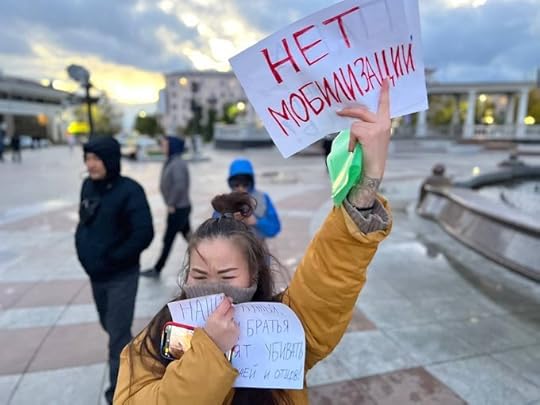
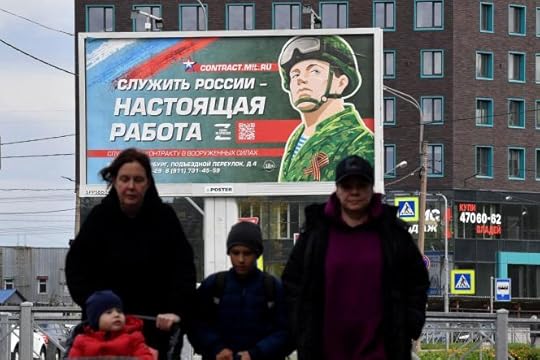
(serving Russia is a real job)
https://www.goodreads.com/review/show...

February 27, 2022
Angelic politics? Dasein as a political subject? Civilization-centered geopolitical analysis? This book serves as the perfect outline to Dugin's numerous ideas involving political philosophy, ontology, geopolitics, and even gender theory.
Dugin breaks down the development of liberalism and postmodernism, critiquing them from several standpoints in the process (adopting the individual as a political subject, the racist pathology of thinking in terms of 'civilized' and 'uncivilized' peoples, and so on) and he considers the first step towards moving beyond modernity to be possible through a close examination of liberalism, fascism, and communism in order to arrive at a 'Fourth Political Theory' that goes beyond being a merely new political ideology but also an examination of the roots of the ideologies that came before it.
He also provides his own analysis on the different types of conservatism, liberalism's elevation into the status quo of human existence and its schmittian murder of politics as such, and the neoliberal / neoconservative American outlooks towards the rest of the world.
The chapter on the crisis of the Left in the 21st century and its analysis of the different left-wing currents that have arised and the schools of thoughts which they draw from was especially interesting. Overall, it's a worthwhile book that contains many different refreshing perspectives and interesting ideas.
Dugin breaks down the development of liberalism and postmodernism, critiquing them from several standpoints in the process (adopting the individual as a political subject, the racist pathology of thinking in terms of 'civilized' and 'uncivilized' peoples, and so on) and he considers the first step towards moving beyond modernity to be possible through a close examination of liberalism, fascism, and communism in order to arrive at a 'Fourth Political Theory' that goes beyond being a merely new political ideology but also an examination of the roots of the ideologies that came before it.
He also provides his own analysis on the different types of conservatism, liberalism's elevation into the status quo of human existence and its schmittian murder of politics as such, and the neoliberal / neoconservative American outlooks towards the rest of the world.
The chapter on the crisis of the Left in the 21st century and its analysis of the different left-wing currents that have arised and the schools of thoughts which they draw from was especially interesting. Overall, it's a worthwhile book that contains many different refreshing perspectives and interesting ideas.
March 18, 2014
Excellent criticism of the present with convincing arguments for action. I remain unconvinced by the proposed philosophical solution.
May 10, 2021
Bullshit by a russian nazi demagogue. Really primitive thing.
July 28, 2025
Alexander sees the evil of postmodernism and Deluzes schizoid man, and then he seems to think that we should go through postmodernism to accelerate the end of civilisation. This reeks of evil.
Reading the book feels like listening to the rantings of an intellectual madman. He has some interesting takes, like his analysis of the modern simulacra of the political man, fighting a fight for the sake of the fight with no connection to the real world problems anymore. Where are your nazis? Do they exist, or are they monsters beneath your bed?
And how liberalism must always keep fighting against something, to keep it self alive. This results, according to Dugin, in the disintegration of the modern individual. First, they fought the social structures, and when that fight was won they fought to free the individual from himself. Resulting in a tangled mess of opposing opinions and alienation from the world.
His goal is a multi polar world where no society is regarded as better than any other society. My opposition to this comes from:
1) I disagree with his relativist premise. I think values are real, and some lives and societies are better than other societies. This doesn't necessarily mean that universal culture and no ties to religion, family, and each other is the pinnacle.
2) I am not sure the west is imposing its culture on all the other cultures. It seems more probable that universal culture is a strong force of hyper stimuli and short term pleasure that ate the west first.
3) I dont really see the difference with putting ethnicity as the main actor of the state instead of race. Seems like you end up at the same point.
It was really hard to get a copy of the book and it seems like there are active forces trying to keep it from bookstores. Book banning makes me 10× more interested in the book. The bookstores I searched had copies of critiques of this book, but not the book itself. Tbh this is the main reason I read it. Secondary I tried to get some insight into russian thinking and the ideology of Putin. According to the internet Putin believes in Dugin.
Reading the book feels like listening to the rantings of an intellectual madman. He has some interesting takes, like his analysis of the modern simulacra of the political man, fighting a fight for the sake of the fight with no connection to the real world problems anymore. Where are your nazis? Do they exist, or are they monsters beneath your bed?
And how liberalism must always keep fighting against something, to keep it self alive. This results, according to Dugin, in the disintegration of the modern individual. First, they fought the social structures, and when that fight was won they fought to free the individual from himself. Resulting in a tangled mess of opposing opinions and alienation from the world.
His goal is a multi polar world where no society is regarded as better than any other society. My opposition to this comes from:
1) I disagree with his relativist premise. I think values are real, and some lives and societies are better than other societies. This doesn't necessarily mean that universal culture and no ties to religion, family, and each other is the pinnacle.
2) I am not sure the west is imposing its culture on all the other cultures. It seems more probable that universal culture is a strong force of hyper stimuli and short term pleasure that ate the west first.
3) I dont really see the difference with putting ethnicity as the main actor of the state instead of race. Seems like you end up at the same point.
It was really hard to get a copy of the book and it seems like there are active forces trying to keep it from bookstores. Book banning makes me 10× more interested in the book. The bookstores I searched had copies of critiques of this book, but not the book itself. Tbh this is the main reason I read it. Secondary I tried to get some insight into russian thinking and the ideology of Putin. According to the internet Putin believes in Dugin.

March 21, 2020
This is the best far-right book that i have read. Not because i agree with its ideas, but because Dugin actually studied all three political theories of Western philosophy and presents pretty coherent critics about each of them.
Also the translation is very good and i actually enjoyed reading about different ideas and criticism of our modern society. I actually felt that i was learning something new and not just torturing myself, like i so often feel, when i read far-right literature.
The biggest problem in this book is that Dugin does not explain why homosexuality is bad. He just calls LGBTQ-people "perverts" and assumes that the reader hates them too. Then he defines racism in such a weird way, that wanting ethnically pure societies is not racist, but fighting racisms is.
Like so many ideological manifestos, this book is great on criticising liberalism and postmodernity, but very poor on alternatives. The fourth political theory is just a collection of reactionary ideas mixed with Socialist economic policies. The haziness explains why no one actually takes Dugins ideas seriously. The only thing that is concrete in this book is Dugin's outline of a united left and right global front against liberalism and US hegemony. This is the core of Vladimir Putin's external policy of hybrid warfare. But like so many neo-Nazis and alt-righters that have said to admire Dugin, Putin does not believe in the fourth political theory. Dugin's ideas are just a justification for ultra nationalism and reactionary ideas, packaged in a "new" ideology that is not quote fascism or socialism, but still feels familiar.
Also the translation is very good and i actually enjoyed reading about different ideas and criticism of our modern society. I actually felt that i was learning something new and not just torturing myself, like i so often feel, when i read far-right literature.
The biggest problem in this book is that Dugin does not explain why homosexuality is bad. He just calls LGBTQ-people "perverts" and assumes that the reader hates them too. Then he defines racism in such a weird way, that wanting ethnically pure societies is not racist, but fighting racisms is.
Like so many ideological manifestos, this book is great on criticising liberalism and postmodernity, but very poor on alternatives. The fourth political theory is just a collection of reactionary ideas mixed with Socialist economic policies. The haziness explains why no one actually takes Dugins ideas seriously. The only thing that is concrete in this book is Dugin's outline of a united left and right global front against liberalism and US hegemony. This is the core of Vladimir Putin's external policy of hybrid warfare. But like so many neo-Nazis and alt-righters that have said to admire Dugin, Putin does not believe in the fourth political theory. Dugin's ideas are just a justification for ultra nationalism and reactionary ideas, packaged in a "new" ideology that is not quote fascism or socialism, but still feels familiar.

June 10, 2016
I was deeply impressed by the vastness of scope of which Dugin engaged in his analysis, his thorough understanding of the various ideologies he addresses and not least his ability for creative and sound synthesis when devising his fourth political theory. I've read a much outspoken commentator here in Norway refer to it as superficial. Nothong could be further from reality and only shows the ridiculousness and baseness of the current russophobic political climate in the West.
Still, I challenge Dugin on his religion, where he seems simply to align himself with the Russian Orthodox church. And I think that is a wanting position for a man who goes as deeply into the ideologies that rule our times as he does. One simply cannot do that without a well thought out religious world-view, and Dugin seems at the very least reticent when it comes to addressing religious subjects. That is untenable and unsustainable, and the future may divulge a religious thinker that doesn't quite measure up to his political and ideological standing. The latter two in my opinion unsurpassed in today's civilizational discourse.
Still, I challenge Dugin on his religion, where he seems simply to align himself with the Russian Orthodox church. And I think that is a wanting position for a man who goes as deeply into the ideologies that rule our times as he does. One simply cannot do that without a well thought out religious world-view, and Dugin seems at the very least reticent when it comes to addressing religious subjects. That is untenable and unsustainable, and the future may divulge a religious thinker that doesn't quite measure up to his political and ideological standing. The latter two in my opinion unsurpassed in today's civilizational discourse.

November 24, 2021
Dugin sounds like a kid who really is into Guénon and Evola, wishes for a world close to the Primordial Tradition, but can’t give up on rock music. So he forces us through this dizzying hopscotch using Heidegger as a crutch: Dasein is a metonym for some strong primordial force that spread across time and history. It can be modern, or even postmodern; but that is in name only, since it is primordial nucleus don’t change. One can be “traditional,” one can live in the his ethnic limits, even though he listens to rock. I guess Dugin does that and this book, or even the whole Fourth Political Theory, is his save-face operation. At the end of the day, I don’t even think he believes in a single word of this.
That said, the chapter on time is really nice.

to-keep-reference
September 15, 2015Belyaev es miembro del movimiento euroasiático pro Kremlin del filósofo Alexander Dugin, que pide «la unión con nuestros grandes vecinos orientales» y que espera el «cegador amanecer de la nueva Revolución rusa; fascismo ilimitado como nuestras tierras y rojo como nuestra sangre». Su catecismo ofrece frases como «la fuerza engendra fuerza» y «¡nuestro objetivo es el poder absoluto!».
Viviendo en el Final de los Tiempos Pág.261
Viviendo en el Final de los Tiempos Pág.261

July 13, 2019
While Mr. Dugin is correct in many of his critics of the main political systems of the XX century (socialism, fascism and liberalism), and for those critics i gave those 2 stars, from the moment that he starts to build his 4th political theory everything goes down.
Not only it is a humonguous amount of wishful thinking (like a giant alliance between national powers that historically are hostile towards each other and have almost nothing in common), but also in the absurd amount of relativisms that at some point just make his entire book sounds like a near-insane gibberish.
Not only it is a humonguous amount of wishful thinking (like a giant alliance between national powers that historically are hostile towards each other and have almost nothing in common), but also in the absurd amount of relativisms that at some point just make his entire book sounds like a near-insane gibberish.

April 29, 2017
So many words, yet the only thing I got from it was that we operate in the west from an unspoken paradigm that liberal democracy is the natural evolution of all political systems. OK, I get that - I don't even know what he was trying to propose as an alternative though (his fourth political theory), there was so much diatribe and fucking words everywhere that lead to nothing. Read a bit like an academic textbook.
November 27, 2019
I have owned this book for 5 years now and I have never really been able to finish it. I feel like everyone should have this book because the ideas presented are really interesting but at the same time I cant bring myself to actually finish it. Even at this latest reading I managed to get mostly through it but was still unable to. Dugin is a good writer and it able to make things easily understood and this book has a great view of ideological history.
October 15, 2022
Interesting but flawed perspective on the possibility of a fourth political theory combining elements of other theories -- taking the "best" portions and discarding the rest. Provocative but erroneous conclusions. The invocation of Heidegger's concept of Dasein as the underlying principle of an emergent fourth political theory is well-worth exploring. Dugin -- like Heidegger -- are flawed characters who wrestle with eternal questions that have yet to be addressed properly.
Displaying 1 - 30 of 128 reviews