

What do you think?

Deutsche Chronik #7
Ein Kapitel für sich
Der Roman "Ein Kapitel für sich" ist Teil der sogenannten "Deutschen Chronik" von Walter Kempowski.
Acht Jahre verbrachte der Ich-Erzähler Walter im Zuchthaus in Bautzen, und das alles wegen ein paar Frachtbriefen, mit denen er den Amerikanern die Ausplünderung der "Zone" durch die Russen demonstrieren wollte. Bei einem Besuch in Rostock wurde er festgenommen. Spionage hieß die Anklage. Neben Walter wurde Bruder Robert verhaftet und schließlich sogar die Mutter. Mutter und Söhne machen mit Haft und Häftlingen ihre ganz eigenen Erfahrungen, und so erzählt jeder kapitelweise aus seiner Perspektive und in seiner Ausdrucksweise, was ihm in der Welt der Eingeschlossenen widerfahren ist.
Acht Jahre verbrachte der Ich-Erzähler Walter im Zuchthaus in Bautzen, und das alles wegen ein paar Frachtbriefen, mit denen er den Amerikanern die Ausplünderung der "Zone" durch die Russen demonstrieren wollte. Bei einem Besuch in Rostock wurde er festgenommen. Spionage hieß die Anklage. Neben Walter wurde Bruder Robert verhaftet und schließlich sogar die Mutter. Mutter und Söhne machen mit Haft und Häftlingen ihre ganz eigenen Erfahrungen, und so erzählt jeder kapitelweise aus seiner Perspektive und in seiner Ausdrucksweise, was ihm in der Welt der Eingeschlossenen widerfahren ist.
388 pages, Paperback
First published January 1, 1978
About the author
Walter Kempowski
60 books108 followersWalter Kempowski was a German writer. He was known for his series of novels called German Chronicle ("Deutsche Chronik") and the monumental Echolot ("Sonar"), a collage of autobiographical reports, letters and other documents by contemporary witnesses of the Second World War.
Ratings & Reviews
Friends & Following
Create a free account to discover what your friends think of this book!
Community Reviews
Displaying 1 - 5 of 5 reviews

October 9, 2016
This part from the lives of the Kempowskie is really, as the title says, a chapter of its own. Walter Kempowski (the younger of two brothers), Robert (the older one) and the mother Margarethe are all arrested by the Russians in Rostock and accused of espionage. Walter and Robert had collected waybills that prove the Soviets had shipped more good and machinery to Russia than they were allowed by contracts. This was regarded as an espionage activity and the two brothers were sentenced to 25 years imprisonment. The mother was sentenced to 10 years in a labor camp because she did not report her sons.
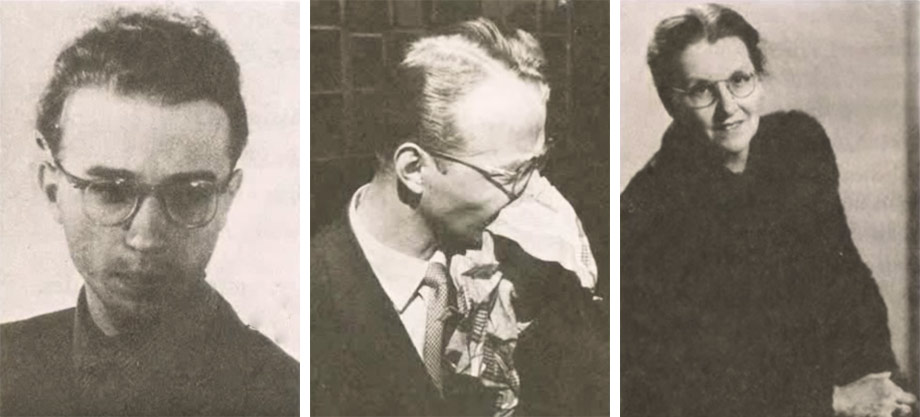
[Walter, Robert, and Margarethe Kempowski; photo credits unknown, taken from a clip on youtube]
In contrast to the other books there is no continuous single story told here, but the life in prison is told by the three individuals separately in alternating chapters. Between those chapters there is a exchange of letters between Ulla, the older sister who is living in Denmark with her family, and her uncle Richard in Hamburg. For quite a long time the rest of the family is kept in the dark about the whereabouts of the three prisoners. Walter and Robert were separated at first, but then later meet in the infamous Detention Center of Bautzen. The mother meets here sons only years later, after they all have been released.
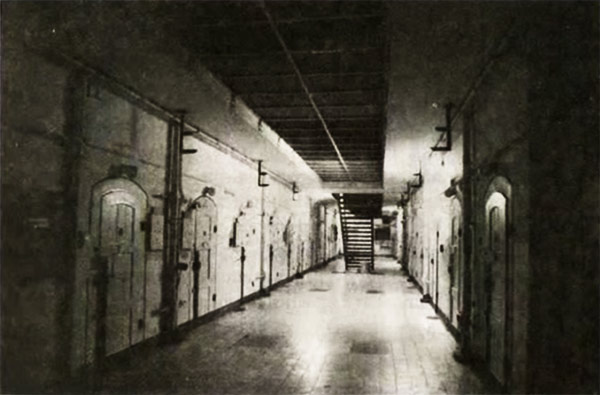
[prison sector Bautzen; photo credits unknown, taken from a clip on youtube]
Although the book, like the others, is referred to as a “novel”, I suppose that the memories recorded here essentially correspond to the facts. It is difficult to say whether the reports of Robert and the mother were actually written by them, or whether Walter Kempowski wrote the book alone, using three different styles. Both is possible in my opinion.
Here are some random quotes from each of them [translated by me]:
Walter:
Hour upon hour I walked up and down, fifteen kilometers per day. […] Who was Erasmus of Rotterdam? Who Saint Jerome in His Study? Eighty-six times two hundred and ten. Always up and down. From the door to the window and from the window to the door. Also with closed eyes. Perhaps one becomes blind: walking up and down, you already know that then. […] Every now and then a sip from the pitcher, against hunger. Earthy tasting water.Robert:
If you are so alone suddenly and cut off from everything, you try to fill the day somehow, and because you don’t have any books, nothing of anything, naturally you can only do that by using your head. Everything else dies down. So I thought much about home, this and that, hummed records to myself and imagined what I would do when I get out one day.Margarethe:
At six o'clock one was woken up, then had to pour out the bucket and get the washing water. Shortly afterwards there was coffee–what was called coffee–a crust of bread and a teaspoon of sugar. I couldn’t eat the bread, it was so moist. Sometimes there were four or five crusts on the bunk. “Eat, eat,...,” said the guard, but that didn’t help either. Lunch came very irregularly. Sometimes at three, sometimes at twelve, sometimes at one. To carry the food, the guards used a cleaning rag bucket, you could hear when they rattled with it. It was like heavenly music.
The author has written another book about his time in Bautzen. It’s called Im Block and was his debut novel (published in 1969). When he was arrested in March 1948, he was only 18 years old (almost 19) and 26 when he was released. Understandably these years were quite formative for Walter Kempowski.
The penultimate novel of the series was again very engrossing. It’s in the nature of the matter that there’s not much development here, and things are repeated in one form or another. Such is life in prison. Nevertheless, Walter Kempowski succeeded in delivering his (second) “jail-novel”, a plea against inhuman punishment, an essential part of the family biography, spiced with the irony I so much admire.

This work is licensed under a Creative Commons Attribution-NonCommercial-ShareAlike 3.0 Unported License.

October 29, 2020
A very interesting read; excellent description. The brothers Kempwski are jailed for a meaningless information supplied to the Americans after the Russian tried to establish an empire in their zones. The 52 years old mother also shared their fate. The mother was in a women's prison with thousands of other women nearly the whole of her 5 years' sentence. The sons spent 8 years of their 25 years' sentence.
They describe the prison life realistically; made more interesting because of the viewpoint of the three family members.
They describe the prison life realistically; made more interesting because of the viewpoint of the three family members.

May 4, 2023
As its title suggests, Ein Kapitel für sich represents a unique chapter within the Kempowski family saga. It deals with the persecution and imprisonment the family members faced in Eastern Germany immediately following WW2. In contrast to its direct predecessors, the story is not told from one character’s perspective exclusively, but the point of view alternates between the protagonist’s, his brother’s, and their mother’s. All three of them end up in captivity where they must face inhumane treatment and are confronted with a complete lack of a justice. Despite the frequent changes of perspective and Kempowski’s fragmented way of storytelling, this story feels more linear compared to the previous novels making it easier to follow. Personally, I really enjoyed this novel and I think Kempowski’s Deutsche Chronik as a whole is an important piece of German literature as it captures the impact of the major historic events of the 19th/20th century on ordinary German citizens in an honest and unembellished manner.

January 30, 2020
The true story of the author, his mother and his brother, who spend 8 years in the East German prison system in the 1950s for having smuggled evidence of Soviet malfeasance to the Americans. Horrifying. But, because it's Walter Kempowski, it's also kind of hilarious.

Displaying 1 - 5 of 5 reviews