

What do you think?

Le Séminaire #3
Les Psychoses: Séminaire Livre III
Taking us into and beyond the realm of Freudian psychoanalysis, Lacan examines the psychoses' inescapable connection to the symbolic process through which signifier is joined with signified. Lacan deftly navigates the ontological levels of the symbolic, the imaginary, and the real to explain psychosis as "foreclosure," or rejection of the primordial signifier. Then, bridging the gap between the theoretical and the practical, Lacan discusses the implications for treatment. In these lectures on the psychoses, Lacan's renowned theory of metaphor and metonymy, along with the concept of the "quilting point," appears for the first time.
512 pages, Pocket Book
First published January 1, 1920
About the author
Jacques Lacan
189 books1,307 followersJacques-Marie-Émile Lacan was a French psychoanalyst, psychiatrist, and doctor, who made prominent contributions to the psychoanalytic movement. His yearly seminars, conducted in Paris from 1953 until his death in 1981, were a major influence in the French intellectual milieu of the 1960s and 1970s, particularly among post-structuralist thinkers.
Lacan's ideas centered on Freudian concepts such as the unconscious, the castration complex, the ego, focusing on identifications, and the centrality of language to subjectivity. His work was interdisciplinary, drawing on linguistics, philosophy, mathematics, amongst others. Although a controversial and divisive figure, Lacan is widely read in critical theory, literary studies, and twentieth-century French philosophy, as well as in the living practice of clinical psychoanalysis.
Lacan's ideas centered on Freudian concepts such as the unconscious, the castration complex, the ego, focusing on identifications, and the centrality of language to subjectivity. His work was interdisciplinary, drawing on linguistics, philosophy, mathematics, amongst others. Although a controversial and divisive figure, Lacan is widely read in critical theory, literary studies, and twentieth-century French philosophy, as well as in the living practice of clinical psychoanalysis.
Ratings & Reviews
Friends & Following
Create a free account to discover what your friends think of this book!
Community Reviews
Displaying 1 - 30 of 30 reviews

October 8, 2019
" من الأفضل عدم المجيء إلى الحياة، إلا أن هذا لا يحصل، مع الأسف، إلا مرة في كل مئتي ألف محاولة." — المعلم فرويد
قدم لاكان عبر هذا الكتاب التحليلي الجامع بين صروف النفس واللغة؛ باعتبار اللغة ظاهرة اجتماعية، قراءة مفصلة لحالة شريبر، التي تعد من الحالات المميزة في مسألة الذهانات، ومرجعاً مهماً في الدراسة والبحث. حرّض على ذلك تدوين شريبر لمذكراته التي يسرد عبرها ماضيه، وأحداث حياته، وأفكاره أو علاقاته الهذائية مع مختلف الأشخاص المحيطين به؛علاقاته بمحدثيه الخياليين. مع الإمعان في مسألة تطور الظواهر اللفظية في سيرة شريبر. مع الاهتمام فيما يتعلق ب "بنيوية الذات"، و في مشكل علاقات الذات بالآخر، وفلسفة الذهن. تناول لاكان على وجه الخصوص موقف فرويد حول موضوع هذيان شريبر، "تفسير فرويد يرتكز على كون المريض شريبر يمر باقتصادية نرجسية أساساً."حيث يتجلى التأويل التحليلي بكونه رمزياً، كذلك الاعتراضات التي قوبل بها هذا الموقف ك موقف " عايدا ماكلباين" وآخرون. ويعتبر لاكان التفسير الذي قدمه فرويد الأفضل في هذه الحالة. كما يوضح لاكان أهمية تحليل اللغة في تفسير وقراءة عقلية المصابين ب الذهان" بكونه علاقة مرتبطة من أحد أطرافه بالكلام". وبين عبر طرحه كيف تم قراءة وتفسير حالة شريبر عبر أدوات التحليل النفسي اللغوي أو اللساني. ( علاقة الدال بالمدلول) وأهميته في استكشاف الصورة الذهنية، بما تثيره من تأويلات تمييزية أو إقصائية مثقلة بالمعنى، واللامعنى.
كما يطرح في صميم الكتاب الفروق الناشزة بين العصاب والذهان، وما يقع البعض فيه من إشكال في التمييز بينهما.
كتاب يعيد من خلاله لاكان: قراءة واستشفاف مفهوم الذهان، أهم المشتغلين أو المؤلفين بخصوص مسألة الذهانات، ك كاطان Katan، أعراضه الباطنية، سبل قراءته وتحليله، وطرق فهم ما يعتمل ويلتبس في نفس وعقل المريض الذهاني، عبر استرجاع نموذج مذكرات أو نص شريبر . مع التركيز على ما يميز وجهة النظر التحليلية في تحليل الذهان. كما أنه يحث على العودة لقراءة الإرث الفرويدي لغناه من نواحي مختلفة، ومثيرة للتساؤلات.
من أهم ما يخرج منه القارئ هو، أهمية الإلمام باللسانيات، أو علم النفس اللساني/ اللغوي للمتخصص، لدورها في قراءة واستشفاف الأفكار أو ما يعتمل في عقل المريض النفسي. اللغة كأداة أو وسيط أو نظام اجتماعي، تعد من أهم أسس التحليل النفسي؛ ففي التوجه الفرويدي، الإنسان هو الذات المسكونة باللغة والمعذبة من طرفها.
قدم لاكان عبر هذا الكتاب التحليلي الجامع بين صروف النفس واللغة؛ باعتبار اللغة ظاهرة اجتماعية، قراءة مفصلة لحالة شريبر، التي تعد من الحالات المميزة في مسألة الذهانات، ومرجعاً مهماً في الدراسة والبحث. حرّض على ذلك تدوين شريبر لمذكراته التي يسرد عبرها ماضيه، وأحداث حياته، وأفكاره أو علاقاته الهذائية مع مختلف الأشخاص المحيطين به؛علاقاته بمحدثيه الخياليين. مع الإمعان في مسألة تطور الظواهر اللفظية في سيرة شريبر. مع الاهتمام فيما يتعلق ب "بنيوية الذات"، و في مشكل علاقات الذات بالآخر، وفلسفة الذهن. تناول لاكان على وجه الخصوص موقف فرويد حول موضوع هذيان شريبر، "تفسير فرويد يرتكز على كون المريض شريبر يمر باقتصادية نرجسية أساساً."حيث يتجلى التأويل التحليلي بكونه رمزياً، كذلك الاعتراضات التي قوبل بها هذا الموقف ك موقف " عايدا ماكلباين" وآخرون. ويعتبر لاكان التفسير الذي قدمه فرويد الأفضل في هذه الحالة. كما يوضح لاكان أهمية تحليل اللغة في تفسير وقراءة عقلية المصابين ب الذهان" بكونه علاقة مرتبطة من أحد أطرافه بالكلام". وبين عبر طرحه كيف تم قراءة وتفسير حالة شريبر عبر أدوات التحليل النفسي اللغوي أو اللساني. ( علاقة الدال بالمدلول) وأهميته في استكشاف الصورة الذهنية، بما تثيره من تأويلات تمييزية أو إقصائية مثقلة بالمعنى، واللامعنى.
كما يطرح في صميم الكتاب الفروق الناشزة بين العصاب والذهان، وما يقع البعض فيه من إشكال في التمييز بينهما.
كتاب يعيد من خلاله لاكان: قراءة واستشفاف مفهوم الذهان، أهم المشتغلين أو المؤلفين بخصوص مسألة الذهانات، ك كاطان Katan، أعراضه الباطنية، سبل قراءته وتحليله، وطرق فهم ما يعتمل ويلتبس في نفس وعقل المريض الذهاني، عبر استرجاع نموذج مذكرات أو نص شريبر . مع التركيز على ما يميز وجهة النظر التحليلية في تحليل الذهان. كما أنه يحث على العودة لقراءة الإرث الفرويدي لغناه من نواحي مختلفة، ومثيرة للتساؤلات.
من أهم ما يخرج منه القارئ هو، أهمية الإلمام باللسانيات، أو علم النفس اللساني/ اللغوي للمتخصص، لدورها في قراءة واستشفاف الأفكار أو ما يعتمل في عقل المريض النفسي. اللغة كأداة أو وسيط أو نظام اجتماعي، تعد من أهم أسس التحليل النفسي؛ ففي التوجه الفرويدي، الإنسان هو الذات المسكونة باللغة والمعذبة من طرفها.

Read
January 29, 2023تا به حال چندین نفر از متفکران و پژوهشگران قابل توجه در خاطراتشان، مصاحبهها یا... گفته اند که زمانی آغاز به خوانش لکان کرده اند -منهای آنها که حکم به شارلاتانیسم و تکفیرش دادند- اما بعد از مدتی آن را کنار گذاشتهاند چون اساسا برای فهم هر بند یا جمله مجبور بودند چندین بار آن را بخوانند و نهایتا به این نتیجه رسیدهاند که مهلت کافی برای پرداختن به آثارش (در واقع متون مکتوب سمینارها عمدتا) را نخواهند داشت. به نظرم میآید حق داشتند چون نه تنها نظامهای متعارف تفکر در آن دیده نمیشود و به نوعی از قول خود لکان پادفیلسوفانه نوشته بلکه مغلق بودن جملات و مباحث هم حاصل نوعی تکلفآمیزی در شکل نوشتار مثلا آنطور که میان غولهای ایدئالیسم آلمانی شاهدیم که بعد از واکاوی ظریف به مرور کلافش از هم گشوده و بازتافته شود نیستند بلکه حاصل گزینش مسائلی است ذاتا لبههای دانش، مرزهای انسان، و حدود جهاناند، شاید به معنای دیگر بشود گفت شرایط ممکن شدنشاناند در سرحدات خود، از نظر مکاننگاری فضاهایی اند که از آن به بعد آشوب است و همه چیز درهم میپیچید لکان هم کم نگذاشته و ادای دین کرده و تا توانسته در هم پیچانده. خلاصه قلمرو فکریاش فضایی است که بارها در آن گردش کردم اما کماکان اجازه آشنایی چندانی نداده؛ هرچه به عقب برمیگردم کماکان لکان برایم لکان همان کتابهایی هست دیگران در تشریحش نوشتند و داخل خود متن سمینارها مدام از چنگم گریخته احتمالا باید دقیقتر و موشکافانهتر بخوانم شاید هم بعضی چیزها را سخت نگیرم که پیچش مو و خم ابرو را بشود دید.

August 20, 2021
وجدت كاتباً يفوق نيتشه وبروست من حيث ثقل العبارة وهو جاك لاكان . مازلت مستمر في قراءته ببطء سلحفاة قلبها تعبان .

December 25, 2019
" الذهانات " / جاك لاكان.
ما من شك بأن جاك لاكان يعتبر من أشهر المحللين النفسانيين بعد فرويد. وإنه بعد فرويد أكثر المحللين عطاءا في مجال التحليل وأفيدهم. لقد ترك خلفه عطاءا قيما همه الأساسي استرجاع التحليل النفسي لمضمونه الحق ولمساره الأصوب كما سنَّهما فرويد وحاد عنهما الخلف بالتجويف والتحريف. وزيادة على النصوص المكتوبة التي خطها لاكان بيده والتي ليست باليسيرة، فإن القسط الأوفر من عطائه كان على شكل تدريس واظب على القيام به بدون توقف لفترة تفوق الثلاثين عاما. ومنذ وفاة لاكان حتى الآن والعمل مستمر على تدوين هذه الدروس الشفوية ثم تحقيقها ونشرها على شكل سلسلة كتب تنقل خطيا ما قاله لاكان في سيمناره المسترسل على مدى ثلاثة حقب متتالية. وهذا الكتاب الذي نحن بصدد ترجمته ونقله الى العربية، هو الكتاب الثالث من سيمناره، تطرق فيه بالخصوص الى مسألة الذهان.
كان لاكان في بداية حياته المهنية طبيبا نفسيا. ولقد اهتم آنذاك كثيرا بالمرضى الذهاننين كما تدل على ذلك كتاباته الأولى. إلا أن اندراجه في التحليل النفسي في أواخر الأربعينيات من القرن الماضي، فتح أمامه بابا واسعا بشأن مسألة الذهانات التي خصص لها، انطلاقا من هذا المنظور، مضمون سيمناره على مدى سنة بكاملها تمتد من نونبر 1955 الى يوليوز 1956.
من بين أهداف لاكان في هذا الكتاب هو تبيان المآزق والمزالق التي تكتنف الإقتراب الطبنفسي للذهان وكذلك التنبيه الى الفهم الخاطئ بصدد التحليل النفسي والذي يصبو، عن قصد أو غير قصد، الى جعل هذا الأخير مجرد وسيلة وأداة يمكن إضافتها للطب النفسي حتى يتقدم في فهمه المزعوم للحمق. لذا نجد لاكان في هذا الكتاب لايفتأ في التنبيه الى سلبيات الفهم القبْلي والمتسرع بل وبمخاطره في هذا المجال. فهذا الفهم المسبق الذي يزعمه مختصوا الأمراض العقلية بخصوص الذهان ما هو الأ مجرد سراب في سراب كما يقول. فلا الطب النفسي بأكمله ولا حتى التحليل النفسي بعد تطويعه لخدمة القيم المجتمعية على حساب تحرر الذات، لن يفلحا من شيئ في تقصي الظواهر الذهانية إذا ما بقيا على تعنتهما في البقاء بمقام الفاهم والعارف المتعالي أمام هذه المظاهر.
ما من شك بأن جاك لاكان يعتبر من أشهر المحللين النفسانيين بعد فرويد. وإنه بعد فرويد أكثر المحللين عطاءا في مجال التحليل وأفيدهم. لقد ترك خلفه عطاءا قيما همه الأساسي استرجاع التحليل النفسي لمضمونه الحق ولمساره الأصوب كما سنَّهما فرويد وحاد عنهما الخلف بالتجويف والتحريف. وزيادة على النصوص المكتوبة التي خطها لاكان بيده والتي ليست باليسيرة، فإن القسط الأوفر من عطائه كان على شكل تدريس واظب على القيام به بدون توقف لفترة تفوق الثلاثين عاما. ومنذ وفاة لاكان حتى الآن والعمل مستمر على تدوين هذه الدروس الشفوية ثم تحقيقها ونشرها على شكل سلسلة كتب تنقل خطيا ما قاله لاكان في سيمناره المسترسل على مدى ثلاثة حقب متتالية. وهذا الكتاب الذي نحن بصدد ترجمته ونقله الى العربية، هو الكتاب الثالث من سيمناره، تطرق فيه بالخصوص الى مسألة الذهان.
كان لاكان في بداية حياته المهنية طبيبا نفسيا. ولقد اهتم آنذاك كثيرا بالمرضى الذهاننين كما تدل على ذلك كتاباته الأولى. إلا أن اندراجه في التحليل النفسي في أواخر الأربعينيات من القرن الماضي، فتح أمامه بابا واسعا بشأن مسألة الذهانات التي خصص لها، انطلاقا من هذا المنظور، مضمون سيمناره على مدى سنة بكاملها تمتد من نونبر 1955 الى يوليوز 1956.
من بين أهداف لاكان في هذا الكتاب هو تبيان المآزق والمزالق التي تكتنف الإقتراب الطبنفسي للذهان وكذلك التنبيه الى الفهم الخاطئ بصدد التحليل النفسي والذي يصبو، عن قصد أو غير قصد، الى جعل هذا الأخير مجرد وسيلة وأداة يمكن إضافتها للطب النفسي حتى يتقدم في فهمه المزعوم للحمق. لذا نجد لاكان في هذا الكتاب لايفتأ في التنبيه الى سلبيات الفهم القبْلي والمتسرع بل وبمخاطره في هذا المجال. فهذا الفهم المسبق الذي يزعمه مختصوا الأمراض العقلية بخصوص الذهان ما هو الأ مجرد سراب في سراب كما يقول. فلا الطب النفسي بأكمله ولا حتى التحليل النفسي بعد تطويعه لخدمة القيم المجتمعية على حساب تحرر الذات، لن يفلحا من شيئ في تقصي الظواهر الذهانية إذا ما بقيا على تعنتهما في البقاء بمقام الفاهم والعارف المتعالي أمام هذه المظاهر.

April 29, 2024
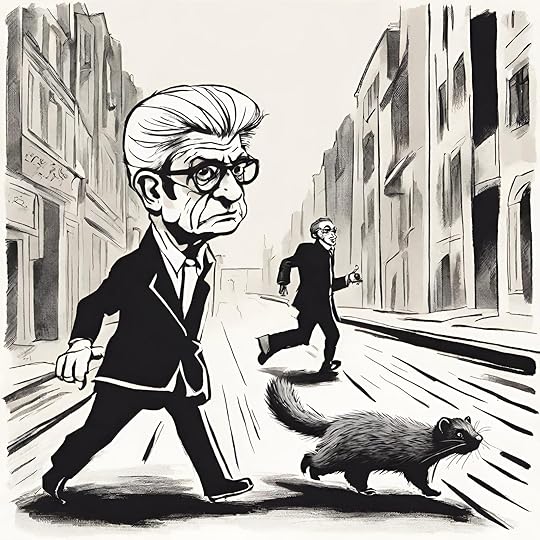
Desire walks ahead of Lacan
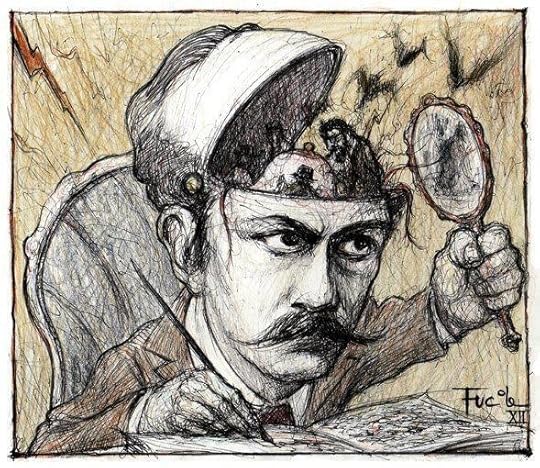
Schreber's mind on the mirror
"This is the purpose of this manuscript; in it I shall try to give an at least partly comprehensible exposition of supernatural matters, knowledge of which has been revealed to me for almost six years."
IN Introduction to Memoirs Of My Nervous Illness,
by Daniel Paul Schreber
The memoirs of Schreber are of a psychotic nature. They are not poetry. The genuine, religious nature of those memoirs (revelations) is doubtful, according to Lacan. They are delusional.
The Psychoses is mainly a book about Daniel Paul Schreber. And most of it consists of linguistic analysis, by a psychoanalyst.

October 26, 2023
Picked up Lacan again because Neuroscience and programming is fucking cooking my brain, so I thought what could possibly be worse..
Although, this is an excellent place to start, I wish I had read “The Schreber Case” first. Because, Lacan quotes it throughout the seminar (it’s done well enough that you get a decent idea of the case) however, I do think that it sounds very interesting in itself.
Anyways, thanks Lacan, will never be able to look at a ring the same way again.
Although, this is an excellent place to start, I wish I had read “The Schreber Case” first. Because, Lacan quotes it throughout the seminar (it’s done well enough that you get a decent idea of the case) however, I do think that it sounds very interesting in itself.
Anyways, thanks Lacan, will never be able to look at a ring the same way again.
March 14, 2007
I read this after my friend had a major psychotic episode. It was fascinating, but I'm not a Lacanian so my grasp of the text is probably severely lacking.
Unfortunately I can now identify a psychotic discourse when I see read it...so i guess it's kind of like learning knowledge that contains a curse.
One should always keep these things in mind.
Unfortunately I can now identify a psychotic discourse when I see read it...so i guess it's kind of like learning knowledge that contains a curse.
One should always keep these things in mind.

October 5, 2021
Technically, this is my second time through this, but the first time, I was scouring it for a broad understanding of Lacan's take on Schreber while writing a paper on the latter rather than actually trying to read these lectures.
At one point, Lacan mentions that a slap can have multiple meanings for a child. After reading these, I wish I could slap Lacan and see what he makes of it. It's clear he's quite capable of making himself understood; it's also clear he very often does not want to be understood, not fully. That's fine. But he's also a total asshole, to be blunt. He'd be a miserable person to take a class with: he likes to tease and make fun of his rivals, to call people idiots, simpletons, etc. He's an extraordinarily off-putting fellow.
He can also be pretty humble, which comes from a streak of pessimism in his writing that places human incapacity, lack, and failure at the core of his argument. He never claims to be telling us the "truth" about psychosis or the Schreber case, but only about the structure of the delusion and its relation to language. In that sense, Lacan comes out OK as far as Schreber interpreters go. Still, I find the whole interpretive tradition, including him, to be guilty of blithely ignoring the institutional conditions under which psychotic text and speech is produced. They don't bring up, and therefore don't really consider, whether being in confinement or "treated" with violent means would have an effect on this production, or the fact that Schreber chose certain registers of text because of a court trial, which is not mentioned once here. I think it's obvious these facts would condition the writing, so in my view this tradition from Freud to Lacan finds itself dancing around an unacknowledged condition.
Still, this is a fine text to get a pretty clear introduction to the symbolic and imaginary orders (the real is not so present) and Lacan's use of "signifier."
At one point, Lacan mentions that a slap can have multiple meanings for a child. After reading these, I wish I could slap Lacan and see what he makes of it. It's clear he's quite capable of making himself understood; it's also clear he very often does not want to be understood, not fully. That's fine. But he's also a total asshole, to be blunt. He'd be a miserable person to take a class with: he likes to tease and make fun of his rivals, to call people idiots, simpletons, etc. He's an extraordinarily off-putting fellow.
He can also be pretty humble, which comes from a streak of pessimism in his writing that places human incapacity, lack, and failure at the core of his argument. He never claims to be telling us the "truth" about psychosis or the Schreber case, but only about the structure of the delusion and its relation to language. In that sense, Lacan comes out OK as far as Schreber interpreters go. Still, I find the whole interpretive tradition, including him, to be guilty of blithely ignoring the institutional conditions under which psychotic text and speech is produced. They don't bring up, and therefore don't really consider, whether being in confinement or "treated" with violent means would have an effect on this production, or the fact that Schreber chose certain registers of text because of a court trial, which is not mentioned once here. I think it's obvious these facts would condition the writing, so in my view this tradition from Freud to Lacan finds itself dancing around an unacknowledged condition.
Still, this is a fine text to get a pretty clear introduction to the symbolic and imaginary orders (the real is not so present) and Lacan's use of "signifier."

November 27, 2018
It's one thing to assert that Schreber's psychosis/paraphrenia evinces an etiology of the foreclosure of the Name-of-the-Father and altogether an other thing to witness Lacan work toward that notion over the course of months. While it's possible some of the steps along the way could have been clearer or tighter--more laconic--I don't think any can be omitted. The theoretical assertion posited as the conclusion is void without presupposing the labor of the practical exposition. To match the specialization of the psychological topic of the psychoses, Lacan insists upon a coterminous specialized analysis of the signifier, which for him is an unsurprising move that yields surprising results.
"Psychoanalysis should be the science of language inhabited by the subject. From the Freudian point of view man is the subject captured and tortured by language."
Condensation and displacement are contiguous with metaphor and metonymy. The quilting point slash button tie slash point de capiton facilitates a more meticulous analysis case by case than the wet blanket assumptions endemic to object relations theory and supposed stages of development. I won't go into here because Lacan does, and does again.
In the last instance, why should one be determined to read The Psychoses if not training to be an analyst or to soothe a psychotic? Because, entranced by the shadowboxing of madness and reason, the gaps revealed in the psychotic loss of reality afford a glance at the rhetorical bob-and-weave by which we each claim to gain on reality. Nothing goes without saying.
"LE MOT ME MANQUE!"
"Psychoanalysis should be the science of language inhabited by the subject. From the Freudian point of view man is the subject captured and tortured by language."
Condensation and displacement are contiguous with metaphor and metonymy. The quilting point slash button tie slash point de capiton facilitates a more meticulous analysis case by case than the wet blanket assumptions endemic to object relations theory and supposed stages of development. I won't go into here because Lacan does, and does again.
In the last instance, why should one be determined to read The Psychoses if not training to be an analyst or to soothe a psychotic? Because, entranced by the shadowboxing of madness and reason, the gaps revealed in the psychotic loss of reality afford a glance at the rhetorical bob-and-weave by which we each claim to gain on reality. Nothing goes without saying.
"LE MOT ME MANQUE!"

July 19, 2024
Okay so I'm still not super clear on the difference between neuroses and psychoses as Freud [allegedly] conceived of it but from what I understand neurosis has to do with repression whereas psychosis has to do with rejection and missing signifier (the neurotic can express what is repressed but the psychotic can't). Due to this missing or rejected signifier, whatever cannot be integrated into the symbolic appears in reality in the form of delusion. Lacan compares the signifier to a knot that ties a whole host of meanings together or a high way that links meanings well in advance (i.e. the primacy of the signifier over both the amorphous mass of thought, signified and even meaning). In the case of Judge Schreber, "father" is the rejected signifier around which the respected judge's entire delusional cosmos is fabricated. After reading Lacan's interpretation for the first time, I am left with one big question--why doesn't Schreber's case exhibit the structure of hysteria also, considering that he obviously seems to be posing the question "What is to be a man?" (or a woman) via his delusions of being the feminine love-object of a God who does not know what is it like to embodied?

Read
May 1, 2024According to Lacan, neuroses are the kinds of psychopathologies that lend themselves to treatment in psychoanalysis. These neuroses fall into one of three categories: hysteria, obsession, phobia. Psychoses on the other hand is a whole other can of worms.
As far as I can tell, psychoses for Lacan are extreme mental breaks from reality, and they do not lend themselves to treatment in psychoanalysis. In fact, psychoanalysis and other modalities of talking cure could actually egg on psychoses.
This delineation of neuroses and psychoses aside, there is not much more to be gleaned from this seminar. At least I didn't get much out of it. What you might like, however (though I didn't), is Lacan's lengthy quotations from a man surnamed Schreber, who suffered from psychosis, and who wrote a memoir, which, even to the extent that it coheres, reads mostly like glossolalia.
As far as I can tell, psychoses for Lacan are extreme mental breaks from reality, and they do not lend themselves to treatment in psychoanalysis. In fact, psychoanalysis and other modalities of talking cure could actually egg on psychoses.
This delineation of neuroses and psychoses aside, there is not much more to be gleaned from this seminar. At least I didn't get much out of it. What you might like, however (though I didn't), is Lacan's lengthy quotations from a man surnamed Schreber, who suffered from psychosis, and who wrote a memoir, which, even to the extent that it coheres, reads mostly like glossolalia.
December 30, 2025
My first entry into Lacan. Yeah. This guys kinda got some good ideas but i also might have to kill him for being so fucking annoying. Incredible book.

May 8, 2014
This seminar is still fairly early in Lacan's development, but a lot of important elements of his theories are elaborated. The most famous is probably "the quilting point," the signifier which fixes meaning in place and works like a ballast to keep it from drifting endlessly. Lacan concludes that not lacking enough of these is key factor in bringing on psychosis. There's a heavy debt to Saussure's linguistics running through this text.
It's also noteworthy because of his in-depth focus on Schreber, perhaps the most famous case of insanity in history, and his book, Memoirs of My Nervous Illness. Deleuze and Guattari make the same book a focus of Capitalism and Schizophrenia: Anti-Oedipus. After reading all of this I feel as though I understand Schreber a lot better than I am comfortable with.
It's also noteworthy because of his in-depth focus on Schreber, perhaps the most famous case of insanity in history, and his book, Memoirs of My Nervous Illness. Deleuze and Guattari make the same book a focus of Capitalism and Schizophrenia: Anti-Oedipus. After reading all of this I feel as though I understand Schreber a lot better than I am comfortable with.

February 4, 2009
Lacan's reputation precedes him. I've read reviews of his books that say his books are purposefully obscure, difficult, and not worth the tedious effort. I am finding this reputation must come from short-attention-spanned professors who are barely literate.
December 6, 2022
This would be genuinely great if this guy could stop being a misogynist for five seconds and also not dismiss the idea that a man might genuinely become a woman (or in fact have never been a man) utterly out of hand

June 13, 2017
All about Schreber and psychosis... It was great! Though provoking. Unconventional. Insightful.

March 14, 2025
Lacan claims, “We are sure that neurotics have asked themselves a question. With psychotics, this is not so clear” (227). This statement characterizes much of this seminar’s argument, particularly how it arises out of Freud failure to sufficiently differentiate the psychotic and neurotic. In response, Lacan ventures where Freud had not and posits three orders of analytic experience: the symbolic, the imaginary, and the real.
For Lacan, the symbolic is that which “is beyond all understanding, which all understanding is inserted into, and which exercises such an obviously disruptive influence over human and interhuman relationships” (8). Meanwhile, the imaginary, which Lacan analogizes with animal ethology and rivalry, is most often integrated into the symbolic order, but it is “the captivating or ensnaring forms that constitute the rails upon which animal behavior is conducted towards it natural aims” (9). Pacing Lacan’s example, if the psychotic has a ‘delusional intuition’ that does not see a random passing red car as random, but as meaning laden and significant in some way, even in some indecipherable way, then this intuition can be interpreted as a failure of accurate perception (i.e., the psychotic is color blind), as significant within the imaginary (i.e., the color read expresses hostility or anger), or as significant in the symbolic order, in which the car is understood in opposition to another element (i.e., it is red and not black and therefore the car is seen within a larger chain of language). In other words, the psychotic symbolizes “what is happening in terms of meaning” (21).
With this division established, Lacan distinguishes between the imaginary and the real insofar as the imaginary is characterized by a “primitive otherness” that is “included in the object, insofar as primitively it’s the object of rivalry and competition” (39). Thus, it suffices to say that the element foreclosed in psychosis concerns the Nom-du-Père. Indeed, it is the Nom-du-Père that keeps the child, who would otherwise have been engulfed in and by their mOther, at a certain distance from their mOther. Without the symbolic function of the Nom-du-Père and its introduction of the child into the law, sociality, and language, psychosis takes root and language disturbances present themselves. Such psychosis entails that the imaginary and its competitive spirit lead to a precarious sense of self. In psychosis, the self is thought to be slipping away and there is a difficulty, if not impossibility, in distinguishing one’s ego from another’s.
Given the Nom-du-Père plays the pivotal role in the introduction of the subject into language and acts as a grounding metaphor for all other metaphors, in psychosis “there must be language disturbances” (96). For example, the psychotic is unable to create new metaphors as they cannot substitute words in the way subjects fully immersed in the symbolic do. For this exact reason, Lacan says that “while Schreber is certainly a writer, he is no poet, he does not introduce us to a new dimension of experience” (91). Indeed, Magistrate Schreber, whose “hope of paternity was unfulfilled,” is unable to create new metaphors and thus exhibits a variety of linguistic disturbances (30). Similarly, the psychotic is unable to grasp the chain function of a sentence and therefore they fill in the presumably missing or important parts of a sentence with their own voice; in so doing they wrongly see sentences as a composition of things rather than a chain. Further, instead of using known and existing words to describe a matter, the psychotic uses neologisms. Lacan calls this latter feature the “frankly neologistic character” of psychosis (33). Such are the reasons Lacan insists several several times that “before making a diagnosis of psychosis, we must make sure that language disturbances exist” (106).
Lacan also holds that those whose primary narcissism with the mOther was severed by the Nom-du-Père categorical take issue with the symbolic and its attendant authority figures, whereas the psychotic, stuck in the imaginary, obsesses with co-equals, as if they were in the animal world of fundament rivalry. Lacan’s study on psychosis contends that the neurotic’s self-questioning (e.g., their anxiety with slips) is absent in the psychotic who is certain of the meaning generate by words and from their own imaginary. The differences between the neurotic and the psychotic proposed by Lacan demonstrate Freud’s failure to recognize that “whereas the neurotic inhabits language, the psychotic is inhabited or possessed by language” (284).
For Lacan, the symbolic is that which “is beyond all understanding, which all understanding is inserted into, and which exercises such an obviously disruptive influence over human and interhuman relationships” (8). Meanwhile, the imaginary, which Lacan analogizes with animal ethology and rivalry, is most often integrated into the symbolic order, but it is “the captivating or ensnaring forms that constitute the rails upon which animal behavior is conducted towards it natural aims” (9). Pacing Lacan’s example, if the psychotic has a ‘delusional intuition’ that does not see a random passing red car as random, but as meaning laden and significant in some way, even in some indecipherable way, then this intuition can be interpreted as a failure of accurate perception (i.e., the psychotic is color blind), as significant within the imaginary (i.e., the color read expresses hostility or anger), or as significant in the symbolic order, in which the car is understood in opposition to another element (i.e., it is red and not black and therefore the car is seen within a larger chain of language). In other words, the psychotic symbolizes “what is happening in terms of meaning” (21).
With this division established, Lacan distinguishes between the imaginary and the real insofar as the imaginary is characterized by a “primitive otherness” that is “included in the object, insofar as primitively it’s the object of rivalry and competition” (39). Thus, it suffices to say that the element foreclosed in psychosis concerns the Nom-du-Père. Indeed, it is the Nom-du-Père that keeps the child, who would otherwise have been engulfed in and by their mOther, at a certain distance from their mOther. Without the symbolic function of the Nom-du-Père and its introduction of the child into the law, sociality, and language, psychosis takes root and language disturbances present themselves. Such psychosis entails that the imaginary and its competitive spirit lead to a precarious sense of self. In psychosis, the self is thought to be slipping away and there is a difficulty, if not impossibility, in distinguishing one’s ego from another’s.
Given the Nom-du-Père plays the pivotal role in the introduction of the subject into language and acts as a grounding metaphor for all other metaphors, in psychosis “there must be language disturbances” (96). For example, the psychotic is unable to create new metaphors as they cannot substitute words in the way subjects fully immersed in the symbolic do. For this exact reason, Lacan says that “while Schreber is certainly a writer, he is no poet, he does not introduce us to a new dimension of experience” (91). Indeed, Magistrate Schreber, whose “hope of paternity was unfulfilled,” is unable to create new metaphors and thus exhibits a variety of linguistic disturbances (30). Similarly, the psychotic is unable to grasp the chain function of a sentence and therefore they fill in the presumably missing or important parts of a sentence with their own voice; in so doing they wrongly see sentences as a composition of things rather than a chain. Further, instead of using known and existing words to describe a matter, the psychotic uses neologisms. Lacan calls this latter feature the “frankly neologistic character” of psychosis (33). Such are the reasons Lacan insists several several times that “before making a diagnosis of psychosis, we must make sure that language disturbances exist” (106).
Lacan also holds that those whose primary narcissism with the mOther was severed by the Nom-du-Père categorical take issue with the symbolic and its attendant authority figures, whereas the psychotic, stuck in the imaginary, obsesses with co-equals, as if they were in the animal world of fundament rivalry. Lacan’s study on psychosis contends that the neurotic’s self-questioning (e.g., their anxiety with slips) is absent in the psychotic who is certain of the meaning generate by words and from their own imaginary. The differences between the neurotic and the psychotic proposed by Lacan demonstrate Freud’s failure to recognize that “whereas the neurotic inhabits language, the psychotic is inhabited or possessed by language” (284).

March 20, 2024
Lacan introduces or develops a number of key concepts that he became famous for: the Name of the Father, the quilting point, the psychic structures of neurosis and psychosis, foreclosure, his theory of sexuation, his reconceptualization of the Oedipus complex. That he does this primarily through a single text, Daniel Schreber’s Memoirs of my Nervous Illness, is all the more remarkable. I’m really not a fan of the way Miller chose to edit the seminars compared with, say, Foucault’s excellently edited lecture series. Can’t wait to start Seminar IV.

Read
February 22, 2026كتاب صعب جداً ولم أستطع إتمامه إلا بشق الأنفس ، كدتُ أثناء قراءتي أصرخ فرحاً كلما فهمت جملة أو فقرة دون أن أضطر إلى إعادة قراءتها مرة ثانية. استعنت بمعجم لاكان التمهيدي وبالذكاء الاصطناعي وفتحتُ كثيراً من التبويباتِ على المتصفح لكي أفهم وأقرأ عن بعض المصطلحات أو الأشخاص الذين يمرّ لاكان عليهم دون أن يشرح من هم وما فكرتهم فيعلق عليها فوراً.
هذا الرجل لديه أفكار عظيمة جداً ولكن أخذها منه مباشرةً أمر مرهق جداً، على الأقل بالنسبة لي، لذلك قد أميل أكثر إلى قراءة شروحات أفكاره قبل أخذها عنه مباشرةً.
هذا الرجل لديه أفكار عظيمة جداً ولكن أخذها منه مباشرةً أمر مرهق جداً، على الأقل بالنسبة لي، لذلك قد أميل أكثر إلى قراءة شروحات أفكاره قبل أخذها عنه مباشرةً.

January 19, 2018
Lacan's works will be always the hardest most demanding reads ever.

June 30, 2022
Great book

October 5, 2022
ya que me hacen leer estas huevadas enteras para la facultad voy a aprovechar y bajarles el average rating

May 1, 2023
An exciting seminar. Lacan provides possible holdings on a state that is so easily dismissed.
September 9, 2024
Metaphor and metonymy become the guiding principles into developing a theory of psychosis that centers around the psychotic's relation to the signifier.

October 20, 2024
uh la la, señor francés ! Libro fundamental.
July 18, 2025
imbuvable

August 13, 2026
I finished this earlier this year. It was my favorite one.
November 4, 2022
Read for the second time recently. I learned a lot. You spend all your time reading Hegel thinking it’s about religion only to find out it’s all about the sexual (non)relation and you spend all your time reading Lacan thinking it’s about the sexual (non)relation only to find out it’s all about religion. Well, damn.
I’ll have to stew on this for a while. I finally understand what understanding is in the Hegelian sense. I also think I finally apprehended Lacan’s conception of the Freudian Oedipal complex. Why did Sophocles’ plays survive so long? Why does every child read it in school? Freud (according to Lacan) said that is because it contains important symbolizing and/or signifying elements that helps situate the subject within the symbolic conditions of our order.
After some stewing and reading the écrit that goes along with the seminar:
Having finally grasped Lacan’s conception of the Oedipus complex (you must hold fast to all the meanings of the word “complex” to conceptualize - most importantly, like an office complex, which represents a structure), last night I came up with the Antigone complex that I later found out already exists though it is posited in opposition to Oedipus instead of as complement or accompaniment. Though both man and woman identify with the father (a signifier signifying a signified that did not exist prior to the signifier) and see the mother as the love object to compete for - it is the daughter and/or woman that must uphold the symbolic coordinates of the patrilineal family. The Antigone complex is the symbolic structure that impels the feminine subject to hold family above all else - to risk the entire city of Thebes to give the burial rights to the father’s son.
I’ll have to stew on this for a while. I finally understand what understanding is in the Hegelian sense. I also think I finally apprehended Lacan’s conception of the Freudian Oedipal complex. Why did Sophocles’ plays survive so long? Why does every child read it in school? Freud (according to Lacan) said that is because it contains important symbolizing and/or signifying elements that helps situate the subject within the symbolic conditions of our order.
After some stewing and reading the écrit that goes along with the seminar:
Having finally grasped Lacan’s conception of the Oedipus complex (you must hold fast to all the meanings of the word “complex” to conceptualize - most importantly, like an office complex, which represents a structure), last night I came up with the Antigone complex that I later found out already exists though it is posited in opposition to Oedipus instead of as complement or accompaniment. Though both man and woman identify with the father (a signifier signifying a signified that did not exist prior to the signifier) and see the mother as the love object to compete for - it is the daughter and/or woman that must uphold the symbolic coordinates of the patrilineal family. The Antigone complex is the symbolic structure that impels the feminine subject to hold family above all else - to risk the entire city of Thebes to give the burial rights to the father’s son.

December 22, 2014
A foreclosure of the name-of-the-father eh? Sounds pretty radical but I'm going to believe you because you are Jacques Lacan. I can only imagine trying to explain this one to the shitty mental health system of which I am a part. Helped to clarify the meaning and the function of the father though which is great.

April 18, 2013
Uma maneira surpreendente de trabalhar os conceitos Freudianos, abrindo novas perspectivas de abordagem da psicose. Seu conceito de Nome-do-Pai e de Foraclusão trouxeram possibilidades para a escuta e tratamento da psicose.
Displaying 1 - 30 of 30 reviews