Jump to ratings and reviews
Rate this book

Dandelions

Rate this book
In  Dandelions , her extraordinary debut, Thea Lenarduzzi pieces together her family history through four generations’ worth of migration between Italy and England, and the stories scattered like seeds along the way. 
Where, or what, is home? What has it meant, historically and personally, to be ‘Italian’ or ‘English’, or both in a culture that prefers us to choose? What does it mean to have roots? Or to have left a piece of oneself somewhere long since abandoned? At the heart of this book brimming with the lives of remarkable and apparently unremarkable people is Thea’s grandmother Dirce, a former seamstress, who, now approaching 100, is a repository of tales that are by turns unpredictable, unreliable, significant. And that lead us deeper. There’s the one about Mussolini’s modern Icarus who crashed into the murk of a lake; about the Manchester factory worker who wanted only to be seen; about the shadowy demon who visits in your sleep; and the monument to a murdered politician that, when it rains, runs the colour of blood.
Through the journeys of Dirce and her relatives, from the Friuli to Sheffield and Manchester and back again, a different kind of history emerges, in which self and place are warp and weft, tightly woven, with threads left hazardously trailing.
A family memoir rich in folk legends, food, art, politics and literature, Dandelions heralds the arrival of an exceptional bold, joyful and wise.

283 pages, Paperback

Published September 7, 2022

22 people are currently reading
834 people want to read

About the author

Thea Lenarduzzi

2 books7 followers

Ratings & Reviews

What do you think?
Rate this book

Friends & Following

Create a free account to discover what your friends think of this book!

Community Reviews

5 stars
68 (31%)
4 stars
86 (39%)
3 stars
54 (24%)
2 stars
11 (5%)
1 star
0 (0%)
Displaying 1 - 30 of 40 reviews
Profile Image for Ilse.
555 reviews4,481 followers
October 22, 2022

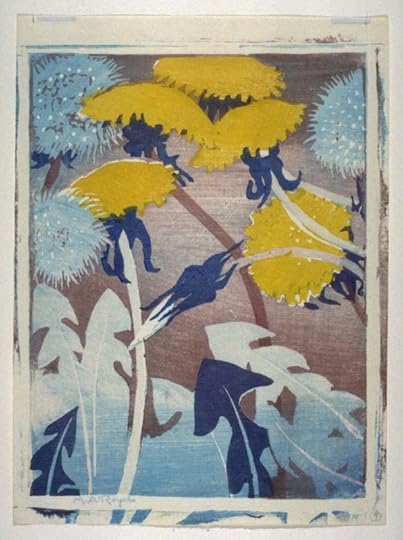
(Mabel Royds, 1932, Dandelions)

All immigrants have narratives in which the mundane is ripe with symbolism, centred on moments in which the difference between them and us, the natives and the newcomers, are somehow distilled. We recycle abstruse parables, pass them down the generations, and find in them nourishment, confirmation a-of something never fully articulated. We keep the lines of the stories more or less straight, because embellishment, like questions, only complicates.

Dandelions is a family memoir stretching over four generations who move back and forth between England (Sheffield and Manchester) and Italy (Maniago, Friuli- Venezia Giulia region), weaving a tapestry of stories of love and loss and family myths and legends interstitched with essayistic ruminations on topics that seem to come to Lenarduzzi in a process of free association when reflecting on bicultural identity and exploring what it means to live in between two different cultures: food, vegetation, the sense of (not)belonging, linguistic observations, piecing together fragments and anecdotes drawn from social and political history of England and Italy.

Central in the memoir are Thea Lenarduzzi’s (mostly telephone) conversations with her nonagenarian grandmother Dirce. Lenarduzzi interviews her (sometimes reluctant and taciturn) nonna on her memories and the family’s past, in which she almost seems to approach Dirce as a potentially inexhaustible receptacle of tales and anecdotes, ever hoping to find more beneath the shrugs of her nonna, eager to find stories - where there maybe are none. Touching on events and significant figures in Italian History (from Garibaldi over Mussolini, the assault in Bologna, the assassination of Aldo Moro), if this memoir makes anything clear it is that much of History passes by people unnoticed and that is very hard to access it again, the past being a foreign country, even for the contemporaries who lived it.

Experience becomes language becomes story becomes identity, and everyone’s place is settled. Each family has its own ‘dictionary of our past’.

Despite Thea Lenarduzzi’s beautiful, elegant and eloquent writing, quite early on I realised Dandelions wasn’t a book for me. It is hard to read a family memoir making abstraction from one’s own family history and memories. I acknowledge I don’t like to be reminded of that when I am reading – reading has always been my main refuge from what I experienced as stifling. Readers who are more comfortable with their own family relationships might enjoy this a lot more. The book left me mostly cold and even slightly rubbed me in the wrong way. Reading along until the end, I also felt trapped as when meeting with a friend who is eager to show thousands of holiday pictures or who cannot stop spinning endless stories on their incredible wide network of relatives and acquaintances, basking in every detail in these lives full of interest and meaning to that friend, but insignificant and colourless to an outsider who has no connection to them. With this memoir Lenarduzzi seems have Natalia Ginzburg’s Family Lexicon in mind as a model– a book she also explicitly mentions – and though I admire Ginzburg’s fiction and essays, I recall struggling with that book as well.

Photographs are like paragraphs, words written in light and dark.

Gradually I felt myself turning overly critical and ungenerous towards Lenarduzzi’s reflections. As much as the metaphors on the dandelions are a fascinating angle to capture both immigration (the spreading of the fluffy seeds), strangeness and xenophobia (dandelions as food; dandelions that are considered weeds in a lawn and so to eradicate) in one strong, multifaceted image, I was put off by the underlying tone of exceptionality of her family’s story and their position in a foreign country. Neither was I able to believe that eating dandelions – gathered and served up by her grandmother - is so uniquely Italian (it used to be common in the low countries before the second world war too). But maybe that is the whole point of the book, highlighting the exceptionality of experiences for the individual, in which it is actually unimportant if these experiences really are exceptional or not, the only thing mattering being how they are individually experienced? Lenarduzzi’s book reminded me of Bertolt Brecht’s song The Ballad of Mack the Knife And some are in the dark, and others are in the light. But one only sees those in the light; those in the dark, one doesn't see. However laudable Lenarduzzi’s venture to shed a light on people who would likely have remained in the dark, for me it missed the compaction in storytelling I enjoy in fiction.

Many thanks to Fitzcarraldo Editions and the author for kindly granting an ARC via NetGalley.
Profile Image for Alwynne.
947 reviews1,642 followers
September 13, 2022
Writer and editor Thea Lenarduzzi’s first full-length work, published as a result of winning the Fitzcarraldo Editions Essay Prize. It’s a moving, almost investigative, narrative of her family’s history, represented through a series of intertwining pieces that fall somewhere between memoir and essay. Lenarduzzi, partly inspired by Natalia Ginzburg’s idiosyncratic account of growing up in pre-WW2 Italy, sat down with her Italian grandmother (Nonna) to hear her stories of their family’s past. Lenarduzzi’s work also owes a debt to the practice of oral history, its methods of unearthing and bearing witness to the lives of ordinary people, the hidden or forgotten. Lenarduzzi, like many of her relatives before her, has lived suspended between countries: an Italian father and an English mother; time spent in Italy, then in England; study in France. Someone who’s scrabbled to patch together some clear sense of who she is out of her fragmented past. Her Nonna’s (Dirce) history is filled with similar ruptures. Born in 1926 in Maniago Libero, in a working-class community to the north of Venice, Dirce’s father’s dual identity led her briefly to Sheffield in the 1930s, as he searched for work to support his family; then back to Italy; and later as a married woman to Manchester and finally back again.

Lenarduzzi opens with a striking image of her grandmother, transplanted to post-war England, gathering dandelions on a Manchester wasteland, destined to accompany a Sunday meal. Spinning out from this image, and her grandmother’s recollections, Lenarduzzi constructs an intricate tale of identity, displacement and loss. One that also reveals aspects of the cultural and social history of Italy over the course of the twentieth century. Her narrative is garnished with snippets of folklore, the rich customs and the foods that form part of her family’s foundations: from the history and symbolism of the dandelion onwards. She draws parallels too between this tenacious, survivor of a plant, its seeds drifting on the wind, and the precariousness of life as a migrant striving to carve out an existence far from their homeland. Lenarduzzi, not unexpectedly, probes concepts of memory and identity, the role of stories and storytelling in shaping individuals and tying families together – or driving them apart. Her prose is elegant and precise, her imagery’s often powerful, haunting even, and her bond with her grandmother is movingly rendered. Perhaps inevitably there were sections that really worked for me and others that didn’t, some were a little too meandering and dry for my taste. Others, featuring Lenarduzzi’s more intimate thoughts of lost family members, were just too personal for me to relate to as a reader who is, after all, an uninvolved bystander.

Thanks to Netgalley and publisher Fitzcarraldo Editions for an ARC

Rating: 3/3.5
Profile Image for Roman Clodia.
2,916 reviews4,715 followers
September 5, 2022
Serendipitously, I read Natalia Ginzburg's Family Lexicon just a couple of weeks ago and so was already thinking about the role of language as a family and community bond, as well as an aide memoire before Lenarduzzi cited that book herself. But this abstraction is only one of the elements that is woven together to make up this book.

In what has become a prominent go-to mode of postmodernism, this tangles up in itinerant fashion linguistics with family history, cultural differences with political history, meditations on immigration and what it means to be in-between two cultures on both a micro- and macro level. The eponymous dandelions serve as a figure for both the gaps between Italian and English culture - but also encompass the image of all those spores that are blown away and apart, a kind of diaspora with a lost 'home' but also the potential to create further little homes with a common root.

The writing is fluent, and some of this is very moving. A wonderful cross between memoir, history and essay.

Many thanks to Fitzcarraldo Editions for an ARC via NetGalley
Profile Image for Ends of the Word.
550 reviews143 followers
May 4, 2024
In 2020, Thea Lenarduzzi won the Fitzcarraldo Editions Essay Prize with the initial chapter of what would become her hauntingly beautiful debut – Dandelions. Lenarduzzi was born and raised in Northern Italy, to an Italian father and an English mother. She now lives in the UK, in an uncanny reiteration – whether through destiny or choice – of the history of their forebears. Her Italian-born grandparents and great-grandparents had settled for long spells in England first between the wars, then in the 1950s. Dandelions is their story, told through the perspective of Lenarduzzi’s paternal grandmother, Nonna Dirce. Hours of recorded interviews with the redoubtable matriarch are combined with the author’s own memories and distilled into a family history which, through a tale of loves gained and lost, joys and sorrows, deaths and new beginnings, explores the themes of identity and belonging over several generations.

This memoir is as much the author’s own story as that of Nonna Dirce and her ancestors, a story lived in (and in between) two very different countries both of which were, in their own way, “home”. The dandelions of the title are a potent and multi-faceted symbol. They represent Nonna Dirce, who gathers them to prepare them as condiment to her dishes. Their seeds, spreading far and wide on the breath of the wind, evoke the diaspora of whole communities who leave their country to settle down elsewhere. They also remind us, however, of cultural differences – they are ubiquitous in both Italy and the UK, but in one country they are considered edible, in the other, not, thus highlighting the challenges of the immigrant experience:

All immigrants have narratives in which the mundane is ripe with symbolism, centred on moments in which the difference between them and us, the natives and the newcomers, are somehow distilled. We recycle abstruse parables, pass them down the generations, and find in them nourishment, confirmation of something never fully articulated... We Italians know how good gently wilted tarassaco tastes, once tossed with salt, perhaps a splash of vinegar or squeeze of lemon, and the essential olive oil, which, in England, you had to buy from the pharmacy back then (t’immagini? Can you imagine?). The British, on the other hand, do not. Dandelion and burdock is one thing, they’d say, picking weeds from a wasteland, something else entirely.


Lenarduzzi poignantly expresses the often conflicting emotions of immigrants and persons with dual citizenship, who may call two countries their home and yet feel strangely out of place in either, a sense of “in-betweenness”. There’s a certain serendipity in the fact that I read this memoir soon after Bejn Bejnejn by Palestinian-Maltese author Walhid Nabhan, a short story collection which explores the same theme of dual citizenship and (non-)belonging. At one point, Lenarduzzi conveys the strange but exquisite irony of her living for a time in France, physically half way between the two places she calls home.

By revising my attachments to England and Italy, I was performing a dual belonging which I did not confidently feel. There had always been a subtext of insufficiency, even fraudulence, about this hypthenated identity I had inherited – that I was not English enough to call myself English but not Italian enough to call myself Italian – and, in Paris, this intensified. To reach firmer ground, I pushed back against this other culture that now surrounded me.... The irony is that the betwixt and betweenness of being in a country that sat almost exactly halfway between these two places I call home was a fairly accurate reflection of the stuff in me.


Dandelions would have worked well enough as a lyrical family memoir, suffused with nostalgia and melancholy. But Lenarduzzi goes further. Details from her family’s past trigger intriguing sociological and historical ruminations: on the rise and fall of Fascism (and nagging, guilty doubts as the family’s wartime allegiances); Mussolini’s obsession with aviators; the racy romances or romanzi rosa of Amalia Negretti Odescalchi detta “Liala”; dark Friulian folklore courtesy of the writings Carlo Ginzburg; Garibaldi and the Risorgimento; the anni di piombo (literally the “years of lead”, marked by terroristic attacks by extremist groups); the differences between the packs of playing cards used in different regions of Italy, testament to the diverse historical and cultural influences which formed this relatively modern state. Thus, one family’s memory trove becomes a microcosm reflecting the heritage of a whole country.

This book held a particular resonance for me since I come from Malta, which is so close to Italy and which is marked, thanks to own chequered history, by the same Mediterranean/British dichotomy experienced “in the flesh” by Lenarduzzi’s family. But really it is a truly special debut which I would recommend to any reader. It drew me in from its very first page, where Maniago, the small Italian town where Nonna Dirce was born, is described as a place “where the plains pucker along the seam of the north-eastern Alps”. It is an arresting metaphor and, we soon learn, a particularly appropriate one too since Dirce is a fine seamstress. Small gems such as these pepper the text, making this a wonderful reading experience, and likely one of the best books I’ll read this year.

https://endsoftheword.blogspot.com/20...
780 reviews102 followers
April 12, 2023
3,5 - This started out very well, but lost momentum towards the end.

Thea Lenarduzzi asked her Italian grandmother to tell her life story and then turned it into an essayistic family memoir. Nonna's life is not all that extraordinary, except that after the war she emigrated to England and spent 20 years working in Manchester, and this experience serves to explore themes of identity, home, nationality.

If you are interested in Italy, its language and history there are many interesting vignettes, anecdotes andmost on the theme of (Italian) identity - on Garibaldi, d'Annunzio, Pasolini, italianità, Cuore, fascism, the emigrant's experience, dialects, the miracolo economico, Brigate Rosse... But there were also sections where I found the link between the family history and whatever the author wanted to explore very far-fetched.
Profile Image for Paul.
2,231 reviews
March 15, 2023
A copy of this was provided free of charge from the publisher in return for an honest review.

Home is as much a metaphysical thing as it is a physical building. For those that choose to make their home in different places, and in particular different countries, where they call home is very much dependent on the moment. I was born in Surrey, but I have felt more at home in Dorset since we moved here 20 years ago.

Thea Lenarduzzi has a similar dilemma. Her family are originally from Italy and the various generations have shuttled backwards and forward between the UK and Italy over the course of four generations. In this book, she blows away the dust from these family memories and tries to understand how it has shaped them as a family and her, as a person.

She sits down with her grandmother, or Nonna as she calls her and starts the process of recording the stories of family members past and just still present. This cyclic motion between the Fruili in Italy and Sheffield and Manchester happened over two generations and has defined her as a person and a full European citizen.

I cling to Nonno for support. My mind moves around his land like a ghost haunting a house that it considers its own. Or a vampire hovering on the threshold, hoping to be invited in.

I did like this intimate and intricate family memoir. Lenarduzzi meanders through her family history whilst being centred around her grandmother, Dirce. I like the way we can see a vast swathe of European history and the wars that punctuated the twentieth century through the prism of this family. Her prose is beautiful sometimes, but occasionally it felt like we had peered in a little too far into her family life. I can recommend this if you want a story of a family that has spread far and wide like the seeds from a Dandelion clock.
Profile Image for Sarah.
1,254 reviews35 followers
August 30, 2022
Framed around conversations she has with her aging Italian grandmother about her personal history, Dandelions is an engaging examination of family, home, migration, language and identity across the UK and Italy. I found Thea Lenarduzzi's non-fiction debut to be as compelling as any novel, one of those almost sui generis offerings that Fitzacarralo seems to do so well. Highly recommended!

Thank you Netgalley and Fitzcarraldo Editions for the advance copy, which was provided in exchange for an honest review.
Profile Image for Bob Hughes.
210 reviews207 followers
September 14, 2022
This book blends the personal and political in a truly powerful way.

Beginning with the tale of her grandmother collecting dandelions and the importance of dandelions and similar 'weeds' to immigrants (drawing a line between 'unwanted' plants and the immigrant experience of not quite belonging), this tale soon weaves into a much bigger tale about the feeling of being uprooted, about the role of memory in holding on to who you are and where you are from, and about what we inherit from the people around us.

We are almost a fly on the wall as Lenarduzzi interviews her grandmother, and asks her to share stories from her life, often revealing truly profound meditations on life and the human experience.

This book is a treasure, and above all else, is full of heart.

I received an advanced copy of this book from NetGalley in exchange for an honest review.
Profile Image for Patricia.
802 reviews15 followers
October 3, 2022
I loved the many riffs on identity: language, especially dialect, being part of multiple cultures, and how the book progresses through story-telling sessions with the Grandmother with characters emerging bit by bit and still remaining unknowable in some ways.
Profile Image for JacquiWine.
680 reviews180 followers
November 15, 2022
In 2020, the Italian-born editor and writer Thea Lenarduzzi won the Fitzcarraldo Editions Essay Prize with her proposal for Dandelions, a gorgeous, meditative blend of family memoir, political and socioeconomic history, and personal reflections on migration between Italy and the UK. The book has now been published in full, and it’s a thoroughly captivating read. Elegant, thoughtful and exquisitely written, Dandelions spans four generations of Lenarduzzi’s family, partly crafted from discussions between Thea and her paternal grandmother, Dirce (aka ‘Nonna’). This gorgeous meditation touches on so many of my favourite themes – family stories, memory, identity, belonging, migration, displacement, loss, grief, language and regional culture – all set against the fascinating backdrop of a time of great sociopolitical change.

The book begins with one of Thea’s prevailing images of Nonna, picking dandelions to accompany the family’s dinner – bobbing and weaving “between the flowers’ perky heads, dotted like asterisks on a densely annotated page.” The setting is 1950s Manchester – home to Dirce, her husband Leo, their two children, Manlio and John, and Dirce’s mother, Novella. From this springboard, the book moves backwards and forwards in time – and between Italy and England – threading together various stories and vignettes that span the 20th century. In doing so, a multilayered portrayal of Thea’s family emerges, placed in the context of Italy’s sociopolitical history and economic challenges.

The dandelion motif, which we see in these opening passages, recurs throughout the book as a metaphor for several aspects of the family’s story – from the way the seeds travel from one place to another, aided by the wind, to the plant’s ability to take root and grow pretty much anywhere, irrespective of circumstances. There’s also a sense of time passing through the generations, with each seed being a descendent of the ‘parent’ flower and the beginnings of the one to come. (The prose is superb throughout.)

Each seed, white and wandering, is a ghost of the flower that once was, and an apparition of the flower to come, looking for a place of rest. (p. 15)

The dandelion’s tenacious nature and its role in healing and medicine are significant too, adding further layers to the plant’s relevance as a title for the book.

Natalia Ginzburg’s novel-cum-memoir Family Lexicon is clearly a touchstone for Thea – a text in which well-worn tales and phrases become triggers for specific memories, passed through the generations entwined with identity.

Experience becomes language becomes story becomes identity… (p. 13)

Central to Dandelions are the various stories of migration (some successful, others less so) – many featuring Dirce, now ninety-five and living in Campagna, Italy. So, it’s rather appropriate that the name ‘Dirce’ has two roots: ‘cleft’ and ‘dual’, especially for a woman who feels she has lived two lives – one in Italy, the other in England.

We hear of Leo’s persistent and touching courtship of young Dirce, initially frowned upon by Novella, and the couple’s marriage and move from Italy to England in the early 1950s, mostly for its opportunities. Then there are Dirce’s jobs as a seamstress, which Thea captures as a series of trends, from ‘the quick-fire cushion-cover years’ to ‘the little-goes-a-long way hot pants years’.

To read the rest of my review, please visit:
https://jacquiwine.wordpress.com/2022...
Profile Image for Antonio Gallo.
Author 6 books57 followers
September 11, 2022
Un bibliomane che si rispetti, sia cartaceo che digitale, è sempre a caccia di nuovi libri. Ho letto la fantastica notizia che nel mondo si pubblicano circa 400 mila libri al giorno. Quanti libri al minuto allora? Il conto fatelo voi. A me basta saper scegliere, a seconda dei propri interessi e bisogni. L’immagine che correda questo post vi propone un libro che non è stato ancora pubblicato in cartaceo, ma di imminente uscita in versione digitale Kindle. L’ho prenotato dopo di aver letto la notizia sulla rivista inglese The Spectator. Leggete la presentazione editoriale e la traduzione della recensione in anteprima. Quando mi arriva la copia digitale, a lettura del libro completata, ne discuteremo.

Dove, o cos’è casa? Che cosa ha significato, storicamente e personalmente, essere ‘italiano’ o ‘inglese’, o entrambi in una cultura che preferisce che siamo noi a scegliere? Cosa significa avere radici? O aver lasciato un pezzo di sé in un posto abbandonato da tempo? In Dandelions, il suo straordinario debutto, Thea Lenarduzzi ricostruisce la storia della sua famiglia attraverso quattro generazioni di migrazioni tra Italia e Inghilterra, e le storie sparse come semi lungo il percorso. Al centro di questo libro traboccante della vita di persone straordinarie e apparentemente insignificanti c’è la nonna di Thea, Dirce, un’ex sarta, che, ora vicina ai 100 anni, è una depositaria di racconti che sono a loro volta imprevedibili, inaffidabili, significativi. E questo ci porta più in profondità. C’è quello sul moderno Icaro di Mussolini che si schiantò nell’oscurità di un lago; sull’operaio di Manchester che voleva solo essere visto; sul demone oscuro che ti visita nel sonno; e il monumento a un politico assassinato che, quando piove, si colora del sangue. Attraverso i viaggi di Dirce e dei suoi parenti, dal Friuli a Sheffield e Manchester e ritorno, emerge una storia diversa, in cui sé e luogo sono ordito e trama, intessuti, con fili lasciati pericolosamente indietro. Un libro di memorie di famiglia ricco di leggende popolari, cibo, arte, politica e letteratura, Dandelions annuncia l’arrivo di una scritttice eccezionale: audace, gioiosa e saggia.

Verso la fine di “Dandelions”, il libro di memorie ispirato e profondamente toccante di Thea Lenarduzzi, l’autrice cita l’osservazione della nonna secondo cui ci sono tante Italie, tante Italie. “La mia è diversa dalla sua, che è diversa da quella di mia madre, che è diversa da quella di mio padre, e così via”, scrive. Queste Italia, del fascismo, di Garibaldi, di emigranti che vivono a Sheffield e Manchester, di 31 dialetti, non sono stranezze storiche lontane confinate a documentari o libri di testo ma sono, nel racconto di Lenarduzzi, la storia patchwork di una famiglia.

Seduta al tavolo di sua nonna con “le persiane abbassate contro il sole mattutino e il resto della famiglia scacciato via”, diventa una “archivista della tradizione familiare”. Attraverso conversazioni su cose semplici come passioni infantili (“Chi era il tuo scrittore preferito quando eri giovane?”) o dolorose come la dittatura di Mussolini (il nonno di Lenarduzzi non si opponeva al regime fascista; sua nonna afferma che “non aveva scelta ‘), si dipana una storia complicata di amore, immigrazione e guerra e le tante Italia in cui si è svolta.

L’autrice, sulla trentina, è lei stessa ‘50–50 italo-inglese’, anche se lotta con questo modo ‘biometrico, certificabile’ di guardare alla sua eredità. Il movimento tra l’Italia e l’Inghilterra muove il libro. Sua nonna (il cui nome, Dirce, significa giustamente “spaccatura” o “doppio”) ha “vissuto due vite”, con due diverse migrazioni dall’Italia all’Inghilterra. Lasciò per la prima volta Maniago, una cittadina nel nord-est del Friuli, per trasferirsi a Sheffield nel 1935, quando “la Grande Depressione stava montando” e Mussolini stava per consolidare il suo potere. Questa migrazione fallì quando suo padre, Angelo, morì due mesi dopo (è sepolto nel cimitero di Sheffield’s City Road). Ma Dirce lasciò di nuovo l’Italia nel 1950, questa volta per Manchester, con marito e figlio.

Questi viaggi, affrettati, difficili e pieni del dolore della nostalgia di casa, qualcosa a cui secondo Lenarduzzi gli italiani sono ‘particolarmente sensibili’ spiegano il titolo del libro. I denti di leone, le loro “teste cariche di semi in attesa di prendere una brezza, stabilirsi e mettere radici”, sono un “regalo di un motivo” quando si pensa all’immigrazione. La loro fragilità completa la metafora: ‘Per gli immigrati, la precarietà fa sempre parte della disposizione.’

Lenarduzzi è molto brava quando scrive di migrazioni internazionali, ritorno a casa e appartenenza (‘Lo vedo come un processo di prosciugamento, come se l’italianità mi stesse esaurendo ogni anno trascorso all’estero’); ma le sue storie sui movimenti e le tensioni all’interno della stessa Italia sono ancora più potenti.

Il libro è costellato di frammenti dei dialetti parlati dalla sua famiglia. Suo nonno era trilingue e parlava “friulano con la moglie, veneto con i figli e italiano con i nipoti, che lo parlavano da soli”. Negli anni ’20, tale varietà costituiva una “minaccia diretta” all’omogenea italianità in cui credevano i fascisti. Per 20 anni, le molte lingue “reciprocamente incomprensibili” d’Italia furono soppresse a favore dell’italiano, una lingua che, all’epoca dell’unificazione , parlava solo il 2% della popolazione.

Ma il Duce non lasciò in pace nemmeno la lingua. Nel 1938, mise fuori legge l’uso del “lei” come versione educata di “tu” (simile a vous in francese) e lo sostituì con “voi”. Sessant’anni dopo, tornato in Italia dall’Inghilterra, il padre di Lenarduzzi in una riunione vine rimproverato per aver ancora usato questo tipo di indirizzo imposto dal fascismo. Nelle pagine di chiusura del libro, l’autrice cita sua nonna dicendo: ‘Sono solo parole’, solo parole. Ma in Italia sembra che nulla possa essere più lontano dalla verità.

Natalia Ginzburg, la saggista e scrittrice ebrea-italiana che ha scritto sull’Italia in tempo di guerra, aleggia in tutto “Dandelions”. Lenarduzzi cita il suo romanzo-memoir “Lessico di Famiglia” quando parla di storie di famiglia. ‘Se io e i miei fratelli dovessimo trovarci in una grotta buia… solo una di quelle frasi o parole ci permetterebbe immediatamente di riconoscerci’. C’è qualcosa di narrativa consapevole in molti passaggi del libro. Nel descrivere i suoi nonni che si innamorano, scrive: “Mentre la storia di Leo e Dirce si svolgeva, gli Alleati invasero la Sicilia”. Non è una scelta gratuita o un cliché. Lenarduzzi si interroga continuamente su cosa significa scrivere un libro di memorie, impacchettare vite in parole e creare una narrazione coerente al di là di ogni forma di “deviazione e digressione”: “Mi chiedo quali siano le motivazioni della nonna e le mie”.

Ci sono momenti in cui la narrazione sfocia nell’auto-indulgenza, Lenarduzzi elabora persino una meditazione filosofica sull’amore di sua nonna per il paracetamolo, ma, nonostante questo, “Dandelions” è ancora libro che coinvolge. Così come descrive di molte Italia, parla anche molti libri, e questa insolita combinazione di memorie di famiglia, indagine letteraria e storia politica è un trionfo.

MEDIUM - https://angallo.medium.com/prima-di-m...
Profile Image for Carlton.
681 reviews
October 10, 2022
Lenarduzzi creates a patchwork story from her Nonna’s (grandmother’s) memories. Her Nonna was born in northern Italy in 1926, emigrating to England for a short spell in 1935-1936 where her father has found work before he suffers an early death.
Nonna returned to England in 1950, returning to Italy in the early 1960’s.
Lenarduzzi interpolates the lives of other Italians, authors (Liala) and politicians (Garabaldi, Mussolini, Berlusconi, Salvini) into her Nonna’s stories to provide necessary historical context, and also the lives of many of her other relatives.
The book is an extended meditation on belonging, homecoming and the importance, but unknowability, of ordinary personal history.
All immigrants have narratives in which the mundane is ripe with symbolism, centred on moments in which the difference between them and us, the natives and the newcomers, are somehow distilled. We recycle abstruse parables, pass them down the generations, and find in them nourishment, confirmation of something never fully articulated. We keep the lines of the stories more or less straight, because embellishment, like questions, only complicates.

Lenarduzzi also quotes Joan Didion’s famous lines:
‘We live entirely, especially if we are writers, by the imposition of a narrative line upon disparate images, by the “ideas” with which we have learned to freeze the shifting phantasmagoria which is our actual experience’.

Lenarduzzi looks lovingly and critically at this narrative line.

This is another intriguing and engaging book from Fitzcarraldo Editions, who seem to be able to consistently publish readable, thought provoking books.

I received a Netgalley copy of this book, but this review is my honest opinion.
Profile Image for Karolina Slup.
35 reviews
November 28, 2022
It’s true what others wrote about the book being so personal that it becomes unrelatable. Despite that, although I had a moment of weakness somewhere around half of the book, I finished it. I quite enjoyed the second half of Dandelions, particularly story of Nonna’s mother and on-point reflections on death, society and identity that started to appear more frequently towards the end of the book. I really liked the writing style of the author. It was a very well-balanced and accessible poetic narrative. I’m not sure if I would recommend the book, but I’m glad I finished it. I think Italian readers could perhaps relate more to the story because of the historical and cultural references.
Profile Image for marta.
151 reviews
April 2, 2023
e-arc provided by netgalley in exchange for an honest review.

"non mi ricordo."

this is a book about a grandmother, about a family, about italy, about life.

there is nothing i can say about 'dandelions' without first establishing the sheer magnitude of love and reverence that runs through it. through minute details and a careful putting-to-paper of her family history, thea lenarduzzi has crafted a book that feels like sitting in on a private conversation and trying to hold on to every word spoken. i thought i was getting a biography, when instead, this was a book about everything. through the lens of dirce, lenarduzzi's nonna, we see how the twentieth century played out in italy and beyond, we see a life lived, tears shed and love felt.

frankly, it is difficult to put into words what this book did to me, just as it would be difficult to express the full meaning of a grandmother. she is grander than life, and yet so fragile. she has lived more than you think you ever will, and downplays everything to clear the path for you.

it is wondrous how many stories we carry.
Profile Image for Kerry.
212 reviews4 followers
August 12, 2022
Lenarduzzi presents readers with a fine debut, a memoir that is intelligently written, binding history, sociology and mythology into a flowing and gorgeously written narrative. This is a personal narrative tackling the question of what represents 'home', but also what represents 'remarkable'? In this narrative, Lenarduzzi uses the history given to her by her grandmother, who moved from Italy to the UK, and links it to herself, and (fascinating) information about dandelions. Metaphorically speaking, who knew dandelions were edible, for a start? And the link to the way in which dandelions seed themselves so easily is well used. Unsurprisingly, Lenarduzzi won the prestigious 2020 Fitzcarraldo Editions / Mahler & LeWitt Studios Essay Prize for her proposal for this book, and it seriously does not disappoint. A beautiful piece of work. Highly recommended.

My grateful thanks to Fitzcarraldo Editions and to Netgalley for the ARC.
Profile Image for Bridget Bonaparte.
349 reviews10 followers
September 7, 2022
As the product of italian migrants, I was so excited to read this book—that turned out to be a disappointment. I get that Lenaduzzi’s project was to make a monument for the unhistoric people in her family; however, even though nothing historic was achieved by them that’s no excuse to make this book boring as hell. Literally nothing happens to her family. She continually tries to force a narrative into her nonnas memories that doesn’t exist. The book feels forced in all senses, formally and content wise it just doesn’t cohere. There’s really no story, and the historical aspects she pulls in as well as the frankly excessive etymology feel like they’re there just to fill space (defining “nostalgia” is now cringe. It’s as embarrassing as the Beat Generation). Anyways surprised to see all the praise, the writing is unimpressive it feels like much is mishandled and odd choices are made. If this book is was good for anything it inspired me to start recording a much spicier tale of my own Sicilian migrants.
64 reviews3 followers
September 23, 2022
Just loved this. Dandelions, the first book by Thea Lenarduzzi, is a family memoir centered on her grandmother Dirce. From Friuli in northern Italy, they travelled to England in the 1930s, and then back forth subsequently. It is a book about home, what it means to belong, the role of language as a bond, identity and memory. The dandelions of the title refer to both dandelion leaves searched for as food by Dirce on wasteland in her new home in England, and to dandelion seeds spreading in the wind and taking root, as her migrant ancestors did. Through many conversations with Dirce, she tells stories of love, death and migration, blending the personal with contemporary Italian politics through the rise of Mussolini and fascism, the Red Brigade terrorism of the 1970s and 80s, and up to the current right-wing xenophobic leaders. Throughout, Thea also remembers her own childhood in Italy, and the family myths she grew up with. It is written with great perception and clarity, and is a wonderful read. I have missed Thea’s podcast voice – it’s so good now to be able to read her written words.
Profile Image for Eena.
88 reviews
September 3, 2022
Thank you, Net Galley and Fitzcarraldo Editions for the arc.

“Nonna’s stories had been a comforting background noise, like water steadily following its course outside the house in which I live.”

Oh wow, this book feels like a warm embrace from my granny. The author’s words were so comforting to the point that they felt like they’re satisfying my overthinking brain as I question what home truly means.

What I also like about the construction of the chapters here is that they’re like a collection of snippets of the author’s family tree throughout the decades. And I love that it felt like I was in a journey with the author because you will know that as you read this you and her are both audience members of their story.
Profile Image for Sarah.
734 reviews30 followers
Read
August 31, 2022
This is a memoir spanning four generations across Italy & England, largely inspired by conversations between the author & her grandmother. It feels like grief runs through the veins of this book albeit in a very beautiful way.

There was a lot of Italian history over the past 100 or so years included which I found interesting, as well as the cultural differences between Italy and the UK. One being the very title of this book - dandelions are commonly used in cooking in the region the author is from whereas in the UK her grandmother received funny looks for picking them.

A gorgeous meditation on belonging and identity.

Read via NetGalley in exchange for an honest review.
Profile Image for a.
27 reviews2 followers
July 26, 2024
I came to this book for a few reasons. I was looking for a book about Italian history that was personal without being romanticized, and I was looking for someone who worked with dialects and wove in & out of english and regional languages. I think Lenarduzzi excelled at both of these things. I walked away from this book with a new understanding of Italy’s Fascist era, how it impacted life on the mundane day-to-day, and how that impacts Italian families today. I also gained a much broader appreciation for Italian diaspora, and an understanding of Italians, in some sense, as a diasporic people.

Lenarduzzi walks a very fine line between naming the reality of Fascist history (finding pictures of relatives with swastika armbands, for instance) and avoiding pointing blaming fingers at anyone. I understand why. However, when she comes to talking about her own lifetime, I think Lenarduzzi missed an opportunity to build connections with other diasporic peoples and name some of Italy’s current problems.

Nearing the end of the book, there are a few scenes in which Lenarduzzi describes witnessing racism. She does not call it racism, and I suspect she is trying to “show, not tell.” I understand why, but it falls flat for me when she starts recounting her anxiety around immigration papers. She names, indirectly, that her own experience with immigration is much easier than it would have been if she had a different skin tone - but she doesn’t go much further than vaguely implying it. I’d have liked to see her go beyond naming her privilege and the guilt/shame she feels around it, and see her actively draw parallels between Italians’ experience of immigration (xenophobia, classism, “smelly food” jokes etc) and the experiences of newcomers to Italy.

“Now we are back at the root of a matter which has stalked this country since birth. Because after the question, ‘Which Italy is this in which I find myself?’ come two more: ‘Which Italy do I want it to be?’ and, inevitably, ‘What am I prepared to do about it?’”

Italians, as Lenarduzzi notes, are not the first immigrants to seize onto the imagery of a dandelion. She has done so much work in this book to unpack the how’s and whys immigrants are discriminated against, what impact this has on her family, how she (like many Italians) ends up stuck in this endless state of homecoming. Why not take the opportunity to hold the door open behind her?
Profile Image for Kasia.
11 reviews4 followers
January 22, 2023
A combined review of Lenarduzzi and Paul Corner's book on Mussolini (the whole review available at https://revdem.ceu.edu/2023/01/19/dic...

Engaging with the difficult task of deconstructing firmly rooted myths, Corner’s main goal is to answer two questions: (1) How far does the affirmation of “many good things” done by Fascism corresponds to the historical reality?; and (2) Why do so many people today share a “permissive memory” of Fascism? Here it has to be stressed that Corner’s choice of myths-and-facts approach allows to answer him only the first question — which he does in a very persuasive way. Let us look at the misperceptions of the Fascist regime that the author deconstructs in more detail before we would move on to the second question.

It is a praiseworthy endeavor to debunk repeatedly stated assessments that are simply contrary to the historical evidence. It is enough to mention that even former European Parliament’s President Antonio Tajani, quoted in the book, once remarked unashamedly in an interview that “Mussolini also did many good things”. If the elites representing “noble” European institutions share such views in good faith, why should one then expect a different approach from the common people?

In her recently published book “Dandelions”, author and TLS editor Thea Lenarduzzi describes how she had a hard time listening to her grandma’s stories in which she tends to repeat social clichés about Fascism. Lenarduzzi even places in a visible location in the house a book similar to Corner’s — “Mussolini ha fatto anche cose buone. Le idiozie che continuano a circolare sul fascismo” [Mussolini did also good things. The still circulating stupidities about Fascism] by Francesco Filippi— just to observe that it remains forever untouched. However, Lenarduzzi never dares to explicitly confront Nonna about her mistaken convictions in anticipation of condescending behaviour of an otherwise lovely and charming grandma. This is just an example of how wide spread are the erroneous convictions about the benevolent character of Fascism (including those who experienced it on their skin!), and how difficult it would be to eradicate those beliefs (or even confront them) in the sphere of popular opinion and small talk.
Profile Image for Matilde.
160 reviews15 followers
October 10, 2025
TW short discussion of stillbirth

Pros: it's a nice meandering read about a woman tracing back her family roots through conversations with her family, particularly Nonna Dirce. Home and all its compositions (homecoming, homesickness, home-haunting, homemaking) is explored with some interconnections as well with the wider world (e.g., what was going on while Dirce was falling in love? Ah, yes, WWII.). Truly the story of an ordinary family, which is what makes it so sweet to read, especially as an Italian living in the UK - the book is about an Italian-British family as they move between the two countries.

Cons: Home is explored... ad nauseam. This book should have been about 200 pages. Some portions are repetitive, and while I do appreciate the tangents on world or Italian politics which contextualise the family's life and history, sometimes they aggrandise the Italian emigration experience and might appear perhaps shallow in comparison to other, more nuanced explorations of immigration in Britain. What I mean is, yes, Italians were discriminated against as they arrived in the UK in the early 20th century, but it seems a bit narrow to not also contextualise this with the experience of other communities (e.g., South Asian). Additionally, sometimes I really don't appreciate the way she speaks to her interviewees/family members - it feels at times that writing the novel takes precedence over her family's feelings about their own history. For example, she keeps asking her grandmother if she felt bad that technically Catholicism does not allow for the blessing of stillborns, although hers was (exceptionally) blessed before his burial. Jesus Christ, Dirce told you 40 pages ago that she understood the stillbirth as a challenge God gave her, sometimes religion really is the opium of the masses and that's better than the alternative, which might just be languishing in pain over the death of one's child. Dirce also doesn't want the stillborn child, Anthony, engraved into the tombstone. Sometimes, the subject's pain overrides the importance and comprehensiveness of the project.

Final con: sometimes I just find her discussions about language a bit pithy and pointless. Okay, scared, sacred, and scarred are similar words. So? Language evolves organically but also without intention, not everything has to be an English essay.
Profile Image for Rachel Hitch.
20 reviews
February 20, 2025
"Tens of moony dandelions were meeting their maker, casting their ghost-seeds to the breeze ... they will die and resurrect in their own time, whether or not anyone is around to bear witness"

This is honestly one of the best books I have read in a very long time. Most of the time, I would resist picking it up because I did not want to get any closer to finishing it. I really felt how personal this project was for her; how, in an attempt to uncover the dead stories in her family, she was really just reviving herself and her identity. Her connection to these stories and these people is so palpable without slipping into the overly-sentimental.

What I found most profound was her discussions on the themes of home and belonging, peppered between the stories of fascist Italy and immigration to England. How her expectations of how her ancestors would have been feeling in their migratory state - identity and physical - says more about Lenarduzzi feels in the present day, being a collection of different nationalities.

"Nonna's memory was in full bloom and would not be tamed by anything like conventional narrative structures" - I love when people write about circumstances and people they know so well and Nonna is just magic, blunt, but pure magic in her honesty and unwavering memory.

This was a project which allowed the author and the reader to get closer and deeper within the subject, serving all of us in equal measure and I am so grateful to have experienced it. But, not more than my mother who has been impatiently waiting for me to finish it so she can have it ...
This entire review has been hidden because of spoilers.
Profile Image for Hazel Tang.
22 reviews
October 9, 2025
I kept wondering if the repeated non mi ricordo created memory gaps that Lenarduzzi had to fill with long detours into dandelions, history and political figures. As I continued reading, I realised that some of these digressions were not entirely necessary. Her family stories are already beautiful and memorable on their own, so for the background, I can always Google if I need to.

I’d have preferred if Lenarduzzi lingered more on the tiny, precious moments:

As a reader, these are the things - the human stories - that stay with me. Dandelions, on the other hand, even if one lands on my shirt, I’d simply brush it away. That said, I thoroughly enjoyed this book. It’s so unique and though at times disjointed, it somehow still feels whole. I finished it feeling inspired and a little stirred to one day write about the Italian side of my own family.
Profile Image for Georgia.
51 reviews4 followers
September 5, 2022
Italian immigrants come to London in the late 1800s and have a son, who eventually goes back to Italy and marries and has a daughter, who in turn moves to Manchester and has a son, who will later move back to Italy and have a daughter (our author) who is currently living in England. In this book dandelions serve as a metaphor for immigrants, Thea writes, “all immigrants have narratives in which the mundane is ripe with symbolism.”

Some parts of the book were unexpectedly moving, the period leading up to 1971 in particular which is, ‘best told through snatched scenes, brief flashes of something solid in a fog.’ As I read, I suddenly thought wow, perhaps that’s all life really is, a series of snatched scenes; like when me and my brother saw a rat run up a ladies leg up the high street, the infamous missing creme egg, the feeling of being warm and cosy in my bed as my dad sat on the floor reading me Harry Potter. How the only thing my own future grandchildren will know of my parents, my grandparents are the things I will tell them, a collection of ‘snatched scenes’, remembered and repeated and re repeated until they become our own mythology. What will I say when my grandchildren ask me what Covid was like or ask me about Boris Johnson? Will age have softened me, blurred my memories, will I respond, “Oh Boris Johnson he wasn’t that bad, yes we were cold that winter but everyone was back then, it wasn’t unusual.”

http://www.artsbooksplaces.com/dandel...
Profile Image for Amanda Rosso.
342 reviews28 followers
December 27, 2022
A brilliant, rich and profoundly articulate book, a memoir about Lenarduzzi's own history of migration between England and Friuli Venezia Giulia, the region where her family came from and, in some capacity, came back to. But Dandelions is most importantly a profound analysis of the meaning of one's belonging, especially for what concerns the aleatory concept of "italianità" so often dangerously weaponized by the Far Right and mixed with the lost history of one's complex heritage.
Lenarduzzi peppers her narration with micro stories, anecdotes and the personal story of her paternal grandmother, her Nonna, and her family's journey to Sheffield and back home, whatever "home" means.
The author's own style and slanted perspective enriches the story with precious observations about language, belonging, history and etymology, where language is a crucial part of one's history and identity, mirror to a world contraddictions and long cultural melting pot.
Profile Image for Mandy.
3,631 reviews334 followers
September 21, 2022
Much more than a simple memoir, this wide-ranging exploration of the author’s family is at once a meditation on home, identity, belonging and migration as well as a social and political history of the times that family lived through. Centred around her beloved grandmother and the tales she had to tell, the author allows herself to wander far and wide – sometimes perhaps meandering too far and wide, as occasionally my attention wandered when the non-linear narrative dwelt too much on people I simply had no connection with. Nevertheless, this is a fine piece of writing, intelligent, perceptive and deeply personal whilst retaining a universality that all readers will relate to.
Profile Image for mylogicisfuzzy.
643 reviews1 follower
November 18, 2024
An interesting memoir about family history, home and belonging, language, culture and identity. At the heart of it is the author's 95 year old grandmother Dirce who, like the author, lived between Italy and England. Woven into the stories of Dirce and her family is history from Garibaldi to a popular 1930s Italian romance author.

While well written and interesting, I found Dandelions somewhat meandering and difficult to relate to. It is a very personal work with Lenarduzzi and her family's migrant experiences quite different to my own experience of migration and 'home' in particular.

My thanks to Fitzcarraldo Editions and Netgalley for the opportunity to read Dandelions.
Profile Image for Asia Martello.
7 reviews
April 4, 2024
This book felt like it was written for me, I think it’s a must read for anyone with Italo-English roots or bi-national roots in general. Wouldn’t say it’ll help you through an identity crisis but definitely will help you see the beauty in the binary
Profile Image for Leah Soeiro.
68 reviews
December 27, 2025
Dandelions is an eclectic tapestry of belonging and remembering. More people should take on the task of immortalising their ancestors and their journeys across lands and cultures as Thea Lenarduzzi has.
Displaying 1 - 30 of 40 reviews

Can't find what you're looking for?

Get help and learn more about the design.