

What do you think?

Crossing the Mangrove
Travesía del manglar, cuya traducción la realizó Ana Inés Fernández, tiene lugar en la isla de Guadalupe, donde los miembros de la comunidad Rivière au Sel se congregan en el velorio de un extranjero, Francis Sancher, caoba de hombre, muerto sospechosamente. Los personajes de la comunidad rememoran para sus adentros su relación con el difunto. Cada recuerdo es un pedazo de la historia del fallecido, siempre incompleta, y una fracción de la identidad guadalupeña, con metropolitanos, negropolitanos, inmigrantes y gente que nunca salió de la isla. Los prejuicios que cada uno tuvo ante el hombre extranjero ponen en evidencia la dimensión de un lugar pequeño, y sin embargo cosmopolita, que cruza el fantasma colonial con la condición de isla caribeña. En este libro, la fuerza del lenguaje criollo-guadalupeño se enmaraña hermosamente con el verde de la flora isleña. El viento también lo hace, entre verado en los recuerdos de quienes asisten al velorio, arrinconado por la lluvia. Las piezas de esta novela son un complejo mosaico, su escritura es singular, y por ello se trata de una obra infalible en la literatura poscolonial antillana.
248 pages, Paperback
First published January 1, 1989
About the author
Maryse Condé
88 books968 followersMaryse Condé was a Guadeloupean, French language author of historical fiction, best known for her novel Segu. Maryse Condé was born as Maryse Boucolon at Pointe-à-Pitre, Guadeloupe, the youngest of eight children. In 1953, her parents sent her to study at Lycée Fénelon and Sorbonne in Paris, where she majored in English. In 1959, she married Mamadou Condé, an Guinean actor. After graduating, she taught in Guinea, Ghana, and Senegal. In 1981, she divorced, but the following year married Richard Philcox, English language translator of most of her novels.
Condé's novels explore racial, gender, and cultural issues in a variety of historical eras and locales, including the Salem witch trials in I, Tituba: Black Witch of Salem and the 19th century Bambara Empire of Mali in Segu.
In addition to her writings, Condé had a distinguished academic career. In 2004 she retired from Columbia University as Professor Emeritus of French. She had previously taught at the University of California, Berkeley, UCLA, the Sorbonne, The University of Virginia, and the University of Nanterre.
In March 2007, Condé was the keynote speaker at Franklin College Switzerland's Caribbean Unbound III conference, in Lugano, Switzerland.
Condé's novels explore racial, gender, and cultural issues in a variety of historical eras and locales, including the Salem witch trials in I, Tituba: Black Witch of Salem and the 19th century Bambara Empire of Mali in Segu.
In addition to her writings, Condé had a distinguished academic career. In 2004 she retired from Columbia University as Professor Emeritus of French. She had previously taught at the University of California, Berkeley, UCLA, the Sorbonne, The University of Virginia, and the University of Nanterre.
In March 2007, Condé was the keynote speaker at Franklin College Switzerland's Caribbean Unbound III conference, in Lugano, Switzerland.
Ratings & Reviews
Friends & Following
Create a free account to discover what your friends think of this book!
Community Reviews
Displaying 1 - 30 of 338 reviews

September 22, 2020
Crossing the Mangrove by Maryse Conde
The story is set in a small town on Guadeloupe in the Caribbean. A mysterious man has died and at his wake, chapter by chapter, different people reflect back upon him, his character and his life. As usual in this set-up they end up telling us more about themselves and each other than they tell us about him. Most people hated him because he came from “elsewhere” and he had some money. Men hated him because he attracted women because of his good looks and money; most women hated him because they weren’t one of the two young women he was romantically involved with.
The author introduces us to the complex racial and ethnic mix of the island through the labels the inhabitants use. The author doesn’t tell us this, but the island is roughly 80% Creole (mixed African-European ancestry) and about 10% East Indian and 10% European. There are some Chinese and Haitians; the latter are farm laborers, often undocumented.
The book sometimes uses dialect (a French patois) but gives us the English translation in parentheses and in footnotes. These terms tell us what a lot of the story is about: a dame gabrielle is a high-class prostitute; a capress is a very light-skinned woman (the term high yellow is also used); makoumeh means gay; Negropolitans means locals who have lived in Paris. Upper class people, usually white, speak ‘French French’ and often visit ‘French France.’ Many Creoles call the East Indians by the derogatory term “coolies,” or, to be more specific in your insult, ‘kouli malaba,’ meaning an Indian from the Malabar coast of southwestern India. (I love all the geography in this book.) These black children come home from schools, following the French curriculum, chanting “Our ancestors the Gauls…”
The legacy of slavery hangs over the book and haunts all the people in the story. Most are poor and all are unhappy. We hear stories of rape, incest, suicide, abuse of wives and family by angry drunken men, unrequited love. Their legacy turns them against each other. A poor young man who manages to excel in school and go to Paris to become a doctor is despised: “What! A Ramsaran, a doctor! People don’t know their place!” Anyone who tries to get ahead is accused of “acting white” so, for example, a man starting a plant nursery won’t use TV ads because he doesn’t want to fall into “white folks ways.”
The dead man was hated “Probably because he came from Elsewhere. From over there. From the other side of the water. He wasn’t born on our island of malice that has been left to the hurricanes and the ravages caused by the spitefulness in the hearts of black folks.”
One theme is that sugar cane, the traditional crop – historically the ONLY crop – is dying off. Only Haitians work as cane cutters now, and yet the people criticize anyone who tries planting bananas or flowers. Another theme is communing with nature – everyone walks through the forest. They encounter and spy on each other. One young boy watches a beautiful girl bathe nude in a pond and is love-struck for life. A mentally challenged boy spends all his time in the woods. A hermit lives there. He babbles incoherently, terrifying the children. We learn his story of how he used to be “normal” with a job, a house and family
There is good writing. Some examples:
“But death being what it is, when it passes by, respect it.”
[his children]”…one who was already shooting up fatherless under the sun, the other who was getting ready to enter this world as an orphan with nothing but two eyes to cry with.”
“I always think of him [my father] as being dressed in black, probably because his whole being reminded me so much of death.”
“How many years went by, one behind the other, pushing their twelve months in front of them?”
Although it’s a novel focused around the life of the dead man, each chapter, each brief life story, could be seen as a collection of interconnected short stories. The book reminds me a lot of other small island Caribbean novels I’ve read, and one I’m reading now. I could characterize their differences by their humor, or lack of it, and general attitude of the characters toward life. All have a theme of poverty, multi-ethnicities and the lasting legacy of slavery.
Miguel Street by V. S. Naipaul (set in Trinidad) and Solibo Magnificent by Patrick Chamoiseau (Martinique) have humor, a live-and-let-live attitude, and an appreciation of life despite the hardships, especially in Chamoiseau’s novel where many characters are homeless people who hang out in the park. This story I’m currently reviewing, Crossing the Mangrove (Guadeloupe), lacks humor and the characters turn on and undercut each other as in The Dispossessed by Clement Maharaj (Trinidad), of which I wrote “there is no joy in Mudville.” Flickering Shadows by Agymah Kamau (Barbados), which I am about one-third through as I write, has humor but it’s mainly jokes at the expense of others.

The author (b. 1937) has written about two dozen novels, plays and collections of short stories. Most have been translated into English. She had been best-known for her novel Segu and a sequel, but has since become better known for her best-selling novel I, Tituba, Black Witch of Salem. She’s a native of Guadeloupe and all her work is translated from the French.
The author is an “almost Nobel Prize winner.” According to the NY Times: The Guadeloupean writer Maryse Condé won The New Academy Prize in Literature, a new prize established by a group of over 100 Swedish cultural figures as a substitute for this year's [2018] Nobel in Literature, which was not awarded for the first time since 1949 because of a sexual misconduct scandal.
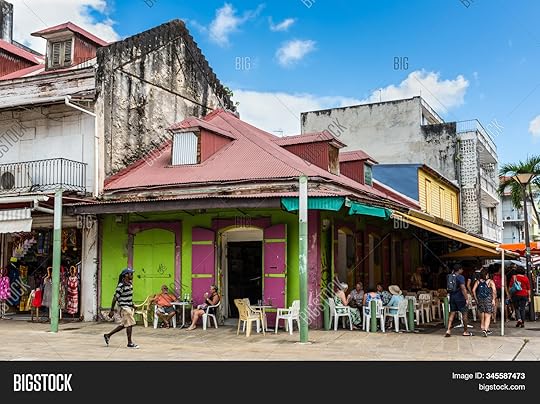
Top photo of a street scene in Pointe-a-Pitre, Guadeloupe from bigstockphoto.com
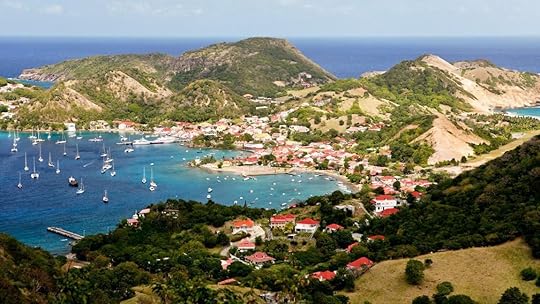
The island from forbes.com
The author from theguardian.com
The story is set in a small town on Guadeloupe in the Caribbean. A mysterious man has died and at his wake, chapter by chapter, different people reflect back upon him, his character and his life. As usual in this set-up they end up telling us more about themselves and each other than they tell us about him. Most people hated him because he came from “elsewhere” and he had some money. Men hated him because he attracted women because of his good looks and money; most women hated him because they weren’t one of the two young women he was romantically involved with.
The author introduces us to the complex racial and ethnic mix of the island through the labels the inhabitants use. The author doesn’t tell us this, but the island is roughly 80% Creole (mixed African-European ancestry) and about 10% East Indian and 10% European. There are some Chinese and Haitians; the latter are farm laborers, often undocumented.
The book sometimes uses dialect (a French patois) but gives us the English translation in parentheses and in footnotes. These terms tell us what a lot of the story is about: a dame gabrielle is a high-class prostitute; a capress is a very light-skinned woman (the term high yellow is also used); makoumeh means gay; Negropolitans means locals who have lived in Paris. Upper class people, usually white, speak ‘French French’ and often visit ‘French France.’ Many Creoles call the East Indians by the derogatory term “coolies,” or, to be more specific in your insult, ‘kouli malaba,’ meaning an Indian from the Malabar coast of southwestern India. (I love all the geography in this book.) These black children come home from schools, following the French curriculum, chanting “Our ancestors the Gauls…”
The legacy of slavery hangs over the book and haunts all the people in the story. Most are poor and all are unhappy. We hear stories of rape, incest, suicide, abuse of wives and family by angry drunken men, unrequited love. Their legacy turns them against each other. A poor young man who manages to excel in school and go to Paris to become a doctor is despised: “What! A Ramsaran, a doctor! People don’t know their place!” Anyone who tries to get ahead is accused of “acting white” so, for example, a man starting a plant nursery won’t use TV ads because he doesn’t want to fall into “white folks ways.”
The dead man was hated “Probably because he came from Elsewhere. From over there. From the other side of the water. He wasn’t born on our island of malice that has been left to the hurricanes and the ravages caused by the spitefulness in the hearts of black folks.”
One theme is that sugar cane, the traditional crop – historically the ONLY crop – is dying off. Only Haitians work as cane cutters now, and yet the people criticize anyone who tries planting bananas or flowers. Another theme is communing with nature – everyone walks through the forest. They encounter and spy on each other. One young boy watches a beautiful girl bathe nude in a pond and is love-struck for life. A mentally challenged boy spends all his time in the woods. A hermit lives there. He babbles incoherently, terrifying the children. We learn his story of how he used to be “normal” with a job, a house and family
There is good writing. Some examples:
“But death being what it is, when it passes by, respect it.”
[his children]”…one who was already shooting up fatherless under the sun, the other who was getting ready to enter this world as an orphan with nothing but two eyes to cry with.”
“I always think of him [my father] as being dressed in black, probably because his whole being reminded me so much of death.”
“How many years went by, one behind the other, pushing their twelve months in front of them?”
Although it’s a novel focused around the life of the dead man, each chapter, each brief life story, could be seen as a collection of interconnected short stories. The book reminds me a lot of other small island Caribbean novels I’ve read, and one I’m reading now. I could characterize their differences by their humor, or lack of it, and general attitude of the characters toward life. All have a theme of poverty, multi-ethnicities and the lasting legacy of slavery.
Miguel Street by V. S. Naipaul (set in Trinidad) and Solibo Magnificent by Patrick Chamoiseau (Martinique) have humor, a live-and-let-live attitude, and an appreciation of life despite the hardships, especially in Chamoiseau’s novel where many characters are homeless people who hang out in the park. This story I’m currently reviewing, Crossing the Mangrove (Guadeloupe), lacks humor and the characters turn on and undercut each other as in The Dispossessed by Clement Maharaj (Trinidad), of which I wrote “there is no joy in Mudville.” Flickering Shadows by Agymah Kamau (Barbados), which I am about one-third through as I write, has humor but it’s mainly jokes at the expense of others.
The author (b. 1937) has written about two dozen novels, plays and collections of short stories. Most have been translated into English. She had been best-known for her novel Segu and a sequel, but has since become better known for her best-selling novel I, Tituba, Black Witch of Salem. She’s a native of Guadeloupe and all her work is translated from the French.
The author is an “almost Nobel Prize winner.” According to the NY Times: The Guadeloupean writer Maryse Condé won The New Academy Prize in Literature, a new prize established by a group of over 100 Swedish cultural figures as a substitute for this year's [2018] Nobel in Literature, which was not awarded for the first time since 1949 because of a sexual misconduct scandal.
Top photo of a street scene in Pointe-a-Pitre, Guadeloupe from bigstockphoto.com
The island from forbes.com
The author from theguardian.com

March 1, 2023
Écriture tellement le fun à lire!! Définitivement pour les amateurs de tranches de vie, ou plutôt dans ce cas de multiples tranches de vies. Ça donne une perspective intéressante sur la guadeloupe pour quelqu’un qui s’y connaît plus ou moins dans le sens où ça donne envie de découvrir la littérature et la culture de là bas!! Atmosphérique, donc si c’est moins votre bail je recommande pas ; autrement vous allez kiffer comme moi

July 6, 2025
We meet Francis Sancher when he is dead, discover him face down in the mud, clothes soiled.
We continue to meet Francis Sancher through the internal reminisces and dialogues of the characters of Riviere au Sel, a volcanic ridged, densely forested Guadalupian village.
The residents observe his body from dusk till dawn; his ‘touched’ friend, the disgraced mothers of his bastard children, his biographer and hired worker. All who hated, loved and feared this foreigner who seemed to be from everywhere and nowhere.
The lives of individuals unravel only to tangle. Speculation and accusations fly. What part did each person have in this tragedy? More importantly, what about their neighbours?
The interconnected web of community and all it contains was deftly portrayed. This is one of those novels that I feel has an untranslatable element, spanning and examining Creole, French and other dialects. Although it took adjustment, I appreciated the use of footnotes and the focus I had to pay at the beginning paid off. I picked this back up after not reading it for months and was absolutely engrossed. I actually think allowing what I’d read to settle enriched my reading experience.
I’ll probs have more thoughts once this settles more but wooowwwwww
We continue to meet Francis Sancher through the internal reminisces and dialogues of the characters of Riviere au Sel, a volcanic ridged, densely forested Guadalupian village.
The residents observe his body from dusk till dawn; his ‘touched’ friend, the disgraced mothers of his bastard children, his biographer and hired worker. All who hated, loved and feared this foreigner who seemed to be from everywhere and nowhere.
The lives of individuals unravel only to tangle. Speculation and accusations fly. What part did each person have in this tragedy? More importantly, what about their neighbours?
The interconnected web of community and all it contains was deftly portrayed. This is one of those novels that I feel has an untranslatable element, spanning and examining Creole, French and other dialects. Although it took adjustment, I appreciated the use of footnotes and the focus I had to pay at the beginning paid off. I picked this back up after not reading it for months and was absolutely engrossed. I actually think allowing what I’d read to settle enriched my reading experience.
I’ll probs have more thoughts once this settles more but wooowwwwww

August 17, 2020
This was such a great read, I forced myself to pause halfway in order to savour it. I can imagine rereading it, it's such a multilayered novel, that can be read for pure entertainment value or thought about more deeply in how it attempts through exquisite storytelling and characterisation, to lay bare the complexity of a society/community that is made up of so much diversity, it's impossible to keep up with who is who is what and demonstrated how farcical that is anyway, and yet nearly everyone contributes to it, the labelling, the judgements, the superiority and inferiority complexes.
The trigger for all of this, in a novel where every chapter takes the perspective of a different character, is the wake of a man found dead in the mangrove. No I e really knew Francis Sancher but everyone had had an encounter with him. And so we come to know more about this intriguing stranger who came to Riviere au Sel expecting to die, and finding out who wished that to happen and who fell for his charm.
Maryse Condé is a magical writer, and in this novel she returns to a landscape closer to home, evoking it and this collection of characters beautifully.
"Life's problems are like trees. We see the trunk, we see the branches and the leaves. But we can't see the roots, hidden deep down under the ground. And yet it's their shape and nature and how far they dig into the slimy humus to search for water that we need to know. Then perhaps we would understand."
The trigger for all of this, in a novel where every chapter takes the perspective of a different character, is the wake of a man found dead in the mangrove. No I e really knew Francis Sancher but everyone had had an encounter with him. And so we come to know more about this intriguing stranger who came to Riviere au Sel expecting to die, and finding out who wished that to happen and who fell for his charm.
Maryse Condé is a magical writer, and in this novel she returns to a landscape closer to home, evoking it and this collection of characters beautifully.
"Life's problems are like trees. We see the trunk, we see the branches and the leaves. But we can't see the roots, hidden deep down under the ground. And yet it's their shape and nature and how far they dig into the slimy humus to search for water that we need to know. Then perhaps we would understand."

June 11, 2022
"...he had never come to face to face with death. He imagined her with pearly-white teeth sparkling between thick lips the color of black beauty aubergine, swaying her hips seductively, starting a fire... For if she was ugly, with an ugly grin and a scythe over her shoulder, why would anyone follow her?" (p127)
• CROSSING THE MANGROVE by Maryse Condé, translated from French by Richard Philcox, 1989/1995.
🌺 Rivière au Sel is a quiet town in Guadeloupe. Peoples' stories are all woven up with others in this community, and when a handsome stranger shows up in town, things get discombobulated. Even more so when the stranger is found dead.
Crossing the Mangrove initially dresses up as a murder mystery - who killed Francis Sancher? - but Condé's design from the beginning seems to be more intimate character study / 'turn the mirror back on yourself' kind of tale, revealing much more about the society than the event that took place.
Told in Rashōmon** style - multiple perspectives and backstories around a single event, so the "truth" is obscured - this is the story of the death (and in back story, some of his life) of Francis Sancher.
Interestingly enough, we hear from nearly every person in the village in small chapter snippets, and never Sancher himself.
"What had this island looked like before it had been auctioned off through the greed and love of lucre of the settlers? ...now, alas the forest was a desecrated cathedral. You had to be content with paltry takings..."(pg47)
My 3rd by Condé and my favorite thus far ✨
.
.
.
**Tangent and digression: The misnomer of Rashōmon strikes again! This whole effect of multiple character points of view is from Akutagawa's short story "In a [Bamboo] Grove", but is called Rashōmon due to the 1950 Akira Kurosawa film, which co-opted the title from a totally different Akutagawa story and plot line...
• CROSSING THE MANGROVE by Maryse Condé, translated from French by Richard Philcox, 1989/1995.
🌺 Rivière au Sel is a quiet town in Guadeloupe. Peoples' stories are all woven up with others in this community, and when a handsome stranger shows up in town, things get discombobulated. Even more so when the stranger is found dead.
Crossing the Mangrove initially dresses up as a murder mystery - who killed Francis Sancher? - but Condé's design from the beginning seems to be more intimate character study / 'turn the mirror back on yourself' kind of tale, revealing much more about the society than the event that took place.
Told in Rashōmon** style - multiple perspectives and backstories around a single event, so the "truth" is obscured - this is the story of the death (and in back story, some of his life) of Francis Sancher.
Interestingly enough, we hear from nearly every person in the village in small chapter snippets, and never Sancher himself.
"What had this island looked like before it had been auctioned off through the greed and love of lucre of the settlers? ...now, alas the forest was a desecrated cathedral. You had to be content with paltry takings..."(pg47)
My 3rd by Condé and my favorite thus far ✨
.
.
.
**Tangent and digression: The misnomer of Rashōmon strikes again! This whole effect of multiple character points of view is from Akutagawa's short story "In a [Bamboo] Grove", but is called Rashōmon due to the 1950 Akira Kurosawa film, which co-opted the title from a totally different Akutagawa story and plot line...

November 23, 2012
Francis Sancher was dead to begin with. Not dissimilar to Jacob Marley in the classic Charles Dickens tale, "A Christmas Carol", the mysterious central character of Maryse Conde's novel "Crossing the Mangrove" is introduced to the reader in the form of a corpse. It is only through the internal dialogs and reminiscences (of questionable veracity) by the citizens of Riviere au Sel at Sancher's wake that we learn who he might have been, and what might have led him to end up face down in the mud of this small hamlet on the Caribbean island of Guadeloupe.
While at first it appears that the thrust of "Crossing the Mangrove" is to delve into the life and death of one Francis Sancher, who inevitably may or may not be exactly what he seems, what lies in fact at the heart of this novel is an examination of our own perceptions of the people around us, and the roles they play in our every day lives. Over the course of a night, one by one the characters unravel their own stories and speculate on the stories of their neighbors, each supposing over the role that they played in bringing Francis Sancher closer to the "bad end" they all said was eventually coming his way.
By far, aside from the cast of characters that make up the citizenry of Riviere au Sel (a group that could put our modern "Real" or "Desperate" housewives to shame), what shapes the tone and atmosphere of "Crossing the Mangrove" is the island of Guadeloupe itself. In her lush descriptions of the flora and fauna of the Caribbean, and deft use of metaphor, Conde reminds the reader that prejudices and perceptions, like the roots of the mangrove tree itself can cause a person to "be sucked down and suffocated by the brackish mud." It comes as no surprise that the author herself hails from Guadeloupe, and through seeing the island and its intrigues through her eyes, the reader too feels that they have become intimately familiar with this place where "death is nothing but a bridge between humans, a footbridge that brings them closer together on which the can meet halfway to whisper things they never dared talk about." If it sounds dark in Conde's Guadaloupe, it is. But ultimately, this journey of perception and introspection, of the clinging closeness of the climate, of the small town of Riviere au Sel and it's people as they react to the death of this interloper reveals something hopeful - that despite differences of race, of caste, of circumstance, the congregation as a whole is still greater than the sum of its disparate parts.
Originally published in 1995 as "Traversee de la Mangrove" in her native French tongue, this is not one of Conde's most popular novels. That honor goes to "Segu", a historical novel about the rise of Islam in 18th Century Africa. Honestly, given the choice, the plot of "Segu" sounds much more like the type of novel I would typically be drawn to. But having now experienced Conde's florid prose in the context of this psychological search for truth, camouflaged in the pretense of an atypical murder mystery, it's likely I would follow her anywhere, even if it meant traversing a mangrove swamp itself.
While at first it appears that the thrust of "Crossing the Mangrove" is to delve into the life and death of one Francis Sancher, who inevitably may or may not be exactly what he seems, what lies in fact at the heart of this novel is an examination of our own perceptions of the people around us, and the roles they play in our every day lives. Over the course of a night, one by one the characters unravel their own stories and speculate on the stories of their neighbors, each supposing over the role that they played in bringing Francis Sancher closer to the "bad end" they all said was eventually coming his way.
By far, aside from the cast of characters that make up the citizenry of Riviere au Sel (a group that could put our modern "Real" or "Desperate" housewives to shame), what shapes the tone and atmosphere of "Crossing the Mangrove" is the island of Guadeloupe itself. In her lush descriptions of the flora and fauna of the Caribbean, and deft use of metaphor, Conde reminds the reader that prejudices and perceptions, like the roots of the mangrove tree itself can cause a person to "be sucked down and suffocated by the brackish mud." It comes as no surprise that the author herself hails from Guadeloupe, and through seeing the island and its intrigues through her eyes, the reader too feels that they have become intimately familiar with this place where "death is nothing but a bridge between humans, a footbridge that brings them closer together on which the can meet halfway to whisper things they never dared talk about." If it sounds dark in Conde's Guadaloupe, it is. But ultimately, this journey of perception and introspection, of the clinging closeness of the climate, of the small town of Riviere au Sel and it's people as they react to the death of this interloper reveals something hopeful - that despite differences of race, of caste, of circumstance, the congregation as a whole is still greater than the sum of its disparate parts.
Originally published in 1995 as "Traversee de la Mangrove" in her native French tongue, this is not one of Conde's most popular novels. That honor goes to "Segu", a historical novel about the rise of Islam in 18th Century Africa. Honestly, given the choice, the plot of "Segu" sounds much more like the type of novel I would typically be drawn to. But having now experienced Conde's florid prose in the context of this psychological search for truth, camouflaged in the pretense of an atypical murder mystery, it's likely I would follow her anywhere, even if it meant traversing a mangrove swamp itself.

June 24, 2022
I'm a fan of inter-connected stories, so had high expectations here that were generally met.
Let's start with a politically-charged topic as it pretty much drives the narrative here: race. There's an approach among some in America today to lump all nonwhite residents under the term People of Color (POC). I mention this now as the characters in this story most definitely did not feel that way at all, anyone "from away" (as our Newfie friends would say) is The Other. The South Asian characters for whom the setting is home were definitely not fully accepted, though India was a vague concept to those people. There aren't really episodes of white racism in the stories as the French French (the term used) are so peripheral to the events.
Unless I seriously mislead things (always possible), I was impressed that the author made the point that two men spending time together were assumed to be gay, when one was a very lonely native and the other a mistrusted foreigner.
Said foreigner forms the focal point of the book, having died as the stories begin. He's quite cagey about his past, so it's no surprise many found him deceitful (justifying xenophobia), while others gave him a chance, blowhard though he could be. Female author writes men well, with women who seem realistic enough. The man's death causes many to examine their own lives to face regret, or acceptance, depending.
Highly recommended for the many folks these days in search of approachable non-western fiction (although, these folks are almost all French citizens).
Let's start with a politically-charged topic as it pretty much drives the narrative here: race. There's an approach among some in America today to lump all nonwhite residents under the term People of Color (POC). I mention this now as the characters in this story most definitely did not feel that way at all, anyone "from away" (as our Newfie friends would say) is The Other. The South Asian characters for whom the setting is home were definitely not fully accepted, though India was a vague concept to those people. There aren't really episodes of white racism in the stories as the French French (the term used) are so peripheral to the events.
Unless I seriously mislead things (always possible), I was impressed that the author made the point that two men spending time together were assumed to be gay, when one was a very lonely native and the other a mistrusted foreigner.
Said foreigner forms the focal point of the book, having died as the stories begin. He's quite cagey about his past, so it's no surprise many found him deceitful (justifying xenophobia), while others gave him a chance, blowhard though he could be. Female author writes men well, with women who seem realistic enough. The man's death causes many to examine their own lives to face regret, or acceptance, depending.
Highly recommended for the many folks these days in search of approachable non-western fiction (although, these folks are almost all French citizens).

December 18, 2021
Tenía muchas ganas de leer a Maryse Condé y por fin lo hice. Travesía del manglar es una novela polífona que me recuerda a novelas como Temporada de huracanes o Pedro Páramo, obras que también utilizan el mismo recurso. Francis Sancher el protagonista aparece muerto y a su velorio se congregan amigos, enemigos y conocidos. Ellos son quien construyen y dan vida de nuevo a Francis, un ser enigmático para los personajes como para nosotros como lectores. Y eso es lo interesante, desde el comienzo de la novela, Condé nos siembra la curiosidad. El atractivo de la obra no se queda ahí, con un manejo del lenguaje poético, gracias a la traducción de Ana Inés Fernández, nos abre un panorama de temas súper interesantes que operan en la isla Guadalupe: el racismo imperante, el tema de la migración y xenofobia con los haitianos, la identidad, el machismo, las tradiciones y el mismo lenguaje ya que podemos leer algunas palabras en creole.
La única dificultad que le veo es que con la vastedad de personajes a veces uno puede llegar a confundirlos pero en la edición de Elefanta Editorial, nos pone un mapa de personajes y su relación con el protagonista para que volvamos al caudal del río.
Otro punto que me pareció super chido de la traducción y edición, es que al final hay un glosario donde puede ver qué significan algunas palabras en creole.
La única dificultad que le veo es que con la vastedad de personajes a veces uno puede llegar a confundirlos pero en la edición de Elefanta Editorial, nos pone un mapa de personajes y su relación con el protagonista para que volvamos al caudal del río.
Otro punto que me pareció super chido de la traducción y edición, es que al final hay un glosario donde puede ver qué significan algunas palabras en creole.

November 21, 2023
অল্টারনেট নোবেল পুরস্কার পাবার পরেই ম্যারিস কন্ডের নামটা প্রথমবার শুনি। রওশন জামিলের অনুবাদে কন্ডের উপন্যাস 'আই, তিতুবা, ব্ল্যাক উইচ অফ সালেম' পড়ে অ্যাতোই মুগ্ধ হয়েছিলাম, মহিলার আরও লেখাপত্র পড়ার সিদ্ধান্ত নিতে দেরি হয়নি।
'ক্রসিং দা ম্যানগ্রোভ' উপন্যাসটা বহুদিন পড়ে ছিলো টেবিলে, পড়তে ভালোই দেরি হলো।
রহস্য উপন্যাসের ঢঙে আরম্ভ হয় গল্প, সন্ধ্যার মুখে রিভেরা অউ সেল গ্রামে আবিষ্কৃত হয় ফ্রান্সিস স্যাঞ্চারের লাশ। রহস্যে ঘেরা অতীত ফ্রান্সিসের, গ্রামে তার শত্রুই বেশি। নারীঘটিত কারণে অনেকেই সুযোগ পেলে খুন করতো তাকে। কিন্তু তার এই পরিণতির জন্য দায়ী কে? খাটিয়ায় শুয়ে থাকে ফ্রান্সিসের লাশ, আর গ্রামের এক-একটা মানুষের স্মৃতিচারণ থেকে পাঠক বুঝতে চায় কে এই ফ্রান্সিস, কেন সে এসেছিলো ক্যারিবিয়ানের গুয়াদেলুপে অঞ্চলের ওই গ্রামে।
ক্রেওলভাষী কালো মানুষ, মিশ্র ভাষার পূর্ব-ভারতীয়, এবং ফ্রেঞ্চ মারানো ইউরোপিয়ানদের আঞ্চলিক রাজনীতি বা বর্ণবৈষম্যের বেশ কিছু ইঙ্গিত আছে এই উপন্যাসে, সেগুলো ঠিক স্পষ্ট হয় না পাঠকের কাছে। তিতুবার মতো তীব্র ভালো লাগা তৈরি হয় না তাই এবার।
কিন্তু, কৌতূহল জাগানো ব্যাপার, ১৯৮৯ সালে প্রকাশিত এই 'ক্রসিং দা ম্যানগ্রোভ' এর সাথে কোথায় যেন মিল পাওয়া যায় ১৯৯৫ সালে প্রকাশিত শহীদুল জহিরের 'সে রাতে পূর্ণিমা ছিল' উপন্যাসের। কোথাও যেন সুহাসিনী গ্রামকে ছেদ করে যায় গুয়াদেলুপে অঞ্চল। ভূগোলের সীমা পেরিয়ে মানুষেরা- দুই উপন্যাসেই- নিম্ফলে অতিক্রম করতে যায় ম্যানগ্রোভ অরণ্য।
'ক্রসিং দা ম্যানগ্রোভ' উপন্যাসটা বহুদিন পড়ে ছিলো টেবিলে, পড়তে ভালোই দেরি হলো।
রহস্য উপন্যাসের ঢঙে আরম্ভ হয় গল্প, সন্ধ্যার মুখে রিভেরা অউ সেল গ্রামে আবিষ্কৃত হয় ফ্রান্সিস স্যাঞ্চারের লাশ। রহস্যে ঘেরা অতীত ফ্রান্সিসের, গ্রামে তার শত্রুই বেশি। নারীঘটিত কারণে অনেকেই সুযোগ পেলে খুন করতো তাকে। কিন্তু তার এই পরিণতির জন্য দায়ী কে? খাটিয়ায় শুয়ে থাকে ফ্রান্সিসের লাশ, আর গ্রামের এক-একটা মানুষের স্মৃতিচারণ থেকে পাঠক বুঝতে চায় কে এই ফ্রান্সিস, কেন সে এসেছিলো ক্যারিবিয়ানের গুয়াদেলুপে অঞ্চলের ওই গ্রামে।
ক্রেওলভাষী কালো মানুষ, মিশ্র ভাষার পূর্ব-ভারতীয়, এবং ফ্রেঞ্চ মারানো ইউরোপিয়ানদের আঞ্চলিক রাজনীতি বা বর্ণবৈষম্যের বেশ কিছু ইঙ্গিত আছে এই উপন্যাসে, সেগুলো ঠিক স্পষ্ট হয় না পাঠকের কাছে। তিতুবার মতো তীব্র ভালো লাগা তৈরি হয় না তাই এবার।
কিন্তু, কৌতূহল জাগানো ব্যাপার, ১৯৮৯ সালে প্রকাশিত এই 'ক্রসিং দা ম্যানগ্রোভ' এর সাথে কোথায় যেন মিল পাওয়া যায় ১৯৯৫ সালে প্রকাশিত শহীদুল জহিরের 'সে রাতে পূর্ণিমা ছিল' উপন্যাসের। কোথাও যেন সুহাসিনী গ্রামকে ছেদ করে যায় গুয়াদেলুপে অঞ্চল। ভূগোলের সীমা পেরিয়ে মানুষেরা- দুই উপন্যাসেই- নিম্ফলে অতিক্রম করতে যায় ম্যানগ্রোভ অরণ্য।

November 27, 2023
Napp, ent väga rikas raamat, mu tänavuste lemmikute hulgas raudpoltkindlalt. Sõnad ja laused on sellised, et lased korduvalt pilgu tagasi, sest no nii ilus on (tõlkinud Ulla Kihva, toimetanud Anti Saar). Ja siis veel jutustusoskus ja looduskirjeldused ja...
Sisu, väga-väga lihtsustatult öeldes, on omamoodi segu kodumaisest Nipernaadist ja Pasolini "Teoreemist", ainult selle vahega, et siinne peategelane Francis Sancher on kohe raamatu alguses täitsa surnud. Tema teod on tehtud, jutud on räägitud. Surnuvalve ongi raamatu raamiks, teised tegelased saavad sõna igaüks ühes peatükis (oli vist ka üks erand). Iga tegelase loost koorub midagi salapärase, alles hiljuti nende kodukülla saabunud Francise kohta, ent märksa enam hargneb lahti kohalik eluolu ühes Guadeluope`i koloniaalajaloo, võõraviha, keeruliste suhete, rassismi ja naiste olukorraga.
Kindel soovitus.
Sisu, väga-väga lihtsustatult öeldes, on omamoodi segu kodumaisest Nipernaadist ja Pasolini "Teoreemist", ainult selle vahega, et siinne peategelane Francis Sancher on kohe raamatu alguses täitsa surnud. Tema teod on tehtud, jutud on räägitud. Surnuvalve ongi raamatu raamiks, teised tegelased saavad sõna igaüks ühes peatükis (oli vist ka üks erand). Iga tegelase loost koorub midagi salapärase, alles hiljuti nende kodukülla saabunud Francise kohta, ent märksa enam hargneb lahti kohalik eluolu ühes Guadeluope`i koloniaalajaloo, võõraviha, keeruliste suhete, rassismi ja naiste olukorraga.
Kindel soovitus.
November 30, 2012
The genre of crossing the Mangrove can be slightly confusing, because it is often categorized as a mystery novel. It is true that there is a mystery at the heart of the novel, but the novel is actually a portrait of life in Guadeloupe.
When Francis Sancher is found dead in a small village, the people of Riviere au Sel come out of the woodwork to attend his wake. Yes, it does seem that Sancher was murdered, but finding the culprit is difficult because of the intricate web woven between Sancher and the survivors. Francis was rich, sullen, and handsome, and somewhat of a womanizer so all of the components for a suspenseful murder mystery are there.
The amazing part of Conde’s work is that I stopped caring who or what killed Francis Sancher early into the book. I was drawn into the regrets and raw emotions of the people who loved and hated Sancher before he died. Through his friends the reader is given a picture of a sad man with a mysterious past, but through his enemies the reader can see man who took advantage of weaknesses in others.
So, even though this book may not be quite the page-turner in the sense you would expect, be prepared to enjoy seeing life through the eyes of the suspects. The villagers will draw you in with their stories of failed hopes and you’ll be given a new insight into the society and socioeconomic structure of the Guadeloupe. If you enjoy works like Cold Sassy Tree or Spoon River Anthology, you’ll like the way Conde creates a story by giving the reader a complete picture of small town life.
When Francis Sancher is found dead in a small village, the people of Riviere au Sel come out of the woodwork to attend his wake. Yes, it does seem that Sancher was murdered, but finding the culprit is difficult because of the intricate web woven between Sancher and the survivors. Francis was rich, sullen, and handsome, and somewhat of a womanizer so all of the components for a suspenseful murder mystery are there.
The amazing part of Conde’s work is that I stopped caring who or what killed Francis Sancher early into the book. I was drawn into the regrets and raw emotions of the people who loved and hated Sancher before he died. Through his friends the reader is given a picture of a sad man with a mysterious past, but through his enemies the reader can see man who took advantage of weaknesses in others.
So, even though this book may not be quite the page-turner in the sense you would expect, be prepared to enjoy seeing life through the eyes of the suspects. The villagers will draw you in with their stories of failed hopes and you’ll be given a new insight into the society and socioeconomic structure of the Guadeloupe. If you enjoy works like Cold Sassy Tree or Spoon River Anthology, you’ll like the way Conde creates a story by giving the reader a complete picture of small town life.

November 21, 2011
Reading this book wasnt easy mentally,emotionally, Conde has written a powerful story and captured alot nuances and traditions of her Caribbean culture, the book is set in Guadeloupe.
I was impressed by how she used the village the book was set in to say many things about her country,culture. Very critical it was about social class,gender roles. Teenage girls taken out of school without their choice to get married and serve the family. She also captured the complex,bitter racial views that havent changed much from colonial,slave days. I cant count the number of times characters was talking about how someone is black black and someone else is almost white like that explained everything about their identity,social class. This is not a nostalgic story about a creole culture and it is beautifully written but pretty depressing how this book is set in 1980s and very little has changed among west indians blacks,east indians and how they relate to each other in this culture.
I rate this book highly and the author's writing ability is very impressive and the only reason i didnt rate this 4 stars is because there was a flaw with narrative technique she used. Every chapter was POV of a different character who lived in that village . It made the story less focused and there wasnt enough of pages to develop the most interesting characters, their personal history.
I was impressed by how she used the village the book was set in to say many things about her country,culture. Very critical it was about social class,gender roles. Teenage girls taken out of school without their choice to get married and serve the family. She also captured the complex,bitter racial views that havent changed much from colonial,slave days. I cant count the number of times characters was talking about how someone is black black and someone else is almost white like that explained everything about their identity,social class. This is not a nostalgic story about a creole culture and it is beautifully written but pretty depressing how this book is set in 1980s and very little has changed among west indians blacks,east indians and how they relate to each other in this culture.
I rate this book highly and the author's writing ability is very impressive and the only reason i didnt rate this 4 stars is because there was a flaw with narrative technique she used. Every chapter was POV of a different character who lived in that village . It made the story less focused and there wasnt enough of pages to develop the most interesting characters, their personal history.

April 18, 2020
We are introduced to the novels central figure with his immediate death. Francis Sancher, how these characters sang your name out of fear, love & anger.
Crossing the Mangrove by Guadeloupean author Maryse Condé is one of those novels I’m both impatient and wary of reviewing simply because I don’t have the words to capture the effect it had on me. Condé’s ability to transport you, to excite you, to horrify you is absolutely sublime.
Each chapter is told from a different characters perspective, each one dwelling in Rivière au Sel in Guadalupe, which itself became a central figure with Condé’s intense descriptions of lush, foreboding forests and gullies, hot bars awash with rum and gossip, homes filled with discontent and confusion.
There are many important issues at play as we delve into who Francis Sancher was and how he shook this community to its core: racial tensions, death, slavery and it’s ensuing trauma, colonization, how a poisonous past leaks into the present.
If you’re not reading Maryse Condé, you’re missing out on so much. This is a 5/5 for me. An intensity you won’t often find elsewhere. Miigwech.
Crossing the Mangrove by Guadeloupean author Maryse Condé is one of those novels I’m both impatient and wary of reviewing simply because I don’t have the words to capture the effect it had on me. Condé’s ability to transport you, to excite you, to horrify you is absolutely sublime.
Each chapter is told from a different characters perspective, each one dwelling in Rivière au Sel in Guadalupe, which itself became a central figure with Condé’s intense descriptions of lush, foreboding forests and gullies, hot bars awash with rum and gossip, homes filled with discontent and confusion.
There are many important issues at play as we delve into who Francis Sancher was and how he shook this community to its core: racial tensions, death, slavery and it’s ensuing trauma, colonization, how a poisonous past leaks into the present.
If you’re not reading Maryse Condé, you’re missing out on so much. This is a 5/5 for me. An intensity you won’t often find elsewhere. Miigwech.

July 2, 2020
History of Guadeloupe told through the life and death of an outsider
In this novel, Conde introduces a newcomer to the village who is regarded with suspicion before he is entertained, and even then by individuals instead of by the community as a whole. I love how each of the acquaintances tell a part of the story and how by piecing together their narratives and wading through their individual biases, we get a sense of the social dynamics of the country. Brilliant representation!
In this novel, Conde introduces a newcomer to the village who is regarded with suspicion before he is entertained, and even then by individuals instead of by the community as a whole. I love how each of the acquaintances tell a part of the story and how by piecing together their narratives and wading through their individual biases, we get a sense of the social dynamics of the country. Brilliant representation!

June 14, 2021
Spell-binding as always with Maryse Condé. She carries us far to the small French Caribbean island of Guadeloupe where a man has been found dead. The victim is a newly arrived foreigner who is said to have come from Cuba. A tall, handsome and smart black man, Francis Sancher is admired by some but also despised by many in the small, narrow-minded community of Rivière-au-Sel.
The story is based on the interwoven testimonies of several inhabitants who have known Francis briefly and whose lives have been marked by their short acquaintance with him. Many are bewildered just as the reader, almost bewitched by a character whose past is still shrouded in mystery after his death. Has he fought alongside Fidel Castro in the Sierra Maestra?
An entertaining story whose structure is reminiscent of Patrick Chamoiseau's Texaco that would be published one year later. However, the number of characters has made it a bit difficult for me to follow. It remains an important novel which lets you share in the Caribbean folklore with its legacy of slavery, racial hierarchy and anticolonial struggle.
The story is based on the interwoven testimonies of several inhabitants who have known Francis briefly and whose lives have been marked by their short acquaintance with him. Many are bewildered just as the reader, almost bewitched by a character whose past is still shrouded in mystery after his death. Has he fought alongside Fidel Castro in the Sierra Maestra?
An entertaining story whose structure is reminiscent of Patrick Chamoiseau's Texaco that would be published one year later. However, the number of characters has made it a bit difficult for me to follow. It remains an important novel which lets you share in the Caribbean folklore with its legacy of slavery, racial hierarchy and anticolonial struggle.

September 27, 2022
Qui era en Francis Sancher? Era un violador? Un dropo? Un immigrant cubà? Què hi feia a Rivière au Sel? De què s'amagava? Ens transportem a l'illa antillana de Guadalupe on aquest homenàs ha aparegut mort. Cap dels seus veïns el coneixia gaire, la seva història personal era una incògnita, però cadascun d'ells hi havia interactuat prou per atresorar una peça del trencaclosques que ens permetrà obtenir una imatge completa.
El llibre s'estructura de manera curiosa, ja que cada capítol porta el nom d'un veí o veïna de Rivière au Sel i molt pocs repetiran protagonisme. Cadascun d'ells ens explica, en primera o tercera persona, la seva pròpia història personal i la relació amb el mort, de manera que no només anirem reconstruint la vida de l'enigmàtic Francis Sancher, sinó que també coneixerem la comunitat guadalupenca, el tarannà de la societat, els costums, les creences i la barreja d'orígens i sensibilitats d'aquella terra.
Hi ha un especial èmfasi en el flux de gent entre França (o com ells l'anomenen: la metròpoli) i l'illa, i en el colonialisme salvatge exercit pels francesos. Però el mestissatge a Guadalupe és molt més divers, com tot l'elenc de personatges que ens ensenyaran la seva pròpia perspectiva i l'opinió que tenien del difunt, que no pot ser més variada, també!
Amb un llenguatge poètic, una mica florit i amb moltes metàfores, l'autora basteix una trama notable i ens descobreix la seva terra natal, que personalment no coneixia gens. Objectivament tinc poc a retreure a l'obra, trobo que és un molt bon relat amb ingredients de sobres per atrapar, però en el meu cas la vaig llegir massa dispers i no m'hi vaig concentrar prou. Feu-li justícia, llegiu Maryse Condé amb atenció i ganes. No crec que us decebi.
(SERGI)
El llibre s'estructura de manera curiosa, ja que cada capítol porta el nom d'un veí o veïna de Rivière au Sel i molt pocs repetiran protagonisme. Cadascun d'ells ens explica, en primera o tercera persona, la seva pròpia història personal i la relació amb el mort, de manera que no només anirem reconstruint la vida de l'enigmàtic Francis Sancher, sinó que també coneixerem la comunitat guadalupenca, el tarannà de la societat, els costums, les creences i la barreja d'orígens i sensibilitats d'aquella terra.
Hi ha un especial èmfasi en el flux de gent entre França (o com ells l'anomenen: la metròpoli) i l'illa, i en el colonialisme salvatge exercit pels francesos. Però el mestissatge a Guadalupe és molt més divers, com tot l'elenc de personatges que ens ensenyaran la seva pròpia perspectiva i l'opinió que tenien del difunt, que no pot ser més variada, també!
Amb un llenguatge poètic, una mica florit i amb moltes metàfores, l'autora basteix una trama notable i ens descobreix la seva terra natal, que personalment no coneixia gens. Objectivament tinc poc a retreure a l'obra, trobo que és un molt bon relat amb ingredients de sobres per atrapar, però en el meu cas la vaig llegir massa dispers i no m'hi vaig concentrar prou. Feu-li justícia, llegiu Maryse Condé amb atenció i ganes. No crec que us decebi.
(SERGI)

December 27, 2021
“Travesía del manglar” es una novela polífona en la que, a raíz de la misteriosa muerte de un residente extranjero, Maryse Condé construye la realidad social, histórica y política de Guadalupe, territorio francés de ultramar ubicado en el Caribe.
A través de las memorias de los personajes que se congregan en el velorio de Francis Sancher, los lectores podremos conocer la vasta y compleja estructura sobre la que se sostiene la sociedad guadalupeña, tan alejada de sus vecinos americanos y tan cercana, pero a la vez distante, de la “metrópoli” europea de la que dependen.
Lo interesante es que, a pesar del europeísmo caribeño que Condé retrata, hay muchísimos elementos que resultarán familiares para quienes somos ciudadanos de los países americanos, continentales e insulares, que no nos encontramos dentro del primer mundo angloparlante de nuestro continente. Además, gracias a la construcción polifónica, la autora deja en claro que las personas somos no solo como nos vemos a nosotras mismas, sino también, y quizás, sobre todo, como el resto nos ve.
Definitivamente, “Travesía del manglar” es un texto sumamente político y social que se construye sobre la cosmovisión guadalupeña, pero que se vuelve panamericano y, tal vez, universal. Leerlo nos enfrentará a críticas al racismo, a la xenofobia, al poscolonialismo, al patriarcado y la misoginia, etc. 100% recomendado.
A través de las memorias de los personajes que se congregan en el velorio de Francis Sancher, los lectores podremos conocer la vasta y compleja estructura sobre la que se sostiene la sociedad guadalupeña, tan alejada de sus vecinos americanos y tan cercana, pero a la vez distante, de la “metrópoli” europea de la que dependen.
Lo interesante es que, a pesar del europeísmo caribeño que Condé retrata, hay muchísimos elementos que resultarán familiares para quienes somos ciudadanos de los países americanos, continentales e insulares, que no nos encontramos dentro del primer mundo angloparlante de nuestro continente. Además, gracias a la construcción polifónica, la autora deja en claro que las personas somos no solo como nos vemos a nosotras mismas, sino también, y quizás, sobre todo, como el resto nos ve.
Definitivamente, “Travesía del manglar” es un texto sumamente político y social que se construye sobre la cosmovisión guadalupeña, pero que se vuelve panamericano y, tal vez, universal. Leerlo nos enfrentará a críticas al racismo, a la xenofobia, al poscolonialismo, al patriarcado y la misoginia, etc. 100% recomendado.

October 10, 2021
This book is all character development. Each chapter explores the people in town and their relationships with not only the deceased, but with each other. As each person's narrative unfolds, there's an exploration of life, culture, and politics in Guadeloupe. There's also discussions of culture, race, colorism, jealousy, hypocrisy, dreams deferred, the treatment of women, and unhappiness.
I'm hard pressed to say anything more about the book, because it really is more about the people than the plot, but I am NOT a fan of Francis Sancher. I can't speak much to the translation, but other than getting used to the sentence structure, I think it was done well.
I'd recommend and will be picking up other works from Conde.
I'm hard pressed to say anything more about the book, because it really is more about the people than the plot, but I am NOT a fan of Francis Sancher. I can't speak much to the translation, but other than getting used to the sentence structure, I think it was done well.
I'd recommend and will be picking up other works from Conde.

January 26, 2019
It might be me, but I don't enjoy books that give you nothing to care about and no one to like. There's nothing wrong with the writing. I just found it to be boring and pointless.

July 4, 2025
Feia molt de temps que no llegia a aquesta escriptora i feminista nascuda a l'illa de Guadalupe que es caracteritza per l'ambientació de les seves obres. Llegir-la és sinònim de trobar recer i caliu en les seves paraules.
Aquesta novel·la coral la conformen tots els habitants de Rivière au Sel. A través dels seus relats i vivències, ens configuren el mosaic del seu dia a dia, la seva idiosincràsia i el seu caràcter, els seus costums, com treballaven la fusta i els camps, i també dels conflictes i contradiccions d'aquest llogaret de Guadalupe.
Tot comença amb la mort d'un nou veí, en Francis Sancher. La Léocadie Timothéé (la mestra jubilada) és la que es topa amb el seu cadàver prop del corriol. Des del primer moment desconfien d'aquest foraster que s'instal·la en una casa atrotinada als afores i on creuen que hi ha esperits perquè hi han mort diverses persones i tota mena de rumorologia l'acompanya. El seu posat elegant i que té un bagul ple de bitllets encara fa que se'n fiïn menys i d'ell se'n diu de tot... que és cubà, que fuig de coses tèrboles, que és un violador, que porta malastrugança...
Moltes són les dones del poble que en secret el desitgen.
Pocs són els que es fan amics d'ell (tret del carter, l'escriptor i l'historiador) i ho mostren públicament.
Mentre el vetllen, cada veïna ens anirà compartint les seves impressions, com el va conèixer, com altera la rutina del poble, quina va ser la primera vegada que se'l van trobar.
Quan deixa embarassades a dues de les noies joves del poble, la Vilma i la Mira, provoca un terrabastall que encara embolica més tots els vincles amb la gent del poble i els detractors augmenten, ja que totes dues pertanyen a famílies ben considerades.
A qui el volia escoltar, en Francis explicava que sabia que a cinquanta anys moriria, pel fet que una maledicció pesava sobre la seva família i aquesta desgràcia tenia l'origen en aquella illa, i per això hi va acudir buscant respostes.
I molts dels habitants de l'illa reflexionen sobre la vida que haurien volgut, la somiada, i pensen a recomençar.
Una obra que explora en la negritud i el colonialisme.
Aquesta novel·la coral la conformen tots els habitants de Rivière au Sel. A través dels seus relats i vivències, ens configuren el mosaic del seu dia a dia, la seva idiosincràsia i el seu caràcter, els seus costums, com treballaven la fusta i els camps, i també dels conflictes i contradiccions d'aquest llogaret de Guadalupe.
Tot comença amb la mort d'un nou veí, en Francis Sancher. La Léocadie Timothéé (la mestra jubilada) és la que es topa amb el seu cadàver prop del corriol. Des del primer moment desconfien d'aquest foraster que s'instal·la en una casa atrotinada als afores i on creuen que hi ha esperits perquè hi han mort diverses persones i tota mena de rumorologia l'acompanya. El seu posat elegant i que té un bagul ple de bitllets encara fa que se'n fiïn menys i d'ell se'n diu de tot... que és cubà, que fuig de coses tèrboles, que és un violador, que porta malastrugança...
Moltes són les dones del poble que en secret el desitgen.
Pocs són els que es fan amics d'ell (tret del carter, l'escriptor i l'historiador) i ho mostren públicament.
Mentre el vetllen, cada veïna ens anirà compartint les seves impressions, com el va conèixer, com altera la rutina del poble, quina va ser la primera vegada que se'l van trobar.
Quan deixa embarassades a dues de les noies joves del poble, la Vilma i la Mira, provoca un terrabastall que encara embolica més tots els vincles amb la gent del poble i els detractors augmenten, ja que totes dues pertanyen a famílies ben considerades.
A qui el volia escoltar, en Francis explicava que sabia que a cinquanta anys moriria, pel fet que una maledicció pesava sobre la seva família i aquesta desgràcia tenia l'origen en aquella illa, i per això hi va acudir buscant respostes.
I molts dels habitants de l'illa reflexionen sobre la vida que haurien volgut, la somiada, i pensen a recomençar.
Una obra que explora en la negritud i el colonialisme.

May 14, 2021
When Crossing the Mangrove opens, Francis Sancher is found dead on a path outside the small village of Riviere au Sel in Guadeloupe. In each chapter, you get to know Sancher, an outsider to this village, through the perspective of the villagers. Each chapter takes a different perspective - you hear from people who hated him, people who befriended him, people who loved him, and people who feared him. Conde weaves the history and culture of the country throughout these stories and this forms the parameters of many of the relationships that Sancher has (either close or from a distance) with the people in the village. Conde excels at creating a world that you can picture - both the relationships as well as the setting for the novel. Some of her descriptions are exquisite -"For a long time, I lived in the hollow of the wild pineapples, filling my belly with the sap from the trees. Sometimes I was tired of roosting in the treetops and flew down to the savannas among the sugarcane in flower. I turned my back on the hills and headed for the sea, seeking the muddy lowlands eaten away by the brackish water of the marine culs-de-sac. I loved the black sand, black as my skin and the mourning in my heart."
September 4, 2026
Small towns eh

August 18, 2020
2.5/5
There's a series on Netflix that I've been taking great comfort in catching up on for the past few weeks. It doesn't have aliens or vampires or dystopia conditions, it's hardly pretty or CG'd out of its mind, and you could find variations on the short story cycle plots in any number of media creations. Perhaps its the focus on food, the setting in Japan, or that one of the main themes is sex workers getting happy endings, but for whatever reason, it's very much working for me in ways that far more popular pieces of media with very similar content have failed in. Now, this particular work crams in almost twenty narrators in the span of barely two hundred pages, replete in a setting I rarely traverse in fiction and themes that I still haven't satisfactorily gotten my awareness up to speed on. However, the stories are ones that I've seen before: the red scare, the incest, the sati, not to mention the unfulfilled wife, the postcolonial husband, the failed revolutions, the colorist hierarchy, and all the more domestic aspects of the token queer, the token mentally disabled child, the token woman in power. Couple that with constant imitations of the trauma of history lived out in the mysterious body of a single man that don't quite hold one in awe, and you have something that, unfortunately for the most part, trails in my imagination. A consequence of my having read the marvelous I, Tituba, Black Witch of Salem first? Perhaps. A flaw in my own academically desiccated concerns when it comes to the Caribbean, far more interested in mentions of Creole negotiation with French and Chamoiseau than real flesh of blood? Probably. More short story blues, however novel the structure? Always a possibility. Still, do I regret reading it? Never.
Condé won the equivalent of the Nobel Prize for Literature while the committee was hemorrhaging over letting a sexual predator run rampant through their ranks for the last however many years. Her prerogative is to go against the prerogatives of the Anglo white boys that the literary world continues to be driven towards worshiping, disturbidizing the standardized works of white men and white women by bringing whatever blackness they invoked to the forefront and going from there. Tituba is one, Heathcliff is another, and history becomes not a tale of white people wandering wily nilly and getting sad over their sins of enslavement, genocide, and settler state, but Africa caught between the Transaharan Slave Trade on one side and the Transatlantic Slave Trade on the other and all the centuries that have fallen in so many waves of scattered chances and deity driven fortunes and dire endings since. So, if you think this less impressed rating of mine for a single works of hers justifies your decision to pass her by. It's not too much to say that non white women who don't write in English, or who go even farther in composing in a Creolization of a dominant European tongue, form the antithesis of the false hierarchy that less than ten percent, lately less than twenty percent, has been attempting to impose on the written word on an international scale for the last half a millennium. I personally know enough about Hinduism and Caribbean socialism and créolité for the brief mentions to not titillate and/or fulfill my titillations all too well, but for those looking for an introduction to these exciting literary times I've laid out in this last paragraph, this work isn't a bad way to go.
So. This work was rather a miss with me, but I still have a lot more authors and even more works I need to experience before I can even begin to pass judgment on Caribbean lit, or Condé herself, as a whole. Simply sticking to what I have on hand, there's Abeng, The Dragon Can't Dance, Texaco, and The Lonely Londoners, and even those are looking a little too Anglo and/or male for my tastes. The only solution is to keep digging and diving and every so often fortuitously stumbling across and subsequently snatching a work that promises a person less culturally destitute than a Fortune 500 CEO and a venue more complicated than a middle to upper class kitchenette and a place in history less taken for granted than the sight of one's likeness printed on a sample of a first world country's system currency. It's harder these days to do such in person treasure hunting as I most prefer to do, but I will admit, the sight of so many well trained reviewers diving in headfirst to James' Black Leopard, Red Wolf and aghastly finding themselves struggling to float amuses me so much that it makes the wait for better bookish times easier to bear. That type probably wouldn't do much better with this work, what with the plethora of references to rape and liberal usage of the n-word, but what are you going to tell an author who writes of such from a deeply intimate place of knowledge? That you refuse to admit to the fact that, in this area of literature, it is on you to catch up? If that's the case, and you continue to insist that literature is dead or dying or defunct, you only have yourself to blame.
There's a series on Netflix that I've been taking great comfort in catching up on for the past few weeks. It doesn't have aliens or vampires or dystopia conditions, it's hardly pretty or CG'd out of its mind, and you could find variations on the short story cycle plots in any number of media creations. Perhaps its the focus on food, the setting in Japan, or that one of the main themes is sex workers getting happy endings, but for whatever reason, it's very much working for me in ways that far more popular pieces of media with very similar content have failed in. Now, this particular work crams in almost twenty narrators in the span of barely two hundred pages, replete in a setting I rarely traverse in fiction and themes that I still haven't satisfactorily gotten my awareness up to speed on. However, the stories are ones that I've seen before: the red scare, the incest, the sati, not to mention the unfulfilled wife, the postcolonial husband, the failed revolutions, the colorist hierarchy, and all the more domestic aspects of the token queer, the token mentally disabled child, the token woman in power. Couple that with constant imitations of the trauma of history lived out in the mysterious body of a single man that don't quite hold one in awe, and you have something that, unfortunately for the most part, trails in my imagination. A consequence of my having read the marvelous I, Tituba, Black Witch of Salem first? Perhaps. A flaw in my own academically desiccated concerns when it comes to the Caribbean, far more interested in mentions of Creole negotiation with French and Chamoiseau than real flesh of blood? Probably. More short story blues, however novel the structure? Always a possibility. Still, do I regret reading it? Never.
Condé won the equivalent of the Nobel Prize for Literature while the committee was hemorrhaging over letting a sexual predator run rampant through their ranks for the last however many years. Her prerogative is to go against the prerogatives of the Anglo white boys that the literary world continues to be driven towards worshiping, disturbidizing the standardized works of white men and white women by bringing whatever blackness they invoked to the forefront and going from there. Tituba is one, Heathcliff is another, and history becomes not a tale of white people wandering wily nilly and getting sad over their sins of enslavement, genocide, and settler state, but Africa caught between the Transaharan Slave Trade on one side and the Transatlantic Slave Trade on the other and all the centuries that have fallen in so many waves of scattered chances and deity driven fortunes and dire endings since. So, if you think this less impressed rating of mine for a single works of hers justifies your decision to pass her by. It's not too much to say that non white women who don't write in English, or who go even farther in composing in a Creolization of a dominant European tongue, form the antithesis of the false hierarchy that less than ten percent, lately less than twenty percent, has been attempting to impose on the written word on an international scale for the last half a millennium. I personally know enough about Hinduism and Caribbean socialism and créolité for the brief mentions to not titillate and/or fulfill my titillations all too well, but for those looking for an introduction to these exciting literary times I've laid out in this last paragraph, this work isn't a bad way to go.
So. This work was rather a miss with me, but I still have a lot more authors and even more works I need to experience before I can even begin to pass judgment on Caribbean lit, or Condé herself, as a whole. Simply sticking to what I have on hand, there's Abeng, The Dragon Can't Dance, Texaco, and The Lonely Londoners, and even those are looking a little too Anglo and/or male for my tastes. The only solution is to keep digging and diving and every so often fortuitously stumbling across and subsequently snatching a work that promises a person less culturally destitute than a Fortune 500 CEO and a venue more complicated than a middle to upper class kitchenette and a place in history less taken for granted than the sight of one's likeness printed on a sample of a first world country's system currency. It's harder these days to do such in person treasure hunting as I most prefer to do, but I will admit, the sight of so many well trained reviewers diving in headfirst to James' Black Leopard, Red Wolf and aghastly finding themselves struggling to float amuses me so much that it makes the wait for better bookish times easier to bear. That type probably wouldn't do much better with this work, what with the plethora of references to rape and liberal usage of the n-word, but what are you going to tell an author who writes of such from a deeply intimate place of knowledge? That you refuse to admit to the fact that, in this area of literature, it is on you to catch up? If that's the case, and you continue to insist that literature is dead or dying or defunct, you only have yourself to blame.
March 15, 2023
lyrical but not heavy handed. I really liked that the women were written in first person and the men in second person. Something about women and their subjectivity, men and their objectivity etc. Again, nothing heavy handed. Just interesting.
Grounded in the wider political reality but thoughtfully focused on the multiplicity within a tiny village community. Coming together to “mourn” the death, every person’s chapter reveals immense solitude and selfishness. The utopic vision of village life is peeled away. Slavery is a haunting ghost. Ethnic Diversity is its emblem.
This is a book I will think about for a long time. And happy to hear Condé’s latest book is on the intl. booker longlist!
Grounded in the wider political reality but thoughtfully focused on the multiplicity within a tiny village community. Coming together to “mourn” the death, every person’s chapter reveals immense solitude and selfishness. The utopic vision of village life is peeled away. Slavery is a haunting ghost. Ethnic Diversity is its emblem.
This is a book I will think about for a long time. And happy to hear Condé’s latest book is on the intl. booker longlist!

October 27, 2024
Raamat kultuurist, millega ei ole suurt kokkupuudet ja isegi, kui oled seal kohapeal käinud, siis see, mis sellest raamatust vastu vaatab, on täiesti teistsugune. Ei mingit rummikokteilihõngulist lusti ja rõõmu rannal ja pidevat rõõmu kogukondlikust õlg-õlatundest. Rummi on, aga see on pigem anesteetikum, kogukond on, aga toetamise asemel käib pidev ussitamine ja ärapanemine ja naabrist parem olemine. Tundub, et hullem kui kaamoseaegne põhjamaa. Aga. Samas on ka mingi müstiline vaib, mingi maagia.
Tehnilises mõttes avaneb ühe inimese surma järel pilt minevikule ja olevikule läbi kohalike inimeste silmade. Üks inimene, üks peatükk. Selles raamatus mõjub see kuidagi eriti hästi, sest selle ühe peatüki käigus saab lugeja mosaiigikillu nii toimunu ja koha kui ka selle inimese kohta. Kõiges oma ebaobjektiivsuses. Nii et kui raamat läbi saab, siis tundub, et nüüd tuleks otsast alata, sest teades tegelaste kohta rohkem, oleks teine lugemine hoopis teistsugune.
Kui sellest kõigest jäi nüüd mulje, et kõik on äng, siis ei. Seal on mingi oma huumor, selline natuke eemalt vaatlev , aga samas sõbralik. On ka loodusmaagiat ja no loodust on üldse küllaga. Ühesõnaga hea lugemine ja loodetavasti ka ülelugemine.
Tehnilises mõttes avaneb ühe inimese surma järel pilt minevikule ja olevikule läbi kohalike inimeste silmade. Üks inimene, üks peatükk. Selles raamatus mõjub see kuidagi eriti hästi, sest selle ühe peatüki käigus saab lugeja mosaiigikillu nii toimunu ja koha kui ka selle inimese kohta. Kõiges oma ebaobjektiivsuses. Nii et kui raamat läbi saab, siis tundub, et nüüd tuleks otsast alata, sest teades tegelaste kohta rohkem, oleks teine lugemine hoopis teistsugune.
Kui sellest kõigest jäi nüüd mulje, et kõik on äng, siis ei. Seal on mingi oma huumor, selline natuke eemalt vaatlev , aga samas sõbralik. On ka loodusmaagiat ja no loodust on üldse küllaga. Ühesõnaga hea lugemine ja loodetavasti ka ülelugemine.

May 24, 2024
Crossing the Mangrove opens to the news of Sancher's death, a mulatto outsider to Guadeloupe in France, where the novel takes place. The novel proceeds through the reminiscences of Guadeloupe's people who came for the wake. Through their memories of a man lying lifeless in front of them, they introspect their own lives and the melancholy which pervades them. Death assumes the means for the revelation of their brokenness. Their memories conjure the ghosts that haunt and mark Guadeloupe— racism, xenophobia, slavery, colonial history, incest and inequalities of class and gender.
Its a shame that I had no knowledge of Maryse Conde and her works around themes of race, culture and gender until I read the news of her passing in April 2024. As a writer she refuses to adhere to any narrative standards of the genre. You cant exactly point out a central character who drives the narrative . If at all there is one, it must be Guadeloupe. Another standout factor is the usage of Creole by her characters. Though it makes the translation difficult, as is mentioned in translator's preface, it is what embodies Condé's politics.
What establishes a bond as a reader is Condé's vivid portrayal of women. In fact, her women mark the history and social landscape of Guadeloupe. Women who find solace in forests and gullies. Women who find their way to move out of the suffocating spaces occupied by their fathers, brothers and husbands. Mothers who recognize their fate within a toxic domesticity and try to protect their children from the rotten and destructive environs of Guadeloupe. Women who assert their autonomy over their bodies and sexuality.
Its a shame that I had no knowledge of Maryse Conde and her works around themes of race, culture and gender until I read the news of her passing in April 2024. As a writer she refuses to adhere to any narrative standards of the genre. You cant exactly point out a central character who drives the narrative . If at all there is one, it must be Guadeloupe. Another standout factor is the usage of Creole by her characters. Though it makes the translation difficult, as is mentioned in translator's preface, it is what embodies Condé's politics.
What establishes a bond as a reader is Condé's vivid portrayal of women. In fact, her women mark the history and social landscape of Guadeloupe. Women who find solace in forests and gullies. Women who find their way to move out of the suffocating spaces occupied by their fathers, brothers and husbands. Mothers who recognize their fate within a toxic domesticity and try to protect their children from the rotten and destructive environs of Guadeloupe. Women who assert their autonomy over their bodies and sexuality.

October 26, 2019
Erg mooi geschreven. Caribisch existentialisme is een genre wat mij erg aanspreekt ("Maar het geluk is nooit meer dan een onderbreking in de onmetelijke oceaan van het ongeluk", aldus Xantippe op pagina 227) . Door drukte heb ik dit boek iets te sporadisch gelezen waardoor het lang duurde voordat ik het uit had. Ik ben bang dat ik daarom bepaalde dingen heb gemist; op de "to re-read" lijst dus. Maryse Condé is in elk geval en fantastische schrijfster die als geen ander sfeer kan weergeven en een wereld kan opbouwen.

May 6, 2023
Around the World Reading Challenge: GUADELOUPE
===
3.5 rounded up
An interesting book that essentially takes place over the course of the wake for a dead man that hardly anybody in this small village seemed to like. Every chapter is from another characters point of view, and the way all of the narratives weave together, painting a picture of the POV character's life and how it was touched by the man who died was a really interesting structure. You get a good sense for the culture and community, and the various racial, social, and economic tensions there. I don't tend to love books with a ton of POVs as I find it difficult to connect with anybody/the story, and I did find that the case here, but the structure certainly felt appropriate to the story being told and I did enjoy it on the whole!
===
3.5 rounded up
An interesting book that essentially takes place over the course of the wake for a dead man that hardly anybody in this small village seemed to like. Every chapter is from another characters point of view, and the way all of the narratives weave together, painting a picture of the POV character's life and how it was touched by the man who died was a really interesting structure. You get a good sense for the culture and community, and the various racial, social, and economic tensions there. I don't tend to love books with a ton of POVs as I find it difficult to connect with anybody/the story, and I did find that the case here, but the structure certainly felt appropriate to the story being told and I did enjoy it on the whole!

April 3, 2023
Un fet tan quotidià com és la mort serveix de fil conductor d’una història punyent explicada des de diversos prismes, que permeten teixir un relat panoràmic dels fets. A la vegada, d’una forma subtil però palesa, aconsegueix tractar d’una forma excel·lent problemàtiques socials de primer ordre com ara el colonialisme o el masclisme. Un llibre molt recomanable.

May 12, 2023
It’s always so difficult to review Conde’s books. On the surface it’s just a simple story. She is talking about nothing and everything at once and that everything is so interconnected with each other that you can hardly peel away the layers and reach a center. But if you wish to go into depth then there is too much to explore. Through the story told by different characters all revolving around the death of Francis Sancher, we get a glimpse of the patriarchal society of Guadeloupe, colonialism, slavery, and poverty. But then it’s just a story, laced with cries of those, whose voices often go unheard.
“You, do you believe we are born the day we are born? When we land up sticky and blindfolded in the hands of a midwife? I’m telling you we’re born well before that. Hardly have we swallowed our first breath of air than we already have to account for every original sin, every sin through deed and omission, every venial and mortal sin committed by men and women who have long returned to dust, but leave their crimes intact within us. I believed I could escape punishment! I couldn’t!”
“You, do you believe we are born the day we are born? When we land up sticky and blindfolded in the hands of a midwife? I’m telling you we’re born well before that. Hardly have we swallowed our first breath of air than we already have to account for every original sin, every sin through deed and omission, every venial and mortal sin committed by men and women who have long returned to dust, but leave their crimes intact within us. I believed I could escape punishment! I couldn’t!”
Displaying 1 - 30 of 338 reviews