Jump to ratings and reviews
Rate this book

The Golden Age #1

The Golden Age ( Kenneth Grahame ) Annotated

Rate this book
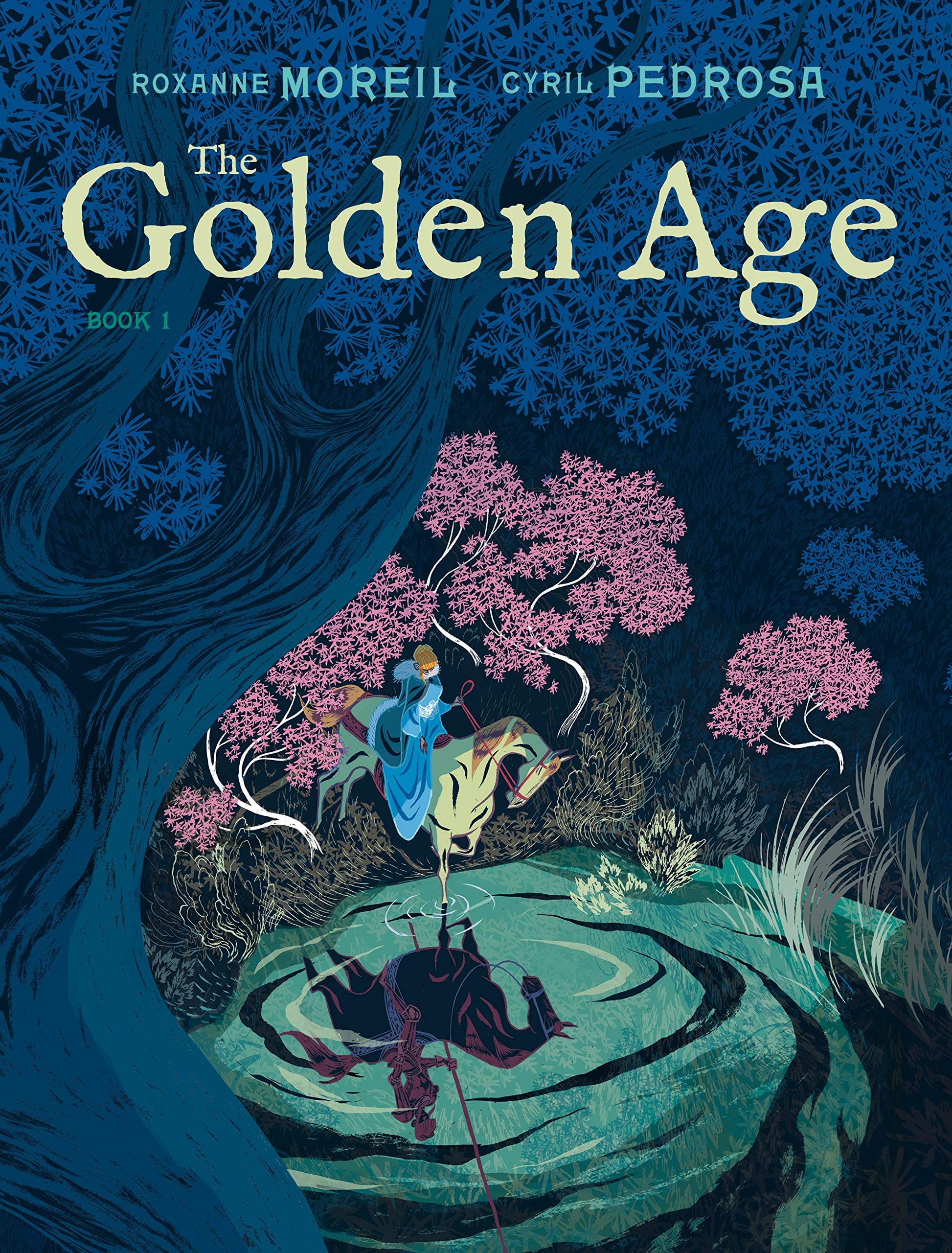
The Golden Age is a collection of reminiscences of childhood, written by Kenneth Grahame and first published in book form in 1895, by The Bodley Head in London and by Stone & Kimball in Chicago.

Kindle Edition

First published January 1, 1895

72 people are currently reading
941 people want to read

About the author

Kenneth Grahame

767 books760 followers
Kenneth Grahame was a British writer. He is best remembered for the classic of children's literature The Wind in the Willows (1908). Scottish by birth, he spent most of his childhood with his grandmother in England, following the death of his mother and his father's inability to look after the children. After attending St Edward's School in Oxford, his ambition to attend university was thwarted and he joined the Bank of England, where he had a successful career. Before writing The Wind in the Willows, he published three other books: Pagan Papers (1893), The Golden Age (1895), and Dream Days (1898).

Ratings & Reviews

What do you think?
Rate this book

Friends & Following

Create a free account to discover what your friends think of this book!

Community Reviews

5 stars
158 (32%)
4 stars
148 (30%)
3 stars
119 (24%)
2 stars
50 (10%)
1 star
14 (2%)
Displaying 1 - 30 of 77 reviews
Profile Image for Petra X.
2,456 reviews35.7k followers
August 29, 2018
I was delighted when I found this book as the Wind in the Willows is one of my all-time favourite stories. Most people haven't even heard of the Golden Age story collection with good reason - they are really terrible. Words that come to mind thinking of Wind in the Willows include charming, beautifully-written, wonderful characterisations, relatable dialogue, a story for all children for all time. By contrast the words that come to mind on reading the Golden Age are boring, smug, lacks creativity and overwritten . On seeing this book, do not get your hopes up as I did, but pass on, pass on. Even if its free in the library, your time is worth more than this book will deliver.

Reviewed Aug 2018
Profile Image for Georgie-who-is-Sarah-Drew.
1,364 reviews152 followers
October 12, 2020
Mr Toad ("Parp, parp!"), Ratty ("There is nothing - absolutely nothing - half so much worth doing as simply messing about in boats,"), Mole and Badger – most of us have come across Kenneth Grahame's 1908 children's classic The Wind in the Willows. The strands of the book are based on stories Grahame told his young son, Alastair – who was, apparently, the model for Toad.  But before Alastair, before Grahame was even married, he wrote these enchanting memoirs of childhood – The Golden Age (1895) and Dream Days (1898).
Maxfield Parrish (1870-1966) – illustrations for Dream Days by Kenneth Grahame.jpg
"The Golden Age" and "Dream Days" are Kenneth Grahame's affectionate reminiscences of his idyllic childhood in 1860s Berkshire, including the classic story "The Reluctant Dragon". The stories are both entertaining (as you'd expect from the author of "The Wind in the Willows") and grimly long-suffering of the unthinking adults who have no conception of the importance of catapults, ferrets and mud. They're also excellent on the surrealism & cynicism of childhood conversations.
"What would you do?" asked Charlotte presently, "if you saw two lions in the road, one on each side, and you didn't know if they was loose or if they was chained up?"
"Do?" shouted Edward, valiantly, "I should—I should—I should—"
His boastful accents died away into a mumble: "Dunno what I should do."
"Shouldn't do anything," I observed after consideration; and really it would be difficult to arrive at a wiser conclusion.
"If it came to DOING," remarked Harold, reflectively, "the lions would do all the doing there was to do, wouldn't they?"
"But if they was GOOD lions," rejoined Charlotte, "they would do as they would be done by."
"Ah, but how are you to know a good lion from a bad one?" said Edward. "The books don't tell you at all, and the lions ain't marked any different."
"Why, there aren't any good lions," said Harold, hastily.
"Oh yes, there are, heaps and heaps," contradicted Edward. "Nearly all the lions in the story–books are good lions. There was Androcles' lion, and St. Jerome's lion, and—and—the Lion and the Unicorn—"
"He beat the Unicorn," observed Harold, dubiously, "all round the town."
"That PROVES he was a good lion," cried Edwards triumphantly. "But the question is, how are you to tell 'em when you see 'em?"
"I should ask Martha," said Harold of the simple creed.
Edward snorted contemptuously, then turned to Charlotte. "Look here," he said; "let's play at lions, anyhow, and I'll run on to that corner and be a lion,—I'll be two lions, one on each side of the road,—and you'll come along, and you won't know whether I'm chained up or not, and that'll be the fun!"
"No, thank you," said Charlotte, firmly; "you'll be chained up till I'm quite close to you, and then you'll be loose, and you'll tear me in pieces, and make my frock all dirty, and p'raps you'll hurt me as well. I know your lions!"

Grahame, with his brothers and sister, had been sent by his father to live with his grandmother in Cookham Dean (on the Thames, near Maidenhead) when Grahame's mother died in childbirth. Many of the details of the short stories that make up both books are based on his recollections of his own idyllic rural childhood.
We three younger ones were stretched at length in the orchard. The sun was hot, the season merry June, and never (I thought) had there been such wealth and riot of buttercups throughout the lush grass. Green–and–gold was the dominant key that day. Instead of active "pretence" with its shouts and perspiration, how much better—I held—to lie at ease and pretend to one's self, in green and golden fancies, slipping the husk and passing, a careless lounger, through a sleepy imaginary world all gold and green!

Superficially, these are books for children – at least, they are certainly about children – specifically five brothers and sisters who live with aunts and uncles in rural Berkshire. Grahame has an acute ear for the inanities of childhood (witness the lions above), but the books' real thesis is the unbridgeable gap between childhood and adulthood. Adults have, for the most part, lost completely the sense of imagination and adventure that characterise the children.
It was incessant matter for amazement how these Olympians would talk over our heads—during meals, for instance—of this or the other social or political inanity, under the delusion that these pale phantasms of reality were among the importances of life. We illuminati, eating silently, our heads full of plans and conspiracies, could have told them what real life was. We had just left it outside, and were all on fire to get back to it.

Although there are honourable exceptions.
The curate… was always ready to constitute himself a hostile army or a band of marauding Indians on the shortest possible notice: in brief, a distinctly able man, with talents, so far as we could judge, immensely above the majority. I trust he is a bishop by this time,—he had all the necessary qualifications, as we knew.

Grahame was writing towards the end of the C19th, in the fin de siècle, when there was a sense that increasing "civilisation" leads ultimately to decadence. The children, with their somewhat archaic notions of honour, their "natural" responses to nature, and unquenchable imaginations are Grahame's embodiment of Innocence, pursuing a simpler, purer life hidden from "civilised" adults.
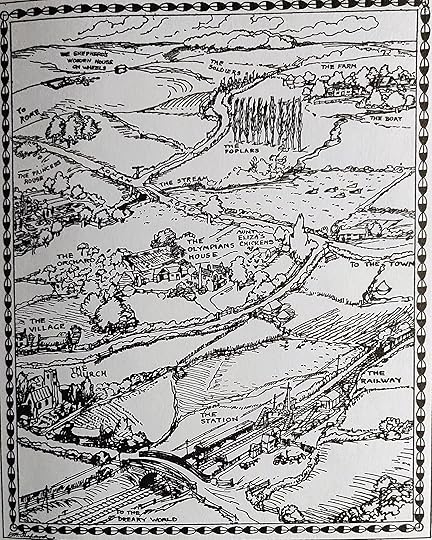
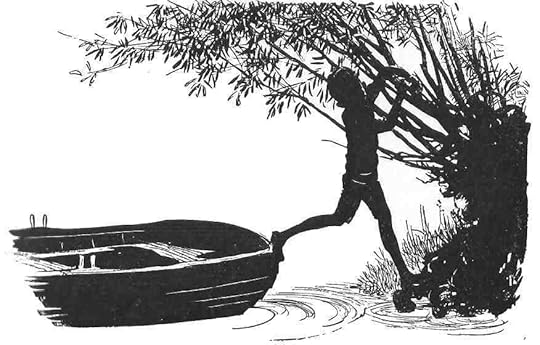
The Golden Age - illustration by E.H. Shephard
I then struck homewards through the fields; not that the way was very much shorter, but rather because on that route one avoided the bridge, and had to splash through the stream and get refreshingly wet. Bridges were made for narrow folk, for people with aims and vocations which compelled abandonment of many of life’s highest pleasures. Truly wise men called on each element alike to minister to their joy, and while the touch of sun-bathed air, the fragrance of garden soil, the ductible qualities of mud, and the spark-whirling rapture of playing with fire, had each their special charm, they did not overlook the bliss of getting their feet wet.

Encapsulating all this is the charming story "The Reluctant Dragon" (in Dream Days); a young boy stands up for his local dragon against the serried ranks of adults, represented by a pompous St George.
“Six to four on the dragon!” murmured St. George sadly, resting his cheek on his hand. “This is an evil world, and sometimes I begin to think that all the wickedness in it is not entirely bottled up inside the dragons."
The saddest chapter deals with Edward's departure for boarding school. It's not just his leaving that is heart-breaking, but the narrator's recognition that school is going change Edward irrevocably: he will stop being a child. He'll stop being one of "us" and become one of "them". The chapter's called "Lusisti Satis" ("you have played long enough")–taken from a Latin poem by Horace that was used frequently at funerals:
Lusisti satis, edisti satis, atque bibisti; tempus abire tibi est.
"You have played long enough, you have eaten and drunk enough. It's time for you to leave."

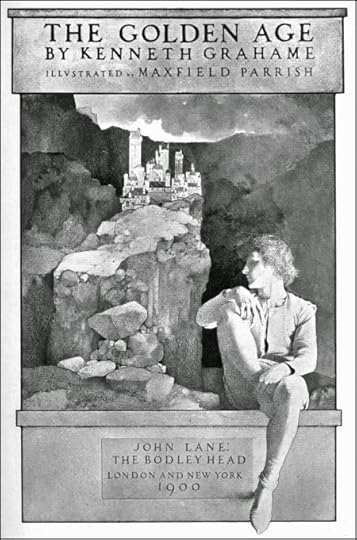
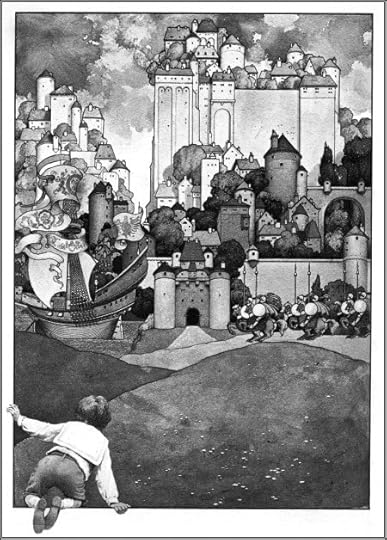
If you're going to read the books, try to get hold of a hardcopy of one of the illustrated versions of both books.  The first illustrations in 1900 were by Maxfield Parrish. There's a romanticism to Parrish's approach that's certainly attractive.
The Golden Age cover - illustration by Maxwell ParrishIts Walls were as of Jasper - illustration by Maxwell Parrish
Twenty years later, E.H. Shepard (whose drawings are an integral part of "The Wind in the Willows") provided quite a different take on the stories.
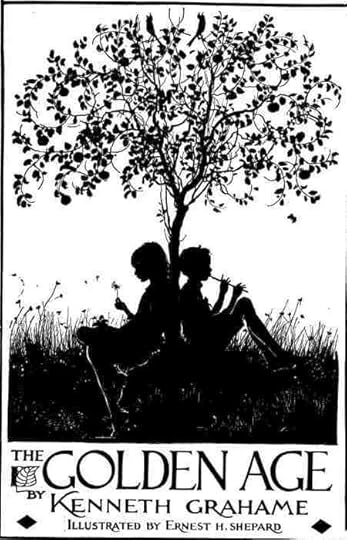
Cover to The Golden Age - illustration by E.H. ShepardIts Walls were as of Jasper - illustration by E.H. Shepard
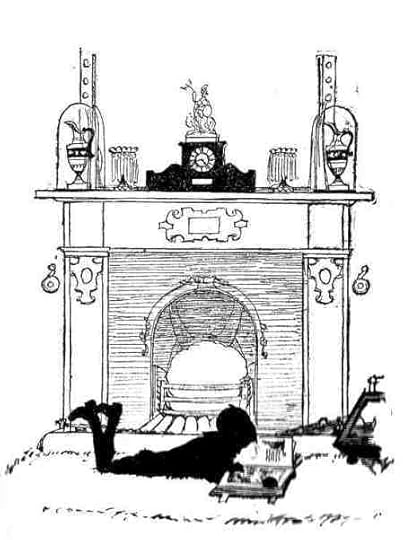
It's a sparer style, and I think it works better with the purpose of the stories. There's both an innocence to Shepard's children, and – because he often uses silhouettes – a universality. Both the right-hand pictures illustrate the same chapter ("Its Walls Were as of Jasper") in which the narrator is caught up – as its creators intended he should be – in the glory of a medieval manuscript illustrating the Heavenly City. But while Parrish gives us the city, in all its glory, Shephard manages to convey the absorption of the child and his complete absence from the formal drawing room around him.
Profile Image for Paul.
2,756 reviews20 followers
September 17, 2020
While this is no Wind in the Willows by any stretch of the imagination, it is a charming collection of tales that I’m sure would have delighted children at the time it was originally written. I have a sneaking suspicion it would bore the pants off today’s kids, though, largely due to the somewhat antiquated writing style.

It lacks the timelessness of Grahame’s more famous works and I think is of more historical interest than anything else at this point.

I feel a bit miserly giving this 3 stars but I can’t quite bring myself to give it an unreserved 4. Call it 3.5 stars; round up if you’re a literary historian, round down if you’re a 21st century child.
Profile Image for GoldGato.
1,299 reviews38 followers
October 7, 2021
Kenneth Grahame, better known for writing The Wind in the Willows, brings back his memories of childhood in the 19th-century, when life was more innocent and a child’s imagination could run very wild. Before we all grow up and become one of them, we have all been children, battling dragons amid sandcastles, adventures requiring childish energy. It’s the Golden Age before schooling and responsibilities grab hold of us.

Grahame was only five years old when his mother died in childbirth. His father had a bit of a problem with liquor so Grahame and his three siblings were sent to live with his maternal grandmother in a big, decaying house in the Berkshire countryside. It was this landscape which would later inspire him to write those memorable Edwardian characters of Toad, Mole, Rat, and Badger. This was the adventurous terrain of childhood, with streams and farms and orchards for boys building their own empires.

GZ32rB.jpg

Adults are only on the periphery here, labeled as Olympians. They are too serious, too worried about authority. They were uncles and aunts without the emotional ties that would normally bind children to their first-hand parents. To the adults, an orchard meant counting the numbing of apples and cherries produced. For a child, it meant elves. The adults were unaware of the pirates and bison roaming about the land. Their lack of imagination made them better suited for the stuffy indoor life.

On the whole, the existence of these Olympians seemed to be entirely void of interests, even as their movements were confined and slow, and their habits stereotyped and senseless. To anything but appearances they were blind.

And so we learn of the exploits of the children, the trouble they get into, and their dread of growing up. Each chapter is another story, another remembrance. The children love the wildness of their environment, sadly watching as the Olympians develop the brambled waste, the flickering tangle of woodland. Eventually, the oldest son goes to boarding school, a time of sadness for his siblings, for they know that when they see him again, he will be one of them.

I enjoyed the read, mostly because of Grahame’s prose. It’s clear he loved his magical land of childhood and appreciated the opportunity of landing in his granny’s home. One of his paragraphs reminded me of my love for the gloaming, when the day winds down and the trees cast shadows.

The dew was falling, the dusk closing, as I trotted briskly homewards down the road. Lonely spaces everywhere, above and around. Only Hesperus hung in the sky, solitary, pure, ineffably far-drawn and remote; yet infinitely heartening, somehow, in his valorous isolation.

The sun shines forever for children but dwindles as we age.

Book Season = Spring (fairy filaments)


Profile Image for Emily.
1,016 reviews186 followers
April 21, 2016
In the Spring of 1990, a friend at college and I read aloud these stories, and those from this book's sequel, Dream Days aloud to each other, usually outdoors on mild sunny days. Simply because of that, I can't help loving these half-forgotten works of Grahame's, despite recognizing that long winded, almost painfully precise Victorian prose sprinkled with Latin isn't everyone's cup of tea (and oh yes, copious amounts of tea were also drunk during our readings). This is an episodic account of the doings of five orphaned children, Edward, Selina, Harold and Charlotte, and our narrator, who I think comes second in age, whose name we're never told. They are left in the care of some vaguely sketched in aunts and uncles. Apart from suffering lessons from a governess, they seem pretty much left to their own devices. Sometimes Grahame does some regrettable winking at the reader over the children's heads, but other times he's very funny. Here's my favorite passage from this book:

"...Harold, who invented his own games, and played them without assistance, always stuck staunchly to a new fad until he had worn it quite out. Just at present he was a muffin-man, and day and night he went through passages and up and down staircases, ringing a noiseless bell and offering phantom muffins to invisible wayfarers."

The phrase "phantom muffins" just really tickles me, somehow.
Profile Image for Ben.
51 reviews
October 31, 2019
I can say honestly that is among the best books I have ever read. It’s somewhat surprising, what with the success and popularity of The Wind in the Willows, that The Golden Age is almost completely forgotten. It’s a book about children but I do not think it was written for children. It was written for the rest of us who have forgotten what it was like to be a child. Have we also become Olympians?

Rather than a single narrative, it is a series of short stories about the lives of five children, their mishaps and adventures. Among my personal favorites are “The finding of the princess,” “the burglars,” “the Roman road,” and “a falling out.” The writing is somewhat difficult in places, but it manages to be enjoyable even then. I can’t recommend this highly enough. If possible get a hold of a copy illustrated by Ernest H. Shepard.
Profile Image for Renée Paule.
Author 9 books264 followers
August 26, 2017
A lovely blend of the reminiscences of Kenneth Grahame's own childhood experiences, fantasy, metaphor and ancient Greek Legends. I particularly enjoyed reading the chapter 'A white-washed Uncle'.
Profile Image for Nick.
Author 21 books141 followers
July 19, 2012
A classic Edwardian evocation of the separate world of childhood that seems to have vanished today with helicopter parents and the Internet. Grahame calls adults "Olympians," as in remote and pretty useless, compared to the present, pointed, world of childhood. The book is short on plot and long on Grahame's wonderful writing and elegiac tribute to that beautiful era of hot summer days, stolen fruit, escapades involving farmers' rowboats, and the safety of childhood innocence. Where have we gone so horribly wrong that we can't let children be children any more?
Profile Image for Andre Piucci.
478 reviews28 followers
December 27, 2016
"It was incessant matter for amazement how these Olympians would talk over our heads—during meals, for instance — of this or the other social or political inanity, under the delusion that these pale phantasms of reality were among the importances of life. We illuminati, eating silently, our heads full of plans and conspiracies, could have told them what real life was. We had just left it outside, and were all on fire to get back to it. (...) Among the many fatuous ideas that possessed the Olympian noddle, this one was pre-eminent; that, being Olympians, they could talk quite freely in our presence on subjects of the closest import to us, so long as names, dates, and other landmarks were ignored. We were supposed to be denied the faculty for putting two and two together; and, like the monkeys, who very sensibly refrain from speech lest they should be set to earn their livings, we were careful to conceal our capabilities for a simple syllogism. Thus we were rarely taken by surprise, and so were considered by our disappointed elders to be apathetic and to lack the divine capacity for wonder."
Profile Image for Keturah Lamb.
Author 3 books77 followers
March 23, 2024
I read this slowly; it's a book to be savored. Each chapter is like liquid poetry, very subtle, delightful to read any portion allowed. No context needed. It had a story and a flow, but they felt secondary. It was simply like falling in a beautiful memory.
Profile Image for Amanda.
755 reviews129 followers
April 21, 2008
This was a LibriVox recording.

That phrase is now drilled into my head. But that's ok, because The Golden Age was one of the better read stories I've heard on LibriVox. This book is also available at Project Gutenberg.

The Golden Age was published in 1895 and is a novel that is divided up into short stories. The stories as a whole tell about the childhood of 3 boys and 2 girls. The children refer to the adults as Olympians and believe that the adults no longer know how to have fun. The chapters are each short stories detailing adventures the children take and/or imagine taking.

This was an excellent book that didn't "feel" like it was written so long ago.


(links to the book in both formats available here: http://icedteadiaries.blogspot.com/20...)
Profile Image for Jill.
51 reviews
October 21, 2016
I love Kenneth Graham; the Wind in the Willows is my all-time favorite book, and this one is right up there as well. I find his writing style enchanting. He understands the mind of a young boy and knows the importance of cultivating the imagination and the need for freedom for exploration (and inevitably, mischief-making). And he is hilarious. I definitely laughed aloud at some parts.

His childhood was not particularly full of love - his parents were not in the picture; he grew up with aunts were indifferent to him and his siblings, but he still found magic and golden adventure in the surroundings in which he grew up.

Each chapter is its own little anecdote or adventure or scrape that he and his siblings got into; each one is more delightful from the last. I feel as though I could go back and read the whole thing again and find new reasons to love it.

Profile Image for Sarah.
1,653 reviews81 followers
September 11, 2011
Grahame's reminiscences of childhood are framed in term of the Ancient Greek pantheon of gods. While it may be a book about childhood, it's written too much from the perspective of adults smugly remembering the carefree days of childhood to actually be a book for children.The stories of childhood adventures and elaborate imaginings are charming, but there's not a strong narrative to engage the reader's attention from chapter to chapter. Of course, I'm generally one for a novel rather than a novel-length collection of stories, so it may just be my personal preference.
Profile Image for Manuel Alfonseca.
Author 79 books213 followers
February 12, 2016
First part of "Dream days." It contains seventeen stories and a prologue based on the author's own childhood. These stories are shorter than those in the second part. The ones I liked best were "The finding of the princess," "The Argonauts," and "A falling out," but they are all quite nice. Anyway, I still prefer "The wind in the willows," and since I gave that book 4 stars, I must give this one 3.
Profile Image for Khinna.
300 reviews1 follower
December 24, 2012
Was this really the same author of The Wind in the Willows? After three chapters in, I just couldn't read anymore. As another reviewer said,"Overly written." It was tedious. A Kenneth Graham book you can skip over.
Profile Image for huzeyfe.
568 reviews85 followers
February 1, 2025
Çocukların gözünden yazılan kitapları çok seviyorum. Bu kitabın da en sevdiğim yanı sanki bir yetişkin değil de küçük bir çocuk yazmış gibi sıcacık ve akıcı bir üslubu olması. Olaylar genelde Tom Sawyer benzeri maceralar olsa da gayet güzeldi. Bir de Antik Yunan göndermeleri ayrı bir hoşluk katmış.
Profile Image for Sarah Maguire.
Author 2 books5 followers
Read
July 15, 2022
This was a random and pleasant find from a second hand bookshop in Margate. The book was a blue hardback with gold lettering and had an inscription dated 1930.
Nostalgic childhood remnisciences from the author of Wind in the Willows. In some ways it reminded me of the William books, in its descriptions of how this small band of children roamed the countryside and evaded the tedious demands of prim adults. There was a particular kind of arch humour, however which was a little different. The ending was of a similar tinge of sadness as that of The House at Pooh Corner but the book was by no means of that quality.
Profile Image for Jordan Taylor.
331 reviews202 followers
November 6, 2019
"The Golden Age" is narrated by an unnamed boy, possibly meant to be the author himself, as he goes through the "golden years" of his childhood.

With his friends - the dramatic Harold, the shy Charlotte, and Edward, the oldest - he enjoys all the lighthearted, whimsical fun of being young.

The descriptions of the children's games, their outlook on life, their make believe stories, and their favorite fairytales are charming to read about.
I was quite surprised at the writing in this book - it is beautifully done. Written in magical, silvery prose, it was a joy to read.

For example, this passage on music:

"...some notes have all the sea in them, and some cathedral bells; others a woodland joyance and a smell of greenery; in some fauns dance to the merry reed, and even the grace centaurs peep out from their caves. Some bring moonlight, and some the deep crimson of a rose's heart; some are blue, some red, while others will tell of an army with silken standards..."

Also interesting was the classical leaning that this book had. The children are well versed in Latin and Greek, and seem to be quite familiar with Greek mythology and lore.
They call the adults in their lives "Olympians," and are constantly playing games that involve Homer, the Argonauts, or other such figures.

They also have their own customs and culture, entirely separate from the adult's world. There are rules - both official ones and unspoken ones - such as the law that no one may feed someone else's rabbit. There are alliances that are broken and then patched back up repeatedly, fads and fashions that waver in and out of style, and special trysts made.

The children's comparison of themselves to the adults is most strongly voiced in the prologue, where the Narrator expresses that adults do things they don't really want to (for example, going to church or to work) even though there is no one there to make them do it. The children only do so because the Olympians make them. They all say that once they are grown up, they won't do anything of the sort.

The childish naivete, which still possesses a sort of simplistic logic, is what governs this story.

Though I liked it, I couldn't actually call this book a great read. Nothing much happens - it seems that Grahame's aim was to transport the reader, or perhaps simply transport himself, back to childhood, and that is all. If there had been more of a storyline, such as exists in "Peter Pan," this book could have been perfect.
Profile Image for Scoats.
311 reviews6 followers
June 28, 2016
I picked this up cheap at some point because I read The Wind in the Willows as a youth and sort of recalled liking it. As part of my read every book we own project, I am in the G's. This seemed like a nice change after some Graham Greenes, Erle Stanley Gardners, and a Sue Grafton.

The Prolog for The Golden Age was a hard slog, so I skipped to the first story after a page. The first two pages of which were pretentious and ponderous too.

Thinking back, it took me several goes to read The Wind in the Willows as a kid . And I don't really know how much I actually liked it or if I just felt accomplishment for finishing the thing. Back then it was sort of accepted that some classics were a slog and that slogging through it was good for you. Which is bs because Twain remains completely readable to this day.

Maybe this was good 100 years ago, but I doubt it. There's a reason why Kenneth Grahame is mostly lost to history, except to children unfortunate enough to have been gifted one of his books.
Profile Image for Cheruv.
208 reviews
January 2, 2017
The Golden Age was a fun, nostalgic read about the innocence of childhood and looking at the world from a different mindset. This book was by no means a children's book but captured the perspective of being a child very well.
I enjoyed it, and it reminded me of a time, less complex, when I was growing up, and all the mischief and adventures I got into.

The writing got a bit flowery at some points, but for what it was, I enjoyed it. It was written episodically with only a couple of tales chronologically connected later on in the book.

It seemed to me, that the tone of the book slightly changed towards the end, perhaps it was the anticipation of growing up and becoming an olympian, perhaps I am reading too much into it.
Will read it again one day.
Profile Image for Sara Cantoni.
446 reviews172 followers
April 15, 2022
Che meraviglioso incontro quello con Grahame!
Una lettura piacevole, divertente e ironica che ricostruisce un'immagine affascinante e magica di infanzia. Un'infanzia vera, quella di Grahame, che si dipana tra i giochi con i coetanei e le continue relazioni con il mondo adulto degli Olimpii.

Una narrazione che procede per episodi. Alcuni capitoli sono dei veri e propri gioiellini.

Ho apprezzato davvero molto lo stile, il ritmo della narrazione e il punto di vista scelto dall'autore.
Ho già recuperato altro di Grahame del quale, shame on me, non avevo mai letto nulla!
Profile Image for Carrie Brownell.
Author 5 books90 followers
July 25, 2019
Fantastic. Magical. Hilarious. Wonderful. Thoroughly entertaining.

I stumbled across this book (and its sequel) at a used bookstore and snatched them up and I'm ever so glad I did. I can't remember the last time a book made me literally laugh out loud - on multiple occasions. Kenneth Grahame describes childhood in such a hilariously realistic way in this book that I can't imagine but that any reader can find something to relate to inside the pages. Find it. Read it. You'll be glad you did!
Profile Image for Jessica.
39 reviews6 followers
February 19, 2009
I didn’t like this book as much as I wanted to; the writing just didn’t keep my attention. The concept is great and the story made me feel so nostalgic. The author writes about the live of five children, from a child’s point of view. It is really interesting to hear the child’s thoughts about the adults around him and how they interact with the world.
Profile Image for Lisa.
254 reviews4 followers
September 8, 2014
Great book, a tad pretentious even for a Victorian children's book, with all the Latin phrases. Still a great book on childhood. Too bad the author couldn't extend his seeming empathy with children to his own child later in life.
7 reviews2 followers
June 30, 2011
A good book 4 ppl of al ages abt kids n der mindset.
Profile Image for Peter J..
Author 1 book8 followers
February 16, 2013
I loved this. He truly captures the feel of childhood many of us have forgotten.
Profile Image for Jeff.
268 reviews8 followers
May 16, 2016
I LOVE this book. It's not a children's book, but rather a book about childhood. Beautifully written, hilarious and heartbreaking at the same time!
Profile Image for Ben Lovegrove.
Author 10 books12 followers
June 25, 2020
Some deeply moving short stories, especially enjoyed the one where he slips through a hedge into a secret garden. Then the one where the governess leaves and they miss her is deeply poignant. Grahame’s ability to evoke the feeling of childhood in such accurate detail is uncanny and shows a great empathy with children.
This entire review has been hidden because of spoilers.
Displaying 1 - 30 of 77 reviews

Can't find what you're looking for?

Get help and learn more about the design.