

What do you think?

Loveland
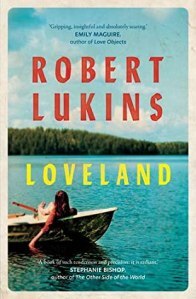
Two women stand in the shallows, a man dead at their feet, while around them buildings burn.
Amid the ruins of a fire-ravaged amusement park and destroyed waterfront dwellings, one boarded-up building still stands. May has come from Australia to Loveland, Nebraska, to claim the house on the poisoned lake as part of her grandmother's will. Escaping the control of her husband, will she find refuge or danger?
As she starts repairing the old house, May is drawn to discover more about her silent, emotionally distant grandmother and unravel the secrets that Casey had moved halfway around the world to keep hidden. How she and Casey's lives interconnect, and the price they both must pay for their courage, is gradually revealed as this mesmerising and lyrical novel unfolds.
Compelling, compassionate and profoundly moving, this new novel by the acclaimed author of The Everlasting Sunday confirms Robert Lukins as one of our finest writers.
'Gripping, insightful and absolutely searing.' -Emily Maguire, author of Love Objects
'A book of such tenderness and precision: it is radiant.' -Stephanie Bishop, author of Man Out of Time
'Heartbreaking in its emotional reach.' -Gail Jones, author of Our Shadows
'A novel that is as gloriously satisfying as it is achingly beautiful. A must-read.' -Paige Clark, author of She Is Haunted
'It takes a masterful writer to tell an ugly story so beautifully. I couldn't stop reading it.' -Allee Richards, author of Small Joys of Real Life
Amid the ruins of a fire-ravaged amusement park and destroyed waterfront dwellings, one boarded-up building still stands. May has come from Australia to Loveland, Nebraska, to claim the house on the poisoned lake as part of her grandmother's will. Escaping the control of her husband, will she find refuge or danger?
As she starts repairing the old house, May is drawn to discover more about her silent, emotionally distant grandmother and unravel the secrets that Casey had moved halfway around the world to keep hidden. How she and Casey's lives interconnect, and the price they both must pay for their courage, is gradually revealed as this mesmerising and lyrical novel unfolds.
Compelling, compassionate and profoundly moving, this new novel by the acclaimed author of The Everlasting Sunday confirms Robert Lukins as one of our finest writers.
'Gripping, insightful and absolutely searing.' -Emily Maguire, author of Love Objects
'A book of such tenderness and precision: it is radiant.' -Stephanie Bishop, author of Man Out of Time
'Heartbreaking in its emotional reach.' -Gail Jones, author of Our Shadows
'A novel that is as gloriously satisfying as it is achingly beautiful. A must-read.' -Paige Clark, author of She Is Haunted
'It takes a masterful writer to tell an ugly story so beautifully. I couldn't stop reading it.' -Allee Richards, author of Small Joys of Real Life
344 pages, Paperback
First published March 1, 2022
About the author
Robert Lukins
4 books83 followersRobert Lukins lives is a writer living in Melbourne.
His debut novel, The Everlasting Sunday, was published in 2018 and was nominated for several major literary awards.
His writing has appeared in Meanjin, Rolling Stone, Overland, The Big Issue, and other odd places.
His debut novel, The Everlasting Sunday, was published in 2018 and was nominated for several major literary awards.
His writing has appeared in Meanjin, Rolling Stone, Overland, The Big Issue, and other odd places.
Ratings & Reviews
Friends & Following
Create a free account to discover what your friends think of this book!
Community Reviews
Displaying 1 - 30 of 83 reviews

March 8, 2022
Such a beautifully written book, it’s a compelling read with believable characters. Lukins has got inside the heads of his female characters so well, in showing the effects of domestic violence on their mindset, their shame not just the physical injuries, and how it has lasting effects, often repeating itself in later generations.
It’s a two timeline story, the main one in the present, May goes to Loveland Nebraska to see the property left in her grandmother’s will. It becomes clear that her grandmother, Casey, had told her family nothing of her life before coming to Australia, and May learns some of her story. The other timeline is Casey, her marriage in 1955 to a man twice her age and the events that follow. Drawn into the story, it’s dark and overwhelming, clear that there’s doom of some sort approaching yet it’s impossible to put down and it has quite an emotional impact.
It’s a two timeline story, the main one in the present, May goes to Loveland Nebraska to see the property left in her grandmother’s will. It becomes clear that her grandmother, Casey, had told her family nothing of her life before coming to Australia, and May learns some of her story. The other timeline is Casey, her marriage in 1955 to a man twice her age and the events that follow. Drawn into the story, it’s dark and overwhelming, clear that there’s doom of some sort approaching yet it’s impossible to put down and it has quite an emotional impact.

December 7, 2021
5 stars for effort.

April 7, 2022
This story is told in two time lines One is that of Casey staring in 1956 in Nebraska. The other is that of May. Set in the present day, it starts in Australia before shifting to Nebraska when May inherits the property of her grandmother. She realises, when she goes to sort things out and prepare to sell the property as her husband demands, how little she knows of her grandmother’s life. The lake on the property is poisoned. What will that mean for trying to sell the property? But that is not all she finds. May also finds in the process of repairing the old house, she uncovers the secret her grandmother moved halfway round the world to keep hidden.
I found this to be interesting if, at times, dark and confusing book. What it does highlight is the mental, and emotional effects of abuse suffered by women at the hands of controlling men. This is so well conveyed that it does not make for easy reading. Never having suffered abuse, the story was so well done it made me depressed. I had to pick up another more uplifting book to read for a while. That it affected me in such a way only goes to show what a good job the author did in conveying the situations of mental anguish. I did return to this book, after I finished the other book, but it was hard to come back to.
While well written, I never found it compelling as some other readers I know did. So can’t say I enjoyed it, but it is an interesting read and a topic that needs to be dealt with. My thanks go to Allen& Unwin for my ARC to read and review. I recommend this book if you like stories that are complex, explore emotional and mental problems, and tackle hard issues.
I found this to be interesting if, at times, dark and confusing book. What it does highlight is the mental, and emotional effects of abuse suffered by women at the hands of controlling men. This is so well conveyed that it does not make for easy reading. Never having suffered abuse, the story was so well done it made me depressed. I had to pick up another more uplifting book to read for a while. That it affected me in such a way only goes to show what a good job the author did in conveying the situations of mental anguish. I did return to this book, after I finished the other book, but it was hard to come back to.
While well written, I never found it compelling as some other readers I know did. So can’t say I enjoyed it, but it is an interesting read and a topic that needs to be dealt with. My thanks go to Allen& Unwin for my ARC to read and review. I recommend this book if you like stories that are complex, explore emotional and mental problems, and tackle hard issues.

March 13, 2022
Loveland is the second novel by Australian author, Robert Lukins. When her grandmother Casey Lawrence dies, May is surprised to learn there’s a bequest: a lakeside house and twenty-four acres at Loveland, Nebraska. May’s mother wants her to have the funds once it is sold, to give her a fresh start, to free her from her abusive marriage. But she needs to go to Nebraska to get the official paperwork sorted.
What May finds in Nebraska is not quite what she expected: a poisoned lake and a boarded-up boathouse, the inside of which is a surprise. She learns that her grandmother’s name was actually Casey Love, that she was married into the family who founded the town.
She encounters townspeople and neighbours, all friendly, but in some the friendliness is a thin veneer over the malice they bear towards anyone who might threaten their class action and, as a Love descendant, that means May.
It becomes easy to postpone what she’s meant to be doing, and to ignore her husband’s increasingly irate texts: it may be her inheritance, but he will handle it for her, he maintains. She knows, though, that he won’t be ignored for long…
Through various snippets and anecdotes from different sources, May learns about the Loveland property: a hotel, Ferris wheel and lakeside promenade, one-time playground of the rich, until it burned down just before Casey Love took her baby daughter and fled to Australia.
She learns, too, about her grandmother’s life with her grandfather, Moses Love, none of which Casey ever spoke about, and comes to understand what they had in common, and how history sometimes repeats.
In a dual timeline narrative that highlights the parallels between Casey’s life in the mid-1950s and May’s in the early twenty-first Century, Lukins lets the reader draw conclusions, then turns them around. He gives his characters insightful observations and wraps it all in evocative prose. Clever and compelling.
This unbiased review is from an uncorrected proof copy provided by Allen & Unwin.
What May finds in Nebraska is not quite what she expected: a poisoned lake and a boarded-up boathouse, the inside of which is a surprise. She learns that her grandmother’s name was actually Casey Love, that she was married into the family who founded the town.
She encounters townspeople and neighbours, all friendly, but in some the friendliness is a thin veneer over the malice they bear towards anyone who might threaten their class action and, as a Love descendant, that means May.
It becomes easy to postpone what she’s meant to be doing, and to ignore her husband’s increasingly irate texts: it may be her inheritance, but he will handle it for her, he maintains. She knows, though, that he won’t be ignored for long…
Through various snippets and anecdotes from different sources, May learns about the Loveland property: a hotel, Ferris wheel and lakeside promenade, one-time playground of the rich, until it burned down just before Casey Love took her baby daughter and fled to Australia.
She learns, too, about her grandmother’s life with her grandfather, Moses Love, none of which Casey ever spoke about, and comes to understand what they had in common, and how history sometimes repeats.
In a dual timeline narrative that highlights the parallels between Casey’s life in the mid-1950s and May’s in the early twenty-first Century, Lukins lets the reader draw conclusions, then turns them around. He gives his characters insightful observations and wraps it all in evocative prose. Clever and compelling.
This unbiased review is from an uncorrected proof copy provided by Allen & Unwin.

February 22, 2022
It’s been four years since the release of Robert Lukins’ debut novel, The Everlasting Sunday. In my review for that novel, I closed with this statement:
‘The Everlasting Sunday is a fine debut and I feel certain this is only the beginning of great literary endeavours for Robert Lukins.’
I was right. His latest release, Loveland, has been worth the wait. It is a stunning novel, rich in both beauty and brutality. No one writes quite like Robert Lukins. He is a master of words, lyrically weaving them all together with visual clarity, blunt force, and impeccable timing. I really believe sometimes that books find you at the right moment. This may sound strange, coming from a reviewer, because the books are sent to me, not discovered through another channel. But I get a lot of books, far more than I can read at the time of their release, so I have to be selective, and this is where the magic comes in. Sometimes, I pick up a book knowing that this is the one I have to read right now, and so it was with Loveland. Not because of the impending release date, not even because it is written by Robert Lukins, and I’ve been waiting on another release by him since five minutes past reading his debut novel. No, I had to read Loveland at that point in time because when I picked it up, looked at the cover, and read the description I knew, really knew, that this novel had something to say that I needed to hear at that particular time. And it did. It spoke to me on a whole other level, whispered in my ear and reeled me in. It is the most magnificent novel of losing oneself, giving up, giving in, and then rising again, quite literally from out of the ashes.
‘It was the unending struggle for air. This was the worst of it and the thing that never passed. The fear that stole her every breath.’
Robert is so intimately acquainted with all the many shades of humanity and seems blessed with an ability to articulate this with such realism. And I am not sure how he understands women so well, it is a rare gift for a male writer to be able to write women with such precision and insight. Loveland is a dual storyline that demonstrates with painful clarity the way in which violence can cross generations with eerie repetitiveness. As both stories unfolded and overlapped, the intended destination for both women, grandmother and granddaughter, merged with a stunning symmetry that stole my breath. And while much of this story is character driven, there are other themes running through the story, shaping the plot, and directing the focus. In some ways, Loveland is almost like a love letter to Nebraska, the changing face of it, the way in which economics and environment ceased to cohabit and instead began to clash. Loveland’s dying lake and bitter depressed economy are a microcosm of the American mid-west. The scene that Robert has set as the backdrop for his story is atmospheric, oppressive, and familiar.
This is a novel I wanted to both savour and devour. It will remain on my shelf as a favourite. Five stars just doesn’t seem enough.
Thanks to the publisher for the review copy.
‘The Everlasting Sunday is a fine debut and I feel certain this is only the beginning of great literary endeavours for Robert Lukins.’
I was right. His latest release, Loveland, has been worth the wait. It is a stunning novel, rich in both beauty and brutality. No one writes quite like Robert Lukins. He is a master of words, lyrically weaving them all together with visual clarity, blunt force, and impeccable timing. I really believe sometimes that books find you at the right moment. This may sound strange, coming from a reviewer, because the books are sent to me, not discovered through another channel. But I get a lot of books, far more than I can read at the time of their release, so I have to be selective, and this is where the magic comes in. Sometimes, I pick up a book knowing that this is the one I have to read right now, and so it was with Loveland. Not because of the impending release date, not even because it is written by Robert Lukins, and I’ve been waiting on another release by him since five minutes past reading his debut novel. No, I had to read Loveland at that point in time because when I picked it up, looked at the cover, and read the description I knew, really knew, that this novel had something to say that I needed to hear at that particular time. And it did. It spoke to me on a whole other level, whispered in my ear and reeled me in. It is the most magnificent novel of losing oneself, giving up, giving in, and then rising again, quite literally from out of the ashes.
‘It was the unending struggle for air. This was the worst of it and the thing that never passed. The fear that stole her every breath.’
Robert is so intimately acquainted with all the many shades of humanity and seems blessed with an ability to articulate this with such realism. And I am not sure how he understands women so well, it is a rare gift for a male writer to be able to write women with such precision and insight. Loveland is a dual storyline that demonstrates with painful clarity the way in which violence can cross generations with eerie repetitiveness. As both stories unfolded and overlapped, the intended destination for both women, grandmother and granddaughter, merged with a stunning symmetry that stole my breath. And while much of this story is character driven, there are other themes running through the story, shaping the plot, and directing the focus. In some ways, Loveland is almost like a love letter to Nebraska, the changing face of it, the way in which economics and environment ceased to cohabit and instead began to clash. Loveland’s dying lake and bitter depressed economy are a microcosm of the American mid-west. The scene that Robert has set as the backdrop for his story is atmospheric, oppressive, and familiar.
This is a novel I wanted to both savour and devour. It will remain on my shelf as a favourite. Five stars just doesn’t seem enough.
Thanks to the publisher for the review copy.

March 1, 2022
Loveland is the first book I've read by Robert Lukins so I wasn't sure what to expect. Something terribly literary or esoteric I suspect as I know he writes for a number of literary magazines and journals here in Australia.
As it happened I did not flounder about in a state of bewildered confusion. I absolutely adore/d Lukins's writing. His ability to craft phrases and sentences in a way that they offer so much more than what's on the page is extraordinary. And far from an unfathomable metaphor I was unable to unravel, Loveland is a very enjoyable novel. About real people and only on a couple of occasions and at the very end did it dip into something possibly beyond my very literal comprehension.
The focus on family also makes this wistful, because as Casey's secrets are revealed, it's obvious how little of herself she shared with her daughter and granddaughter. And of course there's a very obvious theme of history repeating itself as we pass through the generations. And perhaps the question... if it's too late to stop that cycle?
4.5 stars
Read my review here: https://www.debbish.com/books-literat...
As it happened I did not flounder about in a state of bewildered confusion. I absolutely adore/d Lukins's writing. His ability to craft phrases and sentences in a way that they offer so much more than what's on the page is extraordinary. And far from an unfathomable metaphor I was unable to unravel, Loveland is a very enjoyable novel. About real people and only on a couple of occasions and at the very end did it dip into something possibly beyond my very literal comprehension.
The focus on family also makes this wistful, because as Casey's secrets are revealed, it's obvious how little of herself she shared with her daughter and granddaughter. And of course there's a very obvious theme of history repeating itself as we pass through the generations. And perhaps the question... if it's too late to stop that cycle?
4.5 stars
Read my review here: https://www.debbish.com/books-literat...

March 26, 2022
I must say this is not a book for me. I found it hard to read, the narrative was a bit strange and it just didn't draw me in and make me want to keep reading. I think maybe a bit boring and a bit strange.
The topic and story was interesting with the dual timeline but it lost me at times and I just couldn't get my heart into it. I must say I did skip through some of it otherwise I would have put it down and not finished it.
Loveland
Robert Lukins
Allen & Unwin Australia Pty. Ltd.
The topic and story was interesting with the dual timeline but it lost me at times and I just couldn't get my heart into it. I must say I did skip through some of it otherwise I would have put it down and not finished it.
Loveland
Robert Lukins
Allen & Unwin Australia Pty. Ltd.

May 2, 2022
Twenty five years ago I escaped an abusive and controlling marriage. It was at a time when controlling behaviour was not understood or actually even believed. (I discovered that when I tried to tell one or two friends about my husband’s behaviour. They thought I must be making it up.) So you can imagine with my history that I approached this book with some trepidation. Once I dived in, it did make for painful reading and about two thirds of the way through I wasn’t sure how it was all going to end. Let’s just say Lukins weaves his magic again creating a resolution in a manner I didn’t see coming. But one that is wholly satisfying and within the bounds of the main character May’s intention and resolve.
We only gradually find out about May’s life. For a while I thought her son was younger than he actually is. Looking back I think it’s May’s guilt about how she’s let him down that led me to believe that. At the beginning we only know that she’s overly worried about her son and that she’s in a difficult relationship with the boy’s father that she needs to escape from. When she discovers that because of her mother Rosie’s wishes, she is going to inherit her grandmother’s house in Nebraska, she begins to see a way out.
“May had never spoken to Rose about Patrick and the way he hurt her. About this terror that stole her oxygen. (What a sentence!) There were the bruises, of course, and the red and puffy cheeks and the shot nerves, (I stuttered for the last year before I left) but May would never speak of it because that was not what she had with Rosie.”
Her mother really is in the shadows and we never find that much about her but the grandmother Casey’s story is the other narrative strand and a fascinating one, depicting Loveland, Nebraska in the 1950s and the tourist attraction on the lake that Casey’s husband is trying to get off the ground. To say he’s a controlling monster is putting it mildly. Yet we are never really told this. As readers, we just know from Casey’s shrunken world as a new wife. While he is away all day at the big house above the lake, she is expected to read the books he has delivered:
“She was never a good reader but maybe this could change. She could never seem to find the meanings the teachers intended. Maybe she could replace the voice of the husband, and this would come to some good. There would be some hidden place of her mind. Maybe that one she still reserved for the sensation of love.”
It is a very different Loveland that May finds when she arrives sixty odd years later. The lake is now poisoned and some of the residents threaten May. I did enjoy Jean in both timeframes. Her personality and her house. What I did struggle with as a reader was May’s inertia. Why didn’t she just leave like I did? But unfortunately so many women don’t.
The strengths of this novel are the way Lukins has successfully depicted the intergenerational trap. How it seems to be in the DNA and you think future generations won’t let it happen to them. But somehow it makes the women more vulnerable and the men more violent. The linking of the narrative strands are masterfully done and I love the way some sentences have such weight. They chime like a bell. A haunting, marvellous novel.
We only gradually find out about May’s life. For a while I thought her son was younger than he actually is. Looking back I think it’s May’s guilt about how she’s let him down that led me to believe that. At the beginning we only know that she’s overly worried about her son and that she’s in a difficult relationship with the boy’s father that she needs to escape from. When she discovers that because of her mother Rosie’s wishes, she is going to inherit her grandmother’s house in Nebraska, she begins to see a way out.
“May had never spoken to Rose about Patrick and the way he hurt her. About this terror that stole her oxygen. (What a sentence!) There were the bruises, of course, and the red and puffy cheeks and the shot nerves, (I stuttered for the last year before I left) but May would never speak of it because that was not what she had with Rosie.”
Her mother really is in the shadows and we never find that much about her but the grandmother Casey’s story is the other narrative strand and a fascinating one, depicting Loveland, Nebraska in the 1950s and the tourist attraction on the lake that Casey’s husband is trying to get off the ground. To say he’s a controlling monster is putting it mildly. Yet we are never really told this. As readers, we just know from Casey’s shrunken world as a new wife. While he is away all day at the big house above the lake, she is expected to read the books he has delivered:
“She was never a good reader but maybe this could change. She could never seem to find the meanings the teachers intended. Maybe she could replace the voice of the husband, and this would come to some good. There would be some hidden place of her mind. Maybe that one she still reserved for the sensation of love.”
It is a very different Loveland that May finds when she arrives sixty odd years later. The lake is now poisoned and some of the residents threaten May. I did enjoy Jean in both timeframes. Her personality and her house. What I did struggle with as a reader was May’s inertia. Why didn’t she just leave like I did? But unfortunately so many women don’t.
The strengths of this novel are the way Lukins has successfully depicted the intergenerational trap. How it seems to be in the DNA and you think future generations won’t let it happen to them. But somehow it makes the women more vulnerable and the men more violent. The linking of the narrative strands are masterfully done and I love the way some sentences have such weight. They chime like a bell. A haunting, marvellous novel.

April 27, 2022
Loveland
is a satisfying read even though the subject of domestic violence which figures so prominently in the novel, administered as it is via physical and coercive means, is distressing in the extreme.
The ways in which Robert Lukins links the regrettable stories of the central character May and her vaguely remembered Grandmother Casey are impressive as is the examination of the complex relationships between the two women and their confidants/supporters. May enlists the help and eventually the friendship of a young man not much younger than her son; his strength of character contrasts markedly with that of May’s son Francis whose treatment of his mother is abhorrent and hard to believe.
There are a couple of instances of ‘magic realism' within the novel which I was not expecting. The appearance of these surreal elements of dream or fantasy within the realistic Loveland narrative were particularly appropriate mirroring as they do the fragility and confusion of May’s mind and unfortunate situation.
The ways in which Robert Lukins links the regrettable stories of the central character May and her vaguely remembered Grandmother Casey are impressive as is the examination of the complex relationships between the two women and their confidants/supporters. May enlists the help and eventually the friendship of a young man not much younger than her son; his strength of character contrasts markedly with that of May’s son Francis whose treatment of his mother is abhorrent and hard to believe.
There are a couple of instances of ‘magic realism' within the novel which I was not expecting. The appearance of these surreal elements of dream or fantasy within the realistic Loveland narrative were particularly appropriate mirroring as they do the fragility and confusion of May’s mind and unfortunate situation.

August 11, 2022
While well written and the subject of domestic violence addressed in a thoughtful manner I found this a slow read

March 9, 2022
The much-anticipated second novel by Robert Lukins, Loveland (Allen and Unwin 2022) is exactly as wonderful as you would expect from this writer of exceptional talent. Beautiful literary prose, taut dialogue, an evocative and immersive setting, a thrilling and tense plot filled with conflict and moral dilemmas, this novel is steeped in such tender, heartbreaking and memorable tension and characterisation that it is sure to win awards but also be passed from hand to hand with solid word of mouth recommendations.
Lukins’ first novel The Everlasting Sunday was stunning in its precise crafting, and Loveland again fulfils this promise. The story centres on Australian woman May, who unexpectedly inherits a house in the town of Loveland, Nebraska, where the story is set. May travels to Loveland not knowing what to expect; what she finds is the beginning threads of the story of her grandmother, Casey, whose past has always been a secret and who has remained a somewhat hidden figure in her life. The boathouse May has inherited sits at the site of what was once a grand home, an amusement park and waterfront dwellings on the shores of a lake which now appears poisoned, fluorescent with toxins. When May arrives in Loveland, she realises that nothing about her grandmother is what she had thought or assumed, not even her name.
May has taken this trip to claim her inheritance partly as an excuse to escape her dominating, abusive and controlling husband, and her manipulative and damaged adolescent son. It is a lifeline she grabs with both hands, not knowing what lies at the end of the rope. When she moves into the house, and begins to repair it, and to repair her own life and emotional state, she uncovers more of the mystery of her grandmother’s life. It gradually becomes apparent that the two women’s stories echo each other’s in many ways; that the legacy of intergenerational trauma binds them together even after Casey’s death.
The book opens with a shocking scene: two women standing knee-deep in the lake, all the structures around them ablaze, and a dead man at their feet. It is not until the conclusion of the novel that we understand how and why that scene came about.
This is an intense, compelling, emotionally satisfying, engaging, complex and superbly crafted story. I don’t think I have read another book that addresses the cruel and oppressive subject of family violence in such a subtle and understated way. The mood of simmering tension, hostility and viciousness creeps up on the reader in a slow burn, with devastating realisations.
There is even a touch of magic realism in this story, which appears and disappears just as quickly; this highlights the heightened emotional state of the characters and perfectly expresses the surreal atmosphere in which they find themselves.
The novel is full of strong and intense women, women who have grown up powerless and impotent but who through their experiences, determination and agency become embittered, free, powerful and full of love and courage, lifting up others around them and fighting back like even they could never have imagined. These characters will stay with me for a long time.
But the real strength and beauty of this novel is in its writing. The prose is sublime; thoughtfully crafted sentences that are lyrical, poetic and transformative. Lukins is a master of language and remains in tight control of the narrative and the prose throughout. But while this story will no doubt appeal to readers of literary fiction, it is also grounded enough that it will satisfy readers who want a tense narrative and a complex and thrilling plot. The combination of authentic dialogue, sense of place, unforgettable characters, an engaging story and so many thought-provoking themes ensures that I’m already predicting Loveland will be one of my books of the year. It is profound and moving.
Lukins’ first novel The Everlasting Sunday was stunning in its precise crafting, and Loveland again fulfils this promise. The story centres on Australian woman May, who unexpectedly inherits a house in the town of Loveland, Nebraska, where the story is set. May travels to Loveland not knowing what to expect; what she finds is the beginning threads of the story of her grandmother, Casey, whose past has always been a secret and who has remained a somewhat hidden figure in her life. The boathouse May has inherited sits at the site of what was once a grand home, an amusement park and waterfront dwellings on the shores of a lake which now appears poisoned, fluorescent with toxins. When May arrives in Loveland, she realises that nothing about her grandmother is what she had thought or assumed, not even her name.
May has taken this trip to claim her inheritance partly as an excuse to escape her dominating, abusive and controlling husband, and her manipulative and damaged adolescent son. It is a lifeline she grabs with both hands, not knowing what lies at the end of the rope. When she moves into the house, and begins to repair it, and to repair her own life and emotional state, she uncovers more of the mystery of her grandmother’s life. It gradually becomes apparent that the two women’s stories echo each other’s in many ways; that the legacy of intergenerational trauma binds them together even after Casey’s death.
The book opens with a shocking scene: two women standing knee-deep in the lake, all the structures around them ablaze, and a dead man at their feet. It is not until the conclusion of the novel that we understand how and why that scene came about.
This is an intense, compelling, emotionally satisfying, engaging, complex and superbly crafted story. I don’t think I have read another book that addresses the cruel and oppressive subject of family violence in such a subtle and understated way. The mood of simmering tension, hostility and viciousness creeps up on the reader in a slow burn, with devastating realisations.
There is even a touch of magic realism in this story, which appears and disappears just as quickly; this highlights the heightened emotional state of the characters and perfectly expresses the surreal atmosphere in which they find themselves.
The novel is full of strong and intense women, women who have grown up powerless and impotent but who through their experiences, determination and agency become embittered, free, powerful and full of love and courage, lifting up others around them and fighting back like even they could never have imagined. These characters will stay with me for a long time.
But the real strength and beauty of this novel is in its writing. The prose is sublime; thoughtfully crafted sentences that are lyrical, poetic and transformative. Lukins is a master of language and remains in tight control of the narrative and the prose throughout. But while this story will no doubt appeal to readers of literary fiction, it is also grounded enough that it will satisfy readers who want a tense narrative and a complex and thrilling plot. The combination of authentic dialogue, sense of place, unforgettable characters, an engaging story and so many thought-provoking themes ensures that I’m already predicting Loveland will be one of my books of the year. It is profound and moving.

March 6, 2022
Thank you Allen & Unwin for sending us a copy to read and review.
Violence, emotional manipulation and abuse represent the ugly side of humanity, an ugliness that forms and ferments when love and adoration should.
History and abusive patterns have tendency to repeat themselves.
In a place called Loveland the ironies play out.
The stories of grandmother Casey and granddaughter May are reflected in a dual time line illuminating the physical and emotional horrors they both endured and how they each handled these trying times.
The mirrored violence revealing itself when May goes to Nebraska to sell her grandmother’s property.
An idyllic lakeside property with a sweet sugary name is where the past and present will collide in an uncanny manner.
May discovers the untold truth her grandmother lived while she was escaping hers.
I was drawn to a quote on the back of this book “to tell a ugly story so beautifully” is the trademark of a masterful writer and couldn’t agree more.
I was taken in by the intensity, rawness and beauty of the story.
When both extremes of human nature are showcased it triggers a powerful experience.
A good friend advised I would love this and she was spot on.
Violence, emotional manipulation and abuse represent the ugly side of humanity, an ugliness that forms and ferments when love and adoration should.
History and abusive patterns have tendency to repeat themselves.
In a place called Loveland the ironies play out.
The stories of grandmother Casey and granddaughter May are reflected in a dual time line illuminating the physical and emotional horrors they both endured and how they each handled these trying times.
The mirrored violence revealing itself when May goes to Nebraska to sell her grandmother’s property.
An idyllic lakeside property with a sweet sugary name is where the past and present will collide in an uncanny manner.
May discovers the untold truth her grandmother lived while she was escaping hers.
I was drawn to a quote on the back of this book “to tell a ugly story so beautifully” is the trademark of a masterful writer and couldn’t agree more.
I was taken in by the intensity, rawness and beauty of the story.
When both extremes of human nature are showcased it triggers a powerful experience.
A good friend advised I would love this and she was spot on.

January 15, 2023
It is incredibly disappointing that in a country where on average a woman dies a week from domestic violence a publisher allowed this rubbish into the market. A white man writing from the perspective of two women experiencing domestic violence is questionable to begin with, but this absolute trash is an assault on those who have experienced domestic violence and does not in any way explore the complex relationships they find themselves in. Lukins claimed he was exploring toxic masculinity and inherent violence in men but all we got were men who were two dimensional monsters that committed violence just because they’re men. There’s no nuance, no exploration and it’s a disservice to the female characters in the book, mostly May, who has chosen to be with this man. She just stays with Patrick who’s always been violent because it’s an intergenerational thing? It’s in her blood? We’re not shown the softer sides of the relationship, the distorted love, the moments Patrick pulls her in. It’s all just horrible men. The disconnected, flouncy, overly worded, repetitive prose does nothing for the narrative either. I’ve never been so angry reading a book. No wonder domestic violence in Australia is dealt with the way it is if this is how people think it manifests.

March 19, 2022
I wasn’t blown away by this book as I was with Lukin’s first novel. I was bored by the characters and the story. I would still read another by this author, perhaps this story just wasn’t for me.
January 1, 2023
3.75 stars

March 19, 2022
If anything in this review raises issues for you,
help is available at White Ribbon Australia.
To learn to recognise the signs of coercive control and how to get help, visit Relationships Australia.
 It only took a day and a half to read Robert Lukin's new novel Loveland—I couldn't put it down.
The last time I read a novel as harrowing in its depiction of coercive control was The Watch Tower by Elizabeth Harrower. In that novel two sisters fall prey to a vile man called Felix who terrorises his wife and her sister into anticipating his every wish, for fear of punishment. The younger can do nothing but watch, entrapped herself by the other's compliance.
In Lukin's novel, May grows up in Australia as an indifferent witness to her widowed grandmother's pathological meekness without recognising that she has inherited the same vulnerability. It is not until Casey dies, and her mother Rosie inherits Casey's small property in Nebraska, that May finds the means to transcend her own submission to the vile man she refers to as 'the husband'.
As in real life where coercive control hides behind closed doors and the pretence of a satisfactory marriage, most of the violence in Loveland is off-stage.
We just become how and who we are and no-one is beyond that. He had been handsome and charming, but when she looked back it was never enough. The story could never explain itself. She came to realise that the marks on her body were not the worst of it. There is physical pain and it is unbearable in the moment but the moment is at least brief. It was the unending struggle for air. This was the worst of of it and the thing that never passed. The fear that stole her every breath. (p.43)
The intergenerational poverty is muted too as we see in May's sceptical response to the executor who explains about the inheritance...
To read the rest of my review please visit https://anzlitlovers.com/2022/03/19/l...

April 25, 2022
“𝘔𝘢𝘺 𝘭𝘰𝘰𝘬𝘦𝘥 𝘣𝘦𝘵𝘸𝘦𝘦𝘯 𝘵𝘩𝘦 𝘤𝘰𝘶𝘱𝘭𝘦’𝘴 𝘵𝘢𝘯𝘯𝘦𝘥, 𝘨𝘳𝘰𝘰𝘮𝘦𝘥 𝘧𝘢𝘤𝘦𝘴. 𝘚𝘩𝘦 𝘸𝘰𝘯𝘥𝘦𝘳𝘦𝘥 𝘪𝘧 𝘰𝘯𝘦 𝘰𝘧 𝘵𝘩𝘦𝘮 𝘭𝘪𝘷𝘦𝘥 𝘪𝘯 𝘧𝘦𝘢𝘳 𝘰𝘧 𝘵𝘩𝘦 𝘰𝘵𝘩𝘦𝘳. 𝘔𝘢𝘺𝘣𝘦 𝘣𝘰𝘵𝘩. 𝘈 𝘮𝘢𝘳𝘳𝘪𝘢𝘨𝘦 𝘮𝘪𝘨𝘩𝘵 𝘸𝘰𝘳𝘬 𝘣𝘦𝘴𝘵 𝘪𝘧 𝘦𝘢𝘤𝘩 𝘩𝘢𝘭𝘧 𝘸𝘢𝘴 𝘵𝘩𝘦 𝘰𝘵𝘩𝘦𝘳’𝘴 𝘯𝘪𝘨𝘩𝘵𝘮𝘢𝘳𝘦.”
Two women stand in the lake with a man dead at their feet. Around them, the world burns. May travels from Australia to Loveland, Nebraska, to the house left to her in her grandmother’s will. In a move that helps her escape her controlling husband, she also begins to learn about the secrets her grandmother flew half a world away to keep hidden.
Loveland is a dark and compelling exploration into the lives of two women who have suffered astounding domestic abuse. Told through the eyes of both May and her grandmother Casey, Lukins presents us with two timelines that are eerily similar though decades apart.
I feel that this story was a peek into the minds of two ordinary women, living through what we've been conditioned to believe is an ordinary situation: the suffering of women at the hands of their partners. Masterfully written, Lukins tells May and Casey’s stories so vividly that it makes for a difficult read, but in the best way.
A feeling of unease still sits with me days after putting Loveland down. It was beautiful, it was brutal, and I honestly don't have the words, just a feeling.
Thank you @allenandunwin for the gifted copy of this book 💛
Two women stand in the lake with a man dead at their feet. Around them, the world burns. May travels from Australia to Loveland, Nebraska, to the house left to her in her grandmother’s will. In a move that helps her escape her controlling husband, she also begins to learn about the secrets her grandmother flew half a world away to keep hidden.
Loveland is a dark and compelling exploration into the lives of two women who have suffered astounding domestic abuse. Told through the eyes of both May and her grandmother Casey, Lukins presents us with two timelines that are eerily similar though decades apart.
I feel that this story was a peek into the minds of two ordinary women, living through what we've been conditioned to believe is an ordinary situation: the suffering of women at the hands of their partners. Masterfully written, Lukins tells May and Casey’s stories so vividly that it makes for a difficult read, but in the best way.
A feeling of unease still sits with me days after putting Loveland down. It was beautiful, it was brutal, and I honestly don't have the words, just a feeling.
Thank you @allenandunwin for the gifted copy of this book 💛

February 26, 2024
An original and moving piece that’s somewhat gothic, somewhat nostalgic, and deeply moving. While confronting in its portrayals of abuse and out of body experiences, I found this book to be beautifully written and told honestly. I especially enjoyed the descriptions of the main character May’s childhood, as she grew up where my family usually holidays in Queensland. This was small but a fun aside. The story unravelled in a way that was engaging and easy to understand which I liked. Certainly not a children’s book, but a great summer read.

July 21, 2022
I have just finished this book “Loveland”. The story begins here on the Sinshine Coast. I am not sure who it was that recommended this to me, but thank you. Quite profound. Perhaps it was a recommendation through Sunshine Coast Libraries ?
It did take a bit to draw me in but omg it is quite a profound book covering inter-generational family violence and coercion and shame and the ongoing effects growing from the inability to talk about the reality of the lives being lived.
It did take a bit to draw me in but omg it is quite a profound book covering inter-generational family violence and coercion and shame and the ongoing effects growing from the inability to talk about the reality of the lives being lived.

Read
November 13, 2022DNF

January 4, 2023
I wanted to like this more, if only for the name.

October 5, 2023
This was beautifully and movingly written and TBH I’m inspired by how the author dishes out 5 ⭐️ reviews on GR

May 5, 2022
- thanks to @allenandunwin for my #gifted copy
When I saw that Loveland was available in audiobook, I did not hesitate to borrow it from my library immediately. However, as sometimes happens with audiobooks, halfway through I realised I was not enjoying the story, so I decided to blame it on the narrator and leave it, so I could start fresh again by reading my physical copy instead. But unfortunately, I understood that the audiobook's narrator was not the problem by the end.
Admittedly, I had a few issues with this novel. Although I totally understand the author's intention and what sort of story he wanted to tell, I believe it lacked in execution.
Domestic violence and intergenerational trauma are the underlying themes from beginning to end; however, there is a lot of telling and little showing. Actually, there is not even a lot of telling: the characters barely communicate with others, and they mention instances of rape almost in passing. The omnipresent narrator is mostly the only reason why it is clear that the protagonists suffer from domestic violence, because there is little evidence of it within the text apart from glimpses of particular memories. I have no doubts some readers would prefer this type of vagueness, but I needed more depth and nuance.
I also struggled with the stilted dialogues and the extremely short sentences, both in conversations and descriptions. I do not know why the author often chose not to use commas, but I'm. Certain that people. Do not. Speak. Or think. Like this. In real life. Sadly, this detached writing style was detrimental to the credibility of the characters and, therefore, the characterisation in general.
The reader is also expected to believe in a strained mother-teenager relationship when both characters only talk to each other briefly three times: we are told about it, so we should accept there must be reasons why they don't get along?
Overall, Loveland was not my cup of tea. I did not connect with the characters as they did not feel real. The dual timeline felt unnecessary, the plot lacked substance, and the writing style was contrived—definitely a shame.
When I saw that Loveland was available in audiobook, I did not hesitate to borrow it from my library immediately. However, as sometimes happens with audiobooks, halfway through I realised I was not enjoying the story, so I decided to blame it on the narrator and leave it, so I could start fresh again by reading my physical copy instead. But unfortunately, I understood that the audiobook's narrator was not the problem by the end.
Admittedly, I had a few issues with this novel. Although I totally understand the author's intention and what sort of story he wanted to tell, I believe it lacked in execution.
Domestic violence and intergenerational trauma are the underlying themes from beginning to end; however, there is a lot of telling and little showing. Actually, there is not even a lot of telling: the characters barely communicate with others, and they mention instances of rape almost in passing. The omnipresent narrator is mostly the only reason why it is clear that the protagonists suffer from domestic violence, because there is little evidence of it within the text apart from glimpses of particular memories. I have no doubts some readers would prefer this type of vagueness, but I needed more depth and nuance.
I also struggled with the stilted dialogues and the extremely short sentences, both in conversations and descriptions. I do not know why the author often chose not to use commas, but I'm. Certain that people. Do not. Speak. Or think. Like this. In real life. Sadly, this detached writing style was detrimental to the credibility of the characters and, therefore, the characterisation in general.
The reader is also expected to believe in a strained mother-teenager relationship when both characters only talk to each other briefly three times: we are told about it, so we should accept there must be reasons why they don't get along?
Overall, Loveland was not my cup of tea. I did not connect with the characters as they did not feel real. The dual timeline felt unnecessary, the plot lacked substance, and the writing style was contrived—definitely a shame.

December 22, 2023
Book club really is good for the unexpected reading experience, and this was a delightfully positive one. It’s about a woman who inherits a house in Nebraska from her grandmother, and travels there from Australia. As she starts to fix up the house, she learns about what her grandmother’s hidden past, and confronts her own dangerous situation. It’s lyrical, dreamlike in places. thought provoking, and hopeful.

March 17, 2022
http://jessjustreads.com
Tender and heartfelt, Robert Lukins’ novel Loveland explores humanity, family, history, and the secrets that bind generations together. Its two main characters, May and Casey, are the vulnerable among the volatile.
After her grandmother dies, May flees her abusive husband and travels from Australia to Nebraska to claim her inheritance — a loved but long-empty house aside a poisoned lake. Written in third person, Loveland moves between perspectives: primarily May and her grandmother Casey, but we’re also privy to one of Casey’s neighbours and once close friend, Jean.
“Casey thought the flower was quite beautiful. She had none of them on her side of the fence. The husband could be watching from the big house but what crime was there in collecting a weed? Without pausing to reconsider, she acted.”
Like other novels that centre around a woman searching the depths of their grandmother’s past, May comes to realise quite quickly that she didn’t really know her grandmother at all. Mystery surrounds her marriage, her youth and her connection to the Nebraska town she once lived in as a young wife and mother. Over the course of the story, we witness what appears to be history repeating itself — a young woman, loyal and trusting, trapped in an abusive marriage with little opportunity to extricate herself from it.
A common thread in each storyline is Jean — when a young teenager, she’s a friend and confidante for Casey, and when older, she’s the caretaker of Casey’s home and the person who helps May reconnect with the grandmother she’s struggling to understand.
May and Casey’s lives seem to parallel in a way that haunts the reader, keeps them engaged as each chapter ends. Both women almost seem tethered to each other, much like the men they’re married to. But whilst those marriages seem to be a detriment — a physical and emotional toll — the connection between May and Casey almost seems necessary for May, and also Jean, to resolve each of their demons.
“Jean’s house was among the final few on the curve before the decline to the lake. Hers was the least well kept. Not a wreck, but certainly not the tamed exhibitions of the others…Tate had made her put her hand to her heart and swear an oath that she understood her debt. The personal, unbreakable contract into which they had entered.”
An underlying theme of the book is intergenerational trauma — do we inherit trauma? Does it plague a family and its descendants, no matter what?
Whilst at times I felt the significance of the land and lake was a little lost on me, perhaps the imagery not quite as perfected as I would’ve liked, I found the characters compelling enough to continue reading. Jean was the necessary element to keep the story progressing and to keep May and Casey connected — as predicted, she held the secrets that explained why Casey liked to keep her connection to Nebraska hidden, even later in her life.
“May had flown six times in her life. To and from Sydney, once. To and from Cairns, twice. Each a family holiday that would be christened with Patrick’s disapproval over the size or state of the hotel room. He had always been the one to book.”
Steady and measured with a haunting undertone, Robert Lukins’ Loveland is recommended for literary readers. Reminiscent of Kristin Hannah, whom I love. Readership skews female, 30+
Thank you to the publisher for mailing me a copy in exchange for an honest review.
Tender and heartfelt, Robert Lukins’ novel Loveland explores humanity, family, history, and the secrets that bind generations together. Its two main characters, May and Casey, are the vulnerable among the volatile.
After her grandmother dies, May flees her abusive husband and travels from Australia to Nebraska to claim her inheritance — a loved but long-empty house aside a poisoned lake. Written in third person, Loveland moves between perspectives: primarily May and her grandmother Casey, but we’re also privy to one of Casey’s neighbours and once close friend, Jean.
“Casey thought the flower was quite beautiful. She had none of them on her side of the fence. The husband could be watching from the big house but what crime was there in collecting a weed? Without pausing to reconsider, she acted.”
Like other novels that centre around a woman searching the depths of their grandmother’s past, May comes to realise quite quickly that she didn’t really know her grandmother at all. Mystery surrounds her marriage, her youth and her connection to the Nebraska town she once lived in as a young wife and mother. Over the course of the story, we witness what appears to be history repeating itself — a young woman, loyal and trusting, trapped in an abusive marriage with little opportunity to extricate herself from it.
A common thread in each storyline is Jean — when a young teenager, she’s a friend and confidante for Casey, and when older, she’s the caretaker of Casey’s home and the person who helps May reconnect with the grandmother she’s struggling to understand.
May and Casey’s lives seem to parallel in a way that haunts the reader, keeps them engaged as each chapter ends. Both women almost seem tethered to each other, much like the men they’re married to. But whilst those marriages seem to be a detriment — a physical and emotional toll — the connection between May and Casey almost seems necessary for May, and also Jean, to resolve each of their demons.
“Jean’s house was among the final few on the curve before the decline to the lake. Hers was the least well kept. Not a wreck, but certainly not the tamed exhibitions of the others…Tate had made her put her hand to her heart and swear an oath that she understood her debt. The personal, unbreakable contract into which they had entered.”
An underlying theme of the book is intergenerational trauma — do we inherit trauma? Does it plague a family and its descendants, no matter what?
Whilst at times I felt the significance of the land and lake was a little lost on me, perhaps the imagery not quite as perfected as I would’ve liked, I found the characters compelling enough to continue reading. Jean was the necessary element to keep the story progressing and to keep May and Casey connected — as predicted, she held the secrets that explained why Casey liked to keep her connection to Nebraska hidden, even later in her life.
“May had flown six times in her life. To and from Sydney, once. To and from Cairns, twice. Each a family holiday that would be christened with Patrick’s disapproval over the size or state of the hotel room. He had always been the one to book.”
Steady and measured with a haunting undertone, Robert Lukins’ Loveland is recommended for literary readers. Reminiscent of Kristin Hannah, whom I love. Readership skews female, 30+
Thank you to the publisher for mailing me a copy in exchange for an honest review.

June 2, 2022
A gritty opening with two women standing on the shores of a lake on fire, while a man slits his own throat and dies. This is Loveland in 1956, a town on the shores of a lake in Nebraska, a place of disappearing. Loveland is a resort town with an amusement park, in the ownership of the Love family for some generations. Casey is one of the women on the lake front. The man is her abusive controlling husband, who in this story is only ever referred to as the husband. She is nineteen years old, despatched by her parents to a new life in Nebraska. The story moves to the present day, to Australia. Casey's grand daughter May has just found out that she has inherited her grandmother's property in Loveland, must go there to sort out her estate and what to do with the property. May's marriage is not happy either, and she is having trouble maintaining a good relationship with her 17 year old son. At this point in time, Loveland seems like a perfect escape. So she goes.
Loveland is a town in crisis, the lake poisoned, the residents bitter about the situation they find themselves in. May's arrival further unsettles the locals, her wish to sell the property not welcome. Despite the at times outright hostility to her, May begins to find herself, recovers some of that strength and strong sense of self she had as a younger woman. She meets Jean, an elderly woman who has been caring for the property since Casey left.
Why did Casey leave? This plot line forms the other half of the story. The husband's attempts to completely isolate Casey gradually coming undone, especially once she finds a friend in Jean. She also discovers the serenity and isolation of being on the lake, teaching herself to row a dinghy, giving her some much needed freedom.
This is a marvellously told story of how two women rediscover their own selves, and for May, how she gets to know her now deceased grandmother. Casey lived with May and her mother, but May never really knew her, was not able to become close to her. Now, living in and rebuilding Casey's former home on the shores of the lake, with Jean by her side, May finally gets to learn the secret's of Casey's life and what really happened in 1956.
Loveland is a town in crisis, the lake poisoned, the residents bitter about the situation they find themselves in. May's arrival further unsettles the locals, her wish to sell the property not welcome. Despite the at times outright hostility to her, May begins to find herself, recovers some of that strength and strong sense of self she had as a younger woman. She meets Jean, an elderly woman who has been caring for the property since Casey left.
Why did Casey leave? This plot line forms the other half of the story. The husband's attempts to completely isolate Casey gradually coming undone, especially once she finds a friend in Jean. She also discovers the serenity and isolation of being on the lake, teaching herself to row a dinghy, giving her some much needed freedom.
This is a marvellously told story of how two women rediscover their own selves, and for May, how she gets to know her now deceased grandmother. Casey lived with May and her mother, but May never really knew her, was not able to become close to her. Now, living in and rebuilding Casey's former home on the shores of the lake, with Jean by her side, May finally gets to learn the secret's of Casey's life and what really happened in 1956.
September 18, 2022
Bit of a slow burn at the start with chapters alternating between the mid 1950s and the recent past but it becomes a book that is hard to leave. It was read and enjoyed over a weekend.
As well as a great story line about three generations of women in one family who have experienced violent relationships, it provides description of Nebraska, a state of the US which is quite unfamiliar to me. Over the last two months, I have been reading Braiding Sweetgrass: Indigenous Wisdom, Scientific Knowledge and the Teachings of Plants which I have just finished. It is an overtly ecological text decrying the destruction of natural environments particularly in the northern states of the US. There is a synergy with Loveland in that the lake which has the status of a character is also an environment rendered almost lifeless with industrial pollution and neglect.
Perhaps a novel has much more chance of reaching a wider audience when climate change and the need to protect land, sea, water and air for all sentient beings is part of a social discourse rather than being albeit a very well written tome which is likely to be mostly encountered by those more environmentally conscious.
There is empathy for the protagonists caught in the web of physical, financial and emotional abuse - how the powerlessness creeps and disempowers. It has a surprising and satisfying conclusion.
This is Aussie Robert Lukins second novel - I will be now keen to read his first.
As well as a great story line about three generations of women in one family who have experienced violent relationships, it provides description of Nebraska, a state of the US which is quite unfamiliar to me. Over the last two months, I have been reading Braiding Sweetgrass: Indigenous Wisdom, Scientific Knowledge and the Teachings of Plants which I have just finished. It is an overtly ecological text decrying the destruction of natural environments particularly in the northern states of the US. There is a synergy with Loveland in that the lake which has the status of a character is also an environment rendered almost lifeless with industrial pollution and neglect.
Perhaps a novel has much more chance of reaching a wider audience when climate change and the need to protect land, sea, water and air for all sentient beings is part of a social discourse rather than being albeit a very well written tome which is likely to be mostly encountered by those more environmentally conscious.
There is empathy for the protagonists caught in the web of physical, financial and emotional abuse - how the powerlessness creeps and disempowers. It has a surprising and satisfying conclusion.
This is Aussie Robert Lukins second novel - I will be now keen to read his first.

April 8, 2022
Loveland is a book like no other, written in a style like no other I have read. It was a story I felt I had submitted to rather than being drawn into. The staccato punch of some of the words and sentences - their arrangement and their delivery came at me like a king hit. Having said that, there were also examples of the most beautiful marriages of words into lyrical and beautiful compositions. Unique and pleasing ways of expressing the familiar. This -
“May, the child, had been at the waterfall again. It was right on midday, in one of the summers that stretched to meet itself again the year after.” Beautiful.
For a reason known only to the universe, I have, of late, been drawn to stories with themes of domestic violence. This one was eerily solid. Staunch even. I felt the author captured the essence of toxic masculinity, the way it crushes women, distorts the minds of developing children. It did not romanticise it. It did not portray it as anything other than what it truly is. For this, I love Robert Lukins.
I enjoyed the way time flowed in and out of generations, revealing more of the characters with every crossing. We are treated to a trickle of insights into the inner workings of both May and Casey, and as the story progresses, we understand the parallels in their lives. Her grandmother’s secrets are only revealed to May at the same we, the readers, discover them.
I found the ending to bring satisfaction, but leaving many unresolved threads - which I also like. The freedom to knit them together in a pattern that is to my liking. I liked, but didn’t love this book - 3.5-4 stars.
“May, the child, had been at the waterfall again. It was right on midday, in one of the summers that stretched to meet itself again the year after.” Beautiful.
For a reason known only to the universe, I have, of late, been drawn to stories with themes of domestic violence. This one was eerily solid. Staunch even. I felt the author captured the essence of toxic masculinity, the way it crushes women, distorts the minds of developing children. It did not romanticise it. It did not portray it as anything other than what it truly is. For this, I love Robert Lukins.
I enjoyed the way time flowed in and out of generations, revealing more of the characters with every crossing. We are treated to a trickle of insights into the inner workings of both May and Casey, and as the story progresses, we understand the parallels in their lives. Her grandmother’s secrets are only revealed to May at the same we, the readers, discover them.
I found the ending to bring satisfaction, but leaving many unresolved threads - which I also like. The freedom to knit them together in a pattern that is to my liking. I liked, but didn’t love this book - 3.5-4 stars.
April 10, 2022
This book was an exquisite piece of writing …..dealing with a brutal theme of Domestic violence suffered by three generation of women, it focussed on the experiences of grandmother, Casey and her granddaughter May, who both found themselves married to husbands who terrorised them with words and actions . The narrative shifted like a kaleidoscope between Casey and May, using the inheritance of a property in Nebraska as a focal point to shift between Queensland and Nebraska and their respective stories. The use of the word “lyrical “ is over used in book reviews, I think, but it is fully justifed here to describe Lukins prose. It is a depressing theme and the grinding tone of the story was as instrumental as the surgically precise words , to powerfully convey the stifling and oppressive experience of coercive control. The detached emotional survival state of both May and Casey was brilliantly depicted as well as sense of place , nature and time. I read that Lukins had never been to Nebraska but someone from there said the description of the place is spot on ….I have a feeling too , that if Lukins or a loved one has never experienced a relationship like those depicted in the story, he has also captured it in a spot on way. Reading this book created in me the same feeling that you have when you go to an art gallery and cannot stop staring at a brilliant painting depicting a war scene or some other human catastrophe, where the soul of this experience is conveyed via something more than the sum of the brush strokes, paint and canvas etc. A solid 5 stars, many thanks to Allen and Unwin for sending me a copy to review

May 1, 2022
‘Two women stand in the shallows, a man dead at their feet, while around them buildings burn.’
This dual timeline story centres around Casey and her granddaughter May. When May inherits her grandmother’s house in Nebraska, she leaves Australia to sell the house which has sat vacant since 1958. The house is part of an estate set up by the Love family who envisaged a resort on the banks of a lake. May, escaping a controlling and violent husband and a remote teenage son, wonders when she arrives whether her grandmother has given her the opportunity to escape.
The run-down house fronts a stagnant poisoned lake and as May works to put the house on the market, she learns why her grandmother abandoned it for a life with her small daughter in Australia and discovers how their lives interconnect.
This is a beautifully written book and my first by Australian author, Robert Lukins. He does a superb job drawing out the characters as well as the sinister relationships they deal with. The treatment of abuse by controlling men was sensitively as well as brilliantly portrayed.
I enjoyed the description of the town, the people and the lake. Underneath the welcoming and friendly veneer lies economic and environmental issues which create a running tension pushing us to urge May to stay strong. A trip to the countryside provides a tour guide to the state which although interesting seemed a little out of place.
All in all, this was a very enjoyable read full of tension and great pace. Highly recommend this one.
This dual timeline story centres around Casey and her granddaughter May. When May inherits her grandmother’s house in Nebraska, she leaves Australia to sell the house which has sat vacant since 1958. The house is part of an estate set up by the Love family who envisaged a resort on the banks of a lake. May, escaping a controlling and violent husband and a remote teenage son, wonders when she arrives whether her grandmother has given her the opportunity to escape.
The run-down house fronts a stagnant poisoned lake and as May works to put the house on the market, she learns why her grandmother abandoned it for a life with her small daughter in Australia and discovers how their lives interconnect.
This is a beautifully written book and my first by Australian author, Robert Lukins. He does a superb job drawing out the characters as well as the sinister relationships they deal with. The treatment of abuse by controlling men was sensitively as well as brilliantly portrayed.
I enjoyed the description of the town, the people and the lake. Underneath the welcoming and friendly veneer lies economic and environmental issues which create a running tension pushing us to urge May to stay strong. A trip to the countryside provides a tour guide to the state which although interesting seemed a little out of place.
All in all, this was a very enjoyable read full of tension and great pace. Highly recommend this one.
Displaying 1 - 30 of 83 reviews