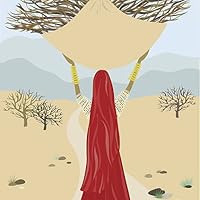
A heinous crime has been committed-seven girls are brutally gang-raped by a group of upper-caste men. As news quickly spreads, their village comes under the national spotlight; journalists, policemen and ministers filter in, each trying to get to the bottom of the truth and find the culprits. Long oppressed, the girls from the minority community refuse to utter the names of the men; feigning ignorance and burdened by shame, they grapple with notions of honour and purity. Lustre presents to us the portrait of a society-of a village afflicted by communal strains-as tensions rise with the police force coming under pressure, afraid the villagers will be seduced into joining the local Naxalite movement. As things take a violent turn, the novel offers a glimpse into the true situation in some parts of India as well as the collective psyche of a community-their thoughts on propriety, violence, subjugation, and, most importantly, revolution.
This was a fascinating and thoroughly enjoyable novel about political corruption, revolution and much more in rural India. Written by the decorated Urdu writer and academic Abdus Samad, and (thankfully) translated from the original title Dhamak by Syed Anwar Ali for Penguin Modern Classics. It has many interesting aspects to it, one of those its frankly unexplainable absence from Bookstagram, Goodreads, media reviews or indeed any type of Google search. But I´m truly grateful for having stumbled upon it myself through the Penguin India website.
The protagonist of the novel is Raju, a young man of Dalit caste and a Naxalite sympathiser in rural Bihar. Outraged by the barbaric gang rape of 7 young women in his village, when the regional minister comes to visit Raju jumps onto his car and smears the politician’s face with black dye. Surprisingly, “Master-ji” sympathises with Raju and arranges for him to be released from jail after suffering a beating by the local Police.
Raju returns to support the Naxalite revolutionaries but their leader, the Doctor, a Western-educated idealist, has been killed in a police “encounter” and replaced by Sundari, one of the victims of the gang rape who is seething for revenge. She rejects Raju for not being radical enough and, now suspected as a sympathiser by the Police, he flees to the city.
Raju is quickly reacquainted with the regional minister and his personal secretary. They encourage him to enter their political party and to stand as representative for his village. As a Dalit, for whom quotas are reserved in the political assemblies, they assure him he can go far. So begins an enthralling story that reveals the precarious world of regional and national politics, in which personal ambition and corruption leave little money or attention for rural voters. Raju quickly becomes the Forest Gump of regional politics, until his ignorance and avarice overtake him.
The author made accurate observations of rape victims being denied justice, confined to labels of societal shame and how the very act of violence against a woman is taken as a blight to family's honour. A woman's pain and feelings are simply forgotten; the concept of justice, right to dignity and freedom of choice are taken from them. And how as days go on, the women themselves are just minor and not-so-noteworthy additions to the existing statistics. In the beginning, I was truly enjoying the characters and the societal observations made by the author. The positives of Lustre end here; because, ironically, the author does the same, if not more henious injustice to the rape victims in his narrative: he simply forgets them for more than half of the plot and re-introduces them as women of pleasure. And Sundari, the only victim interwoven in the narrative, is a brainless rage-driven terrorist.
The main character is a man. A man who is initially driven to rage by the act of gangrape; to be precise, he is offended as he considers the gangrape as a blight on the men of his caste. Any little regard he has for the victims is however, miniscule to his desires and overshadowed by his cowardice. As the story progresses, he begins to crave sex and the blatant power imbalance between him and the women made me sick to core. Having the main character of a novel whose summary is centered on gang rape and social revolt be a rapist himself is simply a new low. And having the end be this rapist go on a self-discovery journey is simply like throwing another stinking stone into this entire shitshow.