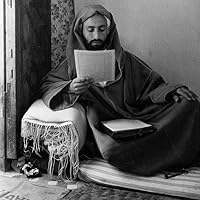
A revealing memoir of a sixty year journey from early post-war Britain through to the new millennium and the huge social, political, technological and religious upheavals that went with it. The author details his slow awakening to the extraordinary worlds he was to move through: from the Quakers of his upbringing to the hard-nosed architects that he studied with in 1960s London and his immersion in the chaos of the burgeoning music business.
His musical journey then took him, almost unwittingly, into a Moroccan Sufi order, and eventually on the pilgrimage to Mekka and Medina. Ian Abdal Latīf tries to examine his motives at each step of the way, recording his meetings with real holy men and not-so-holy men, and the upheavals that these encounters brought about. In this illuminating and entertaining autobiography he charts a course through these tumultuous waters, eventually finding some peace and gratitude for the lessons learnt.
I had my eyes on this book for about a year, considering it was the memoir of a man who, despite the title of the book, had a not-so-average life. Being known in the community as a designer of many Islamic books (particularly translations of Al Ghazali and books by the Islamic Texts Society), calligrapher, architect, someone who has met some of the greatest people in the world, experienced 5 different generations of Islam in Britain and beyond, Ian Abdal Latif Whiteman certainly has a story to tell.
He begins his memoir in post-war Britain, going through a family trauma that came out of the effects of WW2, and his Quaker background, which his family adopted as a result of this trauma, and discussing about Britain being dull in the 50s. He delves a bit into his studies in architecture and the counterculture that was ever prevalent in western society. He then spoke of his passion for music from childhood, particularly Jazz musicians, leading into the sixties which lead him to connect with many iconic figures of the time, such as George Martin of Beatles fame, Eric Clapton and George Harrison, as well as starting his band, Mighty Baby.
Whiteman then dives into his conversion to Islam, which in of itself is an interesting story. It's not everyday your fellow band member (Martin Stone) joins a Shadhili Darqawi Sufi group in Morocco without telling anyone, and immediately being connected to someone who knows a saint or two. All in the early 70s, mind you. He then goes into detail about his experience with Abdal Qadir as Sufi, which is what I signed up for as I've had mixed feelings about him and found him to be a peculiar figure, and the controversies and the unhealthy environment Whiteman was in. It's not surprising to see someone like him gaining popularity, as the aesthetic of Sufis drinking mint tea, engaging in unique forms of dhikr, singing qasidas dressed in djellabas and wearing tasbihs around their necks is quite an appealing one (which is still popular amongst Sufi-leaning Sunnis), and something I myself find appealing.
I, like many others, have heard much about his community in London / Norwich in the 70s, and aware of his projects in Granada and South Africa but not to the extent of learning so much of what went wrong with the original community, until reading this book. A lot of it is nothing short of shocking, but unsurprising given the kinds of things we hear nowadays.
In a time like this where we are now surrounded by charlatans and fake leaders, it's important to learn about these experiences rather than suppress such memories and not teach others to be wary of people who engage in spiritual abuse. We should be thankful we now have resources such as In Shaykh's Clothing to tackle these issues, although much work still needs to be done.
With that said, Abdal Latif encounters true men who have a deep connection to God, making a bittersweet statement, "Why is it that when I found real holy men they went and passed away?" This list of holy men includes the famous Sidi Muhammad Ibn Al Habib of the Shadhili Darqawi tariqah, Sidi Muhammad Bil Kurshi, Shaykh Muhammad Abu Bakr, Martin Lings, his interactions with the likes of Shaykh Hamza Yusuf and Shaykh AbdalHakim Murad and his work with these people.
His love for music deepens with descriptions of sweet Andalusian music and poems from Sidi Ibn Al Habib's Diwan, connections with Nubian Oud player, Hamza el Din and working with Yusuf Cat Stevens in his Sarajevo concert after the massacre in 1995.
It is obvious that this is a man who's seen the British Muslim community flourish and evolve throughout the 50 years of being a Muslim, from the influence of Moroccan Sufis to the post 9/11 world. A man who's seen movements, figures and phases in the community come and go. This memoir should be treated as a part of one of the most important moments of British Muslim history.
Very interesting read for those of us who have had decades-long associations with former members of the groups Abdal Latif Whiteman was part of. Also, an important warning against cults and their leaders on many levels which is equally important.
There was a lot for me in this book, especially as a child of hippies who were in parallel but very different circles in the hippie circuit, but much of his testimony about the problems of cultish behavior from pseudo-Sufi shaikhs was particularly important (and analogous to many charismatic "gurus" of the time, I think). There are cycles of this in our communities, unfortunately, that haven't been addressed enough to stop those who have been programmed, conned, and hurt from doing the same to following generations, even though many of them have openly condemned such actions in the false Sufi shaikh (their own words from so many prominent prominent former members) in a way that you would think would make them very much repulsed by even the thought of repeating the same cycles. But those are the fruits of trauma and abuse. Cycles of spiritual abuse. And Sidi Whiteman is real about it. And it's a trip because so many of the works of some who are still loyal to this shaikh really do produce marvelous and beneficial translations of classical works and the ummah in the West would arguably be impoverished without their considerable groundbreaking literary and other contributions, let alone the library of works from all of those who were once associated with this group. Alhumdulillah, Allah teaches us as He teaches us and guides us as He guides us, and at the end of the day, we are thankful for the good men do, and we must acknowledge it, but when the harm men do creates cycles of harm, we must acknowledge that to stop the harm. And Sidi Ian Whiteman had bravely contributed to these acknowledgements of good and harm in a beautiful literary way, may Allah reward him.