

What do you think?

Eco Colour: Botanical Dyes for Beautiful Textiles
This book by internationally renowned dyer, costumier and artist India Flint draws on her two decades of experience and experimentation in natural dyeing techniques to present an expert, highly accessible and achievable handbook of ecologically sustainable plant dye methods using renewable resources - most of them to be found in the average home garden. Eco Colour uses an exciting range of projects to demonstrate a variety of techniques, many of which have been specially developed by the author. Projects range from the simplest imaginable (solar dyeing, in which the fabric and dye material are placed in a closed jar and left for a few weeks in a sunny spot) to the positively romantic (dyeing with 'ice flowers'). Beautifully crafted, inspirational garments and homewares are used as the basis for dyeing techniques that produce a boundless range of pure, gentle, natural colourways.
238 pages, Hardcover
First published January 1, 2008
About the author
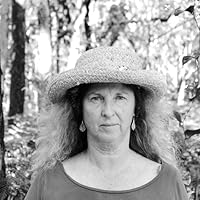
India Flint
5 books16 followersTextile artist, dye developer.
India Flint was born in Melbourne, Australia, but celebrated her first three birthdays in Montreal, Canada. This not only set a nomadic pattern, it meant that when starting her formal education on the family’s eventual return to Australia, learning to speak English was the initial hurdle. Her first attempts at stitching were guided by her maternal grandmother, an infinitely patient re-threader of needles, who overdyed faded garments in various combinations of tea leaves, calendulas and onion skins. As a child, she discovered felt by accident, whilst vigorously scrubbing wool gathered from barbed wire fences near Werribee. Her fascination for textiles was greatly encouraged by her mother, who always seemed to have a piece of embroidery or knitting in progress, and took her through seemingly endless museums during the family’s wanderings around the world!
In 2002 she was living and working with her three children on a property on the eastern escarpment of the Mount Lofty Ranges in South Australia, she combines lecturing in ecologically sustainable dye processes at the South Australian School of Art with research, textile practice, playing tenor saxophone and farming. Most of the wool and plants used in her work are sourced from the farm. Her work is represented in a number of European Museums as well as private collections.
The distinctive Eco-print, developed in the course of research for a Master of Visual Arts at the University of South Australia, has become a defining feature of India’s textile practice. While she has made details of the technique available in order to assist dye practitioners with colour assessment of eucalypts, it is on the understanding the process will not be used on a commercial basis.
India Flint was born in Melbourne, Australia, but celebrated her first three birthdays in Montreal, Canada. This not only set a nomadic pattern, it meant that when starting her formal education on the family’s eventual return to Australia, learning to speak English was the initial hurdle. Her first attempts at stitching were guided by her maternal grandmother, an infinitely patient re-threader of needles, who overdyed faded garments in various combinations of tea leaves, calendulas and onion skins. As a child, she discovered felt by accident, whilst vigorously scrubbing wool gathered from barbed wire fences near Werribee. Her fascination for textiles was greatly encouraged by her mother, who always seemed to have a piece of embroidery or knitting in progress, and took her through seemingly endless museums during the family’s wanderings around the world!
In 2002 she was living and working with her three children on a property on the eastern escarpment of the Mount Lofty Ranges in South Australia, she combines lecturing in ecologically sustainable dye processes at the South Australian School of Art with research, textile practice, playing tenor saxophone and farming. Most of the wool and plants used in her work are sourced from the farm. Her work is represented in a number of European Museums as well as private collections.
The distinctive Eco-print, developed in the course of research for a Master of Visual Arts at the University of South Australia, has become a defining feature of India’s textile practice. While she has made details of the technique available in order to assist dye practitioners with colour assessment of eucalypts, it is on the understanding the process will not be used on a commercial basis.
Ratings & Reviews
Friends & Following
Create a free account to discover what your friends think of this book!
Community Reviews
Displaying 1 - 28 of 28 reviews

March 25, 2013
Beautifully produced book. India Flint writes very well of the the variable types and ways of using plant colour. The textiles she produces are so attractive and the philosophy of slow & sustainable practise is great. I only borrowed this for the chapter on using plant leaves to dye Easter eggs but then read on and enjoyed it all.

August 5, 2011
Love it, love it, love it. Truly a treasure. I would love to participate in one of her workshops.

July 13, 2015
This is a fabulous book on dyeing in ways that are sustainable for the planet using plant materials. There are also some very interesting methods described that i am already incorporating into my felt work. Thanks so much Ms. Flint!

December 4, 2018
India Flint composed a visually stunning and inspirational book through her thorough examination of how plants can be used with various mordants to create beautiful and safe dyes. Her scientific note-taking and photos of products and plants invite dyers to keep this book as a useful tool for many experiments.

February 21, 2021
My cousin Nancy Landrum is a textile artist and showed me this book when I was at her Dragonfly Studio while looking at some of the creations she'd made based on what she'd learned from it. I am not an artist, but the book has been beloved by me because of Nancy and the silk scarf she gave to me that day.

June 27, 2019
Good reference book. More of an overview and source for inspiration than how to.

November 10, 2019
Interesting book but almost impossible for a person without perfect vision to read due to the busy backgrounds.

September 1, 2021
Resource
Botanicals are challenging - look out for poisons, proper containers, etc.
Botanicals are challenging - look out for poisons, proper containers, etc.

January 3, 2022
Wow! So much detailed info and India Flint's experience is exceptional. I would highly recommend this marvelous book.

March 6, 2017
Loved this book SO MUCH! India Flint shares so much knowledge from personal experience dyeing - methods, materials, and more. Can't wait to try them all out!

February 11, 2017
This is a great directory of plants with their botanical and common names and parts to use to extract colours. You’ll find tips on how to collect, store and undergo experiments with colour extractions, as well as documenting your explorations. It is beautifully photographed and shows up India’s work to full advantage.
I find this book very hard and frustrating to use and whether this is intentional, you’ll find yourself having to pick it up again and again to read and make sure you’ve understood correctly. Information is all over the place – for instance in the chapter ‘mordants’ you’ll find some information about cotton – drips on one page, doubling back or forward (thankfully page numbers are indicated) to find more drips – and you may wonder whether the author intended you to slowly extract the lessons, just as the eco-dyeing procedures are slow…Surely someone who’s written a Master’s thesis on the subject of eco-dyeing could have organized her material a lot better, or are we to blame the editors? The book has become the ‘bible’ for textile artists wishing to dye with colours naturally.
I find this book very hard and frustrating to use and whether this is intentional, you’ll find yourself having to pick it up again and again to read and make sure you’ve understood correctly. Information is all over the place – for instance in the chapter ‘mordants’ you’ll find some information about cotton – drips on one page, doubling back or forward (thankfully page numbers are indicated) to find more drips – and you may wonder whether the author intended you to slowly extract the lessons, just as the eco-dyeing procedures are slow…Surely someone who’s written a Master’s thesis on the subject of eco-dyeing could have organized her material a lot better, or are we to blame the editors? The book has become the ‘bible’ for textile artists wishing to dye with colours naturally.

August 3, 2012
This book is very inspiring-- already have my first foray into eco dyeing cooling off. I can't wait to open the bundled t-shirt tomorrow and discover what surprises my impromptu dye fest created. Hopefully my experiment will have great results, and even if it doesn't, I've used all natural ingredients and ecologically-friendly dye methods, so I can just try again. I foresee a second life for many a stained or worn garment in my family's wardrobes thanks to Eco Colour.
I wish I didn't have an imminent move on the horizon so I could explore some of the slower dyeing techniques India Flint shares right now ! Still, a lack of time is not going to prevent me from starting a second project tomorrow. Like I said, very inspiring book.
My only quibble is one of a newbie to the dyeing arena: I would have liked a glossary for dyeing terms so that I would know right away what the author was speaking about rather than having to stop to parse it from context or look it up from an outside source. However, the index is good, and after finishing the book, I was able to quickly find some information that I wanted to access.
This is not a how-to complete with lists of specific "recipes" to follow to get predictable results. It is a passionate invitation to explore and discover on one's own with some helpful guidelines and gentle reminders to respect the environment while doing so.
I wish I didn't have an imminent move on the horizon so I could explore some of the slower dyeing techniques India Flint shares right now ! Still, a lack of time is not going to prevent me from starting a second project tomorrow. Like I said, very inspiring book.
My only quibble is one of a newbie to the dyeing arena: I would have liked a glossary for dyeing terms so that I would know right away what the author was speaking about rather than having to stop to parse it from context or look it up from an outside source. However, the index is good, and after finishing the book, I was able to quickly find some information that I wanted to access.
This is not a how-to complete with lists of specific "recipes" to follow to get predictable results. It is a passionate invitation to explore and discover on one's own with some helpful guidelines and gentle reminders to respect the environment while doing so.

June 16, 2013
I bought this book on an impulse. I wasn't looking for a specific book about dyeing, but this book came across and I bought it.
The book covers the basics: the workspace, harvesting plant material, natural dyestuff, special effect and some tips and tricks. Along the way, Flint shares wonderfull ideas for projects.
This book is perfect for the beginning dyer who has some experience and wants to know the possabilites for dyeing and expand their knowledge. For absolute beginners, it would have been better if a glossary would have been included.
I love the list of plants for getting various colors (and what parts to use) and the colorfull photographs which give me an instant itch to dye something.
This book does cover something from everything - but I would have like an in depth part about certain stuff, like dyeing natural fibers. However, the main goal of this book is to give ideas to experiment with natural dyeing - and in that matter, this book is certainly inspiring.
Overall, I would recommend this book to anyone who is interested in dyeing the natural way.
The book covers the basics: the workspace, harvesting plant material, natural dyestuff, special effect and some tips and tricks. Along the way, Flint shares wonderfull ideas for projects.
This book is perfect for the beginning dyer who has some experience and wants to know the possabilites for dyeing and expand their knowledge. For absolute beginners, it would have been better if a glossary would have been included.
I love the list of plants for getting various colors (and what parts to use) and the colorfull photographs which give me an instant itch to dye something.
This book does cover something from everything - but I would have like an in depth part about certain stuff, like dyeing natural fibers. However, the main goal of this book is to give ideas to experiment with natural dyeing - and in that matter, this book is certainly inspiring.
Overall, I would recommend this book to anyone who is interested in dyeing the natural way.
October 12, 2016
Dyeing naturally using ingredients from nature. Direct dyeing with leaves, berries, petals with no dye bath. If you lived in Australia as India Flint does then you could likely dye from the orange earth. An Australian friend of mine made paint from different earths by grinding and mulling. Beautiful colours. A good addition to textile library
This entire review has been hidden because of spoilers.
February 19, 2016
AMAZING BOOK! It has every piece of information you could use to begin exploring the world of dyeing with plants, metals and other substances from the natural world. this is a wonderful alternative to the toxic and water intensive synthetic dye process.

May 31, 2016
Focused on bundle dyeing/eco dyeing and Australian plants, it was lush with wild, organic colors. It makes me want to dry more bundle dyeing with fingers crossed that I can get the clear, defined shapes and colors she achieves.

July 30, 2009
for anyone interested in dying fiber naturally, this is a treasure. In depth and wonderful photos.. a real inspiration.
February 27, 2013
Lots of practical advice for using natural dyes.

August 29, 2013
Encyclopedic.

September 12, 2013
A beautiful book. Interesting to read but much more information than I'll ever need or use.

July 29, 2014
Inspiring and informative, if you don't try at least one of the techniques having read it you are probably not destined to be a natural dyer!
August 25, 2014
Love it ! Want to try it out soon .
September 13, 2014
Pretty much everything you need to know to for dyeing naturally and safely, with minimal or no harm to the environment..... a great book for beginner's and experts alike.

July 9, 2015
A lovely book that combines social activitism, fiber art and plant chemistry into the creative outlet of dyeing with plants.
Not the best book for a beginner or someone who wants recipe formats.
Not the best book for a beginner or someone who wants recipe formats.

September 1, 2016
Brilliant book written by a woman who knows her stuff. Heaps of excellent information on beginning the intriguing process of eco printing and dyeing.
March 6, 2016
What a great book with the philosophy and India's practical experience
June 28, 2017
A very informative read on eco/natural dyes. A bit complicated for a person to the world of dyeing due to the wide perimeters listed on materials, mordants and co factors effecting the results of dyeing. A chapter to guide new dyers would have been helpful followed by the more advanced information.
A very good reference book.
A very good reference book.
Read
July 23, 2017India Flint is the mentor for those interested in Eco Dyeing
Displaying 1 - 28 of 28 reviews