A magical adventure for fans of Amari and the Night Brothers and Nevermoor, about three witchlings who must work together to do the impossible if they have any hope of earning their full powers.
Every year, in the magical town of Ravenskill, Witchlings who participate in the Black Moon Ceremony are placed into covens and come into their powers as full-fledged witches.
And twelve-year-old Seven Salazar can't wait to be placed in the most powerful coven with her best friend! But on the night of the ceremony, in front of the entire town, Seven isn't placed in one of the five covens. She's a Spare!
Spare covens have fewer witches, are less powerful, and are looked down on by everyone. Even worse, when Seven and the other two Spares perform the magic circle to seal their coven and cement themselves as sisters, it doesn't work! They're stuck as Witchlings—and will never be able to perform powerful magic.
Seven invokes her only option: the impossible task. The three Spares will be assigned an impossible task: If they work together and succeed at it, their coven will be sealed and they'll gain their full powers. If they fail... Well, the last coven to make the attempt ended up being turned into toads. Forever.
But maybe friendship can be the most powerful magic of all…
With action-packed adventure, a coven of quirky witchlings, Claribel A. Ortega's signature humor and girl-power vibes, this middle grade Latine witch story is truly a modern classic.
New York Times Bestselling and award-winning author, Claribel A. Ortega is a former reporter who writes middle-grade and young adult fantasy inspired by her Dominican heritage. When she's not busy turning her obsession with eighties pop culture, magic, and video games into books, she’s co-hosting her podcast Bad Author Book Club. Claribel is a Marvel contributor and has been featured on Buzzfeed, Bustle, Good Morning America and Deadline.
Claribel’s NYT Bestselling debut middle grade novel Ghost Squad is being made into a feature film. Her latest book Witchlings (Scholastic) was an Instant NYT and #1 Indie Bestseller. Her graphic novel Frizzy with Rose Bousamra is out now from First Second and was an Indie Bestseller. You can find her on Twitter, Instagram and Tiktok @Claribel_Ortega and on her website at claribelortega.com.
I don't care what anyone says...this book is so sticking cute! I was really excited to get my hands on this book after I've heard so many great things about Ghost Squad. I haven't read it yet, but I'm definitely looking forward to getting my hands on it soon. If you're a fan of middle grade fantasy or books about witches, this is one that you're going to want to pick up.
Witchlings has a little bit of something for everyone. There are witches, spooky creatures, covens, amazing friendships, adventure, and mystery. The story focuses on Seven who is extremely excited to be sorted into a coven with her best friend. They are both determined to make it into House Hyacinth; however, Seven doesn't make it into any coven and is considered a spare. Spares are witches that are looked down upon and typically only end up working as servants for the wealthy families in the community. Seven along with Thorn and Valley attempt to seal their bind, but fail. They then commit to completing an impossible tasks that will help them get their full powers and prevent them from remaining witchlings.
The best part of this book outside of the amazing world-building was definitely the character development as it applies to the friendship that grows between Thorn, Valley, and Seven. These three are the most unlikely trio, yet they end up doing so many wonderful things together. By building a bond with Thorn and Valley, Seven learns a lot about what it means to grow away from past relationships and gain new ones. These three don't always get along and they definitely have issues to work through during the course of the novel, but the love, support, and care that exists between them is so endearing that it's hard not to love them as a coven.
The other part of this novel that I thoroughly enjoyed was the the world building. Ortega does such a great job slowly incorporating the reader into this lush community of witches. There wasn't a moment where I was confused about the magic system or even the other which communities that exist in the grander scheme of the world building. The evil presence/foe made sense in regard to how the community is set up especially those thoughts and feelings that many have towards spares. And to be quite honest, I knew something was wrong, but I couldn't really put my finger on how everything was going to unfold.
Overall, this is a great new novel from Ortega. The writing was simple, but thorough and really captured the world. I absolutely adored the characters and the world building. There is a content warning for child abuse which is described by a character. For some reason I got Halloweentown vibes from reading this book. I highly doubt that was the intention or the inspiration, but it definitely gives off cozy Halloween vibes that make it a for sure an annual spooky season re-read. If you haven't already, make sure you pick up this book.
Twelve-year-old Seven Salazar is a Witchling whose worst nightmare comes true when she isn't placed into a house coven at the annual sorting ceremony. When the ritual to seal her and two other leftovers into their coven of Spares fails too, their only shot at redemption is something called "the impossible task." The story blends fast-paced adventure with themes of identity, empathy, othering, and acceptance, and is a still too-rare example of Latine witches in middle grade. It's a lovely friendship-focused start to an ongoing series, a gem that will hopefully herald more magical Latine stories for kids.
Be honest. Is there anything better than found family? You're absolutely right. There isn't.
All three girls had so distinct personalities and all of them were so lovable. The way they started out almost as enemies and then throughout the book they became so close was so heartwarming. They were under so much pressure, but even when they didn't agree, they were there for each other.
I didn't care about the plot that much, I was here for the girls and I am so happy it turned into a series. I need a lot of books about them, I already know these will become my comfort reads.
What I also appreciated was that they needed the adults' help. They admitted they are just kids, and when it came to things they couldn't solve, they asked for help.
I wanted to love this, it sounded so fun and really cute. But what it ended up being is just a big mess.
I could hardly visualize any of these scenes. There is a severe lack of detail and a whole lot of telling and not showing. It seemed like many of the rules of the world and magic system were just pulled out of thin air and revealed when the author felt like it served the plot. Nothing was established, I really don't think anything about this book was planned. It felt very clumsy and messy.
Some of this writing really gave me second-hand embarrassment. The main character says every other page that she doesn't care what people think of her being a spare witch and that she'll prove everyone wrong, and then she's also blowing her BFF's phone up who has been ghosting her ever since they got sorted into different covens. She literally shuns her in public. Like come on, get a grip and move on. Also, these 12 year olds calling things "dope" made me roll my eyes. And the frequent use of "heck" or "heckin" was nauseating. If you can't use the word "Hell," please just avoid phrases where it's required. I decided I needed to DNF this book when I read "Heck had frozen over."
Obviously this book isn't realistic because it's fantasy, but the dialogue between these characters really stuck out to me. The three girls constantly use slang, but are also somehow extremely grammatically correct and proper? Can we please get some contractions in here?! The dialogue consistently felt out of place, very forced and unnatural.
This book is advertised as being some grand message about inclusion and friendship. You will find none of that here. The MC, Seven, is so adamant about not being judged by the town residents for being a spare witch, but she's the most judgmental character in the whole book.
Only reason this didn't get a full 1 star is because I liked the side characters, Valley and Thorn. They were cute and actually likable.
Thank you to the publisher for an advanced copy in exchange for an honest review.
After reading Ghost Squad in 2020 I knew I wanted more from Ortega. I had so much fun with that book.
The characters, the relationships, the humor, the heart; it was such a fantastically pure Middle Grade story. The perfect start for future Horror Readers like myself.
In Witchlings, Ortega is able to bring a classic feel to a modern Fantasy story.
Set in a magical town called Ravenskill, we follow 12-year old Seven Salazar, who on the night of her Black Moon Ceremony gets a result she wasn't expecting.
For context purposes you can picture the Black Moon Ceremony as a kind of sorting hat process. Young witchlings are essentially sorted into covens based on their skills and abilities.
Seven and her best friend have always dreamed of being in the same coven. They want it so much that the girls actually begin to take it as a foregone conclusion.
Unfortunately, that's not how it works out and Seven ends up as a Spare. A witchling who doesn't get placed into one of the five covens.
Spares, if we are being honest, are sort of looked down on by the whole town. It's not the greatest fate and disappointing for Seven, but she's not alone. Two other witchlings become Spares during that ceremony, Thorn and Valley.
Making matters worse, when the three witchlings try to seal their circle, forging their bond as sisters, it doesn't work. Now they'll be doomed to a life without magic, except there's a catch and Seven knows it.
She invokes their right to perform an impossible task. If they are able to complete it, their coven will be sealed and they will be able to gain full power.
If they fail they risk being turned into toads. No pressure.
Thus the three witchlings, who initially believed they had nothing in common, learn to work together and rely on one another to accomplish their goals. Friendship truly is magic.
Witchlings is so engaging from the very start. Seven, as well as Thorn and Valley, are all very well fleshed out and super relatable.
I love how pure their friendship is and the evolution of their relationship is so natural. I am sure young readers will be able to see a bit of themselves in at least one of these main characters.
The witchlings uncover a bit of a mystery involving their town during the course of their impossible task and even in the face of dangerous odds, they forge ahead to reveal the truth.
I loved that bit of mystery and intrigue. It was surprising and fun. You can tell that Ortega poured her whole heart into this one and I would definitely recommend reading the Author's Note at the end.
Hearing a bit of Ortega's inspiration behind this story really helped me to appreciate all she brought to the page.
I cannot recommend this one highly enough to both Middle Grade Readers and Fantasy Readers in general. Additionally, the audiobook is superb.
I am super stoked for the sequel to this. Yes, there is one coming and I cannot wait!!!
This was delightful! Witchlings is a middle grade fantasy about friendship, found family, bravery, and inclusion. Seven Salazar is 12 years old and excited for the Black Moon Ceremony where she will graduate from witchling into a full witch with a coven. But instead of being magically chosen for a cover, she and two other girls are Spares - the lowest and least powerful of their society. In a last chance to keep their power and change their fate, they take on an Impossible Task and embark on a dangerous undertaking that will put them in the path of bigots and underhanded politics. While this has some serious elements, the tone manages to stay on the lighter side and I really enjoyed it. I also love how it handles this issue of what to do when you realize a friend is in an abusive situation. Definitely would recommend.
Oh my god I loved this so, so much! I’m so glad it’s going to be a series and I can’t wait to see where Seven, Valley, and Thorn go from here. If Goodreads allowed emojis, this is where I’d put approximately 10 of the big eyes UWU face emojis.
Witchlings is out April 5th wherever books are sold!
ARC Note: Thanks to Scholastic & Claribel for the review copy. This did not impact my opinions at all, and I can’t wait til my finished copy arrives!
The first book I read this year and it's already a favorite.
When the Black Moon Ceremony decides Seven is a spare, witches that don't seem to have a place in this society, she thinks the only option left is to complete the impossible task, a mission that will either seal their coven or turn them into toads. From there we follow Seven and the other spares, Thorn, the new girl and Valley, the girl that has bullied Seven for years.
This world is absolutely wonderful. Being inside this book made me feel giddy and warm, but this book didn't shy away from a strong plot. There's not a thing I didn't like about this and I'm so excited to read the second book!! Truly the best way to start 2023.
Wow! I absolutely loved Ghost Squad SO much..but I think I may love this 1 even more! Incredible read! I absolutely loved this town & its whole backstory. From the different covens, Spares, the Gran, the town Uncle, toads lol, Nightbeast, cucos, & more-phenomenal! So detailed, so atmospheric, & such vivid, incredible writing. So many incredible messages in here as well. Like when you grow up with expectations of how certain things will happen in life, & then they don’t. What it feels like when you you feel like you don’t belong anywhere, & you desperately want to feel like you belong. This book is for anyone who has ever felt like an outcast, different, or like they didn’t fit in anywhere. In turn, it also has great messages on embracing & accepting yourself….being yourself. What makes us each special & unique ARE OUR DIFFERENCES. Be proud of who you are. The seemingly unlikely friendship that you can’t see happening at the beginning of the book….is even more beautiful & special when it DOES happen. Watching these 3 become friends was incredible to read about. Great dynamic between them, & they make the BEST team. The power of friendship is magic in itself. Seven, Valley, & Thorn are amazing characters, & have the BEST character development/growth. The topic of abuse is touched on briefly also, & I really loved the way the author handled that & wove it into the story. It’s a subtle reminder every kid needs to read(without even realizing the important message they’re getting while reading their witchy read-BRILLIANT)that if you see or hear something like that, you need to tell an adult immediately. If worried about your friend being mad at you-they won’t stay mad, & telling someone is more important anyway-FOR them. Emotional & physical abuse, either one or both-is wrong. Wanted to mention that, because even though it’s not a main focus or even a big big part in the book or anything, it really meant a lot to me to see that. Anyway, incredible writing, witchy goodness, mystery, monsters, magic, atmosphere, amazing characters & a phenomenal friendship all make for an epic magical adventure read. There is even a toad race. Lol So good! I loved this so much, & highly recommend. This is out now! STUNNING cover front & back by Lissy Marlin too!💜
First read: April, 2022 Reread #1: September, 2023
Review in 2023
Just as good and charming as I remember! On to the sequel!
Review in 2022
This was such a delight, and any fan of Nevermoor or Amari and the Night Brothers needs to give this a go! Would also highly recommend listening to the audiobook; the narrator was great. The audiobook also had an interview with the author at the end, and in it a sequel/companion was teased. So, I’m crossing my fingers for this to become a loooong series.
An obvious nominee for the Goodreads' Choice Awards, Best Middle Grade of 2022, if you ask me.
Book at a Glance: • Witches • Enemies to friends • Quest • Conspiracy • CWs: abuse, hate speech
At the Black Moon Ceremony young witchlings are given their coven assignments. Those without a coven are labeled Spares. Without a true coven, these witches are magically limited and afforded fewer opportunities. When Seven Salazar is marked as a Spare along with her bully, Valley Pepperhorn and the new girl, Thorn Laroux, she makes the one choice that will save them from being stuck as witchlings forever. Together, they must face the impossible task of defeating the Nightbeast that is stalking their village.
I am so thoroughly disappointed by this book. I feel like a fool for holding out hope and finishing it over DNF'ing. Beyond the adorable cover is a totally lackluster story.
Let's start first with the world building. There might as well be none at all. Utterly unbelievable and unexplained, it felt like Ortega pulled details out of nowhere as they were convenient to the plot, regardless of if it makes sense or not. The spell levels seem totally arbitrary as to which spell is higher level than another. The only scale I could determine was whether or not Ortega wanted the scene to seem more dire. Not that there's any penalty for casting high level magic anyway. Aside from feeling mildly sick after one casting, Seven is casting high level magic constantly without a hitch, all while telling her friends and the reader how dangerous it is.
There's a big issue of telling rather than showing. Ortega's writing is so sparse on details, and she time skips over things constantly that it feels like we never see any actual evidence of what we're being told. We're told that Valley is a mean and terrible bully, but never see any evidence, with her more frequently acting as a team player. We're told about how dangerous things are, only for them to be non issues. One instance that stood out to me is the revelation that this apparently takes place in a hidden magical society, with the real world referenced almost 50% through in a parentheses. Totally useless information to the story that should have been removed in editing.
Seven is a irritating, unlikable main character. We're expected to believe that she's a resilient, talented witch, that she's been unfairly put in this situation. No. She's the cause of virtually all the issues the trio faces in the first half of the book. Their circle not closing during the sorting ceremony? Seven is the one who refused to accept her coven sisters. Then as they begin their quest, it's Seven who is undermining Valley at every opportunity, refusing to listen or work with her on anything.
Valley is meant to come off as a bully at first, but this was never the case for me. If anything Seven felt more like a bully with her air of superiority and constant dismissal of Valley and Thorn.
Ortega clearly has no idea of how to set up characters or plot. With the issue of telling over showing, this felt more like a rough outline than a finished book. The character development was sloppy, the plot slow and predictable. The main crux of the story is spent following a mystery but the reveal was so telegraphed that it was insulting.
It felt at once like too much was happening and yet not enough. Ortega has a strange love for having the trio just faff around and talk about things rather than actually accomplish anything. The result is that it feels as though they're handed solutions because the plot says so rather than actually solve anything on their own.
Finally, let's talk about the diversity in this book, or lack thereof. Magic in this setting uses Spanish for spells. Interesting enough, but the language is so thoroughly divorced from any culture that it might as well have been a made up language. There is zero indication that any character is Latinx. The only reason I knew Seven was a POC is the art on the cover. With how scant the descriptions are in this book, there is nothing to tell the reader if a character is not white.
Then the issue with LGBT+ rep. It insults me that this book has been shelved as having queer representation. There is a single scene where the main trio chat with a lesbian couple. That is it. That is not representation. That is Disney expecting applause for putting an unnamed gay couple in the background. That is nothing.
Yes, this is a middle grade book. And I was willing to suspend my disbelief to imagine that a group of 12 year olds could defeat a monster. However, being for a younger audience does not mean poor quality. There was no reason for a book in this state to be published.
This story follows 12 year old Seven Salazar who finds herself sorted into a coven of unwanted spare witches with two others…one of which is her bully. Seven, Valley, and Thorn must work together to defeat the Nightbeast or get turned into toads.
This was such a fantastic read. It’s chock full of adventure, magic, magical creatures, covens, and unexpected friendships.
There’s also some really great teaching moments when it comes to bullying, abuse, and prejudice.
Thank you to Scholastic Inc for providing review copy. This did not influence my review. All opinions are my own.
Yoooo de tweede helft???? Die maakte alles goed wtf
Dit boek is prima leuk met jonge heksen die een queeste hebben. Niet heel bijzonder, en ik klikte ook niet echt met de personages en zo. Maar dan ineens komt er een racisme/civil rights/equality plotlijn die de WILDSTE PLOTLIJN was die ik ooit heb gelezen. Op een goede manier. Like, dit is echt een goede manier om aan kinderen de verschrikkingen van racisme te introduceren, want het is allemaal erg, maar het is met niet-bestaande heksen weet je? En geschreven door een POC, wat heel tof was.
Okay dit klinmt vaag maar geloof me deze plotlijn was magistraal. Ik heb genoten. En de plottwists, wajow.
Mijn favoriete stuk was dat de pad van de hoofdpersoon Edgar Allan Toad heet en een snor heeft. 10/10.
Young fans of The Owl House will find a lot to love here. A lot of standard MG fare—enchanted forests, magic sorting, and a mean girl who’s not so mean—but standard fare done really, really well.
This was a well done middle grade story. It was certainly meant for younger readers, which concerned me at first, but after I got used to the writing style it was easy to enjoy the story. It gave me Owl House vibes but was enough of it's own thing it did not feel like it was ripping it off.
The world building was amazing, by the end of the I felt like I understood how an average person would spend their day in The Twelve Towns.
Certainly something I would easily recommend to anyone who is looking for a light fantasy regardless of age. One thing to note is that there is no romance and none of the main characters are confirmed queer. There is some LGBTQIA rep throughout the book but the main story is focussed on the three witchlings dealing with their task.
Thank you so much to Scholastic for sending me an ARC in exchange for review! 🍄🐸
Witchlings is a toad-ally charming tale of 3 witches on a epic quest of belonging in a world of covens & magical beasts. I love how this story explored not only friendship & belonging, but also the injustices of class systems.
Seven, Thorn, and Valley, despite their differences, come together to stand up for themselves. Very empowering! 🪄
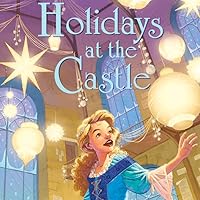
Having the super awesome character artwork on the cover really helped bring these characters to life. Sooo cute! also the illustration of Edgar Allen Toad?? FROGGIN' ADORABLE!
I received an ARC from the publisher TW: systemic prejudice & oppression, threat of infanticide, mentioned family death, mentioned fire, themes of abuse (abuse of a servant & abusive parent) 3.8
Seven can't wait to be in the same coven as her best friend, but not only does she not get put in the coven she wants, and not only does she not get into the same coven as her best friend, but the worst happens- Seven is a spare. And her spare coven won't even seal, so they're doomed to be witchlings forever, and never graduate into full witches. The only option is to invoke The Impossible Task, and it seems like they got the most impossible, hunting down Nightbeast. Between the danger, her best friend drifting away, and learning to trust a witch she's just met and one who's made fun of her for years, it doesn't seem doable. But Seven, Valley, and Thorn are sure if they can band together they can find the Nightbeast, and even unravel all the weirdness that seems to be stirring.
This is a sweet yet adventurous middlegrade book! This is a book I could imagine having read in elementary school, the kind of thing that would've gone well right in between my Eva Ibbotson books and Harry Potter, but would have lended some much needed diversity. The cast of characters is also one that I think kids are going to connect with, and the themes of abuse and getting past misunderstandings to get to know someone better are really important and done with a careful hand.
The disappointment for me, an adult of color, is that I thought I saw a build up towards more political, validating moments- and certainly saw space and potential for that- but not only does that not get met, but it almost feels like a bait and switch in that department at the end. To have so much of the story be about how the system is crooked, and specifically targeting a marginalized class that's already vulnerable, as well as even using them as scapegoats, and show on page abuse to someone in this situation and then end the book without ever even hinting that they're going to try to make things better for those peoples is incredibly upsetting. I was so ready for an early introduction to social justice, and the rug gets completely pulled out from under you. Particularly because of the ending. I can understand that some things are going to be requested to get simplified a bit and perhaps an editor might want things more centrist, but this felt like undoing literally all of the work done throughout the book up to this point.
This is a fun, diverse magical story of adventure and friendship. Had the ending not played out as it did, I would have loved it.
Pre-review comments below Well, I got a surprise copy of this ARC in the mail yesterday, so I guess I can count myself in on this fun, diverse adventure!
I really wanted to like this one. This book shot up to the top of my To-Read pile the second I saw it. And how could it not? Look how cute it is! Even before I knew this was published by Scholastic, I saw it in my mind’s eye on the cardboard display stands of a Book Fair, shrink-wrapped in with a House Hyacinth necklace. But this world is rotten at its core. The metaphor of Spares as anyone who feels they don’t belong and has to find their place in the world is not lost on me. I’m the type of person that thinks it’s really important for literature for children in particular to have this kind of metaphor not just so they feel less alone in their struggles, but so they can learn to recognize and even overcome injustices in their own society. But there is a difference in being ostracized because butt-toad people decided you were different, and because you were cosmically deigned to be different. Imagine if three students from your graduating class were chosen completely at random to not graduate, were barred from ever taking GEDs or going to college, and the jobs they could find were basically slave labor. It does not matter how much of a good student they are, it does not matter how hard-working they are, it does not matter their family background or their social position, and it could be you. And if you ever question this system, you get turned into a literal animal. It would make some amount of sense if they actually filled a social niche, like it would sure be convenient if the Gran or the Uncle or anyone else involved in running the town didn’t have biases towards their own covens, but nothing is ever given. Not a single person, not even the main characters who now have to face oppression firsthand, ever questions whether it is right to deliberately choose three people each year to be the social pariahs. And Spares aren’t just loner kids, they are oppressed peoples. I got so mad during Pixel’s two scenes that I had to put the book down and pace around the house for an hour. There’s a plot point about a civil rights bill that would “expand Spare’s rights”, but we never see what rights Spares are now given permission to have (but only if they’re nice about it!) because the fact that Spares didn’t have those rights before might make the world seem really bad. It’s hard to get excited about your hypothetical House Hyacinth necklace if you’re sad that magic caste systems exist. Just looking at Ortega’s website suggests that there isn’t even an option to be a Spare in her coven quiz (which, yes, we need more fun quizzes and custom icons and merchandising to promote children’s books please). And even though Seven, Thorn, and Valley all get a happy ending, what’s going to happen next year when we decide three twelve-year-olds aren’t good enough to be in society unless they fight a scary monster and save the world? How many more children do we have to throw at the problem?
There are things to like about this book. The three main characters are really fun. My favorite is Valley; she’s immediately set up to be just a standard stock bully, but she ends up being really cool and interesting. I do kind of wish that she had committed to doing more mean things, but the fact that she didn’t and her thought process behind the mean things she did do makes her really fascinating. And I need more of the Oracle now. There’s a lot of fun worldbuilding details like how the town is run, the magical plants and how the Witchlings use them, and the intricacies of Toad Races. I will die on the hill that we need less vaguely European-inspired fantasy worlds. But even with the icky politics of the book aside, there’s still a lot to dislike about the writing. Writing mysteries in a magical world is inherently hard since the audience won’t know how the world works and can’t logically come to a conclusion without help, but there is too much telling and not showing in this book. Even as the villains were giving their evil monologues about why they did what they did, Seven has her own internal monologue about how they did what they did as if the reader couldn’t pay attention. I also really dislike how most of the character arcs resolved, especially Poppy and Pixel. Poor Pixel. Pixel needs her own series where she takes over the Twelve Towns, she deserves it.
There’s a line towards the end where Seven muses that it’s nobody’s fault that she is a Spare, and that’s the line that scares me the most. Let’s ignore the fact that the adults of this world did fail her by not getting rid of Spares in the first place, or at least never stopped the people who physically and emotionally abused them in broad daylight and made them work starvation wages. But even at the end of the book, the main character still views her otherness as something inherently negative. And considering that Spares are supposed to be a metaphor for any kind of otherness the reader can throw at them, I’m really concerned that kids who came to this book for comfort are going to start viewing their otherness as negative as well.
I really want to like this book, and I still want it to do well. It’s a really fun read once you can look past the politics, but dear lord do we live in a society. I will read the sequel. I read the summary and know it’s supposed to be about the witch Olympics, but my hope is that Seven, Valley, and Thorn end up making a coven for all Spares. That would actually make this book retroactively better in my opinion. But as it stands, I can’t recommend it.
If you want a cute witch adventure without icky politics, I recommend The Wee Free Men or A Hat Full of Sky by Terry Pratchett. They feature a witch who goes on a grand adventure, finds her place in the world, and earns the respect of both her peers and her elders despite coming from a disadvantageous background. A Hat Full of Sky in particular is in my top 3 favorite books of all time.
PS: I got Goose House. Which could not be farther from the truth, but I do like the reference.
I am very in love with the world building in this book! I enjoyed seeing the friendship between Seven and her coven blossom. There were a few image descriptors in this book that genuinely scared me! This book has several lessons / themes that delivers in a way that’s not overly heavy-handed and the premise certainly had high stakes that kept the tension at its peak!
You can never really have enough books about finding your place in this world. It’s one of those universal experiences that draws us all together. Witchlings sounds like many other beloved fantasy books: children come of age in a society that places them in groups that will shape their futures and of course, there’s trouble that comes along with the territory.
Even though that’s a trope and story arc that’s been explored time and again, Witchlings feels fresh and new. It’s a different take on the magic that we often see within Middle Grade fantasy.
Seven, Thorn, and Valley are a great group of characters. They feel fully developed and you just want to get to know them more. Some of the words & phrases in the world are a little too sweet and silly for my taste.
Heavy subjects are touched on through the story in an age appropriate way.
All in all, a charming new addition to the middle grade fantasy world.
I stayed with this book way longer than I should have. Witchlings has such atrocious world building that it’s distracting. We’re in a world of witches, magic and monsters, and its history clearly is not meant to reflect our own…but it’s also the same world as Edgar Allen Poe and everyone uses phones and texts each other? I don’t like it. You have a world of magic and you decide to write smartphones for communication? Sounds lazy. New elements of magic were introduced when it was convenient.
It’s hard to be invested when at the very beginning, the heroine goes against her own oath and customs. “Don’t fight your coven assignment,” and she does just that. The whole concept of Spares seems wildly under-thought. You mean to tell me that this village perfectly engineers its population so that there are three leftovers every generation to sacrifice into a lower caste? What kind of fucked up shit is that?
Sadly, nothing worked for me here. I will be passing on Ortega’s future books.
this was the book of my dreams. what a wonderful treat of magic, friendship and identity. can’t wait for book two! Claribel’s voice is so strong, Seven and her friends are some of the most charming characters that i have met. adored the world-building, adored the use of Spanish with the magic, adored the unlikely friendship and second chances, adored Seven’s fierce family.
Very cute story about a trio of misfit witches, set in an intriguing new witch world! It reminded me most of Sibéal Pounder's Witch Wars, with lots of great fashion moments along with the story, which was quite spooky and great for an October read! I have the physical book, but I also listened to the audiobook, and I really liked the voices that she did for the characters.