Éden, Éden, Éden (1970, Gallimard), obsceno e infame romance de Pierre Guyotat, é um dos melhores exemplos de uma escrita obcecada com o carnal e o escatológico na literatura do século XX. Com acção situada numa anátema região do deserto argelino, nela encontramos corpos desprovidos de subjectividade ou, dirão outros, demasiado circunscritos por uma paisagem e uma época histórica para que toda a sua vida interior não se expresse através de actos em que o próximo é danificado e corrompido até ao irreconhecível.
Banido e retirado de circulação aquando da sua primeira edição, logo teve vozes como a de Roland Barthes, Pier Paolo Pasolini, Maurice Blanchot, Jean Genet ou Simone de Beauvoir a manifestarem-se em sua defesa, fosse por petições, cartas ou prefácios. Cinquenta e um anos depois, e exemplarmente traduzido por Diogo Paiva, chega agora a oportunidade do leitor português relembrar o que significa apelidar algo de «dilacerante» quando de literatura se fala.
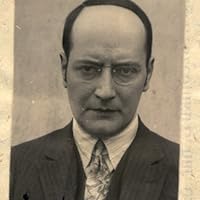
Born in Bourg-Argental, Loire, Guyotat wrote his first novel, Sur un cheval, in 1960. He was called to Algeria in the same year. In 1962 he was found guilty of desertion and publishing forbidden material. After three months in jail he was transferred to a disciplinary centre. Back in Paris, he got involved in journalism, writing first for France Observateur, then for Nouvel Observateur. In 1964, Guyotat published his second novel Ashby.
In 1967, he published Tombeau pour cinq cent mille soldats (later released in English as Tomb for 500,000 Soldiers). Based on Guyotat's ordeal as a soldier in the Algerian War, the book earned a cult reputation and became the subject of various controversies, mostly because of its omnipresent sexual obsessions and homoeroticism.
In 1968, Guyotat became a member of the French Communist Party, which he left in 1971.
Eden, Eden, Eden came out in 1970 with a preface by Michel Leiris, Roland Barthes and Philippe Sollers (Michel Foucault's text was received late and therefore didn't appear as a preface). This book was banned from being publicized or sold to under-18s. A petition of international support was signed (notably by Pier Paolo Pasolini, Jean-Paul Sartre, Pierre Boulez, Joseph Beuys, Pierre Dac, Jean Genet, Simone de Beauvoir, Joseph Kessel, Maurice Blanchot, Max Ernst, Italo Calvino, Jacques Monod, and Nathalie Sarraute). François Mitterrand, and Georges Pompidou tried to get the ban lifted but failed. Claude Simon (who won the Nobel Prize in 1985) resigned from the jury of the Prix Médicis after the prize wasn't awarded to Eden, Eden, Eden.
Recommended for: the unoffendable reader in search of artistic avant-garde narrative streams of unpalatable filth that stabs at your sense of decency.
This extremely pornographic, epic narrative is not only utterly and completely unpalatable, it is artistically inspired and enthralling. It truly IS for that unoffendable lot who will reach into the bonfire to save Love’s precious art, and Life’s freedom of expression. Many would not brave the fire for this one.
[Excerpts taken from Preface by Roland Barthes]
Eden, Eden, Eden is a free text: free of all subjects, of all objects, of all symbols, written in space (the abyss or blind-spot) where the traditional constituents of discourse … would be superfluous.
It is hard to breathe when reading this book. There are no hard stops. There are no periods. There are only spaces, pauses that seem to genuflect to the next sequence of thoughts. There is no space between the spaces in between. Only stale air, and stagnant streams. It’s exhilarating, nauseating, and unpalatably vulgar.
Guyotat’s language must be “entered”, not by believing it, becoming party to an illusion, participating in fantasy, but by writing the language with him in his place, signing it along with him.
Truth: Guyotat’s language MUST be entered, rough, terrifyingly unflinching, without palliative relief or lucidity.
[H]e views the act of writing as a physical secretion, a feral expectoration of deadly poisons which are remorselessly savage and interrogative in their visceral impact upon the reader.
He writes as if masturbating his mind, on and on with wanton attention to every stroke, every hitch, every catch in breath. He pounds you into conscious unconsciousness, exhausting you with ceaseless, savage assaults to your psyche.
[N]o Story and no Sin (surely the same thing), we are left simply with language and lust, not the former expressing the latter, but the two bound together in a reciprocal metonymy, indissoluble.”
There is no clean space here. There is only an absolute and filthy whole of a story. There is no separation of perversion and life; it is one in the same. Each word is a perversion. Each space filled with rancorous, fetid, filth. There are no characters, only objects of action and reaction.
As all art should, Eden Eden Eden exists without reason or apology. It is fiction at its most ferocious. It is pornography in its most naked, powerful, raw state. There is NO DOUBT that it IS art. This book sits acutely on the edge of nothing. It waits. It invades you. It LIVES without breathing, only slightly beneath the bloody, rancid pool of sleepless dreams. It simply IS, without question or answer. ART.
I read this book as part of a class, otherwise I would have put it down within a few seconds of picking it up.
This book can cause permanent damage to the psyche. I wish there were a rating for revulsion.
To be fair, that might have been the intent of this work-- to create a headspace that somehow begins to encompass the intense horror of war. Unfortunately, it is my opinion that the author meant to go beyond that into territory which obliterates the boundary of conscience. (Not consciousness, CONSCIENCE)-- ie, the visceral sense that something is revolting for the specific reason that it is inhumane.
Many people would argue that this is the very thing that makes this book successful-- that it reduces highly emotional content, through a constant, punctuationless assault on the senses, to the point of non-meaning. (The same way that if you repeat a word over and over and over to yourself, it begins to lose meaning.) These people would argue, that from a purely language-based perspective, great leaps of revelation are accomplished when an author can reveal language for what it is-- words and nothing more than words.
But that kind of argument fails to address the communicative and empathetic regions of writing. Words are not merely theory-- to reduce writing to that single aspect makes about as much sense as reducing the whole human being to a biochemical machine, or to say that a painting is simply dabs of color on a canvas. The effect is always at least one purpose of a work of art, and the effect of this book was highly traumatic and distressing to me. I am already numbed enough to violence by living in the contemporary world.
As for the idea presented to me in the class I read this book for, that the relentlessness of the disgust this book generates eventually leads to a kind of transcendence into beauty-- I never got there, nor do I want to.
I'm only giving this four instead of five stars because something this radically experimental undoubtedly works better in its native language. Despite that, it's still an intense, non-stop kaleidoscope of disgust, horror, and beauty.
It's interesting to contrast this with Tomb for 500,000 Soldiers. That book is one of the most disturbing things I've ever read. Maybe it's the more abstract language, but this one didn't make me nearly as horrified. It seems like there's a kind of joyfulness, and even sense of humor, in the obscenity in this one.
Sadly, this is out of print and used copies are rare, but I managed to get a copy easily through my library's interlibrary loan system.
Definitely one of the hardest books I've ever read, not even because of the its (highly graphic and explicit) content but because of its form and style. There is no complete sentence, only bursts of phrases that are shot out like bullets or the last few drops of a man's ejaculation. It cloys: for me, personally, the writing conveys less about the graphic nature and physicality of movement (sweat, flesh, semen, blood, tears, more sweat) but instead the festering, rotting stench that permeates throughout the text.
The intensity and density of the short, quick phrases demands the entirety of your attention, focus, and energy. There are no pronouns used, and prepositions are hardly used: each sentence-phrase is language at its most primal, as if the entire text is composed by nonsensical, yet nonetheless lurid, phrases that Guyotat blurts out at the moment of an overwhelming orgasm. (Considering his history with writing, I actually wouldn't be surprised if this is actually the case.)
Guyotat's writing is difficult to follow, or fall into, however, once you do, the book concurrently becomes much easier to read. I usually dislike writers that are so deliberately non-approachable and uncompromising, but Guyotat somehow pulls it off; that is to say, once you accept his world as the norm, and once you step into his frequency, attune to his wavelength, there is something oddly glorious and soothing in the intense, continuous stream of violence and debauchery. It is less so that you become desensitized to the endless scenes of bleakness, desolation, and (seemingly) aimless, mindless violence, and perverse pleasure derived from it, but more that you are too busy taking in the different sensations Guyotat presents to you to care.
It's a book that demands not only mental energy and focus but also a certain level of physicality. Reading Guyotat's highly detailed and profuse description about every atom vibrating in the ether, I found myself physically tense, afraid of being stricken, with my throat tight and closed, as if warding off the stench from the corpses and debris (imaginarily) around me. It's an uncomfortable book to read and it succeeds precisely because it is so viscerally uncomfortable to read.
In many ways, the extremity of the luridness of the language is perversely utopian, in spite of the desolate setting: there seems to be an absolute freedom, however nihilistic this form of freedom is, in pure sensation. (Which also reminds me of Burroughs' "The Wild Boys"). It overpowers you, whether you have asked for it or not: in your powerlessness and immobility in face of Guyotat's language, he implicitly allows you to simply accept. It does not matter where you are-an air-conditioned coffee shop, the subway, your own bedroom-you leave the reading experience feeling filthy, cloyed with nonexistent sweat and grime.
One of those books where the Goodreads rating system doesn't really work. I can't say that I liked this book, but it was interesting. One of the joys of reading a dirty book, at times, is that there's a certain feeling of joy at grotesquery. I feel this, too, watching a John Waters movie or a really gross comedian. This book has pretty much zero joy. There is lots of sex. So much so that it feels at times like you are being battered repeatedly by the sexual imagery, which comes repetitively, disgustingly, and, overall, sort of numbingly in almost every line of the text. There is also no story to make you want to follow the grossness to some end. There is an arc, for sure, from the soldiers raping people in the streets near the beginning, through an exhaustingly long orgy in an all-male brothel, to a couple copulating over and over again where their caravan has stopped. Sort of a worst-case scenario to best case scenario sort of movement, maybe? But even the two tireless lovers at the end go to really gross extremes, and there's a lot of side grossness that I will not even go into here (a. because I don't want to write about it, and b. because if you're going to read it, maybe you want to be surprised by the fresh filth foisted upon you), so whatever possible positivity falls to the wayside. The characters are really just pornographic props, and fill that purpose just fine. Also, while I like the writing style, it is challenging to work through, which is good except that when the material is so nauseating, it is hard to also be beaten down by the endless words. There was no way for me to remember what I had or had not read if I lost my place or put the book down for a moment. There are no sentences to speak of, and the words repeat themselves in a seemingly endless train. Also, who says "sexual cluster"? Is that some weird French thing?
Which is odd for a three star review, but here's the thing: Guyotat is an Artist, and yes I include the capitalization as a nod to all the pretension and mania and pinpointed clarity of myopic vision that entails.
I did not enjoy this book. I'm pretty sure I wasn't supposed to, as it's one long stream of prostitution, humiliation, degradation, rape, intermingled with descriptions of war atrocities in a civil-war-torn Algeria. But, I didn't even enjoy not enjoying it. I can see what he's doing - mostly - and I feel he is successful in his execution, but, again, I really wouldn't recommend it.
I often find this type of writing a tacky gimmick, so despite high praises by Foucault, Barthes, etc., I was still skeptical. However, I find Guyotat's stream-of-consciousness wordplay horrifying and grotesque. Taken out of context, the book could describe a mass orgy among all of society, but placed within the Algerian War, it becomes a disgusting tale of debauchery and force. There is no pleasure in this book; the acts within snuff life out of the characters, bringing the brutality of war to life in an unparalleled manner.
The reader gasps for breath, but there is no air to be found.
Brace yourself: the model for the sex scenes in Almost Transparent Blue. "The writer Philippe Sollers said that nothing had been done that risked so much since the novels of the Marquis de Sade. Pierre Guyotat has relentlessly beaten the comatose, catatonic nature of language into an anatomical matter of writing. Pierre Guyotat is the most original writer alive, and this is his most livid atrocious book. It will derange you and it will scar you." Check. Kind of like Burroughs, without recording technologies.
El Marqués de Sade ambientando una novela en la Argelia colonial. Excesiva, en el sentido más amplio de la palabra. Escrita con un ritmo frenético que afecta a la lectura, es un libro apabullante, lo que obliga a tener que dejar reposar el libro con bastante regularidad, sin embargo, engancha, paradójico y sorprendente. Valiente y excelente edición por parte de Malas Tierras y magnifica traducción de Rubén Martínez Giráldez que además aporta un interesante epílogo.
Novela, o más bien antinovela, que presenta un flujo verborreico que no se detiene en ningún punto (literalmente, no hay puntos). El texto está unido principalmente por comas y puntos y comas, y lo único que separa algunas escenas son unas barras diagonales (/), pero esto es algo excepcional.
Heredero de Sade y bajo una libertad absoluta, Guyotat escribe sobre el sexo sin regirse por ninguna ley: ni moral, ni biológica, ni física, ni anatómica ni de convenciones literarias. La obra deja de lado el significado y se centra en el signifcante, en el lenguaje. Aquí no hay personajes, ni trama, ni tiempo, ni nada de eso. Solo un lenguaje ensimismado que se obceca en representar escenas sexuales de lo mas depravadas y repulsivas.
En una primera instancia, la premisa me pareció bastante prometedora (supongo que tengo intereses un poco raros) y en las primeras páginas me tenia bastante metido. Escena sexual asquerosa / tras escena sexual asquerosa / tras escena sexual asquerosa. No hay nada entre medias ni ningún momento de descanso. El autor alcanza un estado de exceso donde no deja de correr la sangre, el semen y la mierda. Pero, según avanzaba la novela, la novedad iba perdiendo su fuerza y el libro no tardó en volverse especialmente tedioso.
Antes que nada, no se le puede negar a Guyotat ni su originalidad ni su capacidad estética. Hay escenas que son extrañamente horripilantes y que consiguen que, aun dentro de toda esta monotonía depravada, resalten. Pero si que creo que, aun con toda esa creatividad, es imposible mantener el listón en sus casi 270 páginas. El libro no tarda en convertirse en una espiral de las mismas escenas. El autor tiene sus tres ingredientes principales: sangre, semen y mierda. Y las escenas cambian según cuanto se le antoja verter de cada uno. Y cuando le da por ponerse más travieso, mete una pizca de zoofilia o un bebé de por medio.
Supongo que a estas alturas debo tener fundidos los escandalizadores (o así es como los llama el traductor en su epílogo), porque el libro no solo no me ha escandalizado, sino que me ha llegado a aburrir. A lo largo de la novela, perdí la cuenta de cuantas costras de semen y mierda arrancan de la piel de los prostitutos, cuantas veces succionan las «bolas excretoras», se tiran pedos en pleno acto y se comen culos que rezuman excremento. Cuando fui perdiendo las ganas de seguir leyendo, decidí cambiar el ángulo de mi lectura. No leerlo como narrativa, si no como poesía (que me parece mucho más acertado), pero ni con esas conseguí reconectar.
Este plano del lenguaje sexual escindido de la realidad es resultón, pero no creo que de para alargarlo tanto. Supongo que el autor queria llevar este exceso sexual al exceso verborreico, pero a mí me ha perdido por el camino. Te lees las primeras cuarenta páginas y ya has sacado todo el jugo al libro. Lo demás es reiterativo.
He visto que algunas críticas dicen que el libro tiene un tipo único de belleza, pero a mi eso me parece un término impreciso. Las escenas están troceadas y son bastante planas. Sí, es cierto que tiene una notable capacidad estética, que impacta y que conmueve a su manera, pero no me parece que eso lo haga justamente bello.
Ni me parece un mal libro, ni me parece un buen libro. Es una cosa muy rara, muy suya. Me hubiera funcionado mejor más corto.
I never want to fucking read this book again. Fuck you Guyotat. At some point surely the reader has to come to the realisation that all the disgusting sex isn't just for provocation but was probably something Guyotat was into? There is no need for lovingly including so much farting if it's just a provocation thing.
Anyways I'm fucking done with this bullshit. I'm glad I read it, the writing style is breathtaking and all so it's not a one star.
P.S. there are 276 pages to this book and not once is the word "is" used in any form
un roman totalement déplaisant qui n'en est pas moins une victoire esthétique complète. un véritable roman impressionniste, dans la mesure où il traite clairement de l'impression comme d'une sensation associative et situationniste, brouillant toujours ce qui est ressenti, observé et pensé. en plus, c'est un livre méchant !
No rating; a book beyond liking or disliking; an experience, a skewed compass point. I doubt Guyotat hoped people liked his book but if you're an adventurous reader read it to see what it is: all hell's sins sentenced to writhe on the head of a pin.
exhausting to read, pure brutality and the writing style fits it perfectly: a horrific slog through the depths of the evil capable in humanity. no doubt inspired my own writing when i was going through psychological misery
This deranged textual diarrhea is definitely not for the faint of heart. If you ask me what happens in this atrocity of a 'novel', I honestly wouldn't know what to tell you. On second thought, maybe 'textual diarrhea' is an apt description for the kind of writing Guyotat is attempting here. Like a diarrhea, it's purgative, 'somewhere' in the territory of disgust and waste, purgative, a thing that definitely 'happens' to you that takes temporality and your own ego out of the picture completely (i.e. at some point you're just clutching the porcelain throne and hoping for the best) and above all, strangely liberating. What about the style? What I picked up on is that in comparison to much of Sade's stuff (to draw but the most obvious parallel) the sequence of sexual acts and sexually charged performances depicted in this novel are not ritual-pornographic at all. If anything, I'd say they're clinical in nature (mainly in part due to its frequent employment of 'micro' descriptions). These encounters, though degrading and gross, also seem strangely devoid of compulsion or malicious intent. Not to be missed either is the droning meditative tone that pervades throughout the entirety of the text and the parable-like nature of the setting (the desert, characters occupying functional-roles, signs of direct dominion and visible compulsion, recurring descriptions etc.,). In fact, it all reminds me of Aleksei German's Hard to be a God! (Whatever you do, definitely don't recommend this novel equivalent of a gratuitous arthouse film to your nephew or niece, however forward-thinking you assume they are) If language were a living organism and were one to torture it, these are the noises it would produce.
"Ante Edén, Edén, Edén de Pierre Guyotat nos encontramos ante un artefacto literario difícilmente definible ya que, como apunta Roland Barthes en uno de los tres prólogos del libro, éste es un texto «libre de todo sujeto, de todo objeto, de todo símbolo». Toda clasificación, adjetivación o tentativa de calificación se convierte en un mero rodeo que no hace sino demorar el momento de enfrentarse a esta obra absolutamente salvaje, cruda y utópica.
En Edén, Edén, Edén, Guyotat hace descender al lector a un territorio repulsivo, crudo, sórdido y, ante todo, inmundo. El Edén que recrea el autor en este libro no es cielo ni infierno, ni siquiera es una búsqueda de ese estado originario aunque todo lo que emerge en las diferentes escenas (personas, animales, fluidos, naturaleza o materia inerte) parece tender hacia una pre-historia. No, el Edén de este libro es un reino «de este mundo» en el que los instintos se encuentran en un más allá del principio de placer y la transgresión no es, como en el Edén bíblico, motivo de expulsión sino que aquí todas las acciones se sitúan en otro más allá, el del bien y del mal.
Con la publicación de Edén, Edén, Edén, la editorial Malas Tierras se consagra como una de las editoriales imprescindibles en castellano ofreciéndonos, con un trabajo de traducción y epílogo soberbios a cargo de Rubén Martín Giráldez, la edición de esta obra (tan controvertida como celebrada en su momento de aparición) de la que este 2020 se celebra su cincuenta aniversario." Sergi Álvarez
Not for the faint of heart, would recommend to those who need a next level up on from the likes of Story of the Eye.
I enjoyed and found literary merit in the novel, however it is very gruelling to trudge through. I would argue for the value of this work, and for the worth of thematic indulgence of violent sexualization— that being said, it is still difficult to continue through a singular run on sentence detailing violent sexual acts. The blocks of text across every page are mostly pornographic, offering extremely minimal dialogue and offering little entrance to the environment.
Not to be read with expectation of answers— to be indulged as a sensory experience, allowing yourself to enter the endless rolling of events.
Sade's repetition has such great wit to it, and somehow serves to strengthen the transgression. In contrast, as excited as I was to read the Guyotat (which is so rare that copies fetch up to $25o now), Eden Eden Eden's endless repetition is a bit deadening. There is a sameness to each page that is, alas, more boring than thrilling. But still it's worth reading to sample his aggressive style.
Amos exigentes, excelencias del sado Cadáveres podridos recién exhumados Vaginas que ubican tres pollas de golpe Rectos lubricados con aceite KOIPE
(Teleperversión A Domicilio, El Chivi)
Este es el primer libro que tengo que reseñar desde 2 perspectivas diferentes.
1, la de lector normal ---> como todo hijo de vecino, tres cuartas partes del tiempo de lectura en mi día a día se dan en trayectos de casa al trabajo o viceversa. Y vive Dios que, a las 8 de la mañana, en la línea 1, con este libro deseaba ser ese pasajero de enfrente mía que iba tan feliz con un Vicente Vallés o esa otra muchacha que sostenía el último libro de la autora desequilibrada que atiende al nombre de Irene Solá. Esto es lo más árido que te puedes meter a primera hora camino del curro, y peor aún si hablamos de la vuelta tras haber peleado por la consecución de un asiento. Juro por lo más sagrado que me arrepentía una y otra vez de haber elegido de la pila de "libros pendientes" este libro por encima del de Paesa por pesar la tercera parte y ser mejor para mi hernia de disco. Hasta sopesé tirar de la versión audiolibro de no ser por anticipar que eso sería como tener a Jose Ángel de la Casa narrando un vídeo recopilatorio de Pornhub.
2, la de lector flipao ---> aquí ya cambia la cosa, canelita esto: me lo regaló mi pana el Diego (una vez más, ¡gracias!), con quien hace ni se sabe cuántos años discutía que en la literatura era imposible aproximarse al Elephant del sublime cineasta Alan Clarke. Esto es: diluir el significado de una acción concreta y autónoma a base de repetir continuamente variaciones leves de esa misma acción, tomada a modo de unidad (o significante mínimo) sobre la que se despliega un artefacto basado en la repetición despojadora de todo significado. Pues, sin ser exactamente lo mismo (mayormente, por las diferencias de la semántica entre lenguaje literario y audiovisual), sí que me he topado con lo que creía imposible. No sólo eso: es increíble que Guyotat construya una obra ¿antinarrativa? durante casi 300 páginas de narración pura que anulan toda moral y toda repulsión que cupiese esperar si se coge un extracto del libro aislado del contexto general que es. Genera una especie de limbo alucinante donde el tiempo deja de existir, parece una dimensión constituida por humores y secreciones corporales en la que las tremperas son inmediatas e infinitas y el semen, el sudor, las heces y demás jugos corporales tienen barra libre perpetua. Me ha recordado muchísimo al Robbé Grillett de las pelis que anulan la física, y la verdad es que, en esa especie de deja vu en bucle que es, me dicen que este libro es de Robbé Grillett (también era un poco guarreras, si bien más onda BDSM) y me lo creo. No sé, es que es como mezclar el disco aquel de drones con cantos tántricos de La Monte Young con la Elfriede Jelinek que escribía y puntuaba pasándose por el papo todas las convenciones narrativas y ortográficas que existían. 10/10 desde este lado y contentísimo de haber sido obsequiado con algo así de único.
PD: para los amigos del bestialismo que acudan a Edén Edén Edén sólo por cuando hay temita con las cabras, id directamente a la página 251. De nada.