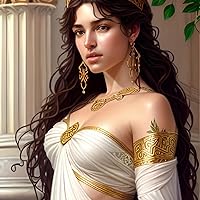
With the death of Lucifer, Queen Lucinda assumes control of Hell, ordering her soldiers to prepare for a doomsday war with Heaven. Craving eternal power, she devours the souls of gifted demonic beings, acquiring their abilities to destroy her perceived political enemies.
Meanwhile, the Black Crows meet with the Knights of Darkness in their hidden headquarters, plotting against Lucinda in their efforts to maintain peace and the balance of power. Consumed by hatred over Crighton Daemonium's unrequited love, Lucinda is unaware of the secret conspiracy brewing, or that Lucifer's spirit has returned to Hell inside the body of a soul–trapped demon.
Reclaiming his throne, Lucifer punishes his daughter for her act of treason. However, his obsession with Samara, Crighton's beautiful daughter, leaves him incapable of controlling his stolen body. After forcing her into submission, he names Samara the new Queen of Hell yet continues his authoritarian rule. When an insurgency breaks out on Earth, he becomes distracted long enough for her to be kidnapped by Nexus rebel forces, believing her to be the prophesied savior of their planet.
Is Samara the Phoenix, destined to destroy Lucifer? Or is she his soulmate and the true Queen of Hell?
Kaylin McFarren has received more than 70 national literary awards, in addition to a prestigious RWA Golden Heart Award nomination for FLAHERTY'S CROSSING - a book she and her oldest daughter, New York Times/USA Today best-selling author Kristina McMorris, co-wrote in 2008. Prior to embarking on her writing journey and developing the popular THREADS psychological thriller series, she poured her passion for creativity into her work as the director of a fine art gallery in the Pearl District in Portland, Oregon; she also served as a governor-appointed member of the Oregon Arts Commission.
When she’s not traveling or spoiling her two pups and three grandsons, she enjoys giving back to her community through participation and support of various charitable, medical and educational organizations in the Pacific Northwest. Her award-winning time-travel adventure, HIGH FLYING, asks challenging questions that will linger long after the final twists are revealed. Jumping to the supernatural-horror genre, Kaylin's clever GEHENNA series takes readers into the pit of Hell, through the mechanisms of secret societies, and across the Earth’s crust, ever raising the stakes for this soulmate duo—a roguish, Nephilim creature and beautiful guardian angel presented with mind-boggling challenges.
With each story she writes, this author delivers unexpected twists and turns and keeps her readers on the edge of their seats, leaving them guessing and thoroughly entertained.
FUN TIDBITS
Kaylin is proud of the fact that her great aunt Bessie B. Cordell, an evangelistic missionary during WWII, was instrumental in opening an orphanage in Tientsin, China and also wrote two published novels, Precious Pearl and Blossoms of the Flowery Kingdom, documenting her dangerous, harrowing experiences.
She keeps a glass of wine close by while writing love scenes, Kleenex on her desk while writing heart breakers, and has been known to empty a box of chocolates when she's completely stumped.
A consummate "pantser" and perfectionist, she writes and edits as she goes, and uses photographs of models and actors from tabloid magazines to visualize her characters.
She loves her husband of 48 years dearly, however, if Josh Holloway, Hugh Jackman or Ian Somerhalder came knockin', well... their marriage just might be put to the test.
Annihilation is the second in the Gehenna series, following the stand-out novel Soul-Seeker by Kaylin McFarren. The dark and gritty novels starts with Queen Lucinda beginning her reign of Hell, after the perceived death of her father, Lucifer. However, Lucifer is not out of the way completely and returns to reclaim Hell. Tangled up in the drama is half angel/half demon Samara Daemonium, who may be destined to destroy Lucifer or rule by his side.
I loved the dark fantasy world McFarren skillfully created with the Gehenna series. The complex plot and intriguing but very distinct characters kept me engaged for the length of this sequel. Included within these pages is plenty of deceit, betrayal, desire and maybe even love? While primarily a dark fantasy, there is also a strong romance plot with steamier scenes.
I definitely recommend this series as a whole, and especially Annihilation. Once I really got started, I couldn't put the book down as McFarren's writing and imaginative plot kept me hooked!
The second entry in the ongoing ‘Gehenna’ series, Kaylin McFarren’s ‘Annihilation’ is an irrepressibly confident slice of genre fiction that offers readers a healthy dose of the strange, steamy, and supernatural.
‘Annihilation’ opens in the depths of hell, where Queen Lucinda is doing everything she can to bolster following her father’s (yep, her father is Lucifer) death and the power-vacuum it created. Enter Samara Daemonium, an angel/demon hybrid and daughter of one Crighton Daemonium (a former employee of Lucifer). Unfortunately for Samara, Lucinda’s plans for world domination involve her family. Unfortunately for Lucinda, Lucifer finds his way back to hell and he has every intention of returning to his throne. Unfortunately for Lucifer, he can’t keep his eyes off Samara. What follows is a plot-heavy tale teeming with loads of desire and deceit.
While technically a sequel, I can personally attest to the readability of ‘Annihilation’—a testament to McFarren’s skill. With more than sixty awards to her name, McFarren clearly knows how to write, but her ability to employ a large ensemble cast in a way that never seems to shortchange the story is downright impressive. Throughout the story, McFarren dangles a number of loose threads—so many that I feared a disappointing ‘cliffhanger’ was all but inevitable. My fears, however, were unwarranted, as it all eventually comes together in a way that both satisfies and sets the table for a follow-up.
As for the ‘romance’ component of this title: obviously, mileage will vary when it comes to ‘sex’ scenes, but they often felt like unnecessary detours. Still, the steamy sections fall (for the most part) on the ‘softcore’ end of the spectrum, and never felt gratuitous. In fact, I’d argue that McFarren nails the ‘mix’ so well this title could justifiably be billed as both dark-fantasy and fantasy-romance. And don’t let the page-count scare you away—‘Annihilation’ is more of a ‘page-turner’ than most novels half its length.
I’d be tempted to toss out the ‘guilty pleasure’ label, but with writing this good, there’s nothing to feel guilty about. Come for the steamy underworld-themed romance, stay for the smart plotting, nuanced characters, and an action-packed third act showdown!
With a large cast of characters from the corrupted innocent to the twisted malevolent, there is certainly someone every type of reader will find a connection with. Schemes and plans will keep you guessing, waiting on tenterhooks as nefarious plans unfold and treachery, betrayal, and manipulation run rampant. It's a combination of horror, supernatural, and romance where the forces of Hell prepare to make their move.
Annihilation by Kaylin McFarren is a story that explores the age-old issues surrounding light and dark or good versus evil, the balance between the two, and the blurred edges between distinguishing them. Following the central family of Ariel, once an angel now trapped in a demon’s body, her husband Crighton, a half-angel half-demon, and their children living between Heaven and Hell. As both realms are on the brink of the ‘Red War,’ it becomes clear that their family, especially their children, are going to be vital in the outcome, and Lucinda, the Queen of Hell, is not going to take any chances.
This novel is scattered with references to well-known myths, legends, and fables such as the ‘eternal fire from hell,’ angels, demons, and werewolves. These are all prominent symbols of the battle between good and evil, and they assist the reader in understanding some of the stories. However, throughout the story, things are not always so clear, which enables people to think more about their perception of where the line between the two would be.
McFarren has done an excellent job of telling the story from various perspectives through short chapters dedicated to specific characters’ points of view. It is easy to follow, ad each storyline overlaps. Imagery is another element that has been successfully used, for example, ‘belied by the unshed tears glistening in her eyes or ‘sheets of bubbling flesh.’ These are powerful images that allow you to see the story as you are reading it.
McFarren is imaginative and explores themes such as the power of women and how everyone is constantly battling internally with good versus evil. From the wonderful use of dialect to the flow of the story itself, this was an excellent read, one I would read again and recommend to others.
Annihilation is a gripping paranormal fantasy novel that explores good vs. evil and shows that things are not always split down the middle. Readers of occult horror will find this book thrilling and different from your usual dark fantasy novels.
Overall I found this to be a very interesting and addictive read. I did have some concerns when I first noted the length of the book that perhaps it was going to suffer from a lot of filler or fluff, but my fears were quickly displaced. Instead, there’s a large cast of characters presented throughout the book that more than merit the respective word counts they receive, and so whilst lengthy, the book never feels like a chore.
Whilst this book is a sequel, I can attest from personal experience that you don’t have to have read the first book in the series, in order to enjoy this one. The author skilfully presents all of the characters in such a way that you quickly get a feel for their motives and experiences, without having ‘witnessed’ them yourself in the first outing.
Overall a great book that I wouldn’t hesitate in recommending.
The writing and narrative was very interesting! I wanted to keep reading to see what came next as the fate of the characters was never set in stone and things could - and sometimes, did - change at a moment's notice. There was something interesting and fun about how there was an obvious fight between Heaven and Hell, but also inner troubles among both groups, although our characters focus on the factions within Hell. The addition of other occult and supernatural elements was a bit surprising at times, especially in the last few chapters of the book, but it made me want to know more about this world and how demons and angels existed alongside other deities and beings.
I also liked the way the POV changes were done. They didn't work to give the reader an omniscient POV of all the narrative details, especially within the second half of the book. I thought this worked out very well because it built up a particular atmosphere in the second half of the book that really came together into a final climax in the last chapter. (If this sounds vague, sorry! I'm trying to avoid spoilers.) It felt unique as most narratives that trade off POVs usually do so in a way that the reader has a bigger picture available than the characters to create tension in the reader and show what traps the characters are falling in.
Despite what I liked of the book, I gave it 4 stars because I wasn't expecting such graphic scenes in it. I did take note of the dark romance in the description of the book, but it was unpleasant to be unprepared for graphic sexual assault to be written out. Frankly, having a sex scene in chapter had me thrown off and surprised as it happened so early on. There were also errors scattered throughout the novel, like it needed just one more round of edits. It wasn't terrible, but that in conjunction with the graphic depictions of rape made it lose a star.
If you are alright with dark romance, reading graphic scenes of sexual assault and torture, and enjoy occult fiction, I think you will enjoy this book quite a bit. Even though I am not a big fan of dark romance and there were a lot of dark romantic elements, I had to read to the end to see what happened next, which shows just how compelling the story was.
“Annihilation” is the second book in the Gehenna series by Kaylin McFarren, following “Soul Seeker.”
The dark fantasy begins after Lucinda believes that she has destroyed her father, Lucifer. Reigning over Hell, Lucinda is set on a path of destruction. A demon and an angel in a demon’s body return to this story. Their daughter Samara is believed to be prophesized to be the entity that will destroy Lucifer. Lucifer has other plans for her. Having returned in the body of a man that Samara loved, he tries to use his wiles and brute force to make her his queen. Meanwhile, Samara is discovering who she is and what she is capable. Journeying between Middle Earth, Hell, and Earth Samara is off on a dangerous adventure.
I loved “Annihilation!” This fantasy is dark and delicious! The plot is complex and has a lot of twists and turns that kept me off balance. I hated when I had to put it down because I wanted to know what was going to happen next. The characters are well developed, even the despicable ones. Their eccentricities as other worldly creatures add to the fun. The settings are incredibly well described. McFarren successfully plants these places in our brains, so that we feel like we are actually seeing them brought to life, rather than just creating pictures with words. She creatively incorporates all sorts of other worldly beings so that it is not just angels, humans and demons, but also other creatures such as a phoenix, werewolf, shapeshifter, and even Cambions who are half human-half demons. They all have their special gifts to use in the battle between good and evil, they just need to know on which side they are fighting.
Subplots add to the richness of the story. Conflicts are common and seeing them dealt with in supernatural ways takes everything to a whole new level of dark fun. I look forward to seeing what happens in the next book in this series. The main protagonist in this story is 17 to 18 years old, but the violence and sexual scenes make me think that this is a fantasy best suited for adults. Readers who enjoy fantasies and horror novels won’t want to miss reading “Annihilation.”
THE WISHING SHELF BOOK AWARDS 14th January 2022 TITLE: Annihilation AUTHOR: Kaylin McFarren Star Rating: 4
To Sum Up ‘A cleverly plotted supernatural thriller populated with a host of gritty and complex characters. Highly recommended!” The Wishing Shelf
Review I find the best part of a supernatural novel is often the characters. And this is very much the case in Annihilation, the sequel to Kaylin McFarren's Soul Seeker. In this compelling story of power struggle, betrayal and even love, the characters, particularly Queen Lucinda, jump off the page. It’s all very gritty, very dark, and wonderfully fun as they fight for the control of hell. So, what’s the plot? Well, in a nutshell, Lucifer is now out of the way and Lucinda is the new queen of hell. But, when Lucifer returns and with a war brewing, who knows who’ll be sitting on hell’s throne next! What follows is a twisting plot, a host of memorable (and not in a Mary Poppins sort of way) characters, and a powerful ending. From the opening – and very powerfully written – Beware the Devil poem, this is a compelling narrative. The plot is cleverly constructed, the setting is splendidly described, and the pacing is, for the most part, spot on. In terms of writing style, the author's very talented. She works well with speech, and she knows when to keep a sentence short; this is not an author who's fallen into the trap of purple prose. I am very happy to recommend this book (and the first book, Soul Seeker) to readers who enjoy dark, gritty novels. The plot is complex – but not overly so – and the characters, although not the sort you’d want to meet in a dark alley, are spine-chillingly bad. I’ll finish with the last verse of the poem at the beginning of the book as, I feel, it sums up the ‘nature’ of the story perfectly. So, latch windows, lock doors, turn on every light, Horned demons are coming in the dark of night. Beware of the shadows in long corridors, Satan consumes souls and is coming for yours.
McFarren injects humanity into the art of supernatural storytelling, and the result is an exhilarating and thoroughly Shakespearean thriller.
High school drama rules Samara Daemonium’s life. Rumor has it that her ex-boyfriend, Legend, broke up with her because she wouldn’t sleep with him. Stunning Samara has plenty of other options, but the sight of Legend with his new girl is eating her up inside. Nosy high school counselor Lestat Gorgon – one of the book’s most delicious characters – suggests dating someone else to make Legend jealous: “You will have that weasel begging on his knees to have you back.”
There are any number of reasons why a high school guidance counselor might care about restoring a student’s reputation. In this case, Samara is the daughter of Crighton Daemonium, the Soul Seeker whom many refer to as “Your Majesty.” Whether she likes it or not, the young royal is about to become an essential player in an epic game of power.
Annihilation, the sequel to Kaylin McFarren’s award-winning Soul Seeker, is a decidedly Shakespearean thriller. Amidst the supernatural world, the novel is essentially a classic story about love, betrayal and power between and among royal families. Ruler of Hell Queen Lucinda orders her soldiers to prepare for a doomsday war with Heaven. A key strategy in her plan is devouring the souls of gifted demonic beings so she can claim and use their abilities, but conspiracies within her ranks pose a serious threat.
Meanwhile, Samara may be a normal teenager at heart, but she’s about to be thrust into a supernatural castle coup of epic scale. Her first taste of what’s to come begins when she agrees to meet Legend at a secluded cabin to talk things out. After being forced to hide during an attack, she emerges to find the cabin littered in blood-strewn bodies. McFarren’s blatantly “human” portrayal of her youthful obsessions in the early going set her up to be both victim, royal and a star in a wholly compelling coming-of-age story.
Annihilation is an occult horror and dark fantasy by Kaylin McFarren. It tells the story of Lucifer as the most wicked, abominable creature that ever existed, and her daughter, Lucinda who is far worse. Then, there’s Crighton and Ariel’s daughter, Samara. She possesses more power than any other creature. Is Samara the true Queen of Hell and Lucifer’s soulmate? Or is she the guardian Phoenix bound to destroy Lucifer to save the planet?
Review
Okay, first of all, the title says it all! This book is all about destruction! Except, this one’s the type that’s very enticing to read because aside from Lucifer, Lucinda, and Samara, there are powerful demons with abilities to teleport, heal, be invisible, cast illusions, and a lot more.
There are lots of unforgettable parts in the book, but I think the ones that stuck to me the most were Lucinda and Caleb’s conversations, and that moment when Crighton found his daughter Samara’s sketch of Spiderman. The writing underneath her sketch broke my heart into pieces.
I love Crighton’s character development in this story, and I think the portrayal of both protagonists and villains were the most intriguing out of all the elements in this book. Each character’s persona was perfectly depicted through their gestures, the way they think, and the way they spoke.
Overall, I’m giving this book 5 out of 5 stars. That ending left me dumbstruck! It was one heck of a twist! And in response to the author’s ending statement: In reality, I think it is frightening to believe that a demonic community resides in some weird twelfth-dimension universe. In the world of fiction, however, it’s a very entertaining concept, which is why I enjoyed this book, and I’m sure mature readers who love dark fantasy will enjoy it, too.
Warning: This book contains violence, sex, and foul language.
Absolutely Phenomenal Tale of Good, Evil, and the In-between
Annihilation is a totally new and creative take on the conflict of good and evil. Set in a three layered world (hell, middle-earth, and heaven) this story brings the reader through the fires of hell and the struggles of earth. Told through the perspective of a young half breed, Samarna, the story asks the reader what is good and what is evil? From the struggles between her demon father Creighton and her angel mother Ariel to the battle between Lucifer and his daughter, the book shows how events in life change us. Ariel struggles to trust her demonic husband, all while her husband struggles to overcome his own inner demons (literally). Meanwhile, Samarna struggles to determine who she can trust? Another aspect I loved about this book was how it toys with perception. Of course we assume we should be disgusted by the bices of the spawns of evil in hell. But, part of us can't help but empathize with these creatures of excess. We admire the beauty of Ariel, but we also marvel at the courage of Creighton. We see in him that glimmer of beauty as well. We all see ourselves in each of these creatures. We all have excesses and vices we struggle with, but we also have that beautiful light that shines of the angels. All in all, we are very much in the middle. Which is why, I guess, humans are said to reside in the realm between heaven and hell: middle-earth. I can't recommend this book enough! Whether you are religious or not, you will resonate with these creatures in a manner you never thought possible. I would recommend it primarily for older audiences due to the somewhat graphic and semi-descriptive sexual content. But, it all serves an important part of the story. After all, what's a demon without their vices?
Ok, this book was one hell of a ride and in the most positive way, I can imagine. No review is gonna do justice to this masterpiece and it is very difficult to write something about the book without spilling the water here and there but I will try my best to not include any spoilers.
First and first, let us discuss the genres; if it wasn't clear already, this book shouts fantasy and fiction. Let me also remark that this is one of the best fiction books I've ever read. Apart from that, there is romance, which plays an important role in the story's main topic. The plot is captivating and well-paced. It has a coming-of-age feel to it, as well as an individual's ambition to conquer and appetite for destruction.
Plot-wise, it's perfect. Of all the books I have read till now, it had one of the best plots and character development. The plot is never slow and each page of the book compels you to read the next. Even when the plot slows itself a little, it makes the story more intriguing and honestly, more relatable. The setting could've been emphasized a little more and when you will read the story more than one time, you will realize the same. It is because the books focus more on characters and their relationships and relatively less on the setting if you know what I mean. Although this critique is of little to no significance since people generally do not read a book twice.
Now it is time to talk about the characters. I cannot be more impressed by how well the characters were. Each character had a distinct and recognizable personality. To some, you can even relate to. Their interactions were very well paced and very well placed. There was no stuffing of extra unnecessary dialogues, everything was just the chef's kiss.
Many people appreciate the book's ending, and while it is excellent, my favorite part was the middle section, where so many things were occurring at once, so many new things were presented, and actual plot development was taking place.
To be honest, I don't have much to say about this book. This book was more of an experience than a book, and one does not criticize an experience; rather, one learns from it. I couldn't have asked for more as a book lover and reader. I want to express my gratitude to the author for all of his hard work.
Without a doubt, I encourage everyone to buy this book and check out the first book in the series too, it is also a very good read.
Annihilation is the second book in Kaylin McFarren's Gehenna series. It follows several characters, mostly Samara Daemonium and her family. This book is mostly about Hell and an oncoming war. It's also about family dynamics, love, torture, and plenty of other things. It's kept interesting with events, but some of them are a bit too drawn out. This book mostly told me things rather than showed, which made for a boring read at some points. It felt like a lot of exposition.
Some of the characters felt bland and not all that unique. At some point a few of them just blended together and were easily forgettable. The love interests were all typical sexy men types that somehow know the right things to say despite being awful people in terms of actions. They didn't quite talk like the demons they were supposed to be, oftentimes claiming love when the book made it clear that demons cannot love. It was extremely bizarre to me why this book contained so much romance as a result.
As a warning to future readers, this book contains some very heavy topics. Personally, I did not think they were dealt with in a good way. I also felt like these heavy topics were mostly for shock factor rather than anything else, which made them feel cheap.
This book did well with family dynamics, I feel, as there was a good emphasis on that. Samara's mother and father were both given a good amount of time to be established. Some characters were given the spotlight so it wasn't just Samara all the time which I appreciated. I also had to take a moment of appreciate the twists and turns in this book because some were actually pretty intriguing and surprising.
Overall not bad, but there was too much telling and not enough showing, emphasis on events that didn't matter all that much to the overall plot, and not enough time for all the important characters to feel solid. It could have contained more character development, more focus on characters that are supposed to be important, and a better grasp on how to tackle heavy topics.
A supernatural thriller This book is a sequel to 'Gehenna', however, it is complete in itself. One can easily understand the plot without reading the first book. Annihilation is a story packed with supernatural fantasy, thrill, romance and action in good proportions. The story revolves around the doomsday war between hell and heaven and search for the Phoenix, the savior of the planet as per the prophecy. All the characters Lucifer, his daughter Lucinda, angel/demon hybrid Samara, ram horned and cloven hoofed demons, goblin witches and shapeshifter creatures make the story all the more thrilling and engaging experience.
This entire review has been hidden because of spoilers.
Books of this size can usually feel like a mountain to climb; however, this was an absolute joy to read.
Once I started the book, I was unable to out it down and was drawn in by the diverse characters, all of whom were well thought-out and skillfully developed.
You don’t have to have read the first book in the series to jump on board with this one. The author gives you enough backstory to fill in the gaps and pique your interest. The narrative is well written and precise, keeping me completely hooked.
If you are looking to escape from the outside world for a few days, look no further than this book!
I thoroughly enjoyed reading Annihilation from the second I started I couldn’t put it down. This thriller novel blends many elements together seamlessly and seems to captivate and draw in its audience. I enjoyed reading the detailed descriptions of the characters and the events that take place in the book. I found it to be well written and the plot to be well executed with little fluff and filler. The plot twists and turns are surely to keep you on your toes. Before starting this book I didn’t realize it was a sequel, so I will have to go back and read the first novel as well. I have to point out though that this book does so well as a stand alone novel as well!
I enjoyed reading ANNIHILATION (Gehenna Book 2). I picked it out because I liked the cover and the summary. I didn’t have high expectations because I didn’t read the first book, so I was expecting to be confused, but the book pulled me right in with the great writing. I like the setting of Hel, and there are a lot of interesting characters, especially the demons, and the author has a knack for great names. Now that I finished this book, I’ll have to go back and read the first. I will also be looking forward to the next one. I recommend this book to anyone that wants to get hooked on a great story and is ok with it getting a little dirty.
Fantasy is usually not a genre that I read, I thought that “Annihilation” by Kaylin Mcfarren was a horror story. Also, I don’t usually read a series of books out of order. Fortunately, I followed another one of my usuals, rules are made to be broken. When I started reading this story I was reminded why I usually don’t read out of order, there were a lot of backstories that I didn’t know, but it didn’t matter because Annihilation is so well written that despite my initial frustration of lack of backstory, I was enjoying the story so just I read on and absolutely loved this book.
The story takes place on Earth, Middle Earth, Hell, and Nexus which is in another dimension with frequent references to Heaven. My belief system is that you end up in Heaven or Hell based on how you have lived your life and that is where you spend eternity. In this story, the characters are mostly from Middle Earth and Hell is a place living beings can come and go, like a shopping mall. I’ve got a meeting in Hell today, I’ll be home for dinner. A very original and clever interpretation. There are some pretty steamy sex scenes involving Lucifer who was dead at the beginning of the story but came back to life when his soul took over a recently dead body.
The characters are Demons, Angels, Humans, and every sort of combination thereof. The Red War between Heaven and Hell is inevitable and we see Hell preparing and training for the fight. It is difficult to describe the story in detail because it would create spoilers. Also, this story has so many characters and so many moving parts that a detailed explanation would be almost as long as the book and not nearly as well written. For me, this book was a page-turner and now I will read book 1 in the series. Enjoy!
There is no way anyone would resist to find out what happens next! This second book from the Gehenna series is an awesome occult fantasy sequel to Soul Seeker which fascinated me from the beginning. There’s that Crighton’s character development that I wanted as the father of Samara, and the anticipation of Samara’s destiny, whether she will stand by Lucifer’s side as the Queen of Hell, or fulfill the prophecy of being the one to destroy Lucifer. This book is a page-turner! I’m sure this action-packed romance and dark fantasy will keep readers on the edge of their seat because of its intriguing plot, well-developed characters, and cinematic setting. 5 stars and highly recommended!
This is the second book in Kaylin McFarren's dark fantasy series Gehenna that has a complex plot and plenty of twists and turns to keep you guessing! This is a great series so far! It's about love, power and betrayal! The characters are well developed and really do come to life right before your eyes! The writing is absolutely amazing! Kaylin McFarren truly knows how to tell a story and capture her readers! I can't wait to see what happens next!
Thank you Get Red PR and Kaylin McFarren for sharing this deliciously dark story with me!
I received this book for honest review. This is the first time reading from this author. 4.5 stars ⭐⭐⭐⭐💫 I really enjoyed it. Can't wait for the next book.
The storyline was very good! The theme and setting was well put together. The characters was well put together in the story. This was a fast read and short. It also go for teens age 13 and up. I think they would enjoy this one. Omg how much I love supernatural reads. Was so well put in the story. Everything all in one book. I highly recommend!
Annihilation is a spectacular read that proved difficult to put down. The story is engaging and filled with twists in the plot that keep the reader guessing. The dark style that author Kaylin McFarren employs is unique and captivating. The characters introduced throughout the book offer intriguing subplots, encouraging the reader to pay close attention to the various relationships between characters. The reality that McFarren places the reader into is chilling and thought provoking. For a reader looking to submerge themselves in an alternate world full of suspense and darkness, look no further than McFarren's Annihilation!
Kaylin McFarren does it again in the second book of the Gehenna series.
Annihilation is a striking piece of occult fiction that starts off in the depths of hell itself. The devil has died, and now his daughter is dealing with the power vacuum. Turns out, however, the devil is not so easily removed. A cast of angels and demons cavort as the plot thickens.
I adored the plot-driven storyline, which teamed with both desire and deceit. The writing flowed nicely, and I found myself turning pages long into the night. The change in point of view kept the story fresh, and the final climax sent me reeling.
If you read Soul Seeker, don't skip out on the sequel here.
I loved this book. It kept my on the of my seat the whole time. So many unsuspecting events unfolded. My favorite character is Samara. It was like going through the journey with her. She was relatable in many ways. I am very excited to read the next book. It's a dark book that describes the many attributes of hell.
Who wouldn’t get enticed with the product description? Lucifer is dead and his daughter Lucinda assumes control over Hell and turns out to be worst than him. She is fueled by so much greed, seeking eternal power by devouring the souls of gifted demonic being and acquiring their abilities for the destruction of her enemies. What else can be more compelling than this? This certainly deserves a 5-star rating. It was very entertaining, adventurous, with strong and fascinating characters, and a story that evokes a myriad of emotions. I highly recommend this book to readers who are into supernatural stores about good and evil.
Captivating erotica and an overdriven ride through heaven and hell
What strikes the most about McFarren's novel is the fact that it delivers, with outstanding mastery and a very precise and eloquent writing style, a frenetic and gruesome adventure that got enough punch on its own in order to offer a passionate reading experience that doesn't demand the reader a close following of the ongoing Gehenna series (even though this second installment should be taken as a treat, a not-so-subtle invitation, to crawl bloody-fevered towards the mayhem of the first book —Soul Seeker—, a new take on horror fiction).
Annihilation provides a very inventive approach to contemporary syncretic mythology, always under the guise and the talent of a multifaceted fiction story about the contingencies and consequences of the "the day after the revolution", as Žižek loves to point out, mixing with potency and chilling ease Tolkien's Middle Ages, with Celtic and Christian traditions (it even contains an almost imperceptible nod —and twist— to the iconography of demons). McFarren is able to convey, through a very particular use of language, certitude, and confidence to the reader, even when addressing a tale that interweaves disloyalties with honorable characters, basic instincts with very tender romantic bits (almost prone to teenager stories), raw erotic descriptions with isolated landscapes of ambition, nature (regardless if it takes place between the mist of England or the desertic outer rim of Hell), and psychological trauma.
The novel, crossed by the spark of a certain Barkerian wink, unfolds through rampage and vertigo. Its own personality emerges along with its characters, self-absorbed demons, sex freaks, spiteful angels, sand-papered wounded faces, power-thirsty leaders, war, medieval torture, mental torment, hellish knives, and hooks: an absolute Feast of Plenty, a Theater of Pain, but nurtured by the proper amount of humor, adventure, and literary stamina.
The corridors, of which McFarren alerts us right at the beginning's beautiful poem, resembles the never-allowed-to-leave ones of Hotel California's demonic verse. As the 1976's Asylum record, McFarren's next book is a tempting invitation impossible to refuse; as Lucinda's Hell... as hell itself.
The supernatural abilities of the demons are fascinating. They can teleport, heal, cast illusions, and more. There is nothing more interesting in the occult fantasy world than having these powers and yet, still having same emotional life challenges like ordinary people do. I love Crighton’s character development and the father and daughter aspect of this story. I think characterization is the strongest point in this book because of the developments. Also, the character’s gestures, inner motivation, and the way they speak, make their persona distinctive from each other. I highly recommend this book to readers who love dark fantasy..
Annihilation is the 2nd book to the Gehenna series by Kaylin McFarren. The story begins with Lucinda’s reign in Hell after her father’s death. However, Lucifer rises again using a different body. Samara, who's half demon and half angel gets entangled in the father and daughter drama of Lucifer and Lucinda and it turns out that Samara is either destined to destroy Lucifer, or to rule by his side. This dark fantasy was well-written with a complex and intriguing plot and well-depicted characters that brought this story of deceit, romance, betrayal alive and worthy of a movie adaptation. I highly recommend it to readers who are into dark fantasies.