Jump to ratings and reviews
Rate this book

Juego limpio

Rate this book
Mari es escritora, Jonna es artista. Mari y Jonna comparten la vida desde hace décadas, una vida de trabajo, pero también de deleite y a veces de consternación. Discuten, sobre arte, sobre sus padres. Se critican el trabajo, a veces con amabilidad, otras con dureza. Se ríen, ven películas, recuerdan su juventud, pasan tiempo en la cabaña de la isla, o viajan por los Estados Unidos. Cada una conoce perfectamente los hábitos de la otra y los respeta. Pero de vez en cuando aparecen personas o cosas que alteran el equilibrio. Saben que no todo se puede controlar, incluso en la isla más pequeña. Se ponen celosas. Se vuelven irascibles. Pero ante todo siguen su impulso estético y creativo, siempre.

Juego limpio es un retrato de la más íntima de las relaciones humanas. Una novela sobre el amor entre dos mujeres que simplemente envejecen, convencidas de que lo que importa es el viaje y la compañía, la libertad y el juego, y el acuerdo mutuo. Una novela en la que no parece suceder mucho, ni decirse demasiado. Pero se trata de Tove Jansson: la contracara de ese silencio es una voz insoslayable, y la otra cara de que en apariencia no pase mucho, es que absolutamente todo está pasando. Y así es como una vida se convierte en arte.

Traducción del sueco.

133 pages, Kindle Edition

First published January 1, 1989

325 people are currently reading
13698 people want to read

About the author

Tove Jansson

877 books3,866 followers
Tove Jansson was born and died in Helsinki, Finland. As a Finnish citizen whose mother tongue was Swedish, she was part of the Swedish-speaking Finns minority. Thus, all her books were originally written in Swedish.

Although known first and foremost as an author, Tove Jansson considered her careers as author and painter to be of equal importance.

Tove Jansson wrote and illustrated her first Moomin book, The Moomins and the Great Flood (1945), during World War II. She said later that the war had depressed her, and she had wanted to write something naive and innocent. Besides the Moomin novels and short stories, Tove Jansson also wrote and illustrated four original and highly popular picture books.

Jansson's Moomin books have been translated into 33 languages.

Ratings & Reviews

What do you think?
Rate this book

Friends & Following

Create a free account to discover what your friends think of this book!

Community Reviews

5 stars
2,143 (28%)
4 stars
2,981 (39%)
3 stars
1,940 (25%)
2 stars
428 (5%)
1 star
74 (<1%)
Displaying 1 - 30 of 1,176 reviews
Profile Image for Ilse.
552 reviews4,438 followers
October 16, 2020
The art of loving and living

A daring thought was taking shape in her mind. She began to anticipate a solitude of her own, peaceful and full of possibility. She felt something close to exhilaration, of a kind that people can permit themselves when they are blessed with love.

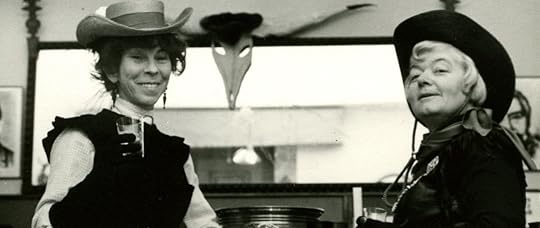
Tuulikki-cowboy-1687pix-235

Giving space and holding tight, to find a satisfying balance between those attitudes in a relationship is a blessing. Having a similar need for solitude for most of the time might help, and can help overcome the moments of friction, as for certain there will be moments that one desires solitude and separateness when the other one wishes for closeness and togetherness – physically as well as mentally. In the relationship of Mari, a writer and Jonna, an artist – a couple in which one can recognise Tove Jansson and her companion Tuulikki Pietilä these profound human needs come to the fore acutely, intensified by their artistic work. Mari and Jonna have their own space – literally, as they live in the same building but in separate flats. As both are creative women, their closeness-distance dance is poignantly illustrated in a series of episodes sketching every- day life. The muse is a demanding and fickle being, thriving on and nourished by solitude, so prone to leave the room when the artist doesn’t grasp the moment when ideas surface. Ideas cannot be tamed or parked for a while which might bring the artist to give priority to the call of the creative impulse on the expense of the partner. And yet, it is a pleasure to watch this dexterous aging couple doing the dance, respecting each other when they are not on the same wavelength, for instance when another person starts taking much time from one. After sharing their lives for a few decades, Mari and Jonna have become excellent dancers, together and apart.

Jansson’s crystalline, lyrical and understated prose suggests a subterranean lake of unspoken emotions and her evocation of how Mari and Jonna vacillate from elegance and generosity towards sulking and misunderstanding is humorous, heartfelt and inspiring, whatever slice of the women’s lives she shed a light on, whether watching Westerns of art house films together in the evening, travelling through America, or staying on their tiny island.

There are empty spaces that must be respected – those often long periods when a person can’t see the pictures or find the words and needs to be left alone.

At the risk of sounding like a maudlin version of Kim Casali’s ‘Love is’ cartoons – which would not do justice to Tove Jansson’s more philosophical approach – I could very much relate to Fair Play’s lesson that love is also sensing what to ask, and what not to ask, letting each other’s eccentricities be– even if such means you might find yourself involved for a while in an obsessive urge to visit cemeteries on holidays (in case not a shared interest).

pietila-tuulikki-ikuisen-jaan-rajalta
(Tuulikki Pietilä)

It is simply this: do not tire, never lose interest, never grow indifferent—lose your invaluable curiosity and you let yourself die. It's as simple as that.

Excellent advise, Tove – thank you.
Profile Image for Jim Fonseca.
1,163 reviews8,493 followers
February 6, 2017
Fair Play by Tove Jansson

This is a beautiful book about two real-life women and the space between them. The author is the famous Finnish writer and artist whose children’s book character Moomintroll inspired TV shows, cartoon strips and theme parks in Finland and Japan.

description

The women are long-time partners and both are multi-talented artists. Between them they write short stories and plays; they paint, photograph, sculpt, and make woodcut engravings and videos. Their studios are in two corners of the upper floor of a remodeled warehouse looking out over the Helsinki harbor. A companion book to A Room of One's Own! The studios/residences are connected by a long corridor with a lounge, TV and shared cooking area in the middle. The spatial arrangements reflect separation yet togetherness; of being apart yet coming together; the metaphor through the whole book.

description

They have a lovely, supportive relationship, helping each other with their art and occasionally daring to critique each other’s work. There is no talk of their physical relationship in the book. They occasionally get “piqued’ with each other and may not speak for a day or two but that is about all. There is an occasional spat of jealousy when one artist starts spending too much time with a young female intern and a crisis when one has the opportunity to move to Paris for a year to work on an art project. Will she go? How will the other react?

The two women also share a summertime cottage on a small harbor island – theirs is the only cottage on the island. It sound idyllic but it is within air space used by the Russians for bombing practice in the ocean! In the whole short book, only a few other characters are introduced, all briefly – an art intern, a visiting, elderly male artist and one woman’s brother. A couple of other characters are encountered in their travels to Mexico and Phoenix. The visiting artist is a master puppet-maker and he shows the woman artist how to improve the life-like look of her cartoon characters hands.

A delightful read. Thanks to 7Jane of Finland and Jim of New Hampshire who recommended Finnish authors and works to me.
Profile Image for emma.
2,562 reviews91.9k followers
February 12, 2021
If I lived on a somewhat solitary island in Scandinavia with one or two other people, where summers are beautiful but winters are monstrous and most activities take place outdoors, I would die of boredom and drama-based hypothermia (aka I am choosing to pass away from cold because I dislike it, not because my body is giving out).

But when Tove Jansson writes about somewhat solitary islands in Scandinavia with one or two other people, where summers are beautiful but winters are monstrous and most activities take place outdoors, I want to live inside her books.

This probably (okay, definitely) has significantly more to do with how much I adore her writing than it does with any latent desire to change my life and priorities and hobbies and interests and move across the world. If Tove Jansson wrote a novel of vignettes about the dumpster-filled alley behind a nightclub, that would probably seem like paradise to me too.

Long story short, I would enjoy anything written by Tove Jansson.

Bottom line: More please!!!

------------------
pre-review

reading tove jansson's writing is meditation to me.

review to come / 4 stars

------------------
currently-reading updates

hell yeah 1980s Scandinavian girlfriends
Profile Image for Agnieszka.
259 reviews1,130 followers
February 6, 2019

In rather ancient past I had read Tove Jansson's Moomins stories and for a long period of time I managed to stay unaware of the fact that she would write for an adult audience either. I've loved her The Summer Book and still can't decide who was more beguiled: the adult woman I'm or perhaps the inner child in me - I still believe it stays somewhere with me though for a most time it must be hiding. I wonder why...

Fair play is truly charming read. Written in the manner and style similiar to The Summer book, with short chapters/episodes, sometimes they feel like anecdotes, and spiced with enormous dose of wisdom, humour and occasionally the loveliest grumpiness.

Mari and Joana share the same apartment, well, in fact two apartments on the opposite sides of the building with common room in the middle. Both women are rather in advanced age and apart from mutual interests, they are artistic souls so to speak, they also share life. It's highly autobiographical, I believe, and Mari and Joana shaped on Tove herself and her lifelong partner. You can see their devotion to themselves and deep affection even in brusque remarks, don't worry there is nothing sappy here, and you hear support and understanding in the most ordinary discussions. And you can see love.

It's so life-affirming and uplifting image that leaves you warmed up from your head to toes. Tove Jansson writes in simple and clear way that one can perfectly imagine these ladies through the years they lived together. At some point one of them is astonished how the time flies and how it actually happened they didn't notice it. And the answer is simple like that:

We're busy with work. And falling in love and that takes a lot of time.

And I will leave you with that words. Let's fall in love. Over and over again. With people. And the world. It's a great idea, don't you think?

4,5/5
Profile Image for Teresa.
Author 9 books1,030 followers
November 5, 2020
Mari and Jonna are long-term, committed partners who, nevertheless, live on the opposite sides of an apartment building, their two domiciles connected by a common room: a fitting metaphor for their relationship. Mari is a writer and illustrator. Jonna is an artist and filmmaker. Despite bouts of jealousy and insecurity, they understand each other, especially each other’s need for solitude; they are both artists after all.

The chapters read as separate short stories and the slim book was perfect as my “purse book,” only used when I’m going to appointments. Yesterday, as I waited in my car for the eye doctor to call me in, I finished the last story. Its last line hit me hard—in a good way—and it was a balm in anticipation for the (election) night to come.
Profile Image for Hugh.
1,293 reviews49 followers
June 12, 2018
Another charming novella, Jansson's last, which I read in a single sitting. It occupies the grey area between novel and short story collection - it could be viewed as a series of linked stories involving the same characters, and their changing relationship.

These are a pair of female artists (Mari, who is also a writer, and Jonna, also a photographer) who live and work on opposite sides of the same building, take holidays together and spend time on the same island summer house, rather as Jansson did with her own long term companion Tuuliike Pietilä and wrote about in her most famous book for adults The Summer Book. This suggests that much of this book is at least thinly autobiographical.

As always Jansson's writing is deceptively simple, and a pleasure to read.
Profile Image for Steph.
861 reviews475 followers
August 30, 2021
fair play is such an odd, subtle, bittersweet sort of love story. it's about mari and jonna, two older women who are artists and who have been together for years. it's about their balanced, respectful relationship. they argue and take space from each other often, but they have a type of love that is gentle, reticent, and filled with tender care.

also, it's always a comfort to read stories about elderly lesbians.

i love tove's matter-of-fact writing style. i read the summer book while i was camping last month, and fair play during this weekend's camping trip, so it's hard not to compare the two. they are both quietly melancholy and filled with soft wisdom, and they share a similar format: short, easy chapters that could be standalone short stores, but which are woven together into a larger picture of a relationship.

perhaps fair play is less cohesive because rather than taking place on one island during one summer, it follows mari and jonna during their daily life in their studio apartments, on their trip to the american southwest, and onto the isolated island where they often stay. but there is a cohesion that comes from following their continuing relationship.

since it's semi-autobiographical and was written in the 80s, there is some necessary vagueness as to mari and jonna's relationship. i suppose a naive straight person could will themselves to believe that the women are friends, not lovers. but my favorite thing about this book is how subtly romantic it is.

for example, one of my favorite chapters, "killing george," is about jonna becoming fed up with mari's endless overediting of her own writing. jonna decides she's done with helping mari rewrite, and to prove her point about the overediting, she asks mari to describe her, convinced that mari won't have a good answer. but mari does:

After a while, she said, "I'd try to describe a kind of patience. And stubbornness. Somehow bring out the fact that you don't want anything except... well, except what you want. Wait a moment... your hair has an unusual hint of bronze, especially against the light. Your profile and your short neck make one think of, you know, old Roman emperors who thought they were God himself... Wait. It's the way you move and the way you walk. And when you slowly turn your face toward me. Your eyes..."

"One of them's gray and the other one's blue," Jonna said. "And now drink your coffee because you need to stay alert. We'll take the whole thing from the beginning. Read slowly, we've got time."
Profile Image for Tony.
1,030 reviews1,911 followers
February 1, 2015
We used to go to the library, the two of us. Just Papa and me. It was like being in his pocket.

Finnish Haiku. That's me peeking out of Tove Jansson's pocket, loving the rhythm of her sentences, just enough to let us know it's a little bit about her.....and a little bit about me.

I loved the structure of this book: just 4 or 5 pages apiece of stories about Jonna and Mari, two 70-ish women, a little bit like Olive Kitteridge without the changing POVs.

An old couple. Both artists. A lot of this is about what it takes to make art, including a wonderful piece - 'Killing George' - which is a dialogue between a writer and her friend about what makes a story. Wannabe writers - and actual writers - should read this.

- (ahem, clearing throat and going all sotto voce: Wannabe writers - and actual writers - should read this.)
Profile Image for Jutta Swietlinski.
Author 14 books48 followers
August 29, 2025
Mari is a writer, Jonna is a graphic designer. The two older women work and live their lives in Helsinki, physically and emotionally close to each other, apparently having been a couple for a long time. The single chapters, or maybe short stories, of this narrow volume portray some slices, or maybe snapshots, of Mari’s and Jonna’s life as individuals and as friends and lovers.
It’s a small but nice and very autobiographical book about life and work, freedom and love by the famous Moomin inventor and all-round talent Tove Jansson, who obviously wrote about her life with her longtime companion Tuulikki Pietilä here.
If you’re willing to read between the lines, you’ll be rewarded with a quiet, contemplative, sometimes philosophical work with many wise statements about love and living in harmony with each other and nature.
I really liked it.
4.5 stars.
Profile Image for Michela De Bartolo.
163 reviews88 followers
November 18, 2018
Il racconto parla di Mari e Jonna due amiche di mezza età che abitano vicino ad un’isola finlandese. Jonna è una scultrice , Mari un illustratrice, vivono assieme ed inseguono le loro passioni . Un libro che cela dietro episodi di vita ordinaria , un’amicizia , un amore fondamentale che molto spesso diamo per scontato . Mi sono lasciata trasportare nei paesaggi e scenari nordici, il mare , le tempeste , la vita molto semplice e complicata da isolane . Un libro particolare da apprezzare proprio per la sua semplicità .
Profile Image for Jenny (Reading Envy).
3,876 reviews3,710 followers
August 3, 2020
It happened again- I made a list of books to read and they became the last books I wanted to read, so I found this slim volume in the library's libby app - largely autobiographical of Tove Jansson's life with her partner on a tiny island, these loosely connected stories speak about art and creativity, long term relationships and how space between two people is so important, and how it's a constant maneuvering when you really know someone and can read their moods. Jansson is Finnish but spoke and wrote in Swedish, so the translator Thomas Teal worked with the Swedish language.

I'd recommend this book and/or The Summer Book by the same author if you are interested in reading something short but meaningful for Women in Translation Month.
Profile Image for Mel Jannard.
86 reviews106 followers
January 8, 2021
J'ai adoré lire ce livre à mon rythme lent, une petite nouvelle à la fois. Je crois que Fair-Play est fondamentalement queer; bien au-delà du fait que les deux personnages soient des femmes qui s'aiment. Leur relation ne ressemble en rien à celles qu'on voit ailleurs, qui sont la plupart du temps non seulement hétéros, mais toujours jeunes - avec deux seuls choix possibles: le couple neuf et edgy ou le couple boulet sur le bord de la fin. Mari et Jonna ont environ 70 ans et elles entretiennent, comme à l'écart du monde sur leur île près du port de Helsinki en Finlande, une relation unique, à la fois très serrée et juste assez détachée - les deux artistes habitent dans la même maison, mais travaillent dans leur atelier séparé. Il y a certainement cette petite vibe Robin & Stella qui ne m'a pas laissée indifférente.

D'ailleurs, au début de ma lecture, je n'étais pas certaine si les personnages étaient des amies très proches, comme Robin & Stella, ou bien des amoureuses, comme le sont habituellement les adultes qui habitent sous le même toit. Au final, ça n'a pas vraiment d'importance, ou ça revient au même. Elles sont des partenaires d'art, de vie. Je me disais «ça a donc ben l'air cool.» (Ce que je ne me dis à peu près jamais des couples qui m'entourent, lol.) Si je le mentionne, c'est pour souligner combien leur lien est dépeint différemment de ce que je suis habituée de voir, autant dans ma réalité que dans la fiction.

C'est le genre de livre qui ne plairait sans doute pas aux fans des grosses péripéties twistées, des punchs à la fin, qui disent souvent d'un livre en soupirant qu'il ne se «passait pas grand-chose». Ce à quoi je répondrais: «come on, il se passe PLEIN de choses». Elles créent, fument des clopes, se servent des verres de rhum et des tasses de café, discutent d'art et s'obstinent sur les films écoutés, vont pêcher pour nourrir le chat, regardent les tempêtes et les bateaux, se remémorent les rencontres et les voyages. Mais encore faut-il être dans l'état d'esprit de prendre une pause, de savourer l'écriture de l'autrice et de rêver tranquillement; d'amour vrai et profond, de paysages insulaires et de soupe de poisson.
Profile Image for liv ❁.
456 reviews1,025 followers
June 21, 2025
I take pride in having a 6th sense for picking up books exactly when I need them, and this is no exception. A very lovely story, really a mosaic of moments in these women’s life, that highlights what it means to be a creative and having the unconditional support and love of someone. The beauty is in its mundanity.
Profile Image for Eddie Watkins.
Author 48 books5,558 followers
October 14, 2014
This is either my least favorite of the three of Tove Jansson's adult novels I've read, or I’m just so accustomed to her and her world that this didn’t offer any shocks or surprises. Either way I can’t deny she’s a master of laconic practical wisdom, and a master of structure as the book very lightly comments on itself and is its arrangement as it progresses; the discrete and independent chapters not only commenting on the book’s very philosophy but also adding up to a coherent whole. Example: the first chapter is about rearranging pictures on a wall in order to create a more powerful impact, while allowing each individual picture its own space in order to create its own distinct impact. This is a direct comment on the structure of the book, and its individual chapters, itself.

It’s a lovely little book, a very personal book, chronicling as it does (via discontinuous anecdote) Jansson’s long term intimate relationship with Tuulikki Pietila. It also has all the Jansson hallmarks such as clarity, distillation of emotion, directness and obliqueness, and a philosophy of self-reliance amid community while maintaining a daily sense of play and discovery. What’s not to admire, and be inspired by, in a portrait of two elderly artists who, without sacrificing a whit of maturity and wisdom, interact with the world with youthful enthusiasm and a seeming sense of perpetual newness? But the book’s so short that I wasn’t afforded the time while reading to really inhabit their world, and that’s with reading half of it twice! I also had a little problem with each chapter having a kind of secret message or life lesson. Nothing wrong with life lessons, but once I realized that this was the case I focused more on the “point” of each interrelated story than the story itself; the coded messages, though subtle, still constricted my experience from a more expansive one I could’ve had without them.

Still, though, there is so much love and wisdom, and even practical lessons in how to live a vibrantly engaged life, in the book that I still heartily recommend it to anyone; and I will surely be reading it multiple more times myself when I feel the need for the messages encoded within.

*** *** *** *** *** *** *** *** *** *** *** *** *** *** *** *** *** *** ***

The 2.5” X 1.875” rectangles on every NYRB cover are beginning to irritate me, especially in this case, as the cover is a reproduction of a Jansson painting that is a portrait of her partner at work in her studio. The rectangle not only blocks out a large chunk of the very subject of the painting, but at times, under certain lights, color clashes with it in a way that physically bothers my eyes.
Profile Image for Bill on GR Sabbatical.
289 reviews88 followers
December 16, 2021
This is a fictionalized account of the Finnish author's life with her partner, the graphic artist Tuulikki Pietilä, in the form of a novella comprised of linked short stories. The characters, Mari and Jonna, live in separate living/studio quarters, attached via an attic, as did their real-life counterparts, a fair symbol of their independence in an intimate relationship that is the subject of the book. This is the first book of Jansson's that I've read and I suspect it will provide me with helpful insight when I get to others.
Profile Image for Brigi.
925 reviews99 followers
June 10, 2021
This short story/vignette collection did not work for me. Plot is basically non-existent, and I felt like the stories lacked a really good punchline. But I do appreciate two old lesbians just living and doing their art.
Profile Image for Alessia Scurati.
350 reviews117 followers
May 26, 2018

Ci sono spazi vuoti che vanno rispettati

Gli spazi vuoti la fanno da padrone in questo romanzo, che è una storia di una delicatezza disarmante.
È la storia di una vita, o due. È un romanzo su cosa sia l’amore, l’affetto, la quotidianità. Soprattutto, su una vita condivisa quasi in 3, due donne e il loro lavoro.
Jonna e Mari condividono un villino su un’isola e un edificio dove ci sono i loro studi. Due vite dedicate all’arte. Due persone con un carattere non semplicissimo, soprattutto perché diverso. La loro diversità, che a volte sfocia in piccole gelosie e discussioni o incomprensioni, non diventa mai un problema, però.
L’amore è una questione di spazi, qui. Di quanto ne viene lasciato all’altro, di quanto bisogna essere capaci di condividere senza invadere.

La narrazione è uno spettacolo. Di una delicatezza estrema. Minimalista, dicono, lo stile di Tove Jansson. Sì. Però io direi più: essenziale. È un andare a togliere tutto il superfluo, che del resto non viene mai esplicitato nemmeno nei discorsi di Mari e Jonna. Non c’è bisogno di dire o spiegare le cose.

All’inizio non capivo molto il nodo del romanzo, cosa volesse veicolare l’autrice. Poi, mano mano che le pagine mi prendevano, non ho più saputo fermarmi. Davvero un romanzo bellissimo.
Concludo con un pensiero personale: sinceramente, quanto di autobiografico o meno ci sia nella vicenda, per me non è importante. Anche fosse tutto inventato, resta di una bellezza incredibile. Mica si può sempre giudicare i libri dalla vita di chi li scrive… (Tove era grandissima e avantissimo).

Uno stralcio per farvi capire, dal capitolo Fuochi d’artificio.
(Mari riceve una lettera da una fan, Linnea, che ha una vita tristissima. Jonna e Mari discutono su cosa dia significato all’esistenza).

«Non fare quella faccia preoccupata, forse anche la tua Linnea ha visto i fuochi e si è tirata un po’ su.» «Lei? Guarda su un cortile tetro, perché la vista sul porto è capitata alla vicina…» «La vicina?» «Sì, una che non fa che dirle cosa deve fare, come vestirsi, che cibi comprare, come fare la dichiarazione dei redditi, eccetera, eccetera.» «Davvero?» ribatté Jonna. «Curioso. Io ci vedo parecchio affetto in tutto questo (…)»
[…]
«(…)Domani vai in posta?» «Sì, vuoi che ritiri i tuoi pacchi?» «Li ritiro io più tardi, sono troppo pesanti. Potresti però magari fermarti a prendere un po’ di formaggio e pomodori e il detersivo? E la senape. Ti ho fatto la lista. E copriti bene, dicono che domani va a meno dieci. Non perdere il biglietto e sta attenta per strada, sarà molto scivoloso.» «Sì, sì», disse Mari. «Lo so, lo so.» Attraversando la soffitta , si fermò come al solito a guardare il porto e rivolse un pensiero distratto a Linnea, che non sapeva niente dell’amore.
Profile Image for Daniel Polansky.
Author 35 books1,249 followers
Read
September 11, 2023
Oh, I loved, loved, loved this book. A short hundred pages and I finished it one afternoon in the park, and I carried it around that evening waving it in front of me and hoping someone would ask about it so I could talk about how much I liked it, but no one did, so I'll have to tell you. A series of vignettes about (basically) Tove and her long-time lover, each small chapter is a small episode in the life of two people who have worn a groove in each other's lives after long decades of love. Of the things they take for granted about one another, of the small ways they hurt and help each other, of the kindnesses and misunderstandings. In short, it's about true, lasting long term love/. Every bit seems so real and lived in and true, and also Jansson is really a marvelously understated story-teller, allowing each point to hit with subtle clarity. It's gorgeous, it's a minor masterpiece, it's one of the best things I've read in a very long time. Loved it. Touched.

Update 9.11.23 Continuing with my summer of re-reads, I picked up Jansson's brief, luminous meditation on art, nature, and the quiet joys of a long term love affair. I always enjoy spending time in Tove Jansson's brain.
Profile Image for Kurkulis  (Lililasa).
559 reviews108 followers
February 16, 2025
Es vēl esmu par jaunu mierīgai ļaušanās idejām, sarunām, filmām, pūkpīļu mazuļiem un lielām kaijām, vecāku apcerēšanai, nesteidzīgai uzklausīšanai un vienkarši blakusbūšanai. Es vēl esmu ar ikdienu un darbu apgredzenots putns.

📖 "Viņas dzīvoja katra savā liela īres nama galā netālu no ostas, un pa vidu starp viņu darbnīcām atradās bēniņi, bezpersoniska pelēkā zona - koridori ar augstiem griestiem un slēgtām koka durvīm abās pusēs. Mari patika šī pastaiga cauri bēniņiem, tā novilka ļoti nepieciešamās neitralitātes domuzīmi starp viņu valdījumiem."

🍃VIŅAS ir rakstniece un ilustratore Mari un māksliniece Joanna. VIŅAS dzīvo uz salas. VIŅAS sarunājas. VIŅAS ceļo. Pie VIŅĀM viesojas... vai arī kādreiz neierodas. VIŅAS ir kopā un atsevišķi.

🍃Gribas teikt, ka "Godīga spēle" ir īsas etīdes par blakusbūšanu. Tā rāmi, nepazaudējot savu es.

Man paveicās, ka grāmata plauktā sagaidīja to vakaru, kad manas domas un maņas nebija sabojājusu satraukta darba diena.
Es ļāvos.
Un man patika tā nesteidzīgā stunda šo sieviešu sabiedrībā.
Katrā no viņām es ieraudzīju kaut ko no sevis, kādu kripatiņu no tā, kam gribētu ļauties kaut kad beidzot aizejot pensijā.

📖 "Mums vajag distanci, tā ir absolūti nepieciešama."
🍃Tas bija par gleznām un zīmējumiem pie sienas, bet vai tad tas vēl lielākā mērā neattiecas uz cilvēkiem...
Profile Image for Tania.
1,041 reviews125 followers
April 17, 2024
A beautifully observed series of vignettes about two artists sharing their life on and island. Reminded me of The Summer Book, anyone who enjoyed that one is likely to enjoy this one too.
Profile Image for Dona's Books.
1,309 reviews272 followers
September 5, 2025
⭐⭐⭐⭐.5

Pre-Read Notes:

I saved this one in my Libby queue several months ago, but I don't know why. I'm glad I did though; it's a short, intense read and I love how Jansson plays with form.

"“Jonna, they’re here again. The purple plastic boat. Can you go down and talk to them?”  “The nerve!” Jonna said. “But maybe they’ve come to apologize. They might even have brought water. Or wood. Wait. I’ll go down and see.”  When Jonna was halfway across the meadow, Mari came running after her. “Take this,” she said. “You never know.” And she handed her the pistol." p16

Final Review

(thoughts & recs) I really enjoyed this slim book about two women living together on an otherwise uninhabited island. I think the best writing can use simple language and even simple circumstances to say everything they want to say about life. Stories like this always remind me of that meme of the iceberg seen from water level, with only a fraction of its girth visible from over the water. Deep stories, for me, are those than manage to submerge a huge part of their meaning, but also find ways to reveal what lies beneath the lines on the page.

This book was clever in many ways--characters, dialogue, form, and setting. I read very fast and for this one, I'm coming back for a slower pass. You might want to read this one slowly also.

If you enjoyed the unusual form of this book, I also recommend Dorthe Nors's SO MUCH FOR THAT WINTER and Mary Robison's WHY DID I EVER.

My Favorite Things:

✔️ "“No. Really good films don’t diminish anything, they don’t close things off. On the contrary, they open up new insights, they make new thoughts thinkable. They crowd us, they deflate our slovenly lifestyle, our thoughtless way of chattering and pissing away our time and energy and passion. Believe me, films can teach us a huge amount. And they give us a true picture of the way life is.”" p11 I really love the discussions of art these two characters have. It reminds me that creating matters not just to us as individuals, but to our understanding of our experiences.

✔️ This form is magnificent. A cross among crots, novel, and autofiction. It's attention grabbing, since the chapters are tiny little short stories that gather to create a detailed image of these two women's relationship with each other.

✔️ While I didn't find the main characters, Jonna and Mari particularly likeable (though I liked Mari more than Jonna), I found them fascinating and complex with endless potential for growth. They made for good leads to interesting stories.

I found an accessible digital copy of FAIR PLAY by Tove Jansson in Libby.

Content Notes:
animal cruelty, animal death, hunting, fishing, guns,
Profile Image for Anita Veckalne.
11 reviews3 followers
January 11, 2025
Grāmata man ārkārtīgi patika, pirmkārt, pateicoties rāmajai darba sajūtai, kas tajā attēlota. Man kā lasītājam, kurš sajūsminās uzzinot detaļas, kā rakstnieki un mākslinieki sēž pie saviem darba galdiem un strādā - šis bija aizraujošs darba process, kurā ieskatīties. Grāmata par mākslinieku ikdienu un sadzīvi. Par to kā kopā dzīvot un kopā radīt, tajā pašā laikā sniedzot otram telpu un radošo brīvību. Skaisti. Tā teikt - nestāstiet man, kas varoņiem mugurā, bet atklājiet pie kādiem darba galdiem viņi sēž un kāds ir viņu radošais process, un es kā lasītājs būšu pateicīga.

Šī ir mana pirmā pieredze ar Tūvi Jansoni. Pat neesmu vēl Muminu lasījusi. Tomēr grāmata aizrāva ar vienkāršo un plūstošo valodu, Zviedrijas dabas skaisto skarbumu un dzīves vērīgumu, ko autore ir prasmīgi ievijusi šajā grāmatā. 

“Jonnai piemita kāda lieliska īpatnība - viņa katru rītu pamodās jaunai dzīvei, kas nelietota un pavisam tīra pletās viņas priekšā līdz pat vakaram, un to reti apēnoja vakardienas raizes un kļūdas.”
Profile Image for Victoria (Eve's Alexandria).
841 reviews448 followers
December 23, 2016
A fierce astonishing book that took me completely unawares. In a string of contained vignettes it tells the story of two women, Mari and Jonna, artists who have lived and worked together for over 30 years. Now in their 70s they have arrived at an equilibrium, a rhythm of life that suits them. They alternate between the quietude of their shared home - with an attic separating their living spaces - and the adventures of world travel. In just over 100 pages an enormous amount is said and done, but with no hint of plot at all. What compels the novel forwards is the desire to see more, to understand more completely, the terrain of love and shared life that exists between the two characters. To parse out the daily intimacies, kindnesses, rebellions and disagreements that describe their knowing one another. What I'm left with is an overwhelming sense of respect for them, and a hope that I can be as generous in my own relationship. It's powerful to read a book that isn't about the romance of love - though their romance is hinted at one time - but the ongoing shaping and negotiation of love. This was my first Tove Jannson; I'm looking forward to reading more.
Profile Image for Larissa.
Author 14 books294 followers
March 9, 2011
Originally reviewed on Three Percent, here: http://www.rochester.edu/College/tran...

“There is no silence like sitting in a fog at sea and listening,” writes Tove Jansson in her newly-translated story collection Fair Play. “Large boats can loom up suddenly, and you don’t hear the bow water in time to start your motor and get out of the way.” Stuck waiting out a dense, chilling fog in a row boat somewhere between the coast of a small Finnish island and Estonia, Jansson’s aging companions, Jonna and Mari, fall into an old argument about their mothers—one had an annoying predilection for painstakingly buttered crispbread; the other was an incorrigible cheat at poker. Their conversation is short—discreetly hurtful in the way that one only can be after years of intimacy. But before the fog lifts, Jonna and Mari have come to an understanding, if not a full reconciliation. “Suddenly the sea was open and blue and they found themselves a long way out toward Estonia,” Jansson writes. “They came back to the island from a totally new direction, and it didn’t look the same.”

This episode is not only emblematic of Jonna and Mari’s time-tested relationship, it also reveals Jansson at her paradoxical best. Her prose is sparing and exquisitely clear. And at first, her stories and characters appear to be simple and straightforward. But once you’ve immersed yourself in a Jansson story, you realize that there is a great complexity simmering under the surface of her work—a whole life that exists, but is not made readily accessible to the reader. As Ali Smith puts it in her excellent introduction to Fair Play, Jansson writes “in a language so tightly edited that its clarity makes for mysterious transparency.”

Tove Jansson is most often recognized as a children’s author and illustrator—the visionary behind those delightful marshmallow hippos called “Moomins.” Her adult novels, which she didn’t begin publishing until she was nearly 60, have until recently remained very much in the shadow of the Moomin legacy. Fair Play is the most recent of Jansson’s ‘adult’ novels that New York Review Books has brought into English translation, following last year’s True Deceiver and 2008’s The Summer Book. The collection picks up two of the major thematic elements that run through each of its predecessors, namely the relationship between two women, explored against the back drop of a remote, idyllic setting. (True Deceiver was set in a snow-bound mountain village; The Summer Book on a small island in the Finnish gulf.) And as with the previous NYRB titles, Fair Play also draws on autobiographical inspiration: in this case, Jansson’s lifelong relationship with her partner, a Finnish artist and scholar named Tuulikki Pietilä, with whom she lived for the better part of 40 years.

Each chapter in Fair Play serves as a snapshot, a brief window into the relationship between the frank and opinionated Jonna and the reserved and introspective Mari. Their day-to-day lives are quiet and happily mundane: they watch Fassbinder movies instead of going to dinner at a friend’s in the evening (with all its “pointless chatter about inessentials”). They re-hang pictures. They travel frequently, though their points of destination are often less than glamorous. On one trip through the American southwest, they spend a few nights at a local bar in Phoenix, Arizona; while in Corsica, one of their main destinations is a cemetery. They bicker frequently, and aren’t above childish jealousy or the occasional resentment. But mostly, they work, comfortable enough with the constancy of the other’s presence and support to spend the majority of their days writing and painting alone.

In “Videomania,” we’re told that Jonna and Mari “. . . lived at opposite ends of a large apartment building near the harbor, and between their studios lay the attic, an impersonal no-man’s-land of tall corridors with locked plank doors on either side.”

Mari liked wandering across the attic; it drew a necessary, neutral interval between their domains . . . They never asked, “Were you able to work today?” Maybe they had, twenty or thirty years earlier, but they’d gradually learned not to. There are empty spaces that must be respected—those often long periods when a person can’t see the pictures or find the words and needs to be left alone.


It’s in the couple’s companionable solitude that Jansson defines her ethos of artistic creation, a deeply felt belief about the importance of maintaining one’s personal life without sacrificing her creative work, and the substantial space that is required to successfully balance both spheres.

Despite the quietude of Fair Play, it is nevertheless a work of remarkable courage. Jansson’s is not the flashy sort of artistic boldness that proclaims itself by way of constant transparency and self-revelation. Rather, she is brave enough to occasionally withhold information, to provide confidential glimpses into her characters’ lives, while still maintaining a distance from them—a sort of respectful privacy. She doesn’t outline the women’s romantic lives—we don’t find them in bed together, or even see them embrace. Jonna and Mari don’t articulate their love for each other directly, although they certainly reflect on their feelings internally.

Fair Play is after all, a book about separation and space as much as it is about intimacy. “We need distance,” Jonna tells Mari, “it’s essential.” The reader is allowed a closeness to these remarkable women, but in the end, their relationship is like any one in real life: private and fully known only to those who are within it.
Profile Image for maddie.
83 reviews6 followers
January 7, 2025
meandering and subtle and tender. makes me look forward to my elder lesbian days.
Profile Image for Baz.
359 reviews396 followers
September 20, 2025
Why was The Summer Book mysterious? Why did Fair Play have this quality as well? I think a lot of it comes from two things: first, as Ali Smith points out in the introduction, Jansson’s stories are “about nothing much and yet about everything”; and second, they feel structureless. The novel is narrated in chapters, each of which is a distinct vignette. Some of the vignettes are like short stories and finish with impact, but some don’t close in a classically satisfying way—they’re scenes that don’t conclude. They simply end.

Smith refers to it as an “open form.” Jansson can write a charged, compelling narrative in this way because of the terseness of her prose. The writing is understated, full of light sentences that contain depths. The pleasure lies in the reader’s recognition of the subtleties—all the little mundane moments that glimmer with meaning.

I enjoyed observing the day-to-day relationship of these two old friends, who have left much of the silly world and its boring people behind, and need only each other and their art. There’s love in their friendship, but also—just as important—curiosity, understanding and respect. I delighted in the way they enabled one another, allowed for one another’s impulses, argued and spoke bluntly, and, most of all, valued and nurtured each other’s creativity.

I’ll definitely need more Jansson in the future! I love older characters, and Sun City is a portrait of a set of residents and employees in a retirement home. It’s so up my alley. (Hopefully NYRB still has it in print when I’m ready to pick it up.)
Displaying 1 - 30 of 1,176 reviews

Can't find what you're looking for?

Get help and learn more about the design.