

What do you think?

Lost
Essie can tell from the moment she lays eyes on Harriet Abbott: this is a woman who has taken a wrong turn in life. Why else would an educated, well-dressed, clearly upper-crust girl end up in the Triangle Shirtwaist Factory setting sleeves for six dollars a day? As the unlikely friendship between Essie and Harriet grows, so does the weight of the question hanging between them: Who is lost? And who will be found?
256 pages, Hardcover
First published January 1, 2009
About the author
Jacqueline Davies
32 books287 followersJacqueline Davies is the author of both novels and picture books. She lives in Needham, Massachusetts with her three children.
Ratings & Reviews
Friends & Following
Create a free account to discover what your friends think of this book!
Community Reviews
Displaying 1 - 30 of 181 reviews

April 2, 2011
This is a hard book for me to rate. The prose was engaging. I liked the set up with 16 year-old Essie working in the sweatshop in NY lower East side, turn off the century. I liked the relationship between Essie and Harriet. I just thought that this book never really went deep enough. I wanted much more out of it. The story itself was a complete downer, and yes I get that this was a quasi-historical novel and all, but this was pretty grim. I've left funerals feeling more upbeat than I did when I finished this book last night. So I'm going with two stars.

May 24, 2011
I've always been drawn to stories about the Triangle Shirtwaist Factory fire in NYC, March 26, 1911, that killed 141 people, mostly seamstress girls. I don't know why. Maybe a previous life?
Jacqueline Davies has written a historical fiction that interweaves this tragedy with another tragedy at the time for which I was unaware. On January 26, 1911 The New York Times reported on the disappearance of a Dorothy Harriet Camille Arnold, the daughter of a wealthy family and niece of a former Supreme Court justice. Although the story was reported on this date, the family had mysteriously waited six weeks to report the disappearance to police. This story was mysterious from the beginning, and received a lot of press, none stating that Miss Arnold had been located until April, 1921, when the then head of The Bureau of Missing Persons in NYC reported that the police had solved the case!
The main character of the story works at Triangle but the storyline does not concentrate on her job. Instead readers are lead through the tragedy of her family using flashbacks. It is difficult in the beginning to follow the story; however, once you get the rhythm, you can't wait for the next flashback. With a "surprise" ending, I'm certain that the author meant for the tension to rise, but I figured out the "surprise" rather early.
In spite of this, I truly enjoyed the book that depicts the life of immigrants in NYC in the early 20th century and gives you an excellent "feel" of NYC at the time. The author expertly presents a plausible interaction between a fictional character and a real one. She also does an awesome job pointing out the contrasts between the disparate lives of a young immigrant woman with a woman from a rich and well-connected family that is timeless.
Although this book is considered Young Adult fiction, just like almost all YA Fiction it is an excellent read for all ages, especially those with an intense interest in history.
I give this 4 Stars.
Jacqueline Davies has written a historical fiction that interweaves this tragedy with another tragedy at the time for which I was unaware. On January 26, 1911 The New York Times reported on the disappearance of a Dorothy Harriet Camille Arnold, the daughter of a wealthy family and niece of a former Supreme Court justice. Although the story was reported on this date, the family had mysteriously waited six weeks to report the disappearance to police. This story was mysterious from the beginning, and received a lot of press, none stating that Miss Arnold had been located until April, 1921, when the then head of The Bureau of Missing Persons in NYC reported that the police had solved the case!
The main character of the story works at Triangle but the storyline does not concentrate on her job. Instead readers are lead through the tragedy of her family using flashbacks. It is difficult in the beginning to follow the story; however, once you get the rhythm, you can't wait for the next flashback. With a "surprise" ending, I'm certain that the author meant for the tension to rise, but I figured out the "surprise" rather early.
In spite of this, I truly enjoyed the book that depicts the life of immigrants in NYC in the early 20th century and gives you an excellent "feel" of NYC at the time. The author expertly presents a plausible interaction between a fictional character and a real one. She also does an awesome job pointing out the contrasts between the disparate lives of a young immigrant woman with a woman from a rich and well-connected family that is timeless.
Although this book is considered Young Adult fiction, just like almost all YA Fiction it is an excellent read for all ages, especially those with an intense interest in history.
I give this 4 Stars.

Read
April 7, 2010 I think it must be terrible to be lost, but so much worse to be forgotten. p. 230, Lost.
There’s no chance in forgetting the characters in Jacqueline Davies’s Lost, so vivid and true are their voices. Like the more recent tragedy of 9/11, the Triangle Shirtwaist Factory fire of 1911* is now burned into my consciousness as if with a hot brand. Seventeen-year-old Essie Rosenfeld lives on the lower east side of Manhattan in 1911. She has been taking care of her irrepressible, fierce bad rabbit of a younger sister Zelda ever since Zelda was born. Their mother, a grieving widow, just can’t cope. But now Essie needs to work at the Triangle Shirtwaist Factory and can’t be around as much for Zelda. There she meets Harriet Abbott, the new girl who strikes Essie as different, somehow, not one of the immigrants like Essie and the other girls who work themselves to the bone for starvation wages because they must.
An immediate friendship with Harriet confirms Essie’s suspicions. Harriet is harboring big secrets; it turns out Essie is too. Who is Harriet, really? Like Grace Brown in Jennifer Donnelly’s A Northern Light, the mystery of Dorothy Harriet Camille Arnold in Lost is based on true events and a real-life person and adds depth and suspense to a story already rich in character, history, language and dialog. Davies weaves these stories together in alternating chapters, one of which is printed on ’stained’ paper evoking the tenement walls of Essie’s home. The stories come together in a riveting and devastating climax that accurately portrays the hardships of that time and place. But in the end, the story is really one of hope and the resilience of the human spirit.
There’s no chance in forgetting the characters in Jacqueline Davies’s Lost, so vivid and true are their voices. Like the more recent tragedy of 9/11, the Triangle Shirtwaist Factory fire of 1911* is now burned into my consciousness as if with a hot brand. Seventeen-year-old Essie Rosenfeld lives on the lower east side of Manhattan in 1911. She has been taking care of her irrepressible, fierce bad rabbit of a younger sister Zelda ever since Zelda was born. Their mother, a grieving widow, just can’t cope. But now Essie needs to work at the Triangle Shirtwaist Factory and can’t be around as much for Zelda. There she meets Harriet Abbott, the new girl who strikes Essie as different, somehow, not one of the immigrants like Essie and the other girls who work themselves to the bone for starvation wages because they must.
An immediate friendship with Harriet confirms Essie’s suspicions. Harriet is harboring big secrets; it turns out Essie is too. Who is Harriet, really? Like Grace Brown in Jennifer Donnelly’s A Northern Light, the mystery of Dorothy Harriet Camille Arnold in Lost is based on true events and a real-life person and adds depth and suspense to a story already rich in character, history, language and dialog. Davies weaves these stories together in alternating chapters, one of which is printed on ’stained’ paper evoking the tenement walls of Essie’s home. The stories come together in a riveting and devastating climax that accurately portrays the hardships of that time and place. But in the end, the story is really one of hope and the resilience of the human spirit.

January 19, 2010
This is THE best book of all time. Before, i didn't really have a favorite book, i just had lots that i thought were my favorites. That was before this book. The detail is incredible, the charachters are amazing, and the setting is great. overall this book is a must-read and should be on everybodys to-read list. This book beats any book of the twilight series -and i loved them all so its not like im saying anything is better-, its even better than the host -and i think that if i had to choose a fav. before i read the book Lost, it would have to be that one; i LOVE that book, but Lost still beats it-, it beats any book in the hunger games series -so far (and yes i love those too)-; i have never read a better book in my life. It's like a puzzle, the more you read, the more you understand. I stayed up until like two in the morning reading, and i couldnt stop crying for the last three chapters. the only word i can come up with that thouroly describes this book is Wow. there is no better word. oh and maybe 'oh my god' or 'i cant belive it' but mostly just 'wow'. the ending is incredible; there couldn't be a more perfect ending to that book. It does not matter what kind of books you like, you'll like this one -trust me. Everyone needs to read this, so please, check it out at your local library or get it at a bookstore or something, my message is -just read it.

April 2, 2011
One of my Comp 102 classes is working with oral histories taken from survivors of the 1911 Triangle Shirtwaist Factory fire for their current research/writing project. My favorite university librarian, a history buff, has been great about sending me articles and other information to share with the students. This week she loaned me Davies's excellent YA novel. I read it in two evenings. Davies intertwines two stories from the turn of the last century: the disappearance of the daughter of a wealthy family, and the Triangle Shirtwaist Factory fire. I was disappointed that the union strikes played no role in the novel (the narrator only mentions them once, at the end, and really only in passing), as I believe the workers' quest for better working conditions preceding the tragedy make it all the more outrageous and alarming.
I'll be sending copies of this to several young readers, though, as it is well written and creates a thoughtful portrait of the life of a young factory worker.
I'll be sending copies of this to several young readers, though, as it is well written and creates a thoughtful portrait of the life of a young factory worker.

November 10, 2012
Excellent story about friendship and loss. The author hooks you right away, and then keeps your interest with a cleverly woven tale based on two independent true stories from the early 1900s. Flash-back chapters in present tense alternate with the meat of the story, written in past tense, to give a sense that the main character is reliving those flashbacks.
November 2, 2012
This book captivated me I could hardly put it down. When I first picked it up i was like, maybe I won't read this. I finished it a day, read the first half in the morning and second half at night. This book is horrifyingly good, I loved every second of it.

November 7, 2011
A truly ambitious, impressive novel. I admire Jackie's ability to create an "unreliable" narrator who captures our sympathies. Well done, neighbor!
August 28, 2013
Title / Author / Publication Date:
Lost. / Jacqueline Davies. / 2009.
Genre: Young Adult - Historical Fiction.
Format: Book - print. 256 pages.
Plot summary:
“In 1911 New York, sixteen-year-old Essie Rosenfeld must stop taking care of her irrepressible six-year-old sister when she goes to work at the Triangle Waist Company, where she befriends a missing heiress who is in hiding from her family and who seems to understand the feelings of heartache and grief that Essie is trying desperately to escape” (NoveList).
Considerations or precautions for readers advisory:
This novel shows readers how the main character (Essie) accepts (or doesn't accept) the loss of her younger sister, and retells how two historical events could have happened.
Review citation:
“Davies weaves two historic events—the disappearance of a wealthy heiress escaping family scandal and the catastrophic Triangle Shirtwaist fire of 1911, graphically depicted—into a lively tale of striving, unspeakable loss, and an eventual life-affirming resolution” (Anne O’Malley - Booklist).
Section source used to find the material:
YALSA Best Books for Young Adults: 2010 Best Books for Young Adults
2012 to 2013 Rosie Nominees - Eliot Rosewater Indiana High School Book Awards
Recommended age: Grades 8 and up.
Lost. / Jacqueline Davies. / 2009.
Genre: Young Adult - Historical Fiction.
Format: Book - print. 256 pages.
Plot summary:
“In 1911 New York, sixteen-year-old Essie Rosenfeld must stop taking care of her irrepressible six-year-old sister when she goes to work at the Triangle Waist Company, where she befriends a missing heiress who is in hiding from her family and who seems to understand the feelings of heartache and grief that Essie is trying desperately to escape” (NoveList).
Considerations or precautions for readers advisory:
This novel shows readers how the main character (Essie) accepts (or doesn't accept) the loss of her younger sister, and retells how two historical events could have happened.
Review citation:
“Davies weaves two historic events—the disappearance of a wealthy heiress escaping family scandal and the catastrophic Triangle Shirtwaist fire of 1911, graphically depicted—into a lively tale of striving, unspeakable loss, and an eventual life-affirming resolution” (Anne O’Malley - Booklist).
Section source used to find the material:
YALSA Best Books for Young Adults: 2010 Best Books for Young Adults
2012 to 2013 Rosie Nominees - Eliot Rosewater Indiana High School Book Awards
Recommended age: Grades 8 and up.
This entire review has been hidden because of spoilers.

November 5, 2009
Historical fiction, family, friendship, death/grief, New York in the early 1900s, poverty, factory work.
This is a beautifully written book that has sections that flash back in time between each chapter. Essie is denying/grieving the loss of her sister as she works as a seamstrees in the Triangle Shirtwaist Factory. A new colleague/friend Harriet Abbott is going through a similar situation.
I think what I most liked about this book is that the author Jacqueline Davies wove actual historical events into this story. She obviously did extensive research.
A couple of golden lines: "It turns out my father was right...A good writer can write any where" (p. 88).
"Grief is like that. You smash up against it, and it rips all the outer parts of you away. You're left naked in front of everybody" (p. 71).
"I like the way he asks me that--what I think. Most grownups don't. Mama never does. Mrs. Pelz never does. My teachers at school never did, when I used to go to school. They didn't want to know what I thought. The just wanted to know what I knew. There's a big difference" (p. 61).
One note--I do not think this is a multicultural book just because there is a sprinkling of Yiddish words/expressions throughout. It is more a historical fiction book.
This is a beautifully written book that has sections that flash back in time between each chapter. Essie is denying/grieving the loss of her sister as she works as a seamstrees in the Triangle Shirtwaist Factory. A new colleague/friend Harriet Abbott is going through a similar situation.
I think what I most liked about this book is that the author Jacqueline Davies wove actual historical events into this story. She obviously did extensive research.
A couple of golden lines: "It turns out my father was right...A good writer can write any where" (p. 88).
"Grief is like that. You smash up against it, and it rips all the outer parts of you away. You're left naked in front of everybody" (p. 71).
"I like the way he asks me that--what I think. Most grownups don't. Mama never does. Mrs. Pelz never does. My teachers at school never did, when I used to go to school. They didn't want to know what I thought. The just wanted to know what I knew. There's a big difference" (p. 61).
One note--I do not think this is a multicultural book just because there is a sprinkling of Yiddish words/expressions throughout. It is more a historical fiction book.

February 24, 2014
Essie is a young lady working at the Triangle Shirtwaist Factory. A mysterious, secretive woman named Harriet is the new girl there and Essie is fascinated with her, to the point that she follows her around, eager to get to know who Harriet really is. Why is Harriet, who seems high class, working in such horrible conditions for low wages?
At home, Essie takes care of her little sister, Zelda, as if the girl were her own daughter. Her mother, who is poor and harried, complains that Essie is spoiling the girl. When tragedy befalls the family, Essie is in denial. These are the moments in the story where the narrator becomes unreliable. What is truth and what is reality?
This story is fascinating both before and after the famous factory fire. The author does an amazing job with both characterization and setting. She takes you to the Lower East Side of Manhattan of the early 1900s. The mystery of Harriet and the truth about Zelda gripped me, and I couldn’t put down the book until I finished it in one sitting.
At home, Essie takes care of her little sister, Zelda, as if the girl were her own daughter. Her mother, who is poor and harried, complains that Essie is spoiling the girl. When tragedy befalls the family, Essie is in denial. These are the moments in the story where the narrator becomes unreliable. What is truth and what is reality?
This story is fascinating both before and after the famous factory fire. The author does an amazing job with both characterization and setting. She takes you to the Lower East Side of Manhattan of the early 1900s. The mystery of Harriet and the truth about Zelda gripped me, and I couldn’t put down the book until I finished it in one sitting.

June 18, 2018
Let me preface this by saying a couple things:
1) This is NOT a bad book.
2) The Triangle Shirtwaist Factory Fire is a historical even that I am incredibly passionate about, and I have read many fiction and non fiction books/articles about this event.
My only complaint about this book is that it somewhat misrepresents the real tragedy that occurs which is the 1911 Triangle Factory Fire. The Author obviously did research and had some well rounded characters. She portrayed the life of a immigrant trying to survive in the Lower East Side of New York. What this author failed to do was describe how mistreated the workers in the factory were, and how dangerous the situation was. You can see some of it in the authors note, but not much in the novel itself. I feel that you need to explain and show what horrors these women went through for anyone to be able to fully feel the true tragedy of the fire. If you want a book that will educate you on this event fully I HIGHLY recommend “Uprising” by Margaret Peterson Haddix.
1) This is NOT a bad book.
2) The Triangle Shirtwaist Factory Fire is a historical even that I am incredibly passionate about, and I have read many fiction and non fiction books/articles about this event.
My only complaint about this book is that it somewhat misrepresents the real tragedy that occurs which is the 1911 Triangle Factory Fire. The Author obviously did research and had some well rounded characters. She portrayed the life of a immigrant trying to survive in the Lower East Side of New York. What this author failed to do was describe how mistreated the workers in the factory were, and how dangerous the situation was. You can see some of it in the authors note, but not much in the novel itself. I feel that you need to explain and show what horrors these women went through for anyone to be able to fully feel the true tragedy of the fire. If you want a book that will educate you on this event fully I HIGHLY recommend “Uprising” by Margaret Peterson Haddix.
June 17, 2009
This beautifully-written book offers both compelling characters in Essie, Zelda and Harriet, and a fascinating time and setting (Lower East Side Manhattan, early 1900s). On a deeper level, LOST is Essie's journey from grief and denial to wholeness and the future's possibilities.
LOST's personalized view of the Triangle Shirtwaist Factory tragedy toward the book's end is gripping and an important part of the plot, but even without this historic event or the sub-plot of a missing heiress, LOST would stand as Essie's story.
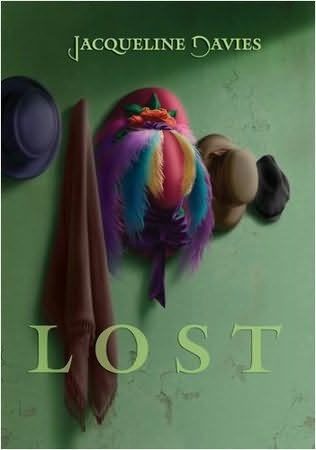
On an aesthetic note, the novel is beautifully bound with alternating chapters (Essie's remembrances of her sister) printed on pages that look like patchy walls of a tenement flat. The book's cover is exquisite and the jacket flaps' contrast ink matches the pink endpapers. Simple design details that make reading this book even more of a pleasure.
Disclaimer: I know the author.
LOST's personalized view of the Triangle Shirtwaist Factory tragedy toward the book's end is gripping and an important part of the plot, but even without this historic event or the sub-plot of a missing heiress, LOST would stand as Essie's story.
On an aesthetic note, the novel is beautifully bound with alternating chapters (Essie's remembrances of her sister) printed on pages that look like patchy walls of a tenement flat. The book's cover is exquisite and the jacket flaps' contrast ink matches the pink endpapers. Simple design details that make reading this book even more of a pleasure.
Disclaimer: I know the author.

August 4, 2009
This was a nice enough book (as the alt-text on the stars says, "it was ok"), that carefully weaves together a few mysteries: the true identity of an upper-crust girl who shows up to work at the Triangle Shirtwaist Factory and the fate of Essie's family being just two of the prominent ones. Essie has a strong, distinctive voice that shows through both the "contemporary" chapters and the flashback chapters about Essie's life with her little sister.
I was, however, disappointed in the scenes set in the Triangle Shirtwaist Factory - or rather, the lack of scenes. If a book wants to sell itself, at least partially, on the drama of the factory and the tragic fire, it should probably spend more than half of two chapters in the factory. We're introduced to the characters in the factory, and then see the characters again in the factory when the fire breaks out, but other than that the factory just gets vague mentions, as the characters can only get together after work.
I was, however, disappointed in the scenes set in the Triangle Shirtwaist Factory - or rather, the lack of scenes. If a book wants to sell itself, at least partially, on the drama of the factory and the tragic fire, it should probably spend more than half of two chapters in the factory. We're introduced to the characters in the factory, and then see the characters again in the factory when the fire breaks out, but other than that the factory just gets vague mentions, as the characters can only get together after work.

October 14, 2009
This is an absolutely lovely novel about a young girl named Essie who is a worker at the infamous Triangle factory. The novel toggles back and forth in time between when she was a young girl and her life as a teenage worker in the factory. There are many secrets in this novel which will tantalize readers. Why does Essie not accept that her baby sister has died in a terrible accident? Who is Essie's new friend at the factory who has a mysterious past? Essie is an endearing character, with her devotion to her baby sister, her tough, no nonsense attitude and her compassion for her new friend. She is a survivor. The terrible Triangle factory fire provides a gripping climax to this wonderful historical novel.

April 24, 2014
Saw this book on Bookbub and thought the story sounded rather interesting. From the description,I had no idea that it would be as powerfully-written or quite so touching.
The book weaves together two unrelated, highly-publicized news stories from 1911 New York City. More so than the stories themselves, the reader is transported back to the immigrant tenements of Greenwich Village and the life of a young Jewish girl who worked in the Triangle Shirt Waist factory. There was so much sadness in the book that I often found myself close to tears, I am not a crying person. Somehow the author was able to bring the character and the reader out of the depths of despair and to a place of hope.
The book weaves together two unrelated, highly-publicized news stories from 1911 New York City. More so than the stories themselves, the reader is transported back to the immigrant tenements of Greenwich Village and the life of a young Jewish girl who worked in the Triangle Shirt Waist factory. There was so much sadness in the book that I often found myself close to tears, I am not a crying person. Somehow the author was able to bring the character and the reader out of the depths of despair and to a place of hope.

September 9, 2009
When I first read the jacket blip for this book, I was immediately interested. Here was a book that not only addressed one of America’s greatest work tragedies, the Triangle Shirtwaist Factory Fire, but also depicted the lives of people during this time. I also loved that the language and actions matched the people of the era. Along with the historical view point, I enjoyed reading a fictional account that did not go bland with history. Davies did a magnificent job on research and was able to intertwine history with a fictional plot without out setting the other.

July 20, 2012
Things that were brilliant: a mystery (a true historical mystery I didn't even know about), a reminder that the historical novels I deign to read are always much more interesting than assumed, a teenager with a sweet 6-year-gap love interest, a solid friendship (with a 20-something character! rare in YA), and artistic design -- besides the brilliantly bright colors of the jacket/cover/end pages, the flashback half of the story is written on gray pages patterned to look like cracked old apartment walls. I've never loved flashbacks so much.

April 24, 2014
I debated giving this book five stars, only because I wanted more story! I wanted to read this book forever, which told me five stars was the right choice. I love the intertwining of all the stories and found myself burning through the pages. so quick and easy to read but continually interesting and thought provoking. Lost was a relatively short story that never made you feel dumb, just interested. actually, it actually made me feel smarter some how. just all around wonderful. I had never heard the true stories that inspired this novel, but know I'm excited to learn more.

February 2, 2016
I personally think that this book is really good for readers who like intense, historical fiction books like me. This book will get you on the edge of your seat because of everything happening in the story. I really recommend this book for those readers out there who like these kind of novels. I learned from the time period that people in 1900s had more trouble making money, finding and keeping their jobs than us now because people had been paid less back then and now we get more money than $13 we get about $100 depending on the job.

December 23, 2014
I enjoy historical fiction like this where the author takes a few points from history (from newspaper headlines, in this case) and builds a story around it. As a writer, I also enjoyed the author's use of past and present tense. The flashbacks were written in present tense because, I believe, of how much a part of us certain memories become. I enjoyed this book so much, I think I will read again some day.

July 7, 2009
I discovered too late that I had a young adult novel on my hands. Still, the author of The Lemonade War has written a smart little book here. Perfectly nice.

February 6, 2010
Totally fictional account of what might have happened to the missing heiress, Dorothy Arnold and at the shirtwaist factory fire in 1911.
I just couldn't get into this book. The foreshadowing bugged me. I admired, but didn't like the main character. And then my favorite character died.
I just couldn't get into this book. The foreshadowing bugged me. I admired, but didn't like the main character. And then my favorite character died.

September 5, 2014
Very interesting! The story of the hardships of the Rosenberg family arriving in New York in 1911. True to the time period! I felt like I was in the period! Also tying in the girls who worked in the triangle and after the horrendous fire. Beautiful story of survival

December 15, 2016
4 stars for the storyline.
5 stars for the weaving of the storyline.
5 stars for the prose. Beautiful.
5 stars for the weaving of the storyline.
5 stars for the prose. Beautiful.

April 13, 2023
When I was about 12/13 this was my absolute favorite book. I think I read it twice maybe three times. So I decided after many years to see if it still held up to my particular book taste, and wow it did!
This book has so much depth and so many levels of situations, stories, and emotions. The characters are so well developed and you feel so attached to them and the story. I felt so connected to them and there were several parts that just absolutely crushed me. I’m not super into historical fiction anymore but the story is just so good that it doesn’t even matter. Incredible writing, characters, dialogue, just everything. This book held up so well. A very confident 5 star rating.
This book has so much depth and so many levels of situations, stories, and emotions. The characters are so well developed and you feel so attached to them and the story. I felt so connected to them and there were several parts that just absolutely crushed me. I’m not super into historical fiction anymore but the story is just so good that it doesn’t even matter. Incredible writing, characters, dialogue, just everything. This book held up so well. A very confident 5 star rating.

February 2, 2012
This was had been on my TBR list forever, and then I got it out and it was in my TBR stack forever and then I finally decided that this was ridiculous and I should just read it. So I did.
In this book, Davies intertwines the stories of two girls, Essie and Harriet, and also two historical events--the Triangle fire and the disappearance of Dorothy Arnold a few months before. It's straight historical fiction, with Essie as our narrator. I love historical fantasy as much as the next person, but it was nice to read something that was firmly grounded in the real historical events.

One of the strong points of the book was the intertwining of the two girls' stories, which is really the focus of the story. There's some romance, but it's really about the relationship between Harriet and Essie, and about Essie's relationship with her sister Zelda. The Zelda plotline was in some ways the weakest part of the book--I understood Essie's motivations, but it was also hard to see why the adults in the story let her keep going. Still, I was less bothered by this during the reading of the book than I was afterwards.
Despite the fact that the Triangle fire is one of the major events of the book, it doesn't dominate the storyline. In fact, it happens at the very end and the events of the fire are laid out, not as a non-fiction book might, focusing on causes and repercussions, but as Essie experiences them. Similarly, the working conditions in the building are mentioned (i.e., not glossed over) but also are not dwelt upon. This makes sense, since Essie is used to them. It's not until Harriet, with her different background and fresh eyes, comes to work there that Essie mentions the quotas and the difficult way of life.
The narration is in two parts--Essie's first person, past tense account of 1911, which is interspersed with dated narration, also from Essie's point of view, but from further in the past. This is, I think, meant to be read as a diary, but it didn't work for me on that level. The beginning did, but the end didn't make sense in the light of Essie's refusal to see the truth. How could she believe that [spoiler redacted], if she had written that [spoiler redacted]? On the other hand, they didn't quite work for me as flashback either, because they were dated and the pages made to look like old paper. Still, I think they provided a necessary framing to the story.
The other thing I did have some trouble with was the neatness of the conclusion, the way the different strands tied themselves together. And when I think about the ending, I have a lingering sense of let-down that I'm having trouble pinpointing. It may be simply that I wish there had been a little more time spent at the end, rather than quickly wrapping everything up.
Still, this was a nice read, especially for the relationship between Harriet and Essie, and for Essie's voice which read to me as sounding period without being affected. I bought her voice and, largely, her character, and that's really what made it work.
Book source: public library
Book information: Marshall Cavendish, 2009; mg/YA (I'd say upper MG-lower YA), historical fiction
Recommended by: Melissa Wiley
In this book, Davies intertwines the stories of two girls, Essie and Harriet, and also two historical events--the Triangle fire and the disappearance of Dorothy Arnold a few months before. It's straight historical fiction, with Essie as our narrator. I love historical fantasy as much as the next person, but it was nice to read something that was firmly grounded in the real historical events.
One of the strong points of the book was the intertwining of the two girls' stories, which is really the focus of the story. There's some romance, but it's really about the relationship between Harriet and Essie, and about Essie's relationship with her sister Zelda. The Zelda plotline was in some ways the weakest part of the book--I understood Essie's motivations, but it was also hard to see why the adults in the story let her keep going. Still, I was less bothered by this during the reading of the book than I was afterwards.
Despite the fact that the Triangle fire is one of the major events of the book, it doesn't dominate the storyline. In fact, it happens at the very end and the events of the fire are laid out, not as a non-fiction book might, focusing on causes and repercussions, but as Essie experiences them. Similarly, the working conditions in the building are mentioned (i.e., not glossed over) but also are not dwelt upon. This makes sense, since Essie is used to them. It's not until Harriet, with her different background and fresh eyes, comes to work there that Essie mentions the quotas and the difficult way of life.
The narration is in two parts--Essie's first person, past tense account of 1911, which is interspersed with dated narration, also from Essie's point of view, but from further in the past. This is, I think, meant to be read as a diary, but it didn't work for me on that level. The beginning did, but the end didn't make sense in the light of Essie's refusal to see the truth. How could she believe that [spoiler redacted], if she had written that [spoiler redacted]? On the other hand, they didn't quite work for me as flashback either, because they were dated and the pages made to look like old paper. Still, I think they provided a necessary framing to the story.
The other thing I did have some trouble with was the neatness of the conclusion, the way the different strands tied themselves together. And when I think about the ending, I have a lingering sense of let-down that I'm having trouble pinpointing. It may be simply that I wish there had been a little more time spent at the end, rather than quickly wrapping everything up.
Still, this was a nice read, especially for the relationship between Harriet and Essie, and for Essie's voice which read to me as sounding period without being affected. I bought her voice and, largely, her character, and that's really what made it work.
Book source: public library
Book information: Marshall Cavendish, 2009; mg/YA (I'd say upper MG-lower YA), historical fiction
Recommended by: Melissa Wiley

July 6, 2017
Lost by Jacqueline Davies is an engaging novel that builds on historical circumstances. I have taught about the Triangle Fire, read about it and seen it presented in films, so this is a story that I can get pulled into quickly. Davies has stories running in two time periods, but before and after a family tragedy and the fire that come near the end, a collective tragedy. However, she weaves together two stories. We have a struggling Jewish family on the East Side who when the daughter is sixteen can work at the Triangle Factory, but prior to that she has left school and is doing laundry and other work on the side to survive. Her mother is a widow before the live birth of her last child and Essie, the eldest has to name and care for this daughter, Zelda, who she spoils. Davies captures that fragile life on the east side where everyone is huddle together, including a law student from a family of means who is boarding with a neighbor, but the focus of attention for Essie. She is a reader and like many in her circumstance dependent on the library for an education. The other story is about a woman of wealth who walks out of her life and is lost. Her own family hides her disappearance but in this treatment she, presented as Harriet, shows up at the factory and has to learn to work. Essie is hiding from her own loss and grief, but does become friends with Harriet. Yet, she discovers Harriet is not who she presents to be and when Essie sees pictures of the lost woman and confronts Harriet. Yet, Essie does not disclose her, as they are both women in a world where they have little control. Essie does get items from Harriet to sell to bail her brother out of the Tombs. That is her motivation to act; otherwise we do not know what she would do with the relationship. As the eldest, Essie has primary responsibility to her family and is willing to bring Harriet into that nest.
Essie does not abandon Harriet, but pushes her to go to work to survive. It is Saturday, when you work half the day and get paid. Yet, this is not the Saturday that you want to be at that factory. The fire is part of the story with different outcomes for people. There is great layering in this story, as you see the harsh working conditions, the tensions in families, the hunt for a quick escape and the strange outcome that is beyond belief. Having grown up near this community in the 1950s, I appreciate how Davies captured it in an earlier era. It is also a different slice on the Triangle Fire, since we learn more about the women who were captured in the flames.
Essie does survive to tell her story, but with much complexities as she has to face her grief on many levels to move forward with her life. It is the community and charity that help the few survivors and the families of the dead, since the law had no space for this type of crime. In the novel, we learn the source of help, but not enough condemnation for the owners. In 1911, they had broken no laws, but the investigations into the Triangle Fire pushed New York to pass laws to protect workers in their workplaces. A lesson we need to remember in this era.
Essie does not abandon Harriet, but pushes her to go to work to survive. It is Saturday, when you work half the day and get paid. Yet, this is not the Saturday that you want to be at that factory. The fire is part of the story with different outcomes for people. There is great layering in this story, as you see the harsh working conditions, the tensions in families, the hunt for a quick escape and the strange outcome that is beyond belief. Having grown up near this community in the 1950s, I appreciate how Davies captured it in an earlier era. It is also a different slice on the Triangle Fire, since we learn more about the women who were captured in the flames.
Essie does survive to tell her story, but with much complexities as she has to face her grief on many levels to move forward with her life. It is the community and charity that help the few survivors and the families of the dead, since the law had no space for this type of crime. In the novel, we learn the source of help, but not enough condemnation for the owners. In 1911, they had broken no laws, but the investigations into the Triangle Fire pushed New York to pass laws to protect workers in their workplaces. A lesson we need to remember in this era.

July 31, 2014
8 days. I don't read books in 8 days. More like 30 days if I'm lucky.
I rushed to the library to pick this up because something about the summary suggests that these characters might be relatable, and that somehow by reading this I could be comforted by their understanding. I've never done this before. I choose to read a book based on its premise, not the characters. I didn't even find the premise to be initially all that intriguing.
Even though it didn't do that for me, it was a wonderful, heartbreaking read--full of the poetry of life that moved me. Davies has a way of explaining abstract thoughts and feelings in such a human way. It is truly remarkable.
The story is weaved so masterfully from true events with little details that bring old New York to life with ease. It is bleak at times, but there is hope for Essie. There is one exception, and I will detail this as a spoiler. I found it rather shocking, gory, and a bit inappropriate and dark for a young adult novel.
It was bittersweet but I was glad to see the book end. I really wanted to read more of Jacqueline Davies' books before, but now I'm not so sure. It says a lot about an author when they're able to bring out so much darkness and bleakness onto paper in such a vivid way. I'm not sure I'm ready for another emo trip now or later. Something a bit lighter, perhaps.
I rushed to the library to pick this up because something about the summary suggests that these characters might be relatable, and that somehow by reading this I could be comforted by their understanding. I've never done this before. I choose to read a book based on its premise, not the characters. I didn't even find the premise to be initially all that intriguing.
Even though it didn't do that for me, it was a wonderful, heartbreaking read--full of the poetry of life that moved me. Davies has a way of explaining abstract thoughts and feelings in such a human way. It is truly remarkable.
The story is weaved so masterfully from true events with little details that bring old New York to life with ease. It is bleak at times, but there is hope for Essie. There is one exception, and I will detail this as a spoiler. I found it rather shocking, gory, and a bit inappropriate and dark for a young adult novel.
It was bittersweet but I was glad to see the book end. I really wanted to read more of Jacqueline Davies' books before, but now I'm not so sure. It says a lot about an author when they're able to bring out so much darkness and bleakness onto paper in such a vivid way. I'm not sure I'm ready for another emo trip now or later. Something a bit lighter, perhaps.

October 7, 2012
I read the book Lost by Jacqueline Davies. The book starts off by telling you about Essie, the main character's, baby sister being born. Later you find out her name is Zelda. Essie is basically Zelda's mom, because their own mother is depressed due to their father passing away. Zelda is adored by Essie. Essie is willing to do anything for her. You can definitely tell Essie loves her.
Next, the book takes you to present day. Essie, works in a factory that makes clothing. She comes across,the new girl named Harriet that she must train. Essie senses that she will be a lost cause, and that she won't be able to work in the fast paced factory. It turns out Essie is wrong, and the new girl can sew pretty well. Essie seems to think that Harriet is mysterious and decides to follow her home one night. She finds out that Harriet is a widow, and that she wants to become a writer. Soon, they start to become very good friends.
As the story progresses, you find out more and more about Zelda and Harriet. Zelda seems to be in the past, while Harriet is in the current. As you continue on you find out that Harriet,is really a rich girl that went "missing", but in reality just ran away. Essie threatens to turn her into the police to get the reward money to bail her brother Saulie out of jail when he runs into some trouble.
The story starts to unravel further when you find out Harriet is pregnant. You learn that her husband really didn't die in an explosion, he never actually existed. Essie decides to help Harriet out with the baby, since she has no one to turn to. That day they go to work to collect their pay for the week, when something terrible happens.
The factory goes up in flames with Essie, Harriet, and the other girls inside. Essie and her best friend escape, only Harriet did not. You also learn through diary entries from the past, that Zelda passed away before Essie met Harriet. Essie ends up fulfilling her dreams, opening up her own hat shop at the end of the book.
I would give this book a three. It's a good book in all honesty. It's not the best book ever, but it's still good. Some parts were a little confusing, like when it switched between present day and the past. Other than that, it has a good story line. I've never read another book like it. It's most definitely a good read. I couldn't put it down! I recommend it to peers around my age. I think lots of people will enjoy this book, because it's full of surprises. I didn't expect a lot of it to happen like it did, and I liked that sense of suspense. Anyone and everyone should read this book!
Next, the book takes you to present day. Essie, works in a factory that makes clothing. She comes across,the new girl named Harriet that she must train. Essie senses that she will be a lost cause, and that she won't be able to work in the fast paced factory. It turns out Essie is wrong, and the new girl can sew pretty well. Essie seems to think that Harriet is mysterious and decides to follow her home one night. She finds out that Harriet is a widow, and that she wants to become a writer. Soon, they start to become very good friends.
As the story progresses, you find out more and more about Zelda and Harriet. Zelda seems to be in the past, while Harriet is in the current. As you continue on you find out that Harriet,is really a rich girl that went "missing", but in reality just ran away. Essie threatens to turn her into the police to get the reward money to bail her brother Saulie out of jail when he runs into some trouble.
The story starts to unravel further when you find out Harriet is pregnant. You learn that her husband really didn't die in an explosion, he never actually existed. Essie decides to help Harriet out with the baby, since she has no one to turn to. That day they go to work to collect their pay for the week, when something terrible happens.
The factory goes up in flames with Essie, Harriet, and the other girls inside. Essie and her best friend escape, only Harriet did not. You also learn through diary entries from the past, that Zelda passed away before Essie met Harriet. Essie ends up fulfilling her dreams, opening up her own hat shop at the end of the book.
I would give this book a three. It's a good book in all honesty. It's not the best book ever, but it's still good. Some parts were a little confusing, like when it switched between present day and the past. Other than that, it has a good story line. I've never read another book like it. It's most definitely a good read. I couldn't put it down! I recommend it to peers around my age. I think lots of people will enjoy this book, because it's full of surprises. I didn't expect a lot of it to happen like it did, and I liked that sense of suspense. Anyone and everyone should read this book!
This entire review has been hidden because of spoilers.
Displaying 1 - 30 of 181 reviews