One of the most fiercely debated topics in modern Christianity centers on the inclusion of sexual and gender minorities into the full life of the church. Dozens of scholars have stepped forward, seeking to make a compelling case for LGBT+ inclusion based on their contextualized reading of the six traditional passages that refer to homosexuality in Scripture. But these arguments alone fall short of providing a comprehensive framework for radical inclusion of LGBT+ people. In The Gospel of Inclusion, pastor and public theologian Brandan Robertson offers a compelling assessment of the biblical texts, cultural context, and modern social movements to suggest that the entire thrust of the Christian gospel calls the church towards the deconstruction of all oppressive systems and structures and towards the creation of a world that celebrates the full spectrum of human diversity as a reflection of God's creative intention.
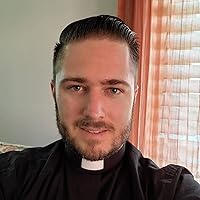
Rev. Brandan Robertson is a noted author, activist, and public theologian, working at the intersections of spirituality, sexuality, and social renewal. He is an ordained minister in the United Church of Christ, serving as the Pastor of Sunnyside Reformed Church in New York City and is the founder and Executive Director of DevOUT, a non-profit challenging far-right religious narratives in both digital and traditional media. He’s widely known as the "TikTok Pastor", with a vast digital reach of nearly 350k followers and 10 million views engaging his inclusive theological content across social media. His sermons can also be heard weekly on Star.FM in various states across the country.
A passionate writer, Robertson has authored, edited, or contributed to over twenty-seven books on spirituality, justice, and theology. Notably, his book "True Inclusion: Creating Communities of Radical Embrace" was recognized as an INDIES Book of the Year Award Finalist. His writings have appeared in the pages of esteemed publications like TIME Magazine, The Huffington Post, NBC, and The Washington Post. He’s currently a columnist for Baptist News Global and for Bishop John Shelby Spong’s Progressing Spirit Newsletter. As a prominent voice in progressive faith discussions, his insights are regularly featured across global media outlets such as CNN, NPR, MSNBC, and The Washington Post. In acknowledgment of his significant influence, Rolling Stone Magazine listed him in its 2021 “Hot List” spotlighting top creatives shaping the future.
Annually, Robertson's sought-after perspective takes him to prestigious platforms like The White House, Westminster Abbey, Oxford University, and The Parliament of World Religions. He's taught seminars for institutions such as the San Francisco Theological Seminary, The Lakelands Institute, Disciples Seminary Foundation, and The Wisdom Centre (Canada). Robertson has also been an honored member of many vital advisory committees for entities like the Democratic National Convention, the U.S. Department of State, and the U.S. Department of Health and Human Services. In 2020, he was named a Fellow of the Salzburg Global Seminar and in 2023 was named a Senior Digital Ministry Fellow of Convergence.
A stalwart champion for LGBTQ+ rights, the Human Rights Campaign lauded him as a top faith-leader fervently advancing LGBTQ+ equality. His tireless efforts encompass collaboration with global political figureheads and activists to eradicate conversion therapy and advocate for the rights of sexual and gender minorities. In 2024, the LGBTQ+ Religious Archives Network honored Robertson for his prophetic leadership for queer inclusion in the Christian Church. Robertson is also a part of the Red Letter Christians Leaders Network, is a founding member of The Union of Affirming Christians, a Patron of One Body, One Faith (UK), and an advisor for The Center for Progressive Christianity, LOVEBoldly, and The Global Interfaith Commission on LGBTQ+ Lives.
In his academic pursuits, Robertson acquired a Bachelor of Arts in Pastoral Ministry and Biblical Studies from Moody Bible Institute, an Master of Theological Study from Iliff School of Theology, and an Master of Arts in Political Science and Public Administration from Eastern Illinois University. He's presently pursuing a PhD in Biblical Studies at Drew University. He currently resides in New York City.
Decidedly unbiblical, poor hermeneutics based on personal preferences rather than Biblical author’s intent, and contrary to Church history. A steaming load of trash.
This kind of perspective leaves me scratching my head. Not only do I disagree, but I'm struggling to work out who this is for. By contrast, I disagreed with Matthew Vines in his God and the Gay Christian, but his approach seems to be a more compelling way to reach evangelicals with a high view of Scripture. "You can keep the vast majority of your worldview," Vines is saying. Robertson's doing something else altogether and it seems like one of the worst trade deals, perhaps of all time. "If you give your beliefs around the authority of Scripture and the meaning of the atonement and eschatology, I'll give you utter licentiousness in the realm of sexuality. Deal?" I mean sure, if it weren't for all the evidence contrary to Robertson's position, maybe it could be plausible. But why should we start with his position, and then disqualify all the evidence that doesn't support it?
Not only that, but Robertson's position can't hold it's own weight, and he constantly has to intellectually have his cake and eat it too. Here are some of the examples of double think:
- Robertson argues that the Biblical authors would definitely be homophobes and would definitely take issue with 21st century monogomous lifelong same sex relationships, but at the same time makes the case that not a single one of the "clobber passages" actually condemns this kind of thing. So somehow the Biblical writers managed to keep their worldview out of the text on this. - He argues that evangelicals shouldn't use the creation narrative because that's obviously a myth, but then makes arguments based off it and also appeals to Jesus Christ constantly through out the book, who definitely makes use of the creation narrative. - He argues that Paul's comments in Romans 1 should not be understand as universally applicable but as a critique of Rome, but also argues that Paul is not to be trusted because he's a bigot due to his Roman patriarchal worldview. - He explains away the experiences of people who no longer engage in this lifestyle by arguing that sexuality is fluid. But if that's the case, doesn't that pull the carpet out from under the whole case? Isn't "conversion therapy" and "non affirming theology" terrible because sexual orientation is fixed and thus an identity issue? - He argues that the problem with evangelicalism is that it's not inclusive and tries to view people through the lens of good and bad, but argues repeatedly that evangelicals are bad. - He argues that Scripture is neither inerrant nor clear, so we shouldn't have confidence in our beliefs anyway, but then cites all the texts that sound super Marxist and conveniently uses them as "clobber passages."
To be charitable with those we disagree with, we first need to hear their ideas until we understand them as if we believed them ourselves. Only then will we see people with the dignity they deserve. A lot of the ideas in this text challenged notions that I have held since I can remember, notions that people around me accept as undeniable truth. I cannot say I can venture as far as the author does with his conception of Christian ethics and biblical interpretation, but I was definitely challenged in how I approach those issues. Hearing new ideas helps us see others less through labels and more through the nuance of who they are, in both academic and personal contexts. These discussions must be incarnational, not merely reserved for books, articles, and echo chambers, but lived in friendships in kindness, community, camaraderie, and curiosity. I still have a lot of questions, but something tells me that I can't find all my answers in books.
Brandan J. Robertson verfolgt in The Gospel of Inclusion eine klare These: Das Evangelium selbst verlange die volle kirchliche Inklusion aller sexuellen Orientierungen, einschließlich gleichgeschlechtlicher Praxis. In sieben Kapiteln versucht er, diese Überzeugung biblisch, hermeneutisch und pastoral zu begründen. Das Buch ist engagiert geschrieben, gut lesbar und erkennbar aus persönlicher Betroffenheit heraus entstanden. Gerade darin liegt zugleich seine Stärke – und seine größte Schwäche.
Aufbau und Anliegen Robertson macht bereits im Prolog deutlich, dass er keine umfassende wissenschaftliche Abhandlung liefern will, sondern einen Denkweg aufzeigen möchte. Kapitel 1 (Known by Your Fruits) argumentiert stark pragmatisch: Nicht-inklusive Theologie führe zu schlechten „Früchten“ wie Ausgrenzung, psychischem Leid und erhöhten Suizidraten unter LGBT+-Personen. Diese Beobachtungen sind ernst zu nehmen und fordern Kirchen zu Selbstkritik und seelsorgerlicher Sensibilität heraus.
In Kapitel 2 (Clobbered) widmet sich der Autor den klassischen sechs Bibelstellen zur Homosexualität. Kapitel 3 (The Redemptive Trajectory) führt die sogenannte „redemptive-movement hermeneutics“ (nach William J. Webb) ein, die dann im weiteren Verlauf leitend bleibt. Die folgenden Kapitel entfalten eine inklusive Lesart der Bibel, dekonstruieren patriarchale Strukturen und rufen schließlich zu einer „radikal inklusiven“ Glaubenspraxis auf.
Hermeneutik und Bibelauslegung Der zentrale Schwachpunkt des Buches liegt eindeutig in der Exegese und Hermeneutik. Die biblischen Texte werden nicht sorgfältig ausgelegt, sondern überwiegend umgedeutet, relativiert oder in ein vorgefasstes Deutungsraster eingepasst. Römer 1 wird etwa so interpretiert, dass Paulus lediglich unnatürliche Sexualität im Sinne fehlender Fortpflanzungsorientierung kritisiere – eine Lesart, die weder dem Text noch seinem Argumentationsgang gerecht wird. Ähnlich problematisch sind die Deutungen von 1. Korinther 6 sowie Jesu Bezugnahme auf Genesis.
Besonders kritisch ist, dass der Autor Genesis grundsätzlich nicht historisch versteht. Die Schöpfung von Mann und Frau wird nicht als normative Setzung, sondern als symbolische Erzählung von Beziehung interpretiert. Jesu Aussagen zur Ehe werden entsprechend umgedeutet. Auch der Begriff des „Erfüllens“ des Gesetzes (plēroō) wird so gelesen, als ob Gott sich moralisch weiterentwickle und frühere Ordnungen hinter sich lasse. Diese Sichtweise hat weitreichende Konsequenzen für Gotteslehre, Christologie und Schriftverständnis – wird aber kaum reflektiert oder sauber begründet.
Ein notwendiger seelsorgerlicher Punkt Gleichzeitig muss – auch gegen manche kirchliche Praxis – deutlich gesagt werden: Die Kirche muss der Ort sein, an dem Menschen mit unterschiedlicher sexueller Orientierung Raum finden, gehört, gesehen und geliebt werden. Sie brauchen eine geistliche Heimat, in der sie nicht auf ihre Sexualität reduziert werden, sondern als ganze Menschen wahrgenommen werden. Ebenso muss die Kirche Menschen in Prozessen der Heiligung begleiten, tragen und geduldig mitgehen – so wie bei allen anderen Christen auch.
Hier liegt ein reales Versagen vieler Gemeinden: Sünden im Bereich der Sexualität werden häufig implizit oder explizit als schwerwiegender behandelt als andere Formen von Sünde wie Stolz, Lieblosigkeit, Machtmissbrauch oder Selbstgerechtigkeit. Das widerspricht dem Evangelium. Ein evangeliumsgemäßer Umgang bedeutet jedoch nicht, Sünde gutzuheißen oder biblische Ethik aufzugeben, sondern Menschen ernsthaft, liebevoll und wahrhaftig zu begleiten – mit Geduld, Demut und Klarheit.
Gerade an diesem Punkt hätte das Buch eine wichtige Brücke schlagen können. Stattdessen entscheidet sich Robertson für eine Lösung, die Spannung zwischen Wahrheit und Liebe aufzulösen versucht, indem die biblische Norm selbst relativiert wird.
Theologische Gesamteinschätzung Im Kern leidet das Buch an einer fragwürdigen Grundannahme: Wahrheit wird stark über Wirkung („Früchte“) definiert. Leid wird damit unteranderem zu einem hermeneutischen Schlüssel. So wichtig Mitgefühl, Seelsorge und Liebe sind – sie können keine tragfähige Grundlage für die Neubestimmung biblischer Ethik sein. Auch Webbs Ansatz – und Robertsons Übernahme desselben – stellt für mich einen der größten Schwachpunkte des Buches dar. In der Konsequenz unterminiert dieser Ansatz aus meiner Sicht die Autorität der Schrift, die Verbindlichkeit biblischer Ethik und letztlich auch die Möglichkeit, noch sauber zwischen Anpassung an den Zeitgeist und geistlicher Erneuerung zu unterscheiden. Zugleich will ich fair bleiben: Um dieses Urteil abschließend zu fällen, müsste Webbs Ansatz noch deutlich gründlicher durchdrungen werden. Der Eindruck, den Robertsons Anwendung hinterlässt, ist jedoch problematisch und wirft mehr Fragen auf, als er überzeugend beantwortet.
Theologisch zeigt das Buch insgesamt deutliche Schwächen. Hermeneutik, Gotteslehre, Christologie, Pneumatologie, Anthropologie und Hamartiologie bleiben unterkomplex oder werden stark selektiv behandelt. Besonders problematisch ist die implizite Vorstellung eines sich moralisch „weiterentwickelnden“ Gottes, der frühere ethische Setzungen relativiert. Das Evangelium wird dabei zunehmend mit Inklusion identifiziert, während Themen wie Sünde, Umkehr, Kreuz, Heiligung und Nachfolge kaum tragfähig entfaltet werden.
Positiv hervorzuheben ist Robertsons Wunsch nach Dialog und sein Appell, nicht übereinander, sondern miteinander zu sprechen. Sein Anliegen, Menschen nicht zu verletzen, sondern ihnen mit Würde zu begegnen, ist ernst zu nehmen. Wahrheit und Liebe dürfen jedoch nicht gegeneinander ausgespielt werden – beides gehört untrennbar zusammen.
Fazit The Gospel of Inclusion ist ein emotional engagiertes, gut zugängliches Buch, das wichtige pastorale und gesellschaftliche Fragen aufwirft. Theologisch überzeugt es jedoch nicht. Die Bibelauslegung ist selektiv, die Hermeneutik einseitig, und die Konsequenzen für das christliche Glaubensverständnis bleiben unterreflektiert. Wer eine historisch-christliche, biblisch fundierte Auseinandersetzung sucht, wird enttäuscht sein. Als Einblick in progressive inklusive Argumentationsmuster ist das Buch aufschlussreich – als tragfähige theologische Orientierung jedoch nicht ausreichend.
I highly recommend this book for anyone looking to learn more about LGBT inclusion in the church. This book is the first I’ve read that doesn’t try to “correct” theology but rather takes an approach of radical inclusion ordained by the Holy Spirit. Well done, Brandan.
I hope to write a fuller review, well more a likely a critic, but for now I'll just say that Roberston's arguments fail to convince because they are based on unsubstantiated ideas. It's just too early in the research to say that the Bible is fundamentally rooted in patriarchy (especially when Aimee Byrd's Recovering from Biblical Manhood and Womanhood makes such a strong case against such a conclusion), and his redemptive hermeneutic has not been shown to extend to LGBT+ inclusion, at least not at a general level of acceptance.
Of course, such ideas start somewhere, but this book moves into real life application sooner than it should.
If you choose to read, just know that this isn't the final word, and there is much work to do.
Brandan Robertson, pastor of Missiongathering Church in San Diego (and, full confession, my former academic advisee!), writes a pithy, eminently readable and well-researched argument for full LGBT+ inclusion in the church, pitched especially to the evangelical community. Robertson’s short book makes six moves in each of its six chapters: 1) laying out a biblical hermeneutic of doing no harm and showing how exclusion actively harms LGBTQ persons; 2) reexamining the social context of the texts usually used to condemn queer activity as sin (whimsically titled “Clobbered”); 3) arguing beyond the “clobber” texts to observe the arc of liberation as salvation throughout Scripture; 4) courageously condemning the patriarchal oppressive parts of Scripture as limited products of their all-too-human writers’ time and place; 5) seeing the transformative power of people in relationships with LGBTQ persons rather than defending abstract doctrines; and 6) a kind of theological sermon that encourages people to embrace the gospel of inclusion actively in their own lives. Robertson includes an appendix with some of his earlier work that was published only online.
Along the way, Robertson engages all the arguments against LGBTQ inclusion in the church, rebutting them sympathetically but firmly. He cites Scripture, theological essays, and scientific studies throughout to support his arguments. We can only pray that Robertson’s book reaches the souls of his intended audience. But those of us who were already convinced that God’s love does not stop with straight people, and that queer people deserve to be present at every level of Christ’s family, will find a helpful aid to conversation in Robertson’s work. Especially recommended for church libraries and for church small groups for discussion, but also as a research aid for undergraduate and seminary students who want to examine this issue more closely as well.
I disagree with the conclusion of this book. I disagreed before I started but hoped to have a better understanding of the inclusive side of the argument. The foundation of the entire book is built by deconstructing both the infallibility and inerrancy of the Bible. From that point there wasn’t much that could justify any kind of legitimacy to an inclusive theology.
There are also some false generalizations about the non-affirming side of the argument. One of the being that LGBTQ individuals are unworthy of Christ’s love. The truth is that all are unworthy of Christ’s love, but we’re also called into a life of transformation and self-denial. For some that hits closer to what may be considered an identity issue, and for others it may manifest in selfish actions.
In general the conversation needs to continue and generalizations don’t often contribute much to that conversation. Much more is to be found in speaking in favor of our own points rather than pointing out the fault in others. Even though I disagree with LGBTQ Christians holding leadership positions, particularly ordained positions, I believe all have sinned and fallen short of the glory of Christ. Whether someone’s sexual belief is enough to contradict their faith is a matter between them and God.
Robertson creates an argument that makes you think. He considers how history has gone against same-sex-attractiveness and tries to rationalize why Christianity and homosexuality has never seen eye to eye. I do believe we must consider multiple lenses while we understand and translate Scripture. Each lens used gives a clearer image of what the writer is indicating. Robertson does make a claim I believe to be entirely true: "if we are to learn anything from the example of the life of Jesus, we should take away the fact that true growth and transformation comes from being in proximity with our "others"" (p. 79). As Christ followers, we have not done enough to understand those that look different than we do and it's a call to become uncomfortable and live in relationship with people who look different than we do. In doing so, we'll know better compassion and understanding for those in our communities.
This was a stimulating and powerful read. Robertson's book is the most comprhensive and practical argument for inclusion in the Church since Matthew Vines "God and the Gay Christian'. Robertson's personal journey and writing style is refreshing as well as academically and theologically spot on! I highly recommend this book for congregations who are discerning a call to inclusivity within the Church as well as LGBTQ+ persons of faith. If I'm forming a syllabus for a course on Queer Theology, this text would be near the top of the reading list. Robertson's book is affirmation that God's Spirit is indeed moving, and waiting for the Church to respond.
Brandan Robertson is a prophetic voice for our times. In ‘The Gospel of Inclusion’ Brandan makes the case that LGBTQ+ Christians should be included in faith communities not in spite of their identities but because of it. I’m not a Christian, but I read this book because so many queer people have experienced spiritual violence and it’s texts like this one that provide a roadmap for inclusive and affirming faith communities that so many people are searching for.
Let's say it all together... If the bible calls it a sin, it doesn't matter what you think.
There is no "deconstruction of oppressive systems". By even suggesting that you are saying Gods word is untrue and that we have a right to change it. I feel incredibly sad that anyone would read or listen to anything Brandan has to say and I hope he'll repent before it's too late.
I tried to read this book with an open mind so I could b enlightened. Unbiblical. He twisted scripture in order to support his lifestyle. I am not impressed at all. I only gave it two stars because it was overall well written and organized.
Pastor Brandan Robertson provides an exciting look about the radical expansiveness of the gospel's message and what that means for the LGBTQ community and the Church. Rather than rely solely on scriptural arguments (which he contends only solidifies the opinions on either side) or lofty theological discourses that leave one's head in the clouds, Robertson addresses both of these arenas and then quickly moves onto the real life impact of non-affirming theology and the fruits that it bears. I especially appreciated how Robertson identified a primary root of these anti-LGBTQ views in the heresy of patriarchy that has imbedded itself in so much theology and countless biblical hermeneutics. In my opinion this is something that is often overlooked when examining non-affirming viewpoints. Robertson then invites the reader, and indeed the Church, to expand their understanding of God's love and the radical nature of Christ's message of good news for all peoples. He emphasizes the necessity of meeting with and honestly learning from members of the LGBTQ community to see and understand their love of God and to let the Spirit move in the conversation by seeing our earnest desire to be fully affirmed, loved, and valued members of the Christian movement. This is a short yet powerful read and I recommend it for anyone who might have lingering doubts about affirmation of the LGBTQ community in the church as well as anyone who seeks a thought-provoking and expansive view of God's love.
Full disclosure: I received an advance review copy of this book. I am also a Lutheran pastor and a gay man.
An excellent breakdown on why the modern church needs to reexamine its stance on accepting and affirming LGB believers. I specifically do not state the full 2SLGBTQIA+ spectrum as the book does not address additional aspects of the queer community, though the author does point to other resources for members for the Trans and Poly communities. His arguments are a great mix of biblical scholarship and theology, making it a more approachable and readable analysis than I've seen in other similar texts on the topic. That being said, as someone who is already an affirming believer, I could see why someone who was not as open would find the work insufficiently scholarly to sway any deep-seated beliefs.
Definitely a book I would recommend to friends who are already affirming and feel the need to have a stronger case when arguing their convictions, but also those who are open to learning more about inclusion in the church.
I’d recommend this book to any theology nerd, especially LGBTQ+ people who’ve deconstructed fundamentalist Christianity.
That said, the book primarily focuses on same-sex relationships. There is pause given to trans identities within the gender binary and, very interestingly, polyamory.
Although I am confident the author would be supportive of such identities and would argue against them being unchristian, nonbinary, intersex and aro / ace identities are not mentioned.
Fascinatingly, core to his deconstruction of bible versus that are used to argue that LGBTQ+ identities are unchristian is a deconstruction of patriarchy.
I do not foresee this book changing the mind of anyone who is committed to a literalist interpretation of the bible, as it simply does not play by these terms nor does it provide the argument for why a literalist interpretation doesn’t work.
However I think it provides a vitally needed perspective, and hopefully comfort to LGBTQ+ Christians who need it.
Not much new here that I haven't heard before, but I wanted to hear what his case was. It was a confused mess, overly relying on a harm principle. If we could make similar arguments for incestuous relationships (something that is still taboo for Robertson), then the logic is probably not all that firm.
Robertson has a weird affinity with restorationist movements. His argument implies that the gospel has been lost for basically all of church history and falls into the same basic "the church went wrong because of Constantine" trajectory that is so common.
Robertson doesn't believe in the biblical Jesus, nor does he believe in the infallibility, reliability and authority of scripture. He is a poor interpreter and has poor hermeneutics based on his own desires and personal agenda as a openly gay man. Everything in this book is an attempt to continually make his lifestyle acceptable. Robertson has a history of saying completely un-biblical things and twisting scripture.
I appreciated that this book didn't lean on the traditional theological explanations, which I've heard countless times already. Instead, Brandan proposed that we watch and see how God is already working among LGBTQ Christians, and how we might be more attuned to the Holy Spirit's leading. While I don't agree with all of his points, he gave me lots to think about and packed quite a punch in such a small book. It was well worth the read.
Este libro es una joya. Que importante es leer experiencias de primera línea en temas de discriminación de las disidencias sexuales en las iglesias. Es urgente que la comunidad Cristiana reflexione y se auto analice en sus conductas y discursos de odio. Es demasiado el daño que se hace. En la mesa de Jesús cabemos todos y todos están invitados. Basta de abusos.
The big debates in today’s Christianity are all about welcoming sexual and gender minorities into the church. The author digs into the Bible, looks at cultural backgrounds, and checks out modern social movements to make the case that the Christian message is about breaking down oppressive systems and celebrating human diversity as part of God’s creative plan.
A beautiful work and resource of theology for inclusion in the church. The fact that there is a flourishing LGBTQ+ Christian community bears witness enough that the story of Jesus is one for all people, for all time. So grateful for this book and will be adding a physical copy to my library.
It’s pride month…so I’m immersing myself to read and listen to LGBTQIA+ stories. This book expands the gospel in a beautiful wholistic way as it centers around the larger more expansive vision…Gospel of inclusion.
Thought provoking. I definitely appreciated the deep dive into the scriptures and the analytical side of this debate. As always, inclusion and love wins.
An important case made from within the church, as pointed and unapologetic at it is respectful to faith and undergirded by a true love for Jesus and His compassionate (as well as Divine) ministry.