

What do you think?

On Agoraphobia
When Graham Caveney was in his early twenties he began to suffer from what was eventually diagnosed as agoraphobia. What followed were decades of managing his condition and learning to live within the narrow limits it imposed on his life: no motorways, no dual carriageways, no shopping centres, limited time outdoors.
Graham’s quest to understand his illness brought him back to his first love: books. From Harper Lee’s Boo Radley, Ford Madox Ford, Emily Dickinson, and Shirley Jackson: the literary world is replete with examples of agoraphobics – once you go looking for them.
On Agoraphobia is a fascinating, entertaining and sometimes painfully acute look at what it means to go through life with an anxiety disorder that evades easy definition.
Graham’s quest to understand his illness brought him back to his first love: books. From Harper Lee’s Boo Radley, Ford Madox Ford, Emily Dickinson, and Shirley Jackson: the literary world is replete with examples of agoraphobics – once you go looking for them.
On Agoraphobia is a fascinating, entertaining and sometimes painfully acute look at what it means to go through life with an anxiety disorder that evades easy definition.
208 pages, Hardcover
Published April 28, 2022
Ratings & Reviews
Friends & Following
Create a free account to discover what your friends think of this book!
Community Reviews
Displaying 1 - 30 of 36 reviews

July 4, 2022
I picked this up after seeing it mentioned in an online article about recently published books. This isn’t a scientific study of agoraphobia but a personal memoir in which the author sets out what the condition has meant for him. He has had a difficult life with several other complex aspects, but it is the agoraphobia he concentrates on here. The book’s cover may refer to a comment where he says that to be agoraphobic means “to think of a windowpane as a movie screen.”
The book is written throughout in short, forceful paragraphs, sometimes just a single sentence. I highlighted quite a few as I went along. It’s also littered with literary references, something I imagine many GR members would enjoy. The author is extremely well-read, explaining that books have been important to him, spending as he does almost all his time indoors. He discusses characters in books who showed signs of agoraphobia, although the only one I was familiar with was “Boo” Radley from To Kill a Mockingbird. He also discusses writers whom he believes were agoraphobic, amongst whom he lists Emily Dickinson, Ford Madox Ford, and Shirley Jackson.
For the author, agoraphobia is not so much fear of open spaces as a fear that bad things will happen to him when he goes outside. He constantly rehearses “What if…?” in his mind – what is termed anticipatory anxiety. To an extent I can relate to this. I’m the sort of person who turns up at an airport or a train station well before I need to. I always leave home early in case of delays en route. I suppose that’s a mild version of what the author suffers from. His difficulties are quite marked though. Motorways seem to be a particular stressor. He says in the book that he has not travelled on a motorway for 36 years, describing that as “a near-lifetime of compromise and embarrassed excuses. I… try to avoid tormenting myself with the missed funerals, unattended weddings, jobs turned down.” In the author’s case, there was an additional complexity in that his background was that of a working-class Lancashire family. His parents had a “common sense”, no-nonsense, attitude to life, and found it hard to understand a son who could hardly move out the door.
Hippocrates seems to have described symptoms that resemble agoraphobia, and the book considers various hypotheses about the cause. In modern times around two-thirds of agoraphobics are female, and the author considers feminist theories as to why this should be. Obviously they don’t apply in his case, and so he also examines suggested neurological, behaviourist and evolutionary causes. The COVID lockdown was of course something of a gift to the author, “my phobia blurring into government policy.”
This is a relatively short book at around 200 pages, but there’s a lot in here. I’m left with a better understanding of what, for the author at least, has been a very debilitating lifelong condition.
The book is written throughout in short, forceful paragraphs, sometimes just a single sentence. I highlighted quite a few as I went along. It’s also littered with literary references, something I imagine many GR members would enjoy. The author is extremely well-read, explaining that books have been important to him, spending as he does almost all his time indoors. He discusses characters in books who showed signs of agoraphobia, although the only one I was familiar with was “Boo” Radley from To Kill a Mockingbird. He also discusses writers whom he believes were agoraphobic, amongst whom he lists Emily Dickinson, Ford Madox Ford, and Shirley Jackson.
For the author, agoraphobia is not so much fear of open spaces as a fear that bad things will happen to him when he goes outside. He constantly rehearses “What if…?” in his mind – what is termed anticipatory anxiety. To an extent I can relate to this. I’m the sort of person who turns up at an airport or a train station well before I need to. I always leave home early in case of delays en route. I suppose that’s a mild version of what the author suffers from. His difficulties are quite marked though. Motorways seem to be a particular stressor. He says in the book that he has not travelled on a motorway for 36 years, describing that as “a near-lifetime of compromise and embarrassed excuses. I… try to avoid tormenting myself with the missed funerals, unattended weddings, jobs turned down.” In the author’s case, there was an additional complexity in that his background was that of a working-class Lancashire family. His parents had a “common sense”, no-nonsense, attitude to life, and found it hard to understand a son who could hardly move out the door.
Hippocrates seems to have described symptoms that resemble agoraphobia, and the book considers various hypotheses about the cause. In modern times around two-thirds of agoraphobics are female, and the author considers feminist theories as to why this should be. Obviously they don’t apply in his case, and so he also examines suggested neurological, behaviourist and evolutionary causes. The COVID lockdown was of course something of a gift to the author, “my phobia blurring into government policy.”
This is a relatively short book at around 200 pages, but there’s a lot in here. I’m left with a better understanding of what, for the author at least, has been a very debilitating lifelong condition.
August 26, 2022
“Agoraphobia is a fundamentalist form of belief. If it was a religion I would be scared of it. Agoraphobes are zealots, crazed clairvoyants; we can predict the future. Terrifying things will happen when we go out, because terrifying things always happen when we go out. Just wait and see.”
Brief, aphoristic, and surprisingly funny at times, this memoir is an unconventional one, as Caveney spends more time discussing others than himself. The work is short on the autobiographical details that one expects and even on the causes of and treatment for agoraphobia, and longer on the history of the condition, famous creative individuals who suffered from it, and its representation in the visual arts, film, and literature. Ford Madox Ford, Emily Dickinson, Shirley Jackson, and Edvard Munch are a few of the famous agoraphobes Caveney writes about, and Miss Havisham and Boo Radley are among the many fictional characters who also make an appearance in the book.
Caveney doesn’t focus much on biological aspects of the phobia, beyond stating that the internal clocks of agoraphobics are damaged. The internal receptors that are supposed to respond to the external world don’t work properly; their malfunctioning impacts hormone production, brainwave activity, and eating and sleeping patterns. According to the author, a single event typically gets the ball rolling, and once rolling, the phobia is mightily resistant to treatment. In fact, in the late 1960s and early 70s, modified lobotomies were performed on those with intractable agoraphobia. It was apparently easier to desensitize an agoraphobe once part of his prefrontal cortex was destroyed.
Hippocrates noted the condition in the third or fourth century BC, but it became better known in the nineteenth century when all manner of mental disorders were being assiduously catalogued by clinicians. In 1871, German neurologist Karl Westphal used the term “agoraphobia” for the first time to indicate the fear of large, open spaces. Initially considered a phobia primarily afflicting men, it’s now seen more often in women. Caveney says that as many as two-thirds of today’s agoraphobic patients are female. Even Freud had some experience of it as a young man. His view was that “the agoraphobic is always afraid of his impulses in connection with temptations aroused in him by meeting people on the street . . . In his phobia he makes a displacement and is now afraid of an external situation.” Some nineteenth-century clinicians linked the emergence of agoraphobia to industrialization and urbanization.
The details the author provides about his own life are disappointingly limited and vague. He appears to be aware of this, acknowledging that “agoraphobia insists it has always been there. It has a scorched-earth policy towards personal history.” The author recalls walks in nature with his father but admits that “the more pastoral aspects” of his early life don’t easily come to mind. Born in Lancashire to working-class parents who doted on him, in time he became a concerning puzzle to them. Looking back, he sees himself as a sickly, awkward child. Because he had no siblings, he did not need to learn to negotiate for personal space and he was “unschooled in [resolving] boundary disputes”. Quiet and retiring, he liked being indoors rather than outside and preferred reading over engaging with other children, whom he disliked. Intellectually gifted, he won a place at a Roman Catholic grammar school. There, as a young teenager, he was groomed and sexually abused for two years by the headmaster/priest of the school. It’s an experience that obviously contributed to his later developing agoraphobia.
Caveney’s agoraphobia grew out of a panic attack he experienced at age 19 while riding by coach to Coventry, where he attended Warwick University. He could not escape the vehicle when he was suddenly flooded with intense anxiety. The bus made a scheduled stop in Manchester, and Caveney sobbed for 20 minutes in a bathroom cubicle, believing something terrible had happened.
Back at school after that episode he turned down offers of rides and outings with friends; motorways had now become a source of fear. He also had more panic attacks. Caveney says it’s not the panic attacks themselves that lead to agoraphobia: “The fear of them recurring does. Agoraphobia is a meta-fear, a pre-emptive strike against the fear yet to come.” The fear of going out isn’t the problem either; rather, it’s the “fear of something dreadful happening whilst being out.” By age 20, Caveney’s fear of travel broadened to include bridges, parks and open ground. He routinely made detours to avoid them. At the time of writing, Caveney hadn’t been on a motorway for 36 years.
By age 21, the author’s world had shrunk. He returned from university to his childhood home, confining himself to his bedroom. Eventually—the details are unclear—he seems to have moved out of the house. (How he later managed to form a relationship with his partner, Emma, and how he gained employment as a writing instructor remain great mysteries.)
Not long after his diagnosis, Caveney turned to alcohol in an effort to dampen his anxiety, but this self-medication only caused more trouble. By the age of 23, he was fully alcoholic. He explains that he cycled in and out of rehabilitation facilities for years. Only at the age of 44, when he was a non-functioning alcoholic whose liver was giving out, did the treatments and therapy finally take. He has maintained sobriety ever since.
Caveney eschews a linear approach to memoir writing. One might even say he’s averse to to a form that requires him to be the main character. Readers are called upon to figure out who he is not by what he remembers about his own life but by what he chooses to report about the lives of others and the facts that seem to interest him. The author’s style is also unusual and idiosyncratic. Chapters and paragraphs are short. There’s a staccato, fragmented feel to prose that is laced with literary allusions. Caveney has obviously read widely and deeply.
Having finished his memoir, I wish I had a better sense of how the author’s agoraphobia progressed, what he thought was going on, how he tried to cope . . . before resorting to alcohol, that is. My guess is that Caveney believed that attempts to reconstruct experiences (as memoirists typically do) would be dishonest. He says that over the course of his life, he’s seen ten psychiatrists, a score of counsellors, and two dozen psychotherapists. He has chosen to say little or nothing about those experiences here. He’s been prescribed various pharmaceuticals (one class of which— benzodiazepines—he became addicted to). He’s equally mum on whether any of these medications helped. Ditto on the herbal and vitamin supplements he’s tried. But what of the cognitive behavioural, desensitization, and biofeedback therapies? He does not say. It’s evident that his life has become more manageable and fulfilling in recent years. It sure would have been interesting to learn how that was achieved.
Rating: 3.5 rounded down
Brief, aphoristic, and surprisingly funny at times, this memoir is an unconventional one, as Caveney spends more time discussing others than himself. The work is short on the autobiographical details that one expects and even on the causes of and treatment for agoraphobia, and longer on the history of the condition, famous creative individuals who suffered from it, and its representation in the visual arts, film, and literature. Ford Madox Ford, Emily Dickinson, Shirley Jackson, and Edvard Munch are a few of the famous agoraphobes Caveney writes about, and Miss Havisham and Boo Radley are among the many fictional characters who also make an appearance in the book.
Caveney doesn’t focus much on biological aspects of the phobia, beyond stating that the internal clocks of agoraphobics are damaged. The internal receptors that are supposed to respond to the external world don’t work properly; their malfunctioning impacts hormone production, brainwave activity, and eating and sleeping patterns. According to the author, a single event typically gets the ball rolling, and once rolling, the phobia is mightily resistant to treatment. In fact, in the late 1960s and early 70s, modified lobotomies were performed on those with intractable agoraphobia. It was apparently easier to desensitize an agoraphobe once part of his prefrontal cortex was destroyed.
Hippocrates noted the condition in the third or fourth century BC, but it became better known in the nineteenth century when all manner of mental disorders were being assiduously catalogued by clinicians. In 1871, German neurologist Karl Westphal used the term “agoraphobia” for the first time to indicate the fear of large, open spaces. Initially considered a phobia primarily afflicting men, it’s now seen more often in women. Caveney says that as many as two-thirds of today’s agoraphobic patients are female. Even Freud had some experience of it as a young man. His view was that “the agoraphobic is always afraid of his impulses in connection with temptations aroused in him by meeting people on the street . . . In his phobia he makes a displacement and is now afraid of an external situation.” Some nineteenth-century clinicians linked the emergence of agoraphobia to industrialization and urbanization.
The details the author provides about his own life are disappointingly limited and vague. He appears to be aware of this, acknowledging that “agoraphobia insists it has always been there. It has a scorched-earth policy towards personal history.” The author recalls walks in nature with his father but admits that “the more pastoral aspects” of his early life don’t easily come to mind. Born in Lancashire to working-class parents who doted on him, in time he became a concerning puzzle to them. Looking back, he sees himself as a sickly, awkward child. Because he had no siblings, he did not need to learn to negotiate for personal space and he was “unschooled in [resolving] boundary disputes”. Quiet and retiring, he liked being indoors rather than outside and preferred reading over engaging with other children, whom he disliked. Intellectually gifted, he won a place at a Roman Catholic grammar school. There, as a young teenager, he was groomed and sexually abused for two years by the headmaster/priest of the school. It’s an experience that obviously contributed to his later developing agoraphobia.
Caveney’s agoraphobia grew out of a panic attack he experienced at age 19 while riding by coach to Coventry, where he attended Warwick University. He could not escape the vehicle when he was suddenly flooded with intense anxiety. The bus made a scheduled stop in Manchester, and Caveney sobbed for 20 minutes in a bathroom cubicle, believing something terrible had happened.
Back at school after that episode he turned down offers of rides and outings with friends; motorways had now become a source of fear. He also had more panic attacks. Caveney says it’s not the panic attacks themselves that lead to agoraphobia: “The fear of them recurring does. Agoraphobia is a meta-fear, a pre-emptive strike against the fear yet to come.” The fear of going out isn’t the problem either; rather, it’s the “fear of something dreadful happening whilst being out.” By age 20, Caveney’s fear of travel broadened to include bridges, parks and open ground. He routinely made detours to avoid them. At the time of writing, Caveney hadn’t been on a motorway for 36 years.
By age 21, the author’s world had shrunk. He returned from university to his childhood home, confining himself to his bedroom. Eventually—the details are unclear—he seems to have moved out of the house. (How he later managed to form a relationship with his partner, Emma, and how he gained employment as a writing instructor remain great mysteries.)
Not long after his diagnosis, Caveney turned to alcohol in an effort to dampen his anxiety, but this self-medication only caused more trouble. By the age of 23, he was fully alcoholic. He explains that he cycled in and out of rehabilitation facilities for years. Only at the age of 44, when he was a non-functioning alcoholic whose liver was giving out, did the treatments and therapy finally take. He has maintained sobriety ever since.
Caveney eschews a linear approach to memoir writing. One might even say he’s averse to to a form that requires him to be the main character. Readers are called upon to figure out who he is not by what he remembers about his own life but by what he chooses to report about the lives of others and the facts that seem to interest him. The author’s style is also unusual and idiosyncratic. Chapters and paragraphs are short. There’s a staccato, fragmented feel to prose that is laced with literary allusions. Caveney has obviously read widely and deeply.
Having finished his memoir, I wish I had a better sense of how the author’s agoraphobia progressed, what he thought was going on, how he tried to cope . . . before resorting to alcohol, that is. My guess is that Caveney believed that attempts to reconstruct experiences (as memoirists typically do) would be dishonest. He says that over the course of his life, he’s seen ten psychiatrists, a score of counsellors, and two dozen psychotherapists. He has chosen to say little or nothing about those experiences here. He’s been prescribed various pharmaceuticals (one class of which— benzodiazepines—he became addicted to). He’s equally mum on whether any of these medications helped. Ditto on the herbal and vitamin supplements he’s tried. But what of the cognitive behavioural, desensitization, and biofeedback therapies? He does not say. It’s evident that his life has become more manageable and fulfilling in recent years. It sure would have been interesting to learn how that was achieved.
Rating: 3.5 rounded down

June 22, 2024
I have had this book on my to read list for quite some time and have been really keen to read it. Well, as they say, be careful what you wish for!
The structure of writing is short staccato paragraphs that often don't follow a natural flow of ideas, more a stream of consciousness pouring from Caveney's head. The book jumps around in time from the time of writing to childhood to university days. There is a blink and you'll miss it revelation of childhood abuse, snatched mentions of visiting therapists but just when you seem to be getting close to understanding Caveney and his agoraphobia, he throws it out to a wider circle by mentioning Emily Dickinson, Virginia Woolf and other writers who have experienced similar. It's like he wants to keep us at arms length throughout.
I was hoping and indeed expecting to really like this book but it fell far short of my expectations in every way imaginable. A shame really but there you go.
The structure of writing is short staccato paragraphs that often don't follow a natural flow of ideas, more a stream of consciousness pouring from Caveney's head. The book jumps around in time from the time of writing to childhood to university days. There is a blink and you'll miss it revelation of childhood abuse, snatched mentions of visiting therapists but just when you seem to be getting close to understanding Caveney and his agoraphobia, he throws it out to a wider circle by mentioning Emily Dickinson, Virginia Woolf and other writers who have experienced similar. It's like he wants to keep us at arms length throughout.
I was hoping and indeed expecting to really like this book but it fell far short of my expectations in every way imaginable. A shame really but there you go.

August 15, 2024
An interesting entry in the memoir category, for sure. The author posits that his agoraphobia isn't so out of place in modern society. He details the struggles he encounters finding a caring therapist who actually understands his affliction. Along the way, he details other well-known agoraphobics throughout history including Emily Dickinson and Sigmund Freud. In a changing world, it's good to know that some things stay constant; people will continue to be diagnosed with agoraphobia, especially in light of the COVID-19 pandemic.

Read
January 10, 2024i found this stylistically grating so was mostly just picking through for his research and points of reference--
but ! and i am about to be so super fucking vulnerable so look away ! i haven't left the house alone in five years. leaving the house with company is a work in progress. often even in the house the world as i see and hear it sends me into clawing, heaving panic. like caveney, i came back to lancashire with my degree & wondered why people say that your hometown feels smaller when you return. i have had to re-make my life in miniature, and rely heavily on people i love to scaffold my tiny world and keep it possible, and me alive. it's v rare for me to brush up against someone else's experience in so many places (being a hermit feels so singular & often so deeply, horribly lonely) and it makes me want to tuck away the experience of reading this more carefully than i wld otherwise.
but ! and i am about to be so super fucking vulnerable so look away ! i haven't left the house alone in five years. leaving the house with company is a work in progress. often even in the house the world as i see and hear it sends me into clawing, heaving panic. like caveney, i came back to lancashire with my degree & wondered why people say that your hometown feels smaller when you return. i have had to re-make my life in miniature, and rely heavily on people i love to scaffold my tiny world and keep it possible, and me alive. it's v rare for me to brush up against someone else's experience in so many places (being a hermit feels so singular & often so deeply, horribly lonely) and it makes me want to tuck away the experience of reading this more carefully than i wld otherwise.

April 15, 2024
About a third of the way through this book, I cried. Seeing my feelings and my afflictions so perfectly defined, so understood, was an immensely emotional experience for me. I can't help but wish everyone in my life could read this book and know that this is me. Most of these chapters focused on a different aspect on the author's personal experiences, cultural references or medical history of agoraphobia, and almost every bit of it had my attention (the Freud chapter lost me a bit, but the Shirley Jackson chapter I can't stop thinking about). This book feels so necessary, so one-of-a-kind. I'm so glad it exists.

May 15, 2022
A complex life story told in an interesting way. I was drawn to the book as I know someone who suffers from agoraphobia and this has certainly made me understand their situation more clearly.

June 22, 2022
So I saw this book at work and after reading the blurb on the back I thought this sounds weirdly familiar. So firstly what is Agoraphobia … “the irrational fear of entering open or crowded places, of leaving one's own home, or of being in places from which escape is difficult.” - Google
So why did I want to read this book … firstly I don’t think I have agoraphobia in a literal sense I’m not afraid of open spaces or crowded spaces. However I have IBS and with that comes a whole array of different anxiety’s one of which can be leaving home.
I love my house I love comfort, safety and the fact I can be myself in my home… to the point where lockdown was wonderful for me and I’ll be honest I was sad when lockdown ended. 😂 As much as I love exploring, I love travelling and I love seeing people… I don’t find it easy. I know your all probably thinking I look like things come easy to me but they don’t. I have for want of a better word “rituals” I must do before I’m confident to leave the house and if they go well then panic attacks are a definite possibility. It’s another classic case of my invisible illness. The outside world is full of risks, judgement, miss understanding, embarrassment and danger and sometimes I find that really challenging to face. Back in the day when my IBS was really unpredictable I’d call in sick for work or I’d leave the house in tears because I was scared of an having an attack and people knowing I had IBS so my home was definitely my comfort zone.
Thankfully I’m a lot better these days but there are a lot of people living with these kinds of fears and this book is beautiful filled with honesty and empathy towards these fears. Absolutely great read.
So why did I want to read this book … firstly I don’t think I have agoraphobia in a literal sense I’m not afraid of open spaces or crowded spaces. However I have IBS and with that comes a whole array of different anxiety’s one of which can be leaving home.
I love my house I love comfort, safety and the fact I can be myself in my home… to the point where lockdown was wonderful for me and I’ll be honest I was sad when lockdown ended. 😂 As much as I love exploring, I love travelling and I love seeing people… I don’t find it easy. I know your all probably thinking I look like things come easy to me but they don’t. I have for want of a better word “rituals” I must do before I’m confident to leave the house and if they go well then panic attacks are a definite possibility. It’s another classic case of my invisible illness. The outside world is full of risks, judgement, miss understanding, embarrassment and danger and sometimes I find that really challenging to face. Back in the day when my IBS was really unpredictable I’d call in sick for work or I’d leave the house in tears because I was scared of an having an attack and people knowing I had IBS so my home was definitely my comfort zone.
Thankfully I’m a lot better these days but there are a lot of people living with these kinds of fears and this book is beautiful filled with honesty and empathy towards these fears. Absolutely great read.
August 25, 2025
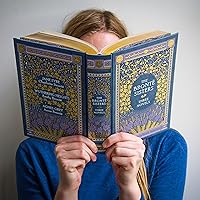
Quite a beautiful book. I loved listening to Caveney himself reading it while out for my evening walks.
June 19, 2022
A book is not fully satisfying without its cover, and I have to say I loved this cover, mainly which caused me to read it. Caveney writes with emotion, dry wit, and his musings on what is agoraphobia is quite therapeutic for one who is quite agoraphobic herself.
Beautiful.
Beautiful.

May 17, 2024
Stylistically not really for me, but very relatable to me as someone who struggles - sometimes very, very severely - to leave their house. I think it's a good insight into the experience and mindset of someone so afflicted, either so as to feel less alone in that aspect, or to gain some understanding of it. I borrowed this from the library and might buy my own copy to re-read despite not getting on amazingly with the writing style, which is a pretty big decision on my part!
March 11, 2022
A really interesting memoir on the subject of agoraphobia — a condition I find rarely spoken about in *any* capacity.
Caveney's work strides through the halls of literary and historical figures, uncovering a largely-ignored well of neuroses and phobias which afflict more of us than one would assume.
Caveney's work strides through the halls of literary and historical figures, uncovering a largely-ignored well of neuroses and phobias which afflict more of us than one would assume.
December 22, 2022
Part memoir, part exploration and deep dive into the history of agoraphobia in writers and historical figures. A stunning book, thoughtful and expansive and comforting and stark.

April 6, 2025
the vibe was off
January 14, 2023
A lyrical insight into the author’s experience of agoraphobia. We get glimpses of the possible factors and consequences Caveney has experienced (sexual abuse, alcohol addiction) and he quotes many literary references to agoraphobia. This is not an easy read in terms of subject matter. But I found the way the author muses on his anxieties to be productive and comforting, in a we’re not alone in finding life to be a struggle sort of way. As this is a newish release, he talks about the way “stay indoors” evolved into government-sanctioned advice during the COVID-19 lockdown, which I wasn’t expecting but found interesting.
Some quotes I loved…
Some quotes I loved…

December 28, 2022
I bought this book in a second-hand shop in London, I was attracted by the title: I had a general idea of what is agoraphobia, but nothing more.
The book delivers exactly what you'd expect to get: a personal essay on agoraphobia.
The style is more like a poem, short paragraphs with short sentences.
He takes you on a journey inside his phobia, he doesn't try to understand or explain what happened to him, he just depicts his life: swinging from alcoholism to a mix of depression and fear of everything; an incessant "what if" rings out in his head which defeats his willpower.
“My father invited all the features of working-class masculinity: resilience and silent strength, virtues, that in the 1970s, and 80s were becoming less virtues than the ones where. He was an endangered species, like those polar bears on melting ice caps.
Ask him about his job and he will look at you like you are daft. It was at work. Work was work. He did it because they paid him to do it. And then he came home.”
“his first attack came when he was a small child: I was suddenly seized with what would now be called agoraphobia. The Great, lonely granite boulders, the mighty, towering, precipitous ravines… produced in me, a sense of immensity, feeling of being lost, of being immediate practical, without any habitation, or place of rest in a menacing material universe, which offered no means of coming into its heart.”
The book delivers exactly what you'd expect to get: a personal essay on agoraphobia.
The style is more like a poem, short paragraphs with short sentences.
He takes you on a journey inside his phobia, he doesn't try to understand or explain what happened to him, he just depicts his life: swinging from alcoholism to a mix of depression and fear of everything; an incessant "what if" rings out in his head which defeats his willpower.
“My father invited all the features of working-class masculinity: resilience and silent strength, virtues, that in the 1970s, and 80s were becoming less virtues than the ones where. He was an endangered species, like those polar bears on melting ice caps.
Ask him about his job and he will look at you like you are daft. It was at work. Work was work. He did it because they paid him to do it. And then he came home.”
“his first attack came when he was a small child: I was suddenly seized with what would now be called agoraphobia. The Great, lonely granite boulders, the mighty, towering, precipitous ravines… produced in me, a sense of immensity, feeling of being lost, of being immediate practical, without any habitation, or place of rest in a menacing material universe, which offered no means of coming into its heart.”

May 8, 2025
Caveney definitely knows how to write. It was very lyrical and moving prose and I always felt the connection to the books he referenced and could see how those shaped his life. At times though, I do felt like that made some of the factual information of Agoraphobia. In a weird way, I feel like this one worked well as a memoir and also as a more factual look at Agoraphobia but it was the blending of the two together that just slightly missed the mark for me. As soon as we transitioned from one to the other, I would be wanting more of whichever one we were leaving and then hop back the other way. Maybe it was the short chapters, and just in general I just wanted more. Still, I found it to be an extremely interesting look into agoraphobia and what it means to live with agoraphobia. I thought the chapters on women were particularly interesting as I had never thought about how fear doesn’t mean quite the same thing if you’ve never had something. I also didn’t know the portions about Shirley Jackson so definitely looking forward to reading more about her as well.
February 26, 2024
This book featured many different references to different pieces of literature to describe Agoraphobia. There were several meaningful quotes, like "A phobia is an abnormal pursuit of normality". Many of the chapters let me come into touch with just how difficult the life of an Agoraphobe was, especailly the last few chapters describing how Agoraphobes would have to use alcohol to solve their problems, but in turn alcohol created more problems. Much of the book was centered on how Agoraphobia was perceived by society and others, and how Agoraphobia was sometimes hard to confront. This gave me a fresh perspective on "life as an Agoraphobic".
However, some parts felt somewhat circuitous and repetitive. Nonetheless, the book's covered a much deeper topic and provided fascinating perspectives for the reader. 4/5
However, some parts felt somewhat circuitous and repetitive. Nonetheless, the book's covered a much deeper topic and provided fascinating perspectives for the reader. 4/5

December 27, 2025
Disappointing, which feels callous to say. Undoubtedly a difficult memoir to write but very often this was a series of hollow metaphors, one liners and quotes strung together for whole chapters at a time. Which didn’t make for particularly compelling or insightful reading for about 80% of the book.
It made for a lot of abstraction with no substance. I really wanted to appreciate this book on its own terms but there was something missing for me. Maybe I’m too nosy, too blunt, too gauche. But I have very little idea of how agoraphobia actually shaped Caveney’s - or anyone’s - life, relationships or feelings. Which maybe wasn’t his goal, but then I don’t know what the goal of the book was if not this.
It made for a lot of abstraction with no substance. I really wanted to appreciate this book on its own terms but there was something missing for me. Maybe I’m too nosy, too blunt, too gauche. But I have very little idea of how agoraphobia actually shaped Caveney’s - or anyone’s - life, relationships or feelings. Which maybe wasn’t his goal, but then I don’t know what the goal of the book was if not this.
August 6, 2024
Not entirely what I was expecting but enjoyed it either way. As someone who looks for ways to articulate such experience, I found comfort in reading his thoughts on his experiences with Agoraphobia and this idea of living in a glass box - being able to see out into the world but staying within the confines of your comfort zone. Opposite to many other anxiety disorders (which he explains a bit) - this one has a uniqueness entirely its own - one that holds people captive beyond their own understanding. I would recommend to anyone who has ever internalized this disorder or is looking to understand the mind of someone who grapples with balancing this disorder and life.

November 5, 2022
a really moving personal account of a lifetime spent with agoraphobia. As a counsellor, the descriptions of Graham's experiences of therapy offered valuable insight to me; as someone who grew up in Graham's home town as around the same time, the descriptions of home life and the experience of going away to university felt very recognisable. This is not a guide to agoraphobia but a very literary and descriptive meshing of personal experience with historic accounts of the condition both in literature and in biographical details of authors and other creatives.

September 19, 2026
I’m a fan of Caveney’s writing voice. The Boy with the Perpetual Nervousness is an unforgettable, yet really painful to read. I’ve been wanting to read On Agoraphobia for a while now, but wasn’t able to find it my location. As in my previous read; honest, introspective, vulnerable in a very different way. The compilation of perspectives on this distinct conditions from everyday people, creatives, writers and even doctors are woven in a way that doesn’t feel like they’re being compiled, but rather told in a story that flows.
June 4, 2022
I don’t read autobiographies as a rule, but compelled to read this one. I happened upon it by chance and I can’t believe I have never heard of this writer.
What an absolute gem of a book!
I want to read everything he’s wrote and read, but I only have a limited time on earth.
Thank you Graham Caveney!
What an absolute gem of a book!
I want to read everything he’s wrote and read, but I only have a limited time on earth.
Thank you Graham Caveney!
September 30, 2025
Often interesting, but after 30 pages it’s clear that the author uses this oblique, aphoristic compositional approach as a way of avoiding directly addressing the topic. I don’t think there was one chapter that thoroughly unpacked anything. Again, often a very interesting read, but the writing itself feels sometimes quite lazy and often quite contrived.

September 30, 2023
Agoraphobia is more than just anxiety; it's a complex condition that can significantly impact one's life. "On Agoraphobia" is a captivating exploration of living with an anxiety disorder that defies easy definition. It celebrates healing through reading.
March 24, 2025
A bit different for me! A bit of non-fic/memoir which I mostly enjoy but can’t recall the last time I read. Loved the author’s personal/ funny writing style kept a dark topic light and drew you in at its more depressing moments. Loved all the literary references too! Enjoyed.

Did Not Finish
February 15, 2026I really wanted to enjoy this, because it's a topic I'm not super familiar with outside of some personal experience, but I found the formatting really difficult to follow, Caveney jumps around a lot and it left me feeling like I wasn't really learning anything.
August 16, 2022
I didn't really click with the author and I can't say I really learnt anything. It was nicely written though and so short that no damage was done to my valuable time 😏

December 13, 2022
I love his prose. He captures the experience of being agoraphobic in a unique yet recognizable way.

Displaying 1 - 30 of 36 reviews