Тентен починає боротьбу з найпотужнішм злочинним синдикатом – бандою Чикаго. Юному бельгійському репортеру таки вдалося порушити плани гангстерів! Не раз він, переслідуючи бандитів, опинявся на краю загибелі. То невже йому пощастить і з мафією буде покінчено?
Потрапивши до США, Тентен вступає у двобій навіть із самим Аль Капоне! Наш герой тікає від індіанців та поліцейських, регулярно провалюється в ями та пастки та отримує кийками по голові. Цікаво, що випуск присвячено боротьбі Тентена з американською мафією, яка часто-густо має і український акцент.
Комікс намальований Ерже далекого 1932 р., незабаром йому виповниться 100 років і це автентичне історичне джерело. Зовнішній вигляд індіанців, їхній побут, портрети пересічних американців, поліцейських, вигляд автівок, залізничного транспорту і просто краєвиди того часу. Приємного читання!
Georges Prosper Remi (22 May 1907 – 3 March 1983), better known by the pen name Hergé, was a Belgian comics writer and artist. His best known and most substantial work is The Adventures of Tintin comic book series, which he wrote and illustrated from 1929 until his death in 1983, leaving the twenty-fourth Tintin adventure Tintin and Alph-Art unfinished. His work remains a strong influence on comics, particularly in Europe.
"Hergé" is the pseudonym of George Remí, making a game with the initials of his name inverted. Throughout the evolution of his star character, Tintin, we can see the progress of this author: from the first titles marked by the ultraconservative doctrine of the director of the newspaper Le Petit Vingtième, to the breaking of conventions embodied from The Blue Lotus , as well as the evolution of the society of his time. The research carried out by Hergé to historically contextualize his Adventures, as well as his implicit social criticism, have made Tintin a masterpiece of the 20th century.
When I first read Hergé's Tintin en Amérique in German translation (as Tim in Amerika) as a child (and I guess I must have been about nine or ten years of age), I did indeed find the general storyline somewhat and mildly amusing. But even then (even at that time), I was already thinking that Hergé had been rather strangely loose with his fusing together 1920s-1930s Chicago gangster and organised crime culture with what can only be considered and described as the so-called Wild West (and its utterly stereotypical late 19th century Cowboys and Indians thematics and scenarios). Now the ethnic stereotyping, the cultural insensitivity to Native Americans did not chafe me so much as a child (especially since in Germany at that time, the rather similarly constructed and conceptualised tales of "Noble Savages" and especially the stories penned by authors like Karl May were both popular and often readily available as children's novels or in my case, as abridged vinyl record audio recordings of said tales), but already then did I most definitely feel that from a logical point of departure, the details presented in Tintin en Amérique did not really make all that much sense by any stretch of the imagination (and that 1930s Chicago, with its gangs, its prohibition era rum running, with Al Capone and other such villains simply did not fit in any fashion with the Wild West scenarios also depicted, as that was not the early and middle 20th, but the late 19th century).
However, rereading Tintin en Amérique as an older adult (and also as someone who has recently done a bit of research on Native Americans and how they have been and how they are depicted and approached in children's literature), well this story now just makes me utterly and completely cringe and yes, incredibly and lastingly angry. I mean, almost EVERYTHING related to the depictions of Native Americans in Tintin en Amérique is at best culturally insensitive and some of it does not in any way even make all that much logical and common sense. For example, the Native Americans depicted in the book are clearly supposed to be Great Plains tribes (I think they might have been Blackfoots), and thus they would NOT in any way have totem poles (these being coastal West Coast of North America traditions and culture). And while the level of presented and featured colonialism, while the level of paternalism and cultural, ethnic insensitivity encountered in Tintin en Amérique might well and indeed not be quite as singularly horrid and nasty as the previous instalment, as the truly almost viciously vile Tintin au Congo (and while I do realise that some readers and literary analysts actually consider Tintin en Amérique as a bit of a satire of and against America), the culturally inappropriate and ethnically stereotyping depictions and descriptions of American Indians, combined with a timeline that simply and utterly fails the test of basic historical logic, these issues are enough for me to only consider but one star for Tintin en Amérique and to declare the book as not really to be recommended except for Tintin completists or for academic research and critical analysis purposes. For even if Hergé might have indeed wanted to present a critical condemnation of the exploitation of American Indians by corrupt business and governmental interests, one cannot really achieve this by using the very instruments of subjugation and cultural appropriation that have angered Native Americans since forever (and with good reason), one cannot really achieve this by portraying American Indians as cardboard one-dimensional ethnic stereotypes at best.
سال ۱۹۳۲ بود و کمیک هنوز داشت خودش رو پیدا میکرد. توی اروپا هم داستانهای مصور یهجور ادبیات راحتخوان برای کودکان حساب میشدن، و توی آمریکا این ژانر داشت کمکم پوست مینداخت تا بشه چیزی که بعدها به اسم Comic Book Culture میشناسیمش. درست تو همین برهه، یه پسرک لاغر بور با موهای سیخسیخی و سگ باهوشش وارد صحنه شدن. دیدیدیدینننن: " تنتن و میلو"
ماجرای آمریکا، سومین سفر تنتنه. بعد از شوروی و کنگو، حالا نوبت آمریکای سرمایهداری بود. هدف؟ رسوا کردن مافیای مواد مخدر، آشنایی با بومیهای سرخپوست، و افشای فساد اقتصادی. خیلی کوله نه؟ اما پشت این ماسک ماجراجویی، چیزای مهمتری پنهان بود؛ تصویری تحریفشده از "دیگری" و تثبیتِ چهره قهرمان سفیدپوست اروپایی. (خیلی تکراری شد میدونم، خودمم خسته شدم. قول میدم آخرین باره) از دید یه بچه، این داستان هیجانانگیزه. ماشینهایی که منفجر میشن، گنگسترهایی که فرار میکنن، سرخپوستهایی با پرهای رنگی و خرسهای گندهای که از دل طبیعت میپرن بیرون. اما اگه چند سال بزرگتر بشی(مثلا ۱۰_۱۵ سال؟؟)، میفهمی که این قصه چیزی بیشتر از یه داستان سرگرم کنندهست. یه جور آموزش زیرپوستی عه و داره یاد میده کی حق داره ماجراجو باشه و کی فقط لوکیشن ماجراجویی حساب میشه. تنتن در آمریکا نمونه کاملیه از اسطورهسازی استعمار مدرنه. تنتن، بهعنوان یه قهرمان بیاشتباه، وسط جهان ناشناختهای میگرده، نظم برقرار میکنه، و بدون ذرهای تردید، قضاوت میکنه. بومیها یا سادهدل و فریبخوردهان، یا دشمن و وحشی. خلافکارها اغلب خارجی، اغلب کاریکاتوری، و حتماً نیاز به یک منجی متمدن دارن. نتیجه چیه؟ تثبیتِ ایدهای قدیمی در لباس نو. "سفیدپوستی که نهتنها برتره، بلکه مسئول نجات دنیاست". و اینجاست که تنتن بهسادگی یه خبرنگار باقی نمیمونه؛ تبدیل میشه به قهرمان سفیدپوست قرن بیستم. اونهم قهرمانی که جهان رو مثل صفحه کمیک میبینه: تخت، ساده، و با رنگهای محدود. جایی برای پیچیدگی آدمها نیست.
شاید بعضیا فکر کنن حالا، با گذشت تقریبا یک قرن، چه لزومی داره به ماجرای «تنتن در آمریکا» جور دیگهای نگاه و نقدش کنیم؟ چرا باید اون حس نوستالژی و کنجکاوی و خاطرههای باحال رو با نقد خراب کنیم؟ راستش بنظر من نقد کردن بهمعنای نابود کردن نیست. درست برعکسه، و یعنی جدی گرفتن. وقتی ما "تنتن در آمریکا" رو نقد میکنیم، در واقع داریم میگیم این داستان انقدر مهمه که ارزش فکر کردن داره. نه اینکه بگیم هرکس ازش لذت برده، اشتباه کرده. نه، بلکه میگیم لذت بردیم و حالا که بزرگتر شدیم، میخوایم بفهمیم چرا این لذت، گاهی با تبعیض همراه بوده. ما هنوز میتونیم عاشق تنتن باشیم (حداقل منکه هستم)، بدون اینکه چشم ببندیم روی ایراداش. مثل اینکه عاشق مادربزرگمون باشیم، ولی بدونیم بعضی از باورهاش امروز دیگه پذیرفتهشده نیستن. ما میتونیم هم لذت ببریم از جذابیت کمیکها، و هم بفهمیم چطور بخشی از روایت استعمار سفیدپوستها بودن. این کمیکها، گذشته ما رو ساختن، اما قرار نیست آیندهمون رو هم تعریف کنن. ............. چقدر بابت هدیه گرفتن این مجموعه سپاسگزارم🥲 بخش بزرگی از شور زندگی هرروز رو به این کتابها و دقایقی که ورقشون میزنم مدیونم❤️
تن تن در آمریکا کتاب معجزه هاست چرا ؟ خب چون توش پره معجزه است
اینم چندتا از معجزه های بزرگ کتاب :
همون ابتدا تن تن دزدیده میشه در یک ماشین تاکسی حبس میشه تا به مقصد برسن به طور معجزه آسایی لاستیک پنچر میشه که اصلا کاری باهاش ندارم تن تن در رو با اره چوب بری می بره و خارج میشه این وسط راننده هم اصلا حالیش نمیشه این وسط تن تن اره از کجا آورد به کنار)
به طور معجزه آسایی ماشین پلیس پیدا میشه و آدم ربا رو تعقیب می کنند ، ماشین ن تصادف میکنه و تن تن به طور معجزه آسایی زنده می مونه
دزدا تن تن رو گیر میارن و آماده میشن تن تن رو با اسلحه بکشند که میلو با گلدون میزنه تو سر دزد و تن تن رو نجات میده
تن تن با سگش حرف میزنه و کاملا حرف هم رو میفهمن این خودش ی معجزه دیگه است
تن تن رو تو اتاق گاز خفه میکنند بعد جسدش رو تو رودخونه میندازن بعدا معلوم میشه اشتباهی به جای گاز کشنده از خواب آور استفاده کردن و تن تن زنده موند
تن تن رو از ساختمان روبرویی به رگبار می بندند بعد معلوم میشه عروسک تن تن بوده
تن تن از با فرار از دست گلوله های تفنگ رییس دزدا از بالای تپه پرت میشه پایین ولی روی صخره پایینی میوفته و ته پرتگاه نمیره ی غار پیدا میکنه که سریع از کوه میاد پایین و از زیر سنگی که رِییس دزدا روش نشسته بود روش درمیاد بیرون
سرخپوستا دنبا لش می کنند فرار میکنه تو همون غار و حبس میشه ، برای بیرون اومدن با باروت ی سنگ رو منفجر می کنه ولی به نفت میرسه و با فوران نفت از تو زمین درمیاد بیرون
در جلوتر لوکوموتیو می دزده و با اون به دینامیت برخورد میکنه و قطار منفجر میشه ولی تن تن سالم می مونه
تن تن و سگشو رو به جرم اشتباه دار میزنن طناب پاره میشه
دزدا تن تن رو دوباره می گیرند و به جای اینکه سریع بکشنش می بندنش به خط ریل و میرن پی کارشون ، قطار به طور اتفاقی یک سانتی متری تن تن توقف می کنه وتن تن نجات پیدا میکنه
تن تن تو چرخ گوشت ماشین سوسویس سازی میوفته و دستگاه از کار میوفته
به پای تن تن وزنه وصل می کنند و پرتش می کنند تو آب ولی وزنه چوبی از کار در میاد و تن تن میاد روی آب و در آخر همه دزدای شیکاکو رو پلیس دستگیر می کنه
To quote Snowy: Tintin has arrived. This is, as far as all logic dictates, the first Tintin book in the series (in the conventional sense). The first two (Tintin in the Land of the Soviets and Tintin au Congo) are oddities which are interesting in their own right, but really recommended for Tintin completists only.
Great snakes! This is entertaining as all heck, and to think the best is yet to come!
There isn't much more I can add to this review, really. If you are a Tintinologist you will enjoy it.
On a mission to clean up corruption in Chicago, Tintin is kidnapped, shot at, gassed, tossed in a lake, and clubbed by a copper. Then it's onward to the Redskin Reservation to make fun of some Native Americans. Here Tintin, the little towheaded Paleface, is shot at some more, trapped in a tunnel, and manages to discover oil. (Don't worry - oil company men instantly materialize to reap the profits and screw the Red Man out of what is rightfully his!)
Then it's on to the Wild Wild West for more shootin' and some lynchin'...yee haw!
This sure was some silly fun. I doubt I would have enjoyed it as a kid; I was more of an Archie comics gal, but for normal children, this would be a swell read.
My only complaints? The steering wheels were on the wrong side of the cars for this country, AND for a youngster from Europe...a place where they're not exactly known for their tolerance of firearms, Tintin was awfully comfortable brandishing a pistol.
Hergé's little hero manages to squirm out of all manner of sticky situations, and that's part of the fun, the knowledge that no harm will come to Tintin, or his little dog, Snowy. The author obviously knew how to entertain children of all ages, and that is indeed a valuable skill to possess.
This is my third re-read and I’m extremely amazed that it hasn’t bored me yet! And I don’t think it ever will! My dad used to read Tintin a lot as a kid and now he’s passed on his habits to me!
Tintin and his faithful pet dog Snowy are off to Chicago! Chicago is filled with gangsters and murderers and Tintin hopes to put an end to this! The book is tremendously fast paced and exceedingly action packed where each situation made me gasp. It was also pretty unforeseeable! The sense of humor was satisfactory, but it gets a whole lot better in the coming comics with Captain Haddock. Ah I miss Captain Haddock!
Overall I love the plot and the characters! The illustrations were magnificent too! It was definitely worth re-reading this and I without a doubt recommend it!
Tras Tintín en el Congo, el famoso reportero viaja a América para terminar de una vez por todas con la red de contrabando de diamantes que dirige el mismísimo Al Capone.
En esta tercera entrega (1931 a 1932) encontramos al fin algo parecido a un argumento o hilo conductor, pero Hergé falla al darle cohesión y vuelve a leerse como una sucesión de persecuciones, secuestros, peleas, torturas e intentos de asesinato que terminan convirtiendo la historia en una aventura tediosa.
Si lo comparamos con los dos anteriores volúmenes, Tintín en América supone una mejora, y tiene algunas escenas bastante logradas, pero la mezcla de temas no tiene mucho sentido, introduciendo todos los tópicos norteamericanos existentes uno tras otro. La mafia y los indios son una mezcla rara, pero más lo es la crítica al materialismo y capitalismo feroz norteamericano y la denuncia del trato que los nativos americanos recibieron por un lado, y la visión simplista que da sobre ellos y el racismo del propio Milú por el otro (si se figuran que voy a dirigirles la palabra a unos perros pieles rojas...).
This book was so lazily written. Everything was soooooo convenient. Tintin should've died, like, ten times. Oh, Tintin's been tied to metal and dropped into the sea? Nevermind. It was accidentally made of wood. Oh, Tintin is tied to railroad tracks? Nevermind. Some lady stopped the train because she saw a puma maul a deer. Tintin needs a way out of the room! Oh, there's a secret door. Tintin needs to find the criminal! Oh, he bumped into him in the desert. It'd be insulting to the reader if it wasn't so goddamn wacky. It's a European's interpretation of America. It's the Prohibition Era with the Old West still kicking. Herge just took everything in American history and said, "This probably all happened around the same time." Fucking Belgian. Tintin's always fun, even when he's extraordinarily lucky and preeeeeetty racist.
الرحلة الثالثة مع تان تان إلي أمريكا او كما بالطبعة العربية، وعصابات شيكاغو...وهو عنوان ملائم أكثر مرة أخري يطارده مجرمين بينما هو يكشفهم وينقذه حظه، وميلو بالطبع ولكن تلك القصة أكبر من سابقتيها، فالمجرمين اكثر لأنه في عاصمة الجريمة في العالم بهذا الوقت في ثلاثينات القرن الماضي القصة اظرف بكثير، حس السخرية عن امريكا والعنصرية بها اكبر
وإن تابعت النسخة الأنجليزية الجديدة ستجد بها اختلافات طفيفة في بعض السطور و حتي في الكادرات، حيث تم تخفيف السخرية من العنصرية في امريكا ..كالاخبار عن قتل الزنوج والهنود الحمر او حتي صورة استخدام زنجي كبواب..يمكنك ان تري النسخة والترجمة عن الأصل من خلال النسخة العربية الصادرة عن دار المعارف المصرية وهي النسخة التي قرأتها واحتفظ بها من اوائل التسعينات من مكتبات المدرسة والتي كان يحضرها لي خالي في الاجازة الصيفية
"مازلت كنت متذكرا ذلك المشهد حيث يروج احدهم لتان تان الدين المختلط الذي هو اخر موضة في امريكا..وضحكت عندما قراته الان في اعادة الفراءة بعد خمس وعشرين عاما وايضا تلك الماكينة التي تضع فيها بقرة تخرج بولوبيف و سجق....والظريف انها كانت اشاعة حقيقية في الثمانينات والتسعينات عند البسطاء....والاظرف هو تعليق بنفس القصة عن ان العمال كانوا يوردون الكلاب والقطط والفئران لتضاف للحوم اللانشون.....اتمني ان تكون هذه إشاعة ايضا"
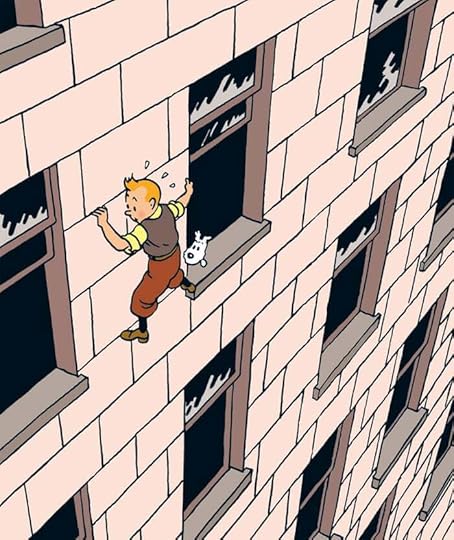
The standout moment from this volume for me is one that had my heart beating insanely fast as an 8-year-old: Tintin is being a pest for the gangsters of Chicago, so they want him gone. Get him out of the way, continue your work without any trouble. He is in his hotel room on the 37th floor of some high rise somewhere in the city when he glimpses into the mirror and sees the profile of a masked gangster behind him, in the hallway of his hotel room. He is waiting for Tintin, gun cocked and biding his time for the opportune moment. Tintin doesn’t lose a moment: he immediately opens the window and starts to scale to another room on the same wing to go around and surprise the gangster. This panel was always masterful.
Hergé was in love with the idea of America, though he did not actually make his way to the country until much, much later in his life. The information mostly came from pictures from a magazine issue published in 1930, fully devoted to Americans. Here, we start to see a dedication to research and accuracy, though pangs of caricature do remain. Beneath this all, there is evidence that “though [Hergé] could be politically naïve in some of his own personal judgements, [he] had an acute political conscience, always supporting the underdog and minority groups.” We see this in a poignant picture of Tintin’s encounter with the Natives of America:
“Hergé’s portrayal of the Red Indians is broadly sympathetic... They prompt from him perhaps the strongest political statement to be found in all of Tintin when, on page 29 of the colour edition, they are driven off their ancestral lands at bayonet point by the National Guard – all because of the white man’s greed for oil. “Here Hiawatha! Twenty-five dollars, and half an hour to pack your bags and quit the territory!” The cigar-smoking entrepreneur instructs the bewildered Indian chief after Tintin admits the oil belongs to the Blackfeet Indians and is not his to sell despite offers spiraling up to 100,000 dollars.”
In 1973, when the story was coming to America for the first time, it was met with insane backlash from American publishers. They did not like the portrayal of Americans as the type of people who would ever do that to the Aboriginal population of a country. Hergé kept this in. He lost another battle, however, being forced to remove several black characters from the book, as the publishers “objected to the placing of blacks alongside whites in a story destined for young readers”. 1973! All that to say, from here on out, Hergé’s soul starts to show.
What else? Al Capone is here as the one and only real-life criminal to feature in the series as a whole, which is pretty cool. We get a first (and very brief glance) of Roberto Rastapopoulos who will be here for a while. Next up is one of my personal favourites: Cigars of the Pharaoh. Truly, I’ve lost count of how many times I have read that one. Tintin heads to Egypt, Arabia, and India for some good ole fun.
Life is far too important a thing ever to talk seriously. Oscar Wilde زندگی ب��یار مهمتر از آن چیزی است که به طور جدی در مورد آن صحبت شود.اسکار وایلد زندگی رو جدی نگیریم و تنتن بخونیم و کیف کنیم، هیچکی تا ابد زندگی نمیکنه و خب طبعاً این روزا هم میگذره.
Leuk voor een strip uit 1945. Oppervlakkig? Ja. stereotyperend? Uiteraard. Discriminatie? Onvermijdelijk. Vrouwen aanwezig in het verhaal? Natuurlijk niet!
بدکش نبود؛ اما بیشتر از اینکه منطق برش حکمفرما باشه، پای شانس و امدادهای غیبی عجیب وسطه. چرا دزدها باید اشتباهی از گاز بیهوشی استفاده کنند، نه گاز سمی؟ و چرا وقتی تنتن بیهوش رو میاندازن توی آب، به هوش میاد؟! چرا دقیقا همون لحظه که پرتش میکنن توی مخلوطکن کارخونه، کارگرها اعتصاب میکنن و دستگاه خاموش میشه؟ چرا وقتی بستنش روی ریل قطار یهو پیرزنی پیدا میشه و با دلیل مسخره ترمز اضطراری رو میکشه؟ چطور جنایتکار حرفهای مثل هالوها اشتباهی وزنهی چوبی میبنده به پای تنتن و پرتش میکنه توی دریاچه؟ (یعنی واقعا متوجه سبک بودن چوب نمی شه؟!) و چرا و چرا و چرا... که چندتاشون رو میشه توجیه کرد و گفت برای نمک داستانه، ولی آخه انقدر شانسی هم خیلی کشکی میشه.
در پویانمایی اقتباسشده از این کتاب، داستان خیلی تغییر داده شده اما باز هم بهنظرم اصل آن است که مدنظر خالق بوده، حالا خوب یا بد
The third installment of the series is better than the previous two. It shows the potential which was developed later in the series. Although there was light satire in certain areas which I thought should have been avoided, this didn't impede much on my enjoying the story as a whole.
The adventure of Tintin and Snowy was interesting enough. It took me up and down and through all the dangers Tintin placed himself in. The story had somewhat a beginning and an ending which was quite a relief.
It was an okay read overall. Looking forward to reading the next installment.
Sorry, I've never been a big TinTin fan.w Wat is surprising is that even though Hergé was appalled by how Native Americans and First Nations people were treated and later visited him, he did them no justice in this book. But I have never been a huge fan of the art or the stories, even as a child.
Tintin was one of the comic book heroes of my childhood. I'm going to read my way through the series again as I listen to a radio program about him, and his creator, Hergé. Due to things that happen in the previous book, Tintin in the Congo, our hero now heads for America. It's quite interesting that this is the third book in the series and Hergé is finally able to send his hero where he wanted to right from the start, America.
Tintin is out to search for Al Capone, because the mafia boss had tried to have him killed in the Congo. He does see Capone, but eventually this trip turns to a full on war with Americas criminal elements as a whole, with side trips to see, and tackle Indians.
This book is full of stereotypes about Americans, the gangsters, the rapid growth of cities, the cowboys, and Indians. So there is a bit of the stereotypical gullible, aggressive red savage, something that is similar to what Hergé had previously done in Tintin in the Congo, but there is a slight difference. He criticizes the way Americans treat Indians. It is only in two frames, but still, one does see that he has some empathy for native Americans, which I don't think I see in Congo book.
As a book, I think it is an improvement from the previous two. The artwork is up the standard, and the story is pretty well thought out. It's cliffhanger stuff, often quite silly, but with a good continuation. It is a fast moving adventure stuff, with it's comic moments, and it isn't as politically uncomfortable as Tintin in the Congo. So I would say the series is definitely starting to develop in the right direction even though it has some way to go before it reached its peak.
Kuifje, de jonge reporter, wordt naar Amerika gestuurd om de misdaad te bestrijden. In Chicago heeft hij al vlug een ontmoeting met een bende gangsters, en daar blijft het niet bij. De gebeurtenissen leiden hem zelfs naar het Wilde Westen, bij de Zwartvoet Indianen. En dan weer terug naar Chicago, waar hij de misdaad een flinke klap kan toebrengen.
Goed verhaal, alhoewel ik niet echt een fan ben van de Kuifje-strips.
A tedious and repetitive series of loosely connected narrative episodes interspersed with clichés about American culture and hateful racist stereotypes.
Las aventuras racistas de Tintín por el mundo. Ya lo vimos manifestar su aria superioridad sobre los malévolos eslavos, los salvajes congoleños, y algún estúpido oriental que pasaba por ahí. Hoy es el turno de los indígenas estadounidenses. Sí, estadounidenses, porque la “América” del título, de más está decirlo, comprende solo a los Estados Unidos.
Para ser justos, los pasajes que abusan de estereotipos culturales son más limitados, en comparación con lo que ocurría en las dos primeras historias de Tintín. Además, pese a que la representación de los blackfoot es tan paternalista como lo era la de los congoleños, la mirada aquí es un poco más comprensiva. Si se muestran hostiles hacia Tintín, es porque otro hombre blanco los manipula, aprovechándose del miedo a que les roben sus tierras. El objetivo último, claro, es justificar una trama medio western que no tendría cabida en los años 30, pero también podría haberse omitido esta justificación. En Tintín en América, Hergé empieza a mostrar cierto interés, aunque todavía limitado, por comprender y representar de forma más apropiada los escenarios de sus historias.
This is not really my favourite Tintin story, though it is only the third one ever written. The story appears to be set immediately after Tintin in the Congo and it is suggested (it has been a long time since I read a Tintin in the Congo, if I ever actually read it in English so I can only garner from what was said about it at the beginning of this story) that Tintin busted a diamond smuggling ring in the Congo and then travelled to the United States to clean up the rest of the mess.
The story is actually a rather silly story in that he arrives in Chigaco, gets into trouble with the mob, escapes from an inescapeable situation, gets them arrested and then gets into trouble with some more crooks. Some have said that Herge's view of the United States is that it is full of cities ruled by crime lords, and when you step out of the city you immediately step into the wild west. It also seems that upon arriving in the United States, Tintin immediately solves all of their problems, and leaves a hero.
Well, he does not necessarily solve all their problems, and when originally released there were some quite controversial aspects too it. One involves Negros, and the other involves the Native Americans. Firstly, the English editions that we now have have been heavily modified in that all references to Negros have been taken out. There is a scene page 34 where the bank owner comes in to find that the bank had been robbed, and states that the hanged a few fella's right away, but were still chasing the culprits. The original indicated clearly that Negro's were hanged, but it is also suggestive of the vigilante justice of the wild west where a crime can be an excuse to simply kill people that are not liked. However we then follow the lynch mob who have already determined guilt, despite Tintin being innocent (and they also attempt to lynch him). It is not a pleasant picture of rural America.
The details of the Indians are not as bad, though they are portrayed as gullible and easy to be mislead by the bad guy (Bobby Smiles), though this is not necessarily an Indian thing. There was a scene where Tintin passes an Indian beggar, but that was removed in later versions. However the most condemning part is where Tintin stumbles across an oil well and within minutes is surrounded by businessmen offering hundreds of thousands of dollars for the find. However Tintin, ever the noble and honest character, tells that that the land belongs to the Indians. So, as can be expected, they offer the Indians $25.00 and half-an-hour to leave. When the Indians tell them where to shove their deal, in comes the army. The sad aspect is that this is still the image of the Land of the Free and Home of the Brave today. To a white man much is offered, but to the others, what they have is taken by force if they cannot scam it out of them.
In the end not the best of the Tintin stories, and we note that Herge is a little critical, however not to the extent of his previous two stories. There are allegations of him being involved with the Nazi's, but the publishing of this book pre-dates Hitler's rise to power. In another sense, it shows Herge moving away from the colonialist writings of Tintin in the Congo, or the conservative propaganda of Tintin in the Land of the Soviets (not that he was necessarily wrong about the actions of the Soviets at that time) and we begin to see a more noble and honourable Tintin, one who refuses to take bribes, and will stand up against criminals.
This is one of the three pre-war Tintin books which are not in general circulation in English, and for fairly good reason; it's not all that good. Tintin goes to America in 1931, briefly captures Al Capone (who was still just about at liberty in real life at that stage), is himself captured by the Blackfoot tribe, and then has a series of unlikely and disjointed adventures ending with him rolling up the entire Chicago Syndicate of Gansters and sent back to Belgium as a hero. The only African-Americans in the book (at least in the current version) are lynched off-screen (apparently even this is omitted in the English translation), and the Blackfoot are kicked off their land because Tintin discovers oil on it; Hergé is at least offering a critique of racism, though not a very elegant one. It's interesting as a fore-runner of the much better stuff to come. It's a very long time since I last read Cigars of the Pharaoh, the next album in sequence, but my memory is that it is a massive upshift in quality and coherence compared with this.