Jump to ratings and reviews
Rate this book

Not Far From Brideshead: Oxford Between the Wars

Rate this book
Oxford thought it was at war. And then it was.

After the horrors of the First World War, Oxford looked like an Arcadia – a dreamworld – from which pain could be shut out. Soldiers arrived with pictures of the university fully formed in their heads, and women finally won the right to earn degrees. Freedom meant reading beneath the spires and punting down the river with champagne picnics. But all was not quite as it seemed.

Boys fresh from school settled into lecture rooms alongside men who had returned from the trenches with the beginnings of shellshock. It was displacing to be surrounded by aristocrats who liked nothing better than to burn furniture from each other’s rooms on the college quads for kicks. The women of Oxford still faced a battle to emerge from their shadows. And among the dons a major conflict was beginning to brew.

Set in the world that Evelyn Waugh immortalised in Brideshead Revisited, this is a true and often funny story of the thriving of knowledge and spirit of fun and foreboding that characterised Oxford between the two world wars. One of the protagonists, in fact, was a friend of Waugh and inspired a character in his novel. Another married into the family who inhabited Castle Howard and befriended everyone from George Bernard Shaw to Virginia Woolf. The third was an Irish occultist and correspondent with the poets W. H. Auden, Louis MacNeice and W. B. Yeats.

This singular tale of Oxford colleagues and rivals encapsulates the false sense of security that developed across the country in the interwar years. With the rise of Hitler and the Third Reich came the subversion of history for propaganda. In academic Oxford, the fight was on not only to preserve the past from the hands of the Nazis, but also to triumph, one don over another, as they became embroiled in a war of their own.

304 pages, Kindle Edition

First published January 1, 2022

21 people are currently reading
364 people want to read

About the author

Daisy Dunn

7 books118 followers
Daisy Dunn is an author, classicist, and cultural critic. Her first two books, Catullus’ Bedspread: The Life of Rome’s Most Erotic Poet, and The Poems of Catullus: A New Translation, were published by HarperCollins on both sides of the Atlantic in 2016. The same year, Daisy was named in the Guardian as one of the leading female historians. Daisy has three books due out in 2019, the first of which, In The Shadow of Vesuvius: A Life of Pliny, was published by HarperCollins on 30 May (it will be released by Norton in the US in December). She is represented for books and media by Georgina Capel at Georgina Capel Associates Ltd.

Daisy contributes features, reviews, and comment articles to the Daily Telegraph, Evening Standard, History Today, Literary Review, The London Magazine, New Statesman, Newsweek, The Oldie, The Times, Sunday Times, Spectator, Standpoint, TLS, Apollo Magazine, Catholic Herald, and in the US she contributes to The LA Review of Books, New Criterion, and Lit Hub. Representing her former Oxford college St Hilda’s, Daisy played 3 matches of the 2016 University Challenge Christmas Special on BBC 2. Her team, captained by crime writer Val McDermid, won the series. Daisy has contributed to the BBC World Service, recorded two short films for BBC Ideas, and in 2015 her essay ‘An Unlikely Friendship: Oscar Wilde and Henri de Toulouse-Lautrec’ was longlisted for the international £20,000 Notting Hill Editions Essay Prize.

Daisy is particularly interested in the ancient world and its afterlife from the Renaissance forwards. Her doctorate, which she was awarded at UCL in 2013, spanned eighth-century BC Greece to sixteenth-century Italy. Her expertise lies in the history of the late Roman Republic and early Empire, literature of Greece and Rome, and art of Renaissance Italy.

Daisy read Classics at the University of Oxford, before completing a Master’s in the History of Art at the Courtauld in London, where she was awarded a scholarship for her work on Titian, Venice and Renaissance Europe. In the course of completing her doctorate, Daisy was recipient of the AHRC doctoral award, the Gay Clifford Award for Outstanding Women Scholars, and an Italian Cultural Society scholarship. She has taught Latin at UCL and continues to give talks and lectures in museums, galleries, and at festivals. She was formerly trustee and Executive Officer of the Joint Association of Classical Teachers. She is now Editor of ARGO http://www.hellenicsociety.org.uk/pub..., a journal published through the Hellenic Society, founded in 1879.

Ratings & Reviews

What do you think?
Rate this book

Friends & Following

Create a free account to discover what your friends think of this book!

Community Reviews

5 stars
22 (18%)
4 stars
53 (45%)
3 stars
33 (28%)
2 stars
7 (6%)
1 star
1 (<1%)
Displaying 1 - 17 of 17 reviews
Profile Image for Susan.
3,019 reviews570 followers
April 17, 2022
Having enjoyed other books by author, Daisy Dunn, and having a weakness for histories of England between the Wars, I enjoyed this portrait of Oxford University, concentrating on the Classicists Maurice Bowra, E.R. Dodds and Gilbert Murray.

The book starts in 1914, with Oxford depleted, with few students in wartime. T.S. Eliot arrived to find a handful of undergraduates and many halls being used as wards. As the 1920's followed this bleak period, there are a host of those associated with the 'Bright Young Things,' such as Evelyn Waugh. However, the famous, and influential, simply pour from these pages - Anthony Powell, Cecil Day-Lewis, W.H Auden, J.R.R. Tolkien, C.S. Lewis, Virginia Woolf, Elizabeth Bowen, Lady Ottoline Morrell, and more. Even at the time, there were those like Aldous Huxley, who featured the house parties of the time in his novels; placing a barely disguised Lady Ottoline Morrell in, "Crome Yellow," and upsetting the hostess who had given him space in her home to write. Later, Evelyn Waugh would also feature Bowra as 'Mr Samgrass,' in 'Brideshead Revisited.'

We see how events such as the General Strike and Wall Street Crash affected Oxford, the desire for women to be educated equally, but finding their numbers - and influence - capped. As Oxford headed into the 1930's, undergraduates began to swop parties for politics. Jewish academics fled Germany and Oxford University became a refuge for many. Mosley spoke in Oxford, causing violence to erupt, while there was resentment from many at the controversial new Regus Professor of Greek - or rather at who had been passed over for the position, as Bowra was resentful he did not receive the position. He may have been deemed 'unsuitable,' as he was homosexual, in a time when this was illegal, but was also known to be indiscreet. His lack of discretion may have also stopped him getting the chance to have an important post in the war, as Oxford dramas seemed 'petty and parochial,' once war was declared. Not quite forgiven and forgotten, but at least publicly dropped. While others, such as Dillwyn Knox, headed for Bletchley Park, Bowra was reduced to the Home Guard, although - to his credit - he took part with enthusiasm.

Over 1,700 members of Oxford University lost their lives in the war, although the City itself was spared the bombing. There were rumours that Hitler saw it as the place he would choose as his centre of power when he invaded. Meanwhile, Dodds later discovered that he had been placed in Hitler's 'Black Book' for arrest if that had happened. This then is a glorious history of Oxford between two world wars, from the time it emerged from the first and then a generation was faced with a second. A history of gossip, intrigue, but immense talent, which the author portays with affection.
Profile Image for Bill Kupersmith.
Author 1 book245 followers
June 12, 2022
Strangely, the Amazon blurb leaves the subjects of this book anonymous, telling prospective readers only “one of the protagonists, in fact, was a friend of Waugh and inspired a character in his novel. Another married into the family who inhabited Castle Howard and befriended everyone from George Bernard Shaw to Virginia Woolf. The third was an Irish occultist and correspondent with the poets W. H. Auden, Louis MacNeice and W. B. Yeats.” Leaving aside the solecism of multiple protagonists, one might still wonder what the subjects’ actual names were. In fact, they were three of the most distinguished Oxford Classical scholars of the earlier twentieth century: Gilbert Murray, Maurice Bowra, and E. R. Dodds. Which makes Daisy Dunn’s Not Far from Brideshead the perfect prequel to Metaphysical Animals: How Four Women Brought Philosophy Back to Life by Clare Mac Cumhaill and Rachael Wiseman, another Oxford book I recently read and loved. Quite as it revived my interest in ethical philosophy, Dunn has taken my back to Greek studies with delight.

Murray and Dodds held the post of Regius Professor of Greek at Oxford, a chair founded by King Henry VIII.) Murray was what we call by that distasteful current term a “public intellectual.” His translations of Euripides were hts on the London stage (T. S. Eliot wrote an essay criticising them for their Swinburnean style), and he inspired Adolph Cusins in G. B. Shaw’s Major Barbara, was active in Liberal politics and a strong supporter of the League of Nations. He was also encouraged women scholars, including Jane Ellen Harrison’s explorations into the dark underworld of Greek chthonic religion.

Bowra aspired to the Regius professorship but had to content himself with being Warden of Wadham College and Vice-Chancellor of the University. He felt that Murray had betrayed him in supporting Dodds. The connexion with Evelyn Waugh is tenuous. Bowra was the model for Mr, Samgrass in Brideshead, but as we might expect from that satiric portrayal of a minor character, they were more acquaintances than friends. From contemporary reminiscences, we imagine Bowra was a brilliant and entertaining conversationalist and host at the warden’s lodge, but though a sensitive reader of Classical and modern poetry in many languages, Bowra’s books were virtually unreadable, as I discovered from numerous attempts to get through From Virgil to Milton; it was spot on my thesis topic of Classical Imitation, but my eyes glazed over. In a brief memoir, Noel Annan compared Bowra to Edmund Wilson, but Bowra lacked Wilson’s easy style, so perfectly attuned to the kind of popularised scholarship readers of the New Yorker feast on.

E. R. Dodds was an obscure Northern Irishman teaching in Birmingham, his principal previous scholarship devoted to the even more obscure Platonist of late antiquity, Proclus. Though like Bowra, Dodds was well acquainted with contemporary poets and poetry, and like Murray edited Euripides, his popularity was of a different kind, one I believe likely to endure. I am currently reading The Bacchae with Dodds’s commentary and though most of what it says about Greek grammar and metre is beyond my Classical attainments, the details of the Dionysiac orgies, especially the sparagmos and omophagos – the Maenads’ tearing their living prey to pieces and eating it raw – especially when the victim is their own son and nephew Pentheus, cannot be equaled by any horror movie even I have seen. But Dodds’s commentary is an education in comparative religion as well, with its parallels to the Ghost Dance of the Native Americans and the Acts of the Apostles. (For the latter, see the conversion of Saint Paul.) Clearly Murray chose his successor rightly. Though Dunn does not follow her subjects’ later careers into the 1940s, Dodds was to write The Greeks and the Irrational (later found on ever y hippie’s bookshelf alongside another work by an Oxford professor, J. R. R. Tolkien’s The Lord of the Rings).
Profile Image for Miba.
107 reviews4 followers
April 28, 2022
Amusing and evocative but did not have enough drive to keep me reading. Will probably pick it up again later.
Profile Image for Jane Gregg.
1,192 reviews14 followers
June 15, 2022
It was an interesting read, and a really clever way of showing us inter-war Oxford, but felt a bit flat for some reason.
Profile Image for Charles Eager.
5 reviews
Read
July 7, 2022
A pleasant book which will divert and educate lovers either of Oxford, classical scholarship, or the interwar period.

As a boy I grew up in a very small world, comprised mostly of my little corner of Yorkshire. One result of this was that when I first went to Oxford at nineteen or twenty to visit a schoolfriend who had been studying there, I felt, as I walked its wide, elegant streets and took in its serene and beautiful architecture, as though I’d entered some impossibly beautiful fairyland. I can recall remarking to my two friends there at the time that, if I’d only known how lovely it was, I’d actually have put in some effort at school in order to get a place at Oxford!

It remains my favourite English city. It was with pleasure then that I took up this book on Oxford between the wars. Despite the title, it has little to say on Evelyn Waugh or his novel Brideshead Revisited. Rather the book revolves around three classical scholars famous in the period: Gilbert Murray, E. R. Dodds, and M. C. Bowra.

Murray, the elder, is perhaps best known today for being the subject of T. S. Eliot’s essay ‘Euripides and Professor Murray’, in which Eliot attacks the professor’s enormously successful translations of Euripides as essentially passé – staid, Victorian, and pre-Raphaelite in their aims. For better or worse, Murray’s translations are now mostly unread, having given way to generations of Eliot-inflected approaches.

Murray was however something of a star in his day. He was for many years Regius Professor of Greek at Oxford – an office established by Henry VIII in 1541 – was chairman and later joint president of the League of Nations Union, gave regular BBC broadcasts (some of which survive), and stood five times (though unsuccessfully) for Parliament.

Like Murray, the names ‘Dodds’ and ‘Bowra’ are unmissable for anyone who had – even fleetingly, as I did – to study the Greeks and Romans and their literature during their university days, even today. Dodds’ masterpiece, The Greeks and the Irrational, is still important reading for students, even if its conclusions by now seem somewhat out of date. Bowra, on the other hand, was more of a speaker than a writer, but remains a familiar name. It is a great advantage of Dunn’s little threefold biography that it adds some flesh and blood to these august and mysterious names. One puts the book down with a strong sense of their diverse characters and deep – at times deeply flawed – humanity.

Dodds, for instance, is introduced as ‘a very courteous rebel’. He was an Irishman in support of the Easter Rising – for which he was ‘sent down’ from Oxford; or rather, ‘strongly advised not to stay up’. (Part of the book’s joy is its use of such uniquely Oxonian language.) At school Dodds was also expelled for ‘gross, studied, and sustained insolence against the headmaster’. The pugnacious Irishman irritated figureheads throughout his life. He has the curious honour of appearing in Hitler’s ‘Black Book’ – his register of individuals to be arrested upon Germany’s invasion of Britain. ‘Eric Robertson Dodds,’ it reads, ‘Professor, propagandist against Franco and involved in the International Front Against Germany; presumed whereabouts: Oxford’.

Bowra was a rather different figure. He was a legend of Oxford social life, hosting dinners at which he served exceptional food for the time and place and offering conversation which made even dull guests sparkle. Kenneth Clark, of Civilisation fame, called Bowra the most important influence on his life – as well as on his speaking style in the famous television programme. Sadly, much of Bowra’s vivaciousness fails to come across in his rather formal writing – a privation noted at the time in his obituaries. But vocally he shone. He had a famous arsenal of phrases. Perhaps my favourite is his habit of referring to pleasant social exchanges as giving someone ‘the warm shoulder’ as opposed to the cold. He sometimes described himself to others as having enjoyed ‘a long and interesting silence’ with foreigners whose language he didn’t know.

Like Dodds, Bowra has a (negative, and therefore positive) connection to Nazism. He loved the culture of Weimar Berlin, visiting often throughout the 1930s. For curiosity, he attended one of Hitler’s speeches; but the lifelong student of the classics – and therefore of rhetoric – found the Führer disappointing:

‘The faulty syntax, the involved, clumsy, often unfinished sentences, the dreary recapitulation of German grievances and Nazi doctrine, the deafening, disturbing impact of that terrible voice . . . were not what one expected from a great orator.’


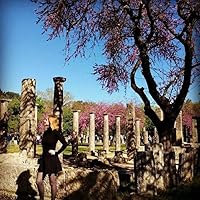
Gilbert Murray, of the older generation (he lived 1866–1957), was yet again a contrasting character. He was a great Liberal – teetotal, vegetarian, always thinking of civilisation, improvement, and progress. He may sound dry and perhaps even irritating, but he often buried himself in high-minded work during a long and sad life in which he lost most of his five children to a variety of tragic and early deaths.

Though this triumvirate is the book’s focus, the story is thick with other good characters. Nearly every major Anglophone writer of the period shows up at some point or other. So do Einstein and Marie Curie; their brief appearances here free them from the clichéd portraits we often see drawn of them. Oswald Mosley gives a speech in Oxford which devolves into a riot. Many of the best appearances, however, are put in by people who are no longer particularly well-known figures but who were larger than life in their time.

Reverend Spooner, for instance, has given us and the English language the ‘Spoonerism’ thanks to his minor speech impediment. In a charming touch, the book is dedicated to his great-great-great-Granddaughter Beatrice, six and three-quarters at the time of publication. I also enjoyed learning more about Lady Ottoline Morrell, whose portrait by Augustus John – one of her many extra-marital lovers – though as terrifying and unflattering as can be, delighted her. She hung it with pride over the mantelpiece of her London home. She once remarked, on being caught with a lover, Henry Lamb, that she ‘was just giving Henry an aspirin’.

The third chapter has perhaps the best momentum and the best self-contained story in the book. Though Gilbert Murray may sound dry from the summary above, the narrative of his courtship corrects this impression. We go back in time to the 1880s. Murray meets his future Mother-in-Law, Rosalind Howard, another passionate Liberal, who is impressed with Murray’s teetotalism. The two will never succeed, for better or worse, in their dream of abolition for Britain; but they will, after enormous effort, succeed in their other ambition of marrying Murray to Howard’s daughter, Maria Henrietta.

Maria Henrietta rebuffs Murray countless times; apparently he is always still ��too selfish’. He is desperately enchanted by her beauty – and likely not without warrant, judging by a quick portrait of her in her youth by her Father, George Howard, a minor artist and MP. The ordeal left Murray on two occasions genuinely suicidal. (Ah, to be young!) One senses Rosalind’s encouragement and cultivation of the match – often expressed through frequent and voluminous letter-writing – as essential to the eventual good marriage.

There are many more interesting yarns and diverting witticisms in the book, but that is enough for this review. Thoroughly recommended to those with interests in its several areas of focus.

C. R. Eager
for The Modena Review

Thanks for reading. Share this with those who might be interested and you will help The Modena Review to thrive. The next dispatches will likely cover an intriguing older book; some recent films and broadcasts; productions by a beautiful independent English press; and some recent sacred poetry.
Profile Image for Colin.
344 reviews16 followers
September 2, 2022
This is a really enjoyable and informative narrative of inter-war Oxford University as soon through the lives and careers of three eminent Classics scholars: Gilbert Murray, E. R. Dodds and Maurice Bowra. Other characters such as T. S. Eliot, John Betjeman and Evelyn Waugh feature but the focus is on the three principal characters.

What I like particularly about this book is that one does not have to know anything about the Classics to appreciate and enjoy the story. With a good blend of quotation from personal accounts and some excellent context-setting, the reader gains a true appreciation of the intellectual life of Oxford, and the way in which changes in politics and society impacted on that world.

Well written and well structured, I highly recommend this book.
Profile Image for Ellen.
1,207 reviews7 followers
November 10, 2024
A group biography of three Oxford classicists. OK but not particularly compelling.
Profile Image for Felix.
22 reviews1 follower
Read
December 17, 2025
Given to me by a friendly Bishop and read in slivers before bed over the last few months. Its charm certainly wears off but it was more than serviceable.
Profile Image for Mark Little.
11 reviews
August 25, 2022
This is a beautifully crafted book. Daisy Dunn, herself an Oxford classics graduate, takes the reader on a fascinating tour of three Classicist personalities who dominated the academic world of Oxford during the inter-war years. A closely interwoven narrative never gets bogged-down, but we find we are able to connect a rich mix of familiar names whose worlds overlap those of the subject figures in Oxford. Dunn has a lightness of touch, but is by no means lightweight. We dance through introductions to personalities, gossip and their links to the weighty world events which dominated the 20th century. I enjoyed every page of a book which - as the best tend to - ended too soon. For me, a sparkling companion to a recovery-period from a short bout of illness. I look forward to what Daisy turns her pen to next.
Profile Image for Joel Zartman.
586 reviews23 followers
May 17, 2022
The book centers on Gilbert Murray, Maurice Bowra, and E.R. Dodds, all of whom taught classics at Oxford. It is interesting to structure it around these three characters. Who knows that much about them? We know all about the literary figures, all about the Inklings who flourished after WWII, but not much about these three, constantly mentioned, occasionally read, and yet always in the background. You study neoplatonism and you still encounter the Irishman E.R. Dodds.

The book begins as the first world war opens, and ends with the arrival of the second, an exceptional time which was colored first by the relief after the end of one war and then by the dread leading up to another.
269 reviews
June 11, 2025
A fascinating insight into Oxford life and its characters between the wars, focusing on the careers of three Classicists - Gilbert Murray, ER Dodds and Maurice Bowra - but including a roll-call of famous writers, poets and politicians whom they taught or befriended. In prose both pacy and incisive, Daisy Dunn succeeds in demonstrating the relevance and importance of Classics in contemporary life, particularly at this key moment of Fascist threat in Europe.
Profile Image for Colin.
Author 5 books141 followers
December 24, 2025
An excellent history of Oxford University in the period from World War I to World War II - really quite fascinating stuff, if one is interested in the scholars and authors of that time periods (minor players in the tale include people better known to modern audiences like J.R.R. Tolkien, but it focuses on things like the battle and bitterness over the Regius Chair of Greek at Oxford) and other matters of classical scholarship.
19 reviews
November 25, 2024
Three and a half.
Nice book and interesting history of Oxford. Not much plot and at times a bit quiet, should have made an effort to read it more frequently to form more of a relationship with the characters.
Profile Image for Amanda.
64 reviews7 followers
April 19, 2022
Som en sån där twitter-relationskarta över alla dina brittiska favoritförfattare från första halvan av 1900-talet.
Profile Image for Michael.
195 reviews
May 28, 2022
Oxford from the Great War through the 20s and 30s, with particular focus on classicists like Gilbert Murray and Maurice Bowra, also on the first female undergraduates and dons like Dorothy Sayers.
140 reviews9 followers
March 27, 2025
Kinda mesmerizing, really — Oxford 100 years ago, trying to stay the same in a turbulent world
Displaying 1 - 17 of 17 reviews

Can't find what you're looking for?

Get help and learn more about the design.