

What do you think?

Corinne, or Italy
Corrine, or Italy, is both the story of a love affair between Oswald, Lord Nelvil, and a beautiful poetess, and an homage to the landscape, literature and art of Italy. Staël, the subject of recent feminist rediscovery, weaves discreet political allusion into her romance, and upon its publication Napoleon renewed her order of exile. Sylvia Raphel's new translation preserves the natural character of the French original, while the notes and introduction place this extraordinary work of European Romanticism in its historical and political context.
464 pages, Paperback
First published January 1, 1807
About the author
Madame de Staël
673 books100 followersAnne Louise Germaine de Staël-Holstein (22 April 1766 – 14 July 1817), commonly known as Madame de Staël, was a French woman of letters of Swiss origin whose lifetime overlapped with the events of the French Revolution and the Napoleonic era. She was one of Napoleon's principal opponents. Celebrated for her conversational eloquence, she participated actively in the political and intellectual life of her times. Her works, both critical and fictional, made their mark on the history of European Romanticism.
Ratings & Reviews
Friends & Following
Create a free account to discover what your friends think of this book!
Community Reviews
Displaying 1 - 30 of 99 reviews

November 22, 2019
For Fionnuala, who keeps reminding me of the books that formed me in the prehistoric times of my enthusiastic youth!
Corinne is the eternal question of self-defined development in a restrictive environment. It can be read as an early attempt at female creative emancipation, or as a universal story of finding and expressing a powerful self in a dull collective.
It can be read as a love story with a beautiful setting - the object of love being art.
It can be read as a period piece showing a way of life that is both modern and familiar and remotely distant at the same time.
It can be read for the wonderful French prose that flows like clear water in a lively river on a sunny day in the meadows...
It should be read - because it is vintage literature!
If I can find my old, beloved Folio Classique, I will read it again, and the dark Scandinavian November rain will give way, and a fresh clear breeze will make me breathe lightly.
Corinne is the eternal question of self-defined development in a restrictive environment. It can be read as an early attempt at female creative emancipation, or as a universal story of finding and expressing a powerful self in a dull collective.
It can be read as a love story with a beautiful setting - the object of love being art.
It can be read as a period piece showing a way of life that is both modern and familiar and remotely distant at the same time.
It can be read for the wonderful French prose that flows like clear water in a lively river on a sunny day in the meadows...
It should be read - because it is vintage literature!
If I can find my old, beloved Folio Classique, I will read it again, and the dark Scandinavian November rain will give way, and a fresh clear breeze will make me breathe lightly.

April 26, 2022
'Father, let this cup be taken from me?!'
Corinne (or Italy) , like her ‘sister’ work, Clarissa (the History of a Young Woman of Quality) , is a work on the side of feeling, tinged with aesthetic philosophy, of study of the archaic and the picturesque illuminated by emotion. In a powerfully singular manner this novel afforded me with rich material for thought. I felt sorry for the unhappy love story of the chief characters -- however oddly and unfashionably presented, yet I felt delighted by the immense historical value of the novel. It opened a large window to show the temper, the aspirations, the ideas, and in a way the manners of a certain time and society. I think this retained my interest strongly, and even interested me far more keenly…
But first I had need I should know what kind of person was its novelist and was much surprised on what I learned about the life and career of Anne Louise Germaine Necker, Baroness of Stael-Holstein, in brief Madame de Sael -- a woman of boundless literary and political ambition, whose strongest passion was her love of society. Through her achievements she got a European reputation in her day, also as regarded by contemporary Europe as the personal enemy of Napoleon…
To put it plainly Corinne is a tragic love story intermixed with a guide book on Italy: a late 18th century romance of high sensibility blended with a glorious manifest of aesthetics and culture. It was a bit difficult for me to remain neutral whilst the author is displaying sensibility so charming – especially the strange artificial 18th century conception of love which is neither exactly flirtation nor exactly passion, and which sets convention at defiance. Notwithstanding I have enjoyed the manner conceived by the novelist at exhibiting the national differences of English, French and Italian temperaments. If I strive to reflect on what I have read and retrace my impressions, then I would say that I do agree with many of the views presented in the novel…
"But who could doubt the truth of Corinne? Was that peculiar charm she possessed the effect of magic, or of poetical inspiration? Was she an Armida, or a Sappho? Was there any hope of captivating so lofty and brilliant a genius! It was impossible to decide…"

“Sooner or later all rebellious heads must bow to the same yoke.”
"Alone I rose, alone I sank, I am alone even here."
"Pity me not, if you can guess how many pangs the grave hath spared me."
"It is well for me to sleep, still better to be stone; while shame and injustice last: not to see, not to hear, is a great blessing; therefore, disturb me not! speak low!"
Corinne (or Italy) , like her ‘sister’ work, Clarissa (the History of a Young Woman of Quality) , is a work on the side of feeling, tinged with aesthetic philosophy, of study of the archaic and the picturesque illuminated by emotion. In a powerfully singular manner this novel afforded me with rich material for thought. I felt sorry for the unhappy love story of the chief characters -- however oddly and unfashionably presented, yet I felt delighted by the immense historical value of the novel. It opened a large window to show the temper, the aspirations, the ideas, and in a way the manners of a certain time and society. I think this retained my interest strongly, and even interested me far more keenly…
But first I had need I should know what kind of person was its novelist and was much surprised on what I learned about the life and career of Anne Louise Germaine Necker, Baroness of Stael-Holstein, in brief Madame de Sael -- a woman of boundless literary and political ambition, whose strongest passion was her love of society. Through her achievements she got a European reputation in her day, also as regarded by contemporary Europe as the personal enemy of Napoleon…
To put it plainly Corinne is a tragic love story intermixed with a guide book on Italy: a late 18th century romance of high sensibility blended with a glorious manifest of aesthetics and culture. It was a bit difficult for me to remain neutral whilst the author is displaying sensibility so charming – especially the strange artificial 18th century conception of love which is neither exactly flirtation nor exactly passion, and which sets convention at defiance. Notwithstanding I have enjoyed the manner conceived by the novelist at exhibiting the national differences of English, French and Italian temperaments. If I strive to reflect on what I have read and retrace my impressions, then I would say that I do agree with many of the views presented in the novel…
"But who could doubt the truth of Corinne? Was that peculiar charm she possessed the effect of magic, or of poetical inspiration? Was she an Armida, or a Sappho? Was there any hope of captivating so lofty and brilliant a genius! It was impossible to decide…"
“Sooner or later all rebellious heads must bow to the same yoke.”
"Alone I rose, alone I sank, I am alone even here."
"Pity me not, if you can guess how many pangs the grave hath spared me."
"It is well for me to sleep, still better to be stone; while shame and injustice last: not to see, not to hear, is a great blessing; therefore, disturb me not! speak low!"

June 26, 2009
Madame de Stael's second novel Corinne (1806), which takes place mostly in Italy but also in Scotland, infuriated Napoleon because Stael dared to ignore France and suggest that French writers had something to learn from the artistic milieu of Italy and from an intellectually superior heroine. The Emperor had already banned Stael from Paris for her first novel, Delphine (1802), which dared advocate divorce (forbidden under the Code Napoleon). When Corinne came out, he banned the author from all of France, which temporarily broke her heart, but never her spirit. The title character in Corinne is a gifted, independent woman who is at once actress, dancer, poet and artist. She loves and is loved by a man who ultimately cannot marry her because she is too independent, and after many twists and turns of the plot, marries Corinne's younger half-sister instead. The ending of the novel, which I will not reveal, is a heart-wrenching tribute to both feminism and Romanticism. In typical Romantic fashion, Madame de Stael and Corinne both possess a dual complex--a notion of personal superiority that is coupled with the near-paranoid fear that no one--or at least the people who really matter--would recognize or appreciate this superiority. Corinne was simply ahead of her time, which is why we 21st-century readers may love her even more than did her contemporaries who had to read of this phenomenal heroine on contraband pages and in secret. Great novel with a fascinating history!

June 16, 2019
The very basic story line is Corinne who is the consummate artist, intellectual and the toast of Rome goes on an extended "date" with Lord Nelvil the indecisive whom Corinne feels understands her and is her equal. This date is a tour which covers several Italian cities. In the meantime they go to a few parties and fall in love.
Corinne, or Italy is both a romance and a collection of nostalgic ideas about the history of Italy's art, architecture, mythology, history, philosophy, religion, music, and national mindset. Madame de Stael's and other explanatory notes are at the end.
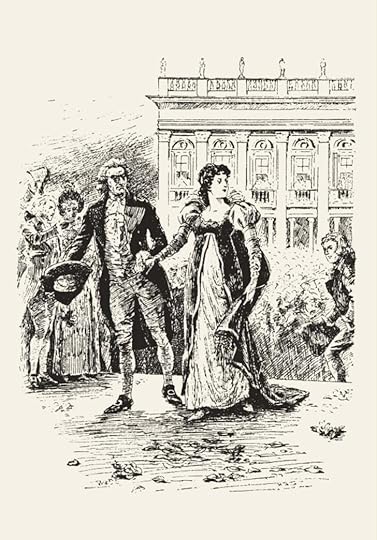
Germaine de Stael was a child of the neo-classical age, the last 1700s and early 1800s and it shows in this novel. During that era, women's attire was modeled after that of the ancient Roman woman. Corinne, or Italy is a reflection of that age when intellectuals reminisced about the glories of ancient Rome and the Renaissance. I can see Corinne in my imagination in the outfit of a neo-classical lady. The cover art is also how I would imagine her.
That the author, Germaine de Stael, was a woman of letters and a historian shows in this novel. Her ideals brought her into conflict with Napoleon, and she had to go into exile. It's written that Napoleon said of her, she "teaches people to think who never thought before, or who had forgotten how to think". Indeed, Corinne is a thinking person's romance and not a quick read.
Looking at the character of Corinne, I see Madame de Stael writing as a proto-feminist. But her type of feminism is totally alien to what is here now. In Corinne, she promotes the idea of a woman attaining a higher self and level of thought through learning, beauty, art, music, history, and philosophy.
I'm very pleased that I fell in love with this book.
Corinne, or Italy is both a romance and a collection of nostalgic ideas about the history of Italy's art, architecture, mythology, history, philosophy, religion, music, and national mindset. Madame de Stael's and other explanatory notes are at the end.
Germaine de Stael was a child of the neo-classical age, the last 1700s and early 1800s and it shows in this novel. During that era, women's attire was modeled after that of the ancient Roman woman. Corinne, or Italy is a reflection of that age when intellectuals reminisced about the glories of ancient Rome and the Renaissance. I can see Corinne in my imagination in the outfit of a neo-classical lady. The cover art is also how I would imagine her.
That the author, Germaine de Stael, was a woman of letters and a historian shows in this novel. Her ideals brought her into conflict with Napoleon, and she had to go into exile. It's written that Napoleon said of her, she "teaches people to think who never thought before, or who had forgotten how to think". Indeed, Corinne is a thinking person's romance and not a quick read.
Looking at the character of Corinne, I see Madame de Stael writing as a proto-feminist. But her type of feminism is totally alien to what is here now. In Corinne, she promotes the idea of a woman attaining a higher self and level of thought through learning, beauty, art, music, history, and philosophy.
I'm very pleased that I fell in love with this book.

April 3, 2015
My story of Corinne begins with my college experience of Literary Women, by Ellen Moers, and her dedication of an entire section to DeStael's book, entitled Performing Heroinism: The Myth of Corinne. I've finally, through the miracle of online publishing, been able to see for myself that which was so rigorously discussed in her book.
As a researcher, Moers found Madame DeStael's early-19th-century book to be an essential contribution to the history of western Europe's early female authors. She cites its direct influence over Eliot, Barrett, Chopin, and even American author Beecher, etc; and presents its protagonist as THE archetype of the performing heroine (a female celebrity of talent), influencing many 19th century novels, including: Consuelo,The Song of The Lark, Aurora Leigh, even Uncle Tom's Cabin. Women authors of the time, Moers asserts, found an intriguing and kindred spirit in the character of Corinne - with her overwhelming "need to please, to captivate, to impress", and thus "enchant and subjugate the world".
(As a matter of fact, I'm wondering right now if the precocious and pathetic Maggie, from The Mill on The Floss, was not an Eliot extrapolation - twisted and turned in upon itself - of the character of Corinne, as a woman of genius, if she had grown, only to wither, in the social mores of Britain rather than spending her formative years in her native country of Italy; or if she had actually acted on her impulse to return to live in the country of her father.)
All of Moers' observations come in spite of her own feelings about Corinne, or Italy; she personally finds the book to be overwhelmingly silly and melodramatic and struggles to take it seriously.
So I came to Corinne with a certain amount of prejudice, after spending 25 years with an author who staunchly asserts its surface ridiculousness. I was a bit surprised, then, to have my eyes opened through my own experience with the book. I found it to be, actually, in truth, surprisingly close to the heart. In love. In duty. In thought and in action. In the artistic impulse.
Is the setup forced? Yeah. Is the dialogue unnatural? Yeah, sometimes. Corinne's continuous rambling discourse to Oswald about everything Italian, national history to national psychology to national politics, becomes wearing after a while - even though I understand this setup is to reinforce the concept of "naturalness" and "darkness" of Corinne and Italy, in opposition to the stifling social atmosphere of Britain at the same time. De Stael is not the only author, we know, to have gone to that well, in contrasting rainy, monotone England as-a-whole, to the sun-drenched, colorful Italy as-a-whole. It also shows off the depth of knowledge that DeStael must have had about both countries (she was incredibly educated, especially for a woman of her time).
The story, in the end, was especially unsettling for me, in how much of the Corinne/Oswald tragedy resulted from mis-communication... from things not said (or said WAY too late); from motivations misunderstood and never clarified through explanation.
This is the greatest preventable tragedy of all, in my own personal book of observation and experience. So these kinds of stories affect me the most.
Corinne, ultimately, was that kind of story. And De Stael nailed it perfectly, despite the melodrama and the staging, and despite the lapse of 200 years between her writing the story and my reading it.

June 25, 2008
Tragic tale of a genius whose brilliance expires when she's forsaken for a hot blonde.
*shakes fist at men*
Corrine's correct about the English. Their culture is a coffin.
*shakes fist at men*
Corrine's correct about the English. Their culture is a coffin.

May 20, 2015
Le grand historien Christopher Duggan offre un interpretation de Corinne dans "The Force of Destiny" qui a radicalement changer ma maniére de voir ce roman. D'après Duggan la protagoniste n'est pas Corinne mais l'Italie dont Corinne est l'incarnation. Je présente alors l'interpretation de Duggan qui a l'avantage de transformer un roman d'amour insipide en allégorie politique percutanate.
Le roman commence avec Lord Nelvil qui decide de faire un séjour en Italie. Dans l'allegorie, Nelvil est le puissant étranger qui va rater l'opportunité de libérer l'Italie qui souffre horriblement sous l'occupation Napoleonienne.
Sur le chemin Nelvil fait preuve d'un grand heroisme. Il passé la nuit dans une ville cotiére quand le feu se déclaire. La ville manqué d'équipement pour lutter contre le feu. Lord Nelvil passé
a l'action. Il va chercher les pompes sur les bateaux ancrés dans le port. Avec les matelots et les citadins il arrive a vaincre l'incendie et ainsie sauver des nombreuses vies.
Arrivé à Rome, il fait la connaissance de la célèbre comedienne Corinne. Devant la Capitole, Corinne livre un monologue improvisé ou elle semble incarner la gloire de l'Italie de l'époque Romaine à la renaissance. Avec son élan vital, Corinne annonce que dans un avenir proche l'Italie connaitra une autre époque glorieuse.
Lord Nelvil tombe amoureux mais il est trop prudent pour demander la main de Corinne. Corinne essaie de le séduire en le menant a travers les grandes édificies de Rome: le basilique de St. Pierre, le Pantheon et d'autres. Elle lui explique que dans la religion les symboles communiquent mieux que les paroles et qu'à Rome le religion Catholique est le mélange d'un symbolisme des paiens greffé sur une théologie chrétienne. Le St.¨Pierre de Rome est d'apres Corinne Jupiter et non le pauvre pecheur de Galilée.
Lord Nelvil est impressionné par l'éloquence de Corinne mais il ne semble pas etre séduit. A la fin du roman, il n'a pas encore declaré son amour pour Corinne. Son reticence est consternant pour le lecteur qui veut que le roman aboutisse avec le marriage du couple. Cependant l'allégorie ne permet pas de tel dénouement. L'Angleterre va trahir L'Italie lors du congres de Vienne qui va re-instaurer tous les regimes moyen-ageux qui gouvernaitl'Italie avant l'envasion de Napoleon. L'Itale devra attendre presqu'une autre soixtaine d'années avant d'etre libérée et unifié par Cavour, Mazzini et Garibaldi.
Le roman commence avec Lord Nelvil qui decide de faire un séjour en Italie. Dans l'allegorie, Nelvil est le puissant étranger qui va rater l'opportunité de libérer l'Italie qui souffre horriblement sous l'occupation Napoleonienne.
Sur le chemin Nelvil fait preuve d'un grand heroisme. Il passé la nuit dans une ville cotiére quand le feu se déclaire. La ville manqué d'équipement pour lutter contre le feu. Lord Nelvil passé
a l'action. Il va chercher les pompes sur les bateaux ancrés dans le port. Avec les matelots et les citadins il arrive a vaincre l'incendie et ainsie sauver des nombreuses vies.
Arrivé à Rome, il fait la connaissance de la célèbre comedienne Corinne. Devant la Capitole, Corinne livre un monologue improvisé ou elle semble incarner la gloire de l'Italie de l'époque Romaine à la renaissance. Avec son élan vital, Corinne annonce que dans un avenir proche l'Italie connaitra une autre époque glorieuse.
Lord Nelvil tombe amoureux mais il est trop prudent pour demander la main de Corinne. Corinne essaie de le séduire en le menant a travers les grandes édificies de Rome: le basilique de St. Pierre, le Pantheon et d'autres. Elle lui explique que dans la religion les symboles communiquent mieux que les paroles et qu'à Rome le religion Catholique est le mélange d'un symbolisme des paiens greffé sur une théologie chrétienne. Le St.¨Pierre de Rome est d'apres Corinne Jupiter et non le pauvre pecheur de Galilée.
Lord Nelvil est impressionné par l'éloquence de Corinne mais il ne semble pas etre séduit. A la fin du roman, il n'a pas encore declaré son amour pour Corinne. Son reticence est consternant pour le lecteur qui veut que le roman aboutisse avec le marriage du couple. Cependant l'allégorie ne permet pas de tel dénouement. L'Angleterre va trahir L'Italie lors du congres de Vienne qui va re-instaurer tous les regimes moyen-ageux qui gouvernaitl'Italie avant l'envasion de Napoleon. L'Itale devra attendre presqu'une autre soixtaine d'années avant d'etre libérée et unifié par Cavour, Mazzini et Garibaldi.

July 2, 2017
Despite the idea behind this novel seeming to be interesting, I simply couldn't make myself really care about the characters to invest much effort with this one. A story of Oswald, choosing the safe choice of submissive, malleable less passionate woman over the sensitive, creative, energy consuming independent thinking woman who he really loves. Too much emotion and not enough real living for my tastes.
April 26, 2026
Le personnage de Corinne et le regard que Staël porte sur elle m'ont un peu émue
Par contre, Nelvil au cachot
Par contre, Nelvil au cachot

November 12, 2022
Ένα αριστούργημα του 19ου αιώνα,δυνατό με το λόγο και τις σκέψεις/απόψεις του ακόμη και σήμερα!Έντονες ανθρώπινες σχέσεις,καταστάσεις συμφερόντων,θυσίες και όλα αυτά με φόντο μια μαγική Ιταλία!
Εξαιρετική μετάφραση και πλούσιο επίμετρο!
Εξαιρετική μετάφραση και πλούσιο επίμετρο!

January 27, 2022
The French is easy to read, but there is no story. It's all sizzle.
I was curious because Madame de Stael was admired and alluded to by authors I admire.
I was disappointed because after setting the stage for love affair between a wealthy melancholy Englishman and a brilliant and talented Italian woman, the author delivers what amounts to little more than a travelogue of Rome.
I was curious because Madame de Stael was admired and alluded to by authors I admire.
I was disappointed because after setting the stage for love affair between a wealthy melancholy Englishman and a brilliant and talented Italian woman, the author delivers what amounts to little more than a travelogue of Rome.

October 31, 2016
Potential readers beware: the first 200-300 pages of Corinne are basically just a long travel guide to Italy, and particularly Rome. If you enjoy reading about all the antiquities of that fabled land, you may enjoy the long descriptions of columns and ruins and paintings and sculptures. But I think most readers find these pages pretty boring.
If you persist through, them, though, you will happen upon one of the most remarkable novels of the nineteenth century. Corinne, the heroine, is a woman of a power and force that you will struggle to find elsewhere in nineteenth-century fiction. Her passions, as she says herself, are volcanic:
Compared to Emma Woodhouse, Dorothea Brooke, Anna Karenina, or even Jane Eyre, Corinne is a titan. Among the nineteenth-century books I've read, the only figure who matches her is Catherine Earnshaw. (Though perhaps Lady Delacour or Adeline Mowbray come close.) But there are important differences. Corinne is a symbol of beauty and sublimity. Her fiery deeds symbolise the highest hopes and possibilities of the human frame: "Qu'est-ce donc que le bonheur, me disais-je, si ce n'est pas le développement de nos facultés." ("What then is happiness, I say to myself, if it isn't the development of our faculties?") Cathy is an impressive symbol of human power, but is not a symbol of human goodness in the way Corinne is.
The novel, as I say, starts very slowly. Corinne has an air of mystery that starts to propel the narrative, and by the time she and her lover Oswald go to Naples, the story has begun to fly forward with all the energy you could wish.
In an age of rampant populism and ugly nationalism, this is a necessary book. It disproves all the stupid and shallow arguments against cosmopolitanism that you read in opinion columns. It portrays human nature in all its grandeur and pettiness. It is replete with the most beautiful, indeed the only kind, of liberalism: the determination "ni le blâmer, ni l'absoudre" ("neither to blame him, nor absolve him"). You need to read this brilliant thing to learn who is the object of De Staël's tolerance.
Germaine De Staël is not as famous anymore as she should be. She was herself a Corinne, a woman whose wealth, charisma, intelligence and education allowed her to lead a truly free life such as few women of her time were able to. Like Corinne, she suffered exile, and was tossed about Europe on the high winds of history. She shocked and inspired her contemporaries, much in the way her great friend Byron or her great enemy Napoleon did. Corinne: ou l'Italie is a powerful expression of her powerful personality.
If you persist through, them, though, you will happen upon one of the most remarkable novels of the nineteenth century. Corinne, the heroine, is a woman of a power and force that you will struggle to find elsewhere in nineteenth-century fiction. Her passions, as she says herself, are volcanic:
... il se passe tant de choses au fond de l'âme, que nous ne pouvons ni prévoir, ni diriger ...
(... so many things pass in the depths of the soul, that we have no power to predict or control ...)
La campagne de Naples est l'image des passions humaines: sulfureuse et féconde, ses dangers et ses plaisirs semblent naître de ces volcans enflammés qui donnent à l'air tant de charmes, et font gronder la foudre sous nos pas.
(The Neapolitan landscape is the image of the human passions: sulfurous and fecund, its dangers and its pleasures seem born of these inflamed volcanos, which give to the air so many charms, and make thunder clap beneath our steps.)
Compared to Emma Woodhouse, Dorothea Brooke, Anna Karenina, or even Jane Eyre, Corinne is a titan. Among the nineteenth-century books I've read, the only figure who matches her is Catherine Earnshaw. (Though perhaps Lady Delacour or Adeline Mowbray come close.) But there are important differences. Corinne is a symbol of beauty and sublimity. Her fiery deeds symbolise the highest hopes and possibilities of the human frame: "Qu'est-ce donc que le bonheur, me disais-je, si ce n'est pas le développement de nos facultés." ("What then is happiness, I say to myself, if it isn't the development of our faculties?") Cathy is an impressive symbol of human power, but is not a symbol of human goodness in the way Corinne is.
The novel, as I say, starts very slowly. Corinne has an air of mystery that starts to propel the narrative, and by the time she and her lover Oswald go to Naples, the story has begun to fly forward with all the energy you could wish.
In an age of rampant populism and ugly nationalism, this is a necessary book. It disproves all the stupid and shallow arguments against cosmopolitanism that you read in opinion columns. It portrays human nature in all its grandeur and pettiness. It is replete with the most beautiful, indeed the only kind, of liberalism: the determination "ni le blâmer, ni l'absoudre" ("neither to blame him, nor absolve him"). You need to read this brilliant thing to learn who is the object of De Staël's tolerance.
Germaine De Staël is not as famous anymore as she should be. She was herself a Corinne, a woman whose wealth, charisma, intelligence and education allowed her to lead a truly free life such as few women of her time were able to. Like Corinne, she suffered exile, and was tossed about Europe on the high winds of history. She shocked and inspired her contemporaries, much in the way her great friend Byron or her great enemy Napoleon did. Corinne: ou l'Italie is a powerful expression of her powerful personality.

May 10, 2017
I don't usually give 5 stars to a book unless it speaks to me and has something remarkable about it. And this book gave me both. Madame de Stael's writing can go to different lengths. From portraying with extreme the character's inner turmoil to describing a monument or place with extreme detail in such a way that even your emotions towards the monument are evoked. Moreover her beauty in her writing also lies in her great wisdom of life, inserting passages in her story of great moral thought so much so that one does not feel they are deviating or delaying from the story but rather supporting the story and bring the story to a universal level. Truly excellent !

March 27, 2012
Gorgeous, sumptuous, dripping with equal parts irony and Romanticism. I wish I'd had this book to console me during my first breakup.


April 8, 2026
3.75 stars
This book took me a good month to get through because of its at times extremely dense passages. Other than that I found this tragic story of a female romantic genius - a feminist icon well ahead of her time - surprisingly good. This is perhaps also partly owed to my own infatuation with Italy and its culture.
This book took me a good month to get through because of its at times extremely dense passages. Other than that I found this tragic story of a female romantic genius - a feminist icon well ahead of her time - surprisingly good. This is perhaps also partly owed to my own infatuation with Italy and its culture.

Read
August 9, 2024Kommer nog inte läsa klart denna heller. Albert hatade den dessutom

November 25, 2025
get this away from me immediately

September 3, 2020
This was a beautiful, beautiful read.
If you enjoy Virgil, if you enjoy a good picturesque view and if you care about the stories of talented, poetic women forsaken by the men they loved because of their superiority, I assure you, you will love this novel.
It is gorgeously written.
Mme de Staël’s talent was profound. She had a mind for literary theory and this novel is as much an essay about Italy as it is a story about two Europeans, wondering through the country, delighting in the views, as well as in the depth of their feelings.
It reminded me of every sunset I’ve ever seen, it reminded me of the self aware earnestness of Before Sunrise. Inspired by Rousseau, she writes her two lovers at the center of an ethical and artistic manifesto. They represent the two ends of a spectrum and, as such, are fated to part.
Oswald, an austere Englishman, falls for Corinne, a brilliant, independent and mysterious poet. She endeavours to show him Italy, its complex beauty and its breathtaking ruins. They walk through time and the landscapes they seek echo with their feelings and prelude to their separation.
In those moments, Oswald is like Aeneas, led by the Sibyl of Cumae. Later on, he will be that same Aeneas, leaving Dido behind and seeking instead the love of the fair, silent and subdued Lavinia.
All of classical literature is woven in this novel, clueing us in and leading us to a dismal and somber ending. Corinne, poetry itself, is likened to Dante, to Petrarch but also to Sappho. Brilliant, beautiful in spirit, she fails to reassure a severe and unfeeling mind. Unable to comply, she is punished for it and denied love.
Madam de Staël’s pessimism is clear. She paints a picture of her time and puts literature on the stand, quoting Shakespeare, Virgil, Racine and Tasso, lamenting society’s inability to welcome women amidst the ranks of those who can prize beauty passionately and walk unscathed for it.
A complex object, this novel packs meaning in all of its corners. Corinne’s fate is tragic and her story is a political stance inhabited by Madame de Staël.
It is also an allegory, an ode to beauty and a vivid depiction of time passing.
There is always one summer past in Italy we all long for. There is always someone lost. Most of the time, we lack the courage of our convictions.
Honesty made beautiful, that’s poetry. Poetry made insightful, that can be a really, really good novel.
And it is.
If you enjoy Virgil, if you enjoy a good picturesque view and if you care about the stories of talented, poetic women forsaken by the men they loved because of their superiority, I assure you, you will love this novel.
It is gorgeously written.
Mme de Staël’s talent was profound. She had a mind for literary theory and this novel is as much an essay about Italy as it is a story about two Europeans, wondering through the country, delighting in the views, as well as in the depth of their feelings.
It reminded me of every sunset I’ve ever seen, it reminded me of the self aware earnestness of Before Sunrise. Inspired by Rousseau, she writes her two lovers at the center of an ethical and artistic manifesto. They represent the two ends of a spectrum and, as such, are fated to part.
Oswald, an austere Englishman, falls for Corinne, a brilliant, independent and mysterious poet. She endeavours to show him Italy, its complex beauty and its breathtaking ruins. They walk through time and the landscapes they seek echo with their feelings and prelude to their separation.
In those moments, Oswald is like Aeneas, led by the Sibyl of Cumae. Later on, he will be that same Aeneas, leaving Dido behind and seeking instead the love of the fair, silent and subdued Lavinia.
All of classical literature is woven in this novel, clueing us in and leading us to a dismal and somber ending. Corinne, poetry itself, is likened to Dante, to Petrarch but also to Sappho. Brilliant, beautiful in spirit, she fails to reassure a severe and unfeeling mind. Unable to comply, she is punished for it and denied love.
Madam de Staël’s pessimism is clear. She paints a picture of her time and puts literature on the stand, quoting Shakespeare, Virgil, Racine and Tasso, lamenting society’s inability to welcome women amidst the ranks of those who can prize beauty passionately and walk unscathed for it.
A complex object, this novel packs meaning in all of its corners. Corinne’s fate is tragic and her story is a political stance inhabited by Madame de Staël.
It is also an allegory, an ode to beauty and a vivid depiction of time passing.
There is always one summer past in Italy we all long for. There is always someone lost. Most of the time, we lack the courage of our convictions.
Honesty made beautiful, that’s poetry. Poetry made insightful, that can be a really, really good novel.
And it is.
This entire review has been hidden because of spoilers.

March 22, 2019
The Eat, Pray, Love of the Regency period. Go to Italy, it says, to be warm, to be healed, to fall in love. Fortunately, one of the people to whom it said that was Elizabeth Barrett Browning, who read it in 1832, when she was a 26-year-old invalid whose only true intellectual companion was an old blind Greek scholar who treated her so badly that he needs to be played by John Malkovich. To him she wrote, "I have read Corinne for the third time and admire it more than ever . . . it deserves to be read 3 score and ten times!" I doubt that many contemporary readers could read it even once --it presumes an understanding of art and classical literature that makes it perfect for anyone wanting an artistic tour of Rome or a thorough understanding of the evolution of literary styles but imperfect for anyone wanting a Jane Austen-ish escape.

Read
April 19, 2009I bought this book purely out of vanity (My name is on the cover). I tried to read it, but nearly dislocated my jaw yawning. If anything, this was great for my insomnia. Maybe I'll pick it up again when I'm a little bit older, more of an intellectual, or just plan out of anything else to read.

November 27, 2025
this book didn’t have to be that long! loved the setting (italy)! but honestly where do men find the audacity??? oswald is the most unbearable character ever. corinne is such an icon, but he literally ruined her!
July 25, 2024
italyyy
August 3, 2026
Les personnages sont insupportables. Lord Nelvil et Corinne, votre bêtise ne va pas me manquer. Mais le roman a certaines qualités et reste un témoignage intéressant des goûts littéraires de son époque.

June 25, 2022
"Il en coûte davantage pour quitter sa patrie quand il faut traverser la mer pour s'en éloigner; tout est solennel dans un voyage dont l'Océan marque les premiers pas: il semble qu'un abîme s'entrouvre derrière vous, et que le retour pourrait devenir à jamais impossible".
Ce roman c'est celui de la rencontre de l'anglais Lord Nelvil avec la belle italienne Corinne, une poétesse aux talents multiples qui revendique sa liberté et son indépendance.
Elle met un point d'honneur à s'épanouir à travers l'art, à exprimer et cultiver ses talents, et à renoncer ainsi au bonheur domestique acquis par le mariage.
Le caractère féministe et fort de cette italienne adulée par tous ne va pas laisser Lord Nelvil indifférent, malgré les attentes de la société quant aux critères de l'épouse modèle.
Toutefois, il n'est pas toujours évident de faire l'impasse sur le poids de la société et du qu'en-dira-t-on, surtout à cette époque...
Madame de Staël présente les mœurs italiennes et anglaises de l'époque à travers ses personnages qui en sont les archétypes;
Ainsi, Corinne représente l'amour passion "à l'italienne", où les sentiments sont magnifiés et célébrés, contrairement à Lord Nelvil dont l'amour est davantage régi par la raison et la pudeur propre aux anglais.
J'ai adoré me plonger dans cette histoire pleine de sensibilité qui m'a transportée en Italie, et qui m'a permis, un temps, de déambuler dans les rues de Rome, Vienne et Naples!
Ce roman c'est celui de la rencontre de l'anglais Lord Nelvil avec la belle italienne Corinne, une poétesse aux talents multiples qui revendique sa liberté et son indépendance.
Elle met un point d'honneur à s'épanouir à travers l'art, à exprimer et cultiver ses talents, et à renoncer ainsi au bonheur domestique acquis par le mariage.
Le caractère féministe et fort de cette italienne adulée par tous ne va pas laisser Lord Nelvil indifférent, malgré les attentes de la société quant aux critères de l'épouse modèle.
Toutefois, il n'est pas toujours évident de faire l'impasse sur le poids de la société et du qu'en-dira-t-on, surtout à cette époque...
Madame de Staël présente les mœurs italiennes et anglaises de l'époque à travers ses personnages qui en sont les archétypes;
Ainsi, Corinne représente l'amour passion "à l'italienne", où les sentiments sont magnifiés et célébrés, contrairement à Lord Nelvil dont l'amour est davantage régi par la raison et la pudeur propre aux anglais.
J'ai adoré me plonger dans cette histoire pleine de sensibilité qui m'a transportée en Italie, et qui m'a permis, un temps, de déambuler dans les rues de Rome, Vienne et Naples!
August 31, 2026
Ce livre m'a donné l'impression que l'autrice voulait vraiment parler de ses voyages en europe mais que tous ses amis sont vraiment tannés d'en entendre parler donc elle a ajouté une histoire d'amour pour les distraire.
Ce livre raconte l'histoire d'amour semi-impossible entre une Italienne et un lord anglais enchevêtrée avec de longues descriptions de divers lieux et des arts qui les caractérisent. C'est plutôt plaisant et c'est quand même assez drôle de voir que le tourisme a peu changé en 200 ans. Ce livre repose aussi sur cette vérité universellement reconnue que les grandes histoires d'amour sont possibles seulement pour les gens qui n'ont pas besoin de travailler.
Le livre comporte également de grandes sections généralisant la culture et la personnalité des différentes nations européennes (les anglais sont froids et ont le sens du devoir, les français sont imbus d'eux même, les italiens sont émotifs et incapables de sérieux). Ce serait peut-être raciste si ce n'était pas que des européens (avec un soupçon de bon vieux racisme contre ''l'orient'').
Mais la fin, la fin.... après deux cents pages de visite guidée à travers l'Europe c'est comme ça que tu conclus Germaine?? C'est quoi la morale??? À la base le gros blocant de son histoire d'amour absolument pas impossible c'est que le dude veut à tout prix respecter la volonté de son défunt papa qui pensait qu'un enfant ne devrait pas avoir son mot à dire sur le choix de son épouse et devrait seulement obéir à ses parents. Donc un peu moyen comme tragédie. Je suis confuse mais j'aime le mélodrame des gens riches du passé qui s'inventent des problèmes, c'est la raison principale pour laquelle je lis des classiques.
Corinne est un personnage assez intéressant surtout pour l'époque, très indépendante et sûre d'elle- même. Une plutôt bonne lecture!
Ce livre raconte l'histoire d'amour semi-impossible entre une Italienne et un lord anglais enchevêtrée avec de longues descriptions de divers lieux et des arts qui les caractérisent. C'est plutôt plaisant et c'est quand même assez drôle de voir que le tourisme a peu changé en 200 ans. Ce livre repose aussi sur cette vérité universellement reconnue que les grandes histoires d'amour sont possibles seulement pour les gens qui n'ont pas besoin de travailler.
Le livre comporte également de grandes sections généralisant la culture et la personnalité des différentes nations européennes (les anglais sont froids et ont le sens du devoir, les français sont imbus d'eux même, les italiens sont émotifs et incapables de sérieux). Ce serait peut-être raciste si ce n'était pas que des européens (avec un soupçon de bon vieux racisme contre ''l'orient'').
Mais la fin, la fin.... après deux cents pages de visite guidée à travers l'Europe c'est comme ça que tu conclus Germaine?? C'est quoi la morale??? À la base le gros blocant de son histoire d'amour absolument pas impossible c'est que le dude veut à tout prix respecter la volonté de son défunt papa qui pensait qu'un enfant ne devrait pas avoir son mot à dire sur le choix de son épouse et devrait seulement obéir à ses parents. Donc un peu moyen comme tragédie. Je suis confuse mais j'aime le mélodrame des gens riches du passé qui s'inventent des problèmes, c'est la raison principale pour laquelle je lis des classiques.
Corinne est un personnage assez intéressant surtout pour l'époque, très indépendante et sûre d'elle- même. Une plutôt bonne lecture!

September 20, 2021
Corinne was an interesting book in that it could be read in many ways: as a tragic love story, a feminist treatise, or a travel guide to Italy and Italian art. Sections of the text were given over to the characters visiting famous sites in Italian towns, including art galleries, and long descriptions were provided of what they saw, which was fascinating for me, since it interests me, but it would probably be a little dull for readers without such interest. The story itself took a while to get going, but when it did I mostly enjoyed it, even though I could see how things were going to play out far ahead of reaching that point in the narrative. I don't want to say too much about the plot and risk spoilers, but I think it's far to comment that I would have enjoyed seeing things end differently for Corinne, but that it was obvious all along what would happen to her. Corinne initially comes across as a strong female character, though, and I liked her in the early stages of the book, before she became maudlin. If you enjoy late 18th/early 19th century books, then you are sure to find something worthwhile in Corinne. However, if you are new to this period of literature, this may not be the best work to start with. From me, it gets four stars.

July 22, 2024
600 sidor Italien utan ett enda ord om mat: sjukt, men också uppfriskande!
Romantiskt apogeum om Europa, konsten, den kvinnliga intellektuellas roll i samhället. Sena 1700- och tidiga 1800-talens brillianta författare skrev ju inte för brödfödan och hade således inget behov av redaktörer, vilket ibland märks…
Romantiskt apogeum om Europa, konsten, den kvinnliga intellektuellas roll i samhället. Sena 1700- och tidiga 1800-talens brillianta författare skrev ju inte för brödfödan och hade således inget behov av redaktörer, vilket ibland märks…

March 7, 2022
Too melodramatic for my taste. Corrine apparently is femme-pays of Italy. It is semi autobiographical and Lord Nelvil is Constant, who had a long running affair with Germaine. Madame Stael's lifestory is really interesting and so may be next I will read her letters and Adolphe by Constant.

Read
August 3, 2023aj ///////3 <333333
Displaying 1 - 30 of 99 reviews