يشتمل هذا الكتاب على مجموعة من المقالات يناقش فيها فريدريش هايك، الحائز على نوبل في الاقتصاد، موضوعات متنوعة كالفلسفة الأخلاقية ومناهج العلوم الإجتماعية والنظرية الإقتصادية باعتبارها جوانب من نفس القضية المركزية ألا وهي الأسواق الحرة مقابل اقتصاديات الاشتراكية المخططة مركزيا. نُشرت هذه المقالات لأول مرة في ثلاثينيات وأربعينيات القرن العشرين، ولازالت قادرة على إلقاء الضوء على المشكلات التي تواجه البلدان النامية والبلدان الإشتراكية سابقا. وتقدم آفاق لقرائها هذا الكتاب ضمن مشروع نقل أهم ما كتب هايك إلى العربية.
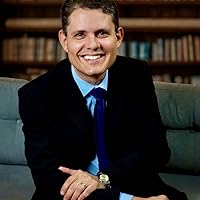
فريدريش فون هايك، هو فيلسوف واقتصادي نمساوي بريطاني عمل أستاذا للإقتصاد بجامعة شيكاغو وجامعة لندن. حصل على جائزة نوبل في الإقتصاد عام 1974. حصل على وسام رفقاء الشرف عام 1984، حصل على وسام الحرية عام 1991، كما نال العديد من الجوائز الأخرى. وفي عام 2011 اختيرت مقالته "استخدام المعرفة في المجتمع" - الموجودة في هذا الكتاب- كواحدة من أفضل عشرين مقالة نشرت في المجلة الإقتصادية الأمريكية في أول مائة عام لها. من أشهر أعماله "الطريق إلى العبودية" الذي تجاوزت مبيعاته مليوني نسخة
Friedrich August von Hayek CH was an Austrian and British economist and philosopher known for his defense of classical liberalism and free-market capitalism against socialist and collectivist thought. He is considered by some to be one of the most important economists and political philosophers of the twentieth century. Hayek's account of how changing prices communicate signals which enable individuals to coordinate their plans is widely regarded as an important achievement in economics. Hayek also wrote on the topics of jurisprudence, neuroscience and the history of ideas.
Hayek is one of the most influential members of the Austrian School of economics, and in 1974 shared the Nobel Memorial Prize in Economics with Gunnar Myrdal "for their pioneering work in the theory of money and economic fluctuations and for their penetrating analysis of the interdependence of economic, social and institutional phenomena." He also received the U.S. Presidential Medal of Freedom in 1991 from president George H. W. Bush.
Hayek lived in Austria, Great Britain, the United States and Germany, and became a British subject in 1938.
Half of these essays constitute an indispensable foundation for the formation of every aspiring Austrian economist and should (why not?) also be carefully studied by any economist whatsoever.
"Economics and Knowledge", "The Facts of the Social Sciences", "The Use of Knowledge in Society" and "The Meaning of Competition" constitute a fantastic trip into the foundations of economic analysis and social sciences in general, and should force any student who is not simply a walking computer to engage in some soul searching and fundamentally question the usual models and policy conclusions of the standard undergraduate courses. Hayek's main point is that we can't simply take all the relevant data of economic analysis as "given" (even though "data" means "given"), because the problem of social sciences is precisely to explain and perhaps enhance how the dispersed bits of information held by each individual become operationally useful to society as a whole. As such, assuming that all data is given is assuming that the most difficult part of the job is already done. Thus, a new door is open for the market to be seen as a process for communicating and making use of those dispersed individual bits of information, and competition is precisely the institutional framework whereby the different agents may have a word to say and contribute to the social process of creating value. "Perfect competition" is a futile construction if it means that no competition is actually taking place - i.e. if it means that all information is already being used and no dynamic process is under way. Hayek also calls attention to the fact that the social scientist deals with a reality which he himself is a part of. We can understand other human beings in a way we cannot understand a stone - and so, just as we should not analyze the stone as if it was a human, we should also not analyze humans as if they were mere natural objects. The facts to be analyzed by the social sciences necessarily include phenomena which we can only interpret and take account of if we realize (and in a sense assume) that we are dealing with a being similar to ourselves. Of course, this epistemological discussion is pretty much reminiscent of Mises. See also Hayek's The Counter-Revolution of Science.
The 3 essays on Socialist Calculation are always a pleasure to read, for how eloquently and respectfully Hayek manages to completely obliterate both the theoretical and the practical case for a socialist economic organization. Specially the second one, on "The State of the Debate", is amazing for how many arguments and obstacles Hayek (obviously inspired by Mises and Brutzkus) manages to raise against the possibility of a well functioning socialist economy. As usual, though, he tends to express his apprehensions a little too gently, and so leaves an open opportunity for his opponents to push the narrative that he conceded socialism "in theory". On this controversy, though, see Lavoie's Rivalry And Central Planning: The Socialist Calculation Debate Reconsidered and Hayek's own article "Two Pages of Fiction".
All in all, and as argued by Kirzner in Classics In Austrian Economics: A Sampling In The History Of A Tradition, the abovementioned articles constitute a sort of metamorphosis on Hayek's part, which led him away from the problems of strict monetary and capital theory and in a sense lifted him beyond economics itself. You should perhaps read them with the subtitle "transcending neoclassical economic analysis". Together with Mises's Human Action: A Treatise on Economics, they constitute the foundation for a new Austrian economics, breaking the illusion, still held in the beginning of the 30's, that the Austrian tradition was basically included in the "modern" marginalist tradition, as suggested by Mises himself.
Now, for the rest of the book: "'Free' Enterprise and Competitive Order" is the paper read by Hayek at the inauguration of the Mont Pelerin Society. It is mostly concerned with the strategy liberals should adopt with regard to the discussion of public policy. In general, it presents a fairly "neoliberal" or "ordoliberal" stance, seeing the creation and promotion of a "competitive order" as a positive role for the State, instead of just focusing on "freeing" enterprise. Hayek also shows his awareness that the general public now demanded equality and security and that liberals should take that into account. In his discussion of property rights and the nature of collective entities, he is surely reminiscent of the subsequent Coasian revolution in "law and economics", a field of inquiry which he would later continue to stress (namely, the allocation and definition of property rights so as to best promote a competitive order). The article ends with a critique of progressive income taxation.
"A Commodity Reserve Currency" is a short article on the gold standard and the possibility of another reserve currency or basket that would improve upon it. I generally did not enjoy Hayek's discussion of gold. It seemed to me that he did not "get it", and was perhaps already too much under the influence of modern monetary schemes. For me this is the only disappointing article in the book - the previous one was a little to interventionist for my taste, but at least I understood Hayek's concerns and grounds for a more social liberalism.
"The Economic Conditions of Interstate Federalism" is a very prescient discussion of the grounds and conditions for a future European federation. Hayek is well on point by noting that economic protectionism and national interventionism would have to be fairly restricted for such a union to be workable, and that the federal authority would need to have some sort of negative power over some of the practices of the member states. However, he also warned that experiments in more "positive" legislation and regulation coming from the federal authority would end up promoting inequalities and disequilibria between countries... Most Mont Pelerin liberals understood that a liberal, competitive order would necessarily mean the loss of national sovereignty, at least to some extent.
"Individualism: True and False" is a philosophical defense of the British, spontaneous order tradition of Individualism as against the French, rationalistic one. It is very entertaining and well researched (for an economist, which shows Hayek's breadth of knowledge), but I am a bit reluctant to treat writers like Rousseau as individualists. In this sense, it may read as a bit of a straw-man to call them false individualists. Perhaps Hayek is merely speaking of individualism in the sense of believing in individual reason, but I have to admit my ignorance with respect to this literature. Despite standing a bit outside the scope of the other articles, the essay appears right at the beginning of the book and is a fairly long one. Hayek must have wished to provide a sort of initial clarification of terms before proceeding to his essays on economics proper. Also, the book was published in 1948, so perhaps this context also led him to make a statement on the topic of individualism.
"The Ricardo Effect" is the hardest one on the book. Although many people complain about Hayek's intricate style of writing, I must say this last essay was the only one that felt a bit unpleasant and difficult to follow at times, at least to me - but I love long sentences. It is mostly concerned with the technical problem of the turning point of the business cycle, namely the reshifting of capital investments back into branches with high turnover.
This is a collection of essays, ranging from fairly topical (in the 30's) and technical to philisophical. It is the latter kind which are of more interest to the layman (like myself) and fortunately these make up the majority in this volume.
One of the most fascinating essays is the first, entitled "Individualism: True and False" in which Hayek clarifies what it means, dispelling many of the myths that are usually associated with it. It is not about greed and selfishness, nor is it about a rejection of society and a celebration of the individual. Nor is it a rejection of planning, a blind faith in chaos and freedom.
Another theme common to several of the essays in this book is the concept of knowledge in society and the problem for any centralised system of planning being that of how it gathers and processes the knowledge which is naturally localised and dispersed.
There is much more besides, and I cannot recommend this book more highly.
It can be easy to get lost in Hayek with his five page long sentences that change subject 16 times, but really this is a great collection of Hayek's writings. Especially "The Use of Knowledge in Society," the clearest and best structured argument for free markets.
Russian edition includes besides his early works (the 30s and the 40s) also lectures and essay from the 70s.
Some works in the book are as good as his The Fatal Conceit: The Errors of Socialism, others are less so. But certainly, this book shows Hayek in the breadth of his mind and theory, that his understanding of the real economy and life, far from the caricature of Him as radical and naive market fundamentalist. He saw the place for all levels of government and that there no prescriptive borders for their activity as far as these borders can be rearranged particularly on the expense of the government's powers.
Rapidly goes very philosophical/technical. And to be fair to author he makes it clear that this book is not for general audience and recommends The Road to Serfdom to us.
While the writing style is turgid and verbose, the intellectual content is superb. The key essays are "The Use of Knowledge in Society" and "Economics and Knowledge". It's worth buying the book for those two essays alone.
This is a series of essays the Hayek wrote in the 1930's and 40's before he became famous for writing "The Road to Serfdom." They are much more technical (and in a couple cases impenetrable) than that great work. The reason to read this is to see him develop his ideas in the context of the planning vs competition debates that roiled economics and politics during the years of the world depression. Some of the essays are a little arcane, including one in which he suggests a currency backed by commodities, rather than gold or government credit. The heart of this book, and the reason to read it, is the 90+ page "Socialist Calculation," where he carefully sets out how the seemingly chaotic system of free market competition is actually much more efficient than an economy that is centrally planned by the brightest lights in society.
Hayek also repeatedly warns (not that it did any good) that a centrally planned economy would require individuals to surrender a significant amount of their economic and political liberty in order to follow the dictates of some distant planning authority, rather than the dictates of their own needs and experience. In that sense, this is a book that may have some contemporary reasonance, depending on how our current economic crisis resolves. Although much of this book is arcane, and refers to events and controversies that are long past, it can still speak to us today.
This book inconsistently met what I was hoping to get from it, but when it did, it was great. Some of the essays were simply too technical for what I was looking for, and while I don't doubt they might be great if I was trying to really study the topic in question, I didn't feel like putting in the effort to trace the details of every argument. The best essays were the more general philosophical ones at the beginning, the last one, and most of all, the essay on "The Facts of the Social Sciences" which I think is a brilliant exploration of the scientific status of social sciences like economics, and what one can expect to get from such "sciences" (while also managing to be very insightful about some philosophical/psychological topics regarding theory-of-mind and how concept-laden our view of the world is). The other essays focus more on the distribution of knowledge in society, and how different structures of knowledge lead to formations of value/prices. I think I probably only scratched the surface of understanding the stakes of the debate, but I find Hayek's positions compelling about the power of distributed knowledge, and the concept of "value" almost necessarily emerging from such distributed knowledge. I think I would benefit from reading this under the tutelage of someone who understood it better, while also reading the "other side" at the same time. Still, some good stuff in here even given these caveats.
اعتقد اني العربية الوحيدة التي قرأت الكتاب وقد قرأته بحكم التخصص اتفق مع كون اللغة مملة لكن كنت اعتقد بسبب فارق الترجمة ، اجد فريدمان تلميذ هايك اكثر سهولة في طرحه الكتاب يزخر بكثير من الأفكار من ضمنها مقالته عن العلوم الاجتماعية أنه يجب البدء بها من الأسفل لا الأعلى (الجزء لا الكل) ، واختلاف المعرفة لدى الجماعات والتي أظنها فكرة عُززت بمقاله الاخير عن القومية لفتت انتباهي نقطة أن القومية لها فوائد اكثر من الاتحادات وأننا بحاجة لتدخل غير كامل من الاتحادات حتى لانلغي القومية ، وان التدخل الكامل لايتناسب مع الاختلافات بين الدول.
فصل ريكاردو كنت الأكثر تشوقا له لكن وجدته غير واضح بعض الشئ واستطعت فهم بعض الأمور التي اعرفها عن مذهب النقديين واحسب اني استنتجها اكثر من فهمها
نقده للاشتراكية كان ممنهج عكس الكتب التي كنت اقرأها كنت أخرج منها وانا أتساءل لم الاشتراكية وماهي الاشتراكية ( كعمق) وليس كمصطلح تعريفي ، وحديثه عن القيمة جعلنا افكر بإعادة قراءة كتاب نقد الاقتصاد السياسي والبحث عن معنى القيمة اكثر . ايضا مما اتفق مع هايك به جملته التي أشار فيها أن نقد الاشتراكية ليس معناه الكمال للرأسمالية ، حيث أتاح مساحة للعمل على النظامين وتعديهما
اخيرا هايك جزء من مقالاته كانت في عام ١٩٣٥ اي ان الكتاب قديم لكن لم يظهر نجمه حينها بسبب صعود أفكار كينز على الساحة بتلك الفترة ، ظهر تأثير أفكار هايك بالسبعينات من خلال تلميذه فريدمان بالمناسبة يبقى كتاب هايك اقل صعوبة من كتاب كينز والذي اعتمد فيه على الرياضيات لشرح أفكاره( اقصد هنا كينز)
Read for class. Good economic critique of socialism, argument regarding the problem of macro calculations for central planning was the strongest. Not so sure of his argument that the main problem with socialism is its practicality and thus its application, as opposed to the theoretical aspect being wrong. I don't see how the two can be separated beyond the basic assumptions of socialism. Seeing that socialism is an economic theory as much as it is a political ideology, its foundations lay with central planning, which relies on economic principles to ensure it works. It is as if he ignores the mathematical economics surrounding the theory of socialism, seeing the two as distinct. Despite this, his arguments are good.
Some sensational essays in here (and some dated ones). "The Use of Knowledge in Society" is always a pleasure. The first essay "Individualism: True and False" was also excellent. I liked the timeliness of "Economics and Knowledge", even if the idea has no been borne out with the empirical turn. "The Meaning of Competition" is also nice.
This is an interesting but sophisticated book. I enjoyed reading it, but confess that my grasp of his work is limited. It would be delightful had I the time to read it a second time.
I must apologize first for not understanding every part of this book because I didn’t expect to encounter so much professional content. I tried hard to search for the background knowledge and work on it for a long, but I am afraid that I am not eligible to rate it very justly. I will proceed to talk about my feelings and thoughts on it. This is actually a collection of essays covering the fields of philosophy, political science, social science, and economy. In the first chapter, the author introduced two kinds of individualism, one represented by Locke, Hume, Mandeville, Adam Smith, Burke, Tocqueville, and Lord Acton, the other by Encyclopedists, Rousseau, and the physiocrats. The first one, true individualism, “is that there is no other way to understand social phenomena but through our understanding of individual actions directed toward other people and guided by their expected behavior.” The other one, pseudo-individualism---is mainly advocated by those continental writers, giving rise to collectivism and socialism rather than liberalism. In other works of Hayek, I have read about the differences between Continental and British liberalism, and I think it might be an inevitable result of history, geography, and culture. My history teacher once talked about the attitude of France, which is more amicable in history than many other European countries. Both are continental countries, relying on agriculture and developed strong autocracy. In many ways, those are almost the opposite of countries like Britain and America. Another interesting point is at the end of the book, expounding the deficiency of 19th liberalism: “Its advocates did not sufficiently realize that the achievement of the recognized harmony of interests between the inhabitants of the different states was only possible within the framework of international security.” The author believed its cause was mainly that by historical accidents, it wrongly joined forces with nationalism and socialism, whose contentions were incompatible with its own. As we can see, the combination of nationalism and socialism led to disastrous consequences in the last century---and maybe still in today’s world.
Essa é uma coletânea de artigos de Hayek das décadas de 1930 e 1940, publicado em 1947. No primeiro artigo, Hayek distingue o verdadeiro do falso individualismo. Enquanto no verdadeiro tem-se a tradição britânica antirracionalista, no falso tem-se a tradição racionalista continental. Em seguida, tem-se o texto "Economia e conhecimento", já publicado como livreto pela Editora LVM, em que Hayek discute economia e dispersão do conhecimento. O terceiro texto é sobre os fatos das ciências sociais. Esse é um texto importante porque critica o empiricismo da teoria social demonstrando que esta deve ser pensada a partir de ações individuais que possibilitam uma técnica de raciocínio que liga os fatos individuais, mas que não pode ser testada. Em seguida, Hayek discute o significado de competição, rejeitando a artificialidade da teoria da competição perfeita. No texto seis, discute sobre a necessidade de liberdade para uma ordem competitiva. Os textos sete ao nove tratam do cálculo socialista e seus problemas teóricos e práticos. No texto nove, discute-se uma proposta de moeda para substituir o padrão-ouro. No texto onze, trata do efeito Ricardo quando da queda geral dos salários. Por último, Hayek defende uma federação internacional entre Estados para livre circulação de bens e proteção da liberdade individual. São artigos importantes que ganharão desdobramentos posteriores importantes na teoria social de Hayek. Principalmente os quatros primeiros artigos são uma contribuição ímpar à teoria política e social.
This is a book about economic epistemology. Questioning the language and assumptions that economists use. How they are ambiguous and misused. Those questions are directed at how people know information, and the limitation to understand a complex reality. Knowledge is dispersed in the economy rather than being centralized. Each individual has expectations that need to be continuously adjusted to coordinate behavior with others. What matters is who makes the decisions based on what knowledge. The limitations of knowledge means that decisions need to favor local agents rather than distant centralized authority. Decisions are propitious by those who have specialization of knowledge in a given area.
The language used by people is ambiguous. The same words mean different things to different people, and can unite people who have contradictory beliefs. The usage of the words changes over time, leaving them with the same name but attached to heterogeneous principles. Many ideas contain assumptions which are not realistic. Applying assumptions which assume away complexity results in policies that are either misleading, or dangerous.
Individual human reason is limited in understanding the complex economic reality. Individuals possess dispersed knowledge bits which are incomplete and at times contradictory. Using that knowledge, the economic problem of society is how to best allocate resources to any member when the resources relative importance is known only to the individuals. The problem is the utilization of knowledge which is never complete. Each individual possesses limited knowledge can only respond to situations with that limited knowledge. Acknowledging the limitation of knowledge in practice results in limited coercive or exclusive power.
The state is a deliberately organized institution that is consciously directed power, which provides the framework for societies individuals to collaborate. As the state functions within a society, it should be small. There is a vast difference between rules and orders. Government by rules informs individuals of responsibilities that shape decisions, while a government by orders imposes specific duties. There are many actions that governments can take that are not coercive which go beyond the enforcement of civil and criminal laws, while also enhancing efficiency of individual action such as by reducing avoidable uncertainty and spreading information.
Coordination requires planning. The problem is who is supposed to be doing the planning. It can be done in a centralized way or decentralized way. Centralized planning directs the economy with a unified plan. Competition is decentralized planning by different economic agents. Theories that design a society need to be under control of individual human reason. But individuals who come together tend to have better results than those designed or foreseen by individual human reason. Those who believed in individualism want to find institutions in which individuals would voluntarily contribute to the needs of other. That is problematic because there are conflicts of individual interests.
Hayek takes a stance of going against the rationalistic psychology defined by Economic Man. Explaining that the Classical economists were describing a very complicated and realistic understanding of human nature who adjusts to circumstance. The role of the individual within a society is to adapt to changes and conventions which appear to be irrational, without recognizable justification, and not the result of intelligent design. Traditions and conventions which are not enforceable but create a set of expected behaviors which allow for coordination of individuals.
Equilibrium depends on intertemporal decisions, which inherently means individual foresight. Comes about from the convergence of expectations and planning, which any change disrupts the equilibrium of actions. Time is an essential feature of equilibrium because it comes about from the relationship between actions depended on anticipation. But this has a problem of the way in which equilibrium is achieved, the way in which knowledge is communicated. Hayek argues against the solution of perfect competition where people are close to omniscient. The assumption subsidized the acquisition of knowledge. Equilibrium comes about from this assumption because it is assumed to be the outcome. What Hayek saw was that equilibrium still comes about from individual spontaneous actions which was not planned but looks like it was made by a centralized plan.
Economic problem come about from change. Without change, there is no need to make different decisions. As the problem of economics is rapid change, the ones who decide how to change should be those with tacit knowledge of the problem. Those familiar with the circumstances and changes can make quick adjustments with the available resources. It would take time to convey the changes to a central authority and more time to deliver a response after aggregating available knowledge. Central authorities see the economic statistics but there is knowledge which cannot be entered into statistical form which makes it impossible to convey.
Hayek goes against perfect competition, as the concept is not actually describing competition. Perfect competition assumes away the need for individuals to adjust to changes, as they are assumed to already be adjusted to everyone. Perfect competition is the absence of all competitive activities. It is competitive activities in which individuals find alternatives by the various means that the market spreads the information. A tool of discovery by exploring the unknown. Making new decisions and attempting to do things differently. Many of those who advocate free markets are actually protecting their own privilege rather than in opposition of all privileges. The disciple of the competitive markets needs to apply not just to the masses, but also those who are against state control.
The book has a lot of knowledge to deliver but it does so with, at times, difficult writing. At times being very tedious and at other delivering clear arguments. As this book is a collection of essays, they sometimes contain passages that contradict themselves. The themes in the book are similar, but have poor transition. There is more critical analysis in arguing against terrible ideas, than in providing an understanding to those supported.
Kind of note to self, Hayek's main argument in both books as I get it.
It's possible to have a state economy (socialist or state-capitalist) in a static environment. It's just a matter of computing power. On the other hand, large bureaucratic systems can't have a mechanism in what to invest because it is a matter of pure speculation. They don't have the flexibility to determine prices or what to create because this involves risk-taking. That is why market systems with a lot of entrepreneurs flexible in setting prices will be more effective.
The problem with it is that it empirically meaningless. "Flexible" is the magic word here, like "virtuous", who can say that being flexible is bad? But if it were true, then corporations like Amazon and Walmart wouldn't exist and the economy would look more like a medieval bazaar. Really, if your company employs about 500k people, at what point can we say that someone in it has the capacity to be entrepreneurial? Who really sets prices at his own whim in it?
Un libro muy corto pero que sin duda establece los principios fundamentales del liberalismo clásico económico. Como principios moral del capitalismo, el individualismo es un concepto que en la época actual tiene connotaciones negativas; en este libro, Hayek intenta desmentir esto último y asegura que aun así hay dos conceptos de individualismo: uno verdadero y uno falso. El falso individualismo llega a ser una mera ilusión donde pretende darle autonomía y soberanía al individuo sobre todas las demás estructuras sociales usando la razón como principal herramienta, pero todo esto conduce inevitablemente al colectivismo y en últimas instancias al socialismo. Mientras que el verdadero individualismo promueve la libertad, el gobierno como un medio y no un fin (como los socialistas desean) y el uso ilimitado de los talentos y vocaciones dd cada individuo sin estar limitados o dirigidos por el Estado o la sociedad como ente. Grandísimo libre para entender la filosofía humanista de la escuela austriaca.
Hayek seems like a great critic to have — in talking about socialism, rather than just saying “all this is foolish”, he instead very clearly articulates the problems a socialist has to answer. It’s an incredibly constructive form of criticism that is able to help his opponents refine their thinking as much as it helps his allies.
I think the overarching theme is that people tend to make simplifying assumptions that lead to intellectual mistakes. People have a warped view about what competition means based on hugely simplified assumptions about equilibrium. People overestimate the ease of creating a functional socialist state based on not understanding just how complicated are the decisions that need to be made about allocating resources. Judges have a simplified view of the moral basis for property rights, so grant patents where they shouldn’t. My overall takeaway is to be more more modest in assuming that we understand complicated societal systems.
Individualism and Economic Order is a book which contains a collection of essays published between 1935 and 1947 by famed economist Friedrich Hayek. There are some deep and dense thoughts on the contrasts between free markets and planned economies. The essays are thought provoking and helps in clarifying how individualism is a theory of society.
The essays aren't necessarily directly connected with each other and some of them can be incredibly strenuous to read. The brilliance of this book seems to lie in elucidation of central questions related to economics (and more specifically to individualism as well as socialism). Reading this book can help the reader to think intently about how to approach this subject in a methodical and sharp manner like the author who is a master of the subject.
1) Systems should be designed with 'British individualism" principles, i.e. they should not prescribe heavy rules on individual choices and provide guardrails for mitigating bad behavior. Individuals should act with "French individualism," i.e. believe in yourself to affect great change, believe in your ability to rationalize think about problems. America's genius is that it enables this dialectic of social individualism through a constitutional republic with three branches of government, and individual individualism with free-market capitalism and the American Dream.
2) At the same time, we should not be too idealistic of free market fundamentalism, which has clearly failed in many respects (e.g. shipping semiconductor fabrication overseas).
Cuando uno escucha actualmente la palabra "individualista" suele asociarla con egoísmo. Exactamente ese fue el objeto de este ensayo del maestro Hayek. El de aclarar que existen dos nociones de individualismo, aseverando que la que el austríaco defiende es la verdadera.
En tal sentido, Hayek entiende por individualismo (verdadero) como un acto de humildad personal ante nuestro desconocimiento del resto del mundo, y que nuestros datos o desconocimientos son severamente limitados. Por tanto, en uso de nuestra libertad, Hayek defiende al individualismo como una forma en la que la persona pueda ir descubriendo nuevos conocimientos en aquellas áreas que sean de su exclusive interés. Todo esto formando lo que sería parte del Orden Espontáneo.
Esta defensa de su "verdadero" individualismo, se presenta como un antónimo frente al "falso", el cual Hayek estima parte de la arrogancia intelectual que cree que lo sabemos todos y podríamos someter nuestros designios como parte de un proceso de ingeniería social.
Esto corto libro -no apto para racionalistas- ilustra e ilumina sobre la verdadera definición del individualismo y el liberalismo y pone su reflector sobre aquellos que pretenden darles a esas palabras significados contrarios a lo que realmente representan. Leer a Hayek siempre es ilustrativo y en este libro se aclaran conceptos tan mal interpretados como aquel del egoísmo en Adam Smith y eso hace de este libro, una lectura obligada para los liberales.
There are essays in here that should be read multiple times. "The use of knowledge in society" is on top of that list. Some of the essays, especially those about socialism, can be boring. A lot of the stuff in this book was over my head. However, I am glad that I read it. I will find time in future to reread some of the essays. This is a collection of essays, almost all of them are about economic topics. The first few are about political theory. My favorite was the one about knowledge.
If you have some knowledge of economics from school, then this is a relatively easy read for a Hayek book, who among other things in this book delves into economic analysis of the failures of socialist calculation in three separate chapters along with defining what competition and individualism truly mean in their own distinct chapters. This might be my favourite Hayek book.
I've read economics books before and I've read about economists. If you can get anything out of this, you are a better person than I am. I do love when he delves into a topic and then says something to the effect that it's too complicated to get into here. Actually, he should be thanked for not making the chapters any longer.
Hayek is not an easy read, that being said the my favorite takeaway was Hayek actually defining Individualism. Hayek makes the normative claim that Individualism is the idea that if an individual were to cultivate his own meaning, he could achieve more than Individual human reason could.